| Global Defense, OSINT & Geopolitics Wire

[🇧🇩] Textile & RMG Industry of Bangladesh

[🇧🇩] Textile & RMG Industry of Bangladesh
581
31K
More threads by Saif

G Bangladesh Defense

RMG exports to EU grow 2.79pc in July-Oct

1794438253576.webp


Bangladesh’s ready-made garment (RMG) exports to the European Union (EU) reached US$6.43 billion during the July–October period of the fiscal year FY2026–27, marking a 2.79 percent increase from $6.26 billion recorded a year earlier, according to Export Promotion Bureau (EPB) data compiled by Bangladesh Apparel Voice (BAV).

However, the growth remained heavily concentrated, with Spain single-handedly carrying nearly all of the expansion. Exports to Spain surged 13.36 per cent to reach $1.448 billion—an increase of $170.6 million—which accounts for about 98 per cent of the EU’s total gain of $174.5 million. With this stellar performance, Spain now commands 22.51 per cent of Bangladesh’s total EU apparel exports, overtaking Germany.

Germany, previously the leading single market, completely stalled during the four-month period, inching up a negligible 0.01 per cent to $1.439 billion and holding a 22.37 per cent market share.

Among other European destinations, the Netherlands registered an 8.68 per cent growth to $784.6 million, and Poland grew 2.85 per cent to $545.9 million. In contrast, exports to France dropped by 7.87 per cent to $611.1 million, while shipments to all other EU countries combined fell 1.34 per cent to $1.60 billion. Collectively, the top five markets accounted for 75.1 per cent of Bangladesh's total EU apparel exports during the July–October timeframe.

In October alone, RMG exports to the EU rose by a modest 1.10 per cent to $1.53 billion. Germany remained the largest single market for the month at $315.7 million (+0.59%), closely followed by Spain at $299.2 million (+11.95%). Meanwhile, the Netherlands grew 7.62 percent to $187.1 million. Conversely, France suffered a sharp contraction, plunging 15.22 per cent to $161.7 million, and Poland declined 4.49 per cent to $144.0 million.

Market analysts point out that EU growth is currently exceptionally narrow. Excluding Spain's robust performance, Bangladesh’s overall apparel exports to the European Union would have remained virtually flat over the four-month period, weighed down by Germany's stagnation and France's ongoing decline.​
 

Special OMS for RMG workers, 10kg rice monthly at Tk 30 per kg


1794524650896.webp


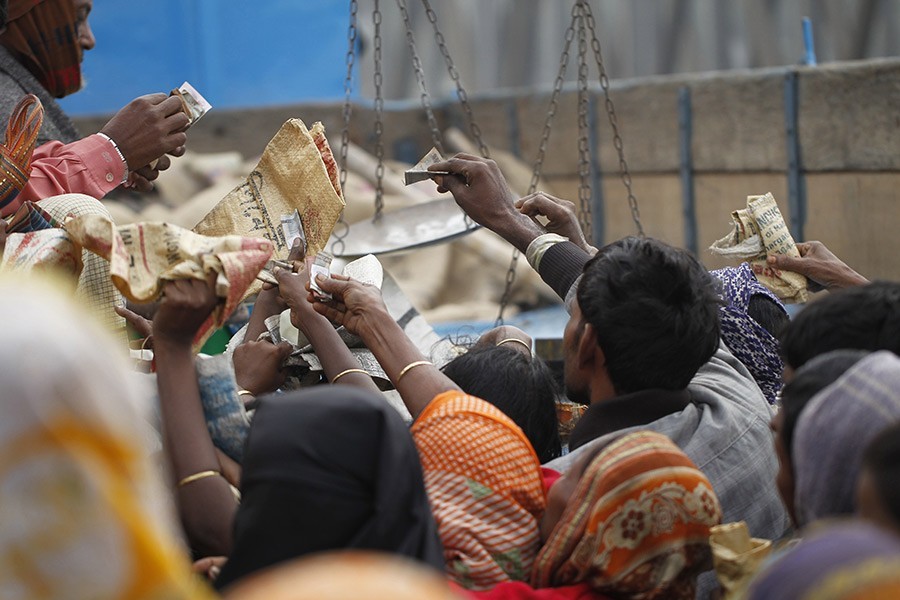
The government is launching a special Open Market Sale (OMS) programme to help workers in the ready-made garment (RMG) sector reduce their food expenses and buy rice at affordable prices.

The programme will begin on November 13 through truck sales in Dhaka metropolitan area and other parts of Dhaka district, Gazipur, Narayanganj, Chattogram metropolitan area and other parts of Chattogram district.

Under the programme, each RMG worker will be able to purchase up to 10 kg of rice per month at Tk 30 per kg.

According to the Ministry of Food, rice will be sold from trucks every Friday from 10:00 am to 12:30 pm and from 2:30 pm to 5:00 pm, subject to availability.

Workers will have to show their garment factory identity cards to purchase rice. Sales will also be made by obtaining their signatures on the master rolls of the respective establishments.

The programme will be implemented under the overall management of the Directorate General of Food under the Ministry of Food. Separate monitoring teams have been formed by the ministry and the directorate to ensure transparency and proper implementation of the programme.

The government has been regularly operating the subsidised OMS programme to facilitate access to food for low-income people and provide price support in view of their purchasing capacity. The special initiative for RMG workers has been taken as part of this ongoing effort.​
 

Fixing the minimum wage for garment workers

1794612117657.webp

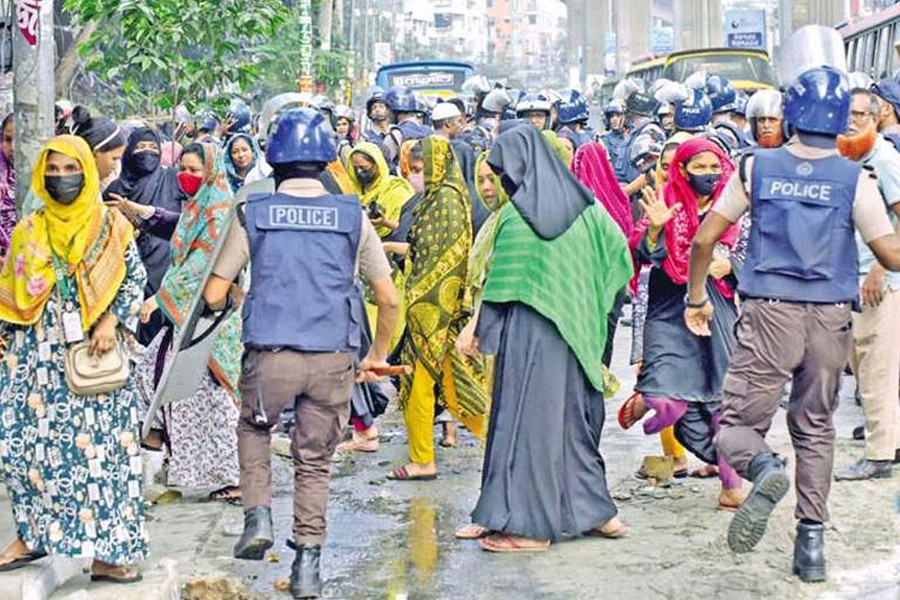
Police dispersed apparel workers, who took to the streets in the capital's Mirpur area. — FE File Photo

The timing of garment workers' demand for higher wages was hardly unexpected. Their call for better pay came just as government employees began receiving salaries under the new national pay scale. Workers immediately took notice of the growing disparity between their wages and those of government employees and felt the inevitable sting of inequality. Protests soon followed. However, what caught everyone off guard was how quickly those protests escalated. There is usually a slow build-up of labour discontent under normal circumstances, but this time, things went from quiet to chaos within days. Hundreds of factories were forced to close and production came to a halt as demonstrators clashed with law enforcers. In the thick of it, protesters even set fire to police vehicles, prompting police to use tear gas and sound grenades. Thus, a legitimate demand for better wages had turned into a serious law and order problem.

Such anger over wages during a prolonged period of high inflation is only natural. The prices of food, rent, fares, cooking fuel and medicine have continued to rise while garment workers have seen little improvement in their earnings. The authorities, however, suspected that the unrest was being fuelled by forces beyond the workers themselves. Law enforcement officials alleged that activists of political parties had joined the protests with money and manpower in an attempt to hijack the movement and keep the government off balance. Soon after these allegations surfaced, the National Board of Revenue (NBR) stepped in, seeking banking details of over two hundred individuals and entities and freezing the individuals' bank accounts.

The move created immediate ripples across the business community. Several well-regarded entrepreneurs with no known political affiliations reportedly found themselves under suspicion simply because workers from their factories had joined the protests. Blaming owners for riots on that basis seems a bit of a stretch, but the possibility that organised groups exploited genuine worker grievances for political ends cannot be ruled out either. Understandably, the administration was feeling the heat as factory after factory closed down, and so declared moves towards settling the wage dispute. On November 1, a six-member wage board was formed to determine a new minimum wage for garment workers, with the wage structure to be finalised by December and revised salaries due from January. Still the protests did not instantly abate. Curiously, it was the NBR's aggressive freezing of bank accounts that seemed to stop them in their tracks. If that timing is any indication, at least some of those targeted may have had an active role in fuelling the unrest. Otherwise, why would agitation that flared up so abruptly die down just as fast?

Be that as it may, it is essential not to lose sight of the genuine grievances that have repeatedly brought workers to the streets. Struggling to survive on a minimum monthly wage of just Tk 12,500, workers feel that taking to the streets is their only way to make their opinions known. In the prevailing socioeconomic environment where demands are not taken seriously unless pressed by street protests, workers see no other choice. This was evident in the wage demonstrations of 2023 and again when workers shut down their factories following the July 2024 uprising. Although those protests were brought under control through various measures, another round of unrest is only a matter of time if the grievances driving it remain unaddressed.

That said, the demand for an immediate increase in the monthly minimum wage to Tk 30,000 needs to be looked at in a practical manner. Hardly anyone disputes that wages must rise, but question remains whether such a steep rise can be sustained by the industry. For context, many university graduates today begin their careers on salaries ranging from Tk 15,000 to Tk 20,000. Elevating an entry-level garment worker's pay above that starting point would disrupt the pay structure across the larger employment market. This leads to another critical issue which is who foots the bill. Unlike public sector salaries which are paid from the government budget, garment workers' wages have to come directly from factory earnings. If production costs shoot up drastically, owners will have no choice but to either absorb the loss or shut down operations altogether.

Any discussion of higher wages must also take into account the difficult business conditions facing garment manufacturers. Domestic production is suffering from acute shortages of gas and electricity, and many manufacturing units are running at reduced capacity or closed down completely. At the same time, global instability, rising energy costs and the increased US tariffs on Bangladeshi exports have made business prospects even less predictable. International buyers are becoming more sensitive to production costs and have several competing countries to choose from when placing orders. Bangladesh currently enjoys a cost advantage, with its minimum garment wage at around $100 a month, compared with more than $150 in competitors such as India and Vietnam. Pushing labour costs up sharply without accounting for these realities would instantly destroy that competitive edge. If buyers respond by taking their business elsewhere, workers themselves would be among the first to bear the consequences.

Loss of export orders might also set off a chain reaction through the economy, given that the garment sector directly employs roughly four million people and supports millions more through related businesses. The lifeblood of port operations, banking services, packaging providers and textile mills is the constant flow of garment exports. Local economies around major factory zones rely just as heavily on the spending power of these workers. If factories close due to uncompetitive wages or prolonged unrest, all these supporting sectors will fold.

There is, of course, scope for Bangladesh to raise wages without sacrificing its competitive position. The challenge is to find a middle ground that gives workers a meaningful improvement in their living standards without placing an unsustainable burden on factory owners. Striking that balance falls to the wage board, which must listen to both sides instead of settling on a rate that merely pleases employers or workers.​
 

Shama urges Eswatini to source eco-friendly Bangladeshi apparel


1794613257160.webp


Bangladesh has urged Eswatini to increase imports of sustainable and affordable Bangladeshi garment products, highlighting the country's growing commitment to environmentally responsible manufacturing and circularity in the apparel industry.

State Minister for Foreign Affairs Shama Obaed Islam made the call during a bilateral meeting with Eswatini Prime Minister Russell Dlamini at the Bangladesh Pavilion in the Blue Zone of COP31 in Antalya, TĂĽrkiye, on Thursday.

The two leaders discussed opportunities to expand bilateral trade, investment, climate cooperation and people-to-people ties, according to a foreign ministry press release issued in Dhaka on Friday.

During the meeting, the state minister highlighted Bangladesh's initiatives to promote sustainability and circular practices in the readymade garment industry, positioning Bangladeshi apparel as an affordable and environmentally responsible choice for international markets.

She also underscored the potential of jute, Bangladesh's golden fibre, as a renewable and biodegradable alternative to plastic products.

Commending Eswatini's ban on single-use plastic bags, Shama Obaed suggested that Bangladeshi jute and jute-based products could provide environmentally friendly alternatives.

She invited the Eswatini prime minister to visit Bangladesh's jute pavilion in the COP31 Green Zone to explore the diversity and commercial potential of jute products.

The state minister also outlined Bangladesh's climate priorities, including limiting global temperature rise to 1.5 degrees Celsius, ensuring predictable and accessible grant-based climate finance, strengthening adaptation efforts and promoting a just energy transition.

She highlighted Bangladesh's target of generating 20 per cent of its electricity from renewable sources by 2030 and 30 per cent by 2040.

Prime Minister Dlamini appreciated Bangladesh's contribution to international climate negotiations and observed that the two countries shared similar priorities in addressing climate challenges.

Both sides discussed strengthening cooperation between COP31 in Antalya and COP32, scheduled to be held in Addis Ababa, Ethiopia.

Healthcare cooperation also featured prominently in the discussions.

Dlamini highlighted Eswatini's healthcare needs, while the state minister expressed Bangladesh's readiness to support the African nation through its pharmaceutical industry, which exports affordable, quality-assured medicines to more than 150 countries.

The two sides reaffirmed their longstanding friendly relations as Commonwealth members and partners in the Global South, agreeing to strengthen cooperation in trade, investment and multilateral forums.

Shama Obaed also sought Eswatini's continued support for the early repatriation of forcibly displaced Rohingyas to their homeland in Myanmar.

Eswatini's Minister of Tourism and Environmental Affairs, Jane Mkhonta-Simelane and Special Assistant to the Prime Minister, Dr Saimum Parvez, attended the meeting.

At the conclusion of the discussion, the state minister presented Dlamini with a jacket made from Bangladeshi jute fabric.

The Eswatini prime minister appreciated the gift and Bangladesh's efforts to promote environmentally sustainable jute products.​
 

Apparel sector lifts industrial growth to 8.79pc in Aug


1794871471279.webp

FE file photo

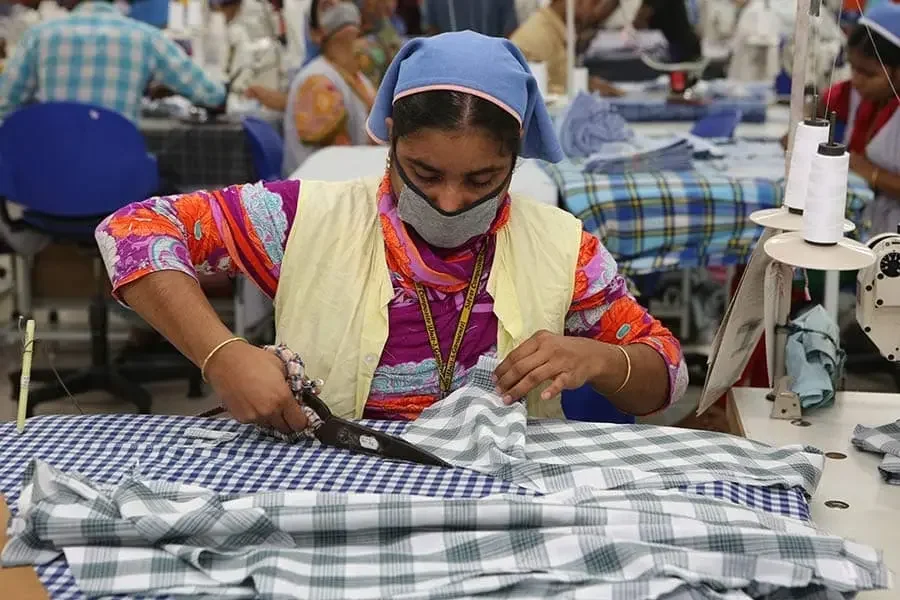
A strong rebound in garment manufacturing propelled Bangladesh's large-scale industrial sector to 8.79-percent year-on-year growth in August 2026, offsetting a contraction in the textile industry and signalling improved momentum across several manufacturing segments.

However, persistent energy shortages and high inflation continue to pose risks to the sustainability of the recovery.

The Large-Scale Manufacturing Industries Index stood at 227.77 in August 2026, compared with the corresponding period a year earlier, according to the latest industrial production data released by the Bangladesh Bureau of Statistics (BBS) on Sunday.

Garment manufacturing, or ready-made garments (RMG), which accounts for around 61 per cent of the index's total weight, recorded growth of nearly 14 per cent during the month under review, providing the main impetus for the overall expansion.

However, the textile industry, the second-largest component of the index, contracted by 2.58 per cent, indicating an uneven recovery across major manufacturing segments.

Several other industries also posted strong growth.

Chemical production surged by 49 per cent, while wood products and paper manufacturing expanded by 57 per cent and 32 per cent, respectively.

Beverage production grew by nearly 25 per cent, leather products by 7.56 per cent and furniture manufacturing by more than 10 per cent.

The large-scale industrial sector accounts for around 11 per cent of the country's gross domestic product (GDP) and is considered an important indicator of broader economic activity.

Policymakers and economists closely monitor industrial production trends to assess the strength of the country's manufacturing base and the wider economy.

Industry insiders attributed the August expansion largely to improved performance in the garment sector and a recovery in several other manufacturing industries.

They, however, warned that persistent energy shortages and high inflation could undermine the sustainability of the recovery.

Anowar Alam Chowdhury Pervez, president of the Bangladesh Chamber of Industries, told the FE that August was a relatively favourable month for the garment industry.

He said late October and early November were generally difficult periods for the sector, as a series of incidents related to wage increases disrupted production and industrial operations.

Energy shortages remained a major constraint on manufacturing output, he said, adding that production could have been significantly higher had industries received an uninterrupted energy supply.

He also observed that the formation of a political government had helped ease some uncertainty, potentially improving business confidence and supporting industrial activities.​