[🇧🇩] The U.S.A.---A Strategic Partner of Bangladesh

[🇧🇩] The U.S.A.---A Strategic Partner of Bangladesh
231
10K
More threads by Saif

G Bangladesh Defense

US$5.0b investment over 5yrs pledged

PM assures support as AmCham seeks economic reforms, policy predictability

1786489367018.webp


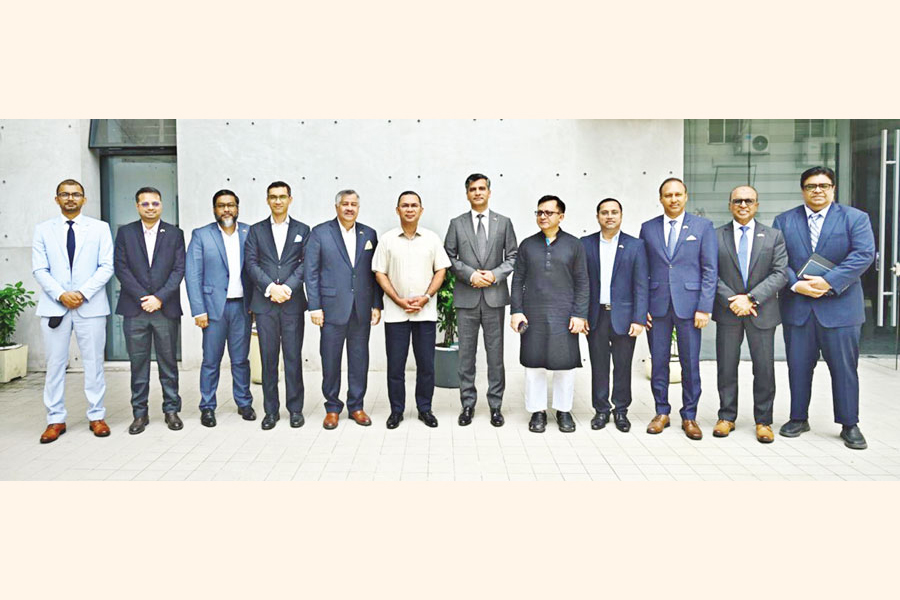
A delegation of AmCham led by its President, Syed Mohammad Kamal, meets Prime Minister Tarique Rahman at the Secretariat in Dhaka on Tuesday.

Leaders of the American Chamber of Commerce in Bangladesh (AmCham) urged the government to accelerate economic reforms and improve policy predictability as they seek to attract US$5.0 billion in fresh US investment over the next five years.

An AmCham delegation led by its president, Syed Mohammad Kamal, met Bangladesh Prime Minister Tarique Rahman at the Secretariat in Dhaka on Tuesday, where the business group reaffirmed its commitment to strengthening economic ties between Bangladesh and the United States.

The chamber noted that its member-companies have invested more than $5.0 billion in Bangladesh over the years and collectively contributed more than 20 per cent of the country's tax revenue.

The AmCham is prepared to help facilitate and mobilise an additional $5.0 billion in investment through existing members and prospective US companies.

The appeal comes as the government seeks to consolidate economic reforms and position Bangladesh as a more attractive destination for foreign capital following a period of political and economic uncertainty.

The American business body welcomed measures under the government's FY2026-27 reform package aimed at making investment easier, including time-bound approvals and licensing, implementation of a single-window system, digital tax and VAT administration, simplified customs procedures and improvements in the repatriation of capital and profits.

But the chamber stressed that reforms would need to be implemented effectively and supported by greater long-term policy certainty, particularly in sectors where foreign investors are considering major, long-term commitments.

"Predictability, efficient governance and constructive dialogue with the business community" would be essential for strengthening investor confidence," the AmCham delegation said.

The group also highlighted the growing importance of the digital economy, welcoming Bangladesh's enactment of the Personal Data Protection Act (PDPA) and National Data Governance Act (NDGA). It called for effective implementation, stronger cybersecurity, regulatory clarity and greater readiness for artificial intelligence.

They also described the US-Bangladesh Reciprocal Trade Agreement framework as an opportunity to move the bilateral relationship beyond traditional market access and towards a broader economic partnership.

Such a partnership, they said, could encompass technology and artificial intelligence, digital innovation, cloud computing and cybersecurity, healthcare and life sciences, renewable energy, advanced manufacturing and financial-sector modernisation.

The chamber proposed establishing a Digital Economy Advisory Forum or taskforce and a Public-Private Competitiveness Council bringing together government officials, local businesses, foreign investors and AmCham representatives.

The proposed bodies would identify regulatory bottlenecks, help implement reforms and provide feedback on measures affecting investment.

The organisation, which has worked to promote Bangladesh-US commercial relations since 1996, said it wanted to act not simply as an advocate for American businesses but as a strategic partner of the government.

It offered to provide investor intelligence and business feedback, connect Bangladesh with US corporate decision-makers and promote the country's investment opportunities and economic reforms internationally.

Rahman welcomed AmCham's continued engagement and said Bangladesh entered a new phase of economic transformation.

The prime minister said the government's priority is to "ensure effective implementation of ongoing reforms while strengthening investor confidence through predictable policies, efficient governance and dialogue with the private sector".

He also assured prospective foreign investors of the government's support and expressed a desire to deepen cooperation with AmCham.

The meeting was attended by Commerce Minister Khandakar Abdul Muktadir, the prime minister's adviser on posts, telecommunications and information technology, Rehan Asif Asad, and executive chairman of the Bangladesh Investment Development Authority Chowdhury Ashik Mahmud Bin Harun.

The AmCham delegation also included senior executives from MetLife Bangladesh, Philip Morris Bangladesh, Excelerate Energy Bangladesh, NATco Bangladesh, Avery Dennison, ShopUp and AmCham Bangladesh.

The chamber separately invited Rahman to attend the opening of the 30th US Trade Show, jointly organised by AmCham Bangladesh and the US embassy in Dhaka, as chief guest.​
 

US delegation in Dhaka to explore investment opportunities

Refayet Ullah Mirdha

1786578186402.webp


A 45-member business delegation from the United States, representing 25 companies under the US-Bangladesh Business Council (USBBC), arrived in Dhaka on August 11 to explore investment opportunities.

The USBBC, a wing of the US Chamber of Commerce, is the advocacy body representing American business interests in bilateral trade with Bangladesh.

The delegation includes officials from major American companies such as Chevron, Excelerate Energy, Visa and Mastercard, according to a US Embassy official in Dhaka.

They are targeting technology, AI and digital innovation, cloud and cybersecurity, healthcare and life sciences, renewable energy, advanced manufacturing, and the financial sector, the official added.


The delegation has held a series of meetings with trade bodies and ministry officials to gauge investment potential across sectors, the embassy official said.

MEETING WITH AMCHAM

Following their arrival, the delegation held an informal meeting at a Dhaka hotel yesterday with leaders of the American Chamber of Commerce (AmCham) in Bangladesh, a trade body representing US-affiliated companies operating in the country.

They sought details on trade barriers and priority investment sectors, according to AmCham members.

“We want to bring $5 billion investment from the US entrepreneurs in Bangladesh over the next five years,” a senior AmCham member said after the meeting.

MEETING WITH INDUSTRIES MINISTER

The delegation also met Industries Minister Khandakar Abdul Muktadir at the ministry on the same day.

After the meeting, Muktadir said the government is working to boost export capacity in the jute, leather, shipbuilding and ship-recycling sectors, according to a statement from the industries ministry.

Measures aimed at turning these sectors into multi-billion-dollar export industries will be announced publicly next month, he informed.

A proposed free trade agreement with the European Union was also discussed with the US delegation, the minister also said, adding that formal talks with the EU are expected to begin soon.

Muktadir added that the government is simplifying business processes and improving access to energy, and is introducing liberalisation in the banking sector that would give IT companies and freelancers easier access to digital payment gateways.

The two sides also discussed trade and export policy, the digital economy, e-commerce, and sectors Bangladesh should prioritise to reach a trillion-dollar economy.

MEETING WITH PM’S ADVISER

Separately, USBBC President Atul Keshap met Prime Minister’s Foreign Affairs Adviser Humayun Kabir at the Prime Minister’s Office, according to a statement from the foreign ministry.

Keshap said expanding private-sector cooperation between Bangladesh and the US was a priority, and expressed interest in taking bilateral business relations to a new level.

The meeting also discussed opportunities for US investment in infrastructure, energy, technology, the digital economy and healthcare.

Google News LinkFor all latest news, follow The Daily Star's Google News channel.
Kabir said the government remains committed to maintaining a business- and investment-friendly environment for US investors.​
 

PM urges US businesses to invest in Bangladesh confidently
United News of Bangladesh . Dhaka 14 August, 2026, 00:56

1786665114040.webp

Prime minister Tarique Rahman meets with a delegation from the US-Bangladesh Business Council at his office in the cabinet division of the Dhaka Secretariat on Thursday. | TIB photo

Prime minister Tarique Rahman on Thursday urged American businesses to invest in Bangladesh with confidence and for the long term, saying his government wants to build a durable economic partnership with the US based on investment, trade, technology and job creation.

‘Our objective is not simply to attract foreign direct investment but to build a durable and mutually beneficial economic partnership. This will strengthen ties between Bangladesh and the United States,’ he said.

The prime minister made the remarks when a 50-member delegation of US-Bangladesh Business Council met him at his secretariat office in Dhaka.

The delegation was led by Oliver Simpson, vice-president and chief commercial officer of Accelerate Energy, and retired ambassador Atul Keshap, president of the US-Bangladesh Business Council and senior vice-president for South Asia at the US Chamber of Commerce.

Tarique invited US companies to invest and expand their businesses in Bangladesh, offering opportunities in energy, infrastructure, technology, digital services, finance, agriculture, healthcare, manufacturing and logistics.

‘Our six-month-old, forward-looking government wants American companies to invest and expand in Bangladesh. We welcome your capital, technology, expertise, and global experience,’ he said.

Tarique said that the government was committed to deregulation, a pro-business budget and liberal economic and fiscal policies to create a more predictable and investment-friendly environment.

‘Our vision is to build a rules-based, globally connected economy that is driven by the private sector. We want American businesses to be partners in this transformation,’ he said.

The prime minister said that the government was strengthening investor protection, simplifying regulations, improving tax and VAT administration, facilitating profit repatriation, reducing red tape and digitising public services.

He also highlighted efforts to improve infrastructure, ports, logistics and energy security while encouraging investment in renewable energy and modern technologies.

‘Please consider our entire government as your partner. We are here to listen, respond, and facilitate,’ Tarique said.

He said that Bangladesh welcomed US investment through direct investment, joint ventures, public-private partnerships and consultancy, and wanted to expand two-way trade and strengthen the export-import relationship between the two countries.

Tarique said that the government had set a target of building a $1 trillion economy by 2034 and was positioning Bangladesh as a manufacturing and investment hub through targeted incentives for priority sectors and investment in skills and technologies.

He said that the government wanted the economic partnership with the United States to contribute to job creation, expanded trade and investment and stronger bilateral ties.

‘I invite you to invest with confidence and build for the long term. Let us create jobs, expand trade and investment, and ensure your companies’ thriving presence. Let us grow together and build a prosperous, competitive, and globally connected Bangladesh,’ Tarique said.

The prime minister also recalled that he had started his career as a businessman before entering politics, saying he understood the importance of having the right policies and conditions for businesses to grow.

‘My message today is simple,’ he said, assuring the visiting business leaders that his government was ready to provide all possible support to facilitate their business interests in Bangladesh.​
 

US lifts January immigrant visa pause for Bangladesh, 74 other countries


1788305824600.webp


The United States has lifted its January pause on issuing immigrant visas to nationals of 75 countries, including Bangladesh, following a court order, The Economic Times reports.

The US Department of State says the pause is no longer in effect as of Aug 21.

The pause took effect on Jan 21 and covered immigrant visa applicants from countries including Bangladesh, Bhutan, Nepal and Pakistan, the Indian daily reported.

The Department of State said the measure was introduced while it reviewed screening and vetting policies, with a focus on ensuring immigrants would be financially self-sufficient and would not become a public charge or unlawfully use welfare in the US.
During the pause, applicants from the affected countries could still submit visa applications and attend interviews.

The department also continued to schedule immigrant visa interviews.


With the pause lifted, applicants can proceed with the immigrant visa process under the applicable rules.

The list of countries covered by the January pause included Afghanistan, Albania, Algeria, Antigua and Barbuda, Armenia, Azerbaijan, the Bahamas, Bangladesh, Barbados, Belarus, Belize, Bhutan, Bosnia and Herzegovina, Brazil, Burma, Cambodia, Cameroon, Cape Verde, Colombia, Côte d'Ivoire, Cuba, the Democratic Republic of the Congo, Dominica, Egypt, Eritrea, Ethiopia, Fiji, the Gambia, Georgia, Ghana, Grenada, Guatemala, Guinea, Haiti, Iran, Iraq, Jamaica, Jordan, Kazakhstan, Kosovo, Kuwait, the Kyrgyz Republic, Laos, Lebanon, Liberia, Libya, Moldova, Mongolia, Montenegro, Morocco, Nepal, Nicaragua, Nigeria, North Macedonia, Pakistan, the Republic of the Congo, Russia, Rwanda, Saint Kitts and Nevis, Saint Lucia, Saint Vincent and the Grenadines, Senegal, Sierra Leone, Somalia, South Sudan, Sudan, Syria, Tanzania, Thailand, Togo, Tunisia, Uganda, Uruguay, Uzbekistan and Yemen.

Dual nationals applying with a valid passport from a country outside the list were exempt from the pause.

Children being adopted by US citizens could also qualify for an exception, including a National Interest Exception under Presidential Proclamation 10998, where applicable.

American families pursuing adoption were advised to continue the regular process, submit visa applications and attend consular interviews.

The state department said the guidance did not revoke any existing immigrant visas. Questions about admission to the US were referred to the Department of Homeland Security.

The pause applied only to immigrant visa applicants.

Tourist visas, which are non-immigrant visas, were not covered.​
 

Trump writes to Tarique thanking him for Boeing purchase, hopes to meet soon

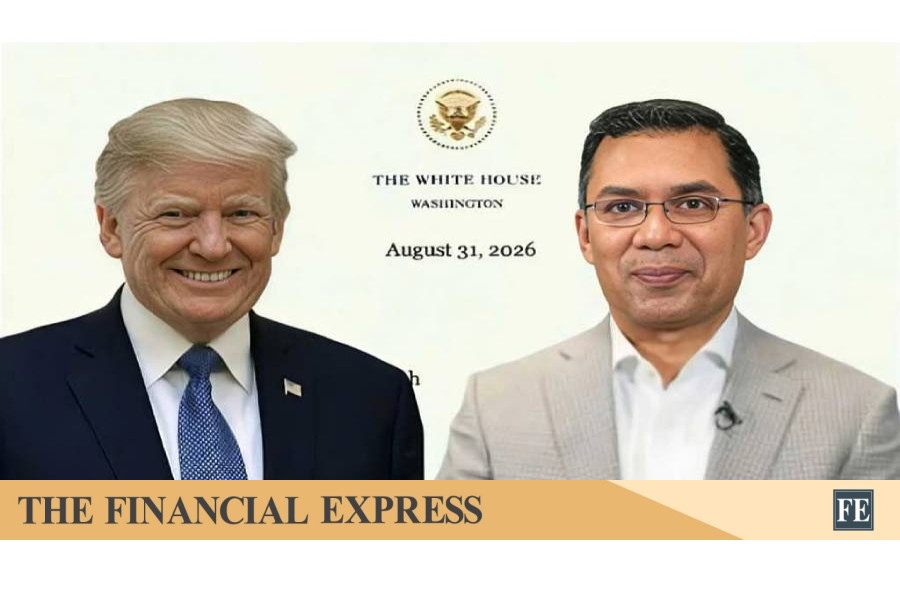
US President Donald Trump has written to Prime Minister Tarique Rahman as Bangladesh has agreed to purchase more Boeing aircraft from the United States.

The Prime Minister’s Press Wing confirmed on Tuesday that Tarique received the US president’s letter.

1788306255232.webp


According to the Press Wing, President Trump thanked Tarique in the letter for the decision to purchase Boeing aircraft. He said Boeing would not disappoint Bangladesh.

In the letter, written on White House letterhead on Monday, the US president said: “I will not forget your attention to this matter (the Boeing purchase).”

Trump hoped to meet with the prime minister soon.​
 

Trump-Tarique meeting likely at UNGA: state minister


1788650370889.webp


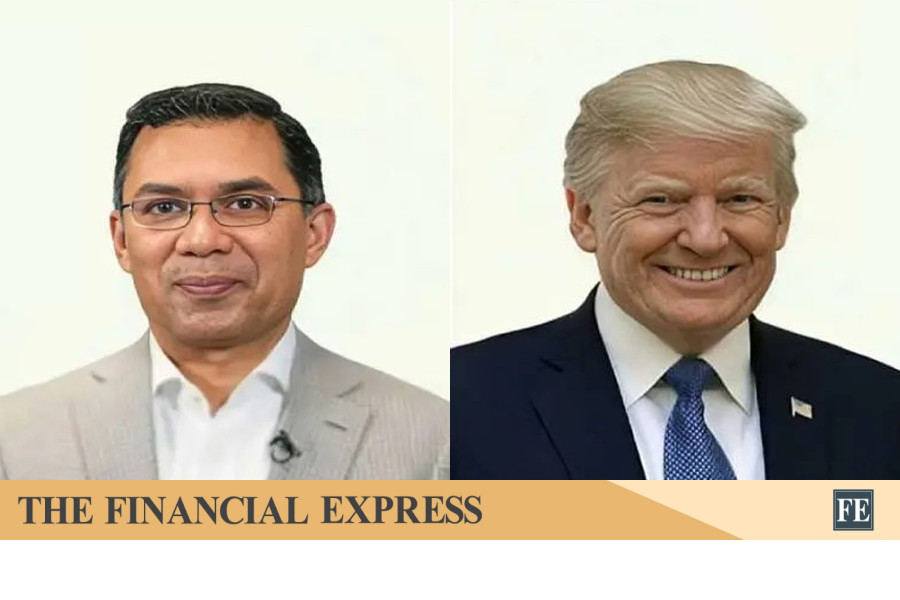
State Minister for Foreign Affairs Humaiun Kobir says there is a possibility of Prime Minister Tarique Rahman meeting US President Donald Trump during the UN General Assembly session.

He said, "The prime minister will go to the UN with a message of progress for the new Bangladesh. There is a possibility of a meeting with US President Donald Trump there."

He made the remark during a discussion with leaders of the Electronic Media Journalists Association, an organisation of television journalists working in the district, at Hotel Star Pacific in Sylhet city around 10:30am on Saturday.

Previously, there had been allegations that journalists were harassed while they were covering Humaiun's speech at the Hazrat Shahjalal (RA) Shrine after Friday prayers. Television journalists announced a boycott of all BNP events and programmes in protest of the incident.

Later, State Minister Humaiun answered various questions from journalists at a discussion and exchange of views on the issue, reports bdnews24.com.

In response to a question about buying Boeing aircraft from the US, the state minister said: "No one is forcing us to buy Boeing. Boeing is being bought from America because there is demand. More will be bought if necessary."

Regarding a potential visit by the prime minister to India, Humaiun said that the date and time of such a visit have not yet been finalised, but discussions are under way. However, there is no possibility of the prime minister visiting India before the UN General Assembly session, he added.

Asked about relations between India and Bangladesh, the state minister said: "Relations between the two countries must be taken forward on the basis of mutual respect, involvement and national interests. The rights and freedoms of the people of Bangladesh are also important in this relationship. India needs to have an effective relationship with Bangladesh.

"At the same time, India must understand the national interests and expectations of the people of Bangladesh. Indian policymakers have started to understand the issue. [The prime minister] has met the Indian high commissioner in Bangladesh twice. It is possible to take relations between the two countries to a more positive level through mutual respect and discussions."

Regarding relations with Russia, he said: “Bangladesh has strong relations with the United States, China, Saudi Arabia and various countries in the Middle East. In addition, an effective working relationship is also being developed with Russia.

“From the first day of taking office, the new government has been working on a foreign policy framework in which Bangladesh’s relations with important world powers is in balance. In addition to Washington, Beijing, Saudi Arabia and Middle Eastern countries, relations with Russia are also being prioritised.”

The state minister for foreign affairs believes that Bangladesh’s visibility and strategic importance in the international arena have increased due to the government’s electoral legitimacy and public support.

Humaiun believes that Bangladesh’s strategic relations with the United States in particular are creating positive prospects for the country’s future.

Regarding the government’s foreign policy plans, he said: “In line with the changing global situation, there must be scope for coordination, restructuring and strategic change in foreign policy as needed. Along with foreign relations, economic and security cooperation should also be seen as part of the same framework.

“Foreign, economic, information and security cooperation are interrelated. Therefore, there is no room for viewing them in isolation. Bangladesh’s foreign policy framework must be integrated and complementary.”

Regarding Bangladesh’s joining the Makkah Agreement, the state minister said: “Negotiations are ongoing regarding the Makkah Agreement. It is not unusual for Bangladesh to join it. Many countries are now in multiple defence alliances. We will go wherever we need to go based on national interests.”

On the matter of manpower exports to Malaysia, he said expatriate workers had been negatively affected due to syndicates being formed during the Awami League government. The current government has broken up this syndicate and more workers will travel to the country in stages, he said.

Regarding regional cooperation, Humaiun said: “Efforts are being made to strengthen cooperation with various countries, including Bhutan, Bahrain and Sri Lanka. Bangladesh is also working on ensuring that regional countries can take a coordinated stance in various international forums for common interests.”​
 

US overtakes India in trade to rank second

Imports from the United States have increased by 43 per cent. Both imports and exports with India have decreased. China remains in the top position by a large margin.

Masud Milad
Chattogram
Published: 11 Sep 2026, 08: 06

1789107957684.webp

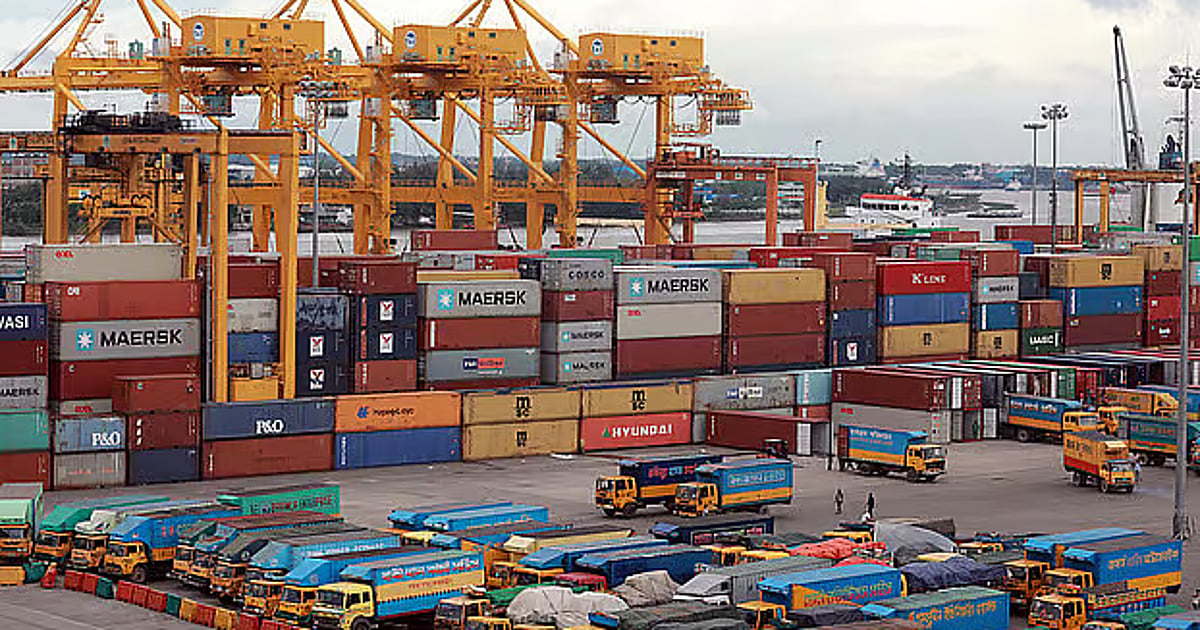
Chittagong Port File photo

Driven by a sharp surge in imports over the past year, the United States has officially overtaken India to become Bangladesh’s second-largest trading partner—marking a significant shift in the country's bilateral trade dynamics.

On the other hand, both imports and exports with India have decreased.

Meanwhile, China remains in the top position by a large margin. After being in the second position for 16 years, India has now slipped to third place.

A big factor in this change is the increase in imports from the US.

Bangladesh's imports from the United States have grown by 43 per cent in one year. Exports have increased slightly—by about 4 per cent.

On the other hand, imports from India have decreased by approximately 7. 5 per cent, and exports to the country have decreased by about 3 per cent.

During discussions regarding counter tariffs by the United States, Bangladesh took initiatives to increase imports from that country. In the public sector, purchases of wheat and energy have increased, while in the private sector, soybean seeds and cotton purchases have grown. There is also a deal to purchase 14 aircraft from the US company Boeing.

Importers say that along with trade benefits, the quality of products and assurance of supply have encouraged them to buy more from the US. Conversely, businessmen believe that trade disruptions amid strained political relations between Bangladesh and India have harmed business between the two countries.

According to the National Board of Revenue's (NBR) data, in the last fiscal year, the trade (import-export) between Bangladesh and the United States was 12. 67 billion dollars. With India, it was 10. 72 billion dollars, meaning that the trade between Bangladesh and the United States was 1.95 billion dollars more than with India.

According to Mustafizur Rahman, a distinguished fellow at the Center for Policy Dialogue (CPD), the increase in imports from the United States is the reason for the overall increase in trade with the country. Especially in government procurement, this increase is more significant. However, the promised special concessions for garment exports have not yet been implemented.

Regarding trade with India, he explained that imports and exports have decreased due to non-tariff barriers between the two countries, negatively impacting consumers and producers. If zero-tariff benefits for Bangladeshi products in the Indian market were absent, exports could have decreased further.

How the United States advances

The United States is Bangladesh's largest export market as a single country. Bangladesh exports much more than it imports from the US. In the 2024-25 fiscal year, Bangladesh had a trade surplus of 6.26 billion dollars with the US, meaning that exports were higher than imports.

Due to significant purchases from the US, the trade surplus decreased to 5.55 billion dollars in the 2025-26 fiscal year. During this time, Bangladesh exported 9.11 billion dollars worth of goods to the US and imported goods worth 3.56 billion dollars.

The trend of increased imports began with steps by the United States. As part of a policy to reduce trade deficits, President Donald Trump imposed counter tariffs on Bangladeshi goods in 2025. After negotiations, the rate was set at 20 per cent, effective from 7 August.

After several months of discussions, on 9 February, Bangladesh and the United States signed a mutual trade agreement. The agreement includes plans to purchase agricultural products worth approximately 3. 5 billion dollars from the US, energy products worth nearly 15 billion dollars over 15 years, and initiatives to increase the purchase of aircraft and military equipment.

The agreement reduced the counter tariff to 19 per cent. Additionally, the US pledged to eliminate the counter tariff on specific amounts of textiles and garments. However, 11 days after signing the deal with Bangladesh, on 20 February, the US Supreme Court declared most of the global counter tariffs imposed under the emergency power law by the Trump administration as illegal. Despite the court's ruling changing the legal basis of the counter tariff, there are no new initiatives to cancel or amend the 9 February Bangladesh-US trade agreement.

How much import has increased

Before the full implementation of the agreement, Bangladesh started executing the import commitments made as part of discussions to reduce counter tariffs. Wheat, liquified natural gas (LNG), and private-sector imports of soybean seeds and cotton have increased.

According to NBR's data, while there was no wheat import from the US in the 2024-25 fiscal year, 227. 7 million dollars worth of wheat arrived in the last fiscal year, the majority of which was for the government sector. Soybean seed imports increased from 350 million to about 620 million dollars, and cotton imports rose from 230 million to 380 million dollars. LNG imports in the government sector also rose to nearly 480 million dollars.

Overall, imports from the US grew by 43 per cent from 2. 49 billion dollars to 3. 56 billion dollars. Despite such an increase in imports, the growth rate of exports has slowed down. While Bangladesh's exports to the United States grew by 14 per cent in the 2024-25 fiscal year, the growth was only 4 per cent in the last fiscal year.

In the last fiscal year, Bangladesh's total import-export trade with the United States increased by about 13 per cent. A significant portion of this increase came from imports.

What importers are saying

To understand why imports are increasing, Prothom Alo spoke with two major industrial groups that import goods from the United States. In the private sector, the Meghna Group of Industries was the top importer from the United States last fiscal year. The chairman of this group, Mostafa Kamal, told Prothom Alo that trade facilities have increased in imports from the US. Considering product quality, prices were also competitive. For these reasons, the Meghna Group of Industries has increased imports from the United States.

Amirul Haque, Managing Director of the Saicom Group and President of the Chittagong Chamber, also spoke of increased trade facilities.

He stated to Prothom Alo that the quality of US products is relatively good, and there is greater assurance of supply. On the other hand, conflicts have increased risks and uncertainties in the use of ports for importing goods from Ukraine and several other countries. Therefore, considering all aspects, they are buying more goods from the United States. He believes that if trade facilities were not improved, private sector imports would not have grown this much.

The fall of India

While trade with the United States is increasing, the opposite is true for India. Amidst the interim government's tenure in March 2025, Bangladesh decided to suspend the import of yarn from India through land ports due to strained relations between the two countries. Then, in April 2025, India withdrew the facility of allowing Bangladesh to export goods to various countries through Kolkata Airport.

Additionally, India imposed restrictions on the imports of Bangladeshi goods in three stages. On 17 May and 27 June of the previous year, India imposed various conditions on the export of garments, food products, jute products, cotton waste, plastic products, and wooden furniture. Later, on 11 August, further restrictions were imposed on some jute products. Moreover, India initiated an investigation into imposing remedial duties on imports of Bangladeshi jute products.

These reciprocal measures have resulted in trade being hampered between the two countries. Exports of Bangladeshi garments to India have decreased, as has the import of cotton and yarn from India.

In the 2024-25 fiscal year, garments worth about 650 million dollars were exported to India. In the last fiscal year, garment exports decreased by nearly 12 per cent to 570 million dollars. A ban was imposed on the export of Bangladeshi-made garments through land ports. In the last fiscal year, the total exports to India amounted to 1.19 billion dollars. Overall exports decreased due to the decline in garment exports.

The import of raw materials for the textile and garment industry from India also decreased. In the 2024-25 fiscal year, 520 million dollars worth of cotton was imported from India. In the last fiscal year, it decreased by about 23 per cent to 400 million dollars. During the same period, the import of all types of cotton yarn decreased from 1.75 billion dollars to 1. 47 billion dollars. Thus, the import of these two raw materials alone decreased by 400 million dollars.

Advantages and disadvantages

Products like wheat, soybeans, and cotton were purchased from different countries based on international prices and supply facilities. The commitment to buy a certain amount from the United States came in exchange for reducing tariffs on garment exports, say exporters. However, they report that these concessions have not yet been implemented. In the last fiscal year, Bangladeshi garment exports to the country grew by 2. 72 per cent.

According to Mahmud Hasan Khan, President of the Bangladesh Garment Manufacturers and Exporters Association (BGMEA), Bangladesh's increased imports are reducing the US trade deficit.

He believes that this will reduce the likelihood of additional tariffs being imposed on Bangladesh in the future.

Mahmud Hasan Khan also mentioned that they are working to secure the promised concessions on garment exports made from US cotton. Discussions regarding the structure of this benefit are expected to take place in September. He hopes that implementing these benefits will increase Bangladesh's garment exports to the United States.

Discussing the impact of reduced trade with India, Mahmud Hasan Khan said both sides are suffering losses due to reciprocal measures. The shorter distance for trade with neighbouring countries reduces transportation costs and time. Therefore, both countries would benefit from increased trade with India.

The progress of China

Despite the changes in the second and third positions, China remains Bangladesh’s largest trade partner. In the last fiscal year, trade with China amounted to 22. 96 billion dollars, more than double Bangladesh's trade with the United States.

Bangladesh's trade with China is mostly import-dependent. In the last fiscal year, 22.14 billion dollars worth of goods were imported from China, an increase of about 7 per cent from the previous year. In contrast, 820 million dollars worth of goods were exported to China, an increase of about 11 per cent compared to the previous year.

Bangladesh imports raw materials, machinery, and various production inputs from China. Due to high imports and relatively low exports, there is a large trade deficit with China.

39 per cent of trade with 3 countries

According to NBR’s data, Bangladesh's total imports were 73.12 billion dollars, and exports were 46.26 billion dollars last fiscal year. The combined total trade amounted to 119.38 billion dollars.

Of this, 19 per cent, 11 per cent, and 9 per cent respectively involved China, the United States, and India. This means nearly 39 per cent of Bangladesh's total trade is with these three countries.

Economist Mustafizur Rahman believes that the advantages of increasing imports from these three countries should also be considered. A large portion of imports from China and India consists of raw materials for export-oriented industries. Finished goods made from these raw materials are exported to various countries around the world.​
 

Latest Posts

Back