[🇺🇸] USA News/Views

[🇺🇸] USA News/Views
86
4K
More threads by Saif

G   American Defense

Alarming rise of NTMs

Asjadul Kibria

Published :
Jun 06, 2026 23:43
Updated :
Jun 06, 2026 23:43

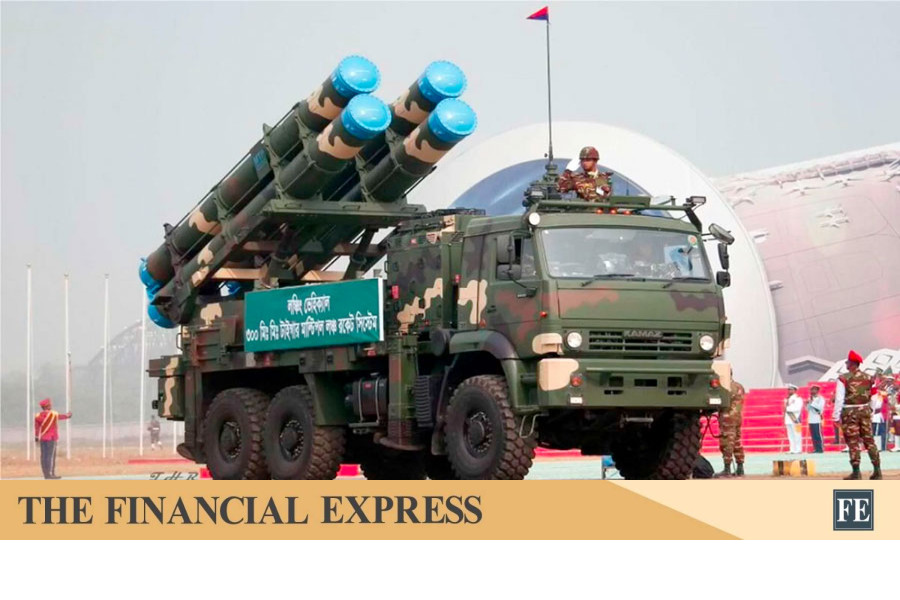
1780792297210.webp


Following US President Donald Trump's tariff blitz last year, countries worldwide have been shaken by the rise in tariff barriers. Trump's move provoked many countries to impose higher tariffs on imports, increasing trade costs for their partners. Besides the surge in tariffs, the rise in non-tariff barriers (NTBs) has become a serious problem for developing nations. Though non-tariff measures (NTMs) are not new in global trade, and countries have continuously struggled to address them, recently, a new wave of NTMs has evolved into NTBs.

UN Trade and Development (UNCTAD), in its latest global trade update, highlighted the issue. Released last month, the report showed tariffs increased sharply in 2025, rising by 10 per cent for developed countries, 16 per cent for developing countries, and 18 per cent for least developed countries (LDCs). Even so, tariffs are not the main cost for most countries because NTMs impose higher export costs than tariffs for 88 per cent of nations. "They include technical regulations, health and safety requirements, and administrative procedures," said the UNCTAD report. "They often involve compliance, information and procedural costs." NTMs such as regulations, mandatory standards, or product requirements now drive most trade costs, shaping who trades, what is traded, and to which markets. "For developing countries, this creates a double burden. They face higher tariffs while also trying to meet increasingly complex rules," it added.

NTMs are broadly defined as policy measures other than tariffs that affect international trade in goods. Most NTMs are technical measures aimed at protecting public health and the environment and are essential public policy instruments. Nevertheless, they may have substantial trade effects by generating information, compliance, and procedural costs. Some NTMs are NTBs, such as import licensing requirements, quotas, import prohibitions, and export bans. These tools generally limit or restrict the export or import of various products.

The international classification of NTMs includes: Sanitary and Phytosanitary (SPS) measures; Technical Barriers to Trade (TBT); Pre-shipment Inspection and other formalities; Contingent trade-protective measures; Non-automatic licensing, quotas, prohibitions, and quantity control; Price-control measures; and Export-related Measures. The first three NTMs are technical measures, and all the rest are non-technical measures. There are other NTMs like finance measures; measures affecting competition, trade-related investment measures; distribution restrictions; restrictions on post-sales services; subsidies and other forms of support; government procurement restrictions; intellectual property (IP) and rules of origin.

The scope of NTMs is very wide, with overlaps among various measures. Different countries use different measures in different ways for different purposes. NTMs are mostly linked to domestic public policies, and no single focal point administers them. Except for a few quantitative measures (e.g., quotas), most NTMs are qualitative.

There are three relevant World Trade Organization (WTO) agreements : General Agreement on Tariffs and Trade 1994 (GATT), Agreement on Technical Barriers to Trade (TBT Agreement), and Agreement on the Application of Sanitary and Phytosanitary Measures (SPS Agreement). GATT provisions seek to ensure that WTO members abide by trade liberalisation commitments and do not re-impose protective or restrictive measures through domestic policies or NTMs that discriminate against imports. The TBT agreement aims to standardise technical regulations and their application. The SPS agreement asks WTO members to base measures for the protection of human, animal, or plant life or health on international standards. Both the TBT and SPS agreements restrain members from setting and applying standards that are more trade-restrictive than necessary to achieve a legitimate objective.

Due to the diversity and complexity of NTMs, it is difficult for developing countries like Bangladesh to understand the measures and take adequate steps to address them. Resource constraints and a lack of skilled manpower make NTMs more challenging for these countries. While developed and some advanced developing nations deploy significant resources to deal with NTMs effectively, others struggle to develop the necessary human resources, technical knowledge, and logistics. That is why NTMs become more burdensome for these countries.

Over the decades, Bangladesh's exports have faced various NTMs in different potential markets. Despite market access thanks to lower tariffs, NTMs often act as NTBs, blocking the potential penetration of Bangladesh-made goods. The country's exports to India have faced various NTBs over the decades despite tariff-free access to most products. Nevertheless, Bangladesh has succeeded to some extent in dealing with Indian NTMs by improving product standards and adjusting other requirements for the Indian market. Exports to India increased modestly over the decades, though still below potential. After the fall of the autocratic Hasina regime, bilateral relations with India were strained during the Yunus-led interim regime. New Delhi, unwilling to accept the changed reality in Bangladesh, imposed several NTBs, making exports more expensive. The Hasina regime was subservient to India, persistently compromising Bangladesh's greater interests. The fall of the regime through the July revolution in 2024, at the cost of at least 1,400 lives, fuelled anti-Indian sentiment in the country.

India's use of NTBs also revealed its hostility toward Bangladesh, showing how trade tools are used to enhance geopolitical pressure. For example, India restricted land ports for exporting goods from Bangladesh and imposed conditions on the use of sea ports, thereby increasing export costs. Though Dhaka requested a discussion on NTBs, New Delhi has given no positive response, indicating its unwillingness to remove the barriers soon.

Like India, other countries also use NTMs and NTBs, mainly for geopolitical reasons. That's why the UNCTAD report mentioned: "Governments are increasingly using NTMs to advance objectives linked to economic nationalism and economic security, as both developed and developing economies seek not only to protect domestic industries but also to shape and secure control over key global value chains, underscoring a broader trend toward the strategic use of interdependence."

The report also noted that recent US trade deals focus heavily on easing regulatory and administrative requirements for US exporters. Most of these include sector-specific provisions on the recognition of US standards and conformity assessment for vehicles, pharmaceuticals and agricultural food products in bilateral trade. For instance, as noted in the UNCTAD report, under the Bangladesh-US Agreement on Reciprocal Trade, Bangladesh recognises the US vehicle standards (TBT) and the US Food and Drug Administration certificates for the automotive, medical devices, and pharmaceutical sectors. The agreement compels Bangladesh not to impose a number of NTBs on US goods.

The UNCTAD report further noted that in some countries, negotiations covered the removal of local content requirements, as well as the elimination or simplification of import licenses. "With Indonesia and Malaysia, agreements also covered strategically important critical minerals, with countries agreeing to refrain from imposing any type of export restrictions," it added.

To address the challenge of rising NTBs, the UN agency urged greater transparency to reduce the costs associated with NTMs. "Improving transparency can reduce trade costs associated with non-tariff barriers by about 19 per cent. When countries fail to notify measures, the costs are comparable to imposing a 28 per cent tariff," it pointed out. "Small companies with limited resources, these hidden costs can be enough to completely exclude them from entering or participating in the global market."

For Bangladesh, dealing with NTMs in the coming days will be more challenging, as NTMs worldwide are rising amid increased focus on national security and geopolitical concerns. Extensive effort is needed to strengthen the capacity in this regard.​
 

Myanmar detains US businessman who wrote about military coup, sources say

REUTERS

Published :
Jun 12, 2026 16:18
Updated :
Jun 12, 2026 16:18

1781319316349.webp


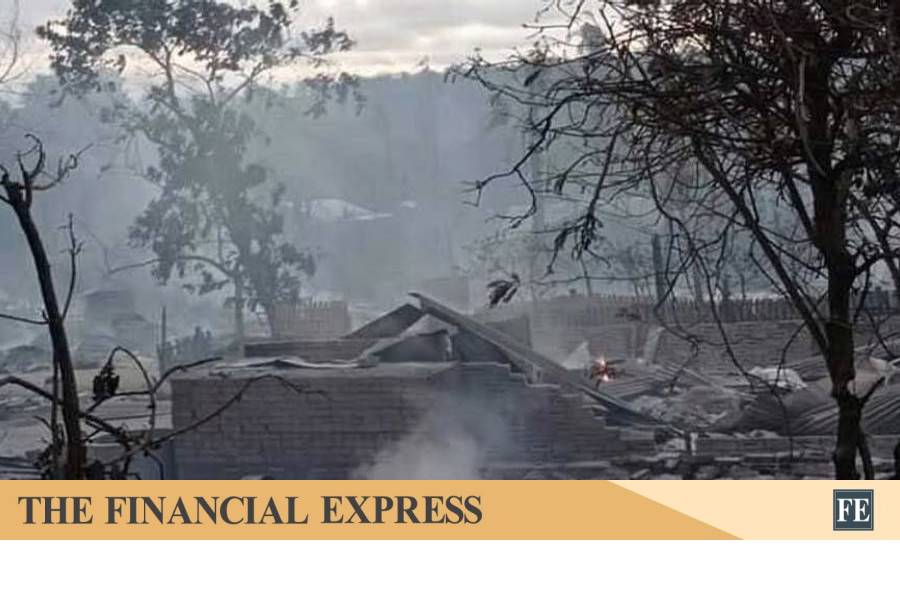
Representational photo: A view shows burnt houses in Kin Ma Village, Pauk Township, Magway Region, Myanmar Jun 16, 2021, in this picture obtained by Reuters from social media.

An American businessman who wrote a book about living through a military coup in Myanmar was detained on his return to the Southeast Asian nation on Thursday, according to two people briefed on the matter.

Adam Castillo, a former head of the American Chamber of Commerce in Myanmar who is based in Yangon where he runs a security firm, was stopped at an airport after travelling to the country, one of the people said.

A US State Department spokesperson said it was aware of reports of the detention of an American in Myanmar but had no further comment “due to privacy concerns”.

A spokesperson for the military-backed government did not immediately respond to requests for comment.

Castillo had been abroad promoting his book, Finding Our Voice, about staying in Myanmar following the 2021 coup that threw the country into turmoil, according to social media posts.

The military’s power grab ended a brief experiment in democratic rule under Nobel laureate Aung San Suu Kyi, and sparked a civil war between the army and a coalition of pro-democracy armed resistance forces allied to long-established ethnic minority groups.

In early April, former junta chief Min Aung Hlaing ⁠was sworn in as the country’s president, following a widely criticised, military-engineered election that excluded the main opposition groups, including Suu Kyi’s political party, and was conducted in the throes of conflict.

Castillo, a former US Marine, last year visited the White House and suggested to officials that the United States play a peace-broker role with a view to accessing rare earth minerals, Reuters reported.

His book chronicles the military’s bloody crackdown on pro-democracy protesters but also criticises Washington’s policy, including sanctions, as ineffective and advocates for more business engagement.​
 

Why Does the US stock market exceed GDP?

Abdullah A Dewan

Published :
Jun 21, 2026 00:09
Updated :
Jun 21, 2026 00:09

1782086370051.webp


One of the more intriguing facts in modern economics is that the value of the United States (US) stock market substantially exceeds the country's annual Gross Domestic Product (GDP), while in many other nations' stock market capitalisations and GDPs are roughly equal. At first glance, this appears paradoxical. How can the value of listed companies exceed the value of everything produced in a year?

The answer lies in the fundamental difference between what GDP measures and what stock markets value. GDP is an annual flow of goods and services produced within a country's borders during a single year. Stock market capitalisation, by contrast, is a stock measure representing the discounted present value of expected future profits. One measures current production; the other measures future earning power. Because stock markets look forward while GDP looks backward, a substantial gap between the two is not only possible but often expected.

A second distinction is that GDP measures economic activity occurring within national borders, whereas stock market capitalization reflects the value of companies wherever they earn their profits. American corporations generate substantial revenues and profits throughout the world. Apple, Microsoft, Nvidia, Alphabet, Amazon, and Meta derive a significant share of their earnings from international markets. GDP captures only the portion of their activities occurring within the US, while market capitalization reflects investors' expectations regarding future profits generated across the globe. In effect, US stock valuations incorporate worldwide income streams that never appear in US GDP statistics.

Using year-end 2025 estimates, the US stock market was worth about $69 trillion, while GDP was roughly $31 trillion, producing a market-cap-to-GDP ratio near 221 per cent.

The phenomenon can also be understood through the smile curve of value creation. The greatest profits are often captured at the two ends of the production process: research and development on one side, and branding, marketing, finance, logistics, and distribution on the other. The middle-the physical manufacturing and assembly stage-typically earns the smallest share of value added. Many American firms dominate these highly profitable ends of the smile curve. Their market valuations therefore reflect control over ideas, technology, intellectual property, software ecosystems, global brands, and financial networks rather than merely the value of physical goods produced. Countries that primarily occupy the manufacturing middle of the smile curve may generate substantial output yet capture only a modest share of the profits.

This distinction highlights the growing importance of intangible capital. Traditional economies were built upon factories, machinery, land, and physical infrastructure. Today's leading corporations increasingly derive their value from patents, algorithms, software, data, trademarks, and intellectual property. Unlike physical assets, these intangible assets can be scaled globally at very low marginal cost. A steel mill can produce only so much steel, but a software platform can add millions of users without constructing another factory. Financial markets place high valuations on such scalable future earnings, causing market capitalization to rise far faster than GDP.

The depth and sophistication of financial markets further magnify this effect. The U.S. possesses the world's largest, most liquid, and most trusted capital markets. Pension funds, mutual funds, insurance companies, sovereign wealth funds, and individual investors from around the world continuously channel savings into American equities. This enormous pool of capital increases demand for shares and supports higher valuations than would be expected from domestic GDP alone.

Institutional quality also matters. Investors place a premium on countries with reliable property rights, transparent accounting standards, independent courts, strong corporate governance, and predictable regulatory environments. Future profits are worth more when investors have confidence that those profits will be protected and enforceable. The rule of law, therefore, acts as a valuation multiplier. Countries with weaker institutions often experience lower stock valuations even when their economies are productive.

Another frequently overlooked factor is the way corporations are financed. The US relies heavily on public equity markets to fund business expansion. Much of corporate wealth therefore becomes visible through stock exchanges. By contrast, countries such as Germany traditionally rely more on bank-centered financing. Many highly successful firms remain privately held, family-owned, or financed through commercial banks rather than public stock markets. These firms contribute significantly to GDP but do not appear in market-capitalization statistics. Consequently, stock market value remains closer to GDP even though economic performance may be strong.

Pension systems also influence market size. In the US, retirement savings flow heavily into 401(k) plans, IRAs, mutual funds, and pension portfolios invested in equities. This creates a continuous institutional demand for stocks. In countries with large state-funded pay-as-you-go pension systems, household savings often bypass equity markets altogether. The result is a smaller stock market relative to GDP.

Interest rates provide another important explanation. Stock prices reflect the present value of future earnings. Lower interest rates reduce the discount rate applied to those earnings and thereby increase stock valuations. Over the past several decades, the U.S. has benefited from relatively low borrowing costs and deep capital markets. Investors have consequently been willing to pay higher multiples for future growth. Higher interest-rate environments generally produce lower market valuations relative to GDP.

The dollar's status as the world's principal reserve currency amplifies all these forces. Governments, central banks, corporations, and investors around the world hold dollar-denominated assets as stores of value. As global savings flow into American financial markets, US equities enjoy a structural valuation premium unavailable to most other countries. The world's confidence in the dollar effectively raises the value of American financial assets beyond what domestic economic activity alone might justify.

The distribution of income between labour and capital also matters. Countries with identical GDP levels can exhibit very different stock market valuations depending on how national income is divided. Where a larger share of economic output accrues to corporate profits, stock market capitalization naturally rises. Where more output flows to wages, social programs, or public-sector expenditures, stock market valuations tend to be lower. The Anglo-American economic model generally channels a larger share of income toward corporate earnings than many continental European systems, contributing to higher equity valuations.

International comparisons illustrate these differences clearly. Switzerland frequently records stock market capitalisation well above GDP because of globally dominant pharmaceutical and financial firms. Germany, despite its formidable industrial strength, often exhibits a lower ratio because many successful enterprises remain privately owned. Australia's ratio tends to hover closer to GDP because its market is concentrated in banking and natural-resource companies. China, despite possessing one of the world's largest economies, typically maintains a lower ratio than the U.S. because of state ownership, regulatory constraints, and differences in capital-market development.

Taken together, these factors reveal that the ratio of stock market capitalisation to GDP is far more than a financial statistic. It serves as a window into how nations create, capture, and retain economic value. Countries concentrated in manufacturing, commodities, agriculture, and domestic services may produce large volumes of output yet capture a smaller share of global profits. Countries that dominate innovation, intellectual property, software, finance, branding, and global distribution occupy the profitable ends of the smile curve and retain a disproportionate share of value added.

A further insight emerges from these international comparisons. Wealth alone does not create an extraordinarily large stock market. Many countries are wealthy because of natural resources, yet their market capitalisation remains relatively close to GDP. The distinguishing factor is often innovation. For example, a barrel of oil produces income once; a patented technology can produce income repeatedly for decades. A factory expands output incrementally; a software platform can serve millions of additional users at minimal cost.

Viewed through this lens, the gap between stock market capitalisation and GDP is not merely a measure of financial wealth, but a measure of where economic power resides. In a well-functioning economy, GDP growth and stock market value often reinforce one another, yet the decisive factor is not the volume of current output but the ability to transform knowledge, technology, and intellectual property into scalable future earnings.

In the twenty-first century, value increasingly belongs not to those who merely manufacture products, but to those who create ideas, control technology, own brands, and command the global channels through which value flows. The stock market therefore reflects not simply what an economy produces today, but what investors believe will continue to earn tomorrow. That is why America's market capitalization towers over its GDP, while many other nations remain much closer to parity.

Dr Abdullah A. Dewan is Professor Emeritus of Economics at Eastern Michigan University (USA); former physicist and nuclear engineer at the Bangladesh Atomic Energy Commission (BAEC).​
 

Top US court rejects Trump bid to restrict birthright citizenship
Agence France – Presse . Washington, United States 30 June, 2026, 21:31

1782865111270.webp

Donald Trump | AFP photo

The US Supreme Court on Tuesday rejected Donald Trump’s historic bid to restrict birthright citizenship.

The court, in an eagerly awaited decision on the final day of its term, ruled 6-3 to maintain the right to American citizenship for nearly everyone born on US soil.

Trump signed an executive order last year on the first day of his second term in the White House decreeing that children born to parents in the United States illegally or on temporary visas would not automatically become US citizens.

Lower courts blocked the move, ruling that under the Citizenship Clause of the 14th Amendment nearly everyone born on US soil is an American citizen.

The Supreme Court agreed in a majority opinion penned by Chief Justice John Roberts.

‘Children born in the United States to parents unlawfully or temporarily present are ‘subject to the jurisdiction’ of the United States and are citizens at birth under the Fourteenth Amendment’s Citizenship Clause,’ Roberts wrote.

In an unprecedented move for a sitting US president, Trump personally attended oral arguments on birthright citizenship at the Supreme Court in April.

Trump stayed for the presentation by his solicitor general, John Sauer, but did not remain for the arguments of American Civil Liberties Union (ACLU) attorney Cecillia Wang, who defended birthright citizenship.

Trump’s bid to end birthright citizenship was part of his wider campaign to restrict immigration, which includes the expulsion of millions of undocumented migrants.

During oral arguments before the Supreme Court, Sauer argued that unrestricted birthright citizenship encourages illegal immigration and ‘birth tourism,’ in which foreigners come to the United States solely to give birth.

The 14th Amendment states that ‘All persons born or naturalised in the United States, and subject to the jurisdiction thereof, are citizens of the United States.’

It does not apply to those not subject to US jurisdiction -- the children of foreign diplomats, for example.

The Trump administration argued that the 14th Amendment, passed in the wake of the 1861-1865 Civil War, addresses citizenship rights of former slaves and not the children of undocumented migrants or visitors.

Trump’s executive order banning birthright citizenship was premised on the notion that anyone in the United States illegally, or on a visa, is not ‘subject to the jurisdiction’ of the country and therefore excluded from automatic citizenship.

The Supreme Court rejected such a narrow definition in a landmark 1898 case involving a man named Wong Kim Ark, who was born in San Francisco in 1873 to parents who had come to the United States from China.

After a visit to China, Wong Kim Ark was denied reentry into the United States in 1895 under the Chinese Exclusion Acts.

The Supreme Court ruled, however, that he was a US citizen by virtue of being born in the United States.

The Supreme Court’s rejection of Trump’s bid to end birthright citizenship is the third major loss for Trump this term. The justices struck down most of his global tariffs in February and on Monday they blocked his bid to fire Federal Reserve governor Lisa Cook.​
 

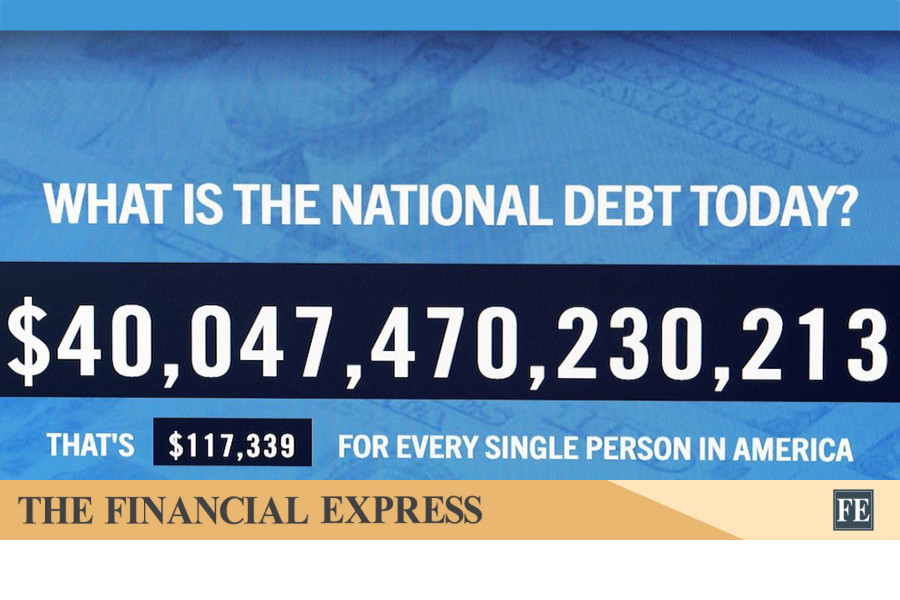
US debt crosses $40 trillion threshold after doubling under Trump and Biden

1787354814454.webp
 

25 years after 9/11, how did the ‘war on terror’ change the US?

Ali Riaz

1789110768518.webp

A firefighter fixes a photo of a first responder lost at the 9/11 attacks during the Fire Department of the City of New York’s memorial service, ahead of the 25th anniversary of the September 11, 2001 attacks on the World Trade Center. PHOTO: REUTERS

Today marks the 25th year of the attacks on the United States by the transnational terrorist organisation Al-Qaeda. In the past quarter of a century, the attacks and subsequent events have brought profound changes in the global arena and transformed the state and society in the United States.

We witnessed the so-called Global War on Terror by the US and its allies leading to the invasion of Afghanistan, occupation of Iraq, decimation of the base of the Al-Qaeda in Afghanistan, consequent proliferation of its offshoots throughout the world, the rise and demise of the Islamic State in Iraq and Syria (ISIS). Many autocratic regimes joined the bandwagon to use the pretext to persecute its legitimate opponents. Thousands have died, been maimed and displaced in various wars, in attacks by violent extremist organisations, as well as during “domestic security operations.”

We experienced blatant violations of international norms and laws in establishing secret detention centres known as “black sites” and normalising torture. Islamophobia spread and was justified in the name of national security; Muslims were painted as enemies. Countries considered consolidated democracies, especially in Europe, enacted laws limiting fundamental rights and privacy; violations of human rights of minorities were ignored. Countries where Muslims are minorities have seen their marginalisation, as “majoritarianism” became the key principle of governance. These developments provided an opportunity to some countries, such as China, to engage in en-masse detention of Muslims.

The global repercussion has continued for decades and its long-lasting impacts continue. Not only was the behaviour of states changed as to how they use force, but also engendered debates in international relations on the use of force without UN authorisation. Within the Muslim community, ideological divides and disputes became more visible. Sectarian rifts, such as the Shia-Sunni divide, and the differences between various madhhabs and maslaks, became issues of discussion, at times leading to a rise in conflict and violence. The question of acceptability of violence from an Islamic perspective created fissures while the participation of ulema, Islamic thinkers, academics, and political activists brought different perspectives to the fore. The rhetoric against Muslims, especially portraying them as outsiders and threats to security, by governments in Europe contributed to the growth of xenophobia. Although white supremacist ideas were not new, these developments contributed to the mainstreaming of white supremacist ideas and organisations in the long run.

Along with these changes in the state structures, laws, and governance around the globe, the United States has also witnessed changes in society and government. Some were dubbed as “temporary” and ensued immediately after the September 11, 2001 attacks. Many of the changes that occurred within the state and society of the US have been crystallised into permanent measures and institutions. For example, although the Patriot Act in 2001, which temporarily granted the government unrestricted wiretapping powers formally expired in 2020, many of its core provisions had been codified into permanent law. The violation of citizens’ privacy under a law has been normalised in the name of “security.”

The creation of the Department of Homeland Security in 2002, followed by Immigration and Customs Enforcement (ICE) in 2003, are other examples. Over the past few years, ICE has morphed into a terrifying entity not only for immigrants, but even for natural-born US citizens.

While the US has maintained military bases globally since the 1960s, after 2001, the nation seems to have institutionalised the concept of “forever war.” The legal framework for the war was granted to the president by Congress in 2001 and was known as the 2001 Authorization for Use of Military Force (AUMF). Similar powers granted before and after this AUMF have since expired, but the 2001 authorisation remains active. Consequently, the US has been engaged in military actions in many countries, at any time, under the pretext of fighting terrorism. Since 2001, the number has grown exponentially.

Between 2021 and 2023, the US conducted various operations in 78 countries under the banner of counter-terrorism cooperation; it was in 85 countries between 2018 and 2020. It is because of this framework that a forever war feels acceptable to a large portion of US citizens.

To sustain such endless wars, enemies must be manufactured—both at home and abroad. How deeply this concept of the “enemy” is ingrained in the US psyche, how deeply it has permeated the society, not only regarding enemies outside but the “enemy within,” is reflected in the majority’s opinion of Islam and Muslims. Recent Pew Research Center surveys show that in 2001, 25 percent of citizens believed that Islam encouraged violence more than other religions; in a survey conducted in May this year, that number stood at 51 percent. Furthermore, 43 percent of respondents expressed doubts about the patriotism of Muslims in the US.

These developments related to perceived security have increasingly given unrestricted power to executives. Much of the power ceded to the executive branch under the pretext of emergency after 2001—from the Patriot Act to various administrative measures—still resides with the executive branch, thus undermining the power of the legislative branch.

One of the most profound shifts bearing on the daily lives of citizens has been the militarisation of the police. As the US engaged in more wars, surplus military weaponry was brought back home and repurposed. The federal government facilitates this through two initiatives: the 1033 and 1122 programmes. The 1033 programme allows the US Department of Defense to transfer military equipment to police departments free of charge. As of 2020, approximately 65 percent of the 18,000 law enforcement agencies in the country received equipment through this programme. The 1122 programme allows law enforcement to purchase military gear using their “own funds” (taxpayer money) at heavily discounted military rates. Equipment includes ammunition, assault weapons, and tactical armoured vehicles. As many police forces now patrol with this gear, their behaviour on the streets often appears inherently lethal.

As the US commemorates the 25th anniversary of the most devastating attacks on its soil, it will remember those who died on that day and those who lost their loved ones. There will be discussions as to what has been learned, not learned or forgotten. But it should also be an opportunity to examine what lasting changes have taken place, and how these changes have limited the scope of liberty, curtailed the rights of the people, weakened their privacy, and hindered the principle of “justice for all.”

Ali Riaz is distinguished professor of political science at Illinois State University in the US. He previously served as a special assistant to the chief adviser of the Interim Government of Bangladesh and in the Constitution Reform Commission and National Consensus Commission.​
 

'Never, ever forget' - America marks 25th anniversary of 9/11 attacks


1789192060277.webp

The Wall of Names at Flight 93 National Memorial in Pennsylvania

Twenty-five years after 9/11, US presidents past and present have commemorated the lives lost when hijacked planes slammed into the World Trade Center, the Pentagon and a Pennsylvania field.

President Donald Trump led a Pentagon ceremony, while US Vice-President JD Vance attended a memorial at the site of the World Trade Center in New York, along with all four living former US presidents and first ladies.

Moments of silence were held to mark the timings of the attacks and the names of nearly 3,000 people who died were read out.

Two beams of light illuminated the Manhattan sky for a Tribute in Light on Friday evening, as other landmarks in the state lit up in blue in commemoration.

George W Bush, who was president at the time of the attacks, was joined by former Presidents Joe Biden, Barack Obama and Bill Clinton at Friday's ceremony at the World Trade Center site.

At the Pentagon, President Trump attended a commemoration alongside cabinet secretaries and Condoleezza Rice, who was national security adviser on 9/11.

"Today we renew the sacred oath that we first swore in their names a quarter of a century ago," Trump said. "We will never, ever forget. That's why we fight today."

He sought to link the "war on terror" that followed 9/11, which sparked years of US involvement in Middle East wars, with his current conflict in Iran.

Trump told the crowd that the Islamic Republic "will never, ever have a nuclear weapon".

Commemorations were also held in Shanksville, Pennsylvania, where Flight 93 crashed after passengers fought back against the hijackers.

Janice Brooks had only moved to New York a couple of weeks before 9/11 to begin what she calls "the biggest adventure", working for a company on the 84th floor of the South Tower of the World Trade Center.

She told the BBC she was in the office when the first plane hit the North Tower. While she was evacuating, the second plane hit with an "almighty thud".

Brooks said she heard "one of those horror film screams" as a woman was hit by debris. She looked up and saw a "big gaping hole" where her office should have been.

Every year on 11 September, bells ring to commemorate the exact time that each of the four planes crashed, and the exact time the Twin Towers fell.

Each of the six bells is followed by a moment of silence.

This year, a seventh bell was rung to commemorate the thousands who died from diseases including cancer after the attacks.

Illnesses related to dust and smoke from the towers' collapse have since claimed more than threefold the nearly 3,000 lives lost in the attacks, US health officials say.

As the names of the dead were read out for nearly four hours at the ceremony in Manhattan, a 9/11 widow criticised Saudi Arabia and what she characterised as failures by US officials to hold the kingdom accountable.

"You are missed more with each year that passes," Terry Strada said of her husband Tom Strada in remarks broadcast live worldwide.

"But how can it be 25 years and still we have no justice for the role that Saudi Arabia played in your murder?"

The comments by Strada, national chairperson of 9/11 Families United, drew applause from the audience.

The majority of those who carried out the 9/11 attacks were from Saudi Arabia and planning was led by al-Qaeda founder Osama Bin-Laden, scion of a prominent Saudi family.

But Saudi officials have repeatedly denied any involvement in the attacks, and in 2004 the 9/11 Commission Report "found no evidence that the Saudi government as an institution or senior Saudi officials individually funded" al-Qaeda.

Events were also held elsewhere to honour the victims. In London, there was a ceremonial event at Buckingham Palace attended by Foreign Secretary Ed Miliband and the US ambassador Warren Stephens.

The Toronto Stock Exchange also held an event to remember colleagues who died in the attacks.

In Gander, Newfoundland, the US ambassador to Canada praised the small town that took in thousands of passengers from 38 diverted planes in the hours after the attack.

"When people in America hear the word Gander, our hearts soften," Pete Hoekstra said.

"As a representative of the United States government, thank you for your friendship... to the nation of Canada, thank you for being a partner and for the shared sacrifices that you made with us."

His remarks come amid fraught relations between the US and Canada, with the two countries engaged in a trade war. Ahead of the 9/11 commemorations, some Gander residents had called for Hoekstra's invite to be rescinded.

Still, Hoekstra's speech was met with applause. But in separate remarks afterwards, former Canadian Prime Minister Jean Chrétien said: "I have message for American friends... never mistake our generosity for weakness." He received a standing ovation.

In Milan, a group of Italian and US firefighters participated in a ceremonial stair climb to honour the emergency responders who died in the line of duty.

Dressed in their uniforms and carrying equipment, they climbed 110 floors up and down the Galfa Tower, in remembrance of the number of storeys on each of the Twin Towers.​
 

Latest Posts

Back