Home Watch Videos Wars Movies Login

[🇧🇩] The U.S.A.---A Strategic Partner of Bangladesh

[🇧🇩] The U.S.A.---A Strategic Partner of Bangladesh
238
11K
More threads by Saif

G Bangladesh Defense

Govt, AmCham to work together to attract additional $5.0 billion US investment in five years


1789254010781.webp


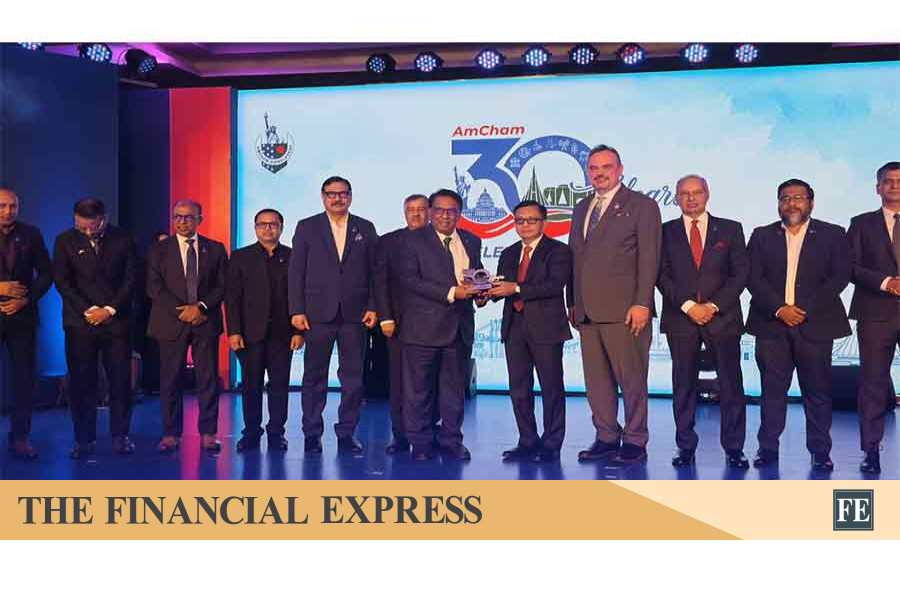
The government and the American Chamber of Commerce in Bangladesh (AmCham) will work together to attract an additional $5.0 billion in US investment into Bangladesh over the next five years, Commerce Minister Khandaker Abdul Muktadir said.

"The government is fully prepared to work closely with US institutions to boost investment, create employment, transfer technology, and expand economic opportunities in Bangladesh," he said.

He made the remarks while speaking as chief guest at the 30th anniversary celebration of AmCham Bangladesh, held at Radisson Blu Water Garden ballroom in the capital on Saturday.

US Ambassador to Bangladesh Brent T Christensen, AmCham President Syed Mohammad Kamal, Vice President Alauddin Azad, former presidents, current and former executive committee members, officials from various ministries, business leaders, and media personnel were present at the event.

The Commerce Minister stated that over the past three decades, AmCham has played a vital role in developing economic relations between Bangladesh and the United States, serving as an effective bridge between the government and the private sector.

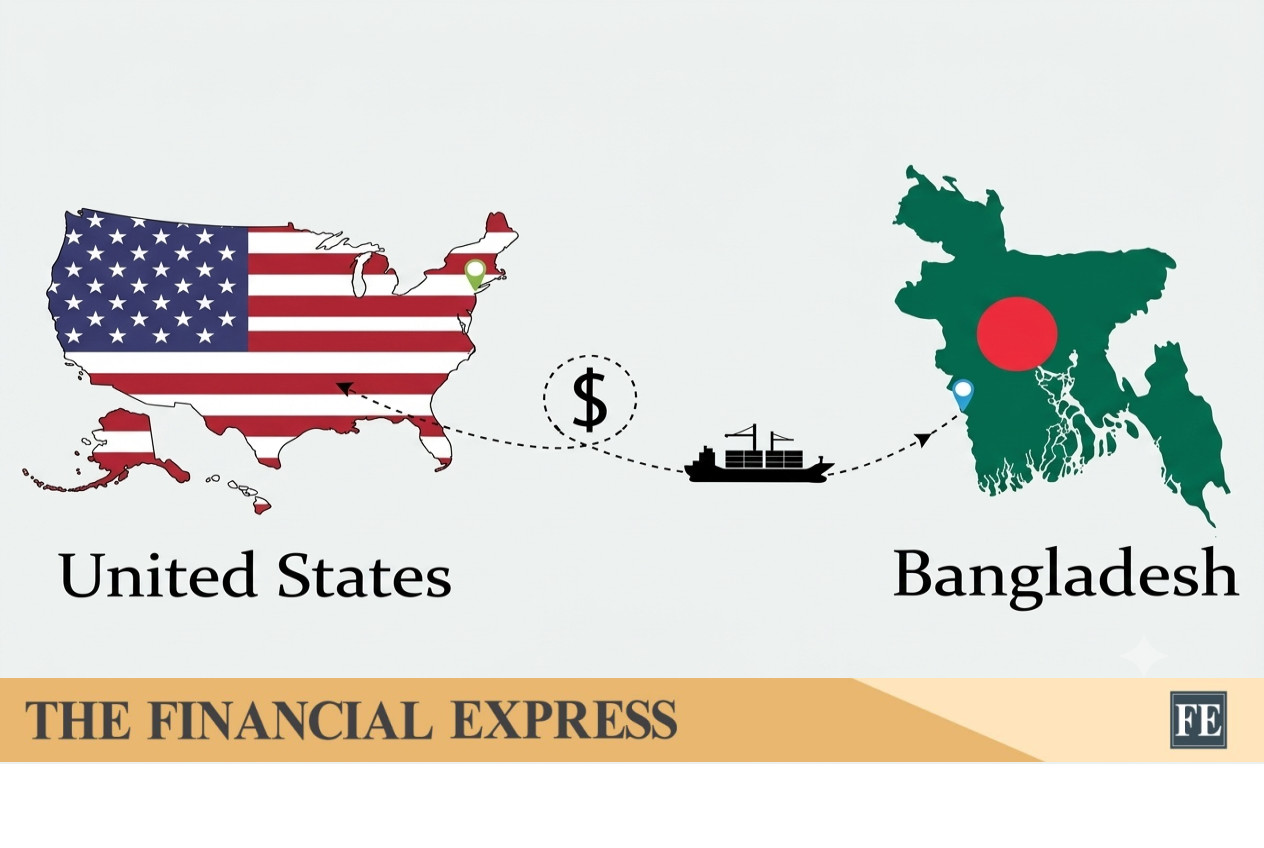
Bilateral trade between Bangladesh and the US currently exceeds $13 billion.

However, the minister noted that this relationship extends beyond trade statistics, as US institutions contribute significantly to Bangladesh's development through investment, technology, employment, knowledge, and global best practices.

He informed that AmCham member institutions have invested over $5.0 billion in Bangladesh and contribute more than 20 per cent to the national revenue, reflecting the confidence of US businesses in the Bangladeshi economy.

He added that during a recent meeting with the Prime Minister, AmCham leaders expressed their intent to bring an additional $5.0 billion in US investment over the next five years, assuring that the government will provide necessary cooperation to realize this initiative.

"When any genuine business issue is brought to us, my ministry and the government will try their utmost to find realistic solutions," the minister assured.

Citing an example, he mentioned 'Corteva Bangladesh', an AmCham member firm, noting that a complexity regarding its industrial and commercial license was resolved within a month through government initiative.

Describing Bangladesh as a country with vast investment potential, he highlighted its strategic location, young and skilled workforce, large domestic market, and strong potential across sectors including technology, digital innovation, healthcare, manufacturing, and financial services.

However, noting that opportunities alone are not enough to attract investment, he emphasised that investors require predictability, ease of doing business, efficient trade facilitation, and a stable policy framework.

The government is working to simplify business processes, increase digitalisation, expand trade facilitation, and create a more investment-friendly environment.

Regarding future economic ties, the Commerce Minister expressed hope that the next chapter of the Bangladesh-US economic partnership will be even more promising, with more US firms investing in Bangladesh, modern technology and global expertise being integrated, and access for Bangladeshi products and services to the US market expanding further.

Achieving this goal, he noted, requires a strong partnership among the government, business community, investors, development partners, and organisations like AmCham.

Describing AmCham's 30th anniversary as an opportunity to create new future possibilities, the minister urged everyone to work together for more trade, investment, innovation, new jobs, and a stronger, lasting economic partnership between Bangladesh and the United States.​
 
Analyze

Analyze Post

Add your ideas here:
Highlight Cite Respond

US keen on investing in Bangladesh’s LNG storage and regasification sectors


The release further said the commerce minister supported increasing US investment in Bangladesh, ensuring transparency in major infrastructure projects and making the business environment more conducive to investment.

Special Correspondent
Dhaka

1789255177884.webp

US Ambassador to Bangladesh Brent T Christensen (R) calls on Bangladesh's Commerce, Industry, and Textiles and Jute Minister Khandaker Abdul Muktadir at the FBCCI office in Motijheel, Dhaka, on 7 September 2026

US Ambassador to Bangladesh Brent T Christensen (R) calls on Bangladesh's Commerce, Industry, and Textiles and Jute Minister Khandaker Abdul Muktadir at the FBCCI office in Motijheel, Dhaka, on 7 September 2026Courtesy: Commerce Ministry.

The United States is interested in investing in floating LNG terminals, or Floating Storage and Regasification Unit (FSRU) projects, in Bangladesh.

US Ambassador to Bangladesh Brent T Christensen has stressed the importance of ensuring a transparent and competitive environment for implementing such projects.

The ambassador expressed the interest during a meeting with Commerce, Industry, and Textiles and Jute Minister Khandaker Abdul Muktadir at the FBCCI (Federation of Bangladesh Chambers of Commerce and Industry) office in Motijheel, Dhaka, on Monday.

Industry Secretary Abdun Naser Khan, Commerce Ministry Joint Secretary Md Mustafizur Rahman and US Embassy Economic Chief Angelo Palazzello were also present at the meeting. The Commerce Ministry disclosed the information in a press release issued after the meeting.

According to the release, referring to the FSRU project, the US ambassador said maintaining a transparent and competitive environment for major infrastructure projects would further boost foreign investors’ confidence.

He said US companies were highly interested in working in Bangladesh and stressed the importance of giving them an opportunity to compete on an open and equal footing.

In response, Commerce Minister Khandaker Abdul Muktadir said proposals from US companies would be given the highest priority if they could implement FSRU projects quickly and demonstrate their capacity to ensure supply.

If they could offer an effective supply plan within a shorter timeframe, their position in the competition would be further strengthened, he added.

The release further said the commerce minister supported increasing US investment in Bangladesh, ensuring transparency in major infrastructure projects and making the business environment more conducive to investment.

The meeting also discussed expanding bilateral trade, partnership in the energy sector and recent policy reforms.

Bangladesh has decided to import a total of 117 LNG cargoes, or shiploads of LNG, from the United States over 13 years, from 2026 to 2038.

US Ambassador Brent T Christensen described the agreement with international LNG supplier Gunvor USA LLC as a positive step towards energy cooperation.

According to the release, the commerce minister also raised with the ambassador the government’s decision to scrap the previous requirement for foreign companies to appoint local agents when purchasing strategic equipment.

He said the move had restored transparency to the procurement process by creating opportunities to deal directly with manufacturers and had curbed the influence of middlemen. The government was working with the protection of national interests as its highest priority in every case, he said.

The US ambassador praised several positive changes in the new import policy. However, he said some provisions of the policy could be made more business-friendly.

In response, the commerce minister said the import policy was an ongoing process. Necessary reforms were being reviewed regularly to ensure that the policy remained aligned with market conditions and economic realities.​
 
Analyze

Analyze Post

Add your ideas here:
Highlight Cite Respond

US envoy Christensen visits Bangladesh Data Center
Staff Correspondent 15 September, 2026, 11:56

1789862204072.webp

US Ambassador to Bangladesh Brent Christensen, accompanied by Oracle country head Rubaba Dowla, visited the Bangladesh Data Center Company Ltd facility at Kaliakoir in Gazipur on Monday | Collected photo

US ambassador to Bangladesh Brent Christensen has said American companies are ready to compete, invest, and deliver world-class innovation to power Bangladesh’s digital future.

‘Partnerships matter. Bangladesh government Cloud powered by Oracle stands as a clear example of American innovation, bringing top-tier technology to the country,’ he said in a Facebook post on Tuesday.

Early on Monday, Christensen visited the Bangladesh Data Center Company Ltd facility at Kaliakoir in Gazipur.

The BDCCL, a government-owned data storage and disaster recovery services provider, has equipped its data centres with the Oracle Cloud Infrastructure Dedicated Region. The centre was launched in 2024.

With the OCI Dedicated Region, more than 30 government agencies in Bangladesh can develop and innovate using the full range of Oracle's cloud services, while adhering to governance, regulatory compliance and data privacy requirements.

In his post, Christensen said the importance of strong partnerships is immeasurable.

‘The Bangladesh government's cloud-powered initiatives, driven by Oracle technology, are a shining example of American innovation, bringing cutting-edge technology to Bangladesh,’ Christensen said.

To drive Bangladesh's digital future, the country is ready to embrace American companies that are committed to competition, investment, and world-class innovation, he added.​
 
Analyze

Analyze Post

Add your ideas here:
Highlight Cite Respond

Why Bangladesh must reconsider its trade agreement with the US

M.G. Quibria

Some trade deals are negotiated. Others are simply accepted. Bangladesh's Agreement on Reciprocal Trade (ART) with the United States, signed in the last frantic days of an interim government, looks unmistakably like the second kind. And seven months later, Dhaka is still making commitments under a bargain whose legal foundations have crumbled twice.

An old grievance, formalised

The programme that produced it began on April 2, 2025, when President Trump unveiled what his administration called "Liberation Day": country-by-country tariffs calculated using a formula publicly associated with trade adviser Peter Navarro and built around each nation's trade surplus with the United States. According to Regime Change, the 2026 book by New York Times reporters Maggie Haberman and Jonathan Swan, when the President found the competing economic estimates from Navarro, Treasury Secretary Scott Bessent and Commerce Secretary Howard Lutnick unsatisfying, he turned to aide Natalie Harp to produce numbers closer to what he already intuitively believed, undercutting any claim to scientific rigour in how the tariff rates presented on Liberation Day were determined. Indeed, the President's instinct behind the policy was long-standing. In a full-page advertisement in the New York Times, the Washington Post and the Boston Globe on September 2, 1987, Trump argued that America's allies were free-riding on US trade and defence policy and ought to pay for it. Thirty-nine years later, the same argument animates the reciprocal tariff programme.

Out of that programme came the ART, the bilateral instrument Washington has used to reset tariff terms one country at a time. Partners could be classified into five rough groups: first, nations with a fully signed ART; second, nations with only a framework, still under negotiation; third, nations offered bespoke "strategic trade and investment" arrangements, such as Korea and Japan, instead of a standard treaty; fourth, Gulf states substituting investment pledges for any treaty; and fifth, nations where talks have broken down into open disputes. As of this writing, of the ten countries that have actually signed the ART, Bangladesh's agreement has the strongest claim to being the most one-sided. Not because any single clause is exotic; most of its mechanisms exist, in some form, in some other countries' agreements too. It is the aggregate, how the obligations stack up and the peculiar circumstances under which Dhaka signed at all, that sets it apart.

The ground shifts twice

The legal scaffolding beneath the tariff side of the ART programme has meanwhile been dismantled and rebuilt twice. On February 20, 2026, the Supreme Court ruled that the International Emergency Economic Powers Act (IEEPA) never authorised a president to impose tariffs at all, striking down the Liberation Day regime in its entirety, including the country-specific caps individual ARTs had negotiated. Within days, the administration invoked Section 122 of the Trade Act of 1974 to address a serious balance-of-payments crisis and imposed a flat 10% global surcharge, a stopgap capped by statute at 150 days. That, too, expired on schedule on July 24, 2026, and was replaced, without a day's gap in collections, by new Section 301 tariffs targeting inadequate enforcement of forced-labour import bans, set at 10% or 12.5% across sixty economies. A second Section 301 investigation, aimed at resetting rates based on "excess manufacturing capacity" across sixteen economies, including China and Vietnam, remains unresolved months past its own informal deadline, with its statutory window stretching into March 2027. Bangladesh, notably, is featured in both investigations.

Through all of this, the underlying non-tariff commitments inside the ARTs, including investment pledges, forced-labour provisions and standards recognition, have proven sturdier than the tariffs themselves, surviving as separate memoranda even as the specific rate attached to each deal was rebuilt from scratch: first under IEEPA, then Section 122, then Section 301. Against this backdrop of a legal foundation that keeps giving way, Bangladesh's bargain has to be understood.

1790057580853.webp

Workers operate in the sewing section of a factory in Narayanganj, Bangladesh. Photo: Reuters


A deal nobody can quite explain

The first puzzle is why, among South Asian nations, Bangladesh rushed to sign first. Looking back, it's hard to identify what that haste bought. If the goal was to lock in better terms than a slower negotiation might yield, the text doesn't bear that out. Its neighbours all declined to sign anything resembling a full ART and appear none the worse for their caution. Pakistan and Sri Lanka remain in active, unhurried negotiations, without conceding Bangladesh's terms. India operates under its own separate interim framework, despite being in the crosshairs of the Lindsey O. Graham Sanctioning Russia and Iran Act, which targets purchasers of discounted Russian oil and gas. More tellingly, Vietnam and the Philippines, both of which export far more to the United States and run considerably larger trade surpluses than Bangladesh, have signed no comparable agreement at all. If exposure to American tariff pressure were the deciding factor, those are the economies that should have moved first. Instead, it was Bangladesh, with lower exports and a smaller trade surplus, that signed the most sweeping and asymmetric text of the ten.

Signed by a government on its way out

Compounding the puzzle is the timing. Bangladesh signed its ART on February 9, 2026, under the outgoing interim administration of Dr Muhammad Yunus, three days before a national election that would replace it. No elected parliament debated or approved it before it was signed, and the new one has not scrutinised it since taking office. No one has clearly explained what economic or political calculus persuaded an interim government to lock in an open-ended trade relationship on its way out the door. Critics are right to call this what it is: a lame-duck administration locking its successors into commitments the country never had a chance to vote on. That charge doesn't apply to the other signatories, whose governments actually had a mandate to sign.

A textual imbalance without precedent

The imbalance is visible even in the drafting. One textual count in the Bangladeshi press noted that the ART uses 179 instances of the mandatory "shall", most of which are attached to Bangladeshi commitments. Such counts are an imperfect measure of substantive burden, but the broader text leaves little doubt about the direction of the obligations: Bangladesh promises considerably more than Washington does. No comparable analysis has been published for the other ARTs, so this is suggestive rather than a verified ranking.

The harshest penalty on the highest starting tariff

An analysis by the non-partisan think tank Peterson Institute for International Economics concludes that these ART deals were "built to push America's trade partners away from China". Bangladesh's agreement carries a non-market-economy clause, foreclosing new trade deals with countries the US designates as non-market economies, including China, Russia, Vietnam, Belarus and others, on pain of snapback tariffs. For Bangladesh, the non-market clause sits in the same maximum-severity tier as five other agreements, including Cambodia's and Guatemala's. What is unusual is what is riding on it: Bangladesh's original "Liberation Day" tariff was 37%, among the highest of any ART signatory, so a snapback would cost Dhaka more than almost any peer. It is, in effect, the same gun pointed at everyone, but loaded heaviest for Dhaka.

Reaching beyond tariffs

The agreement's obligations extend well beyond market access, reaching into Bangladesh's regulatory discretion, digital governance, procurement behaviour and its future room to manoeuvre with third countries. Its specific commitments include not contesting US export-tax rebates at the WTO and not applying VAT measures that discriminate against US goods. None of these mechanisms, taken individually, is exotic; versions appear in some other cases. What makes Bangladesh's case distinctive is the accumulation: a documented obligation imbalance without precedent, one of the highest snapback tariffs in the group and a signing process with no democratic mandate. Whether that combination makes it objectively "the worst" of the ten ARTs is a matter of interpretation.

1790057661086.webp

Biman Managing Director Kaizer Sohel Ahmed and Boeing Vice President Paul Righi sign a $3.7 billion deal for 14 aircraft in the presence of senior government officials, diplomats and aviation executives at a city hotel on April 30, 2026. Photo: Courtesy of Biman

An exchange that keeps getting more unequal

Post-signing developments have widened the imbalance, not narrowed it. Dhaka has kept expanding its Boeing commitments in a confusing sequence. Bangladesh raised its planned Boeing purchase from 14 to 25 aircraft in July 2025. Yet, on April 30, 2026, Biman Bangladesh Airlines formally ordered 14 jets, its largest-ever order, valued at about $3.7 billion. Then, on August 30, US envoy Sergio Gor announced that Bangladesh had committed "billions of dollars" to buy still more Boeing aircraft, "significantly increasing" its initial order, without identifying the number, models, price or contractual status of the additional planes. The next day, President Trump disclosed that Prime Minister Tarique Rahman had written to him concerning a Boeing purchase. Trump thanked Rahman for his "decision of purchase", adding, "Boeing will not let you down, and I will not forget." Yet Bangladeshi officials subsequently said that no separate agreement beyond Biman's 14-aircraft order had been signed. What additional purchase Trump was thanking Rahman for, and whether it represents a firm contract, a political commitment or merely an intention to buy more aircraft, therefore remains publicly unclear.

The contrast with Indonesia is instructive. Garuda Indonesia, negotiating a comparable Boeing commitment under its own ART, had still not signed a binding contract as of late 2026, while Indonesia's sovereign wealth fund warned that deliveries could take up to seven years, given Boeing's production backlog and unresolved financing questions. The Strategic Trade and Investment deals with Japan and Korea have been so large that the Wall Street Journal argues they will never materialise. The same uncertainty has been flagged with respect to the Gulf countries.

Bangladesh, by comparison, has moved faster and further, committing to more while securing less in return, even as its underlying agreement is, by most measures, the most lopsided of the treaties.
What makes the speed more striking still is what the process appears to have skipped over. Biman is, by its own numbers, in no position for a $3.7 billion wager: it loses money on most of its international routes, carries more than Tk 6,000 crore in unpaid dues to the Civil Aviation Authority and has turned a profit in only a few years of its existence. It is, in other words, a loss-making carrier committing to its largest-ever purchase on a timetable set by the seller and the geopolitics of a trade dispute, not by any internal business logic. A capital commitment of this magnitude would ordinarily trigger commensurate due diligence, including board-level risk assessment, fleet-financing review and route-profitability modelling. There is no evidence that any of this happened.

The pattern repeats in energy. On August 12, 2026, Bangladesh's cabinet cleared a twelve-year liquefied natural gas deal with Gunvor USA covering 117 cargoes, roughly 7.5 million tonnes, through 2038. The contract was awarded without competitive bidding, through an unusual state-to-state pricing formula negotiated with a private trading firm, and the government has defended it as prudent hedging against Qatar's own difficulties in meeting its LNG commitments amid regional tensions.

Meanwhile, the reciprocal side of the bargain remains thin to the point of translucence. Bangladesh's garment sector, which accounts for more than 85% of everything the country exports to the United States, now faces a real cumulative burden considerably higher than the headline figures suggest: the 10% Section 301 forced-labour duty stacks on top of an existing 15.6% MFN tariff on apparel, pushing the effective rate into the mid-20% range. In exchange, the US commitment on garments, under Article 5.3 of the agreement, remains only a promise to "establish a mechanism" for zero-tariff access tied to US-origin cotton and fibre, with no volume guarantees or deadline. Bangladesh is executing binding, multi-billion-dollar purchase commitments in real time against a promise that, more than half a year after signing, remains entirely undrawn and vague.

1790057712722.webp

An aerial view of the busy Chittagong Port container yard, a key hub for Bangladesh’s international maritime trade and garment exports. File photo: Rajib Raihan


A legal irony, and a democratic one

There is further legal ambiguity. The agreement contemplated domestic procedures before entry into force, and Washington's February announcement explicitly said those procedures remained to be completed. The striking point, therefore, is not that the ART "does not exist". It is that Dhaka has acted with more certainty than the underlying tariff regime warrants. Aircraft orders, LNG contracts and purchase pledges are all proceeding on schedule against a treaty that, strictly speaking, does not yet exist. The irony compounds: the agreement's own snapback clause authorises Washington to reimpose tariffs under Executive Order 14257 if Bangladesh defaults, but the Supreme Court has already struck that order down, and neither government has said what replaces it. Dhaka, in effect, is honouring the letter of a contract with no legal force, enforced by a threat that no longer exists.

A second irony is more political than legal. Bangladesh, as of this year, has once again emerged as a democracy. One might expect a vigorous parliamentary reckoning with a sweeping, open-ended trade deal signed by an outgoing, unelected administration. Dhaka also inherited a clear opening to ask whether the bargain still made sense once the legal foundation of Washington's original tariff threat collapsed. Instead, the commitments have continued and may be expanding. The mystery is no longer why Bangladesh signed such a deal. It is why, having gained both the democratic authority and the legal opening to reconsider it, Dhaka appears so reluctant to use either.

Dr M.G. Quibria is an economist and public policy commentator whose work explores trade, development, governance and democratic change in Bangladesh and beyond.​
 
Analyze

Analyze Post

Add your ideas here:
Highlight Cite Respond

Biman signs agreement with Boeing to buy 11 more aircraft: Mahdi Amin

1790220712190.webp


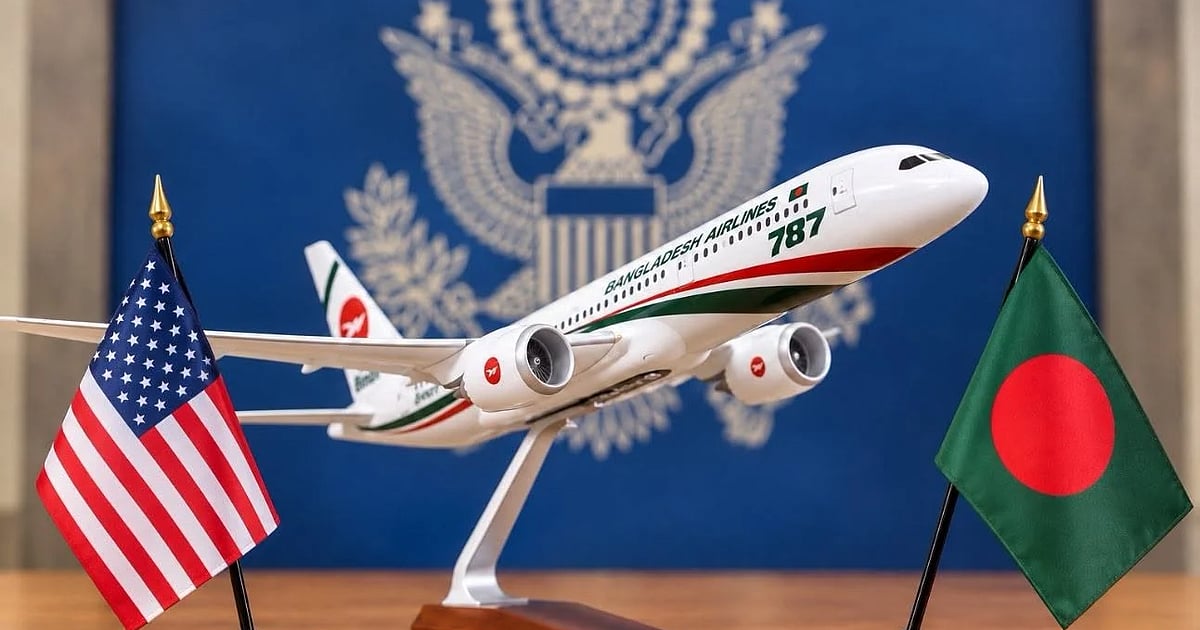
Biman Bangladesh Airlines has signed an agreement with US aircraft manufacturer Boeing to buy 11 more aircraft as Bangladesh moves to expand its aviation sector and open new routes, Prime Minister’s Adviser Mahdi Amin said on Wednesday.

“A significant signing ceremony was held with Boeing today [Wednesday], where Biman Bangladesh Airlines signed an agreement to purchase 11 more Boeing aircraft,” he said at a press briefing at the Hyatt Grand Central New York.

Mahdi said Biman Chairman Rumee A Hossain signed the agreement on behalf of the national flag carrier, reports UNB.

He said Bangladesh is buying aircraft based on its own requirements as the aviation sector is expanding. “We buy aircraft based on our needs. We want to expand our aviation sector, and for that we need aircraft,” he said.

The adviser said Bangladesh has a long-standing commercial relationship with Boeing, while discussions with Airbus could also take place based on the country’s requirements.

“The two companies that provide good aircraft are Boeing and Airbus. We will buy from Boeing or Airbus according to our needs. No one will force us to buy either,” he said.

State Minister for Foreign Affairs Humaiun Kobir said the signing ceremony was significant as several senior US government officials attended the event.


1790220769438.webp


US Secretary of Commerce Howard Lutnick, Deputy Secretary of State Christopher Landau, Under Secretary of Commerce William Kimmitt, Assistant Secretary of State for South and Central Asian Affairs Paul Kapur and Special Representative for Commercial and Business Affairs Vinay Chawla attended the ceremony.

Kobir said the presence of the senior US officials demonstrated the importance of Bangladesh-US relations.

He said the participation of senior officials from the US Commerce and State Departments showed that the two countries are looking at expanding trade and investment while strengthening bilateral relations.

Referring to President Donald Trump’s recent letter to Prime Minister Tarique Rahman, the state minister said the US president had expressed his appreciation for Bangladesh’s decision to purchase Boeing aircraft and conveyed confidence in the country’s future under Tarique Rahman’s leadership.

He said the Boeing agreement was also important from the perspective of expanding Bangladesh’s aviation sector and strengthening economic ties with the United States.

Mahdi said the Boeing delegation later held a courtesy meeting with Prime Minister Tarique Rahman.

In April, Bangladesh signed a deal with Boeing to purchase 14 aircraft for Biman in a deal valued at $3.7 billion, described as the airline’s biggest-ever aircraft order.

In a letter to Prime Minister Tarique Rahman on September 1, Trump thanked him for the decision to purchase Boeing aircraft and said Boeing would not let Bangladesh down.

Mahdi said technical assessments and discussions were also underway on possible future aircraft purchases, including from Airbus, based on Bangladesh’s requirements.

He said Bangladesh is expanding its aviation sector, planning new routes and will need additional aircraft to meet growing demand.

Kobir said Bangladesh will continue to assess its requirements before making further aircraft purchases, adding that the government wants to ensure that its aviation expansion serves the country’s interests.

The Boeing signing was among a series of activities during Prime Minister Tarique Rahman’s four-day visit to New York to attend the 81st session of the UN General Assembly.

The signing ceremony was attended by Brad McMullen, Boeing senior vice president of Commercial Sales and Marketing; Rumee A Hossain, chairman of Biman Bangladesh Airlines; Civil Aviation and Tourism Minister M Rashiduzzaman Millat; Kobir; Mahdi; Invest Bangladesh Authority Chairman Chowdhury Ashik Mahmud Bin Harun; Howard Lutnick; and Christopher Landau on the sidelines of the United Nations General Assembly.​
 
Analyze

Analyze Post

Add your ideas here:
Highlight Cite Respond

Making the BD-US trade deal work


1790221371356.webp


Bangladesh should view the US-Bangladesh Agreement on Reciprocal Trade, or ART, as more than a tariff arrangement. It is also an early test for the country how it will compete after leaving the United Nations' Least Developed Country (LDC) category. Signed on February 9 2026, the agreement links access to the US market with commitments on tariffs, labour, regulation, digital trade and economic security. LDC graduation will gradually reduce some of the trade preferences and policy flexibility that Bangladesh has long enjoyed. The formal graduation date remains November 24 2026, although Bangladesh has requested a three-year extension to 2029. Whatever the final date, the basic challenges will not change. Bangladesh must use the remaining time to build competitiveness that does not depend on special treatment.

Graduation gives rise to a few questions. Can Bangladeshi firms remain competitive when concessions are withdrawn or can an extension become a genuine reform window? An extension of the deadline for graduation would provide breathing space, but it would not solve weaknesses seen in areas of ports, customs, energy, finance or skills. Delay without reform would only shift the deadline. Used well, the extra time could support a shift from preference-based exports to rebate-based trade. This is a demanding transition, but Bangladesh hardly has the capacity to meet challenges. The task is to use the time-gap for raising productivity and strengthening the bargaining power. That is difficult, but achievable with due efforts and discipline.

How can Bangladesh use the US market without deepening export concentration? US Trade Representative data show that bilateral goods and services trade reached about US$ 13.7 billion in 2025. US goods imports from Bangladesh were about US$ 9.5 billion, while US goods exports to Bangladesh were about US$ 2.4 billion. This gives Bangladesh a strong base in ready-made garments, but also shows the risk of concentration. Protecting the access to US market matters, yet the larger objective should be to export higher-value apparel, manmade-fibre products, footwear, pharmaceuticals, light engineering, agro-processing and digital services. ART gives Bangladesh a practical reason to diversify faster.

Will the proposed textile quota create a commercially meaningful advantage? Since July 24 2026, most Bangladeshi goods have faced an additional 10 per cent US duty, subject to exemptions. The United States (US) has directed the establishment, when feasible, of three-year tariff-rate quotas for Bangladesh and several other countries. The quotas are to be linked to purchases of US cotton and textile inputs. Qualifying volumes of textile and apparel exports could then enter free of the additional Section 301 tariff.

This mechanism is promising, but its value will depend on design. A quota that is too small, difficult to use or limited to narrow products will offer little relief. Bangladesh should seek commercially meaningful volumes, simple documentation and coverage that reflect its export industry. Firms should also compare US inputs on price, quality and delivery time. The aim should be a supply chain in which tariff savings, input quality and traceability improve the final product's competitiveness.

Imports from the US can also support productivity. Machinery, energy, technology and better inputs may help firms upgrade production. But large commitments involving agriculture, energy and aircraft carry foreign-exchange and financing costs. Each purchase should be assessed for price, timing, financing, demand and its effect on the balance of payments. A trade agreement should expand useful exchange, not replace economic judgment.

The market access involves costs. Bangladesh has made wide commitments under ART. These cover tariff and non-tariff measures, intellectual-property protection, recognition of standards and conformity assessment, data flows, labour rights, environmental enforcement, customs procedures and cooperation on economic-security matters. Some of these reforms are valuable on their own. Faster customs, transparent regulation, credible labour enforcement and paperless trade can lower costs and strengthen trust in Bangladeshi suppliers. Better standards can also help exporters in markets beyond the United States.

Which ART commitments support reform, and which may narrow Bangladesh's policy space? Stronger intellectual-property rules can affect access to technology and medicines. Data-transfer rules raise questions about privacy, security and regulatory control. Economic-security provisions may influence dealings with third countries. Easier entry for US products may benefit consumers and efficient firms, but expose less prepared producers to sharper competition. These are reasons for careful implementation, public explanation and sector-by-sector assessment.

What should Bangladesh receive in return for each major concession? Every major Bangladeshi concession should be matched by a measurable gain. That gain might take the form of a larger textile quota, product exemptions, clearer rules of origin, reduced duties on priority exports, investment, technology transfer, development finance or more predictable market access. Broad promises are not enough. Government and business need to know what Bangladesh receives, what it gives up, who bears the adjustment cost and when the expected benefit is likely to appear.

Can one national reform programme meet the standards of several export markets? The 2025 strategy already emphasises macroeconomic stability, favourable trade arrangements, export diversification, stronger productive capacity and international partnerships. Many ART-related reforms also support post-LDC competition: modern customs, faster ports, reliable testing, stronger labour standards, traceable supply chains and cleaner factories. Managing these changes through one national programme would be cheaper and more effective than building separate compliance systems for the US, the European Union and other markets.

That programme should set visible priorities. Customs reform should reduce clearance time. Ports should publish performance measures. Testing and certification bodies should gain international acceptance. Labour reform should protect workers while giving responsible exporters a credible record. Energy and banking reforms should help productive firms invest. Small and medium-sized exporters will need technical support because compliance costs can otherwise push them out of higher-value markets.

Bangladesh should also avoid replacing dependence on trade preferences with dependence on one market. Negotiations with Washington should seek better access and practical cooperation, but policy must remain open to other partners. Preparation for the European Union's GSP-plus scheme, deeper trade links with Asian markets and stronger regional supply chains are necessary safeguards. A wider market base will give exporters more options and reduce the leverage of any single partner.

How should Bangladesh measure whether ART is working? The constructive position is neither to reject ART nor to celebrate it without evidence. Government, exporters, chambers, labour representatives and sector associations should create a joint mechanism to review implementation. It should publish regular measures of export growth, tariff savings, quota use, import costs, investment, job quality and compliance expenses. The review should identify who benefits and who faces adjustment pressure. If a commitment produces high costs and limited gains, Bangladesh should use the agreement's consultation and modification channels rather than quietly carry the burden.

Exporters also have responsibilities. They should invest in productivity, skills, manmade fibres, design, environmental performance and supply-chain traceability. Tariff negotiations cannot rescue firms that do not improve quality, delivery and efficiency. Government, for its part, must reduce logistics costs, improve energy reliability, reform customs and banking, and help firms enter new products and markets.

By 2029, success should not be judged by how many preferences Bangladesh has preserved. It should be judged by whether Bangladeshi firms can compete when preferences are smaller or gone. ART can support that shift if Bangladesh treats it as a negotiated instrument, measures its results and protects the policy space needed for long-term development. Used with discipline, the agreement can become a bridge from LDC dependence to a more diversified and productive trade strategy.

Dr Shah Md Ahsan Habib is Professor, BIBM; Chairman, Dnet; and Vice-Chairman, Forum for Policy Insight (FPI).​
 
Analyze

Analyze Post

Add your ideas here:
Highlight Cite Respond

US welcomes Bangladesh decision to procure 11 additional Boeing aircraft

BSS


1790223094665.webp

US Embassy Dhaka

US Ambassador in Dhaka Brent T Christensen today welcomed Dhaka’s decision to procure 11 additional Boeing aircraft and congratulated Biman Bangladesh and the US aircraft producer as they are set to seal an agreement finalising the procurement in New York.

“Congratulations to Boeing and Biman on the agreement to purchase 11 more of the world’s best commercial planes,” he said in statement as officials said the deal would signed at 4:15 pm Wednesday in New York, or 2:15 am Thursday in Bangladesh.

The envoy called the development “another win-win for the US-Bangladesh relationship!”

The envoy said he looked forward to watch the signing ceremony that would coincide with Prime Minister Tarique Rahman’s New York visit to join the UN General Assembly session.

Biman officials said the 11 aircraft would be procured in addition to the 14 ones under their earlier USD 3.7 billion agreement with Boeing signed on 30 April, bringing its planned Boeing acquisitions to 25.

The models, price, financing terms and delivery schedule for the additional aircraft are yet to be publicly disclosed.

Biman is also considering a separate proposal to acquire 10 Airbus aircraft.​
 
Analyze

Analyze Post

Add your ideas here:
Highlight Cite Respond

Latest Posts

Back
 
G
O
 
H
O
M
E