Home Watch Videos Wars Movies Login

[🇨🇳] China vs USA

[🇨🇳] China vs USA
237
10K
More threads by Saif

G   Chinese Defense

Beijing says US firms train AI models on Chinese examples

AFP
Beijing
Published: 27 Jul 2026, 19: 10

1785195299360.webp

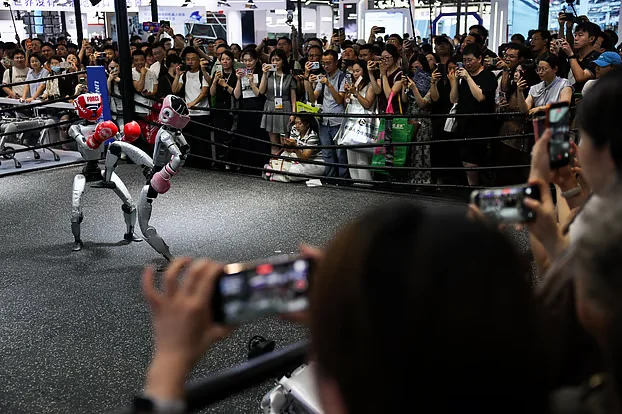
Visitors watch two humanoid robots kickbox at the Unitree booth during the World Artificial Intelligence Conference (WAIC) in Shanghai, China, on 18 July 2026 REUTERS

Beijing accused US artificial intelligence companies on Monday of using Chinese examples to train their models, days after Washington threatened sanctions on Chinese firms for allegedly stealing American technology.

"It is understood that many American artificial intelligence enterprises have distilled Chinese models during their research, development and training processes," the Chinese commerce ministry said in a statement.

Distillation is a process in which an AI model is trained to mimic the output of a larger, more capable one.

The method is widely used across the industry, but US officials say Chinese firms have deployed it at scale to illicitly copy proprietary American systems.

The Chinese ministry said the US accusations "lack factual basis and legal grounds, adopt double standards in practice, and constitute typical acts of artificial intelligence hegemonism".

"China will take all necessary measures to firmly safeguard its legitimate and lawful rights and interests," it added.

Last week, a senior White House official accused Chinese startup Moonshot AI of covertly copying Anthropic's most advanced model to build its Kimi K3.

The latest Moonshot model stunned the US tech industry upon its release, setting off a fresh discussion over the AI rivalry with China.

Treasury Secretary Scott Bessent last week threatened sanctions against China, amid reports the US is also weighing a ban or curbs on foreign-made open source models that are often built through distillation.​
 
Analyze

Analyze Post

Add your ideas here:
Highlight Cite Respond

US to tell dozens of partner countries to pick sides in AI race with China

Reuters
Washington

1787011491383.webp

U.S. and Chinese flags are seen in this illustration created on 10 April 2025. Reuters

The US is preparing to tell dozens of countries they must pick sides in the artificial intelligence race with China, warning they will be excluded from a U.S.-led AI coalition if they also sign up for Beijing's competing framework, according to a U.S. official and an internal draft reviewed by Reuters.

Washington last year launched the Pax Silica initiative aimed at securing supply chains for AI models, semiconductors and critical minerals, amid a fierce technology rivalry with Beijing.

About two dozen countries have joined, including Kazakhstan, a key potential source of critical minerals that has also joined China's coalition, as well as close U.S. allies such as Japan, Australia and South Korea.

The draft letter, prepared by the State Department, is addressed to the 35 signatories of a U.S. "AI Opportunity Statement" signed in June, which includes members of the non-binding Pax Silica framework and other countries that have expressed a desire to align cooperation on AI with Washington.

By pressing countries to choose sides the U.S. hopes to starve China of resources in a race to make the most sophisticated AI, which could be used for military or economic dominance.

In July, Chinese President Xi Jinping launched a rival "World Artificial Intelligence Cooperation Organization", promoting his country's open-weight technology as a challenge to U.S. influence over the fast-moving sector.

Kazakhstan is the only country so far known to have joined both initiatives, setting off alarm bells in Washington.

"To be part of everything is to be part of nothing. Signature of the Pax Silica Declaration is not merely a membership subscription, but a commitment," the letter says, urging countries to "choose deliberately" on AI.

"It cannot be held alongside membership in duplicative initiatives whose expectations conflict with our own," the letter said, without specifically mentioning China.

Reuters could not determine when the U.S. intends to send the letter or whether it might be amended before sending. The draft was undated.

The State Department told Reuters it would not comment on "purportedly leaked internal documents."

China’s embassy in Washington said the country opposes politicizing trade and technology issues. “Such actions will only stifle global AI advances and serve no one’s interests,” an embassy spokesperson said.

The Kazakh embassy in Washington did not respond to a request for comment.

'Can't have it both ways'

The Pax Silica agreement aims to push U.S. allies and partners toward joint projects and export controls, and ultimately reduce reliance on adversaries for critical minerals, AI models and the semiconductor chips that power them.

The race between the U.S. and China for technological leadership has reached a pivotal moment, as Chinese open-weight AI models have made rapid gains against proprietary systems from U.S. companies such as OpenAI and Anthropic.

The exponential growth of the technology's capabilities, including the ability to hack autonomously, has forced a global reckoning over its power.

Beijing is weighing restrictions on overseas access to some of China's leading AI models, highlighting the growing tension with its stringent national security agenda.

The U.S. touted Kazakhstan in June as the first country in Central Asia to join Pax Silica, bringing significant reserves of critical minerals that fuel advanced technologies.

China has used its current near-monopolies over critical minerals as a retaliatory weapon in a tariff war launched last year by U.S. President Donald Trump, who has ramped up U.S. efforts to source the minerals domestically and from allies.

Members of Pax Silica have access to shared investment opportunities in AI-related projects while those who sign the AI Opportunity Statement have symbolically agreed on a "common purpose" and "shared vision" with the U.S., according to the statement posted on the State Department's website.

U.S. officials drafted the letter to make clear that "you can't have it both ways," the U.S. official told Reuters, speaking on condition of anonymity given ongoing internal discussions on the issue.

"It's difficult to see how a country can credibly position themselves as trusted partners in one technology ecosystem while simultaneously signing up for an initiative designed by China to advance a competing vision for AI," the official said.​
 
Analyze

Analyze Post

Add your ideas here:
Highlight Cite Respond

China's Xi seeks to bring large CEO delegation on US visit


1788650704848.webp

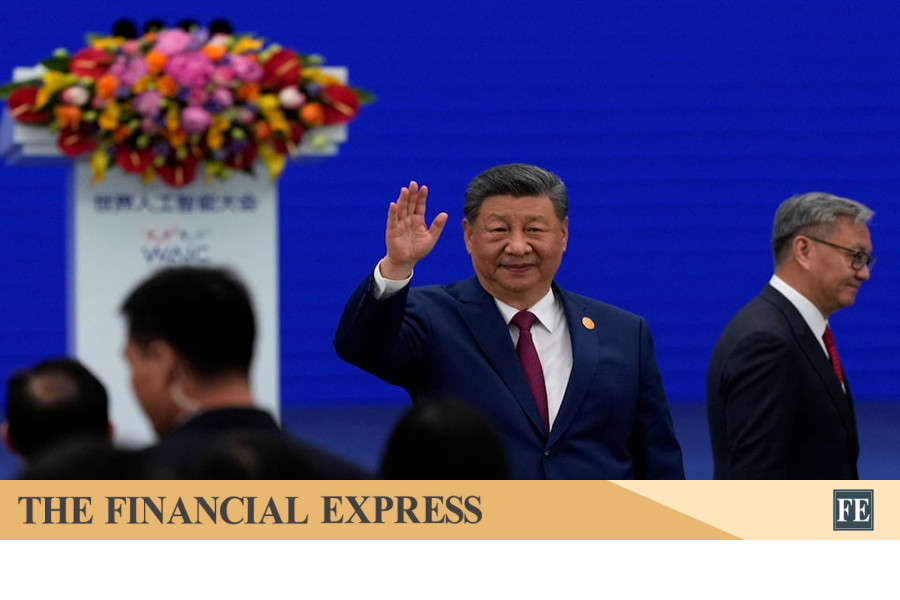
Chinese President Xi Jinping waves as he arrives at the opening ceremony for the World AI Conference in Shanghai, China, on July 17, 2026. — Pool via REUTERS

President Xi Jinping is preparing a large business delegation to accompany him on his visit to Washington, two sources said, an unusual move given US scepticism towards Chinese investment and Beijing's strained ties with private enterprise.

Xi rarely travels abroad with corporate executives, many of whom fell out ‌of favour after Beijing's regulatory crackdowns on the technology, education and property sectors that began in 2020.

"The White House is not tracking a Chinese CEO delegation," an official said. The White House did not explain what they meant by tracking.

The business delegation for the September 24 summit has not been previously reported. Reuters could not determine which executives would join the delegation.

The move is aimed in part at signalling China's willingness to support investment and commercial ties with the US, while offering the White House some potential economic wins ahead of midterm elections, one of the sources familiar with discussions said.

Chinese companies have faced increasing scrutiny of their US investments and business operations in recent years.

Washington has imposed a 100 per cent tariff on imported Chinese EVs, banned foreign drone, router and robot imports, and ⁠forced the divestiture of TikTok's US operations. It also placed major Chinese tech firms on the Entity List of firms or organisations deemed a threat to national security and on a Pentagon blacklist.

Xi last brought a sizeable business contingent to the US in 2015, including Alibaba founder Jack Ma, Tencent founder Pony Ma, and executives from Chinese banks and state-owned firms.

During that visit, China signed a $38 billion agreement for 300 Boeing aircraft and Xi met US technology executives including Apple's Tim Cook, Meta's Mark Zuckerberg and Amazon founder Jeff Bezos.

By contrast, US President Donald Trump has travelled to China with large delegations of American executives, including on visits in 2017 and May this year, seeking greater access to Chinese markets.

LARGE US BUSINESS DELEGATION VISITED BEIJING

Trump took 18 American executives, including Nvidia CEO Jensen Huang and Elon Musk, to China in May, the sources said.

"My sense is that the Chinese... are going to be more intentional about the role of these business people in having them join the delegation," said Scott Kennedy, a Chinese business expert at the Center for Strategic and International Studies.

The participation of executives could prove "really valuable," he said.

Kennedy contrasted the Chinese approach with the organisation of the US delegation in May, which he said was assembled at short notice and whose executives ‌were "more wallflowers ⁠than serious participants."

The US Treasury declined to comment on this story. The Office of the US Trade Representative and the State Department did not respond to Reuters' requests for comment. China's commerce ministry did not immediately respond to requests for comment.

China's foreign ministry said both countries maintain communication on their leaders' planned interactions this year, without elaborating.

SYMBOLIC SUMMIT

The two nations announced formal mechanisms to manage trade and investment ties in May. However, three separate sources briefed on the matter said the Board of Investment is unlikely to produce significant deliverables at the summit because of the challenging US environment for Chinese investment.

Expectations for the summit remain modest, with limited prospects for major breakthroughs, the sources said.

Beijing and Washington also remain ⁠divided over which products should qualify as "non-sensitive" under the Board of Trade, the three sources said.

About 10 categories of "non-sensitive" goods are being discussed for inclusion, but this could change closer to the summit, one of the sources said.

BOARD OF TRADE

Reaching an agreement on the Board of Trade is one of the main US priorities for the summit along with securing more rare earth export licences for US companies, the sources said.

An unnamed US official said the administration continues to press ⁠Chinese counterparts to address China’s lack of compliance with the agreement they announced in Busan in October that secured a one-year trade truce that paused some export controls and tariffs, as well as other bilateral concerns.

Beijing has pressed for further tariff relief. China's commerce ministry said in July that both sides were exploring reciprocal tariff reductions covering $30 billion worth of products.

While the US Supreme Court in February struck down China-related tariffs imposed ⁠under the International Emergency Economic Powers Act, Washington subsequently introduced a 10 per cent global import tariff.

US Trade Representative Jamieson Greer said on Thursday that both countries will make "some announcements on agriculture and non-tariff barriers" during the summit, without providing specifics.

US Treasury Secretary Scott Bessent, Greer and Chinese Vice Premier He Lifeng will meet in early September to discuss summit deliverables, four sources told Reuters. Reuters could not determine the exact date or location of the talks.​
 
Analyze

Analyze Post

Add your ideas here:
Highlight Cite Respond

Trump says he would be OK with China building cars in US


1789191861565.webp


US President Donald Trump speaks to members of the media before boarding Air Force One at Joint Base Andrews, Maryland, US en route to Dublin, Ireland, Sept 11, 2026. REUTERS

President Donald Trump said on Friday he would not oppose Chinese automakers building cars in the United States despite widespread opposition from US lawmakers and car companies.

Advertisement
"If China wanted to come in and open a plant to build their cars here, I'd be okay with that," Trump said in an interview on the Fox News programme "The Ingraham Angle."

"Japan does it, but they hire our people. The big thing is they hire our people," he said.

He added that he does not want Chinese automakers to build cars in Mexico and ship them to the United States. "I'm not knocking Chinese cars," Trump said.

US automakers have urged Trump, who is due to meet Chinese President Xi Jinping in Washington in two weeks, not to agree to allow Chinese automakers access to the US market.

On Wednesday, US Senator Elissa Slotkin, a Michigan Democrat, said there were "rumours that Trump is planning to allow Chinese cars to be sold in the US, as part of a larger deal he’s putting together. That would be a strategic mistake."

Trump called Slotkin's statement a "total phony rumour" and said he had kept Chinese vehicles out of the United States.

A regulation imposed by former President Joe Biden's administration in early 2025 effectively bans all Chinese automakers from selling or building passenger vehicles in the US Washington also maintains more than 100 percent tariffs on Chinese electric vehicles.

Last week, a group representing nearly all major automakers urged Congress to quickly pass legislation permanently barring Chinese vehicles from the US market.

The Alliance for Automotive Innovation, which represents General Motors, Ford, Toyota, Volkswagen, Hyundai, Honda, Stellantis and others, called for passage of the bill by the end of December.

"Right now, Chinese automakers are dumping subsidised vehicles with connected software and hardware around the world," the group's CEO, John Bozzella, said in a letter to congressional leaders.​
 
Analyze

Analyze Post

Add your ideas here:
Highlight Cite Respond

China's US ambassador warns on 'red lines' ahead of Trump, Xi meeting

Reuters, Beijing

1790134947538.webp

Members of a US military honor guard roll up a Chinese flag after rehearsing for Chinese President Xi Jinping’s state visit next week with US President Donald Trump at the White House in Washington, DC, US, September 16, 2026. Photo: Reuters

China's ambassador to the US warned today that the country has "red lines" on Taiwan, human rights and other issues that cannot be crossed, ahead of this week's meeting in Washington between the two countries' leaders.

Chinese President Xi Jinping will visit Washington for a summit with President Donald Trump, as both sides look to bring stability to ties overshadowed by arguments over everything from trade to Taiwan.

Writing in the ruling Communist Party's official People's Daily, Ambassador Xie Feng said managing differences hinges on good faith, and the US should stop "fabricating pretexts" such as national security, economic imbalances and forced labour to try to and constrain China.

When China and the US cooperate, both benefit, but when they confront each other, both suffer, he added.

"China's sovereignty, security, and development interests cannot be violated, and four red lines — the Taiwan question, democracy and human rights, development paths and systems, and development rights — cannot be challenged," Xie said.

"China is committed to pursuing peaceful development and hopes the US will move toward this as well."

China claims democratically-governed Taiwan as its own territory, despite the objections of the government in Taipei. The US is Taiwan's most important arms supplier and international backer despite the lack of formal ties.

Xie said that top-level diplomacy is the "steady hand" of China-US relations and differences are not to be feared.

A separate commentary today in the same newspaper said the US's "erroneous" perceptions of China and its inability to let go of the notion of strategic competition are the basic causes of their recent difficult relationship.

"In recent years, the tortuous path China-US relations have travelled clearly shows the US's erroneous perceptions of China and its unwillingness to let go of the notion of 'strategic competition' are the fundamental cause of recurring difficulties," said the commentary, without offering details.

Both sides should cherish the favourable momentum that has come at "great cost, maintain the right direction, and eliminate interference", said the article, published under the pen name "Zhong Sheng", meaning "Voice of China" and used to give views on foreign policy.

"The US side, in particular, needs to maintain continuity and stability in its policies, honour its commitments, and inject certainty into bilateral relations," it added.​
 
Analyze

Analyze Post

Add your ideas here:
Highlight Cite Respond

As Trump and Xi talk, China surges ahead with its AI ambitions


1790222386725.webp

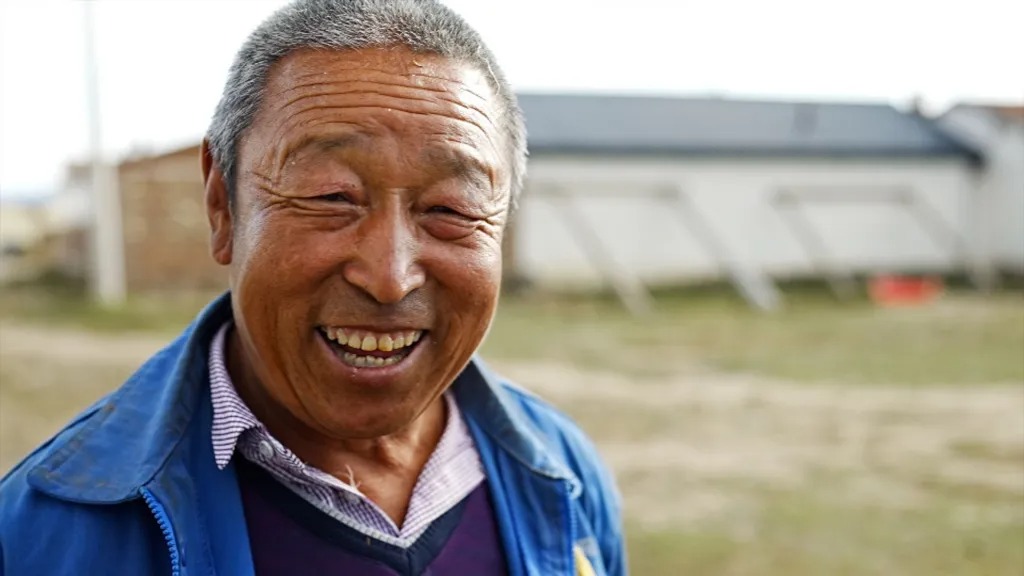
Locals like this farmer have little use for AI because they barely use the internet

In the expansive grasslands of Inner Mongolia, farmers are picking plump potatoes alongside new neighbours: huge, rectangular blocks that will fuel China's AI platforms.

Ulanqab, with its steppes and volcanoes, is an unlikely digital frontier. For years, it has been China's official "potato capital". But now its fields have also become construction sites for a slew of data centres, as Donald Trump and his Chinese counterpart Xi Jinping meet to discuss AI safety among other things.

Hundreds of workers in yellow helmets carry heavy equipment into the building site as welding sparks fly off metal scaffolding. Above them huge cranes move with precision to build rooftops, while men balance on ladders to plaster brickwork.

"This is China speed," jokes one worker. "An infrastructure maniac," is how he describes his country, laughing as he walks away. “There is one phase every year. This is the second phase," explains an electrical engineer. "There will be many more phases afterwards."

Artifical intelligence sits at the heart of China's contest with the United States and the key to it is the computing power inside the data centres here.

To the Chinese Communist Party, these buildings are critical for the country's economic and national security. Once finished, they will help drive its mission to embed AI across 90% of industries and society by 2030.

China's not just building the infrastructure. It's also creating a pool of talent: young engineers and researchers who now see their country as a place of opportunity, partly because tensions with the US and Trump's restrictions on immigration have soured the American dream.
"Fewer students and researchers are heading to the US, and more are returning from the US to China. That is very clear," says Jack Zhang from the University of Science and Technology of China.

He himself was recruited by a high-level programme after studying at Yale in the US, and Cambridge in the UK.

"I wanted to take some of the AI work I was doing in the lab and apply it to human health and medicine. That requires more resources, more people and sometimes more government support, which can be difficult to access overseas."

China's expanding AI capabilities are one reason why the US says it doesn't want to hit pause on its AI development, despite stark warnings from inside the industry that the technology was moving too fast.

"Whoever wins AI, wins," President Trump said last week. The CEO of AI firm Anthropic, Dario Amodei, called for keeping the US-led ban on selling advanced chips and equipment to China, while warning that a Chinese lead would "pose grave danger for the US and the world".

This is not what Xi will want to hear when he arrives in Washington on Wednesday. The state-run Global Times, which echoes Beijing, dismissed US fears as part of a "Cold War playbook" to "contain" China's rise.

But China is not just focused on catching up to the US.

It is also touting an alternate model. Xi himself is encouraging Chinese AI firms to develop more affordable, open-source models - which allow people, companies and countries to modify it as they wish.

It also pits Chinese models against those in the US where developers including OpenAI and Anthropic use closed-model approaches, and their design elements are kept a secret.

One reason Beijing is in favour of their approach is that it has worked well for them. By sharing the tech, Chinese AI firms have been able to innovate quickly.

This has helped China overcome one of its biggest challenges: a lack of access to advanced chips, which would help unlock greater computing power.

But Beijing also wants a bigger say in writing the rules that govern AI. Xi has repeatedly called for more regulation and a global framework for others to follow.

With calls for AI safety growing, this week's summit at the White House is especially significant. Can the two sides collaborate on regulating AI? Is any talk of a slowdown even realistic?

It certainly doesn't seem like that in places like Ulanqab, where China's AI ambitions are taking shape.

China is building hundreds of data centres - for Huawei, ByteDance, DeepSeek - in sparsely-populated provinces: Ulanqab, Ningxia and Gansu in the north, Guizhou in the south-west.

It has already built up vast renewable energy capacity - wind and solar - in these regions, land is cheaper and the weather cooler, so there is less demand for water.

This doesn't mean there are no concerns or downsides. China wants most of its data centres to be fuelled by green energy by 2030 - but some of its grid is still fed by coal power. Water supply remains a concern in the arid, dry parts of Inner Mongolia.

Entire villages have been relocated, although it's hard to pin down the number or what compensation residents were offered. It's a topic few people will discuss because it can be dangerous to voice concerns too openly.

"This big data has absolutely nothing to do with ordinary people," says one local, speaking anonymously off camera. "What benefits has it brought us?"

He says few locals had found jobs there. Others told us of fears that their land would be taken and they would no longer be able to farm for a living.

But there are optimists too, such as a man who told us his last name was Zhang, standing alongside potato pickers in a field near the data centres.

“China is now at the forefront of the world," he says, adding that his children have managed to find jobs there.

"It's not like the 1960s, when it was relatively backward. China is doing alright now. Whether in economic development or other areas, it is doing well."

Surveys appear to suggest that there is little opposition to AI or its widespread adoption, compared to so many other countries, but it's hard to evaluate these figures in such a heavily-censored climate.

Beijing has been quite clear that it sees AI as a solution to its ageing workforce, and is rapidly automating manufacturing and production. That is producing anxiety over job losses, which, again, is hard to measure.

But this is also a country that is producing around five million science and tech graduates each year, compared to around half a million in the US.

And as more of them stay in China, they see a growing ecosystem for innovation.

AI developer Dang Ronghao, 27, who works for a leading tech company says Chinese campuses are becoming more open, allowing him to talk to researchers all over the world from his base in Shanghai.

"I've seen research combining AI with nuclear fusion, AI with astrophysics, AI with new materials, and AI with the development of new drugs. I think we are entering a good era."

Even so, some argue that China still rewards conformity over challenge. "It's not as open as I wish," says Professor Liu Jun, Department of Statistics and Data Science at Tsinghua University. He has taught at both Harvard and Stanford.

"I keep encouraging students here to ask more questions, to challenge more, but that's hard to change. I think partly it's culture, partly it's the system."

Far from the labs where Prof Liu and others are wrangling with the AI frontier, many Chinese people are still grappling with more immediate economic troubles: a sluggish economy, rising youth unemployment, low spending and property prices that have plummeted. In rural areas, an ageing population is also a growing concern.

"Big data and all that… pretty good – but it has nothing to do with me," says one farmer in Inner Mongolia, as he trundles on a cart to check on his sheep.

He says he has no use for AI. He hardly even uses the internet.

The screen on his phone is smashed, and wifi comes from a pocket dongle for which he pays just over 40 yuan a month.

"There haven't really been any changes for me. I don't know about the future," he says.

This kind of scepticism can become a challenge for Beijing.

So much is changing here and everywhere else in the country, but it's hard to know how many people are as invested as their leaders in this tech-charged future.​
 
Analyze

Analyze Post

Add your ideas here:
Highlight Cite Respond

Latest Posts

Back
 
G
O
 
H
O
M
E