Home Watch Videos Wars Movies Login

[🇧🇩] Trump's Victory/Tariff/ Bangladesh

[🇧🇩] Trump's Victory/Tariff/ Bangladesh
235
9K
More threads by Saif

G Bangladesh Defense

US imposes new tariffs on 60 countries, 10% on Bangladesh

Foreign ministry says Dhaka has been placed in the lower tariff tier

Refayet Ullah Mirdha
1785023255914.webp


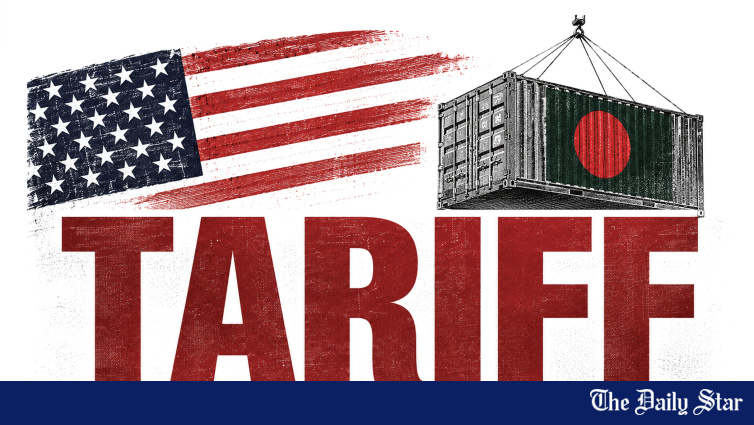
The United States has imposed a 10 percent tariff on imports from Bangladesh, saying the country has not done enough to prevent imports of raw materials produced using forced labour.

The Office of the US Trade Representative (USTR) announced the tariff for Bangladesh alongside 59 other countries and trading partners.

The duty takes effect from Friday, when the temporary 10 percent tariff imposed earlier this year by President Donald Trump expires. It comes into force at 12:01 am Washington DC time on July 24, 2026.

The new duty raises the total tariff on Bangladesh's garment exports to the US to 25.62 percent. Garments are Bangladesh’s main export to the US, its largest single-country export market.

The White House says the move is part of its latest effort to revive President Trump's plan for a broad global tariff regime after the US Supreme Court in February struck down his "reciprocal" tariffs of between 10 percent and 50 percent, which had been introduced under a national emergencies law to reduce the US trade deficit, according to Reuters.

According to a USTR statement, Bangladesh is among 18 countries, including India, Pakistan and Sri Lanka, that will face a 10 percent tariff. Other trading partners will face a 12.5 percent tariff.

Before the reciprocal tariff announced in April last year, Bangladesh's garment exporters had been paying a 15.62 percent duty on shipments to the US for several years.

In April 2025, President Trump introduced reciprocal tariffs on trading partners worldwide in a bid to reduce the US trade deficit. The US Supreme Court later struck down those tariffs.

Since then, the Trump administration has sought alternative legal avenues to implement the president's trade agenda.

Last month, the White House proposed tariffs ranging from 10 percent to 12.5 percent on goods imported from a dozen countries, saying they had not taken sufficient steps to combat forced labour.

Earlier this year, the US launched a Section 301 investigation covering 60 countries to determine whether to impose tariffs of 10 percent or 12.5 percent on countries that fail to prevent imports of goods produced using forced labour.

Following the announcement, the Ministry of Foreign Affairs (MoFA) said today that Bangladesh has been placed in the lower 10 percent tariff tier.

"Therefore, it retains Bangladesh's competitive standing in the US apparel and export market," it said.

The ministry said several major apparel-exporting competitors, including China, Vietnam and Thailand, would face the higher 12.5 percent tariff.

"This distinct differential reinforces Bangladesh's ongoing comparative advantage in the US market relative to its high-tariff competitors."

MoFA also said the USTR is considering introducing a three-year Tariff-Rate Quota (TRQ) for Bangladesh, Cambodia, Indonesia and Malaysia that would waive Section 301 tariffs on goods made from US cotton and textile inputs.

"This, when implemented, would provide Bangladesh with a further competitive advantage and promote its exports to the US market," it added.

The ministry said the government remains fully committed to upholding international labour standards and would continue to engage closely with international partners to ensure the robust growth, compliance and sustainability of Bangladesh's critical export sectors.​
 
Analyze

Analyze Post

Add your ideas here:
Highlight Cite Respond

What is the new US 10% tariff on Bangladesh and how does it differ this time?

Govt, exporters say impact minimal as rate unchanged

Star Business Report

1785195759637.webp


The US has rolled out a fresh 10 percent duty on all imports from Bangladesh under Section 301 of the Trade Act of 1974, replacing a temporary global tariff. The new 10 percent tariff will make the total duty on the country's garment shipments to the USA at 25.62 percent that includes the existing 15.62 percent Most-Favoured-Nation (MFN) tariff rate.

The rate is just replacement of previous universal rate at 10 percent to another name failure to impose prohibition on import of goods produced using the forced labour.

The tariff was announced by the Office of the United States Trade Representative (USTR) on July 23 and took effect on July 24.

Why forced labour?

Following the nullification of reciprocal tariffs by the US Supreme Court from the Agreement on Reciprocal Tariffs (ART), the Trump administration was looking for the opportunity to impose higher tariffs on the imported goods.

So in March, the USTR has launched an investigation on 60 economies including Bangladesh globally under Section 301 to determine whether they failed to block imports made with forced labour. Bangladesh was found to have a “partial enforcement framework”, placing it in the lower of two tariff bands ranging from 10 percent to 12.5 percent.

A shifting tariff landscape

This is the third tariff regime Bangladeshi exporters have faced only in two years. Exporters faced a 15.62 percent base rate before reciprocal tariffs were imposed under a national emergencies law in April 2025. After the US Supreme Court struck down that regime in February this year, a temporary 10 percent global tariff under Section 122 filled the gap until its 150-day legal limit expired on July 24, replaced immediately by the Section 301 tariff.

Official and exporter reactions

Government officials and trade leaders view the measure as a continuation. Commerce Minister Khandaker Abdul Muktadir said the measures would not create any new impact as the tariff rate remains unchanged.

Faisal Samad, director of Bangladesh Garment Manufacturers and Exporters Association, echoed the view, adding it will not impact exports.

Meanwhile, the Ministry of Foreign Affairs (MoFA) said Bangladesh retains its competitive standing as key apparel-exporting rivals face a higher 12.5 percent duty.

"This distinct differential reinforces Bangladesh's ongoing comparative advantage in the US market relative to its high-tariff competitors," MoFA said.

It added that the USTR is considering a three-year Tariff-Rate Quota (TRQ) for Bangladesh, Cambodia, Indonesia and Malaysia to waive Section 301 tariffs on goods made from US cotton and textile inputs.

The bilateral deal complication

The interim government signed a US-Bangladesh Agreement on Reciprocal Trade (ART) on February 9 this year, setting a 19 percent rate in exchange for market opening. Because ART rested on the struck-down emergency-powers structure, the government is seeking formal clarification on whether the 19 percent rate applies or is superseded by Section 301.

Where Bangladesh stands against rivals

Dhaka retains its competitive standing in apparel exports, being among 17 of 86 countries placed in the lower 10 percent tier. Competitors China, Vietnam, and Thailand face the maximum 12.5 percent rate, reinforcing Bangladesh's ongoing comparative advantage, the foreign ministry noted.​
 
Analyze

Analyze Post

Add your ideas here:
Highlight Cite Respond

US has refunded about $100bn in Trump tariffs

AFP
Washington, United States

1786058904346.webp

Donald Trump BSS

US President Donald Trump's administration has refunded about $100 billion in tariffs since the Supreme Court struck down a wave of his duties this year, court filings show.

The figure, reported in documents Tuesday, constitutes about 60 per cent of some $166 billion the Trump administration collected after invoking the International Emergency Economic Powers Act to impose duties.

The refunds went to importers that had paid the duties.

Trump used the act to impose sweeping tariffs on trading partners since returning to the White House last year, but the high court ruled in February this year that he had exceeded his authority in doing so.

This dealt a sharp blow to the president's ability to deploy tariffs at will, as he sought to use them as a tool for leverage against US allies and competitors alike.

The president's sector-specific tariffs, which rely on different justifications, remain intact.

In the court filing on Tuesday, a US Customs and Border Protection official said that as of 31 July, "approximately $128.68 billion in both potential and certified refunds" had been accepted for processing.

Of that total amount, refunds of around $100 billion had been completed and sent to the Treasury Department for disbursement, the official added.

Since the Supreme Court's ruling in February, Trump has turned to new means to reimpose tariffs on dozens of partners, sparking further court challenges.​
 
Analyze

Analyze Post

Add your ideas here:
Highlight Cite Respond

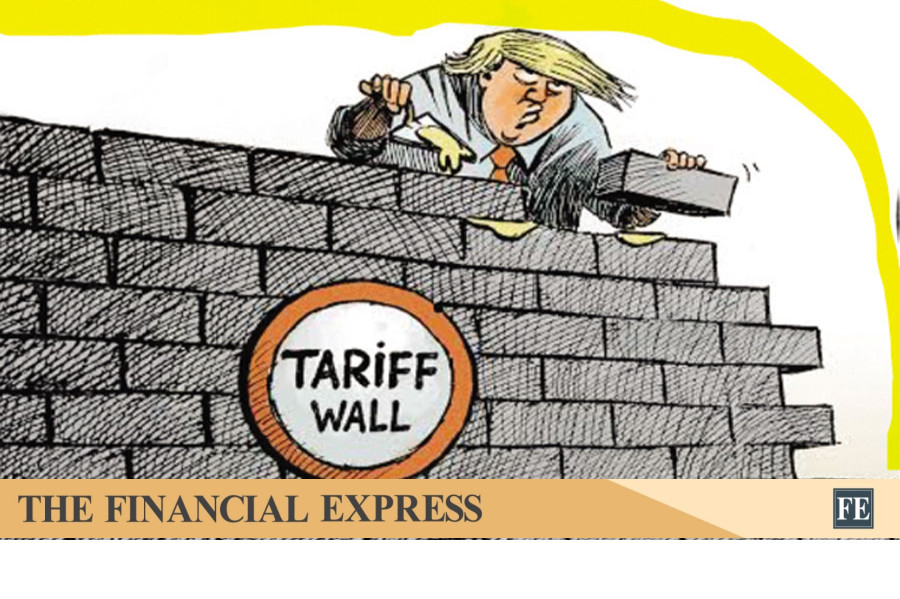
Trump puts more bricks on the tariff wall


1786232288830.webp


President Donald Trump’s latest attempt to escalate trade disputes centres on a threatened 50 per cent tariff on hundreds of Canadian goods, along with baseline duties on dozens of global trading partners. These moves follow earlier legal setbacks, including a Supreme Court ruling that struck down emergency-powers tariffs and the expiration of temporary Section 122 duties.

The decision, which one media report said caused “raised eyebrows,” relies on a provision of the 1930 Tariff Act—the infamous Smoot-Hawley Act, widely associated with deepening the Great Depression—to impose a 50 per cent tariff on billions of dollars’ worth of goods from Canada. The use of this previously obscure provision has been interpreted as a warning shot to Canada and Mexico as negotiations begin on renewing their trade pact with the United States (US).

The US administration announced new tariffs to replace duties phased out after the Supreme Court’s ruling earlier this year. The 10–12.5 per cent levies apply to many trading partners, while countries such as Brazil and Canada face additional duties. The move raises questions about trade costs and the future of regional and global trade arrangements, including the United States-Mexico-Canada Agreement (USMCA). The USMCA, which replaced NAFTA in July 2020, governs trade among the US, Mexico, and Canada. After a joint review, the US declined a 16-year renewal, leaving the agreement subject to annual reviews. Trump invoked Section 338 of the Tariff Act of 1930 to impose the new duties. The White House said they would take effect in 30 days and apply even to goods covered by the USMCA.

Trump has returned to the trade-war battlefield by imposing tariffs of 10 to 12.5 per cent on around 60 countries, including major US trading partners and Bangladesh, with more threats to come. These tariffs were imposed under Section 301 of the Trade Act of 1974, which allows the president to impose duties on countries deemed to have engaged in unreasonable or discriminatory actions against the United States.

The new 10 per cent US Section 301 tariff on Bangladesh, imposed over concerns about forced-labour compliance in supply chains, raises cumulative import duties on Bangladeshi goods to roughly 25 per cent. This adds to cost pressures from domestic energy shortages and high financing costs. It is the third tariff regime Bangladeshi exporters have faced in two years. Bangladesh’s vital ready-made garment (RMG) sector will likely remain under pressure from existing and potential additional US tariffs unless productivity improves.

Trump has also imposed 50 per cent tariffs on a broad range of Canadian imports, citing what he called Ottawa’s “unequal treatment” of American cars, dairy products, and alcohol. The US Trade Representative has opened a separate investigation into whether tariffs can be imposed against China and other countries, mainly in Asia, over alleged overproduction of industrial goods. Further measures may be invoked.

The move marks the latest escalation in a trade war that has intensified since Trump’s return to the White House. Washington has already imposed tariffs on Canadian steel, aluminium, automobiles, and other imports. Ottawa has responded with counter-tariffs and other retaliatory measures.

Trump’s recent steps to increase tariffs on Canada and Brazil, with more expected soon, are part of an effort to reorient his tariff regime after much was struck down by the Supreme Court. The latest move is part of a broader tariff drive launched after Trump’s return to office in January 2025. He has imposed duties on imports from allies and rivals alike, targeting countries including China, Canada, Mexico, as well as steel, aluminium, and automobiles.

The US Senate has advanced a new sanctions bill that would impose harsh tariffs on the top buyers of Russian oil and gas, including India and China. If it becomes law, the bill would give US President Donald Trump authority to impose tariffs of up to 100 per cent on goods imported from India, creating a new headache for New Delhi.

The new tariffs, which may not survive legal challenges from US importers, are Trump’s latest attempt to rebuild his tariff wall through a patchwork of legislation never used as he proposes. His recent trade actions show he remains committed to a misconceived understanding of trade. They also highlight his wilful ignorance of who ultimately pays tariffs. Despite his trade deals and promises that tariffs would lead to massive investment in manufacturing jobs, the US manufacturing sector has continued shrinking along with its jobs and wages.

Trump’s remarks on tariffs suggest he thinks foreign countries pay duties directly to the United States on their exports. In fact, tariffs are collected by US Customs when goods enter the country, and the importer, whether a wholesaler, retailer, manufacturer, or other business, is the first to pay.

In other words, someone inside the United States is immediately out of pocket for the tariff. Some of that cost will be passed on to customers. In other cases, businesses absorb part of the tariff through lower profits. Either way, American consumers or companies pay the price.

Foreign countries would pay tariffs only if the duties reduced the prices of their exports to the US States. But Bureau of Labor Statistics data for June showed non-fuel import prices rising 0.4 per cent for the month and 4.2 per cent year on year, suggesting exporters are not absorbing the costs. When Trump threatens countries with steep tariffs, he effectively threatens Americans with higher taxes.

The amount raised by income tax is at least six times that from customs duties, and studies by the New York Federal Reserve and Germany’s Kiel Institute have shown that more than 90 per cent of the tariff imposts are paid by US companies and customers.

Imagine it’s the year 2030, and a Democratic president is sitting in the Oval Office—still collecting revenue from Donald Trump’s tariffs. Josh Lipsky, the Atlantic Council’s vice president and chair of international economics, opines that the scenario is entirely plausible under a president of either party. After all, as Lipsky notes, former US President Joe Biden “kept nearly all of Trump’s first-term tariffs.” But the need for tariff cash has only grown since then. “Regardless of who wins the next election, they will be constrained by the US financial situation.”

For the reason why, turn to Lipsky’s New York Times essay, where he points to the bond market. “With the national debt clocking in at $39.6 trillion, the market selling this debt has grown addicted to the money coming into the government every day, thanks to tariffs,” he writes. At the end of 2020, US federal debt was around $27.7 trillion. In June this year, it was $39.5 trillion, with the annual interest bill exceeding $1 trillion. The runaway escalation of debt belies Trump’s much-touted “strength” of the US financial system.

In the past, a supposed benefit of tariffs was “job creation” in domestic industry, but that argument was always questionable, and advances in automation have weakened it further. Few, if any, “new jobs” are created. The same people filling protected positions pay more for the goods they want and need. At the same time, the wider economy loses workers who could produce goods and services that do not need protection to sell at reasonable prices.

The tariff measures are not aimed at lifting living standards or wages. Still, they are part of the desperate drive by the US to overcome its economic decline and rising debt burden at the expense of its rivals and competitors, particularly China, by any means necessary. And as in the 1930s, they are an integral component of the unfolding of a new global crisis.

He claimed the US was building more auto plants and more factories overall than any other country. In fact, factory construction has declined since Trump took office in January 2025, particularly after he imposed sweeping tariffs on nearly every country.

The escalation in geopolitical tensions, centred for now on the ongoing conflict involving the US and Iran, has reinforced the structural vulnerability of global supply chains. Recent disruption to Red Sea routes by Yemen’s Ansar Allah movement undermined some of the short-term progress in redrawing maritime routes following intermittent closures of the Strait of Hormuz. The resulting pressure on energy prices, insurance, and freight delivery costs is significant, injecting a fresh wave of inflationary pressure and complicating the disinflationary narrative just as central banks were seeking confirmation that the final stage of inflation reduction was secure.

There are clear indications that the AI bubble, which has boosted chipmaking firms’ shares to record highs, is rapidly deflating. Concerns are growing about the viability of the massive expenditure on data centres, centring on when they will start to earn a profit.

Recent weeks have seen a sharp decline in the share prices of major chipmakers, especially in South Korea, with the sell-off now extending to Wall Street. A global sell-off yesterday, led by declines in US chip and memory stocks, dragged down the tech-heavy NASDAQ index. It fell by as much as 1.8% during the day, taking its total loss since the beginning of June to almost 10%.

The US also joined Japan in a coordinated currency intervention to prevent yen weakness from spreading instability across Asian currencies, Treasury Secretary Scott Bessent told Nikkei last week in an exclusive interview, citing lessons from the Asian financial crisis of the 1990s. But the intervention was undertaken because of fears of its repercussions for the US financial system. The chief concern was that continued action by Japanese authorities to support the yen, which involves further selling of US dollars, would send down the price of US Treasury bonds and push up their yields, adding upward pressure on US interest rates.

It also reported that Wall Street banks were demanding more collateral from hedge funds heavily invested in AI-related stocks, to which they had extended credit, noting that the “collateral demands highlight the mounting fears on Wall Street about the scale and speed of the sell-off in AI stocks over the past fortnight, which has upended a rally in a sector favoured by many funds.”

Many observers warned early on that Trump’s limited knowledge and weak grasp of foreign affairs and diplomacy could harm both the United States and the wider world. The slogan “America First” also has a long and troubling place in US political history. It gained prominence before the Second World War, when far-right and isolationist movements sought to influence US policy. Although those movements have changed, parts of that worldview still shape politics today.

In a late-July interview with the BBC, David Dimbleby described Trump as a “narcissist and bully,” adding that “nobody can work out what he’s trying to do.” Critics have also speculated about Trump’s age and cognitive capacity, though the more immediate issue is the policy uncertainty his leadership style creates.

Trump appears to be profoundly uninformed and out of his depth when faced with complex geopolitical consequences. His susceptibility to flattery and manipulation leaves him vulnerable to impulsive decisions, while his second administration appears unwilling or unable to restrain those instincts. The result is a presidency that risks leaving significant global damage in its wake.​
 
Analyze

Analyze Post

Add your ideas here:
Highlight Cite Respond

Latest Posts

Back
 
G
O
 
H
O
M
E