| Global Defense, OSINT & Geopolitics Wire

[🇧🇩] U.K.---A development partner of Bangladesh

[🇧🇩] U.K.---A development partner of Bangladesh
19
983
More threads by Saif

G Bangladesh Defense

Britain pledges continued support for modernisation of Bangladesh Bank

UNB

Published :
May 07, 2026 22:10
Updated :
May 07, 2026 22:10
1778197457694.webp


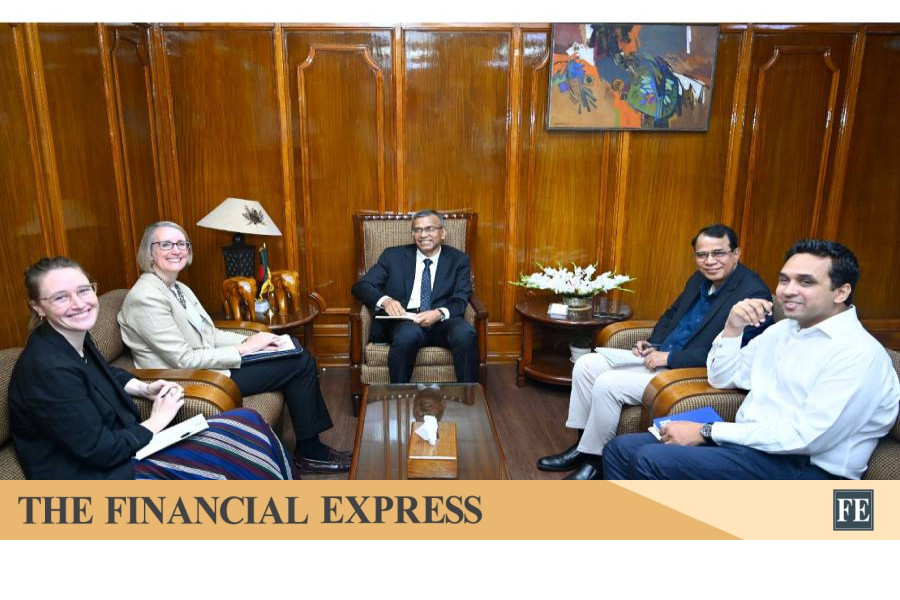
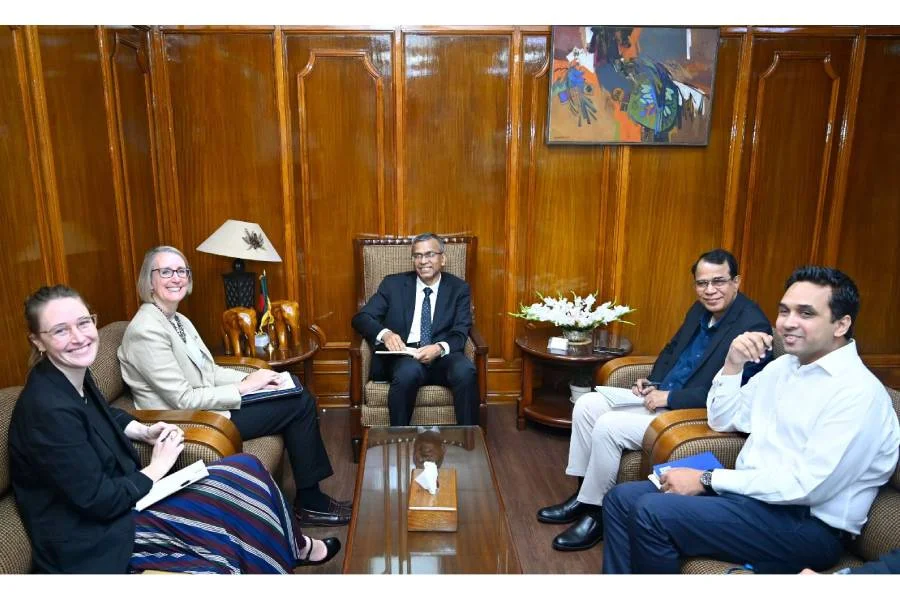
British High Commissioner to Bangladesh, Sarah Cooke, on Thursday reaffirmed the UK government’s commitment to supporting the transformation of Bangladesh Bank into a modern, technology-driven, and robust central bank.

The commitment was made during a courtesy call with the Governor of Bangladesh Bank, Md. Mostaqur Rahman, at the central bank’s headquarters in the capital.

The meeting covered a wide range of bilateral cooperation issues, with a particular focus on the modernization of the financial sector, capacity building for the central bank, and the enhancement of human resources.

A significant portion of the discussion centered on anti-money laundering (AML) efforts and the recovery of laundered assets. Both parties expressed a firm resolve to strengthen coordination with relevant UK authorities to recover assets smuggled abroad. The talks also touched upon critical legislative reforms, including the ‘Bank Resolution Act,’ aimed at ensuring long-term stability and good governance in the banking industry.

In a move toward greater digital integration, the High Commissioner and the Governor discussed:

Digital Bank Statement Verification: Implementing a digital system to verify bank statements provided during visa applications to prevent fraud.

Combating Illegal Migration: Joint efforts to prevent illegal migration and the use of forged documents.

FATF Mutual Evaluation: Preparations for the upcoming Financial Action Task Force (FATF) assessment to ensure Bangladesh’s compliance with global financial security standards.

Governor Mostaqur Rahman expressed his gratitude for the UK’s consistent support in Bangladesh’s development journey. He reiterated the central bank’s firm commitment to building a cashless society and a resilient digital payment ecosystem.

“We are focused on ensuring transparency and good governance within the financial sector through modern technology,” the Governor noted during the exchange.

The meeting was also attended by Deputy Governor of Bangladesh Bank Dr. Habibur Rahman, Stolen Asset Recovery Consultant Farhanul Ghani Chowdhury, and representatives from the British High Commission, including Emma Wind and Issam Musaddeque.​
 

80 British-Bangladeshi councillors elected across 4 East London Boroughs

Political observers believe that the new generation of British-Bangladeshis are no longer just voters but are now cementing their positions at the heart of local policymaking.

Saidul Islam
London
Published: 10 May 2026, 23: 06

1778466540080.webp

Bangladeshi-origin councillors elected across four East London boroughs include Hossain Mohammed Enamul, Moin Qadri, Ajanta Deb Roy, Rabina Khan, Saida Chowdhury, Syeda Sayma Ahmed, Abu Talha Chowdhury, Shafiq Islam, Oliur Rahman and Shenali Mia (left to right, top to bottom)

In the recent UK local government elections, 80 British citizens of Bangladeshi descent have been elected as councillors across four predominantly Bangladeshi-populated boroughs in East London.

Those are: Tower Hamlets, Newham, Redbridge, and Barking & Dagenham.

Local political analysts have hailed this as one of the most significant milestones in the political history of the British-Bangladeshi community. More than 300 individuals from the expatriate Bangladeshi community contested seats in this election.

Election results indicate that in all four boroughs, the majority of Bangladeshi-origin candidates achieved notable success through independent and regional political platforms, moving beyond the traditional mainstream parties.

The most resounding victory occurred in Tower Hamlets, where candidates nominated by the Aspire Party secured a landslide win. The party attained a record majority by winning 33 seats in the 45-member council—all 33 of whom are of Bangladeshi descent. Consequently, Tower Hamlets hosts the highest number of elected Bangladeshi-origin councillors.

Additionally, in Tower Hamlets, three candidates from the Labour Party and one from the Liberal Democrats were elected. Simultaneously, Lutfur Rahman was elected as the Executive Mayor for a fourth term, defeating Labour candidate Sirajul Islam by a significant margin with 35,679 votes.

Bangladeshi candidates also saw major success in Newham. Among those elected, 12 represent the Newham Independent Party, six are from the Labour Party, and one secured a seat for the Green Party.

History was made as Farhad Hossain was elected as the new Executive Mayor of Newham, becoming the first person of Bangladeshi origin to be elected to such a position representing a major mainstream UK political party (Labour).

The Bangladeshi community’s strong presence was equally evident in Redbridge, where nine Labour councillors and five independent candidates of Bangladeshi descent were victorious. The influence of Bangladeshi candidates has notably increased, particularly in the Bangladeshi-populated areas of Ilford.

In Barking & Dagenham, the elected Bangladeshi contingent consists of eight Labour Party councillors and two from the Green Party.

Political analysts suggest that the influence of the Bangladeshi community in East London local politics has reached a new peak.

The establishment of Bangladeshi leadership in the mayoral offices of Tower Hamlets and Newham, alongside a widespread presence across council chambers, has created a new political reality.

Furthermore, both members of parliament for the Tower Hamlets area—Rushanara Ali and Apsana Begum—are also of Bangladeshi descent.

Beyond East London, several Bangladeshi-origin councillors were elected in other London boroughs such as Ealing, Croydon, and Brent, as well as in Birmingham.

Since the early days of migration, Bangladeshis have settled primarily in East London.

According to data from the Office for National Statistics (ONS), these four boroughs maintain significant Bangladeshi populations. In Tower Hamlets, the proportion of Bangladeshis is approximately 35 per cent to 40 per cent. Newham is home to between 40,000 and 50,000, while Redbridge has approximately 30,000, and Barking & Dagenham houses around 20,000 residents of Bangladeshi origin.

Political observers believe that the new generation of British-Bangladeshis are no longer just voters but are now cementing their positions at the heart of local policymaking.

This election is being viewed as the strongest evidence yet of that structural shift.​
 

15 Bangladeshi students at top posts in UK university student unions

Saidul Islam
London
Updated: 10 Jun 2026, 15: 36

1781408774402.webp


Bangladeshi students pursuing higher education in the United Kingdom are demonstrating their capabilities not only in academic fields but also in leadership roles.

Alongside their studies, they have secured positions as presidents, vice presidents, and other key office-bearers in university students’ unions, where they work to safeguard students’ rights, welfare, and representation.

Observers regard these achievements on the international stage as a strong reflection of the leadership qualities and capabilities of Bangladeshi students.

According to information received by Prothom Alo, at least 15 Bangladeshi students currently hold significant leadership positions in students’ unions at various universities across the United Kingdom.

Among them, Naeem Hasan, from Companiganj in Noakhali, has been elected vice president of the Students’ Union at the London Campus of Anglia Ruskin University.

Naeem, who secured 1,627 votes, is currently studying Law. In addition to his leadership responsibilities at the university, he remains actively involved in a range of social and environmental initiatives.

Khadija Hossain Orla serves as vice president (Education) of the Students’ Union at the University of the West of England (UWE Bristol).

Representing the academic interests of approximately 40,000 students, Khadija works on improving educational standards, protecting students’ rights, and addressing issues related to accommodation and renters’ rights.

Shayekh Hasan from Kushtia serves as president of the Students’ Union at the Epsom Campus of the University for the Creative Arts (UCA).

A student of Digital Marketing, he secured re-election for a second consecutive term in recognition of his successful contributions to student welfare.

Irfan Rahman serves as president of the Students’ Union at the University of South Wales.

A graduate in Computer Science, Irfan previously led the university’s Bangladesh Society and now works to represent students and support international students.

Iffat Jahan serves as Welfare and Diversity Officer of the Students’ Union at the University of Gloucestershire. After returning to education following a break of nearly a decade, she won election with 676 votes.

Through her initiatives, the university has introduced important facilities and services, including childcare provision, breastfeeding corners, and dedicated prayer rooms.

Md Saif Molla Chanchal, originally from Tongi in Gazipur, has been elected Vice President of the Students’ Union at the University of Greenwich.

A Computer Science student, he works on issues relating to mental health, the rights of disabled and minority students, and the promotion of an inclusive campus environment.

ABM Rahat Mubasshir has been elected vice president (Education) of the Students’ Union at the University of South Wales.

He secured the highest number of votes in the institution’s history and became the first Bangladeshi student to hold the position. He currently represents the academic interests of approximately 25,000 students.

Rajya Mondal serves as president of the Students’ Union at London Metropolitan University.

Elected with 876 votes, he works on issues relating to students’ rights, mental health, and the challenges faced by international students.

At the same university, Nahid Binte Islam serves as vice president (Activities and Opportunities).

Having secured election for two consecutive terms, she works to expand student participation in extracurricular activities, skills development programmes, and engagement within a multicultural environment.

Nafi Hasan Khan has secured re-election as president of the Students’ Union at Brunel University London.

An Aerospace Engineering student, he previously led the Bangladesh Society and currently plays an important role in promoting student engagement and campus development.

Soumitra Pal serves as vice president (Equity and Welfare) of the Students’ Union at London Metropolitan University.

Originally from Noakhali, he works on issues including mental health, anti-racism, anti-harassment initiatives, and the promotion of a safe campus environment.

Zubayer Ahmed has become the first Bangladeshi student to be elected president of the Students’ Union at the University of Hertfordshire.

In this role, which represents approximately 38,000 students, he works to address issues relating to international students’ tuition fees, safety, and access to religious facilities.

At the same university, Muhtasim Sadat Nibir from Rangpur has served as SPECS Officer and a member of the Board of Trustees.

In addition to representing students within the Faculty of Engineering, he has worked to improve the academic experience and enhance transport services for students.

Hafsa Azmari Farju, originally from Fenchuganj in Sylhet, has been elected vice president of the Students’ Union at Wrexham University in Wales.

A recipient of the Sustainability Champion of the Year award, she works on issues concerning students’ rights, equality, and sustainable development.

M Imam Hossain has been elected vice president (Welfare) of the Students’ Union at the University of South Wales for two consecutive terms with the highest number of votes.

Observers have widely praised his contributions to student welfare, support services, and crisis response initiatives.

Speaking to Prothom Alo, Naeem Hasan said, “I want to use the leadership experience I have gained during university life to bring about positive change in society. I dream of building a better society founded on equality, justice, and fairness. At the same time, I want to help preserve the environment and maintain ecological balance so that future generations can inherit a sustainable, liveable, and peaceful world.”

Khadija Hossain Orla told Prothom Alo, “I want to utilise the experience I have gained through student leadership and policy-making activities to bring about positive change in education, social justice, and public policy. I believe that quality education, equal opportunities, and inclusive policies form the foundation of a just and sustainable society. In the future, I hope to apply my international experience to contribute to educational and social development in Bangladesh.”​
 

Bangladesh, UK exchange views on issues of mutual interest
United News of Bangladesh. Dhaka 03 July, 2026, 08:16

1783049165902.webp


Bangladesh and the United Kingdom on Thursday exchanged views on a range of issues of mutual interest, expanding the pie of mutually beneficial cooperation from regular migration, educational exchange, trade and investment.

Both sides reaffirmed their shared commitment to further strengthening the longstanding partnership between the two countries.

On the sidelines of the Women & Girls South Asia Diplomatic Reception hosted by the UK Foreign Secretary Yvette Cooper MP, acting high commissioner of Bangladesh in London M Nazrul Islam held a discussion with Sarah Cooke, British High Commissioner to Bangladesh.

They reflected on the deep-rooted and historic ties between Bangladesh and the United Kingdom.​
 

BD to retain duty-free mkt access to UK after LDC exit
For 92pc of its goods, no need for negotiating separate trade agreement with UK
1787354601705.webp


Bangladeshi exporters will continue to enjoy preferential access to the UK market after Bangladesh graduates from the least- developed-country status, the United Kingdom has assured.

Economists say the UK's decision provides Bangladesh with valuable policy space and greater certainty on the cusp of transition from the world's poor-country club.

A letter from the British mission in Bangladesh says 92 per cent of goods will continue to qualify for duty-free access without the need for Bangladesh to negotiate a separate trade agreement with the UK.

The letter, dated August 19, from James Goldman, Deputy High Commissioner and Development Director at the British High Commission in Dhaka, was sent to Md Ataur Rahman Khan, Secretary of the Ministry of Commerce.

p1-lead-outlineBangladesh currently enjoys tariff-free access for 99.8 per cent of goods exported to the UK under the UK's Developing Countries Trading Scheme (DCTS).

According to the communication in writing, Bangladesh will retain its existing market access for three years after its LDC graduation, providing exporters with a transition period before moving to a new preferential arrangement.

Following the transition period, Bangladesh will move to the Enhanced Preferences tier of the DCTS, under which 92 per cent of goods will continue to qualify for duty-free access without requiring further renegotiation.

Commerce ministry's senior officials have said apparel and readymade garments are within the 92-percent duty access list, so reduction in ratio won't affect Bangladesh's export.

Talking to the FE on Thursday, Commerce Secretary Md Ataur Rahman Khan termed it a significant assurance allowing Bangladesh to increase its capacity, diversify export and find new market.

"We hope to get three years' extension to stay as LDC until November 2029, so the existing duty benefit will remain unchanged for next three years," he said.

Trade economist Dr Masrur Reaz also takes it as a significant massage from the British High commission that would give a huge comfort to the apparel exporters.

Dr Reaz, chairman of the Policy Exchange Bangladesh, says when all other countries' preferential-trade benefit will expire with the LDC graduation, the UK will retain it.

"The letter made it clear that there is no expiration date of UK's preferential trade benefit," he says.

In this period, he suggests, Bangladesh must act seriously to sign free-trade agreements with the major trade partners to retain the trade benefits to avail after LDC graduation.

In the letter, the British government has also provided specific reassurance to Bangladesh's garment sector, the country's largest export earner.

Dr Mohammad Abdur Razzaque, Chairman of Research and Policy Integration for Development (RAPID), finds this as a welcome news for Bangladesh as it prepares for LDC exit.

"The UK has provided considerable certainty by confirming that Bangladesh will retain its existing market access for three years after graduation and will then move directly into the Enhanced Preferences tier of the DCTS."

For Bangladesh, he says, the most important aspect is the treatment to garments, which account for the overwhelming majority of the country's exports to the UK.

"Market access for garments will remain unchanged under the Enhanced Preferences arrangement."

Equally important are the UK's revised rules of origin, which provide substantially greater flexibility in sourcing imported inputs and do not impose a double-transformation requirement.

This is particularly relevant for Bangladesh's garment industry, given its dependence on imported fabrics and other intermediate inputs in several product categories, Dr Razzaque further notes.

It is also important to recognise that the UK Government introduced these changes to its rules of origin autonomously.

"The changes, therefore, demonstrate the UK's recognition of the adjustment challenges facing Bangladesh and other graduating LDCs, while providing particularly important benefits for Bangladesh because of the scale and composition of its exports to the UK."

This is a positive example of how major trading partners can support a smoother LDC transition, he has said.

The combination of the three-year transition period, subsequent access to Enhanced Preferences, and more liberal rules of origin considerably reduce the immediate market-access risks associated with Bangladesh's graduation.

"Preferential access by itself cannot guarantee export growth. The priority should be to improve competitiveness, diversify products, make effective use of the more flexible sourcing provisions, and ensure that exporters understand and utilise the DCTS rules," he suggests.

The challenge for Bangladesh is to translate that opportunity into stronger and more diversified exports, economist observes.

Market access for garments covered by chapters 61 and 62 will remain unchanged under the Enhanced Preferences tier, according to the letter.

The updated rules of origin will also ease compliance requirements for garment exporters.

They will no longer be required to meet the existing "double transformation" requirement to qualify for preferential market access.

The new rules will provide exporters with greater flexibility to source inputs from a wider range of countries while retaining eligibility for preferential tariffs.

The UK is one of Bangladesh's major export destinations, particularly for readymade garments.

The continuation of preferential access is, therefore, considered important for maintaining the competitiveness of Bangladeshi products following graduation.

The British High Commission will also work with the Export Promotion Bureau (EPB) to organise a series of workshops for exporters and other trade stakeholders.

The workshops will focus on helping businesses better understand and utilise the benefits available under the DCTS, the letter reads.

Garment export to the UK registered .91-percent growth in the last fiscal year while it was negative 3.31 per cent in total EU zone.​