☕ Support Us
Wars - 2023 10/08 Monitoring the Israel and Lebanon War | Page 15 | PKDefense

Wars 2023 10/08 Monitoring the Israel and Lebanon War

Reply (Scroll)
Press space to scroll through posts
G War Archive
Wars 2023 10/08 Monitoring the Israel and Lebanon War
186
7K
More threads by Saif


Fresh strikes, clashes in Lebanon after ceasefire calls
Agence France-Presse . Beirut 26 November, 2024, 00:46

1732581015095.png

Palestinians queue to receive a food ration outside a distribution center west of Gaza City, on Monday, amid the ongoing conflict between Israel and the militant Hamas group. | AFP photo

Israel conducted strikes against Hezbollah’s Beirut stronghold on Monday and battles raged in Lebanon’s south after the Iran-backed militant group claimed 50 attacks on Israeli targets the day before.

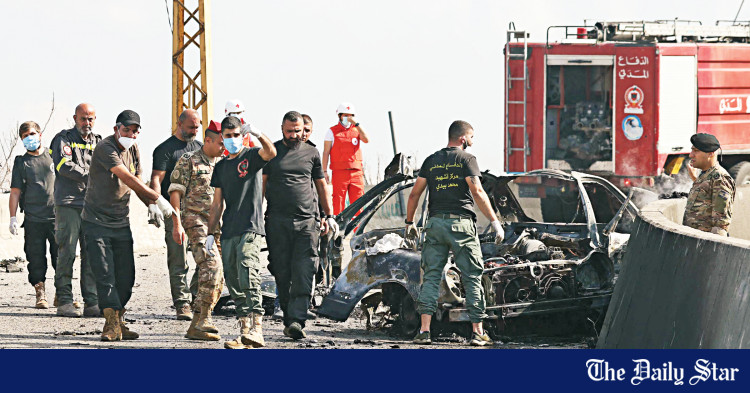
Lebanon’s health ministry said 12 people were killed on two locations in Lebanon’s Tyre district.

The ministry, in separate statements, reported a strike on a road near the city of Tyre that left ‘six dead and body parts’ requiring identification, as well as four wounded, while another left ‘six dead and four wounded’ in the town of Maaraka.

The heavy exchanges of fire over the weekend included deadly strikes on Beirut and other areas of Lebanon, and fighting on the ground between Hezbollah militants and Israeli soldiers, particularly around the southern town of Khiam.

The Israeli military said Hezbollah fired 250 projectiles into Israel on Sunday, part of a wave of attacks the militants said had targeted areas including the Ashdod naval base in southern Israel and military sites near Tel Aviv.

The Israeli army warned in a statement on X it would target Hezbollah ‘facilities and interests’ in Beirut’s southern suburbs, the Iran-backed group’s main stronghold.

The military later said the air force had ‘conducted intelligence-based strikes on several Hezbollah command centres’ in the area.

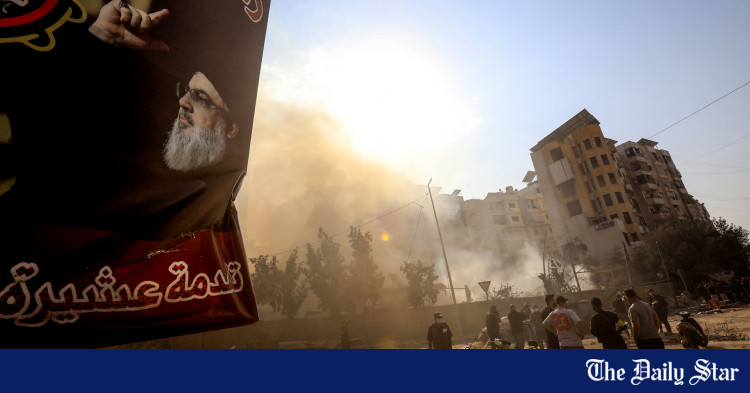
Lebanon’s official National News Agency reported ‘three strikes on the vicinity of Haret Hreik’, and AFPTV images showed thick smoke rising from the southern suburbs.

The strikes followed heavy raids on the area the night before.

Lebanon’s education ministry suspended classes on Monday for schools, technical institutes and private higher education institutions in Beirut and a number of surrounding areas, citing ‘the current dangerous conditions’.

Israeli ground forces have also entered several villages and towns near Lebanon’s southern border, including Khiam, where NNA on Monday reported clashes with Hezbollah fighters.

The escalation came as the United States and the European Union pushed for a truce in a war Lebanon says has killed at least 3,754 people in Lebanon since October 2023, most of them in the last two months.

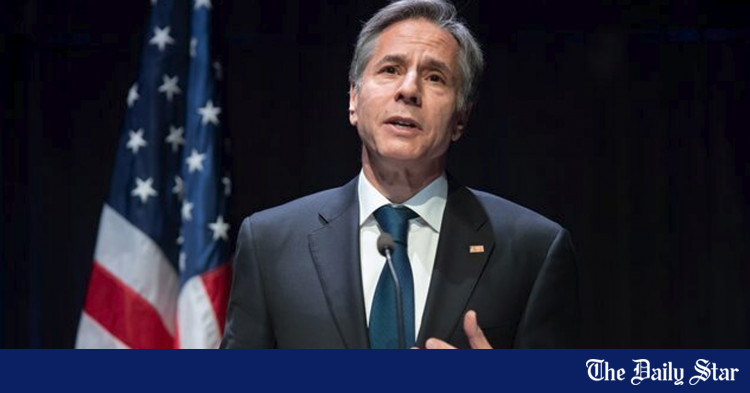
In Beirut on Sunday, top EU diplomat Josep Borrell called for an immediate ceasefire, after a US envoy said last week that a deal was ‘within our grasp’.

The envoy, Amos Hochstein, headed to Israel after a visit to Lebanon, where he met with senior Lebanese officials and twice sat down with a key mediator for Hezbollah.

Neither Israel nor the United States has issued official comments on the Israel visit.

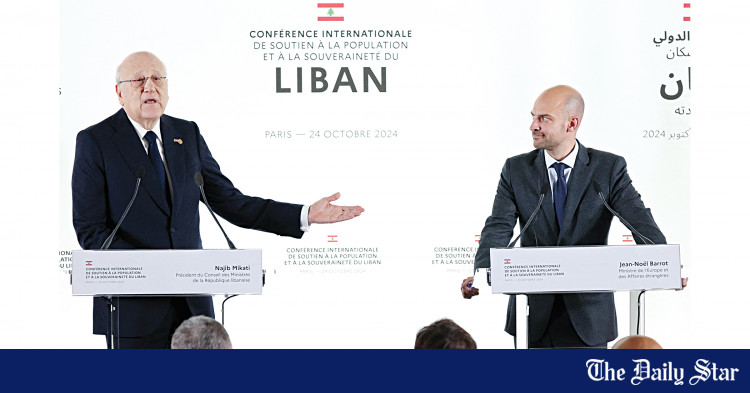
Jean-Noel Barrot, the foreign minister of France — which along with the United States has spearheaded the efforts towards a truce — called on Israel and Lebanon on Sunday to seize a ‘window of opportunity’ to negotiate an end to the fighting.

The US news site Axios reported that the parties were close to a deal that would involve a 60-day transition period in which the Israeli army would pull back, the Lebanese army would redeploy near the border and Hezbollah would withdraw its heavy weapons north of the Litani River.

The draft agreement also provides for the establishment of a US-led committee to oversee implementation, as well as US assurances that Israel can take action against imminent threats if the Lebanese military does not, according to Axios.

Israeli media also reported that prime minister Benjamin Netanyahu was likely to greenlight a US ceasefire proposal.

The war in Lebanon followed nearly a year of limited exchanges of cross-border fire initiated by Hezbollah in support of its ally Hamas after the Palestinian group’s October 7, 2023 attack on Israel, which sparked the war in Gaza.

The hostilities between Israel and Hezbollah have killed at least 82 soldiers and 47 civilians on the Israeli side, authorities say.

They have also forced tens of thousands of Israelis to flee their homes, which Israel says its campaign in Lebanon intends to rectify.

One displaced resident of Shlomi, an Israeli town near the Lebanese border, said she did not want to see a truce that would allow Hezbollah to regroup.

‘I don’t want a ceasefire, because if they do it along the lines that they’ve announced, we’ll be in the same place in five years,’ said 51-year-old teacher Dorit Sison.

‘I am very pessimistic about this agreement. The only thing I want is for my daughter to sleep well at night, without rocket alerts, and for her not to be afraid of anything.’

Israel has said any ceasefire deal must ensure it still has the ‘freedom to act’ against Hezbollah in the event of violations.

Israel’s far-right national security minister Itamar Ben Gvir warned reaching a ceasefire deal in Lebanon would be a ‘historic missed opportunity to eradicate Hezbollah’.

‘I understand all the constraints and reasons, and still it is a grave mistake,’ he wrote on X.

The Israeli army, meanwhile, said a deadly weekend strike in the downtown Beirut neighbourhood of Basta had struck ‘a Hezbollah command centre’.

The Lebanese health ministry said the strike killed 29 people and wounded 67.

It had hit a residential building in the heart of Beirut before dawn on Saturday, leaving a large crater, AFP journalists at the scene reported.

A senior Lebanese security source said ‘a high-ranking Hezbollah officer was targeted’, without confirming whether or not they had been killed.

But Hezbollah official Amin Cherri said no leader of the movement had been targeted in Basta.​
 

Netanyahu approves Lebanon ceasefire deal ‘in principle’: CNN
CNN
Published :
Nov 25, 2024 20:15
Updated :
Nov 25, 2024 20:15

1732581903656.png

Smoke rises after an Israeli airstrike on Dahiyeh, in the southern suburb of Beirut, Lebanon on Monday. Bilal Hussein/AP

Israeli Prime Minister Benjamin Netanyahu approved the emerging ceasefire deal with Hezbollah “in principle” during a security consultation with Israeli officials Sunday night, CNN reports citing a source familiar with the matter.

Israel still has reservations over some details of the agreement, which were expected to be transmitted to the Lebanese government on Monday, the source said.

Those and other details are still being negotiated and multiple sources stressed that the agreement will not be final until all issues are resolved.

A ceasefire agreement will also need to be approved by the Israeli cabinet, which has not yet occurred.

Sources familiar with the negotiations said talks appear to be moving positively toward an agreement, but acknowledged that as Israel and Hezbollah continue to trade fire, one misstep could upend the talks.

United States envoy Amos Hochstein said in Beirut last week that a ceasefire deal between Israel and Lebanon was “within our grasp,” but that it was ultimately “the decision of the parties.”

He met Lebanese Prime Minister Najib Mikati and parliament speaker Nabih Berri, the interlocutor with Hezbollah in the talks and said there had been “constructive” and “very good discussions to narrow the gaps.”

“We have a real opportunity to bring conflict to an end,” he added last week. “The window is now.” He departed Lebanon for Israel on Wednesday to try to bring the negotiations “to a close.”

The US-backed proposal aims to achieve a 60-day cessation of hostilities that some hope could form the basis of a lasting ceasefire.

On Sunday, CNN analyst and Axios reporter Barak Ravid cited a source as saying Hochstein had told the Israeli ambassador to Washington on Saturday that if Israel did not respond positively in the coming days to the ceasefire proposal, he would withdraw from the mediation efforts.

Hochstein’s trip to the region followed Beirut responding “positively” to a US-backed proposal to stop the war, Mikati said last week, adding that large parts of the draft agreement were resolved.

Israel launched a major military offensive in Lebanon in mid-September following months of tit-for-tat border attacks which started on October 8 last year when Hezbollah attacked Israeli controlled territory in solidarity with Hamas and Palestinians in Gaza.

Since then, Israel has launched a ground invasion, killed a string of Hezbollah leaders – including one of its founders, Hassan Nasrallah – and injured thousands of people in an attack featuring exploding pagers.​
 
Hezb has ramped up its rocket and drone attacks on Israel and blunted the IDF offensive in Khayyam city inflicting significant losses on the IDF armored core.

More than a 100 Israeli's have died in the last 24 hrs and Israel's lost another dozen Merkava tanks and APC's to Hezb ATGM fire and drone strikes.
 
Hezb has ramped up its rocket and drone attacks on Israel and blunted the IDF offensive in Khayyam city inflicting significant losses on the IDF armored core.

More than a 100 Israeli's have died in the last 24 hrs and Israel's lost another dozen Merkava tanks and APC's to Hezb ATGM fire and drone strikes.
proofs do

footaze dikhain pleaje
 

Netanyahu says ready to implement Israel-Lebanon ceasefire

1732664988370.png

Photo: Collected
  • Ceasefire accord goes to full Israeli cabinet later​
  • Hezbollah has been set back decades, Israeli PM says​
  • Israel has shaken Beirut 'to its core', says Netanyahu​
  • Israel demands UN enforcement, zero tolerance for infractions​

Israeli Prime Minister Benjamin Netanyahu said on Tuesday he was ready to implement a ceasefire deal with Lebanon and would respond forcefully to any violation by Hezbollah, declaring Israel would retain "complete military freedom of action".

In a television address, Netanyahu said he would put the ceasefire accord to his full cabinet later in the evening. Israeli TV reported that the more restricted security cabinet had earlier approved the deal.

The accord, clearing the way for an end to a conflict that has killed thousands of people since it was ignited by the Gaza war last year, was brokered by the United States and France and was expected to take effect on Wednesday.

"We will enforce the agreement and respond forcefully to any violation. Together, we will continue until victory," Netanyahu said.

Netanyahu said there were three reasons to pursue a ceasefire: to focus on the threat from Iran; replenish depleted arms supplies and give the army a rest; and to isolate Hamas, the militant group that triggered war in the region when it attacked Israel from Gaza last year.

"In full coordination with the United States, we retain complete military freedom of action. Should Hezbollah violate the agreement or attempt to rearm, we will strike decisively."

Netanyahu said Hezbollah, which is backed by Iran and allied to Hamas, was considerably weaker than it had been at the start of the conflict.

"We have set it back decades, eliminated ... its top leaders, destroyed most of its rockets and missiles, neutralized thousands of fighters, and obliterated years of terror infrastructure near our border," he said.

"We targeted strategic objectives across Lebanon, shaking Beirut to its core."

US President Joe Biden was set to deliver remarks at the White House at 2:30pm EST (1930 GMT).

ISRAEL RAMPS UP AIRSTRIKES

Despite the diplomatic breakthrough, hostilities raged as Israel dramatically ramped up its campaign of airstrikes in Beirut and other parts of Lebanon, with health authorities reporting at least 18 killed.

There was no indication that a truce in Lebanon would hasten a ceasefire and hostage-release deal in devastated Gaza, where Israel is battling Palestinian militant group Hamas.

The Lebanon ceasefire agreement requires Israeli troops to withdraw from south Lebanon and Lebanon's army to deploy in the region, officials say. Hezbollah would end its armed presence along the border south of the Litani River.

Lebanese Foreign Minister Abdallah Bou Habib said the Lebanese army would be ready to have at least 5,000 troops deployed in southern Lebanon as Israeli troops withdraw, and that the United States could play a role in rebuilding infrastructure destroyed by Israeli strikes.

Not everyone in Israel supports a ceasefire. Security Minister Itamar Ben-Gvir, a right-wing member of Netanyahu's government, said on social-media platform X the agreement does not ensure the return of Israelis to their homes in the country's north and that the Lebanese army did not have the ability to overcome Hezbollah.

"In order to leave Lebanon, we must have our own security belt," Ben-Gvir said.

Israel demands effective UN enforcement of an eventual ceasefire with Lebanon and will show "zero tolerance" toward any infraction, Defence Minister Israel Katz said earlier on Tuesday.

In the hours before the announcement, Israeli strikes smashed more of Beirut's densely-populated southern suburbs, a Hezbollah stronghold. The Israeli military said one barrage of strikes had hit 20 targets in the city in just 120 seconds, killing at least seven people and injuring 37, according to Lebanon's health ministry.

Israel issued its biggest evacuation warning yet, telling civilians to leave 20 locations. Israeli military spokesperson Avichay Adraee said the air force was conducting a "widespread attack" on Hezbollah targets across the city.

The Iran-backed Hezbollah has kept up rocket fire into Israel.

The UN rights chief voiced concern about the escalation of bloodshed in Lebanon and his office said nearly 100 people had been reported killed by Israeli airstrikes in recent days, including women, children and medics.

Israel has dealt Hezbollah massive blows since going on the offensive against the group in September, killing its leader Sayyed Hassan Nasrallah and other top commanders, and pounding areas of Lebanon where the group holds sway.

Over the past year, more than 3,750 people have been killed in Lebanon and over one million have been forced from their homes, according to Lebanon's health ministry, which does not distinguish between civilians and combatants in its figures.

Hezbollah strikes have killed 45 civilians in northern Israel and the Israeli-occupied Golan Heights. At least 73 Israeli soldiers have been killed in northern Israel, the Golan Heights and in combat in southern Lebanon, according to Israeli authorities.​
 
Iran needs to launch a huge attack on the Israeli's and demolish whatever's fukkin left they're holding onto for dear life. Iran must break Israel's back and leave it crippled before anything gets on the paper.

Its a great initiative to demolish long held taboos like invincibility, jhootta Semite religion and Hollywood filmain being shoved down our throat narratives.

Iran's totally in a position of strength and should demolish all this make belief world of gypsy nonsense!
 

Thousands in Lebanon head home as Israel-Hezbollah truce takes hold
Agence France-Presse . Beirut, Lebanon 28 November, 2024, 00:56

1732755615966.png

A woman looks at the rubble in Beirut’s southern suburbs on Wednesday, as people returned to the area to check their homes after a ceasefire between Israel and Hezbollah took effect. | AFP photo

Tens of thousands of Lebanese displaced by the war between Israel and Hezbollah headed back to their devastated towns and villages as a ceasefire took hold on Wednesday.

Under the terms of the deal that brought the war to a halt, the Lebanese military started reinforcing its presence in the country’s south, where Hezbollah has long held sway.

The war escalated after nearly a year of cross-border fire initiated by the militant group in support of its Palestinian ally Hamas, whose attack on Israel in October last year sparked the war in Gaza.

It killed thousands of people in Lebanon and triggered mass displacement on both sides of the border.

Israel shifted its focus from Gaza to Lebanon in September to secure its northern border from Hezbollah attacks and dealt the movement a series of heavy blows.

The Iran-backed group has emerged from the war significantly weakened and still mourning the killing in an Israeli air raid of its long-time leader Hassan Nasrallah.

Hezbollah lawmaker Hassan Fadlallah said on Wednesday that his group was cooperating on the Lebanese army’s deployment in south Lebanon.

There is ‘full cooperation’ with the Lebanese state in strengthening the army’s deployment, he said, adding that the group has ‘no visible weapons or bases’ there and that ‘nobody can make residents leave their villages’.

The road from the Lebanese capital to the south has been congested since the early hours, with thousands of people heading home.

AFP journalists saw cars and minibuses packed with people carrying mattresses, suitcases and blankets, with some honking their horns and singing in celebration, with Hezbollah supporters declaring the truce a victory.

‘What we feel is indescribable,’ said one Lebanese driver on the road to the south. ‘The people have won!’

Others, however, voiced quiet desolation.

Returning to his home in the southern town of Nabatiyeh, Ali Mazraani said he was shocked by the extent of the devastation from the raids.

‘Is this really Nabatiyeh?’ he said. ‘All our memories of Nabatiyeh have disappeared, and we can’t recognise our own town.’

In Lebanon, more than 9,00,000 people fled their homes in recent weeks, according to the UN, as Israel pounded the country, focusing in particular on areas where Hezbollah holds sway.

Lebanese parliament speaker Nabih Berri called on the displaced to go back to their homes despite the devastation.

‘I invite you to return to your homes return to your land,’ said Berri, who led mediation efforts on behalf of his allies in Hezbollah.

Prime minister Najib Mikati urged Israel to respect the terms of the truce and said Lebanon was turning the page on ‘one of the most painful phases that the Lebanese have lived in their modern history’.

Lebanon says at least 3,823 people were killed in the country since exchanges of fire across the border began in October 2023, most of them in recent weeks.

On the Israeli side, the hostilities with Hezbollah have killed at least 82 soldiers and 47 civilians, authorities there say.

The final hours before the truce took hold at 4:00am (0200 GMT) on Wednesday were among the most violent particularly for Beirut, with Israeli strikes hitting areas including the busy commercial district of Hamra.

Hezbollah, too, continued to claim attacks on Israel all the way up to the start of the truce.

The Israeli and Lebanese militaries have both called on residents of frontline Lebanese villages to avoid returning home immediately.

Hezbollah-backer Iran welcomed the end of what it called Israel’s aggression in Lebanon, while Hamas said it was ready for a truce in Gaza.

The truce in Lebanon, Israeli prime minister Benjamin Netanyahu said, would permit Israel to redirect its efforts back to Gaza, where it has been at war with Hamas since October of last year.

‘When Hezbollah is out of the picture, Hamas is left alone in the fight. Our pressure on it will intensify,’ Netanyahu said, adding that Israel would also focus on ‘the Iranian threat’.

Iran is the main backer of both Hezbollah and Hamas and has fired two barrages of missiles and drones at Israel since the outbreak of the war in Gaza, in response to attacks attributed to Israel.

US president Joe Biden announced the ceasefire agreement on Tuesday.

Under the deal, Israeli forces will hold their positions but ‘a 60-day period will commence in which the Lebanese military and security forces will begin their deployment towards the south’, a US official said.

Then Israel will begin a phased withdrawal without a vacuum forming that Hezbollah or others could rush into, the official said.

The United States is Israel’s key ally and military backer, and Biden hailed the deal as ‘good news’ and a ‘new start’ for Lebanon.

He said that the United States, with the support of France and other allies, would help to ensure the deal is implemented.

Netanyahu thanked Biden for his involvement in brokering the deal, under whose terms Israel will maintain freedom to act against Hezbollah should it pose any new threat.

On Wednesday, an AFP journalist saw Lebanese troops and vehicles deploying in two areas of south Lebanon.

‘The army has begun reinforcing its presence in the South Litani sector and extending the state’s authority in coordination with the United Nations Interim Force in Lebanon,’ the military said in a statement, referring to areas south of the Litani River in southern Lebanon.

While the mood in Lebanon was of joy tempered by devastating loss, in Israel there was no indication of a return en masse of the 60,000 people forced to flee their homes by Hezbollah’s fire.​
 

Members Online

Latest Posts

Latest Posts