New Tweets

[๐Ÿ‡ง๐Ÿ‡ฉ] Iran, US- Israel War: It's Impact On Bangladesh

G Bangladesh Defense
[๐Ÿ‡ง๐Ÿ‡ฉ] Iran, US- Israel War: It's Impact On Bangladesh
21
175
More threads by Saif


Dicey Gulf energy market impacts BB policy

SYED FATTAHUL ALIM
Published :
Mar 08, 2026 23:17
Updated :
Mar 08, 2026 23:17

1773016749322.webp


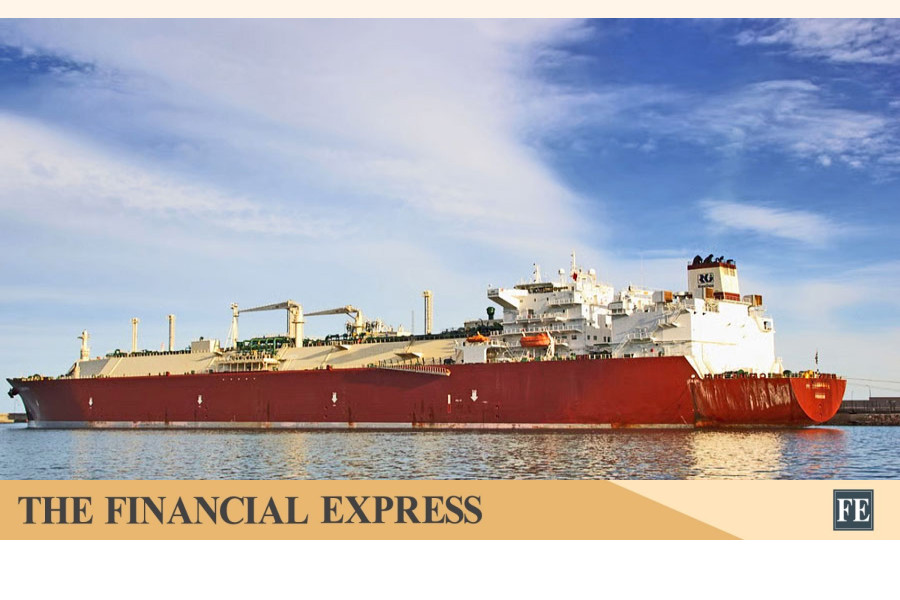
In consequence of the ongoing war in the oil-rich Persian Gulf region following the joint US-Israeli attacks on Iran and the latter's retaliatory measures, the global energy market has, to all appearances, turned upside down overnight. What has raised the worst concern is the virtual shutdown by Iran of the Strait of Hormuz, the chokepoint between Iran and Oman that connects the Persian Gulf to the Arabian Sea. Notably, every day roughly 20 million barrels of oil, which is about 20 to 25 per cent of global oil consumption, and 20 per cent of the liquefied natural gas (LNG), pass through this narrow passage. With Bangladesh's economy so dependent on energy, especially crude oil and Liquefied Natural Gas (LNG) to be particular, from the Gulf countries, the concern of the government here is understandable. The sudden disruption in the supply chain of the Middle Eastern energy has already caused panic among consumers as well as traders. Despite repeated assurances from the government that the country has adequate stock of oil, the local energy market still remains highly volatile.

Needless to say, high energy price means high transportation cost of commodities meaning a fresh upward push to inflation which is already high. Further rise in the inflation, which, according to the Bangladesh Bureau of Statistics (BBS) data, as of January 2026, was hovering around 8.58 or about 9.0 per cent (point-to-point), would put another layer of issues on the existing predicaments of the newly elected BNP government inheriting from the past. Now with sudden crisis in the global energy market, the inflation rate may again reach double-digit figure raising the cost of living further. High inflation also means more depreciation of Bangladesh Taka (BDT) against US dollar (USD) leading to rise in import costs. Instability in the Gulf economies is also linked to the employment situation of our migrant workers in the Middle East and, as such, the remittance dollars they send home. The situation obtaining in the Gulf states amid this war is indeed very precarious where over 8.0 million Bangladesh-origin migrant workers are employed and who sent a record amount of US$32.8 billion last year (2025). Needless to say, these remittance contribute to the nation's economy, particularly to the foreign exchange reserves in a big way. Now that all these countries of the Gulf region are in the heart of the raging destructive war, there is obvious reason for the government to be deeply concerned. Consider that Saudi Arabia hosts over 3.5 million of our expatriate workers, while the United Arab Emirates (UAE) around 2.5 million. The remainders are employed in Oman, Qatar and Bahrain. So, following the start of the current Middle Eastern war which has directly affected all the Gulf states that host Bangladeshi migrant workers, on February 28, their situation has become uncertain. Their job-loss would be a double whammy for the economy as fewer remittance dollars in tandem with increasing number of homebound returnees would render the already fragile economy more insecure. Add to that the issue of imported energy that has been discussed in the foregoing. Against this backdrop, in a bid to find out a way to ride out the emergent crisis, the present governor of the central bank, the Bangladesh Bank (BB), Md Mostaqur Rahman, reportedly took an initiative to meet the country's economists last Saturday (March 7). That is no doubt a prudent move on the part of the new BB governor, who is a businessman with no prior experience of holding a position in any financial organization either in the government, or in the private sector. So, some policy changes such as lowering the policy rate and thus reducing lending costs ostensibly aimed to stimulate economic growth that the new BB governor had been mulling over immediately upon assuming office may be forthcoming. In fact, his predecessor, Ahsan H. Mansur, who was unceremoniously ousted from office, was following a tight monetary policy to check inflation which was not to the liking of a large segment of the business community, who wanted cheaper credit to run their businesses.

Obviously, the fresh Gulf war has upset the calculations of the new BB chief. The top economists of the country he sought opinions from have reportedly advised against lowering the policy rate for now. The issues that featured prominently in the view exchange with the economists evidently centred around the crisis arising from the current war in the Gulf region. Those included first and foremost, the stress it might cause to the reserves of hard currency and saving it for a rainy day. Especially, they advised against spending the reserve dollars for the purpose of import. Also came in their considerations the issue of possible disruption in the inflow of remittance. On the question of disruption of oil and LNG sourced from the Gulf region, the economist were for looking for alternative sources in the Southeast Asia such as Brunei, Malaysia and Singapore. The economist were also against the tendency of instantly passing the cost of any rise in the price of energy in the international market on to the consumers. In fact, a section of the traders, who are unscrupulous, make matters worse by creating an artificial supply crisis. The prevailing panic buying trend following rationing of oil sale from petrol pumps has a lot to blame on the past governments' practice of punishing the consumers in the event of any unforeseen emergency in the energy market. What the consumers have so far experienced is only hike in fuel price come rain or shine. Unfortunately, the consumers were at the receiving end even at times of considerable fall in energy price, for instance, between 2014-15 and 2020-21. But this time around, the culture of making profit by the Bangladesh Petroleum Corporation (BPC), which is a statutory body to import, market and distribute fuels, at the expense of the consumer public, must change. In the evolving circumstances, the new BB governor would do well to listen to the economists and experts and carefully calibrate his options as he might have to resort to measures even to the chagrin of some powerful quarters in politics and businesses.

At this point, one would like him to rise up to his promise he made that he would work with honesty and not bow to any political pressure. Hopefully, he would stand his ground under pressure and put the macroeconomy back on an even keel. That is more so in the face of the past as well as the emerging instabilities in the energy market, which has an overarching impact on the macroeconomy in general and inflation in particular.​
 
Analyze

Analyze Post

Add your ideas here:
Highlight Cite Respond

Iran war could shake Bangladesh economy like an earthquake

Energy shock and trade disruptions already hitting country; economists say fallout depends on conflict intensity and duration

Md Asaduz Zaman

1773103540764.webp


When tensions escalate among global and regional powers, the shockwaves ripple through oil markets, shipping lanes, labour migration routes, and financial systems, reaching economies thousands of kilometres away.

The US-Israel war on Iran is rapidly emerging as one of the most significant geopolitical crises for the global economy in recent years, sending tremors through markets and supply chains.

Although the fighting is roughly 4,000 kilometres from Bangladesh, economists say the impact could be substantial for a nation heavily reliant on imported fuel and remittances from workers in the Middle East.

According to economists, the crisis due to the war risks setting off a chain reaction: rising energy prices, disrupted trade flows, weakened export competitiveness, turmoil in the migrant labour market and remittance inflows, higher inflation, and renewed pressure on foreign exchange reserves amid a constrained fiscal space.

Zahid Hussain, former lead economist of the World Bankโ€™s Dhaka office, said Bangladeshโ€™s economic exposure could unfold through three channels: energy, the dollar, and trade and finance.

He compared the potential shock of the war to an earthquake rather than a passing storm.

A storm passes temporarily, Hussain said. โ€œWater rises and then recedes. Some damage happens, but the situation stabilises. But an earthquake damages the underlying infrastructure, affecting both life and property.โ€

The economist said the scale of the impact will depend on both the intensity and duration of the war.

โ€œThe key question is not only the magnitude of the shock, but also how long it lasts. The longer it continues, the greater the damage,โ€ he said.

ENERGY SHOCK LOOMS

The most immediate and potentially severe impact of the Iran war is on global oil markets, with the price surging to $119 as of yesterday compared to around $72 per barrel a year ago.

The Gulf region sits at the heart of the worldโ€™s energy supply chain.

Following last weekโ€™s US and Israelโ€™s attack on Iran, Tehran blocked the Strait of Hormuz, a crucial maritime route, seriously disrupting cargo transport between the Middle East and Bangladesh.

Major shipping lines have suspended cargo bookings between the Indian subcontinent, including Bangladesh, and the Gulf.

For Bangladesh, the consequences could be painful.

The country imports almost all its fuel -- from crude oil to refined petroleum and liquefied natural gas (LNG). A spike in oil prices would immediately inflate the countryโ€™s energy import bill.

Long queues have already appeared at fuel stations across the country as panic buying spreads, while the government has closed universities and introduced fuel rationing to cushion the fallout.

Higher fuel prices would also increase costs for electricity generation, transportation, and industrial production.

In that case, the government, already struggling to manage energy subsidies, would face difficult choices: absorb the cost through larger subsidies or pass it on to consumers through higher fuel and power prices.

Both carry economic consequences, such as rising subsidies straining public finances, while higher domestic energy prices push up living costs and production expenses.

INFLATION COULD GO WILD, AGAIN

Energy shocks rarely stay confined to the power sector; instead, they ripple through the entire economy.

Bangladesh has been struggling with stubbornly high inflation for around three years. Inflation was above the 9 percent mark from March 2023, easing slightly in 2025, and showing a resurgence recently.

The drivers for renewed price pressure include high food prices, currency depreciation, and rising import costs.

A further rise in global oil prices would amplify these pressures by raising transport and logistics costs across supply chains.

Higher fuel costs affect everything from agricultural irrigation to the distribution of essential commodities, potentially pushing food inflation higher and squeezing household purchasing power.

This dynamic could leave the economy facing elevated inflation alongside slowing growth.

After months of easing, headline inflation reached a 10-month high in February due mainly to rising food prices, according to the Bangladesh Bureau of Statistics (BBS).

FOREIGN EXCHANGE UNDER STRAIN

Energy imports are one of Bangladeshโ€™s largest sources of foreign currency outflows. A prolonged rise in oil prices would add pressure on the countryโ€™s foreign exchange reserves.

Bangladesh has previously faced periods of reserve stress due to high import bills and currency volatility. Another energy shock could widen the current account deficit, increasing the cost of fuel imports.

As demand for dollars rises, the Bangladeshi taka may face renewed depreciation, further raising the domestic price of imported goods and reinforcing inflation.

REMITTANCE RISKS

Bangladeshโ€™s large migrant workforce in the Middle East is another vulnerability. Since fiscal year 2025, around 86 lakh Bangladeshi workers have gone abroad for jobs, with Saudi Arabia employing nearly half.

Middle Eastern countries, including Saudi Arabia, Oman, Qatar, the United Arab Emirates, and Kuwait, account for around 75 percent of overseas employment, according to the Bangladesh Economic Review 2025.

If the conflict escalates, economic activity in the Gulf could slow, threatening employment for migrant workers and reducing remittance inflows.

Even a moderate slowdown would put additional pressure on Bangladeshโ€™s external balance, as remittances play a crucial role in offsetting the countryโ€™s large import bill.

The war could also disrupt global trade routes. During geopolitical tension, shipping companies often raise insurance premiums, and freight rates increase if vessels reroute to avoid conflict zones.

For Bangladeshโ€™s export-oriented industries, particularly the ready-made garment sector, higher logistics costs could reduce competitiveness. Importers would also face higher charges for essential commodities, machinery, and industrial inputs, feeding through into domestic prices.

Bangladeshโ€™s energy system remains fragile. Power generation depends heavily on imported fuels and LNG.

Tight global gas markets or surging LNG prices could make affordable supply difficult, leading to potential power shortages or higher generation costs. Such disruptions could affect industrial production, especially in energy-intensive sectors such as manufacturing and textiles.

โ€œThe first risk is energy, both in terms of price increases and availability,โ€ said economist Hussain.

โ€œEven if you are willing to pay a higher price, you may not be able to secure supply. If energy supply is disrupted, the real economy, agriculture, industry and services, comes under risk,โ€ he added.

The economist also warned of mounting pressure on the US dollar. โ€œAs global uncertainty rises, the dollar strengthens and our import bill increases,โ€ Hussain said.

โ€œEven if the volume of imports does not rise, the total bill will increase, meaning we will have to spend more local currency to buy the same amount of dollars. That will further fuel inflation.โ€

A stronger dollar could complicate external payments.

โ€œWhen dollars become scarce, settlement of outstanding payments becomes difficult, and payment obligations start to accumulate,โ€ he said, adding that this could create pressure on banksโ€™ balance sheets and the government budget.

The third channel is trade and financial flows, particularly higher logistics costs.

โ€œFreight charges, port costs and insurance premiums are already rising, which increases payments under the services account of the balance of payments,โ€ Hussain said. โ€œIndividually, these costs may seem small, but collectively they create significant pressure.โ€

He also flagged risks to remittance flows.

โ€œThere are two risks for remittances. First, employment and wage risks for migrant workers if the conflict spreads, and second, possible disruptions in payment systems that could affect money transfers,โ€ he said.

โ€œThe external balance, financial sector and energy supply are all exposed, and their combined impact will eventually affect the real economy -- growth, employment and wages,โ€ Hussain added.

BANGLADESH NEEDS A CONTINGENCY PLAN

Mustafizur Rahman, distinguished fellow at the Centre for Policy Dialogue (CPD), said Bangladesh should prepare a contingency plan to deal with emerging risks.

โ€œWe need to think about how to use the foreign financing already in the pipeline so that pressure on foreign exchange reserves remains limited,โ€ he said. Once these funds arrive, they could add several billion dollars to reserves, easing external pressure.

Rahman also called for mobilising additional support, including budgetary assistance from institutions such as the World Bank.

โ€œIf fuel import costs surge, it will be very difficult to manage through reserves alone,โ€ he said. โ€œIn that case, we may need financing arrangements such as import credit facilities from institutions like the Islamic Development Bank. Preparing a contingency plan in advance would be a prudent step.โ€

Finance Minister Amir Khosru Mahmud Chowdhury, when asked about the potential impact of the war and whether austerity measures were being considered, did not provide a detailed response.

โ€œWe are working on this issue,โ€ he told The Daily Star.​
 
Analyze

Analyze Post

Add your ideas here:
Highlight Cite Respond

A test for Bangladesh's new government

Golam Rasul
Published :
Mar 10, 2026 23:19
Updated :
Mar 10, 2026 23:19

1773189355880.webp


The Middle East is already engulfed in a widening war-but its economic shockwaves are already travelling far beyond the battlefield. On February 28 2026, coordinated US-Israeli airstrikes struck Iranian military facilities and targeted Supreme Leader Ayatollah Ali Khamenei. Tehran retaliated with counter attacks on Israel and US bases in Gulf States, while declaring the Strait of Hormuz closed to commercial shipping and launching strikes on Gulf energy infrastructure.

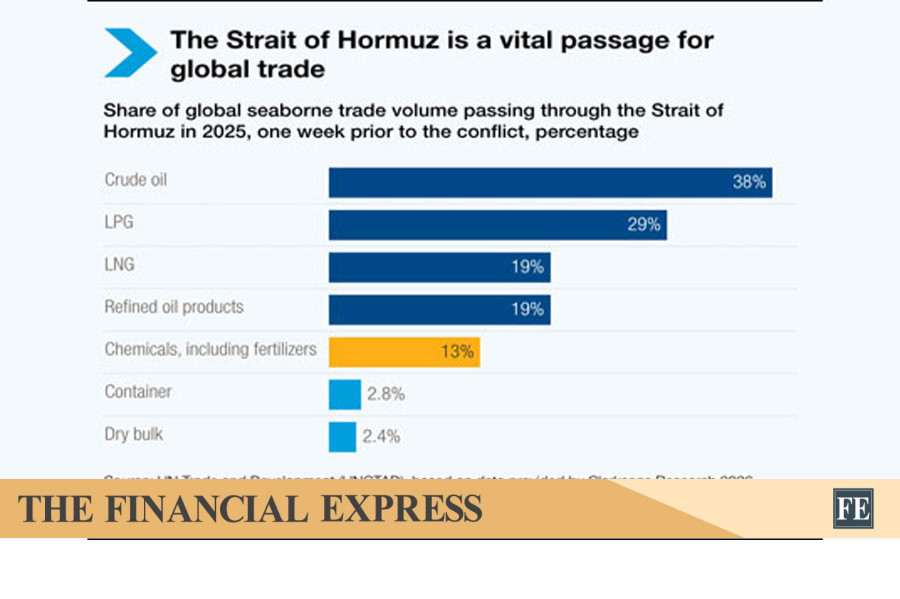
The stakes are global. Nearly 21 million barrels of oil-one fifth of world supply-and 20 per cent of LNG shipments pass through Hormuz each day. Even the threat of disruption is enough to send energy markets into turmoil. Brent crude has already surged past $82 per barrel, LNG cargoes bound for Asia have been suspended, and insurance premiums for Gulf shipping have spiked.

For countries like Bangladesh-heavily dependent on imported energy and Gulf labour markets-the crisis is not a distant geopolitical drama but an immediate economic risk. Bangladesh's economy depends simultaneously on Gulf energy, Gulf labour markets, and global shipping routes, making it unusually exposed to instability in the Middle East. For a government barely two weeks in office, it could prove to be its first major test of resilience.

ENERGY - THE IMMEDIATE SHOCK: Bangladesh's energy dependence is enormous. Petroleum imports alone exceeded Tk 790 billion (US$7.2 billion) in December 2025, and during previous global energy shocks they surged far higher.

Oil provides a quarter of primary energy and is almost entirely imported from Saudi Arabia and the UAE. LNG from Qatar and Oman has become essential for power generation, while LPG imports rose 10.5 per cent in FY25 as households and industries shifted away from unreliable gas.

During the global energy spike following the Russian invasion of Ukraine, monthly petroleum imports peaked at over Tk 1.43 trillion.

With the Strait of Hormuz now disrupted, Bangladesh faces an immediate threat: rapidly rising energy prices combined with possible supply interruptions. The policy choices are politically difficult-either allow domestic fuel prices to rise sharply or absorb the shock through costly subsidies.

INFLATION AND THE COST-OF-LIVING SQUEEZE: Energy shocks rarely remain confined to fuel markets; they ripple through the entire price system.

Bangladesh experienced this dynamic during 2022-23, when inflation remained above nine percent for prolonged periods. Rising fuel prices increased transportation costs, pushed up agricultural production expenses, and raised food distribution costs. Fertiliser subsidies alone expanded to nearly TK 280 billion, placing additional strain on the national budget.

A renewed energy shock would intensify these pressures. Higher natural gas prices would raise fertiliser costs; increased freight rates would push up import prices; and elevated transport costs would feed directly into food inflation.

For urban households, this translates into a sharper cost-of-living crisis. For rural families, where food constitutes a large share of household expenditure, the welfare impact can be severe. Inflation is therefore not merely an economic variable-it is one of the most politically sensitive consequences of external shocks.

For a new government already facing public pressure over rising prices, managing inflation while maintaining fiscal stability will be a formidable challenge.

REMITTANCES AT RISK: While energy imports expose Bangladesh to global price shocks, labour migration ties its economy directly to the Middle East.

In 2025 Bangladesh received a record $32.8 billion in remittances, a 22 percent increase from the previous year. These inflows-equivalent to more than six per cent of gross domestic product (GDP) -sustain millions of households and support consumption across rural Bangladesh.

A large share of these remittances originates from Gulf economies such as Saudi Arabia, United Arab Emirates (UAE), Qatar, and Kuwait, where more than seven million Bangladeshi workers are employed.

A prolonged regional conflict could strain this lifeline. Economic slowdown in host countries may reduce labour demand, construction projects could be delayed or cancelled, and wage payments may become uncertain. In extreme circumstances, large-scale repatriation of migrant workers could occur-echoing disruptions seen during the pandemic.

Unlike energy shocks, which are immediate, remittance shocks unfold gradually. Yet their macroeconomic impact can be deeper over time, weakening rural consumption, reducing foreign-exchange inflows, and increasing pressure on the Bangladeshi taka.

TRADE AND SHIPPING DISRUPTIONS: Bangladesh's export economy is equally dependent on global maritime stability.

The country's ready-made garment sector generated more than $39 billion in export earnings in FY25 and accounts for roughly 80 per cent of total exports. Much of this trade flows to European markets through routes passing the Red Sea and the Suez Canal.

Recent disruptions have already demonstrated the fragility of these shipping routes. Attacks on commercial vessels in the Red Sea during 2023-24 forced shipping companies to reroute around Africa's Cape of Good Hope, adding nearly two weeks to transit times and significantly increasing freight costs.

A wider Middle East war would amplify these disruptions. Higher insurance premiums, longer transit times, and volatile freight rates could undermine Bangladesh's competitiveness in global apparel markets. For an industry employing millions of workers, even modest export disruptions could carry serious economic consequences.

EXTERNAL BALANCE UNDER STRAIN: Bangladesh's external position remains fragile. Although the balance of payments recorded a $3.3 billion surplus in FY25 and reserves recovered to $27.4 billion, vulnerabilities remain significant.

Petroleum imports alone cost $7.2 billion in December 2025, underscoring how quickly reserves can erode. Remittances worth $32.8 billion and garment exports of $39.35 billion are both exposed to Gulf instability and shipping disruptions.

Bangladesh's currency has already weakened sharply-losing nearly 40 per cent of its value against the dollar between 2022 and 2025, eroding purchasing power and driving up the cost of imports. This steep depreciation has not only inflated the energy import bill but also strained reserves, complicated debt servicing, and fuelled inflationary pressures at home.

A Gulf conflict would intensify the challenge. Rising energy imports would drain foreign exchange, while weaker exports and remittances would reduce inflows. The resulting pressure on the current account could weaken the currency, force interest rate hikes, and squeeze growth. In a severe scenario, Dhaka could again be forced to rely on external financial support-just as it did with the $4.7 billion IMF program in 2023.

FISCAL PRESSURE: Bangladesh's fiscal space is exceptionally narrow. The country's tax to GDP ratio of about 8 per cent is far below India's 17 per cent and Vietnam's 19 per cent, leaving Dhaka with far less capacity to absorb external shocks. This weak revenue base means the government relies heavily on subsidies as its primary tool to stabilise domestic prices during crises.

But subsidies consume vast resources. Fuel subsidies alone exceeded Tk 290 billion ($2.6 billion) in FY23, while fertiliser subsidies topped Tk 280 billion ($2.5 billion) in the same year. Electricity subsidies added another Tk 170 billion ($1.5 billion) in FY25. Together, these outlays amount to more than Tk 740 billion annually, a burden that absorbs nearly one?tenth of the national budget and leaves little fiscal space for investment in infrastructure, health, or education. The fiscal deficit was reduced to 3.6 per cent of GDP in FY26, but only through austerity measures, import compression, and cuts to development spending.

A Gulf war would magnify this burden. A sharp rise in global energy prices would dramatically increase subsidy costs, forcing policymakers into a painful trade off. Passing higher costs to consumers risks runaway inflation and social unrest; absorbing them through subsidies deepens deficits and crowds out investment in infrastructure, education, and health-precisely the areas needed to build resilience.

The opportunity cost is stark. Every taka spent on subsidies is a taka not invested in long-term growth. With fiscal space already constrained, Bangladesh risks being locked into a cycle of crisis management rather than building the foundations of resilience.

GEOPOLITICAL PRESSURES: Beyond economics, the crisis will also test Bangladesh's diplomacy. The country maintains deep economic and labour ties with Gulf states while simultaneously navigating relations with major global powers whose strategic interests in the region often diverge. A widening conflict could create diplomatic pressures over sanctions, security alignments, or humanitarian responses, forcing Dhaka to balance principle with pragmatism.

Most critically, the safety of millions of Bangladeshi expatriate workers would become a national concern. Evacuation planning, consular protection, and labour diplomacy would require rapid mobilisation of Bangladesh's foreign policy apparatus. At the same time, Dhaka would face growing expectations from partners to take positions on contested issues-testing its ability to preserve neutrality while safeguarding national interests.

THE ROAD AHEAD: Wars in the Middle East rarely remain confined to the battlefield. Through oil prices, remittance flows, and maritime trade routes, their economic aftershocks travel thousands of miles-reaching countries far removed from the conflict itself. Bangladesh's deep reliance on imported energy, Gulf labour markets, and global shipping lanes means that instability in the region can quickly translate into inflation at home, pressure on foreign-exchange reserves, and uncertainty for millions of migrant families.

For Bangladesh's new government, the unfolding crisis is more than a distant geopolitical conflict. It is an early test of economic leadership in a turbulent world. Managing the immediate shock-containing inflation, protecting reserves, and safeguarding migrant workers-will be essential. The crisis also highlights a longer-term imperative: accelerating energy diversification through renewables, regional power trade, and domestic gas exploration to reduce dependence on volatile Gulf supply chains.

The deeper challenge is not only to navigate the immediate shock but to build resilience in an increasingly volatile global environment-laying the foundations so that future external crises does not reverberate as an economic crisis at home.

Golam Rasul, PhD, is Professor, Department of Economics, International University of Business Agriculture and Technology (IUBAT), Dhaka.​
 
Analyze

Analyze Post

Add your ideas here:
Highlight Cite Respond
Bangladesh gets Iran's waiver in Hormuz strait

 
Analyze

Analyze Post

Add your ideas here:
Highlight Cite Respond
Analyze

Analyze Post

Add your ideas here:
Highlight Cite Respond

From Strait of Hormuz to Bangladesh
The global oil shock explained
Serajul I Bhuiyan

Published :
Mar 11, 2026 23:39
Updated :
Mar 11, 2026 23:39

1773275764760.webp


There are few places on earth where the interplay between geopolitics and the global economy is as evident as in the Strait of Hormuz, a small strait of water located between Iran and Oman, which serves as the primary conduit through which the energy resources of the Persian Gulf are delivered to the global economy. Even though the strait itself is only 33-50 kilometers at its broadest, this small strait of water carries a massive percentage of the worldโ€™s oil supplies.

According to estimates of global energy agencies, 20 per cent of the worldโ€™s daily oil consumption, or 20 million barrels per day, flows through the Strait of Hormuz. This includes oil exports from Saudi Arabia, Iraq, Kuwait, the UAE, and Qatar, all of which must pass through this small strait of water before they are delivered to hungry energy consumers in Asia, Europe, and the rest of the world.

Because of this massive percentage of global oil supplies, even a minor disruption of this small strait of water has the potential to create shockwaves throughout the global economy. In addition, as tensions increase in the Middle East, particularly between Iran and Western nations, as well as between Iran and other Middle Eastern nations, the global oil markets react almost immediately.

Oil prices increase not only as a result of a disruption, but also as a result of the perceived threat of a potential disruption, which affects oil prices even before a blockade takes place.

Geopolitical Tensions and Oil Market Volatility: The Strait of Hormuz has repeatedly emerged as a focal point during periods of geopolitical tension in the region. Iran has repeatedly offered a veiled threat that in case of military pressure or stringent economic sanctions, it can stop or disrupt shipping in the Strait of Hormuz. Conversely, the United States and its allies have consistently maintained a powerful military presence in the region to ensure the free movement of shipping.

Even in cases where no ships are attacked or blocked, the potential for conflict can dramatically affect oil prices. Oil markets function on expectations rather than on actual happenings.

For instance, during periods of regional tensionโ€”whether due to military conflict, sanctions, or political tensionsoil prices tend to rise by several dollars a barrel within a matter of hours. Insurance premiums for shipping rise sharply, shipping routes become more cautious, and companies begin seeking alternative routes for shipping oil.

The reality is that there are very few alternative routes available for shipping oil around the Strait of Hormuz. Some pipelines exist that transport oil across this strategic region in the Middle East. For instance, the Saudi Arabia-East West pipeline or the Abu Dhabi-Fujairah pipeline in the UAE can be used for this purpose. However, these pipelines can only carry a fraction of the total amount of oil normally shipped through this region.

Oil Price Shocks Matter for Bangladesh: Bangladesh is a country in South Asia that imports the majority of its petroleum products to meet domestic energy demand. Therefore, for a country like Bangladesh, which lacks abundant petroleum resources, a conflict in this region can have significant economic implications. Unlike many oil-producing countries in the Middle East, Bangladesh lacks abundant petroleum resources.

Bangladesh is one of the largest importers of oil and liquefied gas from the Middle East region. Therefore, Bangladesh is extremely vulnerable to the instability of the Persian Gulfโ€™s energy supplies.If the tensions in the Strait of Hormuz cause global oil prices to increase, Bangladesh will immediately be subject to the following economic challenges:

Rising Import Costs. Bangladesh already spends billions of dollars annually on import bills. If oil prices increase, Bangladesh will face higher import costs. This will increase Bangladeshโ€™s trade deficit.

Inflationary Pressure. Bangladesh is extremely vulnerable to oil prices because they are directly linked to the cost of transportation, food, and other products. If oil prices rise, transportation costs will rise. This will cause inflation across the transportation, food, and manufacturing industries.

Challenges in the Production of Electric Energy. Bangladesh is facing a growing demand for electricity. Bangladesh uses oil-fired power plants to generate electricity. Therefore, if oil prices increase, Bangladesh will face challenges in producing electricity at reasonable prices. This is a critical challenge because the government will be forced to raise electricity prices or subsidize the people of Bangladesh. This is a critical challenge because electricity prices are a sensitive issue in Bangladesh.

Challenges to the Growth: Bangladesh is one of the largest importers of textiles and textile-based products. Bangladesh is facing a growing demand for textiles from the global community. Therefore, price instability will pose challenges to the growth of Bangladeshโ€™s economy.

Strategic Energy Vulnerabilities: Bangladesh is extremely vulnerable to instability in the Persian Gulfโ€™s oil supplies due to the Strait of Hormuz. Bangladesh is facing a growing energy demand as the country is growing rapidly. Therefore, the country will be forced to import a significant amount of energy from the Middle East region.

As a result, this rising reliance on imported energy sources puts Bangladesh at risk of global disruptions, whether caused by wars, sanctions, or geopolitical tensions far removed from the nation itself.

Diversification and Energy Resilience: To counter this rising threat, Bangladesh has begun exploring a range of new strategies to strengthen its energy resilience.

The first strategy might be to diversify the sources of imported energy. By seeking new suppliers of oil, gas, and other energy sources beyond the Middle East, Bangladesh might begin to reduce its reliance on a single geopolitical hotspot.

A second strategy might be to increase the pace of renewable energy production, including solar power and wind power. While not a solution to Bangladeshโ€™s rising reliance on imported energy, a more rapid transition to renewable energy might begin to reduce the nationโ€™s reliance on imported oil.

Bangladesh might also increase its investment in liquefied natural gas, a new form of energy infrastructure that allows the nation to purchase energy supplies from a wider variety of global suppliers.

A Global Chokepoint with Local Consequences: While the Strait of Hormuz might be located far from Bangladesh, its economic impact feels no such constraint. In a global economy as interconnected as the one Bangladesh operates in, a disruption in a single, small maritime passage can affect nations on every continent.

For Bangladesh, this global disruption has a clear local consequence: the nationโ€™s energy security cannot be divorced from global geopolitics.

While the waters of the Strait of Hormuz are distant, the impact of global events on electricity and gasoline prices, and even on the global competitiveness of Bangladeshโ€™s export industries, is felt directly.

Looking Ahead: Given the ever-changing geopolitical landscape in the Middle East, the Strait of Hormuz will remain one of the worldโ€™s strategic locations under close watch. This is especially true in Bangladesh, which is growing rapidly and is highly dependent on imports.

However, the key to economic resilience in such a setting will be a combination of โ€œdiplomatic awarenessโ€ of the situation, a โ€œdiversifiedโ€ approach to energy policies, and โ€œlong-termโ€ investment in alternative forms of sustainable energy production.

Finally, the restricted waters of the Strait of Hormuz serve as a reminder that, in todayโ€™s interconnected world, the fortunes of nations thousands of miles apart can be dictated by a single passage.

Dr Serajul I Bhuiyan is a professor of journalism and mass communications at Savannah State University, Savannah, GA, USA.​
 
Analyze

Analyze Post

Add your ideas here:
Highlight Cite Respond

Members Online

Latest Posts

Back
PKDefense - Recommended Toggle