☕ Support Us
Wars - 2023 10/08 Monitoring the Israel and Lebanon War | Page 19 | PKDefense

Wars 2023 10/08 Monitoring the Israel and Lebanon War

Reply (Scroll)
Press space to scroll through posts
G War Archive
Wars 2023 10/08 Monitoring the Israel and Lebanon War
185
7K
More threads by Saif


Hezbollah chief thanks Iran for support to face Israel
Agence France-Presse . Beirut, Lebanon 14 August, 2025, 22:13

1755223685669.png

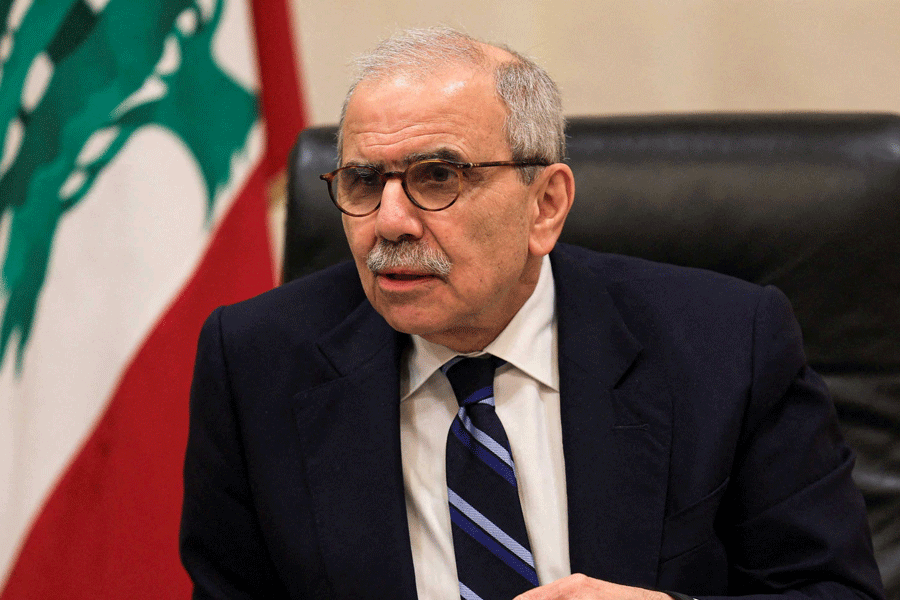
Naim Qassem | BSS file photo

Hezbollah chief Naim Qassem has thanked a senior Iranian official for his country’s on-going support in confronting Israel, the Lebanese militant group said on Thursday.

For decades, Tehran has been the main backer of the Shia Muslim group, which emerged badly weakened from last year’s war with Israel that saw its arsenal pummelled and senior commanders killed.

Qassem met with Iran’s Supreme National Security Council chief Ali Larijani, who arrived in Beirut on Wednesday, and thanked Iran ‘for the on-going support to Lebanon and its resistance against the Israeli enemy’, the group said in a statement.

He also thanked Iran for its support for Lebanon’s ‘unity, sovereignty and independence’, and emphasised ‘the brotherly relations between the Lebanese and Iranian people’.

Larijani’s visit came after the Lebanese government tasked the army with drawing up a plan to disarm Hezbollah by the end of the year.

Recent statements from Iranian officials in support of Hezbollah keeping its weapons have angered Lebanese officials.

Lebanese president Joseph Aoun told Larijani on Wednesday that ‘we reject any interference in our internal affairs,’ adding that ‘it is forbidden for anyone... to bear arms and to use foreign backing as leverage’.

Prime minister Nawaf Salam was equally firm, saying that ’Lebanon will not accept, in any form, any interference in its internal affairs, and expects from the Iranian side a clear and explicit commitment to respect these principles.’

Larijani said that ‘any decision that the Lebanese government makes in consultation with the resistance is respected by us’.

‘The one who interferes in Lebanese affairs is the one who plans for you, gives you a timetable from thousands of kilometres away. We did not give you any plan,’ he said.

He was alluding to Washington, which put heavy pressure on Beirut to disarm Hezbollah and even presented a detailed proposal, including a timeline, for the process.​
 
newagebd.net/post/middle-east/283149/hezbollah-mourns-top-commander-killed-in-israeli-strike

Hezbollah mourns top commander killed in Israeli strike
Agence France-Presse . Beirut, Lebanon 24 November, 2025, 22:18

Hezbollah held the funeral Monday for its top military chief and other members of the militant group a day after Israel killed them in a strike on Beirut’s southern suburbs.

Haytham Ali Tabatabai is the most senior Hezbollah commander to be killed by Israel since a November 2024 ceasefire sought to end more than a year of hostilities between the two sides.

His assassination comes as Israel has escalated its attacks on Lebanon, with the United States increasing pressure on the Beirut government to disarm the Iran-backed Hezbollah.

Israel’s military said Sunday it had ‘eliminated the terrorist Haytham Ali Tabatabai, Hezbollah’s chief of general staff’.

The group announced the deaths of Tabatabai and four other members in the attack.

In Beirut’s southern suburbs, a densely populated area where Hezbollah holds sway, hundreds of supporters joined Monday’s funeral procession for Tabatabai and two of his companions.

Hezbollah members in fatigues carried the coffins, draped in the group’s yellow flags, to the sound of religious chants, an AFP correspondent said.

The crowd yelled slogans against Israel and America, while supporters carried portraits of the group’s leaders and Iran’s supreme leader, Ayatollah Ali Khamenei.

Hezbollah said Tabatabai assumed the role of military leader after the most recent war with Israel, which saw the group heavily weakened and senior commanders killed.

Israel has carried out near daily strikes on Lebanon despite the truce, usually saying it is targeting Hezbollah members and infrastructure to prevent the group from rearming.

According to the agreement, Hezbollah was to withdraw north of the Litani River, some 30 kilometres from the border with Israel, and to have its military infrastructure there dismantled.

Under a government-approved plan, Lebanon’s army is to finish disarming Hezbollah in the area by year end, before tackling the rest of the country.

Hezbollah has rejected calls to disarm.

After Tabatabai’s killing, Israeli prime minister Benjamin Netanyahu said he would ‘not allow Hezbollah to rebuild its power’ and urged Lebanon’s government to ‘fulfil its commitment to disarm Hezbollah’.

A source close to the group said there were ‘two opinions within the group — those who wish to respond to the assassination and those who want to refrain from doing so — but the leadership tends to adopt the utmost forms of diplomacy at the present stage’.

Last December, Hezbollah lost a key supply route through Syria with the fall of longtime ruler and ally Bashar al-Assad.

Washington is also demanding that Beirut cut off the group’s funding from Iran, which slammed Sunday’s killing as ‘cowardly’.

Atlantic Council researcher Nicholas Blanford said that ‘Hezbollah’s options are very limited’.

‘Its support base is clamouring for revenge but if Hezbollah responds directly Israel will strike back very hard and no one in Lebanon will thank Hezbollah for that,’ he said.

Sunday’s strike was the biggest blow to Hezbollah since the ceasefire ‘because of (Tabatabai’s) seniority and the fact that it demonstrates the Israelis can still locate and target senior officials despite whatever protective measures Hezbollah is undertaking’ since the war, Blanford added.

Senior Hezbollah official Ali Damush told the funeral that Tabatabai’s killing aimed ‘to frighten and weaken Hezbollah into retreating surrendering, and submitting, but this goal will never be achieved’.

Israel was ‘worried about Hezbollah’s possible response — and should remain worried’, he said, urging Lebanese authorities to ‘confront the aggression by all means and reject the pressures that seek to push Lebanon to comply with American dictates and Israeli conditions’.

Lebanon’s army says it is implementing its plan to disarm Hezbollah, but the United States and Israel have accused Lebanon’s authorities of stalling.

Condemning the attack, prime minister Nawaf Salam said Sunday that ‘the only way to consolidate stability’ was through ‘extending the authority of the state over all its territory with its own forces, and enabling the Lebanese army to carry out its duties’.

A Lebanese military official said last week that US and Israeli demands to fully disarm Hezbollah by December 31 were ‘impossible’ considering personnel and equipment shortages, expressing concern at the risk of confrontations with local communities that support the group.​
 

Israel launches new strikes in south Lebanon
Agence France-Presse . Jerusalem 27 November, 2025, 22:54

The Israeli military said it had carried out another series of strikes against Hezbollah in southern Lebanon on Thursday, exactly a year into the ceasefire with the militant group.

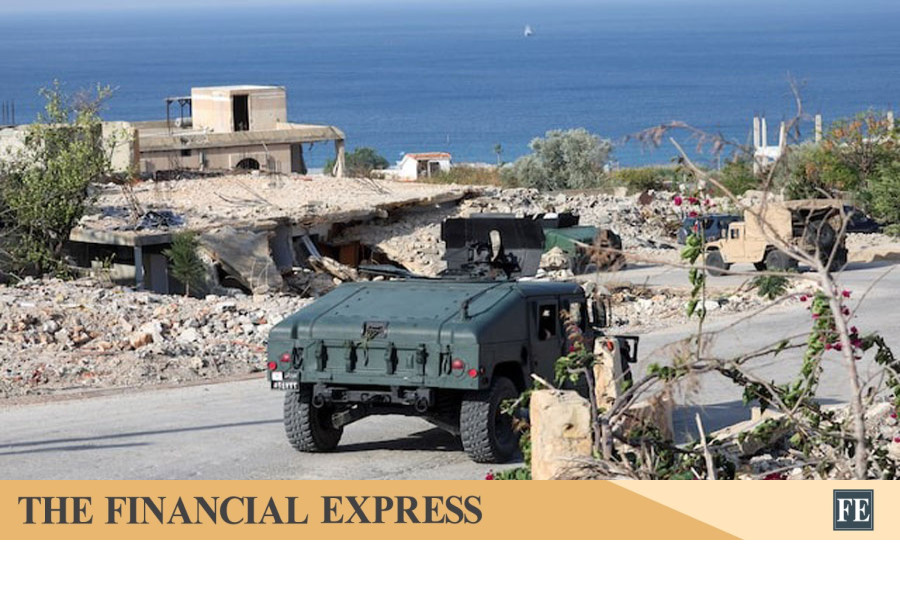
Lebanon’s state-run National News Agency said Israeli aircraft launched ‘a series of raids on Al-Mahmoudiya and Al-Jarmak in the Jezzine area’.

The Israeli military ‘struck and dismantled Hezbollah terror infrastructure in several areas in southern Lebanon’, it said in a statement.

It also said it had hit ‘several launch sites where Hezbollah weapons were stored’, ‘military posts’ used by the Iran-backed group and a storage facility containing weapons.

Israel’s military ‘will continue to operate to remove any threat to the State of Israel’, it said.

The November 27, 2024 ceasefire sought to end over a year of hostilities between the two sides.

Israel has repeatedly bombed Lebanon despite the truce, usually saying it is targeting Hezbollah members and infrastructure to stop the group from rearming.

According to the ceasefire agreement, Hezbollah was to pull its forces north of the Litani River, some 30 kilometres north of the border with Israel, and have its military infrastructure there dismantled.

Under a government-approved plan, the Lebanese army is to dismantle Hezbollah military infrastructure south of the river by the end of the year, before tackling the rest of the country.

The United States is increasing its pressure on the Lebanese government to disarm Hezbollah.

The Lebanese military has said it is carrying out its plan to disarm the group, but the US and Israel have accused Lebanese authorities of stalling the process.

An Israeli strike on Beirut’s southern suburbs on Sunday killed Haitham Ali Tabatabai — the most senior Hezbollah commander to be killed by Israel since the ceasefire entered into force.

Israeli defence minister Israel Katz on Wednesday warned there would be ‘no calm’ in Lebanon if Israel’s security was not guaranteed.

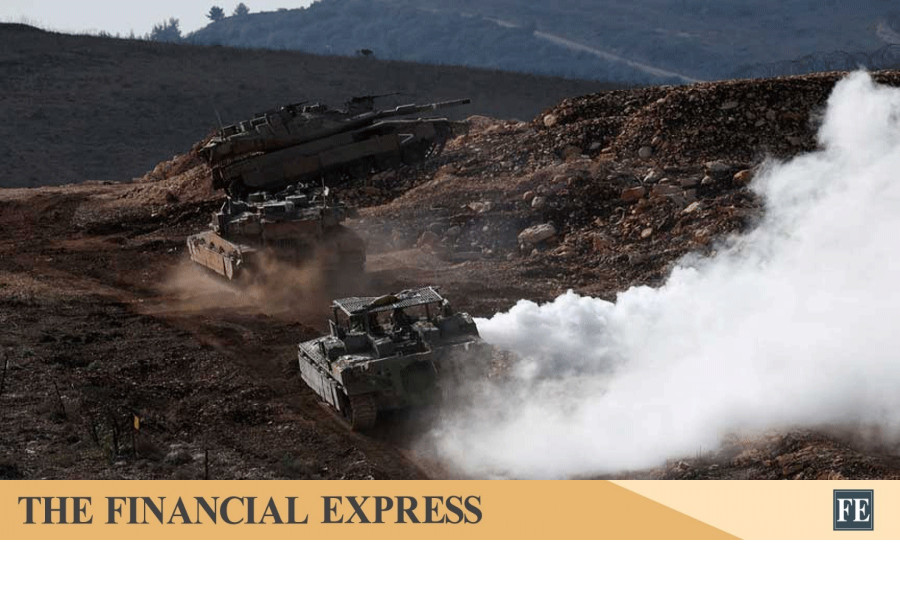
One year after a ceasefire between Israel and Hezbollah, the Israeli army still maintains five positions in south Lebanon, with fortifications and widened access routes, according to satellite images analysed by AFP.

Israel has kept troops in five positions that it deems strategic, saying it wants to ensure Hezbollah does not carry out any military activities in south Lebanon.

AFP was able to pinpoint these bases through satellite images from Planet Labs PBC.

Located on ridges across the Blue Line -- the de facto border -- these positions allow the Israeli army to control a series of Lebanese border villages, a move it considers key to protecting nearby Israeli communities.

The positions offer a direct view of the towns and villages of Kfar Kila, Aita al-Shaab, Maroun al-Ras, Aitaroun, Blida, Markaba and Hula -- among the most destroyed by Israeli strikes and ground operations.​
 

Lebanon holds first direct talks with Israel in decades
Agence France-Presse . Beirut, Lebanon 03 December, 2025, 23:03

1764813368737.webp

AFP file photo

Lebanese and Israeli civilian representatives held their first direct talks Wednesday in decades, part of a year-old ceasefire monitoring mechanism in the war with militant group Hezbollah, a source close to the talks said.

The meeting was taking place at the UN peacekeeping force’s headquarters in Lebanon Naqura near the border with Israel, the source said, as part of a mechanism to oversee the ceasefire that took hold in November 2024.

Morgan Ortagus, the US special envoy for Lebanon, also attended Wednesday’s meeting, the source added. The United States has been piling pressure on Lebanon to rapidly disarm Hezbollah.

Ortagus’s participation came a day after her visit to Jerusalem where she met Israeli foreign minister Gideon Saar. Israeli media said she also met prime minister Benjamin Netanyahu.

Until now Israel and Lebanon, which have no formal diplomatic relations, had insisted on keeping military officers in the role.

The United States has pushed for direct talks between the two neighbours in a bid to stabilise the region and further weaken Iran-backed Hezbollah.

Netanyahu’s office announced he was sending a civilian representative to meet officials in Lebanon, in what it called a first attempt to establish a basis for ties between the two countries.

Lebanese president Joseph’s Aoun office also said Wednesday that his delegation would be led by former ambassador Simon Karam and that it had been informed that Israel would include ‘a non-military member in its delegation.’

The appointment of a civilian on the Lebanese side came after Lebanon declared itself ready for negotiations with its southern neighbour.

Netanyahu has repeatedly indicated that Lebanon should join the Abraham Accords, under which a handful of Arab and Muslim countries have normalised ties with Israel.

The Israeli prime minister ‘instructed the acting director of the National Security Council to send a representative on his behalf to a meeting with government and economic officials in Lebanon’, Netanyahu’s office said.

‘This is an initial attempt to establish a basis for a relationship and economic cooperation between Israel and Lebanon,’ it added.

The announcement came days after the first anniversary of the start of a fragile ceasefire between Israel and Hezbollah.

The ceasefire with Hezbollah ended over a year of hostilities that erupted after the militant group launched attacks in support of its Palestinian ally Hamas.

Israel has repeatedly bombed Lebanon despite the truce, saying it is targeting Hezbollah members and infrastructure to stop the group from rebuilding its military capabilities.

Under a government-approved plan, the Lebanese army is set to dismantle Hezbollah’s military infrastructure south of the river by the end of the year, before tackling the rest of the country.

Judging the Lebanese efforts insufficient, Israel has ramped up its strikes in recent weeks.

On the anniversary of the truce, the Israeli military said it had carried out around 1,200 ‘targeted activities’ and ‘eliminated more than 370 terrorists’ from Hezbollah, Hamas and other Palestinian groups during the ceasefire.

After his meeting with US envoy Ortagus in Jerusalem Tuesday, foreign minister Saar said on X that they ‘had a good discussion on the situation in Lebanon’.

‘I said that the one violating Lebanese sovereignty is Hezbollah. Hezbollah’s disarmament is crucial for Lebanon’s future and Israel’s security,’ he added.​
 

Series of Israeli strikes hit Lebanon
Agence France-Presse . Beirut, Lebanon 12 December, 2025, 23:36

A series of Israeli strikes hit south and east Lebanon on Friday, state media reported, as Israel’s army said it was targeting Hezbollah sites, the latest such raids despite a year-old ceasefire.

Lebanon’s state-run National News Agency reported strikes in around a dozen locations, including up to around 30 kilometres from the Israeli border, citing at times ‘heavy raids’.

Israel has kept up strikes on Lebanon despite a November 2024 ceasefire that was supposed to end more than a year of hostilities with the Iran-backed militant group Hezbollah, and has also kept troops in five areas it deems strategic.

The Israeli military said in a statement that its forces ‘struck a training and qualification compound’ used by Hezbollah’s elite Radwan Force where operatives ‘underwent shooting exercises and additional training on the use of various types of weapons’.

The army also ‘struck additional Hezbollah military infrastructure in several areas in southern Lebanon’, it said.

According to the ceasefire, Hezbollah was required to pull its forces north of the Litani River, some 30 kilometres from the border with Israel, and have its military infrastructure there dismantled.

Under a government-approved plan, Lebanon’s army is to dismantle Hezbollah’s military infrastructure south of the Litani by the end of the year, before tackling the rest of the country.

The sites struck on Friday were generally north of the river.

Earlier this week, Israel launched a series of strikes on southern Lebanon, also saying it hit a Hezbollah training centre and other targets.​
 

Members Online

Latest Posts

Latest Posts