New Tweets

Wars 2023 10/08 Monitoring the Israel and Lebanon War

G War Archive
Wars 2023 10/08 Monitoring the Israel and Lebanon War
196
9K
More threads by Saif


Israel strike kills four in Lebanon
Agence France-Presse . Beirut, Lebanon 16 February, 2026, 22:57

Lebanon said an Israeli strike on Sunday near the Syrian border in the country’s east killed four people, as Israel said it had targeted operatives from Palestinian militant group Islamic Jihad.

Despite a November 2024 truce that sought to end more than a year of hostilities between Israel and Hezbollah, Israel has kept up regular strikes on Lebanon, usually saying it is targeting the Iran-backed group but occasionally also targeting its Palestinian ally Hamas.

It appeared to be the first strike Israel has claimed in Lebanon against Islamic Jihad, which is also allied with Hezbollah, since the truce.

An Israeli drone ‘targeted a car on the Lebanese-Syrian border’, the state-run National News Agency said, adding that ‘four bodies’ were inside the vehicle.

Lebanon’s health ministry confirmed the toll in a statement.

The Israeli military in a statement said it ‘struck Palestinian Islamic Jihad terrorists in the Majdal Anjar area’.

Fighters from Islamic Jihad were among those killed in Lebanon during hostilities between Israel and Hezbollah, which erupted in October 2023 over the Gaza war.

The Palestinian group and Hamas both claimed some attacks and infiltration attempts from Lebanon during the hostilities.

More than 370 people have been killed by Israeli fire in Lebanon since the ceasefire, according to an AFP tally of health ministry reports.

In line with the 2024 truce, the Lebanese army announced in January that it had completed the first phase of a government plan to disarm Hezbollah, covering the area near the Israeli border.

As part of the Lebanese government’s push to disarm non-state groups, some Palestinian factions in Lebanon handed over weapons in several refugee camps last year to the Lebanese authorities.

Hamas and its Islamic Jihad ally have not announced plans to disarm in Lebanon.​
 
Analyze

Analyze Post

Add your ideas here:
Highlight Cite Respond

Lebanon's Hezbollah warns residents in Israel's north to evacuate

REUTERS
Published :
Mar 07, 2026 19:39
Updated :
Mar 07, 2026 19:39

1772929235172.webp

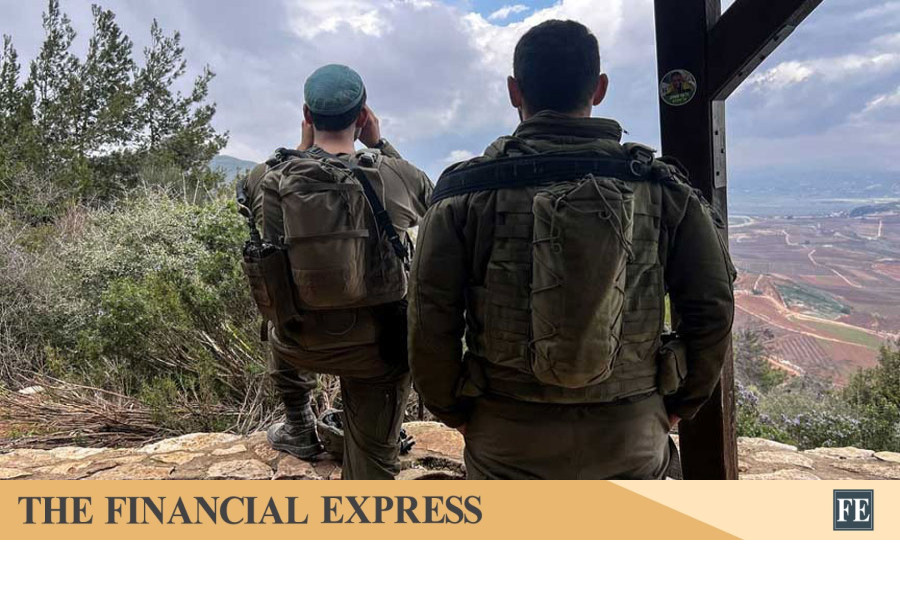
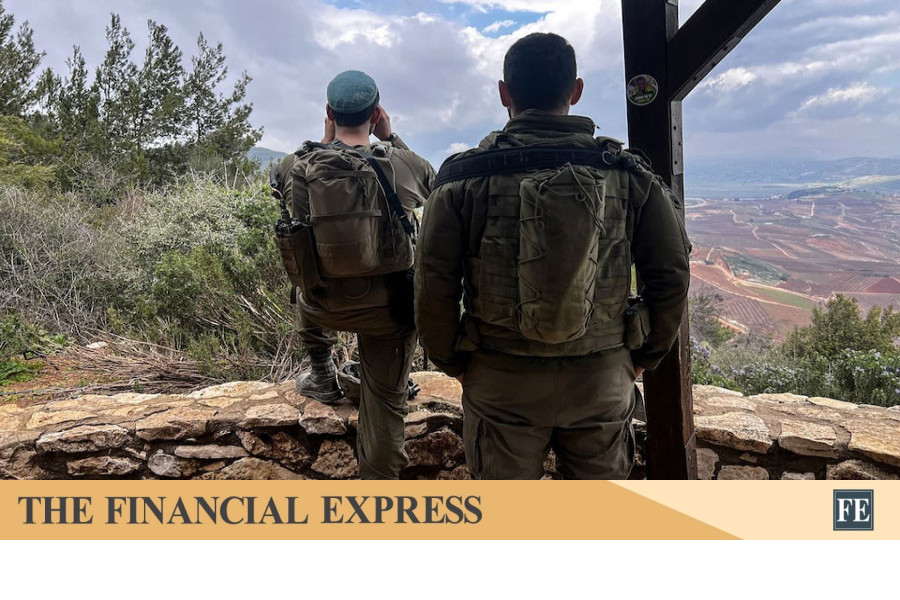
Israeli soldiers look towards Lebanon, amid an escalation between Iran-backed Hezbollah and Israel, and amid the US-Israeli conflict with Iran, by the Israel-Lebanon border in northern Israel Mar 7, 2026. Photo : REUTERS

Lebanese Shi'ite militant group Hezbollah on Saturday warned residents of a northern Israeli city near the border with Lebanon to evacuate and head south.

Hezbollah did not specify what action, if any, it planned to take against the city, which lies only a few kilometres from the border.

"Warning. All residents of Kiryat Shmona are asked to evacuate immediately. Head south," it said in a statement.

Lebanon was pulled into the widening US-Israel war with Iran on Monday after Hezbollah, an Iranian-aligned group, fired rockets and drones into Israel. Israel responded with heavy strikes across Lebanon's south, east and near Beirut.

Tens of thousands of Israelis living in the north evacuated their homes after war broke out in Gaza between Israel and Palestinian group Hamas in 2023, as Hezbollah began firing rockets and other projectiles at northern communities.

Residents returned after a November 2024 ceasefire between Israel and Hezbollah. Israeli Defence Minister Israel Katz has this week repeatedly urged Israelis in the north to remain in their homes, saying the military will protect them.​
 
Analyze

Analyze Post

Add your ideas here:
Highlight Cite Respond

2 Israeli soldiers killed in S. Lebanon: Israeli military

REUTERS
Published :
Mar 08, 2026 22:56
Updated :
Mar 08, 2026 22:56

1773016468021.webp


The Israeli military said on Sunday that two of its soldiers were killed in southern Lebanon, marking ⁠the first fatalities among its troops since Israel-Hezbollah hostilities resumed last week as Israeli intensified air strikes on Lebanon.

The military did not immediately ‌provide ⁠further details on the circumstances of the incident.

The Reuters Iran Briefing newsletter keeps you informed with the latest developments and analysis of the Iran war. Sign up here.

Clashes have continued along the ⁠Israel-Lebanon frontier amid heightened tensions between Israel and Hezbollah ⁠following the U.S.-Israeli military campaign on Iran.​
 
Analyze

Analyze Post

Add your ideas here:
Highlight Cite Respond

Israel unlawfully using white phosphorus in Lebanon: HRW
HRW urges the US, the UK, and Germany, to suspend military assistance and arms sales to Israel and impose targeted sanctions on officials.

Prothom Alo English Desk
Published: 09 Mar 2026, 21: 08

1773102888240.webp

Reuters file photo

The Israeli military unlawfully used artillery-fired white phosphorus munitions over homes in the southern Lebanese town of Yohmor on 3 March, Human Rights Watch (HRW) said in a news release today, Monday.

HRW verified and geolocated eight images showing airburst white phosphorus munitions being deployed over a residential part of the town and civil defense workers responding to fires in at least two homes and one car in that area.

“The Israeli military’s unlawful use of white phosphorus over residential areas is extremely alarming and will have dire consequences for civilians,” said Ramzi Kaiss, Lebanon researcher at Human Rights Watch. “The incendiary effects of white phosphorous can cause death or cruel injuries that result in lifelong suffering.”

White phosphorus is a chemical substance dispersed in artillery shells, bombs, and rockets that ignites when exposed to oxygen. It can set homes, agricultural areas, and other civilian objects on fire. Under international humanitarian law, the use of airburst white phosphorus is unlawfully indiscriminate in populated areas and does not meet the legal requirement to take all feasible precautions to avoid civilian harm.

Human Rights Watch verified and geolocated an image posted on social media the morning of 3 March, showing at least two artillery-delivered white phosphorus munitions being airburst over a residential neighbourhood in the town of Yohmor in southern Lebanon.

Human Rights Watch identified the shape of the smoke cloud caused by the airbursts in the picture as entirely consistent with the “knuckle” made by the expelling and bursting charges of the M825-series 155mm artillery projectile that contains white phosphorous.

Earlier that day, at 5:27 am, Avichay Adraee, Israel’s Arabic military spokesperson, issued an order stating that residents of Yohmor and 50 other villages and towns “should immediately evacuate [their homes] and move away from the villages to a distance of at least 1,000 meters outside the village to open land.”

Adraee repeated the statement at 12:12 pm that day. Human Rights Watch has not verified whether people were in the area or injured as a result of white phosphorus use.

Human Rights Watch has previously documented the Israeli military’s widespread use of white phosphorus between October 2023 and May 2024 across border villages in southern Lebanon, which put civilians at grave risk and contributed to civilian displacement.

White phosphorus can be used for multiple purposes, including to obscure, mark, signal, or directly attack military personnel and materiel.

Concerns over its use in populated areas are amplified by the technique shown in videos of air-bursting white phosphorus projectiles, which spread 116 burning felt wedges impregnated with the substance over an area between 125 and 250 meters in diameter, depending on the altitude and angle of the burst, indiscriminately exposing more civilians and civilian structures to potential harm than a localised ground burst.

Human Rights Watch also verified and geolocated photographs posted to Facebook at 11:34 am and 1:36 pm by the Civil Defense Team of the Islamic Health Committee in Yohmor, which is affiliated with the Lebanese armed group Hezbollah.

The photographs show workers extinguishing fires on residential rooftops and in a car and smoke emerging from the balconies of a home, which the Civil Defense Team attributed to white phosphorous. The geolocated sites were inside a radius of less than 160 meters.

Human Rights Watch analysis indicates the fire was likely caused by felt wedges impregnated with white phosphorus given the proximity of the house and the car to the area where airburst munitions were observed, indicating that the munitions were used unlawfully over concentrations of civilians.

Since the recent escalation of hostilities between Israel and Hezbollah on 2 March, at least 217 people have been killed in Lebanon as of 6 March, according to the health ministry, and hundreds of thousands have been displaced.

The Israeli military has issued displacement orders for the entire population of Lebanon south of the Litani River and all residents of Beirut’s southern suburbs, which include hundreds of thousands of people.

The sweeping nature of the Israeli military’s displacement orders raises concerns that their primary purpose is not to protect civilians but to instead spread terror and panic, especially in the context of recent large-scale displacement of civilians in Lebanon, raising serious risks of the war crime of forced displacement, Human Rights Watch said.

Israel should prohibit all use of airburst artillery-delivered white phosphorus munitions in populated areas because it puts civilians at risk of indiscriminate attacks. There are available alternatives to white phosphorus in smoke shells, including some produced by Israeli companies such as the M150 smoke projectile, which the Israeli army has used in the past as an obscurant, a means of hindering the visibility of its forces. These alternatives can have the same effect and dramatically reduce the harm to civilians.

Human Rights Watch has urged Israel’s key allies, including the United States, the United Kingdom, and Germany, to suspend military assistance and arms sales to Israel and impose targeted sanctions on officials credibly implicated in grave crimes.

It further said that Lebanon’s judicial authorities should initiate domestic investigations of serious international crimes, and the government should accede to the International Criminal Court’s (ICC) Rome Statute and submit a declaration accepting the court’s jurisdiction prior to the date of accession, including since at least 7 October 2023.

Israel’s widespread use of white phosphorus in southern Lebanon highlights the need for stronger international law on incendiary weapons, Human Rights Watch said. Protocol III of the Convention on Conventional Weapons is the only legally binding instrument dedicated specifically to incendiary weapons. Lebanon is party to Protocol III, while Israel is not.

Protocol III applies to weapons that are “primarily designed” to set fires or cause burns, and thus excludes certain multipurpose munitions with incendiary effects, notably those containing white phosphorus.

In addition, it has weaker regulations for the use in “concentrations of civilians” of ground-launched incendiary weapons—like the ones used in Lebanon—than airdropped incendiary weapons, even though they produce the same horrific injuries.

“Concentrations of civilians” is defined broadly to encompass populated areas ranging from villages to refugee camps to cities. Human Rights Watch and many countries have long called for closing these loopholes in Protocol III and creating international norms that better protect civilians from the harm caused by incendiary weapons.

“Israel should immediately halt this practice and states providing Israel with weapons, including white phosphorus munitions, should immediately suspend military assistance and arms sales and push Israel to stop firing such munitions in residential areas,” Kaiss said.​
 
Analyze

Analyze Post

Add your ideas here:
Highlight Cite Respond

‘Stop the war’

UN chief urges Israel, Hezbollah as he visits Beirut amid shelling; Trump says US will hit Iran ‘very hard’ after easing sanctions on Russian oil

Agencies

1773450609209.webp


United Nations Secretary-General António Guterres called on Israel and the Iran-backed armed group Hezbollah to “stop the war” at the start of his visit to Beirut yesterday, as Israel expanded its strikes across the country.

Lebanon was drawn into the Middle East war last week when Hezbollah attacked Israel in response to the killing of Iranian supreme leader Ayatollah Ali Khamenei in US-Israeli strikes.

“My strong appeal to those parties, to Hezbollah and to Israel, is for a ceasefire to stop the war,” Guterres said.

“This is no longer the time of armed groups. This is the time of strong states.”

1773450652157.webp


Later in the day, the UN chief launched a humanitarian appeal to help the more than 800,000 people registered as displaced in Lebanon.

Meanwhile, President Donald Trump said the US was going to be hitting Iran “very hard over the next week”, shortly after issuing a partial 30-day waiver for purchases of sanctioned Russian oil, hoping to ease prices fuelled by the US-Israeli war on Iran.

Prices have been whipsawing on Trump’s changing comments on the likely duration of the war, which has prompted Iran to attack vessels in the Strait of Hormuz, the conduit for a fifth of the world’s oil.

Benchmark Brent crude (LCOc1) eased about 0.6% to around $99.80, still up almost 40% since the start of the conflict.

After nearly two weeks of war, 2,000 people have been killed, most of them in Iran, but many also in Lebanon and a growing number in the Gulf, which has, for the first time in decades of Middle East conflicts, found itself on the front line. Several million people have been displaced from their homes.

As Israeli warplanes pounded Beirut’s suburbs with air strikes, Lebanon’s interior minister said authorities were unable to accommodate the hundreds of thousands of people who have sought refuge in the capital.

Israel also dropped leaflets threatening Gaza-scale devastation as it deployed more troops to fight Hezbollah and warned of more attacks on Lebanon’s infrastructure.

Iran’s Revolutionary Guards announced yesterday that they had launched missiles and drones at Israel in coordination with Hezbollah.

Several homes in a Bedouin Arab town near an air base in northern Israel were heavily damaged overnight.

Later in the day, smoke could be seen rising from two locations around Tel Aviv, AFP journalists said, after blasts were heard following a warning that missiles were fired from Iran.

US forces have also suffered casualties. The US military confirmed that all six crew members aboard a refuelling aircraft that crashed in western Iraq were dead.

Iranian drones were reported flying into Kuwait, Iraq, the United Arab Emirates, Bahrain and Oman.

The Israeli military launched strikes across Tehran. It said its air force had struck more than 200 targets in western and central Iran over the past day.

Iranian Press TV said a woman had been killed by an airstrike close to a rally in Tehran for Quds (Jerusalem) Day, one of many across Iran in support of Palestinians living in Israeli-occupied territory.

President Masoud Pezeshkian, Foreign Minister Abbas Araqchi and security chief Ali Larijani all appeared in videos verified by Reuters openly attending the rally in a gesture of defiance, despite an assertion by US Defense Secretary Peter Hegseth that the leadership were “cowering” underground.

The war has sparked a critical shortage of cooking gas in India, a country with longstanding ties to Iran. Iran has allowed two Indian-flagged liquefied petroleum gas carriers to sail through the Strait of Hormuz, four sources told Reuters.

The US waiver on Russian oil was welcomed in Moscow but left Kyiv and its allies angry.

Trump said he thinks Russian President Vladimir Putin may be helping Iran a “little bit” in the interview with Fox News Radio that aired on Friday.

“I think he might be helping him (Iran) a little bit, yeah, I guess. And he probably thinks we’re helping Ukraine, right?” Trump told “The Brian Kilmeade Show”, without specifying the nature of that help.

The Washington Post reported last week that Russia was providing Iran with targeting information that included locations of U.S. warships and aircraft in the Middle East. Trump’s special envoy Steve Witkoff later said Russia had denied doing so, and “we can take them at their word.”

Iran’s new supreme leader, Mojtaba Khamenei, in his first public comments on Thursday, vowed to keep the Strait of Hormuz shut and urged neighbouring countries to close US bases on their territory or risk being attacked themselves.

Khamenei’s comments were read out by a television presenter, and it was not clear why he had not appeared in person or recorded his comments.

Hegseth told a news briefing that the U.S. knew he was “wounded and likely disfigured”. An Iranian official told Reuters on Wednesday that Khamenei was lightly injured but continuing to work.

President Emmanuel Macron said one French soldier had been killed and several wounded during an attack in northern Iraq, hours after an Italian base in the same area was attacked. The French soldiers were providing training as part of an international coalition fighting Islamic State militants.​
 
Analyze

Analyze Post

Add your ideas here:
Highlight Cite Respond

Latest Posts

Back
PKDefense - Recommended Toggle