War Archive
Saif
Senior Member
- Jan 24, 2024
- 21,100
- 9,688
- Nation

- Residence
- Axis Group


Israeli strikes kill three in Lebanon
Israeli strikes killed three people in Lebanon on Wednesday, Lebanese state media said, despite an on-going 10-day ceasefire, which an official said Beirut will request an extension for in the upcoming talks with Israel in Washington...
 www.newagebd.net
Israeli strikes kill three in Lebanon
Agence France-Presse . Beirut, Lebanon 22 April, 2026, 22:46
Israeli strikes killed three people in Lebanon on Wednesday, Lebanese state media said, despite an on-going 10-day ceasefire, which an official said Beirut will request an extension for in the upcoming talks with Israel in Washington.
Ahead of the talks on Thursday, Israel called on the Lebanese government to ‘work together’ with it against Iran-backed militant group Hezbollah.
The two governments, which do not have diplomatic relations with each other, are set to hold a second round of talks under US auspices on Thursday, in a bid to end more than six weeks of war between Israel and Hezbollah that began on March 2.
Lebanon will request a one-month extension of the ceasefire during the meeting with Israel, a Lebanese official said.
‘Lebanon will request an extension of the truce for one month, an end of Israel’s bombing and destruction in the areas where it is present, and a commitment to the ceasefire,’ the Lebanese official said.
The ten-day ceasefire, which expires Sunday, was announced after an initial meeting last week.
Lebanese president Joseph Aoun, for his part, said Wednesday that ‘contacts are underway to extend the ceasefire period’.
He said Lebanon seeks ‘a complete halt on Israeli attacks and the achievement of an Israeli withdrawal from Lebanese territory’.
Israeli foreign minister Gideon Saar said Wednesday that Israel does not have any ‘serious disagreements’ with Lebanon.
‘Unfortunately, Lebanon is a failed state, a state that is de facto under Iranian occupation through Hezbollah,’ he said.
Hezbollah — represented in the Lebanese cabinet and parliament — strongly opposes the direct talks with Israel pushed by Aoun and prime minister Nawaf Salam.
A Hezbollah lawmaker however said on Monday that the group might accept indirect talks mediated by the United States.
‘The obstacle to peace and normalisation between the two countries is one — Hezbollah,’ said Saar.
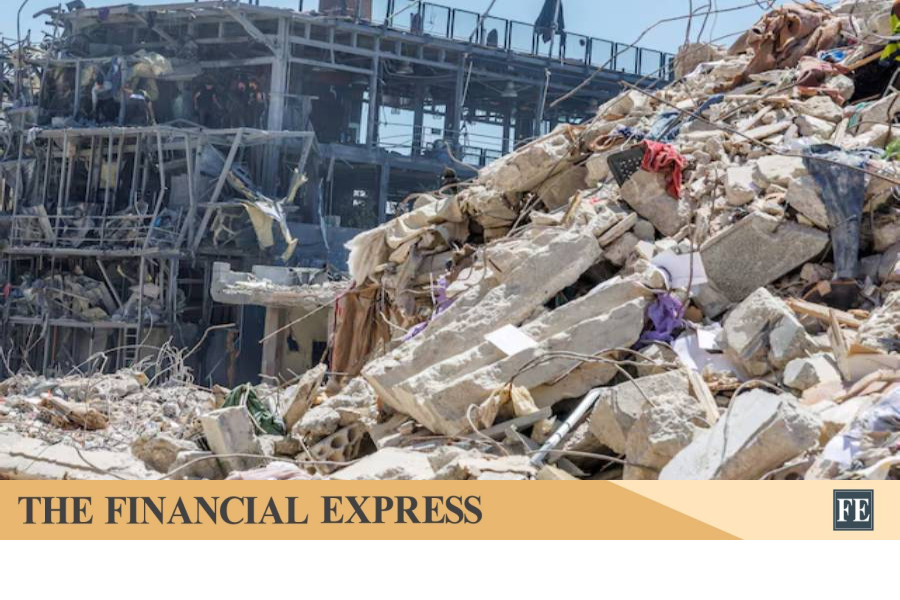
Despite the truce, Israel is continuing its strikes in Lebanon, where one person was killed Wednesday in the eastern Bekaa region, and two were killed in the country’s south, according to state media.
Israeli attacks on Lebanon have killed at least 2,454 people since the start of the war, according to Lebanese authorities.
Israeli forces remain in dozens of southern villages, behind what the army has called a ‘Yellow Line’, described by the Israelis as a 10-kilometre deep ‘security zone’ along the border in southern Lebanon.
Most locals have fled the area, though residents of some Christian villages have been defying Israeli army evacuation orders.
Hezbollah, for its part, said it carried out an attack on northern Israel on Tuesday in response to Israel’s ‘flagrant’ violations of the ceasefire, for the first time since it came into effect on Friday.
French President Emmanuel Macron also said on Wednesday that a second French soldier died ‘of the consequences of his wounds’ suffered in a weekend ambush against UN peacekeepers in Lebanon blamed on Hezbollah, which has denied responsibility.
Agence France-Presse . Beirut, Lebanon 22 April, 2026, 22:46
Israeli strikes killed three people in Lebanon on Wednesday, Lebanese state media said, despite an on-going 10-day ceasefire, which an official said Beirut will request an extension for in the upcoming talks with Israel in Washington.
Ahead of the talks on Thursday, Israel called on the Lebanese government to ‘work together’ with it against Iran-backed militant group Hezbollah.
The two governments, which do not have diplomatic relations with each other, are set to hold a second round of talks under US auspices on Thursday, in a bid to end more than six weeks of war between Israel and Hezbollah that began on March 2.
Lebanon will request a one-month extension of the ceasefire during the meeting with Israel, a Lebanese official said.
‘Lebanon will request an extension of the truce for one month, an end of Israel’s bombing and destruction in the areas where it is present, and a commitment to the ceasefire,’ the Lebanese official said.
The ten-day ceasefire, which expires Sunday, was announced after an initial meeting last week.
Lebanese president Joseph Aoun, for his part, said Wednesday that ‘contacts are underway to extend the ceasefire period’.
He said Lebanon seeks ‘a complete halt on Israeli attacks and the achievement of an Israeli withdrawal from Lebanese territory’.
Israeli foreign minister Gideon Saar said Wednesday that Israel does not have any ‘serious disagreements’ with Lebanon.
‘Unfortunately, Lebanon is a failed state, a state that is de facto under Iranian occupation through Hezbollah,’ he said.
Hezbollah — represented in the Lebanese cabinet and parliament — strongly opposes the direct talks with Israel pushed by Aoun and prime minister Nawaf Salam.
A Hezbollah lawmaker however said on Monday that the group might accept indirect talks mediated by the United States.
‘The obstacle to peace and normalisation between the two countries is one — Hezbollah,’ said Saar.
Despite the truce, Israel is continuing its strikes in Lebanon, where one person was killed Wednesday in the eastern Bekaa region, and two were killed in the country’s south, according to state media.
Israeli attacks on Lebanon have killed at least 2,454 people since the start of the war, according to Lebanese authorities.
Israeli forces remain in dozens of southern villages, behind what the army has called a ‘Yellow Line’, described by the Israelis as a 10-kilometre deep ‘security zone’ along the border in southern Lebanon.
Most locals have fled the area, though residents of some Christian villages have been defying Israeli army evacuation orders.
Hezbollah, for its part, said it carried out an attack on northern Israel on Tuesday in response to Israel’s ‘flagrant’ violations of the ceasefire, for the first time since it came into effect on Friday.
French President Emmanuel Macron also said on Wednesday that a second French soldier died ‘of the consequences of his wounds’ suffered in a weekend ambush against UN peacekeepers in Lebanon blamed on Hezbollah, which has denied responsibility.