War Archive
Saif
Senior Member
- Jan 24, 2024
- 21,100
- 9,688
- Nation

- Residence
- Axis Group


No point in US talks after Beirut strike: Iran
Iran said on Sunday there was ‘no point’ in peace talks with the United States, accusing it of failing to uphold its commitments and casting doubt on a deal that Donald Trump had insisted would be signed imminently.
 www.newagebd.net
No point in US talks after Beirut strike: Iran
Trump vows ME deal is on, calls for no more attacks
Agence France-Presse . Tehran, Iran 14 June, 2026, 19:25
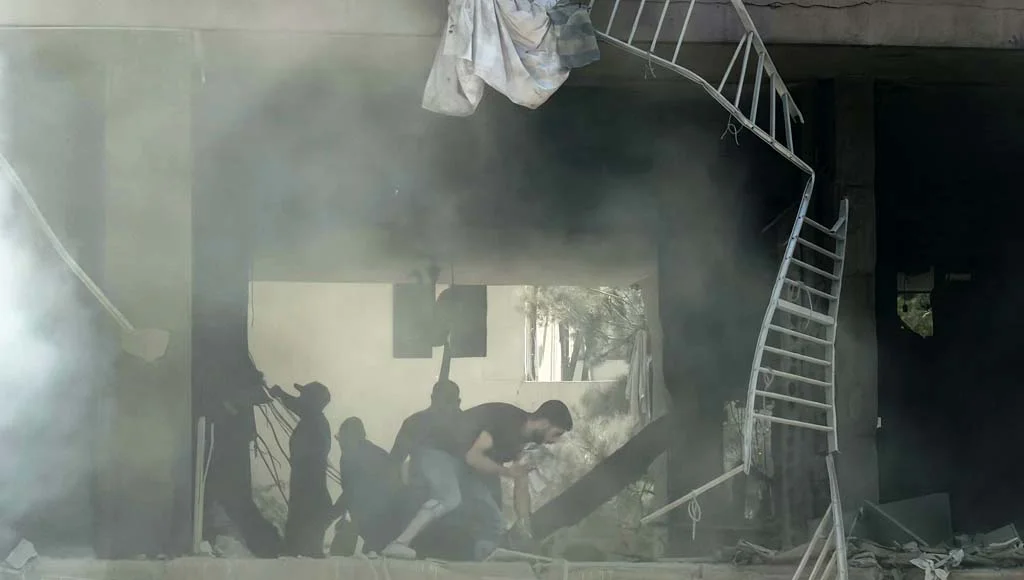
People look for survivors at the site of an Israeli airstrike that targeted a building in Beirut’s southern suburbs on Sunday. | AFP photo
Iran said on Sunday there was ‘no point’ in peace talks with the United States, accusing it of failing to uphold its commitments and casting doubt on a deal that Donald Trump had insisted would be signed imminently.
Trump on Sunday said Israeli strikes on Beirut ‘should not have happened’ as he vowed a regional peace deal was at hand, though he did not confirm his earlier claim it would be signed during the day.
‘We are very close to a Deal that will bring peace to the region, including to Lebanon, and all sides should stand down,’ Trump said on social media.
‘This could be the beginning of a long and beautiful peace — Let’s not blow it!’
Israel struck Beirut’s southern suburbs on Sunday, killing three people, in response to what it said was Hezbollah fire at northern Israel, an exchange that Trump said ‘should not disrupt’ progress towards a pact.
‘This morning’s attack on Beirut should not have happened, particularly on a special day,’ Trump wrote, possibly a reference to his hopes of a signing on Sunday, his 80th birthday.
‘There should be no more attacks by Israel anywhere in Lebanon, but there should also be no more attacks by any other party, including Hezbollah, against Israel.’
Trump — who has repeatedly declared a deal with Iran was all but concluded — had said on Saturday that the framework accord was scheduled to be signed on Sunday.
The latest hurdle came hours after Israel — which launched the war alongside the US in February — said its military had carried out strikes targeting Iran-backed Hezbollah in Beirut’s southern suburbs.
‘The Zionists’ aggression against Dahieh once again showed that the United States either lacks the will to implement its commitments or lacks the ability to do so,’ Iran’s chief negotiator Mohammad Bagher Ghalibaf said on X, referring to the suburbs.
‘If you do not have the will or the ability to fulfil your commitments, then there is no point in talking about continuing down this path.’
Trump — who over weeks of negotiations repeatedly declared a deal with Iran was all but concluded — had said on Saturday that the accord was ‘scheduled to get signed tomorrow, and immediately after it is signed, the Hormuz Strait is OPEN TO ALL’.
But Iran has insisted that any agreement to end the Middle East war also include the parallel conflict in Lebanon, and Israel’s last strikes on the Lebanese capital a week ago drew a retaliatory Iranian missile barrage.
Iranian Brigadier General Mohammad Jafar Asadi said the latest Israeli strikes ‘will not go unanswered’.
A US official said Friday that the deal on the table included Lebanon, which was drawn into the wider war when Hezbollah fired rockets at Israel on March 2.
A statement from the foreign ministry of Pakistan, which has been a key mediator between the warring parties, had also said that the deal’s signing was planned for Sunday.
But Iran’s Fars news agency, citing ‘a well-informed source close to the Iranian negotiating team’, reported Sunday that Tehran had ‘not yet taken or announced its final decision’.
Iranian foreign ministry spokesman Esmaeil Baqaei had said the day before that the deal would not be signed Sunday, but added: ‘The possibility of this happening in the coming days cannot be ruled out.’
A delegation from fellow mediator Qatar arrived in Tehran on Sunday ‘to help facilitate the finalisation of the agreement’, a diplomat with knowledge of the situation said.
The warring parties have released conflicting information about the contents of the deal, as each seeks to show it emerged from the war with the upper hand.
Tehran has insisted it will maintain control over the Strait of Hormuz, but the US has repeatedly said this would be unacceptable.
Since imposing its blockade on the strait — which has thrown global markets into turmoil — Iran has demanded vessels obtain permission from its armed forces before transiting the waterway, and has established a new body to oversee it and collect tolls.
The US has responded with its own blockade of Iranian ports.
Iran’s foreign minister Abbas Araghchi had said on Friday that the deal on the table called for the lifting of the US naval blockade.
Another key sticking point in the talks has been the fate of Iran’s nuclear programme, particularly its stockpile of highly enriched uranium — believed to have been buried by US strikes last year.
Iran has long insisted its nuclear programme is peaceful, but the US, Israel and other Western governments suspect it of seeking a bomb.
Araghchi on Friday said the only way to deal with Iran’s enriched uranium ‘is to dilute it inside Iran’.
Trump, who has justified the war as necessary to prevent Iran from obtaining nuclear weapons, previously said the US would remove and destroy the uranium.
On Saturday, he said: ‘When all is calm, we will go in and get the Nuclear Dust... and downblend and destroy it, whether in Iran or the United States.’
Israeli prime minister Benjamin Netanyahu said Trump had promised him any agreement would include the removal of the enriched nuclear material.
On Sunday, Israel’s military issued evacuation warnings for 29 villages in southern Lebanon.
Netanyahu’s office later said the military had carried out strikes in Beirut’s southern suburbs against Hezbollah targets ‘in response to Hezbollah’s firing towards Israeli territory’.
The military said it had struck a Hezbollah infrastructure site, while Lebanese state media said a strike hit the Ghobeiry neighbourhood.
Lebanon’s civil defence agency said the strike killed at least three people and wounded six others.
Israel’s military had reported that three drones, suspected to have been launched by Hezbollah, struck northern Israel on Sunday but caused no casualties.
Trump vows ME deal is on, calls for no more attacks
Agence France-Presse . Tehran, Iran 14 June, 2026, 19:25
People look for survivors at the site of an Israeli airstrike that targeted a building in Beirut’s southern suburbs on Sunday. | AFP photo
Iran said on Sunday there was ‘no point’ in peace talks with the United States, accusing it of failing to uphold its commitments and casting doubt on a deal that Donald Trump had insisted would be signed imminently.
Trump on Sunday said Israeli strikes on Beirut ‘should not have happened’ as he vowed a regional peace deal was at hand, though he did not confirm his earlier claim it would be signed during the day.
‘We are very close to a Deal that will bring peace to the region, including to Lebanon, and all sides should stand down,’ Trump said on social media.
‘This could be the beginning of a long and beautiful peace — Let’s not blow it!’
Israel struck Beirut’s southern suburbs on Sunday, killing three people, in response to what it said was Hezbollah fire at northern Israel, an exchange that Trump said ‘should not disrupt’ progress towards a pact.
‘This morning’s attack on Beirut should not have happened, particularly on a special day,’ Trump wrote, possibly a reference to his hopes of a signing on Sunday, his 80th birthday.
‘There should be no more attacks by Israel anywhere in Lebanon, but there should also be no more attacks by any other party, including Hezbollah, against Israel.’
Trump — who has repeatedly declared a deal with Iran was all but concluded — had said on Saturday that the framework accord was scheduled to be signed on Sunday.
The latest hurdle came hours after Israel — which launched the war alongside the US in February — said its military had carried out strikes targeting Iran-backed Hezbollah in Beirut’s southern suburbs.
‘The Zionists’ aggression against Dahieh once again showed that the United States either lacks the will to implement its commitments or lacks the ability to do so,’ Iran’s chief negotiator Mohammad Bagher Ghalibaf said on X, referring to the suburbs.
‘If you do not have the will or the ability to fulfil your commitments, then there is no point in talking about continuing down this path.’
Trump — who over weeks of negotiations repeatedly declared a deal with Iran was all but concluded — had said on Saturday that the accord was ‘scheduled to get signed tomorrow, and immediately after it is signed, the Hormuz Strait is OPEN TO ALL’.
But Iran has insisted that any agreement to end the Middle East war also include the parallel conflict in Lebanon, and Israel’s last strikes on the Lebanese capital a week ago drew a retaliatory Iranian missile barrage.
Iranian Brigadier General Mohammad Jafar Asadi said the latest Israeli strikes ‘will not go unanswered’.
A US official said Friday that the deal on the table included Lebanon, which was drawn into the wider war when Hezbollah fired rockets at Israel on March 2.
A statement from the foreign ministry of Pakistan, which has been a key mediator between the warring parties, had also said that the deal’s signing was planned for Sunday.
But Iran’s Fars news agency, citing ‘a well-informed source close to the Iranian negotiating team’, reported Sunday that Tehran had ‘not yet taken or announced its final decision’.
Iranian foreign ministry spokesman Esmaeil Baqaei had said the day before that the deal would not be signed Sunday, but added: ‘The possibility of this happening in the coming days cannot be ruled out.’
A delegation from fellow mediator Qatar arrived in Tehran on Sunday ‘to help facilitate the finalisation of the agreement’, a diplomat with knowledge of the situation said.
The warring parties have released conflicting information about the contents of the deal, as each seeks to show it emerged from the war with the upper hand.
Tehran has insisted it will maintain control over the Strait of Hormuz, but the US has repeatedly said this would be unacceptable.
Since imposing its blockade on the strait — which has thrown global markets into turmoil — Iran has demanded vessels obtain permission from its armed forces before transiting the waterway, and has established a new body to oversee it and collect tolls.
The US has responded with its own blockade of Iranian ports.
Iran’s foreign minister Abbas Araghchi had said on Friday that the deal on the table called for the lifting of the US naval blockade.
Another key sticking point in the talks has been the fate of Iran’s nuclear programme, particularly its stockpile of highly enriched uranium — believed to have been buried by US strikes last year.
Iran has long insisted its nuclear programme is peaceful, but the US, Israel and other Western governments suspect it of seeking a bomb.
Araghchi on Friday said the only way to deal with Iran’s enriched uranium ‘is to dilute it inside Iran’.
Trump, who has justified the war as necessary to prevent Iran from obtaining nuclear weapons, previously said the US would remove and destroy the uranium.
On Saturday, he said: ‘When all is calm, we will go in and get the Nuclear Dust... and downblend and destroy it, whether in Iran or the United States.’
Israeli prime minister Benjamin Netanyahu said Trump had promised him any agreement would include the removal of the enriched nuclear material.
On Sunday, Israel’s military issued evacuation warnings for 29 villages in southern Lebanon.
Netanyahu’s office later said the military had carried out strikes in Beirut’s southern suburbs against Hezbollah targets ‘in response to Hezbollah’s firing towards Israeli territory’.
The military said it had struck a Hezbollah infrastructure site, while Lebanese state media said a strike hit the Ghobeiry neighbourhood.
Lebanon’s civil defence agency said the strike killed at least three people and wounded six others.
Israel’s military had reported that three drones, suspected to have been launched by Hezbollah, struck northern Israel on Sunday but caused no casualties.