[🇧🇩] Textile & RMG Industry of Bangladesh

Afghanistan Albania Algeria Andorra Angola Antigua Austria Azerbaijan Bahamas Bahrain Bangladesh Barbados Canada China Egypt Finland Germany India Iran Israel Japan Lebanon North Macedonia Pakistan Palestine Qatar Russia Syria Turkey Ukraine United Kingdom United States Yemen
[🇧🇩] Textile & RMG Industry of Bangladesh
524
23K
More threads by Saif

G Bangladesh Defense

PM assures full support for garment sector, orders quick action to remove bottlenecks


1784848547279.webp


Prime Minister Tarique Rahman on Wednesday assured the country's garment exporters of the government's full support for the growth of the sector and directed the authorities concerned to remove major bottlenecks as quickly as possible.

“The government will do whatever is necessary for the growth of the garment industry. Solving the problems faced by businesses is also our responsibility, and we are committed to fulfilling that responsibility,” he said.

The Prime Minister gave the assurance during a meeting with a delegation of the Bangladesh Garment Manufacturers and Exporters Association (BGMEA) at the Prime Minister's Office in the Cabinet Division of the Secretariat, said his Deputy Press Secretary Hasan Shiplu.

The delegation was led by BGMEA President Mahmud Hasan Khan.

The BGMEA leaders briefed the Prime Minister on the challenges facing the ready-made garment industry, including the need for uninterrupted gas and electricity supply.

They also placed a number of short- and long-term proposals aimed at strengthening the sector.

Tarique Rahman listened to the business leaders and instructed the relevant ministries and agencies to take prompt steps to resolve the issues that can be addressed immediately.

"We have already started working to solve your problems. Many of these are long-standing issues that have built up over the years. Those that can be resolved now will be addressed without any delay," he said.

The Prime Minister said the government is committed to the sustainable development of the garment industry, describing it as one of the main drivers of the country's economy.

"Infrastructure development for the garment sector is already underway. Once these improvements are completed, they will further strengthen the economy and help Bangladesh move forward. We are working sincerely for the sector's sustainable growth," he said.

Tarique Rahman also said the government had unveiled a business-friendly budget to encourage trade and investment.

After the meeting, the BGMEA delegation presented a commemorative crest to the Prime Minister.

Commerce, Industries, and Textiles and Jute Minister Khandakar Abdul Muktadir, Prime Minister's Adviser on Finance and Planning Rashed Al Mahmud Titumir, Adviser on Labour and Employment Mahdi Amin, BNP Special Secretary Belayet Hossain and other BGMEA leaders attended the meeting.​
 

Garment sector: How far could Tk 35b in cash incentives revive the industry

Shovongkor Karmakar
Dhaka

1785021499078.webp

Yarn Prothom Alo: File photo

The government has increased the cash incentive for export-oriented factories using locally produced yarn from 1.5 per cent to 5 per cent in an effort to revitalise the country's textile sector.

The move will cost the government an estimated Tk 35 billion (3500 crore). However, industry stakeholders say the increased incentive will only provide limited relief to the country's spinning mills.

They cite persistent gas and electricity shortages, as well as liquidity constraints affecting most factories in the sector. In addition, exporters continue to face several complications in accessing the cash incentives.

Several textile entrepreneurs expressed these concerns to Prothom Alo. They said the higher incentive could increase sales by around 5 per cent, giving spinning mills some breathing space.

However, they stressed that the government must introduce several additional effective measures to reduce imports of Indian yarn and encourage greater use of locally produced yarn. Only then, they believe, will the country's textile sector be able to recover.

On 12 July, Bangladesh Bank raised the alternative cash incentive for export-oriented ready-made garment manufacturers using locally produced yarn or fabric from 1.5 per cent to 5 per cent, replacing the bonded warehouse and duty drawback facilities.

During the current fiscal year, ready-made garment exporters using locally manufactured yarn will qualify for the increased cash incentive. Earlier, on 9 July, the Ministry of Finance sent the relevant directive to the Governor of Bangladesh Bank.

According to the Bangladesh Textile Mills Association (BTMA), the country currently has more than 1,800 textile mills, including 527 spinning mills.

Total investment in the sector stands at approximately USD 23 billion. Local textile mills supply 80 per cent of the yarn used by the knitwear industry and nearly 40 per cent of the yarn required by the woven garment industry.

Razeeb Haider, former director of the BTMA, told Prothom Alo, "Small and medium-sized factories that previously relied almost exclusively on Indian yarn will now become somewhat more interested in using locally produced yarn because of the higher cash incentive. This will increase demand for yarn to some extent and create opportunities for idle factories to resume operations. However, if purchase orders for ready-made garments continue to decline and the gas and electricity crisis remains unresolved, the sector will not benefit significantly."

How significant will the impact of cash incentive be?

Until two and a half years ago, exporters received a 4 per cent cash incentive for exporting ready-made garments produced with locally sourced yarn.

As part of Bangladesh's preparations for graduation from the Least Developed Country (LDC) category, the government reduced the incentive to 3 per cent in January 2024.

Six months later, it cut the rate again to 1.5 per cent. Exporters must also pay a 5 per cent tax on the incentive. Since the government reduced the cash incentive to 1.5 per cent, imports of yarn into the country have increased.

According to data from the National Board of Revenue (NBR), Bangladesh imported cotton yarn worth Tk 144.1 billion (14.41 crore) during the 2022–23 fiscal year.

Imports rose to Tk 211.42 billion (21.142 crore) in the following fiscal year and reached Tk 267 billion (26.7 crore) in the 2024–25 fiscal year.

In the most recently concluded fiscal year, the country imported yarn worth Tk 258.64 billion (25.864 crore). Around 90 per cent of the imported yarn came from India.

Although spinning mills benefit from incentives for the use of locally produced yarn, the cash incentive is deposited directly into the bank accounts of ready-made garment exporters.

Discussions with several garment exporters revealed that when the cash incentive stood at 4 per cent, the price difference between imported and locally produced yarn was only 10 to 15 US cents per kilogramme.

Faster delivery after placing orders and lower transportation costs encouraged manufacturers to use locally produced yarn.

However, after the government reduced the cash incentive, the price difference widened to around 40 US cents per kilogramme, leading to a significant increase in yarn imports.

Mohammad Hatem, president of the Bangladesh Knitwear Manufacturers and Exporters Association (BKMEA), told Prothom Alo, "Although the government has announced a 5 per cent cash incentive for using locally produced yarn, legal complexities mean exporters will ultimately receive only about 2.5 per cent. This is because exporters must pay a 5 per cent tax on the incentive, and that is not the final settlement. In the end, the effective benefit may stand at around 3.2 per cent. As a result, yarn imports are unlikely to decline significantly."

Textile mills face multiple challenges

Mosharaf Composite Textile Mills, located in Bhabanipur, Gazipur, has the capacity to produce 160 tonnes of yarn per day. The factory operates gas-fired captive generators to produce electricity and also has a backup connection to the Rural Electrification Board's power supply.

At present, gas pressure at the factory remains between 2 and 3 PSI during the day and rises to 4–5 PSI at night.

Meanwhile, the factory experiences power outages five to seven times a day, leaving it without electricity for approximately two to two and a half hours daily.

Mosharaf Hossain, chairman of Mosharaf Group, told Prothom Alo, "The gas and electricity crisis has reduced our production by 20 per cent. As a result, the production cost per kilogramme of yarn has increased. Even though the government has raised the cash incentive, yarn sales may increase only marginally because factories are still not receiving gas according to their requirements. At the same time, many businesses are suffering from a shortage of capital. Therefore, the government should provide loans on easier terms."


Little Star Spinning Mills in Savar has struggled with gas shortages for a long time. Unable to obtain gas in line with its operational requirements, the company invested Tk 1.2 billion (12 crore) in a solar power system and battery-based electricity storage.

Although the investment has enabled the factory to utilise 80 per cent of its production capacity, production costs have increased.

Khorshed Alam, chairman of Little Star Group and a director of the Bangladesh Textile Mills Association (BTMA), told Prothom Alo, "India provides various forms of support amounting to around 13 per cent to its textile mills. After extensive negotiations with the government, our incentive has increased to 5 per cent. Even so, we remain behind India."

He added, "High gas prices combined with supply shortages, elevated interest rates and several other factors have pushed up our production costs. Therefore, the government must provide broader support to sustain the textile sector while also increasing value addition in the ready-made garment industry."​
 

Textile millers seek PM’s help on gas crisis

Star Business Report

1785370436554.webp


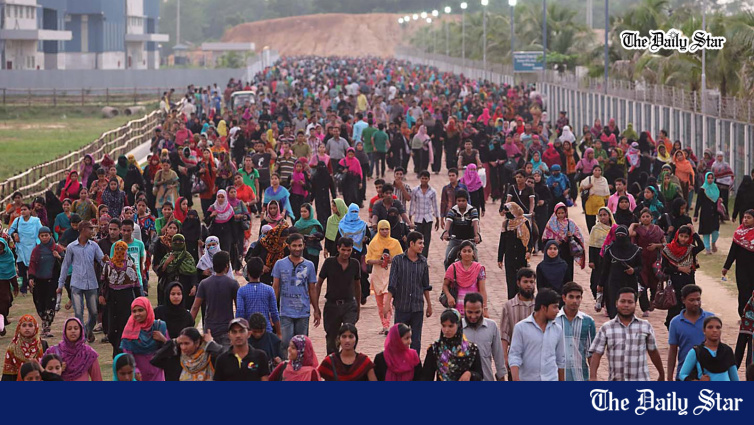
With mill production reportedly nearly halved over the past week, textile millers yesterday pressed Prime Minister Tarique Rahman for a solution to the gas crisis.

They raised the demand at a meeting with the premier at his office in Dhaka as the nearly $25 billion worth primary textile sector is experiencing multifaceted challenges primarily for gas crisis, safety in the business and cheap import of yarn from other countries.

After the meeting, Showkat Aziz Russell, president of the Bangladesh Textile Mills Association (BTMA), said they also discussed the troubled banking sector and high bank interest rates.

The prime minister has assured them that the government is working to install two more floating storage and regasification units (FSRUs) to ease the shortage, Showkat said.

Showkat Aziz Russell, president of the Bangladesh Textile Mills Association, said they also discussed the troubled banking sector and high bank interest rates.

The BTMA president announced that the association will hold a follow-up meeting with the prime minister within the next few weeks, this time bringing in leaders of the Bangladesh Garment Manufacturers and Exporters Association (BGMEA) and the Bangladesh Knitwear Manufacturers and Exporters Association (BKMEA).

A committee was earlier formed at the prime minister’s office to work on the sector’s development in consultation with stakeholders.

Commerce Minister Khandaker Abdul Muktadir, Finance and Planning Adviser to the Prime Minister Rashed Al Mahmud Titumir, Bangladesh Bank Governor Md Mostakur Rahman, and Acting NBR Chairman Ahsan Habib were present at the meeting.

GARMENT MAKERS PRESS THEIR OWN CASE

Earlier on Monday, the BGMEA and BKMEA demanded an uninterrupted supply of gas from CNG filling stations, after garment factories running on CNG to keep production going reported repeated supply disruptions.

Leaders of the two trade bodies separately wrote to Energy Secretary Mohammad Saiful Islam and the Petrobangla Chairman Md Abdul Mannan with their demands, BKMEA President Mohammad Hatem told The Daily Star.

Many factory owners have been buying CNG from nearby filling stations to keep their units running, he said, but disruptions there have made even that workaround unreliable.

Hatem said he had written to BKMEA members advising them to buy CNG from filling stations in the meantime.

Meanwhile, following a meeting with the BKMEA president on Monday, Secretary Saiful directed Titas Gas authorities to allow garment factories to keep collecting gas from CNG filling stations.

The directive came after Titas Gas Transmission and Distribution Company instructed CNG filling stations to stop selling natural gas into open cylinders or gas cascade cylinders not mounted on authorised vehicles, citing safety concerns and violations of the Gas Act 2010 and Gas Distribution Rules 2026.

Farhan Noor, secretary general of the Bangladesh CNG Filling Station and Conversion Workshop Owners Association, said he had received two letters from the BGMEA and BKMEA requesting CNG sales to garment factories.

Station owners are supplying them given the circumstances, he said -- even though selling gas by the lorry-load is not technically permitted.

The energy secretary and Petrobangla chairman could not be reached over phone despite several attempts.​
 

ME crisis deters potential Western RMG buyers
Moinul Haque 02 August, 2026, 00:57

1785632326781.webp


The ongoing Middle East crisis is steering potential Western apparel buyers away from Bangladesh over energy security concerns, with an international global supply chain report saying that buyers who were trying to turn their back on China are now reconsidering their decisions.

Exporters and economists said Bangladesh needed to diversify energy sources and expand storage capacity to ensure a stable energy supply and win back buyers’ confidence.

The latest quarterly Supply Chain Barometer by global quality assurance and compliance firm QIMA said the disruption had exposed a major weakness in the widely adopted ‘China-plus-one’ sourcing strategy.

While western buyers and brands had diversified production away from China, they had failed to diversify their energy sources, leaving manufacturing hubs across South and Southeast Asia vulnerable to the same upstream risks, said the QIMA Q3 2026 Supply Chain Barometer, published on July 27.

It means buyers moved production out of China but overlooked that many alternative manufacturing countries rely on the same vulnerable energy supplies, such as oil and LNG, leaving them exposed to the disruptions.

Former Bangladesh Knitwear Manufacturers and Exporters Association president Fazlul Hoque told New Age on Saturday, ‘Bangladesh’s potential to attract production relocating from China has been partially damaged. If the government can improve the energy supply and at least restore it to normal levels, we should be able to recover.’

The report, based on product inspection and supplier audit data collected during the second quarter of 2026, said years of efforts by companies in North America and Europe to diversify manufacturing beyond China were undermined after fuel shortages spread across South and Southeast Asia following the closure of the Strait of Hormuz in late February.

Over the past five years, multinational companies shifted production from China to lower-cost manufacturing hubs, including Bangladesh and Vietnam, in response to geopolitical tensions, trade disputes and supply-chain disruptions experienced during the COVID-19 pandemic.

However, both countries remained heavily dependent on imported Middle Eastern fuel to power their factories, making them particularly vulnerable when energy supplies were disrupted.

According to QIMA, the crisis reduced manufacturing capacity across the region and forced buyers to seek more reliable sourcing destinations.

Rather than accelerating nearshoring or reshoring production to Europe or North America, many foreign companies redirected orders to China, whose manufacturing sector remained comparatively resilient because its industrial energy mix relies largely on domestic coal and renewable energy.

QIMA report showed that China’s share of North American buyers’ inspection and audit volumes rose to 35 per cent in the second quarter, the highest level since 2024, signalling a reversal in sourcing strategies.

Among European buyers, demand for inspections and supplier audits in Southeast Asia swung from 14 per cent year-on-year growth in April to a 5 per cent contraction by June, while demand for inspections in China strengthened steadily, ending the quarter with annual growth of 10 per cent.

Mustafizur Rahman, a distinguished fellow of the Centre for Policy Dialogue, told New Age that the recent increase in Western buyers returning to China reflected a temporary adjustment in global supply chains rather than a long-term reversal of diversification strategies.

He said that the ‘China Plus One’ strategy would remain the most viable medium-term approach because high tariffs on Chinese exports continued to encourage companies to diversify production.

The economist recommended that Bangladesh should strengthen its competitiveness by diversifying energy sources and expanding fuel storage capacity through regional cooperation.

According to the QIMA report, during the second quarter, nearshoring and reshoring accounted for only 11 per cent of its service volumes for European clients and 7 per cent for North American customers, both below 2025 averages.

As a result, manufacturers had few practical alternatives when factories in Bangladesh, Vietnam and other Asian economies came under pressure from fuel shortages, the report mentioned.

The report said that buyers increasingly viewed China not simply as a low-cost producer but as a risk-management partner because of its established supplier network and stronger quality assurance capabilities.

Inspection data showed that 26 per cent of electronics and electrical products sourced by emerging-market buyers failed acceptable quality limit standards, compared with only 8 per cent for developed-market buyers.

According to QIMA, weaker buyer-side quality management in many emerging markets encourages companies to maintain long-term relationships with established Chinese suppliers rather than expand sourcing to newer manufacturing locations with less developed quality-control systems.

The report also showed that the demand for inspections in China from emerging-market buyers outside Asia increased by 18 per cent year-on-year in the second quarter.

China accounted for 78 per cent of all inspection and supplier audit demand from those markets and as much as 81 per cent among buyers in South and Latin America, compared with around 50 per cent among developed-market buyers.

The former BKMEA leader Fazlu said that Bangladesh’s energy vulnerability was not new and the country’s prospects of attracting production relocating from China had been partially damaged by the crisis.

He said that some international buyers might temporarily delay or divert orders due to concerns over energy security, although it was difficult to counter such perceptions while the country’s readymade garment exports were experiencing negative growth in both the US and the EU.

According to latest Eurostat data, Bangladesh’s apparel exports to the European Union in January-May 2026 decreased by 18.9 per cent to 7.28 billion euros from 8.97 billion euros in the corresponding period of 2025.

Meanwhile, the US Office of Textiles and Apparel data showed that Bangladesh’s apparel exports to the United States declined by 8.08 per cent year-on-year to $3.25 billion in the first five months of 2026 from $3.53 billion in the corresponding period of 2025.

The country’s total export earnings in the financial year 2025-26 stood at $48 billion, of which $38.7 billion came from readymade garment exports, according to Export Promotion Bureau data.

Fazlu, however, said that shifting large volumes of orders from Bangladesh would not be easy because alternative sourcing destinations faced capacity and pricing constraints.

Although the QIMA report identified encouraging signs of increasing regional sourcing in Latin America, where intra-regional inspections recorded double-digit growth, it said the trend remained too small to significantly reduce dependence on China.

The QIMA report said that the Hormuz crisis demonstrated that geographical diversification alone does not create resilient supply chains.

Future resilience, it said, would depend on diversifying energy sources, expanding regional manufacturing capacity and strengthening quality-management systems alongside broader efforts to diversify production.

The coming months, the report said, would determine whether global manufacturers treat the disruption as a temporary setback or accelerate investment in genuinely diversified and energy-resilient supply chains.​
 

Latest Posts

Back