New Tweets

Wars 2026 02/28 Israel-Iran War 3.0

G War Archive
Wars 2026 02/28 Israel-Iran War 3.0
55
549
More threads by RayKalm


Iran vows to block Gulf oil until bombing stops

Agence France-Presse . Tehran, Iran 10 March, 2026, 14:53

1773208566047.webp


A man rides a motorcycle past a banner displayed at Valiasr Square in central Tehran on March 10, 2026, depicting Iran's late supreme leader Ayatollah Ruhollah Khomeini (L) watching as his successor the late Ayatollah Ali Khamenei (C) hands over a national flag to his son and new supreme leader Mojtaba Khamenei. | AFP photo

Iran vowed on Tuesday that not one litre of oil would be exported from the Gulf while the United States and Israel continue their bombardment, as the United Arab Emirates closed its biggest oil refinery after a drone attack.

  • Trump says war will end ‘soon’
  • Netanyahu predicts conflict would continue
  • Israeli military begins new wave of strikes on Tehran
  • Experts warn economic outlook remains extremely volatile
  • Iran targets US base in Iraq

Oil prices have surged since Iranian attacks on shipping closed the Strait of Hormuz in the wake of a US-Israeli strikes that killed Tehran’s supreme leader but fell back somewhat on Monday when US president Donald Trump suggested the war would soon end.

The price began to rise again Tuesday amid more threats and violence, following a week of attacks on oil infrastructure in Saudi Arabia, Bahrain, the UAE and around the Gulf.

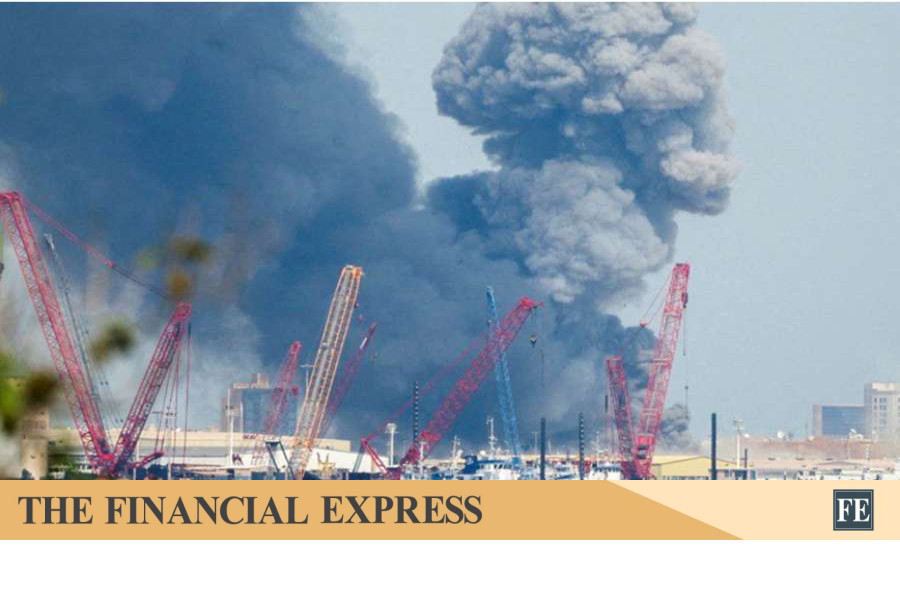
The region’s biggest single-site oil refinery, at Ruwais in the UAE, was closed on Tuesday as a precaution after a drone attack on the industrial complex which houses it caused a fire, a source familiar with the situation said.

‘The Strait of Hormuz will either be a strait of peace and prosperity for all or will be a strait of defeat and suffering for warmongers,’ Iran’s security chief Ali Larijani declared.

The price increase also followed strikes on oil depots in Iran and after attacks on oil infrastructure in Saudi Arabia, Bahrain and around the Gulf, which continued on Tuesday, with explosions heard in Doha.

Qatar, where a suspension of LNG exports has sent European energy prices sky-high, said Iranian attacks on its civilian infrastructure were continuing.

The Israeli military announced meanwhile a new wave of attacks on Tehran, while the US also stepped up its air and missile assault.

‘Today will be yet again our most intense day of strikes inside Iran,’ defence secretary Pete Hegseth told a news conference at the Pentagon.

US and Israeli strikes have hit an airport in southern Iran, damaging part of the site as well as aircraft, local media reported on Tuesday.

‘Following an American-Zionist attack on Kerman Airport, part of it was damaged and two old, out-of-service aircraft were hit,’ Iran’s Tasnim news agency said, quoting a statement from the governor’s office in the southern province of Kerman.

The exchanges of fire will increase fears of economic instability, with traders and energy policy makers nervously following events in the Gulf, source of around a fifth of world oil and gas supplies.

‘There would be catastrophic consequences for the world’s oil markets the longer the disruption goes on, and the more drastic the consequences for the global economy,’ Saudi oil giant Aramco’s president and CEO Amin H Nasser told journalists.

‘It’s absolutely critical that shipping resumes in the Strait of Hormuz.’

Egypt increased the cost of fuels by up to 30 per cent and Pakistan said it would provide naval escorts to commercial shipping. France has dispatched warships to the region.

Iran’s Revolutionary Guards Corps mocked Trump’s bid to lessen the economic impact of the war, warning: ‘The Iranian armed forces will not allow the export of a single litre of oil from the region to the hostile side and its partners until further notice.’

‘It is we who will determine the end of the war,’ the IRGC, seen as close to Iran’s new supreme leader Ayatollah Mojtaba Khamenei, said in a statement carried by Iranian media.

Larijani issued a thinly veiled threat to Trump himself, warning him to be careful ‘not to be eliminated’.

‘Iran is not afraid of your empty threats. Even those greater than you could not eliminate the Iranian nation,’ Larijani wrote, in a social media post.

Iran’s warnings came as a response to Trump, who gave a news conference in a Florida ballroom to declare of the war: ‘It’s going to be ended soon, and if it starts up again they’ll be hit even harder.’

‘We’ve already won in many ways, but we haven’t won enough,’ Trump said Monday.

But, in a later post on his social media platform, Trump warned that if Tehran interferes with oil exports, the US military will bomb the country in such a way to ‘make it virtually impossible for Iran to ever be built back, as a nation, again.’

‘Death, fire, and fury will reign upon them — But I hope, and pray, that it does not happen!’ he wrote.

Israel’s prime minister Benjamin Netanyahu also predicted that the conflict would continue, expressing hope that the Iranian people would seize the opportunity to ‘cast off the yoke of tyranny’.

‘Ultimately, it depends on them. But there is no doubt that, with the actions taken so far, we are breaking their bones, and we are not done yet,’ he said.

A new strike hit Lebanon’s southern city of Tyre, state media reported. The strike came after Israel’s military said it would hit Hezbollah targets there and in Sidon, telling residents to move away at least 300 metres from buildings that it said were Hezbollah’s military infrastructure.

Ankara said a US-made Patriot missile defence system would be deployed to central Turkey, a day after NATO shot down a second ballistic missile fired from Iran in Turkish airspace.

Iran’s Revolutionary Guards said they targeted a US base in Iraq’s Kurdistan region, the Al-Harir air base, with five missiles.

Pakistan’s navy said its ships began escorting merchant vessels ‘to ensure the uninterrupted flow of national energy supplies and the security of sea lines of communication’.

The Tehran-backed Kataeb Imam Ali armed group said four of its fighters were killed in air strikes it blamed on the US in northern Iraq, in the Debs district in Kirkuk province.

On Monday, world oil prices swept past the symbolic level of $100 a barrel and were briefly up 30 per cent on the day, before falling back after Trump’s intervention. But they rose again more slowly on Tuesday, and experts warned that the economic outlook remains extremely volatile.

‘Rare are days in the markets when you get this much volatility,’ said Ipek Ozkardeskaya, an analyst for Swissquote Bank, warning that investors are overreacting to every bit of news even when officials’ statements contradict each other.

‘Part of yesterday’s optimism came after Trump said the war would end ‘soon’ and that the US was ahead of schedule,’ she said.

‘Concretely, however, the conflict in the Middle East continues at full speed, political developments are not pointing to a near-term resolution, and there is little clarity about the US plans.’​
 
Analyze

Analyze Post

Add your ideas here:
Highlight Cite Respond

Iran’s new supreme leader ‘safe and sound’ despite war injury reports: president’s son

AFP
Tehran
Published: 11 Mar 2026, 13: 33

1773276799793.webp

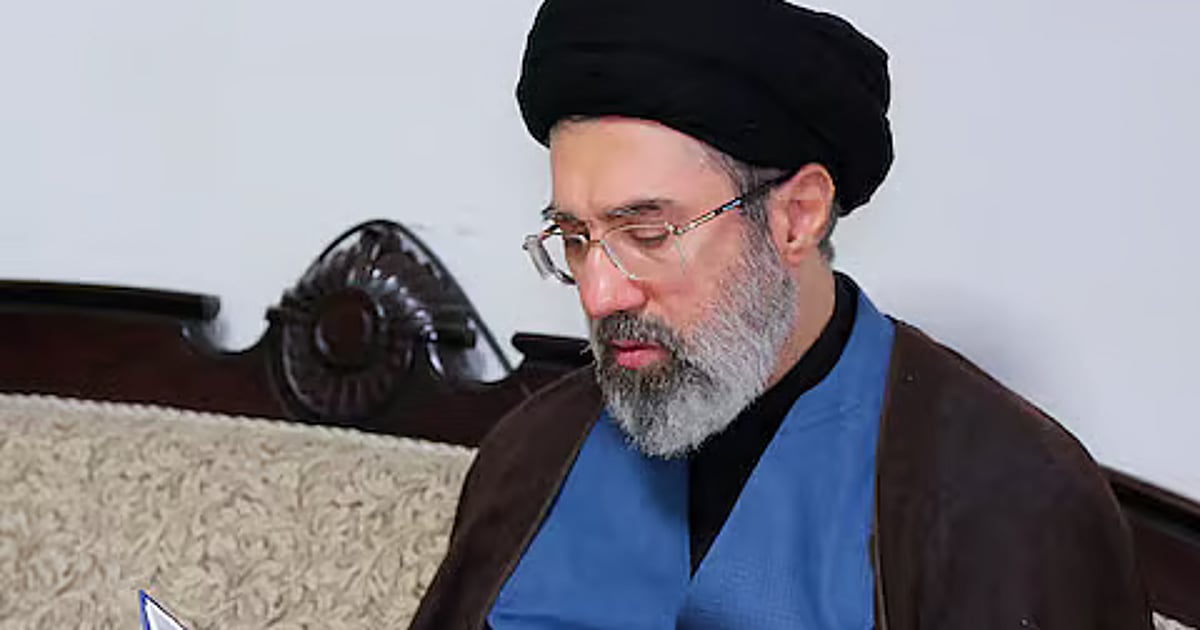
Mojtaba Khamenei, son of Iran's late Supreme Leader Ayatollah Ali Khamenei Reuters

Iran’s new supreme leader Mojtaba Khamenei is “safe and sound” despite reports of an injury during the war with Israel and the United States, said the son of the Iranian president on Wednesday.

“I heard news that Mr Mojtaba Khamenei had been injured. I have asked some friends who had connections. They told me that, thank God, he is safe and sound,” said Yousef Pezeshkian, who is also a government adviser, in a post on his Telegram channel.

State television had called Khamenei a “wounded veteran of the Ramadan war” but never specified his injury.

The new supreme leader is the son and successor of the Islamic republic’s longtime ruler Ayatollah Ali Khamenei, who was killed in US-Israeli strikes on Iran on 28 February which triggered a war across the Middle East.

The 56-year-old Mojtaba Khamenei, a discreet figure who has rarely appeared in public or spoken at official events, has yet to address the nation or issue a written statement since he was declared supreme leader on Sunday.

In a Wednesday report, the New York Times quoting three unnamed Iranian officials said that Khamenei “had suffered injuries, including to his legs, but that he was alert and sheltering at a highly secure location with limited communication”.​
 
Analyze

Analyze Post

Add your ideas here:
Highlight Cite Respond

Iran tells world to get ready for $200 a barrel

Reuters, Dubai/Tel Aviv

1773277255210.webp

Tankers sail in the Gulf, near the Strait of Hormuz, as seen from northern Ras al-Khaimah, near the border with Oman’s Musandam governance, amid the US-Israeli conflict with Iran, in United Arab Emirates, March 11, 2026. Photo: Reuters/Stringer
  • Three ships hit in the Gulf​
  • IEA to propose fastest ever release of strategic oil reserves​
  • Explosions in Bahrain and Dubai​

Iran's military command said on Wednesday the world should be prepared for oil to hit $200 a barrel, as three more ships came under attack in the blockaded Gulf.

Iran fired at Israel and targets across the Middle East on Wednesday, demonstrating it can still fight back and disrupt energy supplies despite what the Pentagon has described as the most intense US-Israeli strikes yet.

Oil prices that shot up earlier this week have eased and stock markets have rebounded, with investors betting for now that US President Donald Trump will find a quick way to end the war he began alongside Israel nearly two weeks ago.

But so far there has been no let-up on the ground, or any sign that ships can safely sail through the Strait of Hormuz, where a fifth of the world's oil has been blockaded behind a narrow channel along the Iranian coast in the worst disruption to energy supplies since the oil shocks of the 1970s.

"Get ready for oil to be $200 a barrel, because the oil price depends on regional security which you have destabilised," Ebrahim Zolfaqari, spokesperson for Iran's military command, said in comments addressed to the United States.

After offices of a bank in Tehran were hit overnight, Zolfaqari also said Iran would respond with attacks on banks that do business with the United States or Israel. People across the Middle East should stay 1,000 metres from banks, he added.

A senior Israeli official told Reuters Israeli leaders now privately accepted that Iran's ruling system could survive the war. Two other Israeli officials said there was no sign Washington was close to ending the campaign.

Iranian official says Mojtaba Khamenei lightly wounded

In the latest public display of defiance, huge crowds of Iranians took to the streets on Wednesday for funerals for top commanders killed in airstrikes. They carried caskets and brandished flags and portraits of slain Supreme Leader Ayatollah Ali Khamenei and his son and successor, Mojtaba.

An Iranian official told Reuters thatMojtaba Khamenei had been lightly wounded early in the war, when airstrikes killed his father, mother, wife and a son. He has not appeared in public or issued any direct message since the war began.

A source also said Israel believed he had been lightly hurt.

The Iranian military said on Tuesday it had launched missiles at a US base in northern Iraq, the US naval headquarters for the Middle East in Bahrain, and at targets in central Israel. Explosions rang out in Bahrain, while in Dubai four people were wounded by two drones that crashed near the airport.

Bahrain's Civil Aviation Affairs said on Wednesday that several Gulf Air aircraft without passengers, and some cargo airplanes, were relocated to alternative airports to "ensure the continuity and efficiency of air operations" during the crisis.

In Tehran, residents said they were growing accustomed to nightly airstrikes that have sent hundreds of thousands of people fleeing to the countryside and contaminated the city with black rain from oil smoke.

"There were bombings last night but I did not get scared like before. Life goes on," Farshid, 52, told Reuters by phone.

IEA to propose huge release of oil reserves

Three more merchant ships were struck in the Gulf by unknown projectiles, according to agencies that monitor maritime security, raising the number of ships reportedly hit since the war began to 14.

Crew were evacuated from a Thai-flagged bulk freighter after an explosion caused a fire. A Japanese-flagged container ship and a Marshall Islands-flagged bulk carrier also sustained damage.

Oil prices, which shot up briefly to nearly $120 a barrel on Monday, have since settled around $90, suggesting investors are betting Trump will be able to halt the war and reopen the strait soon.

But governments are still discussing drastic action. The International Energy Agency was expected to recommend releasing 400 million barrels from global strategic reserves, a record.

That would take months and amount to just three weeks' flow through the strait.

Israel says no time limit on campaign

US and Israeli officials say their aim is to end Iran's ability to project force beyond its borders and destroy its nuclear programme, though they have also invited Iranians to topple the country's clerical rulers.

Israel's Defence Minister Israel Katz said on Wednesday the operation "will continue without any time limit, as long as required, until we achieve all objectives and win the campaign”.

But the longer the war goes on, the greater the risk to the global economy, and if it ends with Iran's system of clerical rule surviving, Tehran is certain to declare victory.

Iran's police chief, Ahmadreza Radan, said on Wednesday anyone taking to the streets would be treated "as an enemy, not a protester. All our security forces have their fingers on the trigger".

Iran has said it would not let oil through the strait until US-Israeli attacks ceased, and it would not negotiate. Trump has threatened to hit Iran "twenty times harder" if it blockaded the strait, but US officials have not revealed any military plan to unblock it.

In Israel, explosions rang out before dawn from air defences intercepting missiles. Sirens sent Israelis to shelters.

Israel also launched a barrage on Beirut aimed at rooting out the Iran-backed group Hezbollah, which has fired into Israel from Lebanon in solidarity with Tehran.

More than 1,300 Iranian civilians have been killed since the US and Israeli airstrikes began on February 28, according to Iran's UN ambassador, Amir Saeid Iravani. Scores have also been killed in Israeli attacks on Lebanon.

Iranian strikes on Israel have killed at least 11 people and two Israeli soldiers have died in Lebanon. Washington says seven US soldiers have been killed and around 140 have been wounded.​
 
Analyze

Analyze Post

Add your ideas here:
Highlight Cite Respond

FBI warns Iran may attack California with drones

FE Online Desk
Published :
Mar 12, 2026 12:09
Updated :
Mar 12, 2026 12:09

1773362168678.webp


The U.S. Federal Bureau of Investigation (FBI) warned police departments in California in recent days that Iran could retaliate for American attacks by launching drones at the West Coast, ABC News reported on Wednesday, citing an alert reviewed by the news outlet.

"We recently acquired information that as of early February 2026, Iran allegedly aspired to conduct a surprise attack using unmanned aerial vehicles from an unidentified vessel off the coast of the United States Homeland, specifically against unspecified targets in California, in the event that the U.S. conducted strikes against Iran," the report quoted the alert distributed at the end of February as saying.

But the alert also added that authorities "have no additional information on the timing, method, target, or perpetrators of this alleged attack."

The FBI's warning did not specify how or when vessels carrying attack drones could get close enough to the U.S. mainland, reports Xinhua.

The warning came just as the Trump administration launched its assault against Iran, the report added.

A joint U.S.-Israel military assault on Iran, which started on Feb. 28, triggered a sharp escalation across the Middle East, setting off waves of missile exchanges, mounting casualties, and far-reaching political and security repercussions.​
 
Analyze

Analyze Post

Add your ideas here:
Highlight Cite Respond

'More than 2,000 killed' across Middle East as Iran war enters Day 14

REUTERS
Published :
Mar 13, 2026 23:40
Updated :
Mar 13, 2026 23:40

1773447337279.webp


The death toll from the ongoing conflict between Iran and Israel, with involvement from US and regional forces, has passed 2,000, according to CNN estimates, as the war enters its 14th day.

The fighting has affected multiple countries across the Middle East, including Iraq, Lebanon, Kuwait, UAE, Bahrain, Oman, and Saudi Arabia.

Casualties by country:

Iran: At least 1,300 killed since the start of the conflict, according to Iran’s UN ambassador. HRANA estimates at least 1,858 deaths, including civilians and military personnel. Official figures have not been updated for over a week.

Lebanon: 773 deaths reported since Israel began strikes, including 103 children, according to the Ministry of Public Health.

Israel: At least 15 killed, including nine residents in Beit Shemesh after a missile hit a residential building and two soldiers in southern Lebanon.

United States: 13 service members killed, including six in a refuelling aircraft crash in Iraq and six in an Iranian strike on a makeshift operations centre in Kuwait.

Iraq: 32 deaths, mostly soldiers from the Popular Mobilization Force (PMF); a French soldier also killed in Iraqi Kurdistan.

Kuwait: Six deaths, including an 11-year-old girl injured by shrapnel on Mar 4.

United Arab Emirates: Six people of Emirati, Pakistani, Nepalese, and Bangladeshi nationalities killed in attacks, defence ministry reported.

Bahrain: One person killed from debris of an intercepted missile on a vessel; a 29-year-old woman also died in an Iranian strike on Manama.

Oman: Three deaths, including an Indian national killed when an unmanned boat attacked his oil tanker; two others killed in a drone crash in Sohar district.

Saudi Arabia: Two deaths after a military projectile struck a residential facility in Al-Kharj on Mar 8.​
 
Analyze

Analyze Post

Add your ideas here:
Highlight Cite Respond

America's treacherous war on Iran

SYED MUHAMMED SHOWAIB
Published :
Mar 13, 2026 21:37
Updated :
Mar 13, 2026 21:37

1773447749012.webp


The expectation that statesmen should conduct themselves with a degree of honour is a cornerstone of civilised society. It is what separates them from rogue elements and common criminals, and it is the very foundation upon which international diplomacy, treaty-making and the mechanics of conflict resolution rest. Honourable conduct at its most fundamental means that when two parties sit across a table to work through their differences, the table itself is a sacred ground. To strike at an opponent while such discussions are underway is nothing short of treachery as it turns the very act of negotiation into a trap. The opponent who lowers his guard in the spirit of negotiation is not presenting a weakness to be seized but a trust to be reciprocated. That the current leadership of the United States chose instead to assassinate Iranian leaders and military commanders in the middle of ostensible diplomatic engagement tells us something definitive about its character. This kind of back alley conduct has historically belonged to those who cannot win on level ground and to tricksters who understand that trust, once extended, becomes the sharpest available weapon against the one who extends it.

The last American president who seemed to genuinely understand the weight of personal and national honour was Barack Obama. Whatever blemishes marked his track record, his demeanour suggested a man who believed that the office carried a dignity inseparable from moral bearing. When he received the Nobel Peace Prize in 2009, he donated the entire monetary award to charity, a gesture that communicated something beyond generosity. It said that he understood how perception and principle intersect in the conduct of international affairs and that he was unwilling to let personal gain complicate that intersection. That era feels distant now to the point of irrelevance. Donald Trump operates on an entirely different philosophy, one that treats the world as a jungle in which the apex predator is entitled to choose his prey and strike at will. His actions confirm that this is not merely rhetoric but an operating doctrine, which is the only way to make sense of luring people to the negotiating table and then taking them out when they are not expecting it. Conduct of this kind corrodes trust not only between the countries involved but also in the idea of diplomacy as a meaningful instrument of resolving disputes.

Now that Iran has responded to the murder of its leaders and the assault on its sovereignty, a curious chorus of condemnation has risen from capitals around the world. These voices have been swift to chastise Iran's retaliation, yet many of them pointedly ignored the dishonourable provocation that started the war in the first place. Russian Foreign Minister Sergey Lavrov gave voice to this contradiction when he asked Arab ambassadors, in a meeting in Moscow, where their condemnation was for what the United States and Israel had begun. It was the right question and it exposed the moral incoherence of the international reaction. Because when Iran is denied the legitimacy of a forceful response, the implication is that pre-emptive strikes can be carried out without consequence and that the initial aggressor is immune from judgment while the victim is condemned for self-defence.

The reasons behind the United States entering this war cannot be disentangled from the dominant role of Israel. The notion that this conflict is being waged primarily on Israel's behalf was inadvertently confirmed by Trump's own Secretary of State Marco Rubio who stated in the early days of the campaign that the American strikes were launched in part because of pressure from Israel. He later withdrew the comment but the truth had already slipped out. The New York Times corroborated the substance of Rubio's admission, reporting that the decision to strike Iran was the product of sustained lobbying by Prime Minister Benjamin Netanyahu. He spent months pressing Trump to hit what he argued was a weakened and vulnerable regime. Even the question of when the fighting ends has been surrendered to Israeli discretion. Trump stated plainly that the decision to conclude the war would be made mutually with Netanyahu, which means that the most powerful military in the world entered this conflict at Israel's urging and will leave it only with Israel's permission.

Why an American president would remain so completely beholden to a foreign government, to the point of sacrificing American lives and resources at Israel's behest, demands an honest reckoning that few in Washington seem willing to undertake. The issue is more unsettling because of material that has surfaced from investigations into foreign influence on the US electoral process. A declassified memorandum attributed to the FBI, released among documents connected to the files of Jeffrey Epstein, reportedly contained an assessment that Donald Trump was compromised by Israel. While the full veracity of the document remains a subject of investigation, it does provide a lens through which the otherwise inexplicable pattern of deference begins to make sense.

Reports indicate, and Trump himself has mused openly, that the United States and Israel are pursuing something far more ambitious than the neutralisation of Iranian military capacity. The goal appears to be regime change and the dismemberment of Iran as a coherent political and territorial entity, an outcome that would serve Israeli maximalist ambitions in the region more completely than any other conceivable result of this war. Yet if the architects of this campaign believe they are building a new Middle East, they appear to have forgotten what happened the last time a similar ambition was pursued in the same neighbourhood. Spanish Prime Minister Pedro Sanchez has warned plainly that the war in Iran risks repeating the disasters that followed the invasion of Iraq. More than two decades ago the overthrow of the Iraqi government produced waves of militant violence, a migration crisis and energy instability that plagued Europe for a generation. The present conflict is already showing similar signs of danger as large scale destruction spreads and uncertainty ripples through the global economy.

So far as can be told, the conflict has produced for the US the opposite effect than intended and consolidated Iranian public opinion behind the state. Trump now faces a strategic impasse of his own construction, fighting a war with no clear objective and no visible path out. The question that lingers over Washington is what an honourable resolution could possibly look like after honour was forfeited at the very starting point.​
 
Analyze

Analyze Post

Add your ideas here:
Highlight Cite Respond

Four US service members killed in plane crash over Iraq

REUTERS
Published :
Mar 13, 2026 17:00
Updated :
Mar 13, 2026 17:00

1773448007662.webp


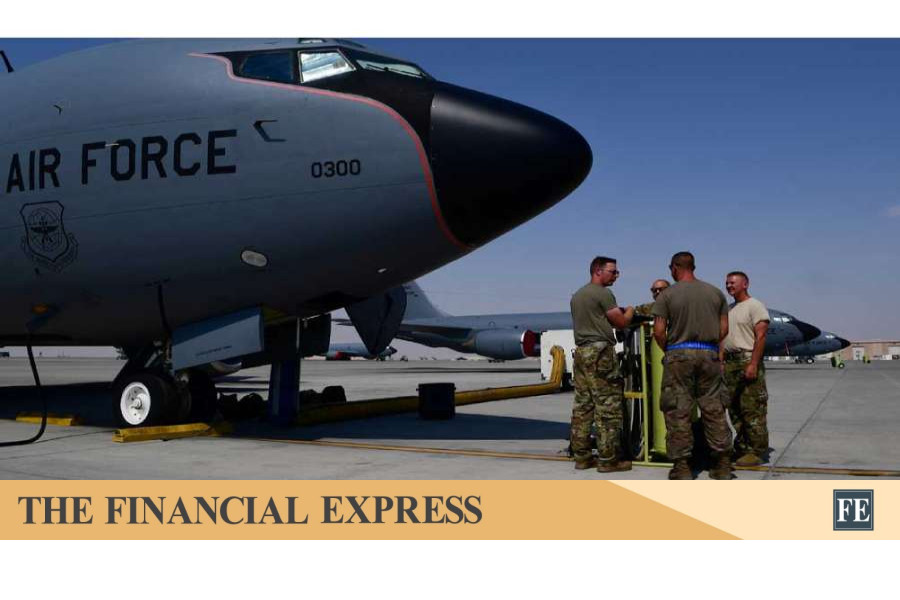
Four of the six crew members aboard a US military aircraft that crashed in western Iraq are confirmed to have been killed, the US military said on Friday, as rescue efforts continued for the remaining two.

A US military refuelling aircraft crashed in western Iraq on Thursday, in an incident the military said involved another aircraft but was not the result of hostile or friendly fire.

The deaths add to the seven US service members who have already been killed as part of US operations against Iran which began on Feb 28.

"The circumstances of the incident are under investigation. However, the loss of the aircraft was not due to hostile fire or friendly fire," a statement from US Central Command said.

A US official told Reuters that the second aircraft involved in the crash, which landed safely, was also a military refuelling aircraft known as the KC-135.

The United States has deployed a large number of aircraft into the Middle East to take part in operations against Iran and the incident highlights the risk of not just operations, but of refuelling aircraft in the air.

The KC-135, built by Boeing in the 1950s and early 1960s, has served as the backbone of the US military's air refuelling fleet and is critical to allowing aircraft to carry out missions without having to land.

The Islamic Resistance in Iraq, an umbrella group of Iran-backed armed factions, claimed responsibility for downing the US military refuelling aircraft.

Reuters reported on Tuesday that ⁠as many as 150 US troops have been wounded in the US-Israeli war on Iran. News of the crash comes the same day two US sailors were injured after ⁠the USS Gerald Ford suffered a non-combat-related fire on board.

The first seven US troops were killed when a drone slammed into a US military facility in Port Shuaiba, Kuwait.

President Donald Trump and other senior officials have warned the Iran conflict will result in more US military deaths as Tehran retaliates against US and Israeli strikes.​
 
Analyze

Analyze Post

Add your ideas here:
Highlight Cite Respond

250 groups oppose additional spending on Trump’s illegal war on Iran
New Age Desk 14 March, 2026, 01:43

1773451273926.webp

US president Donald Trump. | File photo

Members of Congress should vote against any additional funding for president Donald Trump’s unconstitutional war on Iran, more than 200 groups said Friday in a letter sent to Congress, reports American Civil Liberties Union.

Waging a war of choice that costs an estimated $1 billion a day not only fails to address the economic squeeze and health care crisis facing Americans, but diverts federal funding from an array of urgent domestic priorities.

The letter was led by Public Citizen, Win Without War, MoveOn, and the American Civil Liberties Union.

‘By launching a war against Iran, Trump has violated the Constitution, defied international law, flouted the will of the American people, and has put millions of lives across the region at risk.

A vote for president Trump’s Pentagon supplemental funding package would be a vote to commit the US even further to this crisis, which has already killed seven US service members and nearly 2,000 people from across the region, and which endangers the lives of many more,’ the letter reads.

The Pentagon’s budget now totals more than $1 trillion, after an extra $150 billion the agency received in the GOP’s reconciliation bill.

A supplemental worth $50 billion would be enough to restore food assistance for four million Americans, establish universal pre-K education, and pay for the annual construction of more than 1,00,000 units of housing. The groups maintain that this illegal war with Iran cannot be an excuse to fund more weapons instead of priorities here at home.

Other prominent signatories to the letter include Oxfam America, the Service Employees International Union, National Nurses United, the Council on American-Islamic Relations, the National Organisation for Women, the Union of Concerned Scientists, J Street, Greenpeace, Friends of the Earth, Indivisible, Common Cause, Jewish Voice for Peace, Rising Majority, and Working Families Power.

‘President Trump’s illegal war has already shown the costs war imposes — American service members killed and injured, thousands of civilians killed in fighting, skyrocketing oil prices, a conflict spiralling over a dozen countries in unexpected ways, and more.

That’s exactly why it’s so crucial that the decision to go to war not rest on one person’s impulses. Congress must not fund the continuation of this unconstitutional war,’ said Christopher Anders, director of ACLU’s Technology and Democracy Division.

‘More money for the Pentagon will serve to extend and escalate an illegal, unpopular, and devastating war – as well as pave the way for still more Pentagon funding requests,’ said Robert Weissman, co-president of Public Citizen.

‘The money wasted on this war should instead be invested in meeting the economic squeeze felt by everyday Americans. The $11.3 billion spent on the first six days of the war would, for example, be enough to restore food benefits to the four million people losing them due to the tax and budget reconciliation bill.’

‘Every penny wasted on bombing children and families in Iran would be better spent on health care and affordable housing in America. Secretary Hegseth and president Trump are ready to spend trillions on another forever war that nobody asked for, but they won’t lift a finger to lower costs here at home,’ said Sara Haghdoosti, chief of program for MoveOn Civic Action. ‘A vote for supplemental spending is a vote to continue the war in Iran, and Congress must listen to the vast majority of Americans and stop the reckless spending and bloodshed.’

‘People across the US already hate Trump’s illegal war in Iran, and they’re not going to like it any better if Congress wastes $50 billion more of their money on it,’ said Shayna Lewis, deputy director of Win Without War.

‘It’s outrageous that Trump is even asking for more money to spend on bombs when his spiralling war is killing civilians abroad and driving up prices for everyone at home, all with no end in sight. Congress should tell Trump clearly: not one more penny for this foolish, destructive war.’​
 
Analyze

Analyze Post

Add your ideas here:
Highlight Cite Respond

Latest Posts

Back
PKDefense - Recommended Toggle