[🇧🇩] Iran, US- Israel War: It's Impact On Bangladesh

[🇧🇩] Iran, US- Israel War: It's Impact On Bangladesh
52
659
More threads by Saif

G Bangladesh Defense

Bangladesh economy caught in the crossfire

Govt must fix fragile economy to weather shockwaves from Middle East

1775782726196.webp

VISUAL: STAR

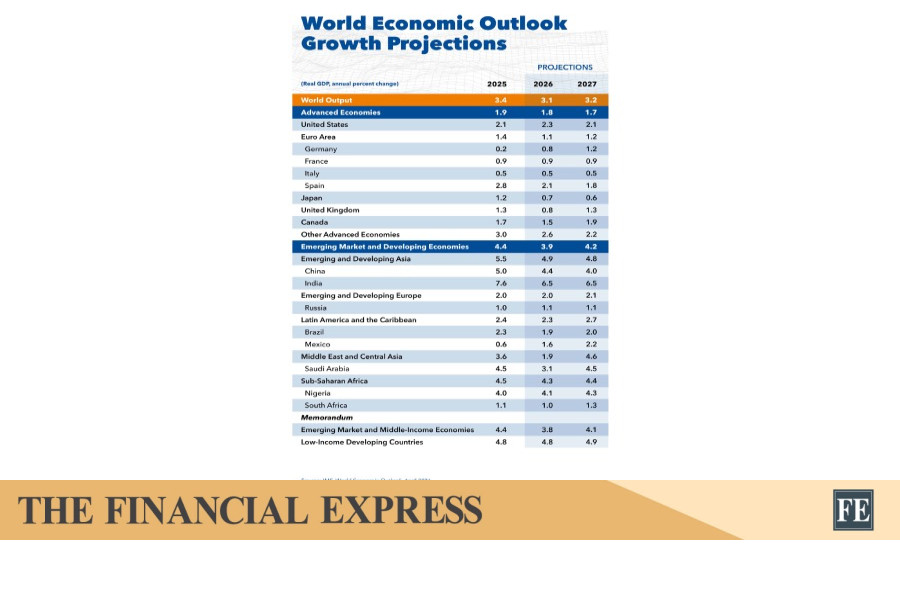
The economic shockwaves from the Iran war are rippling far beyond the Middle East. Heavily dependent on the Gulf for energy and sustained by remittances from the same region, Bangladesh remains particularly exposed, and a new World Bank assessment warns that this external shock could amplify our existing vulnerabilities, slowing growth, fuelling inflation, and pushing thousands back into poverty.

The growth outlook has already dimmed. Real GDP expansion, previously downgraded to 4.6 percent for the current fiscal year, is now projected to fall further to 3.9 percent. For an economy that needs momentum after three consecutive years of rising poverty, this is a serious setback. An estimated 12 lakh people who were expected to move out of poverty will now remain trapped, while about 600,000 jobs risk disappearing altogether.

Bangladesh imports 60-65 percent of its crude oil from the Gulf and also sources up to 75 percent of its LNG from the region, primarily Qatar. As energy prices climb, the import bill swells, widening the trade deficit and putting pressure on the taka. These costs ripple quickly through the economy, raising the price of transport, food production, and industrial output. Inflation, already elevated, is likely to gather further pace, hitting the poorest households hardest. At the same time, a second pressure point looms: remittances. Millions of Bangladeshi workers are now employed in economies that are themselves vulnerable to prolonged instability. If hiring slows or wages weaken, the impact will be felt directly in Bangladesh’s villages and towns. The flow of remittances could begin to thin.

What makes this moment more precarious is the condition of the domestic economy. Bangladesh is entering this external storm with structural weaknesses already exposed. The new government has inherited tight fiscal space, a fragile banking system, and persistently weak revenue mobilisation. These constraints leave little room to absorb additional shocks.

Higher global energy prices will inevitably deepen fiscal pressures. Subsidy requirements for power, gas, and fertiliser are set to rise sharply. If domestic prices are not adjusted, subsidy spending could climb to 2.8 percent of GDP in FY26 from 2 percent now, crowding out investment in health and education and forcing the government to depend more on borrowing. In an already constrained financing environment, that path is risky. Public debt, if left unchecked, is projected to exceed 45 percent of GDP by FY28.

The policy response, therefore, cannot be timid. The central bank must resist the temptation to rely on unsterilised money creation to prop up weak banks and instead maintain a firm monetary stance to contain inflation. At the same time, relief measures should be carefully targeted, reducing import duties on essential food items and expanding safety nets for the most vulnerable households. The authorities must also move on long-delayed reforms. Energy subsidies need to be gradually rationalised to ease fiscal pressure. Tax policy and administration must be overhauled to broaden the revenue base and reduce dependence on domestic borrowing. Without these steps, short-term firefighting will only deepen long-term fragility. If the government is to withstand the current turbulence and return to a path of inclusive growth, decisive reform is urgent.​
 

Managing the crisis thru unity

Tanim Asjad

Published :
Apr 10, 2026 23:16
Updated :
Apr 10, 2026 23:16

1775868650425.webp

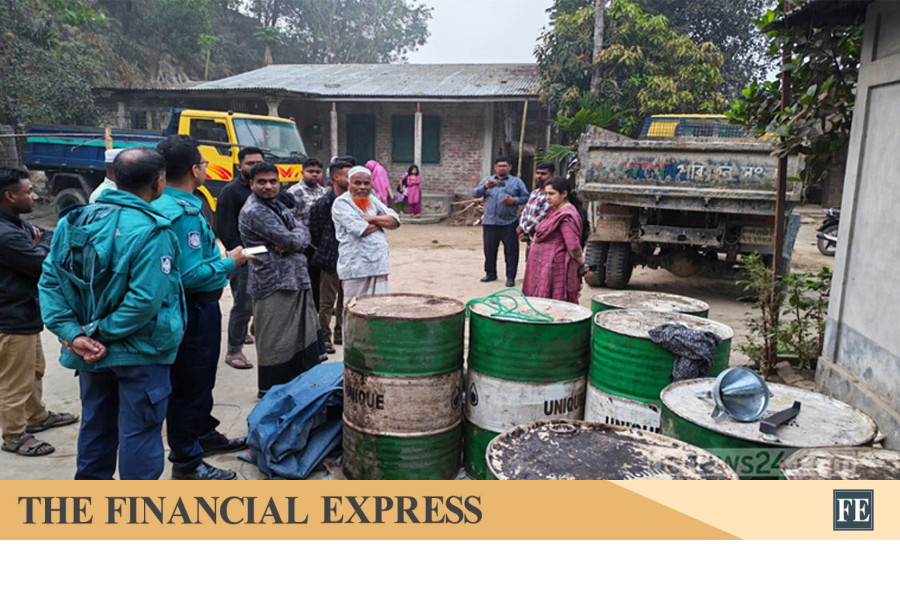
A vigilance team seized some drums of fuel, stored illegally at a hidden place in Sylhet last month —Agency Photo

Bangladesh is facing a major crisis due to the ongoing war in the Middle East, which has disrupted the oil supply chain and driven up prices. Despite temporary ceasefire, the oil shock will make the already vulnerable economic conditions more fragile. It will be truly challenging for the government to address the socio-economic disturbances in the coming days. At such a critical juncture, elected lawmakers are expected to join hands as a gesture of unity to inspire citizens. Unfortunately, there is no sign of progress so far.

Though the government has taken several austerity measures to address the looming crisis, it has not yet invited other political parties for consultation. The opposition parties are also not showing interest in overcoming the crisis by offering suitable suggestions. It might appear to many that neither the government nor the opposition is serious about addressing the socio-economic crisis, which has the potential to intensify in the coming days.

Instead, the government seems to delegitimise the referendum verdict, which was validated by around 70 per cent 'Yes' votes. The referendum was framed as consent to implement various constitutional reform measures under the July National Charter. Opposition parties, however, are pressing to adopt the proposed reforms by amending the constitution. The two sides are now fighting over the referendum verdict as if there are no other problems in the country.

As the government's immediate task is to address the energy crisis stemming from the Iran war, it has a valid argument to suspend talks on the referendum and constitutional reforms for now. It may also seek cooperation of the opposition in Parliament by setting a clear deadline. However, any attempt to ignore the people's verdict is unfortunate and illegitimate.

The government is moving to scrap various ordinances issued by the Yunus-led interim government to implement comprehensive reforms across the fiscal, judicial, and administrative spheres. A special committee of the National Parliament recommended approving 113 ordinances, but suggested ignoring four and not immediately presenting 16 as bills in the house. These 16 ordinances will be re-examined and revised before introduction as new bills. As a result, the effectiveness of 20 ordinances ended after April 10.

The ordinances related to the appointment of Supreme Court judges and the establishment of the Supreme Court Secretariat were nullified in parliament last week. Moreover, the fate of 16 ordinances, including those related to the National Human Rights Commission, the prevention of enforced disappearances, strengthening the Anti-Corruption Commission, and the separation of fiscal policy and fiscal management, will be determined later.

These moves send wrong signal to people. Civil society organisations and rights activists have already protested the government's decision. By scrapping the Supreme Court-related ordinances, the government shows its unwillingness to make the judicial system more efficient and seeks to maintain political influence over judiciary, as did the ousted Hasina regime. Instead of scrapping the ordinances now, the government might re-examine them. Deferring 16 ordinances puts the fate of necessary institutional reforms into uncertainty. As the government has the right to re-examine these ordinances thoroughly, it needs to make a clear statement on this.

Reform of the judiciary and administration are tough tasks, as the vested political-bureaucratic nexus seeks to keep the existing system intact. After winning the 9th parliamentary election in December 2008, the Awami League government quickly scrapped some reform measures introduced by the army-backed caretaker government. For instance, the Better Business Forum (BBF) and Regulatory Reforms Commission (RRC), formed by the caretaker government, were abolished by the Hasina government in 2009. A similar trend is visible now.

Be it constitutional reform or energy crisis, the country now needs unified efforts to address it for the greater interest of the nation. As the country has started a new journey after the July uprising, which was marked by bloodshed and intimidation and a series of chaos and mob violence in the post-July period, there is an opportunity to advance the nation by building unity with diversity.​
 

US likely to extend Russian oil waiver to temper Iran war shock

REUTERS
Published :
Apr 11, 2026 20:30
Updated :
Apr 11, 2026 20:30

1775954002523.webp

US President Donald Trump's administration is likely to extend as soon as Friday a waiver allowing countries to buy some sanctioned Russian oil and petroleum products, two sources familiar with the matter told Reuters.

The US Treasury Department has allowed purchases of Russian oil and products at sea since mid-March with a 30-day waiver that expires on Apr 11, part of efforts to control global energy prices during the US-Israeli war with Iran.

Russia's presidential envoy Kirill Dmitriev had said the original waiver would free 100 million barrels of Russian crude, equal to almost a day's worth of global output.

US Treasury Secretary Scott Bessent met with Trump in the White House on Thursday to talk about extending the waiver, and they agreed it was a good idea, one of the sources said, asking not to be named.

Officials at the White House and Treasury Department did not immediately comment on the matter.

Oil prices LCOc1 have spiked since the start of the war due to the partial closure of the Strait of Hormuz, through which about 20 percent of the world's oil and gas had been shipped daily before the conflict. The war is creating the biggest oil supply disruption in history, the 32-nation International Energy Agency has said.

Rising fuel prices are a major concern for Trump and his Republican party leading into midterm elections in November.

The waivers have been criticized by politicians at home and abroad as they could complicate the West's efforts to deprive Russia of revenue for its war in Ukraine and put Washington at odds with its allies.

European Commission President Ursula von der Leyen has said now is not the time to relax sanctions against Russia.

Congressional Backlash

The US also waived sanctions on Iranian oil at sea on Mar 20 for 30 days, in an effort to control prices, spurring criticism from lawmakers from both political parties.

"Waiving oil sanctions now advantages the countries that wish to do us harm," Republican Senator Jerry Moran said last month, as he urged the administration to not renew the waivers. "Iran and Russia are actively working together to place Americans and other innocent lives at risk."

Senate Minority Leader Chuck Schumer and fellow Democratic Senator Jeanne Shaheen urged the administration on Friday not to renew the license on Russian oil. “It remains far from clear that the extraordinary step of providing sanctions relief to Russia provided any relief for US consumers or eased the global energy crisis," they said in a statement.

"Instead, even as Russia supported Iran in targeting Americans, the Trump Administration has rewarded the Kremlin while Russia has continued to launch strikes at Ukraine—including a barrage of 1,000 strikes in late March," they said.

India, a US ally vulnerable to fuel shocks resulting from the war, has expected Washington to renew the waiver on Russian oil.​
 

Stranded Bangladeshi ships to cross Strait of Hormuz very soon: Iran envoy

UNB
Published :
Apr 12, 2026 20:56
Updated :
Apr 12, 2026 20:56

1776039393717.webp


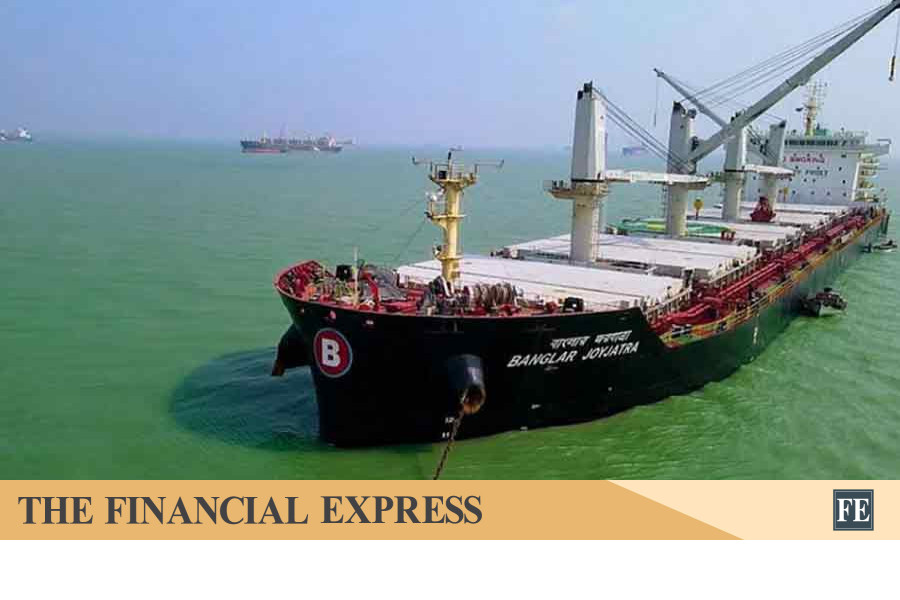
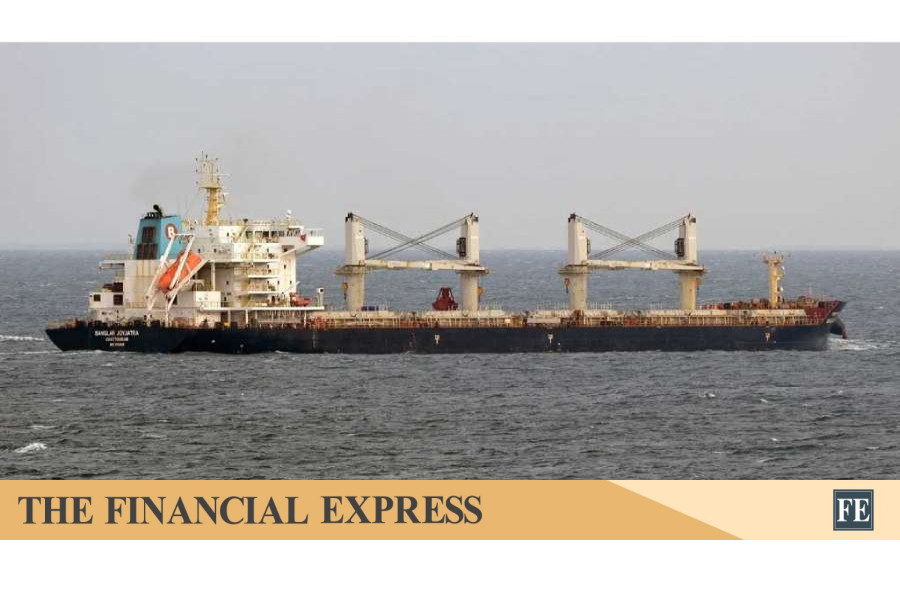
Iranian Ambassador to Bangladesh Jalil Rahimi Jahanabadi on Sunday said many ships are waiting in the Strait of Hormuz due to the war situation, and said he was hopeful that they will be able to cross the Strait ‘very soon’.

“Some Bangladeshi ships are also stuck in the Strait of Hormuz. We will cooperate with Bangladesh. We will make arrangements for the release of Bangladeshi ships. The ships will be able to cross the Strait of Hormuz very soon. We will take action in this regard after talking to the Bangladesh government,” said the Ambassador.

The Iranian Ambassador made the remarks while speaking as the chief guest at an anti-war crimes exhibition titled 'Remembering the Martyred Students of the Islamic Republic of Iran: Demanding Justice and Accountability for US-Israeli War Crimes' organized by the Revolutionary Students' Council at Dhaka University on Sunday.

The Ambassador said the relations between Bangladesh and Iran are good and they consider Bangladesh as a brotherly country. “We have no enmity with Bangladesh.”

Regarding the Pakistan-mediated talks between Iran and the United States, the Ambassador thanked Pakistan for arranging the talks, according to a media release.

“At the same time, I thank those who have cooperated with us, including Oman."​
 

War shock may drain $6b from reserves: BB

Inflation may rise to 11.7pc, it projects

Staff Correspondent 13 April, 2026, 00:37

1776043491804.webp

New Age file photo

Bangladesh faces a sharp escalation in inflation and foreign exchange pressure due to the Middle East war, with risks building across dollar market, reserves and external balance, according to the latest Bangladesh Bank assessment.

In its quarterly report for October-December 2025, the central bank used a structural vector autoregression model to simulate the impact of a severe geopolitical shock.

It projected that such a scenario could raise domestic inflation by nearly 2 percentage points and drain more than $6 billion from foreign exchange reserves by the end of 2026.

The report modelled a steep surge in global oil prices, assuming a 70-per cent increase in the first quarter of 2026 and a further 30-per cent rise in the following quarter, alongside a depreciation of the taka.

Under this combined shock, inflation is projected to climb from 9.6 per cent in early 2026 to 11.7 per cent by the end of the year, intensifying existing price pressures.

The Bangladesh Bank explained that exchange rate depreciation had an immediate impact on domestic prices by raising the cost of imports, including fuel, food and industrial inputs.

At the same time, higher oil prices gradually push up production and transport costs, feeding into broader inflation over several quarters.

The external sector faces equally strong pressure.

Gross foreign exchange reserves stood at $33.19 billion at the end of December 2025.

Under the simulated shock, reserves could fall to $26.06 billion by December 2026, a decline of $6.5 billion.

If the depreciation deepens further, reserves may drop to $24.24 billion, reflecting higher import payments and central bank intervention to stabilise the currency.

The report warned that the gains seen in recent months remained fragile.

The current account recorded a surplus of $476 million in the second quarter of FY26, supported by a 20 per cent rise in remittances to $8.68 billion.

However, the trade deficit widened to $5.8 billion, indicating underlying pressure from imports.

The Middle East conflict has already disrupted global energy and food supply chains.

Bangladesh’s dependence on imported fuel leaves it exposed to rising prices, while any disruption in Gulf labour markets could weaken remittance inflows, a key source of dollars.

Export earnings also remain vulnerable.

The readymade garment sector, which earned $9.75 billion in the second quarter, faces weaker demand from the United States and Europe amid global inflation and trade tensions.

The report outlined a policy dilemma.

If the government fully absorbs higher oil prices through subsidies, inflation may remain around 10.5 per cent, but fiscal costs could rise sharply.

Allowing partial pass-through would ease fiscal pressure but push inflation higher.

The Bangladesh Bank said that maintaining a contractionary monetary policy and allowing some exchange rate flexibility would be necessary to contain inflation and manage reserve losses.​
 

Latest Posts

Back