[🇧🇩] Reforms carried out by the interim/future Govts.

[🇧🇩] Reforms carried out by the interim/future Govts.
220
7K
More threads by Saif

G Bangladesh Defense

A much-hyped new govt move on economic front
PM launches reform drive to ease business, attract investment
Offshore finance mobilisation by businesses envisaged, FDI in banks, insurance to be allowed

Jasim Uddin

Published :
Apr 04, 2026 23:59
Updated :
Apr 04, 2026 23:59

1775347965453.webp


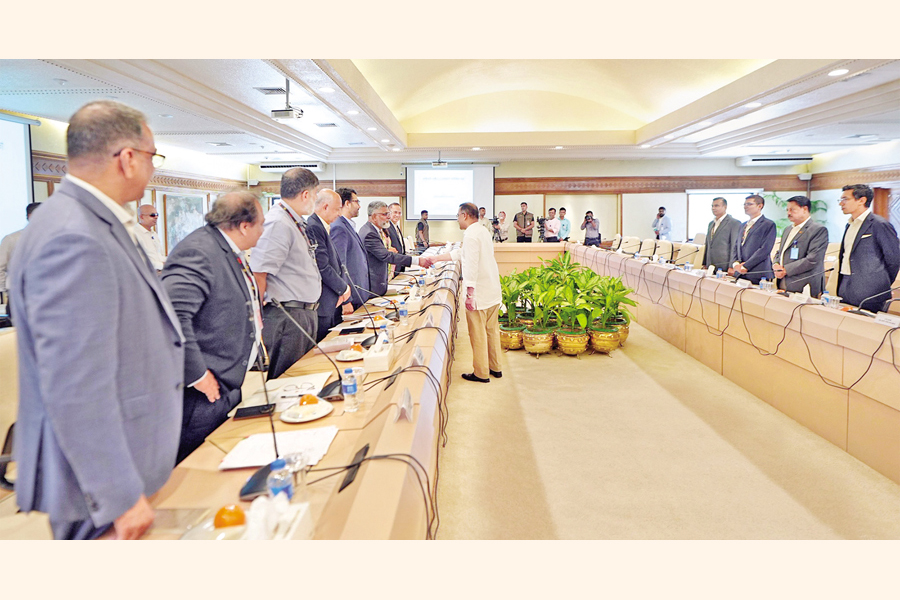
Prime Minister Tarique Rahman shakes hands with a business leader during a formal meeting with the country's leading businessmen at the PMO in the city on Saturday. — Focus Bangla

Prime Minister Tarique Rahman kick-starts a much-cherished reform drive to remove key bottlenecks to private sector and enhance ease of doing business with the cardinal goal of attracting fresh investment from home and abroad and accelerating job creation.

The crucial move came at a high-level meeting with Bangladesh's top business leaders at the Prime Minister's Office on Saturday, where the government also activated the Private-Sector Advisory Council (PSAC) to steer a time-bound reform agenda over the next two years.

Chaired by the Prime Minister, the council will serve as a platform to align policy with business needs and ensure implementation of reforms to improve competitiveness and the investment climate.

After the meeting was over, talking to The Financial Express, Pacific Jeans Managing Director Syed Mohammed Tanvir said the PSAC has been selected as a sounding board for the HPM to capture ground-level realities of manufacturing in Bangladesh from local companies.

"The purpose is to help reduce the gap between business and government. Areas discussed include policy reform and simplification, improving policy quality, timely implementation, and better governance. At the same time, the focus is on identifying ways to boost competitiveness, open up new sectors, create quality jobs, and improve human capital."

He says the meeting was the first to discuss cross-cutting issues such as regulatory bottlenecks, energy, human capital, the NBR, logistics, exports, FDI, branding, new technologies, and finance.

The newly formed PSAC is scheduled to meet every three months to monitor progress, he adds.

Talking to the FE, M. A. Jabbar, Managing Director of DBL Group and a council member, said the Prime Minister directly heard business leaders' concerns during the nearly two-and-a-half-hour-long meeting.

"The focus was on improving the business environment to attract both domestic and foreign investment and generate employment," he says.

He notes that businesses flagged persistent bottlenecks, including complexities in VAT, customs, and income-tax administration by the NBR, as well as hurdles in business registration and renewal.

Logistical and financial constraints -- such as deep-sea port operations, airport capacity, high lending rates, and land and utility issues in economic zones -- also came under discussion.

The meeting also discussed a proposal to raise readymade garment (RMG) exports to $70 billion over the next five years.

Business leaders proposed measures to boost exports and achieve greater self-sufficiency in raw materials, focusing on sectors such as active pharmaceutical ingredients (API), automobiles, semiconductors, agro-processing, and light engineering.

Jabbar adds: the Prime Minister issued on-the-spot directives to address several urgent issues, with others to be resolved in phases under the reform roadmap.

PM Office officials say the Prime Minister emphasised the need for urgent and measurable progress in addressing long-standing structural constraints, including complex taxation, high lending rates, and inefficiencies in port and logistics systems.

The government will conduct a comprehensive review of existing regulations across sectors to identify over-regulation and eliminate overlapping authorities, with a focus on simplifying procedures and reducing compliance burdens.

A key strategy involves benchmarking reforms against peer economies such as Sri Lanka and Indonesia, aiming to adopt proven solutions rather than designing new frameworks from scratch.

During the meeting, business leaders proposed a more structured engagement mechanism between the private sector and key regulatory bodies, including BIDA, the National Board of Revenue (NBR), Bangladesh Bank, IDRA, and BSEC.

They suggested involving industry representatives in policy formulation, allowing businesses to present ground-level realities and provide feedback before regulations are finalized.

According to attendees, Prime Minister Tarique Rahman, whose party espouses wide-ranging reforms in governance and economy, welcomed the idea, signalling a shift toward stronger public-private coordination in economic policymaking.

To improve access to finance, discussions included enabling offshore borrowing for local firms and reviving the domestic bond market.

Plans are also underway to attract foreign investment in banking and insurance, aiming to strengthen financial depth and stability.

A major pillar of the reform recipe is transforming the NBR from a revenue-focused agency into a trade facilitator. Proposed measures include shifting from trade-based taxes toward domestic taxation, such as personal and corporate income tax and VAT, with trade taxes projected to fall from around 28 percent to 7.5 percent by 2035.

The plan also envisions eliminating advance income tax (AIT) and tax deducted at source (TDS), while modernizing tax administration through digital systems to broaden the tax base and enhance transparency.

Business leaders also flagged logistics and infrastructure gaps. Bangladesh spends an estimated 15-20 per cent of GDP on logistics -- nearly double the global average -- undermining competitiveness.

The government plans to expand and modernize ports, develop railways via public-private partnerships, and accelerate renewable-energy adoption, including incentives for solar power and private-sector investment in clean-energy solutions.

The meeting has underscored a broader economic shift from low-cost labour to a skills-driven, diversified economy. A new workforce-development framework will focus on technical skills and industry-oriented training.

Export diversification is also a priority, targeting $100 billion in export by 2030, with emerging sectors like semiconductors, light engineering, and outdoor equipment complementing traditional industries.

Foreign direct investment (FDI) received special attention, with the Prime Minister emphasizing the need to improve the overall investor experience and benchmark the ease of doing business against competitors such as Vietnam, Cambodia, and India.

Measures include easing visa regimes, improving airport and entry procedures, and launching a global branding campaign under a "Build in Bangladesh" narrative.

The discussion also highlighted new manufacturing frontiers and strengthening existing clusters, such as Bogura's light-engineering industry.

Business leaders welcomed the reform agenda but stressed that consistent execution and inter-agency coordination would be critical for success.

Among others, leading industrialists, including Syed Nasim Manzur, Managing Director of Apex Footwear, Ziaur Rahman of Bay Footwear, Ahsan Khan Chowdhury, CEO of PRAN-RFL Group, Abdul Muktadir, Managing Director of Incepta Group, Hafizur Rahman Khan, Chairman of Runner Group, Sohana Rouf Chowdhury, managing director of Rangs Group, and Arif Dowla of ACI Limited were present at the meeting.

Representing the government were Finance and Planning Minister Amir Khasru Mahmud Chowdhury, Commerce Minister Khandaker Abdul Muktadir, Minister for Power, Energy and Mineral Resources Iqbal Hasan Mahmud Tuku, BIDA Executive Chairman Chowdhury Ashik Bin Harun, and Bangladesh Bank Governor Mostakur Rahman.​
 

Nahid Islam calls on prof Yunus, former advisers to take to streets on reform issue

Staff Correspondent
Dhaka
Published: 04 Apr 2026, 22: 38

1775348835115.webp

After returning to the country this Saturday noon following the completion of holy Umrah, Nahid Islam spoke to journalists at Hazrat Shahjalal International Airport in Dhaka. `Nahid Islam’s Facebook

Nahid Islam, convener of the National Citizen Party (NCP), has called on former advisers—including Professor Muhammad Yunus and former law adviser Asif Nazrul—to take to the streets to ensure the implementation of reforms.

“We gave them power through people’s blood, but they have disappointed us. However, to preserve whatever has been achieved, they too must come to the street,” he said.

He made these remarks while speaking to journalists upon his return from Umrah at Dhaka’s Hazrat Shahjalal International Airport.

Nahid Islam, who is also the opposition chief whip in the National Parliament, said that after securing a two-thirds majority in the election, the Bangladesh Nationalist Party (BNP) is disregarding everything. He alleged that they are not accepting the verdict of the referendum, are offering new excuses, and introducing various proposals. Among important ordinances, 10 to 11 are not being brought to Parliament, meaning they will not be turned into law. Through this, he claimed, the BNP government wants to retain the previous authoritarian system where executive power remains absolute.

Nahid Islam said, “Dr Muhammad Yunus, Asif Nazrul, and other advisers who played important roles must take responsibility. They were the ones who introduced these ordinances. Now that these are being repealed, they must speak out. Dr Muhammad Yunus must break his silence.”

The NCP convener also alleged that the interim government handed over power to the BNP through “election engineering.”

He said it cannot be the case that these laws and ordinances will be repealed, reforms will not happen, and the former advisers will remain silent and return to their own careers.

“They too must face the court of the people,” he added.

Responding to a question about the situation in Parliament, Nahid Islam said, “What is happening in the National Parliament is a kind of drama. Discussions are being held on the President’s speech—who was not supposed to remain in office for so long.”

He added that the kind of discussions they want cannot take place in Parliament due to the lack of a proper environment, forcing them to take to the streets.

When asked whether Parliament has become ineffective, Nahid Islam said, “It is the ruling party that is making Parliament ineffective. We want Parliament to function effectively. Two elections have taken place—the referendum and the national election. The Parliament formed based on the national election is functioning. But another election, which was supposed to lead to the formation of a Constitution Reform Council, has been rendered ineffective by the BNP government. As a result, Parliament has already become half ineffective.”​
 

When reform becomes more power, less accountability

6 April 2026, 09:00 AM

Kamal Ahmed

1775524077849.webp

FILE VISUAL: ALIZA RAHMAN

With the parliamentary politics once again becoming vibrant and engaging, a clear fault line is gradually emerging between the ruling party, BNP, and the opposition, Jamaat-e-Islami (JI). Not too long ago, these two parties were political allies—both in government and in opposition—jointly leading street movements against the rise of authoritarian rule under Sheikh Hasina and her Awami League. Their eventual split largely stemmed from a redrawing of the country’s political landscape following the uprising against Hasina’s dictatorial regime, which ultimately consigned her party to political irrelevance.

Both parties have been victims of egregious abuses of power, including the criminalisation of state institutions under Hasina’s rule. They endured severe persecution—enforced disappearances, extrajudicial killings, arbitrary arrests, fabricated charges, prolonged detention without trial, and brutal physical violence. At one point, their political futures appeared nearly extinguished due to the judiciary’s partisan alignment with the executive. In response, both parties championed sweeping reforms in governance and key state institutions, particularly the judiciary, security apparatus, and law enforcement, with a shared commitment to accountability and the rule of law.

In the newly redrawn political landscape, both parties continue to profess support for fundamental reforms, though their interpretations diverge significantly. The reform process initiated by the interim government led by Professor Yunus—through 11 thematic commissions and a National Consensus Commission—resulted in the July National Charter as well as 133 ordinances aimed at overhauling governance and state institutions. Subsequently, the newly elected Jatiya Sangshad formed a parliamentary committee that recommended legal validation of 98 of these ordinances without amendment. At first glance, such broad agreement might suggest an impressive level of political consensus.

A closer examination, however, reveals a far more troubling picture. The 13-member parliamentary committee also proposed that 15 ordinances be introduced in amended form, while 16 others should be deferred for further revision rather than presented as bills now. Most strikingly, the committee recommended scrapping four ordinances outright, three of which relate to judicial reforms widely considered essential for ensuring judicial independence. Reactions from the opposition alliance led by JI, as well as from prominent non-partisan civil society actors and rights groups, suggest that these decisions represent a significant step backward.

The committee report includes notes of dissent from opposition members but none from those on the treasury bench. Three opposition MPs formally objected to 12 ordinances. These dynamics point to a disturbing pattern: rather than exercising independent judgment, many lawmakers appear to have adhered strictly to party directives. Notably, the report omits mention of a ruling party MP who submitted a detailed letter opposing the decision to let certain ordinances lapse or be discarded. This raises concerns that Article 70 of the constitution—which restricts MPs from voting against party lines—is already being enforced, despite prior commitments by all parliamentary parties to limit the application of Article 70 to confidence votes and finance bills.

A review of the ordinances slated for approval, revision, or rejection suggests that the ruling BNP may be prioritising consolidation of power over accountability, contradicting its own 31-point reform agenda. Among the 98 ordinances likely to pass unchanged are provisions that expand executive authority, including powers to remove elected local government officials and discipline civil servants. Given Bangladesh’s history of partisan interference in local governance, retaining such provisions risks replacing elected representatives with politically loyal administrators—an outcome that diverges sharply from BNP’s stated commitments and undermines recommendations from the Local Government Reform Commission. Many of the remaining ordinances are administrative in nature and carry limited political significance.

The most contentious recommendation, however, is the decision to scrap three ordinances related to judicial independence, particularly those concerning judicial appointments and the establishment of a separate secretariat for the Supreme Court. These moves effectively revive earlier practices that allowed significant executive influence over judicial appointments and the lower judiciary. This is especially striking given that many senior BNP leaders, including Tarique Rahman and Khaleda Zia, have themselves suffered from what many describe as the weaponisation of the judiciary under the previous regime. There are also suggestions that elements within the bureaucracy have resisted the creation of an independent judicial secretariat—claims that the government should address transparently to justify its position.

Equally concerning is the apparent retreat from efforts to strengthen institutional accountability. The parliamentary committee’s recommendation to defer (meaning allowing to lapse) 16 ordinances includes key legislation such as reforms to the National Human Rights Commission (NHRC). Allowing this ordinance to lapse could effectively dismantle the current NHRC, which has arguably the potential to be the most effective in the country’s history, as its members include experts who have investigated over 1,500 cases of enforced disappearance while leading a different probe commission. Reports indicate resistance from security agencies and bureaucratic actors to empowering the NHRC, particularly regarding its authority to investigate abuses and operate independently.

It is particularly troubling that a party with a significant number of victims of enforced disappearances now appears to accept national security justifications for limiting oversight. Such a position not only contradicts the spirit of the July mass uprising but also undermines fundamental human rights obligations. Mere pledges by the BNP to bring back these legislations with improved and stronger safeguards are least assuring, as such revisions could have been made during the ongoing process of validating other ordinances.

The opposition JI members of the committee are not without fault. Their revisionist proposals—particularly the suggestion to remove references to Jamaat-e-Islami, Muslim League, and Nezam-e-Islami as collaborators with Pakistani forces from the ordinance on Muktijoddha Council —are deeply problematic. This effort to sanitise historical wrongdoing avoids necessary accountability and reconciliation. A more responsible approach would involve acknowledging past actions and offering a formal apology. How JI’s allies, especially the NCP, a party born out of the uprising and led by its youth leaders, respond to such revisionist tendencies remains to be seen.

Kamal Ahmed is consulting editor at The Daily Star. He led the Media Reform Commission under the immediate past interim government.​
 

Reform an ongoing process, essential for economic dynamism: Debapriya

UNB

Published :
Apr 09, 2026 19:11
Updated :
Apr 09, 2026 19:25

1775781080360.webp


Dr Debapriya Bhattacharya, Distinguished Fellow at the Centre for Policy Dialogue (CPD), on Thursday described reform as a continuous process, emphasising its necessity for maintaining economic momentum.

“Reform is not a static concept, it is an ongoing process. Just as blood circulation is vital for the human body, reforms are indispensable to keep an economy moving,” he said.

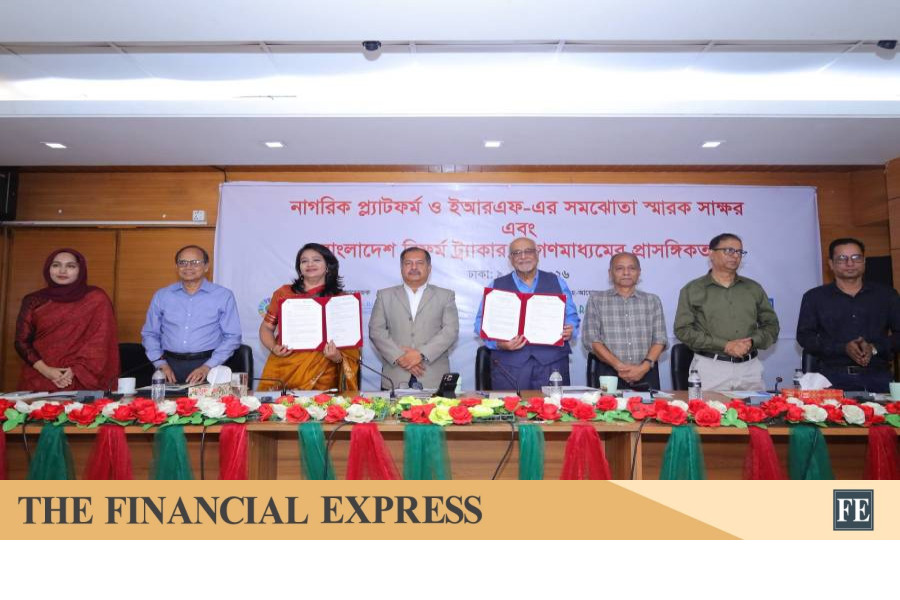
Debapriya was addressing a discussion titled “Bangladesh Reform Tracker and Relevance of Media,” organised by the Citizen’s Platform for SDG, Bangladesh, and the Economic Reporters’ Forum (ERF) at the ERF auditorium in the capital.

Speaking at the event, Information and Broadcasting Minister Zahir Uddin Swapan disclosed that the National Equipment Identity Register (NEIR) policy is set to undergo revisions.

Responding to queries from journalists, he said, “I discussed the matter with the adviser concerned four days ago when he informed me that an initiative has already been taken to revise the policy.”

The NEIR system is utilised by the government to enhance mobile handset security and curb the use of illegally imported or counterfeit devices by syncing International Mobile Equipment Identity (IMEI) numbers with the owner’s National ID and SIM cards.

Reflecting on the spirit of the student-led mass uprising, Debapriya noted that the movement has intensified the public’s aspiration for structural changes.

He urged politicians to prioritise the concept of reform, noting that current electoral manifestos have attempted to reflect both the necessity and expectations of such changes.

The eminent economist also touched upon the historical context of reforms in Bangladesh, recalling the post-independence reconstruction efforts, led by then Finance Minister Tajuddin Ahmad, through state-owned enterprises.

He further highlighted the contributions of former Finance Minister Saifur Rahman, stating, “His role in implementing two major reforms – the introduction of Value Added Tax (VAT) and the flexible exchange rate – will remain historic.”

The discussion was also attended by New Age Editor Nurul Kabir, The Financial Express Editor Shamsul Huq Zahid, Prothom Alo Online Editor Shawkat Hossain Masum, ERF President Daulat Akter Mala, and General Secretary Abul Kashem, among others.​
 

Politics and reform: Procedural crisis versus deficit of trust

The controversy surrounding the repeal of the ordinance has brought us face to face with a fundamental truth: it is not merely what reforms are undertaken that matters, but how they are carried out that are of greater significance. Without ensuring procedural transparency and inclusive participation, even the most well-intentioned initiatives risk falling into a crisis of public trust. Nurul Huda Sakib and Md Ekramul Haque write on this.

Nurul Huda Sakib & Md. Iqramul Haque
Published: 13 Apr 2026, 21: 04

1776127792590.webp


During the tenure of the interim government, a total of 133 ordinances were promulgated over a period of 18 months. Following scrutiny by a special committee, the Jatiya Sangsad (national parliament) approved 113 of these. Of the remaining 20 ordinances, four were repealed (including one that was repealed and subsequently re-promulgated), while 16 were not tabled in Parliament as bills. These 16 ordinances have since been recommended for further review, with a view to strengthening them and reintroducing them as new bills.

As a consequence, the legal validity of 20 ordinances issued during the interim government’s tenure has effectively lapsed. These include one related to the appointment of Supreme Court judges, two concerning the Supreme Court Secretariat, three relating to the National Human Rights Commission, two addressing enforced disappearances, and one pertaining to the Anti-Corruption Commission.

Under Article 93(2) of the Constitution of Bangladesh, an ordinance must be placed before Parliament within 30 days of the commencement of a parliamentary session and must be approved within that timeframe. Failing this, or if Parliament declines to approve it, the ordinance ceases to have effect. Accordingly, as these ordinances were not tabled in Parliament, they lost their legal force after 10 April. Some have already been formally annulled through parliamentary voting.

Against this backdrop, a number of critical questions have emerged in the public mind. Is the majority in Parliament pushing the ruling party towards unilateralism? Are political parties adequately comprehending public expectations? Is the much-discussed July National Charter, hailed as a symbol of reform and change, already losing momentum even before implementation? Beyond these questions, the repeal or suspension of ordinances warrants deeper analysis.

Not opposition to reform, but objection to process

The Bangladesh Nationalist Party (BNP) has consistently maintained that it does not oppose reform per se; rather, its objection lies with the manner in which reforms are being implemented. In practice, many reform initiatives undertaken during the interim government’s tenure have exhibited procedural weaknesses and generated controversy.

The core challenge lies elsewhere. A significant segment of the public does not fully grasp the intricacies of procedural debates; instead, they judge outcomes. As a result, the message reaching the public is not particularly favourable for the BNP.
For instance, under the July Charter, there was an initiative to secure approval for 84 reform proposals through a referendum framed around just four questions. This attempt to compress complex and multidimensional reforms into such a simplified format was not widely accepted, not only by political parties but also by segments of civil society. The BNP formally recorded “notes of dissent” on several occasions. From the outset, the party has stated that, if in power, it would implement reforms in accordance with its electoral manifesto and through established parliamentary procedures. Its position, therefore, is not anti-reform but rather pro-transparency and procedural legitimacy.

During the interim government’s tenure, ordinances were often promulgated in haste—on average, in less than five days per ordinance—without comprehensive parliamentary debate, public consultation, or meaningful dialogue with political stakeholders. Consequently, objections from the BNP and other parties have persisted.

For example, in the ordinance on the appointment of Supreme Court judges, the proposed “Supreme Judicial Appointment Council” limited government representation, prompting objections from the Ministry of Law. If judicial independence is to be ensured, it must rest on parliamentary oversight and constitutional balance—not on decrees issued by an unelected authority.

1776127858413.webp


Similarly, the two ordinances concerning the Supreme Court Secretariat risk increasing bureaucratic complexity under the guise of administrative autonomy. Questions also remain as to whether increasing the number of commissioners under the Anti-Corruption Commission ordinance would genuinely enhance effectiveness or merely create avenues for political accommodation. The two ordinances on enforced disappearances have raised concerns regarding their practical viability, as they were introduced without adequate alignment with international conventions. Comparable procedural shortcomings are also evident in the three ordinances relating to the National Human Rights Commission.

Political scientists have long identified central reasons why reform processes fail: excessive ambition, disregard for local context, bureaucratic overreach, and a lack of political will. Recent experiences in Bangladesh reflect many of these dynamics.

Several reform initiatives undertaken by the interim government were not fully aligned with local realities. For instance, certain provisions within the Human Rights Commission ordinances could have generated new forms of contention within Bangladesh’s socio-cultural context. In other cases, there appeared to be a tendency to expand bureaucratic authority. Furthermore, the omission of important recommendations in revised ordinances raised doubts about the effectiveness of the institutions concerned.

The BNP government’s argument, however, is relatively straightforward: as the interim government was unelected, treating its ordinances as binding “decrees” runs counter to the principles of parliamentary democracy. The party supports the implementation of the July Charter, but insists that this should occur through parliamentary deliberation and a two-thirds majority, in accordance with Article 142 of the Constitution.

Moreover, given that a referendum has already been held, the referendum ordinance itself has effectively served its purpose and is no longer necessary. BNP leaders, including Secretary General Mirza Fakhrul Islam Alamgir, have repeatedly stated, “We will implement the July Charter in full, but with notes of dissent and through parliamentary procedures.”

This stance should not necessarily be interpreted as reluctance towards reform; rather, it may be seen as an effort to render the reform process constitutional, sustainable, and grounded in public ownership.

Public perception, social media, and reality

However, the core challenge lies elsewhere. A significant segment of the public does not fully grasp the intricacies of procedural debates; instead, they judge outcomes. As a result, the message reaching the public is not particularly favourable for the BNP.

Many perceive the party as being “anti-reform” or as retreating from its July commitments. Opposition groups have been capitalising on this perception, successfully promoting narratives—particularly through social media—that portray the BNP as resistant to reform.

This narrative is gradually shaping public opinion and may heighten the risk of future political instability. Compounding this are global economic pressures, energy shortages, and domestic economic challenges. Together, these factors are fuelling public dissatisfaction—an element that can be readily politicised.

Challenges and the way forward for the BNP

In the current context, the BNP faces multiple pressures. On the one hand, there is international scrutiny to uphold standards of human rights and good governance; on the other, there are pressing domestic economic challenges and rising public expectations. Balancing these is not an easy task.

In this context, several factors are important for the BNP; first, the party must clearly communicate to the public why certain ordinances or proposals have been repealed. This explanation must go beyond political positioning and be framed as a principled stance. For instance, in repealing the ordinance on judicial appointments, it could emphasise that judicial independence will be more robustly ensured through parliamentary processes, preventing the concentration of power in unelected hands.

Similarly, the ordinances concerning the Anti-Corruption Commission and enforced disappearances should be revisited, strengthened, and reintroduced as comprehensive bills to ensure genuine effectiveness in combating corruption and safeguarding human rights. Regarding the referendum ordinance, the BNP’s position is clear: implementation of the July Charter should proceed through institutionalised democratic processes, enriched by parliamentary debate.

Second, the party must strengthen grassroots engagement to rebuild trust with the public. It should actively counter the “anti-reform” narrative circulating on social media by presenting a coherent counter-narrative.

The BNP’s 31-point framework for state restructuring, its commitment to implementing the July Charter with notes of dissent, and its electoral manifesto must be clearly communicated to the public, including through grassroots mobilisation.

Third, international partners must be reassured that the party remains committed to implementing effective and credible reforms, albeit grounded in local realities.

The BNP must uphold its commitments to human rights, anti-corruption measures, and judicial independence in line with international standards, ensuring that Bangladesh’s economic partnerships and global standing are not undermined. Continued dialogue with political parties and civil society is also essential.

Fourth, the government must take visible steps to address immediate public concerns—particularly energy shortages, inflation, and employment. Public trust is closely tied to improvements in everyday living conditions. Reforms that exacerbate public hardship will prove politically counterproductive.

Fifth, the government should revisit the 16 ordinances, refine them through inclusive consultation, and reintroduce them as robust and realistic bills in Parliament. This process must incorporate grassroots perspectives, expert input, political dialogue, recommendations from national consensus bodies, and international standards. Such an approach would make the reform process more inclusive and sustainable.

Conclusion

The controversy surrounding the repeal of ordinances has brought into sharp focus a fundamental truth: it is not only what reforms are undertaken that matters, but how they are carried out is even more critical. Without procedural transparency and inclusive participation, even the most well-intentioned initiatives risk descending into a crisis of public trust.

At this juncture, the greatest challenge is not merely to sustain reform, but to ensure that it is anchored in public ownership, constitutional legitimacy, and long-term sustainability. Failing this, a procedural crisis may ultimately evolve into a deeper crisis of trust.

* Nurul Huda Sakib, President and Professor, Department of Government and Politics, Jahangirnagar University

* Md Ekramul Haque, Lecturer, Department of Government and Politics, Asian University of Bangladesh​
 

Latest Posts

Back