Bangladesh Defense
Saif
Senior Member
- Jan 24, 2024
- 20,208
- 9,520
- Nation

- Residence
- Axis Group


Challenges of decoding the budget
People of Bangladesh witnessed the presentation of another national budget on June 11. Since then, analysing the positive and negative sides of the budget has been ongoing, and it will continue for a few weeks, though many parts of the budget remain ambiguous. The way the budget has been designed a
Challenges of decoding the budget
Tanim Asjad
Published :
Jun 19, 2026 23:41
Updated :
Jun 19, 2026 23:41
People of Bangladesh witnessed the presentation of another national budget on June 11. Since then, analysing the positive and negative sides of the budget has been ongoing, and it will continue for a few weeks, though many parts of the budget remain ambiguous. The way the budget has been designed and structured carries the legacy of the British colonial era in South Asia. Though the structure of the national budget has changed over the decades, the budget documents remain complex and difficult to decode to some extent. Bangladesh alone is not responsible for keeping the national budget ambiguous. Governments in many countries, especially developing ones, do not feel comfortable making their national budgets transparent so that stakeholders can easily understand them. The governments' attitudes to keep different aspects of the budget hazy have become a matter of concern.
Against the backdrop, two comprehensive review reports on public finances, prepared and published by the Organisation for Economic Co-operation and Development (OECD) in the last month, clearly reflect the concern. The main report titled 'Restoring Public Finances: Enabling Effective Government' focuses on the various efforts by governments across the world to become more efficient. It also outlines how digital technologies, alongside 'bureaucratic simplifications', can work in this context. The report is intended to serve as a 'knowledge base for policymakers, public servants, and civil society to make the most effective choices in managing public finances'. It argued that, due to higher debt servicing costs, growing public spending requirements, and various support measures for businesses and households in the wake of recent energy price shocks, public spending has increased. So, it is necessary to manage public spending efficiently and prudently.
The companion report, titled 'The People and the Budget: Empowering Public Understanding of Public Finances,' underscores the need for different stakeholders to understand the budget. Although the reports are concentrated on OECD nations, 38 developed countries of the world, the findings and analyses of the reports, along with the recommendations, are relevant to countries, including Bangladesh.
For instance, the report noted that, as public finance is complex, parliamentarians play a key role in demystifying the budget for the public. The challenge, however, is that most lawmakers in Bangladesh have yet to grasp the budget documents, and many have no interest in doing so. In such a case, how can they communicate with people to make the budget easy? The OECD report strongly recommended starting with the fundamentals, meaning that, rather than focusing on the entire budget process, a deeper understanding of fiscal fundamentals is needed. "Efforts need to shift away from a narrow focus on the mechanics of the budget to a broader understanding of fiscal sustainability, pressures and choices," it added.
Over the decades, there has also been an effort in Bangladesh to demystify budgets, mainly by civil society organisations, whereas the government has largely remained indifferent to such exercises. That's why, budget documents remain a mystery even to many economists and experts. The discussions and analyses of the budget are also focused on the budget summary documents and fiscal measures. Key documents, such as the Annual Financial Statement, do not receive the necessary focus because they remain difficult to understand. Even the officials involved in the budget-making process sometimes find it hard to explain the various things in the statement, which is the constitutional document.
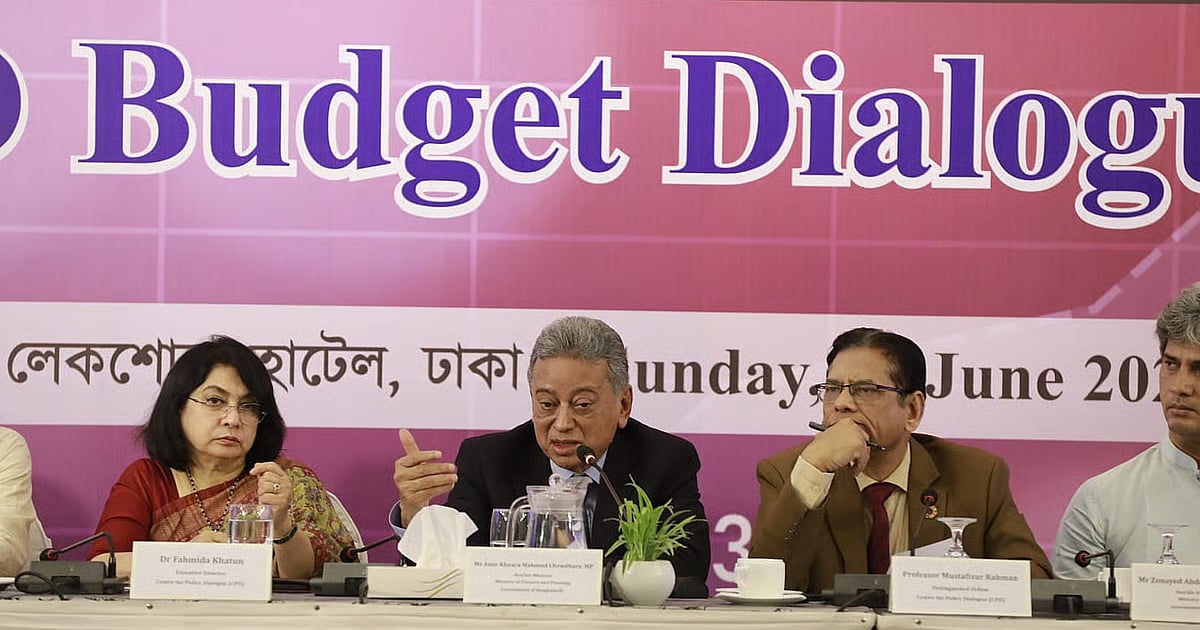
So, when the Finance and Planning Minister Amir Khosru Mahmud Chowdhury presented the Tk 9.38 trillion budget for the fiscal year 2026-27 (FY27) in parliament on June 11, the focus went on the budget numbers on revenue, spending and deficit. Media, with limited time to capture the many critical measures skilfully concealed in budget documents, struggle to expose what's inside the budget within a short time. For more than five decades, the practice of presenting the budget in parliament in the afternoon has not changed. Despite repeated requests, the bureaucratic rigidity has yet to be flexible enough to allow the budget to be unveiled in the morning or pre-noon session of parliament. This also reflects the unwillingness to decode the budget for the people. The newly democratically elected government, under the premiership of Tariq Rahman, doesn't break the tradition which is no longer useful today. The July 2024 uprising that ousted the autocratic regime of Sheikh Hasina has yet to inspire change and transparency in the people's favour.
Tanim Asjad
Published :
Jun 19, 2026 23:41
Updated :
Jun 19, 2026 23:41
People of Bangladesh witnessed the presentation of another national budget on June 11. Since then, analysing the positive and negative sides of the budget has been ongoing, and it will continue for a few weeks, though many parts of the budget remain ambiguous. The way the budget has been designed and structured carries the legacy of the British colonial era in South Asia. Though the structure of the national budget has changed over the decades, the budget documents remain complex and difficult to decode to some extent. Bangladesh alone is not responsible for keeping the national budget ambiguous. Governments in many countries, especially developing ones, do not feel comfortable making their national budgets transparent so that stakeholders can easily understand them. The governments' attitudes to keep different aspects of the budget hazy have become a matter of concern.
Against the backdrop, two comprehensive review reports on public finances, prepared and published by the Organisation for Economic Co-operation and Development (OECD) in the last month, clearly reflect the concern. The main report titled 'Restoring Public Finances: Enabling Effective Government' focuses on the various efforts by governments across the world to become more efficient. It also outlines how digital technologies, alongside 'bureaucratic simplifications', can work in this context. The report is intended to serve as a 'knowledge base for policymakers, public servants, and civil society to make the most effective choices in managing public finances'. It argued that, due to higher debt servicing costs, growing public spending requirements, and various support measures for businesses and households in the wake of recent energy price shocks, public spending has increased. So, it is necessary to manage public spending efficiently and prudently.
The companion report, titled 'The People and the Budget: Empowering Public Understanding of Public Finances,' underscores the need for different stakeholders to understand the budget. Although the reports are concentrated on OECD nations, 38 developed countries of the world, the findings and analyses of the reports, along with the recommendations, are relevant to countries, including Bangladesh.
For instance, the report noted that, as public finance is complex, parliamentarians play a key role in demystifying the budget for the public. The challenge, however, is that most lawmakers in Bangladesh have yet to grasp the budget documents, and many have no interest in doing so. In such a case, how can they communicate with people to make the budget easy? The OECD report strongly recommended starting with the fundamentals, meaning that, rather than focusing on the entire budget process, a deeper understanding of fiscal fundamentals is needed. "Efforts need to shift away from a narrow focus on the mechanics of the budget to a broader understanding of fiscal sustainability, pressures and choices," it added.
Over the decades, there has also been an effort in Bangladesh to demystify budgets, mainly by civil society organisations, whereas the government has largely remained indifferent to such exercises. That's why, budget documents remain a mystery even to many economists and experts. The discussions and analyses of the budget are also focused on the budget summary documents and fiscal measures. Key documents, such as the Annual Financial Statement, do not receive the necessary focus because they remain difficult to understand. Even the officials involved in the budget-making process sometimes find it hard to explain the various things in the statement, which is the constitutional document.
So, when the Finance and Planning Minister Amir Khosru Mahmud Chowdhury presented the Tk 9.38 trillion budget for the fiscal year 2026-27 (FY27) in parliament on June 11, the focus went on the budget numbers on revenue, spending and deficit. Media, with limited time to capture the many critical measures skilfully concealed in budget documents, struggle to expose what's inside the budget within a short time. For more than five decades, the practice of presenting the budget in parliament in the afternoon has not changed. Despite repeated requests, the bureaucratic rigidity has yet to be flexible enough to allow the budget to be unveiled in the morning or pre-noon session of parliament. This also reflects the unwillingness to decode the budget for the people. The newly democratically elected government, under the premiership of Tariq Rahman, doesn't break the tradition which is no longer useful today. The July 2024 uprising that ousted the autocratic regime of Sheikh Hasina has yet to inspire change and transparency in the people's favour.