[🇧🇩] Agriculture in Bangladesh

[🇧🇩] Agriculture in Bangladesh
283
16K
More threads by Saif

G Bangladesh Defense

What's keeping Bangladesh from becoming an agricultural export hub

Ahmed Rifat Kabir Sristy
1788308528052.webp

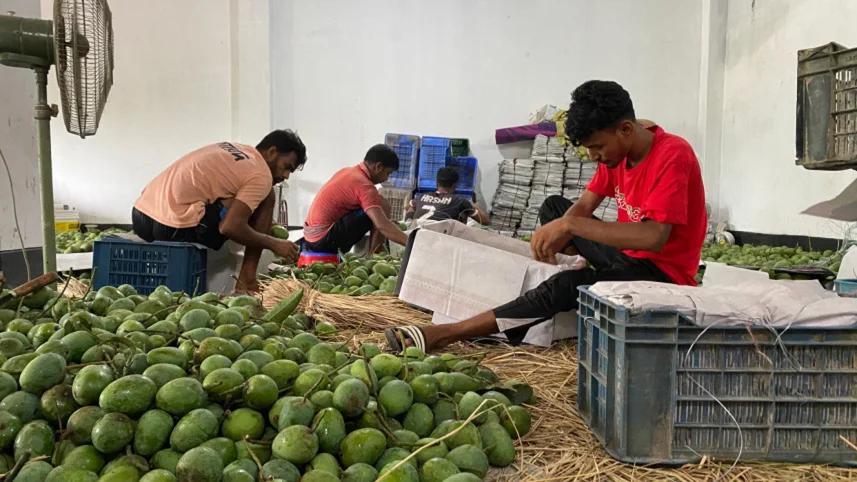
'Bangladeshi agricultural products are regularly rejected for pesticide residue, pest contamination, and inadequate traceability.' File photo: Star

We all want safe food and agricultural products. Consumers want to know what they are eating and where it comes from. And policymakers, at least in principle, want Bangladesh to supply safe products. What we lack, however, is the specific, unglamorous institutional work that such an ambition requires.

Currently, Bangladesh ranks among the world’s top producers of at least 22 agricultural products and has European Union (EU) permission to export fish and fishery products. Yet agricultural exports fell by more than 1 percent year on year and earned $975 million in FY2025-26, which is close to 2 percent of the country’s merchandise earnings. Therefore, even though our production base is large, the trade is not. Vegetables show the pattern most clearly. Exports earned $88.88 million in FY2025-26, up almost 10 percent on the year, but short of the $103.24 million the sector earned a decade earlier in FY2014-15. Production and domestic consumption both expanded sharply over those 10 years but export earnings did not.

The EU keeps Bangladesh under increased official control, and according to its January 2026 update, it increased the frequency of physical checks on Bangladeshi seed and bean shipments over concerns about pesticide residues. At the same time, it eased controls on Indian okra and rice due to improved compliance. Bangladeshi shipments are regularly rejected for pesticide residue, pest contamination, and inadequate traceability. Safe agricultural products require a production system that consistently delivers on those three counts. Bangladesh does not yet have that production system.

The most widely accepted signal of safe production is Good Agricultural Practice (GAP). We already run regular GAP training programmes across hundreds of upazilas—proving that the true bottleneck lies elsewhere. Farmers adopt GAP through donor-funded interventions. When it has to be self-financed, the economics do not work, because buyers rarely pay a premium for GAP-certified produce. This is a failure of market structure, not awareness.

The most direct fix is domestic consumer activation. Right now, GAP exists almost exclusively as an export instrument, and the domestic market is untouched. When a simple milk purity testing tool was made accessible to ordinary consumers a few years ago, sellers who adulterated milk faced reputational consequences and changed behaviour. The incentive architecture shifted because transparency shifted first. A premium verification label backed by batch-level testing results accessible via QR verification would create the demand-side pull that no export promotion scheme has so far generated.

The second constraint is institutional fragmentation. Sanitary and Phytosanitary (SPS) regulation is distributed across several bodies, including the Ministry of Agriculture, the Ministry of Food, the Ministry of Fisheries and Livestock, the Bangladesh Food Safety Authority, the Plant Quarantine Wing, and the Bangladesh Standards and Testing Institution (BSTI). Each governs a slice of the compliance chain, but none has overall authority. Successive SPS capacity assessments have flagged the absence of a lead coordinating body. Because trained quarantine officers are routinely rotated out of their postings, the system constantly bleeds institutional memory. A coordination body with real authority to resolve disputes and unify inspection standards is no longer a structural luxury, but rather a prerequisite.

Third, the geography of testing is wrong. Premium horticulture products are funnelled through a central packing house in Dhaka’s Shyampur and tested there, after travelling from major horticulture zones like Rajshahi or Chapainawabganj.

Decentralised testing at origin, through satellite facilities in the main export zones of the north, would catch problems earlier, reduce post-harvest losses, and put data in the hands of exporters before the produce leaves the farm.

Fourth, Bangladesh’s digital traceability infrastructure is fragmented across incompatible donor-funded platforms. While Bangladesh is registered with the IPPC’s ePhyto network, it cannot utilise it. The centralised domestic platform needed to plug into that global system has been stalled for over a decade, leaving our digital traceability completely fractured.

Fifth, the certification architecture for safe origin needs to be built from the ground up. Under the International Plant Protection Standard (ISPM) 10, individual farms can be registered as pest-free places of production, the building blocks for eventual area-level recognition. The north-western mango belt and vegetable zones in Narsingdi could begin this now.

What is missing is a national zoning study that maps which districts can credibly claim low pest prevalence for which crops.

The production base, the diaspora market connections, and the proximity to high-value markets in the Middle East and Southeast Asia are genuine advantages. What is not yet real is the institutional infrastructure that translates all of that into trusted, safe-origin supply. Bangladesh can be a regional hub. But that status must be built, inspection point by inspection point, coordination body by coordination body, across a decade of choices.

Ahmed Rifat Kabir Sristy is coordinator at Trade Facilitation at Swisscontact Bangladesh.​
 

Fertiliser in stock, but shortage in field


1789533944681.webp

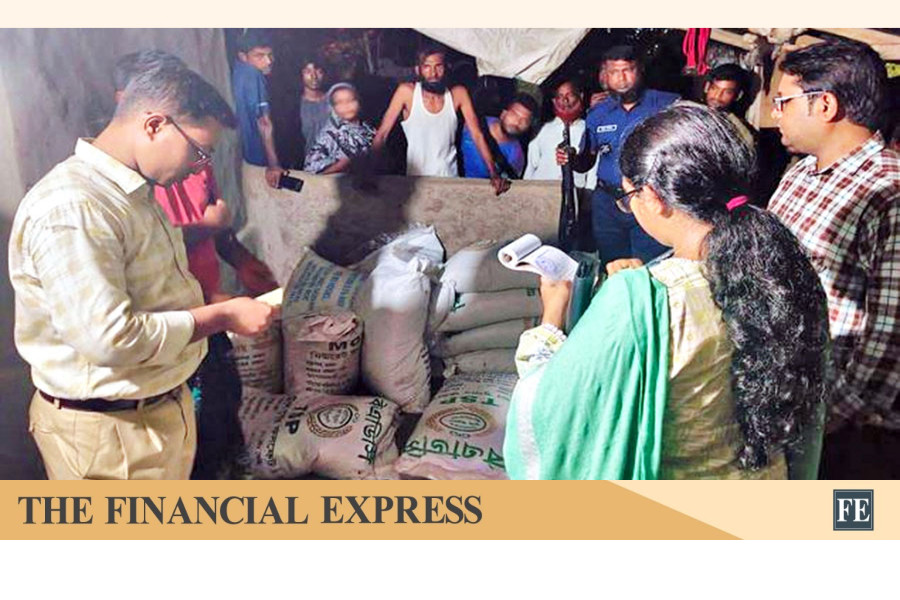
Four traders fined, jailed for stockpiling fertilizer in Natore

Bangladesh may have enough fertilisers in its warehouses, but that does not necessarily mean farmers get those when they need. This seemingly simple distinction lies at the heart of the disruption now being reported from several parts of the country during the Aman season. At the national level, the government says stocks are adequate. Yet in some districts farmers are struggling to obtain fertiliser from authorised dealers at government-fixed prices, while mobile courts are uncovering overpricing, unauthorised sales and illegal stockpiling.

The paradox deserves more attention than a simple declaration that there is "no fertiliser crisis". For a farmer, a sack of fertiliser sitting in a government warehouse hundreds of kilometres away is of little practical value if it cannot reach his field at the right time and at the right price. Agricultural supply is ultimately judged not by the volume stored nationally, but by whether the input reaches farmers when the crop needs it.

The Ministry of Agriculture maintains that there is no nationwide shortage and that existing stocks are sufficient to meet demand through December. Imports under government-to-government arrangements are continuing, while private-sector importers have also been authorised to bring in fertiliser. In other words, the country does not appear to be facing a fundamental supply deficit.

But the reports emerging from the field tell a more complicated story. In Bogura, the authorities reportedly seized 1,675 sacks of fertiliser, each weighing 50 kilograms, and sealed a warehouse. Elsewhere, mobile courts have taken action against traders accused of charging more than the government-fixed prices, failing to display price lists and selling fertiliser without proper registration. Farmers in some areas have reportedly been compelled to turn to retailers after failing to obtain supplies from the authorised dealers.

These are not merely enforcement issues. They point to weaknesses in the distribution chain. Agriculture Secretary Md Selim Khan has said monitoring committees headed by two secretaries have been formed, while tag officers have been appointed in every district. Action has also reportedly been taken against officials and employees involved in irregularities, with several officials removed. He has attributed part of the disruption to uncertainty surrounding the government's new fertiliser dealer policy and suggested that some vested interests may be attempting to create a crisis to frustrate its implementation.

The new policy itself is intended to address a longstanding problem. The government plans to appoint an additional fertiliser dealer in every union while retaining the existing two, thereby widening the distribution network and reducing farmers' dependence on a small number of dealers. If implemented properly, the measure could make access easier and competition among dealers healthier.

Yet a change in policy can also create uncertainty, particularly when an old distribution arrangement is being dismantled before the new one becomes fully operational. Such a transition demands exceptionally close monitoring because fertiliser is not an ordinary commodity. Its usefulness is highly time-sensitive.

Much of the Aman cultivation has already been completed, meaning that demand for non-urea fertilisers such as DAP and MOP should be relatively limited at this stage. Farmers' immediate requirement is mainly urea. Uneven rainfall and distribution problems may nevertheless have contributed to local shortages.

With the Rabi season approaching in mid-October, farmers will soon prepare for potatoes, vegetables, mustard, maize and wheat. Fear of future scarcity may therefore be encouraging some farmers to purchase DAP and TSP earlier than necessary. Once such precautionary buying begins, it can become self-reinforcing. Farmers buy because they fear a shortage; their buying increases demand; the increased demand creates pressure in some markets; and that pressure reinforces the original fear.

Bangladesh Fertiliser Association Chairman Mosharaf Hossain has attributed the current pressure partly to panic buying and misinformation. Even a modest two-to-five per cent increase in demand, he argues, can create pressure in a particular locality. He has also pointed to the possibility of unlicensed traders buying and storing fertiliser in anticipation of higher prices.

Agricultural planning cannot be entirely statistical. It must also be responsive. A national stock figure can conceal a local shortage just as easily as an abundant harvest can coexist with food insecurity in a particular locality.

Government raids and punitive measures are necessary, but they are essentially remedial. What is needed is a distribution system in which such intervention becomes less necessary in the first place. Stocks should be monitored not merely in aggregate but geographically; allocations adjusted quickly in response to emerging demand; dealer inventories transparent; prices displayed and enforced; and farmers should have reliable alternatives when an authorised dealer fails to supply them.

There is also a larger question of trust. Farmers make decisions based not only on official data but on what they see and hear in their local markets. When a farmer is told that there is enough fertiliser in the country but cannot buy it at the official price, official assurances inevitably lose credibility.

That is why, the important question is whether the country has built a supply chain capable of delivering fertiliser where it is needed, when it is needed and at the price set by the government.

For agriculture, availability is not a warehouse statistic. It is a farmer's ability to walk into a dealer's shop and obtain the right fertiliser at the right time without paying an unofficial premium. Until that simple reality is ensured, an apparently comfortable national stock position can continue to coexist with a very real shortage in the field.​
 

Rangpur’s potato farmers need a market, not sympathy

Sabrina Luthfa


1791764984021.webp


ON October 8, a national daily reported that potato farmers in Rangpur are once again selling at a loss. The government has fixed the price at the cold storage gate at Tk 22 per kilogram, but farmers are getting about Tk 12 at the same gate. Growing, transporting and storing potatoes cost them roughly Tk 24 per kilogram. A farmer who grew a good crop, paid for storage and waited for a better price is therefore losing about Tk 12 on every kilogram.

Between 2014 and 2025, Rangpur’s potato growers lost money in seven of twelve seasons. Behind each of those seasons is a family that borrowed money for seed, fertiliser and storage, only to watch the crop meant to repay the loan sell for less than it cost to produce. Last year brought the same scenes from the same fields: potatoes dumped on roadsides and farmers lying beside their produce, crying because no one would buy it at a fair price. Today, even leaders of growers’ associations openly say that they are considering giving up potato cultivation.

Not a bad harvest, a broken chain

RANGPUR grows about a quarter of the country’s potatoes, yet its cold storages can hold only about 22 per cent of its output. The rest has nowhere to wait for a better price. Experts on the ground have already identified the problem. Md Khairul Islam, senior scientific officer at the Bangladesh Agricultural Research Institute (BARI) in Rangpur, told Prothom Alo that unless storage, processing, market management and exports are strengthened, farmers may gradually stop growing potatoes. The Department of Agricultural Extension in Rangpur has made a similar assessment, warning that the crisis will not ease without potato-based industries and exports.

The difficulty is that storage, processing, markets and exports fall under different ministries, agencies and private owners, with none directly accountable to farmers for the outcome. Produce passes from farmers to aggregators, storage agents and wholesalers before reaching consumers. Each layer takes a cut, leaving farmers with a small share while consumers continue to pay more.

This is why a fixed price alone cannot solve the problem. A price announced in Dhaka, without a mechanism to enforce it at the storage gate, remains only an announcement. This year, the difference between the announced price and what farmers actually received was Tk 10 per kilogram. Bangladesh takes pride in being a country that feeds itself, but rarely asks what it costs the people who produce that food.

Platform that farmers own


IN FEBRUARY 2025, I proposed a Circular Agricultural Innovation Platform (CAIP) in articles published in The Daily Star and Prothom Alo. I have since developed the proposal into a fuller model, the Agro-Innovation and Circular Hub. Its purpose is to bring storage, processing, market access and waste recovery under one roof, with farmers in control.

The model has two connected components. The first is a digital platform linked to each farmer’s Farmer Card, through which farmers can list their produce, book storage and transport, arrange credit and connect directly with extension officers and buyers, from local consumers to exporters. The second is a physical hub, collectively owned by farmers or operated as a social business until cooperative ownership becomes feasible. Farmers can sell their produce at market prices or send it for storage, processing and distribution to more distant markets.

For potato growers in Rangpur, the hub would address four immediate problems. First, solar-powered cold storage under farmer control would reduce their dependence on storage agents and the prices offered at the gate. Second, surplus potatoes that cannot be sold fresh could be processed into products such as chips, flakes and starch, which can be stored for months and transported to markets within and beyond Bangladesh. Third, export facilities and a digital trade desk would allow farmers to reach local, foreign and business buyers directly, reducing their dependence on multiple intermediaries. Finally, a biogas digester and fertiliser plant would turn market waste into energy and organic fertiliser, which could be sold back to farmers at a lower cost.

The platform would also enable extension officers to monitor what farmers are planting and advise them before a surplus develops, rather than responding after losses occur. The hub would operate in shifts, with morning intake and sorting, midday processing of unsold stock and evening dispatch. According to the proposed model, this would provide farmers with a guaranteed floor price. The hub would require only one to two acres and could be piloted in a single village with about 5,000–6,000 households. Most of the jobs it creates would come from private ventures rather than subsidised posts, allowing them to continue beyond the project period.

What must change

IN APRIL, the government launched the pre-pilot of the farmer card, promising that Bangladesh would prosper only when its farmers prospered. The promise is right, but a card gives a farmer an identity, not a market. The card needs a platform behind it that translates that identity into access to fair prices, storage, credit and buyers.

After publishing my articles in 2025, I tried unsuccessfully to discuss the proposal with the Planning Ministry and the Department of Agricultural Extension. In August, I presented the model at an innovation fair organised by the Ministry of Science and Technology. Yet I was never invited to a meeting to discuss how the proposal might help address the crisis. I am not an agriculturist, but Rangpur’s farmers already know how to grow potatoes. What fails them is the market, organisation and incentives surrounding their produce. These are precisely the questions my discipline studies.

Policymakers must now take three steps: fund a farmer-owned hub in a single upazila, linked to the Farmer Card, before the next harvest reaches the storage gates; bring the ministries of agriculture, commerce and planning, along with local government, universities and farmer associations, under a single coordinating authority; and establish a mechanism to assess proposals from outside the agricultural bureaucracy on their merits.

Potato planting begins again in November. Somewhere in Rangpur, a farmer is deciding whether to borrow once more for seed and fertiliser or give up. We have read this story every year, shared the photographs and moved on. If nothing changes before the next harvest, we will read it again next October. The farmers deserve more than our sympathy. They deserve a system that works.

Dr Sabrina Luthfa is an associate professor at ULAB Business School, University of Liberal Arts Bangladesh.​
 

The colonial face of safe agriculture

Md Shahidul Islam

1793148854440.webp

New Age

THE language has changed, and so has the market. But has the colonial strategy of controlling agriculture really changed?

Once, we were told that the world could overcome hunger only by increasing agricultural production. Built on that logic, chemical fertilisers, pesticides, herbicides, hybrid seeds and, later, genetic technologies spread across farming systems. Production did increase in many places. But at the same time, farmers gradually became detached from their soil, water, seeds and their own agricultural knowledge. Farming became increasingly market-dependent. Farmers lost part of their autonomy while their dependence on external inputs and technologies grew.

That dependence did not stop with seeds and fertilisers. The markets for pesticides, herbicides and other crop-protection chemicals expanded as well. In Bangladesh, annual pesticide use reportedly increased from around 4,000 metric tonnes in 1972 to approximately 40,000 metric tonnes in 2022. Recent reporting has also put the value of the country’s pesticide market at around Tk 5,000 crore and reported an increase of more than 81 per cent in use over five years.

In other words, alongside the expansion of agricultural production, the market for external inputs required to produce that agriculture has also expanded. Farmers have therefore become dependent not only on markets for selling their crops but also on markets for obtaining the inputs needed to produce those crops. Today, having recognised many of the problems associated with this model, we are turning again towards safe agriculture, organic food, natural farming and chemical-free produce. This is both necessary and positive. But it is important to remember that natural and ecological farming is not a new invention. In many regions, it has evolved through centuries of farmers’ own experimentation, observation and accumulated local knowledge.

And this brings us to an uncomfortable question: safe food for whom? Who can actually afford food produced through natural or safer farming practices? There is no question about the need for safe food if the goal is to ensure everyone’s right to food. But when safe food becomes a specialised market, the question takes a different turn. And this is where the question of a new form of colonialism in agriculture emerges.

A farmer in a village may produce safe and ecological food, yet that food may never reach the plates of people in the same village. Instead, it may travel to the tables of wealthy and upper-middle-class consumers in cities. The price is higher, the market is limited and distribution often depends on specialised outlets, supermarkets and premium food stores.

For low-income urban consumers and often for ordinary rural consumers as well such food can remain beyond reach. Safe food, therefore, risks becoming a class-based privilege.

This raises a difficult question: is this really a movement for safe agriculture, or could another form of neocolonialism be emerging behind the mask of safe agriculture? On the surface, the language is attractive: safety, health, sustainability, organic, natural and ethical consumption. But beneath that language, a new commercial structure can emerge. In such a system, farmers are not necessarily the primary beneficiaries. Between producers and consumers, a new class of traders, startups and food entrepreneurs can emerge, presenting themselves as the providers of solutions. Through sophisticated branding, marketing and consumer narratives, they can capture urban markets.

The knowledge of farmers, their seeds, labour and ecological practices may become the raw material for creating market value. Yet the farmer may have little control over the branding, certification, pricing, distribution or final market. The language of safe agriculture, its labels and even its ethics can then become appropriated by a new set of market actors. But the real need is different. The need is to make safe food available village by village, neighbourhood by neighbourhood and community by community. The challenge is not simply to produce safe food but to build social systems around its distribution, fair pricing, local consumption and food sovereignty. When safe food produced by rural farmers is channelled primarily towards supermarkets, specialised stores and high-priced markets, it gradually becomes a commodity accessible mainly to those who can afford it.

This is where the question of food justice becomes unavoidable. If access to safe and nutritious food depends primarily on purchasing power, then food security itself becomes class-based. A farmer produces safe food, yet the farmer’s own family or neighbours cannot afford to buy it. What kind of food system is that?

There is an even larger question: food sovereignty. Food sovereignty is not simply about producing enough food. It is also about who decides which seeds are used, who makes production decisions, whose knowledge is valued, for whom food is produced and who controls the food market. Yet when new structures of certification, branding, celebrity endorsement, labels and specialised markets are created in the name of safe agriculture, farmers can once again be reduced to the role of producers. Their local knowledge, labour and environmentally responsible practices create market value, while decision-making power may shift elsewhere.

This is where the question of neocolonialism re-emerges. In its older form, colonialism involved territorial occupation, control over resources and political authority. Neocolonial forms of control can be much subtler. They do not necessarily require guns or direct territorial occupation. They can operate through markets, technology, knowledge, policy, certification and even the moral language of consumption.

There is another important dimension to this emerging form of control: it does not necessarily come from outside the territory. Control can also be established within the same territory by turning farmers’ seeds, knowledge and labour into market commodities. This does not mean that safe agriculture must be opposed to markets. Farmers need fair incomes and consumers need safe food. Both are legitimate and necessary objectives.

The question is different: In whose interest is the market structure being created and how much decision-making power do farmers actually retain within it? Some experiences elsewhere offer alternative ways of thinking about this question. Cuba’s experience with urban agriculture, for example, has linked agricultural diversification and agroecology with local food security and food sovereignty. Research on Cuban urban agriculture highlights the importance of community needs, food use value and reducing the commodification of food and land.

Japan’s Teikei movement offers another important example. Emerging in the 1960s and 1970s, Teikei developed direct partnerships between organic farmers and consumers. Its principles emphasised mutual assistance, trust, shared responsibility, direct relationships and forms of distribution that sought to move beyond purely transactional market relations. The significance of Teikei lies not simply in selling organic food directly to consumers. Its original principles placed emphasis on relationships between producers and consumers, shared decision-making, mutual support and learning. In other words, safe food was conceived as part of an alternative food system rather than merely as a premium product.

These experiences suggest that safe food can be connected to local food systems rather than being treated only as a distant commodity. Bangladesh therefore needs to broaden the discussion on safe agriculture. The question cannot stop at how to produce safer crops. We must also ask: are farmers receiving a fair price? Can local people afford safe food? Are local seeds and farmers’ knowledge being protected? Who controls the distribution system? And ultimately, who has the power to make decisions about the food system? If safe agriculture is to become agriculture for people rather than simply another market category, safe food must be connected to local communities. Local markets, direct farmer-consumer relationships, community seed banks, community-based agroecology learning centres, farmer cooperatives and community-based production and distribution systems deserve greater attention. Then safe agriculture would not be reduced to a ‘certified’ product. It could become part of people’s right to food. Otherwise, there is a risk that the language of control will simply change.

During the Green Revolution, agricultural control was often justified through the language of productivity and increased production. In the emerging safe-food economy, control could instead be exercised through the language of ethics, health and safety. The question, therefore, is not only about agriculture. It is also about power. Do we want a safe agricultural system in which farmers produce safe food and everyone can access it? Or do we want a market in which safe food exists, but access to it remains largely determined by purchasing power? Changing the language does not necessarily end colonial relations.

If farmers do not retain meaningful control over their seeds, knowledge, labour and decisions about food, the shadow of neocolonialism or green colonialism may remain even behind the attractive mask of safe agriculture.

Md Shahidul Islam is an anthropologist and environmental law researcher working on climate justice, agroecology, food sovereignty, biodiversity and environmental justice. He works with the Bangladesh Resource Centre for Indigenous Knowledge in the Barind region.​
 
Back
Top