[🇧🇩] Bangladesh History & Heritage

[🇧🇩] Bangladesh History & Heritage
36
11K
More threads by Saif

G Bangladesh Defense

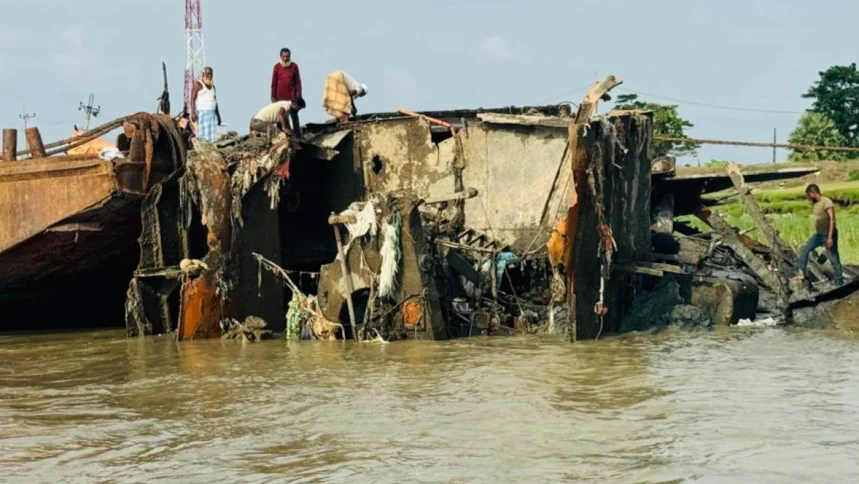
150-year-old British ship found in Karnaphuli riverbed
1723936960359.png

Photo: Collected

A century-old British merchant ship has been discovered at the bottom of the Karnaphuli River during dredging operations for the Chattogram Port Channel.

The 350-foot coal-powered vessel was found on August 15 in the Dangarchar area between Jetty 6 and 7 and has since been salvaged.

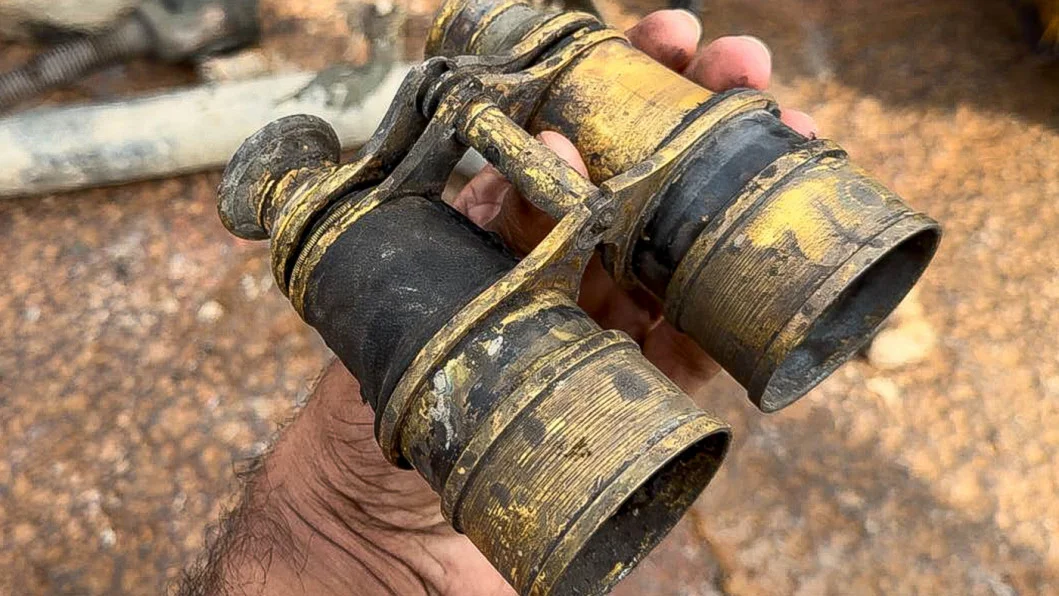
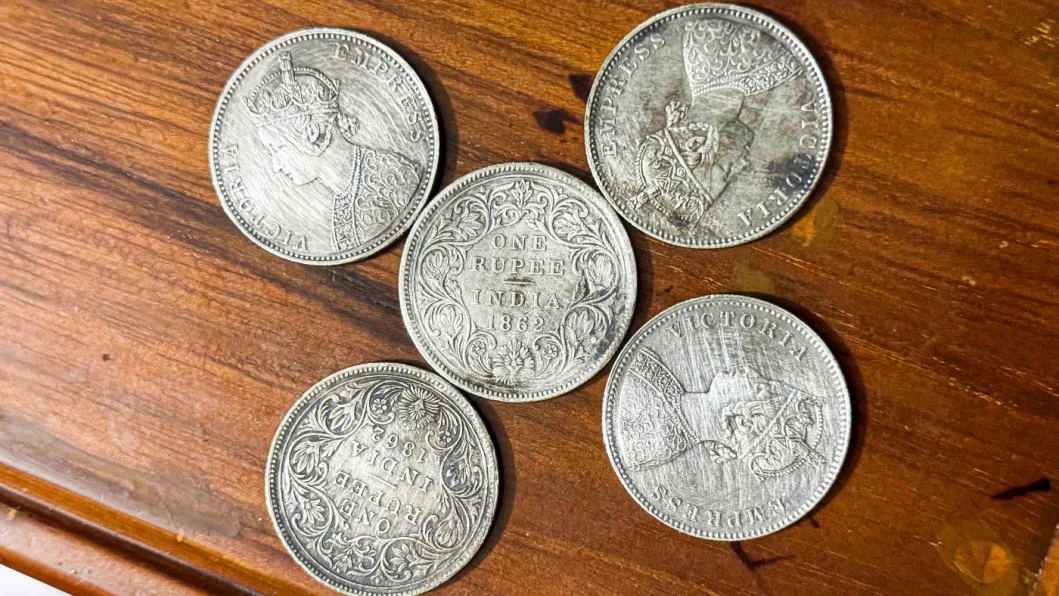
Artifacts recovered from the ship include silver coins from 1862-82 AD, silver furniture, binoculars, and a substantial stock of coal. The ship is estimated to be around 150 years old.

Officials reported that the vessel was cut into two parts for removal. Initial attempts by two organisations to salvage the ship failed, but Hiramoni Salvage Ltd was later successful.

Capt Faridul Alam, deputy conservator of the Chattogram Port Authority, confirmed the recovery, saying the vessel posed a risk to container ship movement in the Karnaphuli Channel.

Md Abul Kalam, manager of Hiramoni Salvage Ltd, stated, "We salvaged and removed the ship as per our agreement with the port. There are also two more sunken ships in the riverbed that will be removed to enhance the safety and efficiency of the port."
1723937044591.webp


Artifacts recovered from the ship also include furniture, plates, bowls, water pots, spoons, candle holders, flower vases, and various items made from ivory, copper, brass, and silver. The ship is believed to have sunk during the British period while engaged in trade in the Indian subcontinent.

Senior diver Md Zahir explained that the ship was submerged 60 feet deep, leading to significant silt accumulation. Salvage operations involved dredging the silt and using skilled divers to cut the ship into two parts, which were then brought to the riverbank using four salvage barges.
1723937079692.webp


Jihad Hossain, director of Hiramoni Salvage Ltd, said the artifacts recovered have not yet been examined by experts.

Dr Ataur Rahman, deputy director of the Directorate of Archeology and keeper of the Chattogram Ethnological Museum, confirmed the historical significance of the recovered coins.

He pointed out that the coins, predating Queen Victoria's direct rule over India, are of considerable archaeological value.

Dr Rahman added, "According to regulations, archaeological artifacts should be handed over to the Directorate of Archeology. The authorities involved in the salvage operation should have informed us to ensure the artifacts are preserved and no items are lost."​
 

Mughal heritage Boro Katra attacked again

1726271822071.webp

Photo: Prabir Das

A portion of Old Dhaka's iconic Mughal monument Boro Katra has recently been demolished. In response, Urban Study Group, an organisation that campaigns for the protection of the architectural heritage of Dhaka, hosted a press conference last Wednesday, where its CEO, Taimur Islam, elaborated on the damages done and called for the protection of this age-old site.

The demolishment activity took place during -- and arguably by taking advantage of -- the chaotic aftermath of the fall of the Hasina-led government, Taimur claimed.

Boro Katra was built in the 1640s -- a relatively early Mughal structure of our city that is older than Lalbagh Fort! Tradition says that was originally intended to be the palace of subahdar Shah Shuja, son of Emperor Shah Jahan, when the prince was the Mughal ruler of Bengal. But he probably never lived in the edifice; it was used as a caravanserai and many rooms were converted into shops, incomes of which were utilised to maintain the building and help the poor.

"People in Dhaka always seem to take pride in the city's Mughal past, but when it comes to the protection of its heritage, we often see neglect and disregard," Taimur opined, but he also added that certain sectors of society, such as the judiciary, have been supportive in stopping unscrupulous activities in the capital's heritage buildings.

This is not the first time that Boro Katra came under attack. To illustrate, Taimur exemplified that in 2022, an attempt was made to tear down the section which has now been demolished. That attempt was partially successful at that time, but it was halted by creating pressure on the authorities. In fact, there have been multiple endeavours to destroy Boro Katra.

1726271875609.webp


Taimur said if Boro Katra can be preserved, or even better, if it can be returned to its former glory, there is an immense potential for tourism and local commerce.

In a rendered image shown during the press conference, Taimur put forward the beauty of the site and the various shops which could be accommodated there. But if you visit the area now, you may have to stretch your imagination to understand the true value or to gather a proper appreciation. This is because of all the settlements, encroachments, and ownership claims that are prevalent there.

Taimur urged the authorities to put a plan in place, on how to relocate these institutions or establishments on the Boro Katra premises.

"Protecting heritage buildings is an interdisciplinary affair that requires tackling legal issues, understanding conservation technicalities, and appreciating culture and tradition," said the Urban Study Group chief. "We would like to see a clear plan in this regard."

1726271912786.webp


Boro Katra's case is not unique in our city: there are many buildings of heritage value which have been partially destroyed, fully demolished, defaced, or taken over by encroachments over the years.

If the government can step forward to stop further damage on Boro Katra and make it return to its former glory, it will set an example for Puran Dhaka, and the city can relish in this Mughal monument's true splendour, perhaps doing justice to an adulation enshrined in one of its inscriptions:

"What a building! It putteth high Heaven to shame

A copy of Paradise ye might it name."

(History and inscription have been taken from the book "Notes on the Antiquities of Dacca" by Sayid Aulad Hasan)​
 

A Buriganga painting from 1861

1726533520786.webp


Illustration: Ashif Ahmed Rudro; Painting: Frederick William Alexander de Fabeck/Wikimedia Commons

Oftentimes, a major city or civilisation is accompanied by a river. For Dhaka, it is the Buriganga. No matter how polluted or dirty, it is hard to imagine our city and its history without it. In the olden times, a few painters picked up the brush to capture it in the canvas.

One such painting was created in the year 1861, by Frederick William Alexander de Fabeck, a doctor who served as an assistant surgeon in Bengal during the British colonial era. Today (15 September) is his birthday!

Fabeck is now long gone, but his creation is in the collections of the Victoria and Albert Museum in the UK. The watercolour looks splendid! It also feels nostalgic, perhaps because of the all-too-familiar boats plying about in the river and the domed buildings (quite possibly mosques) in the background.

There are a number of other artworks on Dhaka by the same artist and doctor. We will feature them in the future episodes of our "Did You Know" series. So stay tuned!​
 

Steps taken to preserve CJ’s residence as protected heritage site
BSS
Published: 10 Oct 2024, 22: 42

1728611091418.webp

Residence of the chief justice of Bangladesh’ at 19 Hare Road in the city BSS

The government has taken steps to preserve the chief justice’s residence at the city’s Hare Road area as a protected heritage site.

Under the initiative of chief justice Syed Refaat Ahmed, the Department of Archaeology has began the process to declare the 'Residence of the Honorable Chief Justice of Bangladesh’ at 19 Hare Road in the city as a restricted heritage site, said a Supreme Court press release today, Thursday.

Following the unexpected damages to the chief justice’s residence on 5 August during the student led uprising, the 25th chief justice of Bangladesh Syed Refaat Ahmed took the initiative to preserve the building permanently as a historically important structure.

The press release said if this eye-catching and important structure is preserved keeping the ownership and rights of use in favor of Bangladesh Supreme Court under the Antiquities Act-1968, it will be considered as a national resource that will make the future generations aware about the rich history of this establishment.

Earlier, the decision of preserving the chief justice’s residence, which was built in 1908, as a protected heritage site site was taken at a meeting between chief justice and the officials of the Department of Archeology on 25 September.​
 

Negligence in conserving heritage sites unacceptable
24 October, 2024, 00:00

A PROFIT-SEEKING group of landowners and property developers have demolished buildings of archaeological significance in Old Town of Dhaka in breach of a High Court order. The Urban Study Group, a non-profit organisation campaigning for the conservation of heritage sites, on October 22 expressed concern about the continued demolition of heritage sites protected by the law and specific High Court orders. The most significant heritage structure on Dinanath Sen road erected 1898 in the neo-classical architectural style is now demolished. The demolition has been going on for weeks until the group filed a general diary with the Gandaria police on October 22. But the demolition soon resumed as no authorities concerned took steps to protect the site. In 2022, Bara Katra, another heritage structure built in 1644–1646, was partially dismantled. The remaining structure is also illegally occupied with little care for its preservation. In Dhaka, as Rajdhani Unnayan Kartripakkha says, there are 74 heritage sites, but only a handful of them are protected. Many of the privately owned sites are partially or fully demolished by owners.

The allegations that successive governments have been negligent in protecting cultural heritage are, therefore, not wrong. The Antiquities Act 1968 stipulates the government will recognise century-old buildings, monuments and sites with historic, architectural and cultural significance as heritage sites and will preserve them. Bangladesh, a signatory to the World Heritage Convention 1972, is also obliged to conserve the sites. In addition, there are High Court directives that ask the authorities to update the lists and submit periodic reports to the court. The government, more specifically the archaeology department and Rajdhani Unnayan Kartipakkha, has failed to perform its legally defined responsibilities. Heritage conservation experts blame corruption, lack of expertise, owner’s unwillingness and business interests of politically influential quarters for the failure. Dhaka’s detailed area plan does not allow any construction within 250 metres of protected areas, but in reality, many structures are there. The amendment to the National Building Code that has reduced the buffer zone of heritage sites and relaxed the height limits has created scope for real estate development near heritage sites. The archaeology department or the city development authorities has no comprehensive list of heritage sites.

The preservation of cultural and natural heritage sites is not only foundational in shaping the philosophical vision of a nation, it could also be an economically beneficial way of positively impacting the tourism industry. The archaeology department should, therefore, take early steps to protect the heritage structure on Dinanath Sen Road and other similar sites. The government should introduce the transfer of development rights as recommended by conservation experts so that private owners are adequately compensated to co-operate with the restoration initiatives. The government should also strictly enforce laws and regulations.​
 

From Sultanate to Mughal: The Architectural Legacy of Bengal

1730074658746.webp

Shait Gambuz Mosque, Bagerhat

The Daily Star (TDS): You have extensively researched the architecture of the Sultanate period. Could you share your thoughts on Bengal's pre-Sultanate architecture?

Perween Hasan (PH):
The existing ruins from Paharpur and Mainamati speak of a rich architectural heritage from pre-Sultanate times. These viharas for resident Buddhist monks corresponding to present day student dormitories were built around a central monumental temple. Recent excavations have also uncovered new evidence of smaller temples which served the Hindu, Buddhist and Jain population of the area. The National Museum of Bangladesh in Dhaka has stone sculptures and architectural members of stone and wood that give us an idea of what some of these temples looked like. There are also illustrated Buddhist manuscripts in museums around the world that have depictions of temples in various sites in Bengal. Externally there was little difference to mark the denominations of Hindu/Buddhist/or Jain temples, the icon inside being the identifying factor.

Usually temples comprised of a small square chamber which housed the deity and had a roof that was either tiered, or had one or multiple tall towers, or a combination of both. The sanctuary was not very large because the space was meant to accommodate just the deity and the officiating priest. Sometimes there would be a porch in front from where the devotees followed the rites performed by the priest inside. There were also various folk religions which must have had their own places of worship, but whose architectural forms remain unclear. Extant and excavated temples indicate that the primary building material was brick although the manuscript illustrations as well as the architectural members in the National Museum suggest that wood was also used. Stone columns , lintels, as well as blocks to sculpt icons were obtained from Bihar, as there was no stone available in Bengal. Apart from brick or wooden examples, there must have been others--small, informally built temples made of mud, bamboo and thatch that resembled the residential huts of much of the rural population.

The primary difference between temple and mosque is dictated by its function. Whereas in a temple the central chamber housing the deity is designed to accommodate only the officiating priest, a mosque must accommodate people for the five daily prayers--collective performance of which is not mandatory but preferred. A congregation is mandatory for the Friday afternoon prayer which requires the collective participation of all male Muslims. To accommodate the Friday prayer a larger space is required and that is provided by the Jami mosque.

Although there is evidence of Muslim presence in Bengal before the Turkish conquest of 1204, the earliest architectural record dates back to 1221 to an inscription of a khanqah (hostel for pious mem) in Birbhum district of West Bengal. The earliest extant monument is the Mosque at Tribeni in Hughly, West Bengal, India built in 1298. This is a typical large mosque enclosing a rectangular space with a row of arched niches (mihrabs) in the west which indicate the qibla or direction of Mecca. As historically and strategically this is a very important building its plinth, piers and parts of the external surface are faced with stone.

Most village mosques were single chambers made of mud, bamboo and thatch as in temples, perhaps larger in size, but much like the rural homes of the villagers; the only distinctive feature of the mosque being the projection of the mihrab on the west (qibla) side. Such mosques exist even today, although their numbers are diminishing, as there is a preference to build with more permanent material.

Most of the extant brick mosques built during the Independent Sultanate, early 14th till the middle of the 16th century, were small square structures made of brick commissioned by prominent or wealthy individuals. Among their distinguishing features was a dome, arched entrances in front, and a curved cornice which resembled the curved cornices of the bamboo framed eaves of the rural huts. Arches and domes were largely absent from the architectural vocabulary of Bengal before the Turkish conquest. As traveling was not easy and usually involved the navigation of numerous waterways, small mosques sufficed for people living in small village communities. Extra efforts were made to attend the larger Jami mosques on Fridays and religious festivals. Contemporary temples, of which there are no extant examples here but several in Myanmar, were likely also constructed following the basic residential hut form.

TDS: What is the significance of the arches?

PH:
Although the arch form was common, arches built in the keystone and voussoir technique, also known as the 'true' arch was a rare architectural technique in India before the arrival of the Turks. In Bengal, the indigenous construction depended on a trabeate system which used posts and lintels or beams to span openings such as doors and windows in walls. The arcuate method popularized by the Turks is technically more advanced and allows the spanning of larger wall openings as well as the construction of vaults and dome. This new technique may account for the survival of some of the mosques from the Sultanate period, although their vaults and domes were the first to fall.

TDS: You mentioned in your book that the presence of a large number of rivers in Bengal had not been a barrier to communication but rather facilitated connectivity. How did geographical features like heavy rainfall and the distinctive climate impact its architecture?

PH:
In this riverine terrain the villages are like small islands, specially during monsoons, and travelling by country boat was the only way to travel long distances. A natural mode of communication was in place, but as a mode of transport it was slow, specially when long distances had to be negotiated. So it was more practical to have small mosques to service small rural communities. Perhaps on Fridays and on religious festivals people would make the extra effort to travel to the nearest Jami mosque.

1730074770418.webp

Central Prayer Hall, Adina Mosque, Pandua, Malda District

The distinct architectural style of Bengal was shaped by its unique geographical features. Clay found most abundantly in the delta was formed and fired to make brick, the primary building material. The curved cornice of Sultanate brick buildings was a distinctive feature that was derived from the curvature of the bamboo frames that roofed the indigenous huts made of more temporal material such as bamboo, thatch and mud. Although many mosques were built, the hot, humid climate largely contributed to their deterioration. The thick brick walls had a veneer of dressed brick with lime mortar, while the inside was filled with brickbat masonry and mud mortar. These could not withstand the heavy rainfall and humidity of the region specially during the monsoon season. In some sites underground salinity has resulted in mossy floors and structural deterioration as can be seen in the Shait Gombuj Mosque in Bagerhat. Human actions also contributed to the ruin. For instance, it is believed that the city of Malda in West Bengal, India built during British rule used bricks from the ruins of Gaur, unearthed through excavations. Thus, the combination of climate, human activity, and construction methods led to the limited number of surviving temples and mosques in Bengal.

As I have elaborated in my book, Sultans and Mosques (paperback edition now available, Bloomsbury, I.B. Tauris, 2024), the domes of mosques and other buildings were low, lacking a drum, and minarets were largely absent. While minarets can be seen in structures like the Shait Gombuj Mosque, they were not as tall as those in Delhi, partly because limited communication meant that the call to prayer (azan) could not be heard over long distances. Minarets also symbolised the presence of Muslims in an area; their scarcity in this region also seems to be influenced by geographical factors. Villages, often accessible only by boat are almost invisible from the rivers due to the dense vegetation that surrounds them and seem isolated from each other specially when there are floods. Constructing tall minarets are unnecessary if they are not visible or if the azan cannot be heard from afar.

TDS: What is the historical significance of the mosques commissioned by the kings in this region, and what materials were typically used in their construction?

PH:
Mosques built by kings or high ranking officials are usually larger, better built, and use higher quality or more expensive material. They are usually dated and therefore serve as a primary source of history. Their inscriptions and styles are also keys to the taste of the elite and often a clue to the particular identity that the patron chose to highlight. The Adina Mosque (1375) in Pandua, Malda district of West Bengal, India is a good example to illustrate this point. This mosque was constructed in the capital city by Sultan Sikandar Shah, an early independent sultan after he had twice defeated Sultan Firuz Shah Tughlaq of Delhi in battle. In the mosque inscription, Sikander Shah proudly referred to himself as the greatest ruler among the Arabs and Persians, with no mention of Bengal or India, making it clear that he sought to draw legitimacy from the central Islamic lands.

We know that brick was the traditional building material in Bengal. The massive structures at Paharpur and Mainamati were constructed with brick. As the region lacked natural stone, mosques built entirely of stone are rare. The Adina Mosque is the largest mosque in India and uniquely follows the classical Islamic architectural mosque plan of Western Asia. It is notable for its lavish stone facing. This uniqueness and identification with the well known style of West Asia was deliberate and the logic for choosing this style is borne out by the historical events of that time.

It is important to acknowledge that, in the early years, temple destruction was almost a consequential act following the conquest. As prominent religious symbols of a conquered people temples were the primary targets. This practice was not unique to Muslim rulers; destruction of temples of rival kingdoms and carrying away of images of patron gods as trophies was also know in pre-Muslim times in India. In the Adina Mosque, one notices how the external stone veneer has been sourced from Hindu structures. Similarly, many images of deities can be seen around the plinth of the Tribeni Mosque mentioned earlier.

1730074837486.webp


Construction of mosques, specially a jami mosque was a very significant act for a Muslim king after the conquest of a new region. It symbolized a new presence and an authority which was established by reading the khutba (Friday sermon) in the new ruler's name. In many instances the king also served as the imam or prayer leader. Another significant act of a new ruler was the minting of new coinage bearing the king's name. The khutba also served to announce new laws and regulations, making the mosque a central place for public gatherings. Initial mosques were therefore often built using materials from destroyed temples, which not only provided ready material, but also reinforced the idea of the new building as a symbol of conquest.

A distinct feature of mosques in Bengal is the presence of multiple mihrabs, uncommon in other regions. The mihrab or niche indicating the qibla, is perhaps the only indispensable or key element in a mosque. Interestingly the earliest mosques in Islam from the time of the Prophet Muhammad (PBUH) did not have mihrabs. They were introduced into later mosques to indicate the place where the imam stood to lead the prayers. Even today it is often considered a specially sacred place as devotees place candles and incense inside the niche, although theoretically, in the absence of an icon every place in the mosque is of equal merit. The idea of multiple mihrabs in Bengal often placed opposite entrance doorways may have been a carryover from the structural element of niches in temples, where the sacred idol was placed inside a niche and was always opposite a doorway.

Over time, these foreign rulers recognized the importance of compromise and coexistence with the local population. From the fifteenth century onwards, this shift became evident as many non-Muslims were appointed to high-ranking positions in the royal cabinet. As foreign rulers, the sultans could not rely solely on the military force and officials from their native country as their numbers were limited, so collaboration with the local population became essential. Bengal, being geographically isolated and politically independent, faced repeated invasions from Delhi, and this constant threat significantly influenced the region's architecture and political dynamics.

Maintaining independence was vital for the rulers of Bengal, as was the establishment of a distinct identity. Later Sultans actively patronized the Bangla language, leading to the translation of Sanskrit texts like the Ramayana and Mahabharata, as well as the writing of Mangal-Kavyas, the latter being highly integrative texts. Muslim writers who authored Islamic texts such as Rasul Charita and Nabi Vangsha (stories on the life and lineage of the Prophet) presented their works in ways that were deeply influenced by local culture. They narrated stories of the Arab world, including those of Fatema, Hazrat Ali, and the battles of Prophet Muhammad (PBUH), but told them in a setting that was familiar to Bengal, an environment replete with storms, cyclones, and tigers. For example at Hazrat Ali and Fatema's wedding feast people chew betel leaves as is customary in Bengal, and at the news of her husband's death, Fatema removed the vermilion from her forehead and broke her bracelets, traditional mourning practices in Bengal. Syed Sultan, who knew the original stories well, deliberately adapted them for the local audience. He explained that native Muslims were familiar with the Ramayana and Mahabharata but knew little about their own religious stories. To bridge this gap, he wrote these stories in Bangla, hoping that the Almighty would forgive him for his modifications. This mission became his life's work, with Nabi Vangsha being a very significant text of the punthi genre. We might not have known about these texts had it not been for the meticulous editing of the punthi manuscripts by the late Professor Dr. Ahmad Sharif published by the Bangla Academy, Dhaka.

To be continued.....................
 
TDS: Islamic civilisation is typically seen as city-centric, yet in Bengal, it has been predominantly rural. How has this been possible?

PH:
The census of 1872, the first official one conducted under British rule shockingly disclosed that Muslims were more numerous in Bengal compared to other parts of India and that even within Bengal, its eastern part, the more rural one held the majority of the Muslim population. Richard M. Eaton ties this phenomenon to the predominance of agriculture in the eastern region; this in turn being related to the gradual eastward shift of the Ganges River. The creation of a fertile new delta made it more suitable for agriculture, while the western part where the capitals of Gaur and Pandua were located became relatively less productive agriculturally.

Eaton also attributes the large scale conversion to Islam in the east to the influence of pirs or spiritual leaders, described as "charismatic individuals" rather than strictly religious figures who came and settled among the rural agricultural communities. Many of them also spearheaded agricultural efforts, clearing forests or settling of land. For example, Khan Jahan Ali (d. 1459), the famous saint of Bagerhat is described in his tomb inscription as a military officer who defeated local Hindu kings, cleared the jungle, and constructed mosques. Subsequently he became venerated as a pir, pushing his original military identity as indicated by his inscription title of ulugh, to the background. These leaders inspired the local population to pursue agriculture and facilitated their conversion to Islam. Conversion was easier as the rigid caste system of Brahmanism was less prevalent in this region and there were many who followed cults of local deities. These individuals, already engaged in various agricultural activities, had more fluid religious practices and were more receptive to converting to Islam. Conversion too, was more of a 'cultural adaptation' than a radical change to a different and foreign religious order.

TDS: How did the architectural landscape in Bengal change during the Mughal period compared to the Sultanate period?

PH:
While the Sultans were fiercely independent and fought every effort of take-over by the powers that ruled from Delhi, they patronized an architecture with a distinct regional identity. Contrarily, the Mughals, themselves an imperial power ruled the provinces from their north Indian capitals of Delhi, Lahore or Agra. Bengal under the Mughals was just another province or subah of the Mughal empire, albeit one that yielded the highest revenue to the imperial coffer. From an independent sultanate, it was reduced to provincial status. The marked difference in architectural styles between the Sultanate and Mughal eras springs from this change in status. The extant monuments of Dhaka, the Mughal provincial capital clearly bears allegiance to the architectural style of the capitals.

During the Mughal period brick continued to be the predominant construction material. This was in contrast to north India, where the the monuments were in a grand scale and the material, stone, red sandstone and marble. As an imperial power governing all of India from their capitals in the north, the Mughals maintained a consistent architectural style across their empire. So Mughal buildings everywhere even from the exterior are easily identifiable because of their plastered surfaces often broken into rectangular panels, high domes and imposing entrances. The lime plaster used in Bengal used to be polished to a shine to resemble the marble surfaces of imperial prototypes. It is significant that while mosques and other official architecture sponsored by the ruling Muslim elite followed the imperial Mughal style, contemporary temples opted for the Sultanate mode of the preceding period. So that the brick temples of this period stand in sharp contrast to Mughal mosques, palaces, gates and caravansaries. The brick and terracotta temples of Bengal have arched entrances, curved cornices and their exteriors are encrusted with terracotta panels depicting tales of the Ramayana and Mahabharata. Some continue to have the chala ceilings of Sultanate times, now covering the entire building instead of a particular part, while others have spires which usually hide a dome below.

TDS: Beyond royal and religious structures, what was the general housing situation for people in Bengal during the Middle Ages?

PH:
Bengal was and still is primarily an agricultural society, with most people living in rural areas. Landownership was limited, and urban centres were few. Majority of the people resided in simple huts, and as noted by Niharranjan Ray in his seminal work Bangalir Itihas: Adiparba. the living conditions for the general population in Bengal remains largely unchanged over time. People lived hand-to-mouth, and their houses of clay were often vulnerable to decay from rain and wind. The architectural structures we have cited were exceptions as they were built with care and commissioned by influential individuals. While royal residences have not survived, historical accounts from foreign travellers describe some Nawabs (provincial rulers) residing in tents and wooden houses, which have not endured. In contrast, mosques and temples, constructed as places of veneration and with meticulous care, have lasted longer.

The interview was taken by Priyam Paul​
 

Neglected heritage: A historic gate in ruins

1730076322993.webp

Illustration: Ashif Ahmed Rudro; Photo: Shadab Shahrokh Hai

When we think of Puran Dhaka's Islampur, the first thing that often comes to mind is the numerous clothes shops this bustling area is home to. But amidst the busy streets swarmed with customers and sellers, there is a piece of heritage which mostly goes unnoticed.

We are talking about an old gate in ruins, referred to as Nawab Bari's gate and believed to be the original entrance to the famous and iconic Ahsan Manzil!

You may have visited Ahsan Manzil — or at least know of it — but did you ever encounter this dilapidated gateway?

It is shrouded in wires, banners, signboards, and modern buildings — downgrading the beauty and importance of this structure. So much so, that it is extremely challenging to even get a good photo of it!

Hopefully, the next time you visit Islampur, you will stop by for a moment to appreciate this underrated heritage. And if we are hoping for things, with any luck the authorities will take initiatives to preserve and protect this old gate!
 

Latest Posts

Back