Home Watch Videos Wars Movies Login

[🇧🇩] Bangladesh Polls & Referendum 2026

[🇧🇩] Bangladesh Polls & Referendum 2026
14
55
More threads by Saif

G Bangladesh Defense

US greets BNP, Tarique Rahman on poll victory

FE ONLINE DESK
Published :
Feb 13, 2026 08:55
Updated :
Feb 13, 2026 08:55

1770962734537.webp


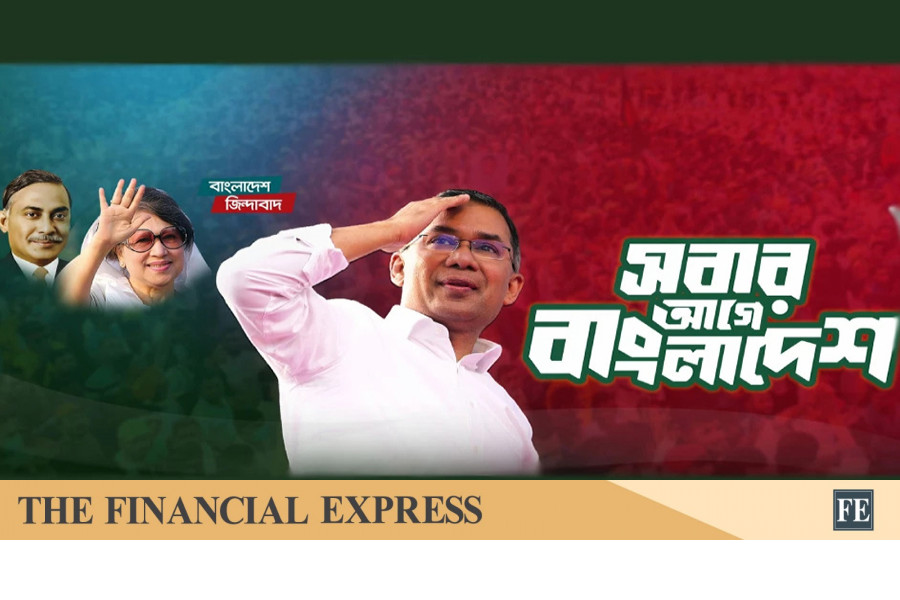
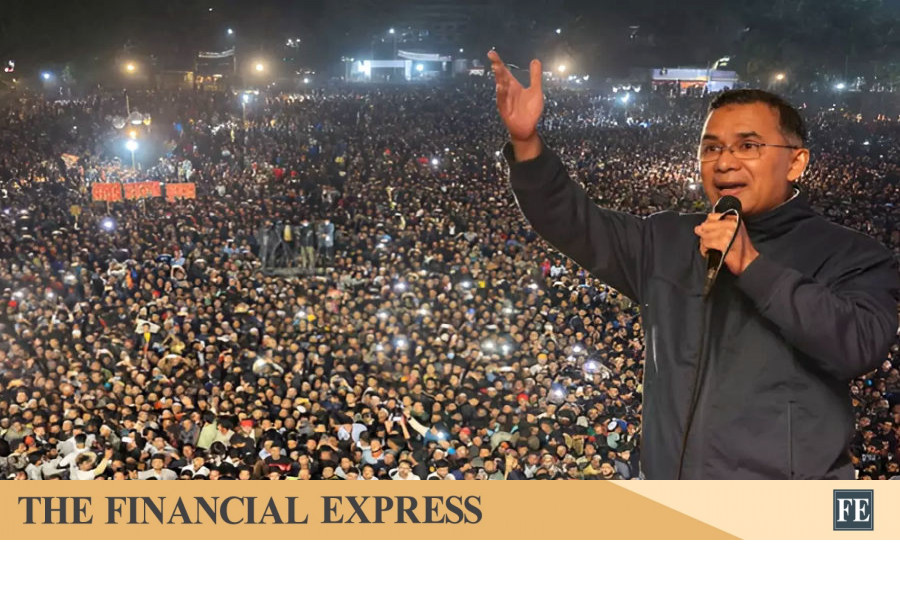
The United States has congratulated the people of Bangladesh for successfully holding the national election, and extended its best wishes to the Bangladesh Nationalist Party (BNP) and its chairman Tarique Rahman for their historic victory.

In a statement issued by the US Embassy on Friday morning, a day after the 13th parliamentary election held on Thursday (February 12), Washington expressed its interest in working together to advance the shared goals of prosperity and security between the two countries.

1770962753628.webp


The statement said: "Congratulations to the people of Bangladesh on a successful election and to the Bangladesh Nationalist Party and Tarique Rahman on your historic victory."

"The United States looks forward to working with you to realize shared goals of prosperity and security for both our countries," it added.​
 
Analyze

Analyze Post

Add your ideas here:
Highlight Cite Respond

Global media hail peaceful Bangladesh polls
International outlets describe post-uprising election as a test of democratic resilience


FE REPORT
Published :
Feb 13, 2026 09:28
Updated :
Feb 13, 2026 09:28

1770962856233.webp


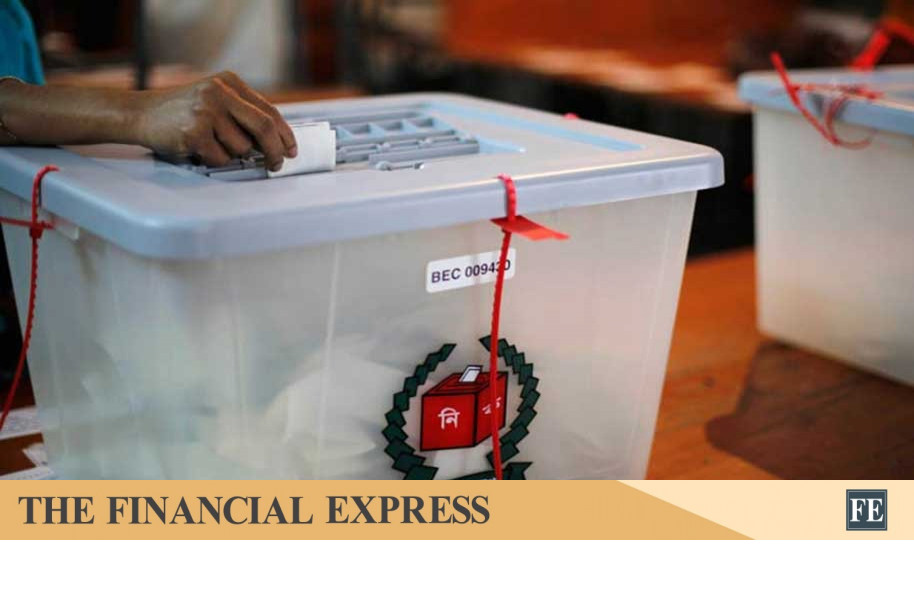
International media outlets have described Thursday's parliamentary elections in Bangladesh as largely peaceful and mostly free of violence, as vote counting progressed following the country's first national election since the 2024 mass uprising.

Global coverage framed the election as a significant moment for Bangladesh's democracy, highlighting the calm atmosphere at polling stations despite isolated incidents in a handful of areas.

International news agency The Associated Press reported that Bangladesh held its first election since the 2024 mass protests that toppled Sheikh Hasina's government.

"The balloting was mostly peaceful in a vote seen as a critical test of the country's democracy after years of political turmoil," it said.

Turkey-based Anadolu Agency headlined its report: "Bangladesh counts votes after peaceful elections as people await newly elected government."

"The day of the election was largely peaceful," Anadolu said, though it noted reports of one death and two small Molotov cocktail attacks in Chauddagram in eastern Bangladesh, as well as another incident at a polling station in Gopalganj Sadar.

The Hindustan Times described the election environment as largely free of violence, stating: "While the polling was largely violence-free, a crude bomb blast was reported from Munshiganj and Gopalganj areas."

The Diplomat magazine reported that voting concluded "with steady turnout in a calm, festive atmosphere", underscoring the overall orderly conduct of the polls.​
 
Analyze

Analyze Post

Add your ideas here:
Highlight Cite Respond

The election must restore democracy, not illiberal democracy

Zahed Ur Rahman
Published: 12 Feb 2026, 12: 23

1770963711570.webp


During Sheikh Hasina’s authoritarian rule, the democracy-loving people of the country wanted a free, fair and credible election. People rightly understood that by winning elections through manipulation and remaining in power, Sheikh Hasina had gradually turned Bangladesh into a mafia state.

Since there were effectively no real elections in the country, the prevailing view was that holding an election alone would put us back on the path to democracy. That statement is a half-truth, not the whole truth. But within a mafia-style system, there was no scope to discuss why it was only a half-truth. Now we will have that discussion. It is an extremely important discussion.


After a long time, Bangladesh is finally seeing a festive election. An election is supposed to mean a free, fair, participatory and credible vote. Yet in a country like ours, where “Hasina-style” elections have been the norm, there has been a tendency to attach these qualifiers to the very idea of an election.

In this election, a truly unprecedented development has taken place in Bangladesh, one that deserves serious consideration. In fact, this trend could become a defining factor in the country’s future politics. Although Islamist parties have long existed in Bangladesh’s political landscape, they typically contested elections through limited seat-sharing arrangements with BNP or Awami League, or occasionally made their presence felt through political programmes.


But for the first time, they have emerged as one of the two contenders for state power. Although the Jamaat-led alliance has included a few parties such as the National Citizen Party (NCP), AB Party, and LDP in an effort to move away from being labeled purely as an Islamist identity-based bloc, their number of seats is very small. Therefore, the 11-party alliance led by Jamaat remains, in essence, an Islamist identity-based political coalition.

Setting aside the question of how well this Islamist identity-based alliance will perform in the election, or whether it will be able to create any real competition at all, it can still be said that, for the first time since independence, they have established themselves as a significant political alliance in the country.

Awami League’s absence has also played a role in this alliance’s rise to prominence; had the Awami League taken part in the election, it would likely have been the BNP’s principal rival. After Sheikh Hasina’s fall, there was justified public anger against the Awami League. Capitalizing on that sentiment, Jamaat, the National Citizen Party (NCP), and other Islamist parties, through their movement, were unable to secure a complete ban on the Awami League, but they did succeed in getting its political activities prohibited, effectively removing it from the electoral field.


Although Jamaat and a couple of other parties in the alliance, including the NCP, have released their own manifestos, these should be considered insignificant in the broader context. If the alliance wins the election, the state will be governed according to Jamaat’s ideological framework.

A look at Jamaat’s manifesto shows that it resembles that of another centre-right political party. Despite having “Islamic” in its name, and despite a constitution that reads more like that of a religious organization than a political party, its manifesto contains no substantive discussion of Islam, particularly of Shariah.

The party’s manifesto mentions taking the initiative to enact a separate Muslim Personal Law for Muslims in line with Islamic Shariah (which, in practice, already exists under a different name), and adopting Shariah-based welfare measures for farmers. Beyond this, there is little in the manifesto to indicate that the party adheres to an Islamic ideological framework. Recently, the khatib of Baitul Mukarram Mosque also noted this point in a khutbah.

At first glance, this could have been praised as a positive trend. But the reality is not so simple. The party holds deeply conservative views; the ameer himself has made statements regarding whether a woman can serve as Jamaat’s ameer. According to its constitution, not only can a non-Muslim not become ameer, they cannot even become a member (rukn) of the party.

Moreover, leaders at various levels of the party, including parliamentary candidates, have said that if they come to power, they will establish Islamic Shariah. The Jamaat ameer himself has not dismissed such a possibility. When asked similar questions in interviews with foreign media outlets, he has said that if the people want it, then it will happen. Interestingly, if they truly wished to demonstrate that the people want it, they could have made this the number one point in their manifesto, but they did not. I discussed the reasons behind this kind of duplicity in an earlier column.

A recent report by BBC News India showed that Gazi Nazrul Islam, the Jamaat candidate from Satkhira-4, considered a Jamaat stronghold, spoke of running a country that is 90 per cent Muslim on the basis of “Islamic law.” In that context, he also raised the issue of women observing hijab and not going outside without a mahram (a male relative whom they are forbidden to marry). ()

Based on circumstantial evidence, it can reasonably be said that such a mindset exists within the party, even up to its highest levels. If this alliance comes to power, it is quite certain that, even if not formally, this country will unofficially fall under a regime of moral policing.

During the tenure of the interim government, religious conservatism (and in some cases extremism) has already become more active in the country. It requires only common sense to understand that if the Jamaat-led alliance comes to power, this will intensify significantly. We should also remember that, judging by their public statements, there are political parties within this alliance that are even more hardline than Jamaat.

The notion that a good election will automatically bring about liberal democracy and institutionalise it is, in fact, only a half-truth. Just as the world witnessed in the pre–Second World War era, and is witnessing again today, democracy is steadily eroding (democratic backsliding) across the globe on the basis of identity-driven (religious, racial, linguistic, etc.) populist politics. Influential books such as How Democracies Die and How to Save a Constitutional Democracy have highlighted this trend, explored its causes, and discussed possible remedies.

Clear examples of this global trend can be found right next door to us, and similar patterns are spreading across America and Europe. As our voters head to the polls, they would do well to keep this trend in mind. Voters must remember that democracy does not necessarily mean liberalism; in many countries today, elections themselves are producing “illiberal democracies,” which are, in effect, a form of fascism.

Voters will surely understand that casting a vote out of anger at the conduct of a party’s leaders and activists, or voting based on a personal preference for a local candidate, could at the national level bring right-wing identity-based political forces to power, or give them a strong foothold by enabling them to win a significant number of seats. This would expose the state to grave dangers both domestically and internationally.

After Sheikh Hasina’s fall, while continuing the discourse against fascism, voters must also remain vigilant against the rise of a new fascism. Responding to the slogan “You’ve seen many in power, now give us a chance” without reflection could carry consequences that are not difficult to imagine.

* Zahed ur Rahman is a university teacher and political analyst.​
 
Analyze

Analyze Post

Add your ideas here:
Highlight Cite Respond

Global leaders greet Tarique Rahman on BNP's victory

FE ONLNE DESK
Published :
Feb 14, 2026 01:10
Updated :
Feb 14, 2026 01:10

1771028364396.webp


Global leaders and diplomatic missions stationed in Dhaka have been quick to congratulate Bangladesh Nationalist Party (BNP) Chairman Tarique Rahman on his party’s significant election victory and are signalling a willingness to work closely with Bangladesh under his leadership.

India, China, the United States, the United Kingdom, Malaysia, Nepal, Bhutan, Pakistan and the Maldives are among countries which congratulated Tarique Rahman, his party and the people of Bangladesh, reports UNB.

Indian Prime Minister Narendra Modi spoke with the BNP chief over the phone and extended support in his endeavour to fulfill the aspirations of the people of Bangladesh.

"Delighted to speak with Tarique Rahman. I congratulated him on the remarkable victory in the Bangladesh elections," PM Modi said.

He conveyed his best wishes and support in his endeavour to fulfil the aspirations of the people of Bangladesh.

"As two close neighbours with deep-rooted historical and cultural ties, I reaffirmed India’s continued commitment to the peace, progress, and prosperity of both our peoples," said the Indian Prime Minister.

In a separate message through his X handle, PM Modi conveyed his warm congratulations to Tarique Rahman on leading BNP to a decisive victory in the Parliamentary elections in Bangladesh.

"This victory shows the trust of the people of Bangladesh in your leadership," PM Modi said.

Progressive, Inclusive Bangladesh

India will continue to stand in support of a democratic, progressive and inclusive Bangladesh, he said.

"I look forward to working with you to strengthen our multifaceted relations and advance our common development goals," PM Modi said.

"Congratulations to the Bangladesh Nationalist Party and its leader Tarique Rahman as well as the people of Bangladesh. The United States looks forward to working with the newly elected government to advance prosperity and the security of the region," said US Secretary of State Marco Rubio.

The United States congratulated the people of Bangladesh on a successful election and the Bangladesh Nationalist Party and Tarique Rahman on his historic victory.

"The United States looks forward to working with you (Tarique) to realize shared goals of prosperity and security for both our countries," said the US Embassy in Dhaka on Friday morning.

Writing New Chapters

China congratulated the people of Bangladesh on the smooth and successful 13th national parliamentary election and the Bangladesh Nationalist Party for taking the lead in the election.

"We look forward to working together with the new government of Bangladesh and writing new chapters of China-Bangladesh relations," said the Chinese Embassy in Dhaka in a message.

China noted that Bangladesh had a steady and smooth general election and congratulates the BNP on winning the election, said Chinese Foreign Ministry Spokesperson.

"As a traditional friend and neighbor of Bangladesh, China supports Bangladesh in advancing its domestic political agenda, and stands ready to work with Bangladesh to carry forward the time-honored friendship, deepen high-quality Belt and Road cooperation and practical cooperation in various areas, and further strengthen the China-Bangladesh comprehensive strategic cooperative partnership," said the Chinese government Spokesperson.

The United Kingdom (UK) congratulated BNP Chairman Tarique Rahman and his party on election victory.

The UK also greeted the people of Bangladesh as the country enters a new chapter.

"We look forward to working together on our shared priorities: economic growth, migration, climate and security," said the British High Commission in Dhaka on Friday in a message through its verified X handle.

New Energy in Ties

Malaysian Prime Minister Anwar Ibrahim congratulated Tarique Rahman and said Malaysia looks forward to working with the new Bangladeshi leadership to bring new energy to Dhaka-Kuala Lumpur bilateral ties.

"I warmly congratulate Tarique Rahman and the Bangladesh Nationalist Party on their emphatic election victory. This is a triumph of democracy: the Bangladeshi people, having navigated a period of extraordinary challenges, have spoken clearly at the ballot box," he said.

The Malaysian PM also expressed appreciation to his friend Dr Muhammad Yunus for his stewardship as Chief Adviser during this important transition and for ensuring that the democratic process proceeded smoothly.

"Malaysia looks forward to working with the new Bangladeshi leadership to bring new energy to our bilateral ties. I join Malaysians in extending our warmest regards to the people of Bangladesh," said the Malaysian Prime Minister.

Partnership to Grow

President of the Republic of the Maldives Dr Mohamed Muizzu congratulated BNP Chairman Tarique Rahman on Bangladesh Nationalist Party’s remarkable victory in the 13th National parliamentary elections.

"I extend my warm regards and look forward to working closely together, to further advance and deepen the longstanding friendship and cooperation between the Maldives and Bangladesh," he said.

'I am confident that our partnership will continue to grow in scope and strength in the years ahead," said the President of Maldives.

Remarkable Victory

Prime Minister of Nepal Sushila Karki on Friday congratulated BNP Chairman Tarique Rahman, noting that her country eyes strong ties with Bangladesh.

"Warm congratulations to the Government and the people of Bangladesh on the successful conduct of the 13th parliamentary elections," she said in a message.

The Nepal’s Prime Minister extended her heartiest congratulations to Tarique Rahman on leading the Bangladesh Nationalist Party to a remarkable victory in the elections .

"I look forward to working closely with you to strengthen our neighbourly ties and consolidate cooperation in areas of mutual interest," she said.

Warm Ties

Prime Minister of Bhutan Tshering Tobgay congratulated BNP Chairman Tarique Rahman on his party's massive election victory.

"I look forward to working closely to further strengthen the warm ties of friendship between Bhutan and Bangladesh," he said in a message.

"Warmest congratulations to Mr. Tarique Rahman and the BNP on winning the Bangladesh General Elections," said the Bhutanese Prime Minister.

He said this resounding mandate reflects the confidence of the people of Bangladesh in Tarique Rahman's leadership and heralds a new chapter of peace and progress.

Democratic Bangladesh

On behalf of the Indian National Congress, its President Mallikarjun Kharge congratulated BNP Chairman Tarique Rahman and the BNP for winning the Parliamentary elections in Bangladesh.

"India and Bangladesh share deep rooted bonds of history, language, culture, and multitude of other commonalities," he said.

"A democratic, progressive and inclusive Bangladesh would always be supported by all Indians for the stability and peace of our region," said the Congress President.

Mamata's Message

Chief Minister of West Bengal Mamata Banerjee congratulated BNP Chairman Tarique Rahman, his party and people of Bangladesh, for the election victory, wishing for a cordial relations between the two sides.

"My hearty congratulations, shubhonandan, to all my brothers and sisters, all the people, in Bangladesh. My advance Ramazan Mubarak to all of them," she said in a message from her verified X handle.

"For this great victory, my congratulations to my Tarique-Bhai, his party, and all the parties. Pray, you all be well and happy," Mamata said.

She wished that their relations with Bangladesh would be always cordial.​
 
Analyze

Analyze Post

Add your ideas here:
Highlight Cite Respond

China greets BNP on election success

FE ONLINE REPORT
Published :
Feb 13, 2026 19:34
Updated :
Feb 13, 2026 19:34

1771028710460.webp


China has congratulated the Bangladesh Nationalist Party (BNP) after its sweeping victory in the 13th parliamentary elections, taking note of what it described as a steady and smooth general election in Bangladesh.

In a statement issued on Friday, a Chinese government spokesperson said China, calling itself a traditional friend and neighbour of Bangladesh, stood ready to advance high-quality Belt and Road cooperation and deepen the comprehensive strategic cooperative partnership between the two countries.

Meanwhile, the Chinese Embassy in Dhaka also congratulated the people of Bangladesh on the successful conduct of the 13th National Parliamentary Election and expressed readiness to work with the new BNP government.

“Congratulations to the people of Bangladesh on the smooth and successful 13th National Parliamentary Election and to the Bangladesh Nationalist Party for taking the lead in the election,” the Chinese embassy in Dhaka said in a message on Friday.

“We look forward to working together with the new government of Bangladesh and writing new chapters of China-Bangladesh relations,” read the message.​
 
Analyze

Analyze Post

Add your ideas here:
Highlight Cite Respond

A new dawn of hope breaks over Bangladesh

FE
Published :
Feb 14, 2026 00:20
Updated :
Feb 14, 2026 00:20

1771029449635.webp


The people of Bangladesh, who practically remained disenfranchised for more than one and a half decades under the ruthlessly autocratic regime of Sheikh Hasina, could finally cast their ballots last Thursday (February 12, 2026) to elect the 13th Jatiya Sangsad (legislature). Notably, Sheikh Hasina was ousted on August 5, 2024 in a student-led mass uprising, popularly known as July uprising, which was followed by installation of an interim government headed by Nobel laureate Dr Muhammad Yunus. Credit for holding a very credible, peaceful and festive election and a national referendum on implementation of the July Charters, primarily, goes to the interim administration---particularly the Bangladesh Election Commission. Unlike the previous national elections, there were few reports of irregularity or violence. Also credit goes to the law enforcement agencies and the armed forces in particular who played a decisive role throughout the electioneering and the day of polling. It is indeed a unique, historic occasion for the entire nation to celebrate because, it is the first-ever election in living memory in which the voters could participate without looking over their shoulders.

The latest unofficial count of voting shows that the Bangladesh Nationalist Party (BNP), led by its chairman, Tarique Rahman, the main contender for the office of prime minister, has secured a landslide victory with 212 seats out of 300, followed by Jamaat-e-Islami and its allies bagging 77 seats. Now that the BNP which enjoys two-third majority in the Jatiya Sangsad, is going to rule the country for the next five years. The BNP leadership must be aware of the challenging circumstances in which they would be taking over the rein of the country's administration. The July uprising has aroused among the people the hope for a lot of changes in the old order that had helped, among others, corruption to thrive, inequality to expand and the party in power to become autocrat or fascist. The BNP has got absolute majority in parliament and unless it exercises due restraint, it might go off the track and indulge in excesses. The BNP, however, has before it two important documents--- July Charter and its own 31-point programme--- the implementation of which might help it remain on the right course.

It is expected that the holder of absolute majority in February 12 election would also learn from history and avoid committing such mistakes. It will be suicidal particularly when the new government will inherit a lot of political, economic and social challenges. In the economic sector in particular, it will have to work hard to lower inflation, restore confidence in the crisis-ridden banking system, reverse the ongoing trend in private investment and reinvigorate the moribund capital market. More importantly, the BNP government will have to resuscitate the collapsing national institutions. A number of reports prepared by the reform commissions constituted by the interim government might also prove handy for the new government in bringing about desirable changes in the social and economic sectors. Besides, the new administration will have to start doing the arithmetic in the matters of some of its major poll promises such as Family Card and Farmer Card in the context of its capacity to mobilise resources, from domestic and external sources.

There is yet another challenge relating to the implementation of the July charter, which, among other issues, is about transitioning to a bicameral legislature and a system of consensus-based caretaker government system to oversee national polls. In countries like Bangladesh, there is no alternative to this caretaker system. Hopefully, the elected government to take office soon would be able to take all the challenges in its stride.​
 
Analyze

Analyze Post

Add your ideas here:
Highlight Cite Respond

Congress president congratulates BNP and Tarique Rahman

Staff Correspondent
Published: 13 Feb 2026, 21: 02

1771030307618.webp


Congress president Mallikarjun KhargeX

India’s opposition party Congress has congratulated the BNP and its chairman Tarique Rahman on their victory in Bangladesh’s national election.

On Friday, Congress president Mallikarjun Kharge wrote on social media platform X (formerly Twitter), “On the victory in the parliamentary elections, I extend my congratulations to the Bangladesh Nationalist Party (BNP) and Tarique Rahman on behalf of the Indian National Congress.”

Kharge added that India and Bangladesh share deep and common ties in history, language, culture, and many other areas.

On X, the Congress president further wrote, “For the peace and stability of our region, a democratic, progressive, and inclusive Bangladesh will always receive the support of all Indians.”

Following the 2024 student–people’s movement that removed the Awami League from power, Sheikh Hasina left the country and fled to India.

On 12 February, Bangladesh held its first national election since then. The BNP-led alliance has won in more than two-thirds of the seats and is set to form the government, securing victory in a total of 212 constituencies. Meanwhile, Bangladesh Jamaat-e-Islami and its allies won 77 seats.​
 
Analyze

Analyze Post

Add your ideas here:
Highlight Cite Respond

Members Online

No members online now.

Latest Posts

Back
 
G
O
 
H
O
M
E