Home Watch Videos Wars Movies Login

[🇧🇩] Trump's Victory/Tariff/ Bangladesh

[🇧🇩] Trump's Victory/Tariff/ Bangladesh
223
6K
More threads by Saif

G Bangladesh Defense

Bangladesh, US sign reciprocal tariff agreement, cut duty to 19pc

bdnews24.com
Published :
Feb 10, 2026 00:15
Updated :
Feb 10, 2026 00:15

1770683338442.webp


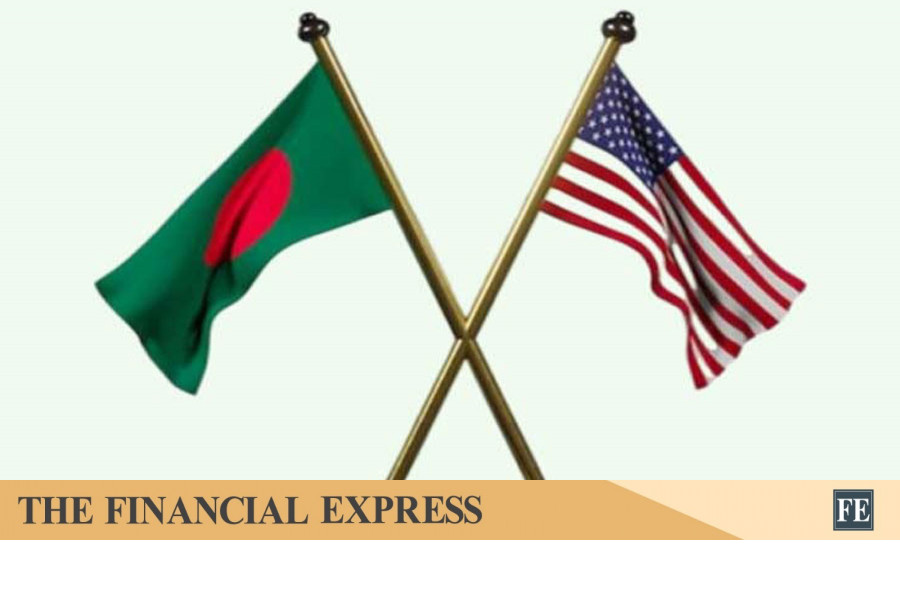
Bangladesh has signed a tariff agreement with the United States after nine months of negotiations, reducing the supplementary duty by one percentage point.

The Chief Advisor’s Office announced on Monday night that under the new deal, Bangladeshi exports to the US market will face a 19 percent supplementary duty, bringing the overall tariff down from 35 percent to 34 percent.

The government had been optimistic about securing concessions, having already taken steps to improve trade relations, including purchasing Boeing aircraft and increasing imports of wheat, cotton and other goods.

Despite these measures, officials acknowledged that the Trump administration was not persuaded to cut tariffs further.

“Although the duty has not fallen significantly, we expect Bangladeshi products will gain additional benefits in the US market,” the interim government said.

The agreement was signed online by Commerce Advisor Sheikh Bashir Uddin, National Security Advisor Khalilur Rahman and US Trade Representative Ambassador Jamieson Greer.

President Donald Trump, in his second term, announced steep tariffs on more than 100 countries on Apr 2, 2025, imposing an additional 37 percent duty on Bangladeshi goods.

Following negotiations, the rate was reduced to 20 percent and took effect on Aug 1, adding to the existing 15 percent tariff.

Since then, Bangladesh has sought to lower the burden, leading to Monday’s deal.​
 
Analyze

Analyze Post

Add your ideas here:
Highlight Cite Respond

AmCham welcomes Bangladesh-US reciprocal tariff agreement

FE ONLINE REPORT
Published :
Feb 10, 2026 20:58
Updated :
Feb 10, 2026 20:58

1770770926024.webp


American Chamber of Commerce in Bangladesh (AmCham) on Tuesday welcomed the recently announced trade understanding between Bangladesh and the United States, which sets tariffs at 19 per cent and introduces important facilitative provisions for selected exports.

From AmCham’s perspective, this development reflects constructive engagement between two longstanding economic partners and sends a positive signal to global investors amid heightened uncertainty in international trade, according to a statement.

The United States remains one of Bangladesh’s most important export destinations, particularly for ready-made garments, and this outcome provides greater predictability for exporters while preserving Bangladesh’s competitiveness in a key market.

Equally important is the provision that allows zero-tariff access for certain products manufactured with US inputs, it said in the statement, adding that this has the potential to encourage deeper supply-chain integration, promote value addition, and strengthen backward linkages between US producers and Bangladeshi manufacturers.

“We also view Bangladesh’s commitments to improving market access, regulatory transparency, and standards alignment as steps in the right direction,” Amcham president Syed Ershad Ahmed said in the statement.

Over the long term, such reforms enhance efficiency, reduce the cost of doing business, and benefit consumers and industries alike, he said, adding trade agreements are not only about tariffs; they are also about confidence, rules, and trust—and this framework contributes to all three.

From AmCham’s standpoint, this agreement underscores the importance of continued dialogue between the government and the private sector.

As the only chamber representing US companies in Bangladesh, he said AmCham remains committed to supporting policy reforms that foster trade, investment, and sustainable economic growth.

“We believe this outcome can serve as a platform for deeper economic cooperation, increased US investment, and diversification beyond traditional sectors.”

Looking ahead, consistent implementation, clear communication of rules, and ongoing stakeholder engagement will be critical, he said, adding AmCham stands ready to work with both governments and our members to translate this opportunity into tangible gains for businesses, workers, and the broader economy of Bangladesh.​
 
Analyze

Analyze Post

Add your ideas here:
Highlight Cite Respond

DUTY-FREE FACILITY UNDER TRUMP TRADE DEAL

Dhaka gives access to 6,710 US goods, gets relief on 1,638 items


Saddam Hossain 11 February, 2026, 22:11

1770860704401.webp

A file photo shows a crane arranging containers at the Kamalapur Inland Container Depot in the capital. | New Age photo

Bangladesh would have to extend tariff concessions on 6,710 categories of United States products once the recently signed Agreement of Reciprocal Trade comes into force.

Moreover, Bangladesh would get reciprocal benefits for 1,638 categories of its exports to the US market.

Under the agreement, Bangladesh agreed to provide significant preferential market access for US industrial and agricultural goods, including energy products, chemicals, machinery, motor vehicles and parts, medical devices, ICT equipment, soy, dairy, beef, poultry, and fruits and nuts.

Commerce adviser Sk Bashir Uddin and United States Trade Representative ambassador Jamison Greer signed the ART virtually on Monday, reducing the reciprocal tariff on Bangladeshi products exported to the US to 19 per cent.Bangladesh cultural tours

The agreement stated that RMG items manufactured using cotton sourced from the US would be eligible for zero reciprocal duty under a specific mechanism and volume threshold.

The USTR published a review of the ART, along with specific HS codes, on Tuesday, indicating that Bangladesh would immediately reduce customs duties on approximately 4,500 categories of US products effective the day the agreement takes effect.

However, according to the ART, in Bangladesh, customs duty comprises supplementary and regulatory duties.

For another 2,210 product categories, duties would be phased out gradually, the ART said. Under the agreement, Bangladesh has committed to providing tariff concessions to the US products in four phases.

Firstly, Bangladesh would reduce customs duties entirely on 4,500 products originating from the US, which would be effective on the date of entry into force of this agreement.

Secondly, across 1,538 categories, tariffs would be cut by 50 per cent from the first day of implementation, with the remaining 50 per cent reduced equally over four years, reaching zero from January 1 of the fifth year.

Thirdly, tariffs on 672 categories would be halved on the first day and gradually reduced to zero over nine years, reaching full elimination on January 1 of the tenth year.

Fourth, 422 product categories already subject to zero customs duty would continue to enjoy that status.

Finally, Bangladesh would retain the right to impose duties on the remaining 326 categories in accordance with its tariff schedule under the MFN customs.

Against nearly 7,000 products, Bangladesh will enjoy zero reciprocal tariff on 1,638 products, including pharmaceuticals, aircraft-related products, cane-made baskets and bags, iron and steel products, graphite, minerals, chemicals, plastic goods, and wooden products.

Under the agreement, Bangladesh would not impose quotas on imports of US goods.

Bangladesh would allow US goods complying with applicable US or international standards, US technical regulations, or US or international conformity assessment procedures to enter without additional conformity assessment requirements.

The agreement also stated that Bangladesh would provide non-discriminatory or preferential market access for US agricultural goods, ensure that its sanitary and phytosanitary measures are science and risk-based and do not operate as disguised restrictions on bilateral trade, and remove unjustified SPS barriers in areas that undermine reciprocity.

Bangladesh would not enter into agreements or understandings with third countries that include non-scientific, discriminatory, or preferential technical standards; include third-country SPS measures that are incompatible with US or international standards; or otherwise disadvantage US exports to such third countries.

Bangladesh shall ensure transparency and fairness in the protection or recognition of geographical indications, including under an international agreement.

Moreover, Bangladesh would provide robust protection for intellectual property.

The agreement also stated that Bangladesh would adopt and implement a prohibition on the importation of goods mined, produced, or manufactured wholly or in part by convict labour, forced or compulsory labour, and child labor.

Bangladesh would protect internationally recognised labour rights, the agreement stated, and ensure that workers in export processing zones (EPZs) could fully exercise their rights to freedom of association and collective bargaining.

Moreover, the country would adopt and maintain environmental protections, effectively enforce its environmental laws, uphold or, as necessary, institute strong environmental governance structures, and address environmental issues that contribute to non-reciprocal trade.

If the US adopts a border measure to combat regulatory arbitrage that would disadvantage US workers and businesses, Bangladesh shall coordinate and endeavor to align its border measures to address the issue, the ART said.

By 2030, Bangladesh will implement and maintain technology solutions that enable full pre-arrival processing, paperless trade, and digitized procedures for the movement of goods into and out of the United States, including facilitating digital trade with the US.

If Bangladesh requires a Halal certification, the country would allow any US Halal certifier meeting Bangladesh’s Halal requirements to certify products.

Bangladesh would remove mandatory reinsurance cession requirements, including the obligation for US insurers to reinsure at least 50 per cent of their business with Sadharan Bima Corporation, according to the agreement.

The agreement stated that Bangladesh would endeavor to facilitate increased purchases of US civilian aircraft, parts, and services, as Biman Bangladesh Airlines intends to purchase 14 Boeing aircraft, with an option to purchase additional aircraft.

Moreover, Bangladesh would purchase US energy and liquefied natural gas worth $15 billion over 15 years, along with US agricultural products including wheat (at least 700,000 metric tons per year for five years), soy and soy products (at least $1.25 billion or 2.6 million metric tons over one year), and cotton, with an estimated total value of $3.5 billion.

The agreement also stated that Bangladesh would endeavor to increase purchases of US military equipment and limit such purchases from certain countries.Bangladesh cultural tours

Moreover, Bangladesh will submit a complete notification to the WTO of all subsidies it provides within six months of this Agreement›s entry into force.

Regarding the agreement, Mustafizur Rahman, a distinguished fellow at the Centre for Policy Dialogue, said it does not qualify as a free trade agreement under WTO rules.

If it is not recognised as such, similar tariff concessions may need to be extended to other countries, potentially putting significant pressure on revenue collection at the import stage, he warned.

The US is Bangladesh’s largest export destination.

In 2024, Bangladesh exported to the US goods worth about $8.4 billion, of which $7.34 billion accounted for readymade garments. In the year, the country imported US goods worth $2.2 billion.​
 
Analyze

Analyze Post

Add your ideas here:
Highlight Cite Respond
A trade agreement has been signed between Bangladesh and the USA. Reciprocal interest rate has been reduced to 19% for Bangladesh. Cotton will be imported from the USA. Bangladeshi apparel using raw materials of the USA will get duty free access. Bangladesh will also buy 25 passenger planes from Boeing to reduce trade imbalance.


Analyze

Analyze Post

Add your ideas here:
Highlight Cite Respond

Bangladesh-US trade deal: prospects and pitfalls

FE
Published :
Feb 13, 2026 00:33
Updated :
Feb 13, 2026 00:33

1770962998209.webp


The signing of a trade deal with the United States at the fag-end of the interim government's tenure has understandably raised many eyebrows, particularly because of its non-disclosure clauses. The limited information released so far suggests a mixed picture-one that promises new opportunities but also poses significant questions about long-term gains for Bangladesh. What is publicly known is that the agreement reduces U.S. tariffs on Bangladeshi goods from an initially proposed 37 per cent-later revised to 20 per cent-to a flat rate of 19 per cent. More notably, it offers zero-duty access to select textiles and apparel produced from American cotton or fibres. In return, Bangladesh has committed to granting significant market access to a range of U.S. industrial and agricultural products. Tariffs on items such as poultry, seafood, corn and certain machinery and medical devices will be cut to zero, while duties on others will be phased out over five to ten years. Additionally, as per media report, Bangladesh will be required to import agricultural products from USA such as soybean, wheat, cotton to the tune of around $ 3.50 billion annually.

In the absence of full disclosure, assessing whether the agreement represents a genuine win-win outcome is difficult. Officials in the commerce ministry are optimistic, arguing that the deal could be transformative, given that nearly 86 per cent of Bangladesh's exports to the U.S. consist of ready-made garments (RMG). A large portion of these exports could potentially benefit from duty-free access, provided they meet the condition of using U.S.-sourced raw materials. The Bangladesh Garment Manufacturers and Exporters Association (BGMEA), in its immediate reaction, has welcomed the agreement. It has pointed out that tariff exemptions for garments made of U.S. cotton and man-made fibres could enhance Bangladesh's competitiveness in the American market. At the same time, BGMEA has rightly emphasised the importance of traceability mechanisms to ensure compliance with rules of origin.

Spinners in the country, however, have reacted more cautiously. They highlight the higher cost of US cotton and the long lead times required for import. From their perspective, supportive infrastructure-such as warehousing at Chittagong Port-will be critical to ensure smooth valuation, storage, and traceability of raw materials of US origin. Without such facilities, the benefits promised by the agreement may remain largely theoretical.

Ultimately, the long-term impact of this trade deal will depend on several external and internal factors. Competition from other major exporters to the U.S., including Vietnam, Cambodia and India, remains intense. These countries are also negotiating preferential access and investing heavily in supply-chain efficiency. For Bangladesh, the agreement could serve as a strategic stepping stone towards deeper integration into the US market-but only if complemented by domestic reforms, infrastructure development, and transparent implementation. Whether this deal proves to be a turning point or a missed opportunity will depend less on the headline tariff cuts and more on how effectively Bangladesh positions itself in an increasingly competitive global trade landscape.​
 
Analyze

Analyze Post

Add your ideas here:
Highlight Cite Respond

US meat, dairy and biotech to enter on easier terms

Bangladesh will adopt US regulatory standards for food safety, agri-biotechnology

12 February 2026, 00:00 AM
Sukanta Halder

1770964133138.webp


Bangladesh has long imported agricultural commodities from abroad. Last year, it became the eighth-largest market for US wheat. Under a reciprocal trade agreement signed on February 9, American dairy, meat and poultry producers will get sweeping access to Bangladesh’s market.

It also widens the door to agricultural biotechnology products without requiring labelling for genetically modified organisms, a provision that has alarmed Fisheries and Livestock Adviser Farida Akhter.

Domestic producers, already struggling to compete, fear they will be overwhelmed.

US MEAT, MILK AND MORE

The agreement represents a sweeping deregulation of Bangladesh’s food-import regime. Bangladesh will recognise America’s dairy-safety system as providing protection “at least equivalent” to its own domestic standards.

The country will allow imports of American dairy products from cattle (for instance, buffalo), sheep and goats when accompanied by an Agricultural Marketing Service (AMS) certificate of the US Department of Agriculture (USDA), and has committed not to impose facility registration requirements.

The recognition extends to meat and poultry, including offal, processed products, catfish and egg items.

Bangladesh will accept oversight by the USDA’s Food Safety and Inspection Service (FSIS) of American production facilities. The FSIS directory will serve as the official list of eligible establishments, eliminating the need for individual American plants to seek separate Bangladeshi approval.

The agreement stipulates that Bangladesh shall “impose no additional product registration or facility registration requirements” on American meat and poultry. It will recognise the USDA’s Animal and Plant Health Inspection Service as the sole authority to determine disease-free statuses.

Additionally, the agriculture ministry will fast-track market access requests for US plant products.

In effect, Bangladesh is outsourcing significant elements of its food-safety regulation to American agencies.

LOCAL FEARS

The agreement has provoked alarm among domestic producers.

Mohammad Shah Emran, general secretary of the Bangladesh Dairy Farmers’ Association, argued that the introduction of foreign products on a big scale “could undermine the growth of our domestic dairy sector, which is already struggling to remain competitive.”

“We urge the government to provide necessary support, including incentives and infrastructure development, so that local dairy farmers can improve production standards and compete effectively,” he said.

Adviser Farida also warned of a potential influx of cheaper meat products that could disrupt local industries.

Not all industry figures are pessimistic. Tanvir Ahmed, managing director of Sheltech Group, which operates Bengal Meat, sees opportunity in American technology, particularly large breed cattle such as Brahma, that could improve yields.

“While we are in the early stages, there is a clear opportunity to improve meat production through better breeding techniques and advanced farming practices,” he said.

“With the right support, we can reduce our reliance on imports and strengthen our domestic meat production,” he added.

Whether such support will materialise remains an open question.

Bapon Dey, a professor of poultry science at Bangladesh Agricultural University, said the trade agreement with the US offers significant opportunities for the poultry industry, but it also presents considerable challenges.

Bangladesh must upgrade its poultry management systems, improve biosecurity and meet international standards. The lack of coordination between the government, the private sector and research institutions is a key barrier.

“If these gaps are bridged,” he added, “Bangladesh’s poultry sector can unlock the full potential of such an agreement.”

BIOTECH WITHOUT BORDERS

Perhaps the most significant shift concerns agricultural biotechnology.

Bangladesh will recognise the effectiveness of America’s regulatory system in ensuring the safety of agricultural biotechnology products. Within 24 months, it must frame a policy allowing the import and marketing of American agricultural biotech products legally approved in the US.

Bangladesh will not require any separate pre-market review, additional labelling or local approval.

Products that have completed American pre-market processes will face no additional scrutiny in Bangladesh.

The agreement clarifies that processed food and agricultural products derived from biotechnology, including those subjected to heat treatment or grinding, do not contain living modified organisms and are exempt from local authority approval.

In other words, Bangladesh is adopting American regulatory standards wholesale.

The absence of labelling requirements is particularly contentious.

Adviser Farida pointed out that biotechnology products such as soybeans and oil are already being imported without proper labels.

“The absence of genetically modified organisms’ labels on these products raises concerns, as consumers are not fully informed about what they are consuming,” she said. The demand for proper labelling would provide transparency and allow consumers to make informed decisions.​
 
Analyze

Analyze Post

Add your ideas here:
Highlight Cite Respond

Bangladesh-US trade agreement in focus

A deal done in the dark – almost


CPD Executive Director Fahmida Khatun says pre-deal consultations with economists were largely formalities
12 February 2026, 00:00 AM

1771031703152.webp

Fahmida Khatun

Bangladesh’s recently signed trade deal with the United States promises slight tariff relief but carries deeper implications for fiscal stability, foreign policy and democratic transparency, according to Fahmida Khatun, executive director of the Centre for Policy Dialogue (CPD).

The economist says the agreement, signed on February 9 just days before a national election, was negotiated with limited public engagement.

The interim government did hold meetings with economists, civil-society representatives and business leaders on ways to reduce bilateral trade deficit, but Fahmida, who attended one of the sessions, describes them as “just mere formalities.”

The deal may help exporters in the short-term, but its financial costs, geopolitical conditions and policy limits could affect Bangladesh’s economy for years
In an interview with The Daily Star, she said that those discussions were limited in scope and substance. When economists began raising questions, there was little clarity about the topics under consideration.

Meanwhile, negotiations with US authorities continued under a non-disclosure agreement, with no public information available, she said.

“Overall, the process resembled a box-ticking exercise rather than a genuine national consultation,” added the CPD executive director.

“The deal may help exporters in the short-term, but its financial costs, geopolitical conditions and policy limits could affect Bangladesh’s economy for years.”

She emphasised that the agreement is “not only an economic agreement but also geopolitical and security-related,” which makes transparency essential.

For a pact that will shape trade, diplomacy and fiscal priorities for years, the lack of broader engagement has raised concerns about legitimacy and preparedness.

According to Fahmida, a far-reaching agreement covering tariffs, defence and energy purchases, technology use and geopolitical alignment has been signed without a strong public debate. Implementation will not fall on those who negotiated it but on the next elected government.

“The interim government will leave without responsibility, while the next government will bear both the positives and negatives,” she observes.

SOME RELIEF

Under the deal, the reciprocal tariff on Bangladeshi exports to the United States, previously set at 20 percent, has been reduced to 19 percent. In the fiercely competitive ready-made garment sector, the difference matters as much psychologically as financially.

“Even though it is only a 1 percentage-point reduction, it still provides some relief,” said the CPD executive director.

Competing exporters face broadly similar tariff levels. Vietnam continues to face around 20 percent, while India, which previously had the same rate, has recently secured a reduction to 18 percent, putting Bangladesh closer to its competitors.

The agreement also provides duty benefits in the US market for garments made with American cotton, though the advantage is limited.

“Bangladesh also exports to other countries, so this is only partially beneficial,” she commented.

“It may help Bangladesh remain competitive in its largest export sector, but it does not fundamentally alter the structure of trade.”

THE HIDDEN COST: FISCAL STRAIN

For the next government, the larger economic effects lie in financial obligations. The deal includes commitments to purchase US goods, notably Boeing aircraft, and to expand cooperation in agriculture and energy.

The agreement enforces a form of managed trade with specific targets. Bangladesh has committed to purchasing $15 billion worth of US energy commodities, including liquefied natural gas (LNG), over 15 years.

LNG may conflict with Bangladesh’s long-term energy goals. “Bangladesh aims to increase renewable energy, but LNG is expensive and not clean,” Fahmida said.

“Ideally, the country should gradually reduce LNG dependence and invest in domestic energy exploration. Instead, the agreement may lock Bangladesh into costly energy imports.”

In agriculture, Dhaka will import at least $3.5 billion of US farm products, including wheat and soybeans.

Bangladesh is already coping with rising domestic and external debt. “The fiscal space of the government is very narrow. We have relatively high debt, and repayment has already started,” said the economist.

The CPD executive director said that funding the purchases of 14 aircraft will require “proactive efforts” and could further strain debt sustainability. The country’s debt-to-GDP ratio rose to 38.61 percent in the first quarter of this fiscal year from 36.30 percent a year earlier, reflecting sustained borrowing amid tightening fiscal space.

Though framed as a trade deal, Fahmida said the agreement carries clear geopolitical overtones. Certain clauses limit Bangladesh’s engagement with “non-market countries,” widely interpreted to include China and Russia.

“There are clauses binding Bangladesh not to engage in certain dealings with so-called ‘non-market countries’,” Fahmida said. “This clearly introduces a geopolitical and security dimension.”

For a country that has traditionally balanced relations among major powers, this could complicate foreign policy.

“Bangladesh’s foreign policy is to maintain a balanced relationship with its partners. How the government will implement this while maintaining balance is going to be another challenge,” she said.

POLITICS AND TIMING

The timing of the agreement has amplified controversy. Signed three days before a national election, it was concluded by an interim administration that will not oversee its implementation.

Fahmida believes the timing of the agreement is crucial. “This is a major national decision. Ideally, the elected government should have taken this decision.”

“The urgency is difficult to explain. Negotiations had been ongoing for months, and while exporters, particularly garment manufacturers, probably benefited from clarity on tariffs, broader national interests suffered.”

She said, “Closing the deal may have been necessary for exporters, but not necessarily for all sectors. The deal could have waited.”

The next government will inherit the consequences of a deal it did not negotiate. Renegotiation may be difficult. “Once an agreement is signed, flexibility is limited,” Fahmida said.

The agreement intersects with wider structural changes. Bangladesh is preparing to graduate from least developed country status in November, a shift that will reduce preferential market access and concessional financing.

According to her, to sustain growth, Bangladesh must diversify trade partnerships, improve governance and strengthen institutions. The competitive landscape is also shifting.

India has secured more favourable trade terms with major partners, including the European Union. “Bangladesh must remain mindful of competition,” she warned.

In the longer term, she suggested exploring a full free-trade agreement with the United States, though such negotiations would be complex and constrained. “Trade agreements must be a win-win situation,” she said. Given Bangladesh’s limitations in technology and finance, the benefits must be carefully assessed.

“How this trade deal will benefit Bangladesh, something we have to see,” she said. “The next government will have to examine it very closely and, if possible, renegotiate aspects of it.”​
 

Analyze Post

Add your ideas here:
Highlight Cite Respond

Bangladesh-US trade agreement in focus

Unequal, rushed and risky


Prof Selim Raihan says it raises questions about Bangladesh’s economic sovereignty and place in the global order
12 February 2026, 00:00 AM

1771032032583.webp

Selim Raihan

A trade agreement signed between Bangladesh and the United States on February 9, just days before a national election, has drawn sharp criticism from economists and policy observers.

The Agreement on Reciprocal Trade, signed by the interim government at the fag end of its tenure, offers only a marginal reduction in US tariffs but binds Bangladesh to a broad framework covering defence, energy, trade, labour and digital governance.

“The agreement could reshape Bangladesh’s economic autonomy, geopolitical balance and long-term development path,” said Professor Selim Raihan, executive director of the South Asian Network on Economic Modeling (Sanem).

Speaking in an extended interview, Raihan described the deal as “highly unequal”, “rushed” and “potentially damaging” to Bangladesh’s strategic independence.

His first concern centres on timing. The agreement was finalised by an interim government just days before the election, a move he believes sets a “troubling precedent”.

The agreement should have been left to the newly elected government. Waiting one or two months would not have created major problems.

“I do not understand why our interim government rushed to sign this agreement just days before the election,” he said. “This should have been left to the newly elected government… Waiting one or two months would not have created major problems.”

Raihan contrasted Bangladesh’s decision with India’s slower approach to a similar trade arrangement with Washington.

“I was informed that India and the United States have not yet signed their trade agreement… If a country like India has not finalised such a deal, why were we in such a hurry?” he asked.

He said an agreement of this magnitude should have gone through parliamentary scrutiny and wider consultation with business leaders and trade experts. “Stakeholders, including exporters and experts, were not properly consulted,” he said, calling the process “deeply concerning”.

One of Raihan’s strongest criticisms concerns the imbalance of obligations between the two countries.

In the 32-page document, “Bangladesh shall” appears 158 times, while “the United States shall” appears only nine times, he said. “This shows that most obligations fall on Bangladesh.”

Under the agreement, Dhaka will open its market to around 6,700 US products, including chemicals, medical devices, machinery, ICT equipment, motor vehicles, beef and poultry. In contrast, the US will grant duty-free or preferential access to about 2,500 Bangladeshi items.

In return, Washington has reduced its reciprocal tariff on Bangladeshi exports to 19 percent from 20 percent.

For Raihan, the imbalance is especially troubling given the asymmetry between the two economies. “For a trade agreement between the most powerful country in the world and one of the weakest economies among the least developed countries, this is highly unequal,” he said.

“Here the weaker country is offering more, while the superpower is offering less,” he added. “Bangladesh is actually giving special and differential treatment to the United States.”

Apart from trade, Raihan expressed concern over provisions that could limit Bangladesh’s policy autonomy.

The agreement mandates that Bangladesh endeavour to increase purchases of US military equipment and restricts procurement from certain countries -- language widely seen as aimed at China. It also allows Washington to terminate the deal if Bangladesh enters trade agreements with countries classified as non-market economies.

“In many areas, including defence purchases and trade agreements with other countries, Bangladesh may need endorsement from US authorities,” Raihan said. “This raises concerns about Bangladesh’s independence and sovereign decision-making.”

The deal emphasises “economic and national security alignment” between the two countries, which Raihan describes as “potentially intrusive”.

“This is not just about trade. It is geopolitics,” he said. “Bangladesh is vulnerable in global geopolitical competition, and we must be careful.”

RISK OF LOSING NON-ALIGNED STATUS

Raihan said the agreement could push Bangladesh towards alignment with US strategic interests.

Under one provision, if the US introduces border measures or trade actions on national security grounds, Bangladesh would be required to adopt complementary restrictive measures. Critics say this could bind Dhaka to US sanctions and trade disputes.

“If the United States bans products from certain countries, Bangladesh may be expected to support that,” Raihan said. “Bangladesh has historically remained non-aligned. This agreement could change that stance.”

He also highlighted the challenge of managing relations with China, Bangladesh’s largest import partner, and India, its key regional neighbour.

“China is our largest import source, yet the US has trade conflicts with China. If Bangladesh is pressured to reduce imports from China, it will be extremely difficult,” he said. “We need good relations with everyone -- China, India, the US, and others.”

ZERO TARIFF, BUT NOT REALLY

Raihan criticised what he described as misleading public communication about tariff benefits. “When officials spoke of ‘zero tariff’ for products using US cotton, it actually refers to zero reciprocal tariff, not total tariff removal,” he said. “The original tariff remains.”

Many exporters misunderstood the provision, believing it meant full tariff elimination. “The document clearly states the original MFN [Most-Favoured-Nation] tariff remains,” Raihan added.

Although Bangladesh will notify the World Trade Organization (WTO) of its commitments, Raihan argues that several provisions contradict WTO norms.

“Under WTO principles, weaker economies usually receive special and differential treatment,” he said. “But here Bangladesh appears to offer greater concessions.”

He called this a “serious contradiction” and questioned whether adequate WTO expertise was involved in the negotiations.

Another concern is what Raihan describes as “managed trade”, where Bangladesh commits to importing fixed quantities of US goods regardless of market conditions.

The agreement requires Bangladesh to purchase US liquefied natural gas worth about $15 billion over 15 years and increase imports of aircraft and agricultural products.

This includes plans for Biman Bangladesh Airlines to buy 14 Boeing aircraft and at least $3.5 billion of US agricultural goods such as wheat, soybean and cotton.

“The whole idea is to reduce the bilateral trade deficit,” Raihan said. “You have to import more from the United States, regardless of competitive prices.”

He warned that Bangladesh could be forced to buy more expensive goods even when cheaper alternatives are available.

“If we find a cheaper source elsewhere, we may not be able to choose it,” he said. “This will put additional pressure on our foreign exchange.”

“How are we going to finance aircraft purchases and energy imports? There is a risk of increased reliance on foreign loans,” Raihan said.

The agreement also requires changes to Bangladesh’s labour laws, including expanding union rights and bringing export processing zones under national labour standards within two years. Analysts say this could unsettle investors in the garment sector.

“Labour is a very critical issue in Bangladesh,” Raihan said. “If these new provisions create confusion or discomfort among investors, it could create serious problems.”

He also raised concerns about provisions requiring Bangladesh to recognise US Food and Drug Administration (FDA) approvals for pharmaceuticals and medical devices, which could weaken regulatory sovereignty.

REMOVAL OF NON-TARIFF BARRIERS: ONE POSITIVE AREA

Despite his criticism, Raihan acknowledged some potential benefits.

“There is a positive area in addressing non-tariff barriers,” he said. “But reforms should apply globally, not just for one country.”

He said inefficient regulations raise costs for both domestic and foreign businesses, and reform could support broader economic growth.

Raihan believes the agreement will pose a major challenge for the next government. “The next government will already be occupied with domestic political and economic challenges,” he said. “They may seek a review rather than cancellation.”

Cancelling the deal could damage Bangladesh’s credibility. “Signing and cancelling later does not send a positive signal to trading partners,” he said.

At the same time, moving ahead would lock in long-term obligations. “The pressure will remain - financial, strategic, and geopolitical,” Raihan said.

“We need everyone -- China, India, the United States, and others,” he said. “Maintaining that balance is crucial for Bangladesh’s future.”​
 
Analyze

Analyze Post

Add your ideas here:
Highlight Cite Respond

Members Online

Latest Posts

Back
 
G
O
 
H
O
M
E