[🇧🇩] Bangladesh Thailand Relation---A Tale of Two Friendly Nations

[🇧🇩] Bangladesh Thailand Relation---A Tale of Two Friendly Nations
29
2K
More threads by Saif

G Bangladesh Defense

Thailand Week 2025 to open in Dhaka on July 10

FE ONLINE REPORT
Published :
Jul 09, 2025 20:06
Updated :
Jul 09, 2025 20:06

1752108067634.webp


The 20th edition of Thailand Week is set to kick off in Dhaka from July 10 to 12, 2025, marking a significant milestone in the vibrant economic and cultural relationship between Thailand and Bangladesh.

Organised by the Office of Commercial Affairs, Royal Thai Embassy, the highly anticipated event will be held daily from 10:00 AM to 8:00 PM at the Grand Ballroom, Pan Pacific Sonargaon Hotel.

“This year’s edition promises to be more dynamic than ever,” said a spokesperson from the Thai Embassy on Wednesday.

“From innovative products to vibrant performances, it’s a true showcase of what Thailand has to offer to its Bangladeshi friends and partners.”

The exhibition, celebrating two decades of bilateral trade promotion, will feature 59 prominent exhibitors, including leading Thai manufacturers and their Bangladeshi partners, importers, and agents.

Visitors can expect an impressive array of premium Thai products from a wide range of industries, including Chemicals & Lubrican, Health Services & Beauty Product, Agricultural Machiner, Construction Materials & Hardware. Food & Beverage, Fashion, Jewellery & Baby Care Items and Stationery & Household Goods.

In addition to product displays, the event will host a Thai Food Festival, offering attendees the opportunity to indulge in Thailand’s rich culinary traditions through authentic flavours and dishes served daily.

The official inauguration ceremony will take place on Thursday, July 10 at 2:00 PM, and will be presided over by Mr. Panom Thongprayoon, Chargé d’affaires a.i. of the Royal Thai Embassy in Dhaka.

Several cultural and business activities are planned throughout the three-day event.

Thailand Week has long served as a catalyst for enhancing trade and cultural exchange between the two nations. The event not only connects businesses and industries but also fosters a deeper understanding of Thailand’s rich heritage and commercial expertise, said a spokesman of the Thai Embassy.​
 

MoU inked to promote Dhaka-Bangkok trade

UNB
Published :
Jul 11, 2025 16:51
Updated :
Jul 11, 2025 16:51

1752280619679.webp


Bangladesh-Thai Chamber of Commerce & Industry (BTCCI) has recently signed a Memorandum of Understanding (MoU) with Thai-Bangladesh Chamber of Commerce (TBCC), Thailand to foster closer cooperation between the members of both organisations.

Shams Mahmud, president of BTCCI and Shahjada Mohammad Ali Khan, representative from the TBCC, signed the MoU on behalf of their respective organisations, said a media release on Friday.

Charge d'Affairs of Thai Embassy, visiting Thai delegation and BTCCI members were present during the signing ceremony.

Both parties expected to get visible benefits from the respective members to boost up the business between two countries.

Panom Thongprayoon, charge d'Affairs of the Thai Embassy, Dhaka, Md. Munir Hossain, Senior Vice President, Hossain A Sikder, Vice President, Khemathat Archawathamrong, Honorarydirector of BTCCI, Adul Chotinisakorn, advisor to the TBBC, Pojjana Paniangvait, Honorary Consul of the people's Republic of Bangladesh in Chonburiprovince, Kriangkrai Chavaltanpipat, representative of Ranong Chamber of Commerce were present among others.​
 

Chularat 11 Int'l Hospital focuses on Bangladesh amid rising medical travel​

A Monitor Special
Published: July 16, 2026 | 11:13 AM
3 min read

1784255740122.webp


Dhaka : Thailand's Chularat 11 International Hospital is strengthening its engagement with Bangladesh as the country continues to emerge as one of its key international patient markets, driven by growing demand for affordable, high-quality healthcare and specialized treatment abroad.

In an interview with The Bangladesh Monitor, Dr Chutima Pincharean, Deputy CEO of Chularat International Hospital Group and Hospital Director of Chularat 11 International Hospital said, Bangladesh has become a strategic market for the hospital, with Bangladeshi patient numbers rising steadily in recent years despite challenges such as changing visa policies and regional geopolitical developments.

Demand led by specialized care

According to Dr Chutima, Bangladeshi patients most commonly seek treatment in cardiology, orthopedics, obstetrics and gynecology, oncology, general surgery, internal medicine, and comprehensive health screening programs.

She attributed the growing demand to the hospital's experienced specialists, advanced medical technology, affordable treatment costs, short waiting times, and personalized care. Bangla-speaking coordinators also help patients overcome language barriers throughout their treatment journey..

Comprehensive patient support

The hospital's Bangladesh office provides assistance before and after treatment, including medical record reviews, specialist consultations, appointment scheduling, treatment cost estimates, visa and travel support, and interpreter services.

eeee529a628367b95aa087c9.webp
Dr Chutima Pincharean

After patients return home, the office continues coordinating follow-up consultations, medical reports, communication with physicians, medication guidance, and future appointments when necessary.

To make overseas treatment more accessible, Chularat 11 also offers transparent pricing, cost-effective treatment packages, teleconsultation services, and dedicated patient coordinators who guide patients through every stage of the medical journey.

Bangladesh remains strategic market

Dr Chutima said the hospital plans to further strengthen its presence in Bangladesh by expanding patient support services and building closer partnerships with local healthcare providers.

She acknowledged that Bangladeshi patients often face challenges related to visa processing, travel arrangements, treatment costs, and follow-up care. The hospital aims to simplify these processes through dedicated assistance before, during, and after treatment, while telemedicine services help ensure continuity of care after patients return home.

Partnership over competition

Dr Chutima said, Bangladesh has made significant progress in recent years but noted that demand for advanced specialized care continues to grow.

Chularat 11 sees opportunities for collaboration through physician training, knowledge sharing, and patient referral networks to improve treatment outcomes.
 

Bangkok Hospital remains trusted destination for Bangladeshi patients​

A Monitor Special
Published: July 16, 2026 | 11:05 AM
4 min read

1784255854305.webp


Dhaka : Bangkok Hospital continues to attract a steady stream of Bangladeshi patients seeking specialized treatment, supported by advanced medical technology, experienced physicians, and comprehensive patient services despite growing competition in the regional medical tourism market.

Dr Shakti Ranjan Paul, an Internal Medicine Physician at Bangkok Hospital, shared these insights in an interview with The Bangladesh Monitor at the hospital's Dhanmondi office in Dhaka.

Leading specialties

Dr Paul said oncology remains one of Bangkok Hospital's strongest specialties, supported by advanced PET/CT scanners and regularly upgraded radiation therapy systems.

Cardiac care is another major strength. The hospital performs complex procedures, including repeat bypass surgeries, while using technologies such as CartoSound for treating difficult arrhythmia cases. Routine cardiac interventions, including angiograms, stent placements, and bypass surgeries, are also widely performed.

f63c1434b750b14e67fcb10d.webp
Dr Shakti Ranjan Paul

Spine surgery is another key specialty, with surgeons using O-arm imaging technology to improve surgical precision and reduce the risk of nerve damage.

Technology, patient support

According to Dr Paul, Bangkok Hospital's strengths lie in its combination of advanced technology, experienced physicians, and Thailand's high nursing standards.

As the flagship of a 54-hospital network across Thailand, the hospital benefits from large-scale investments in medical technology. It introduced Gamma Knife radiosurgery in 1997 and PET/CT imaging in 2007, upgrading the technology again in 2010.

He also highlighted interpreter services as a major advantage, saying they play an active role in supporting patients throughout their treatment rather than simply translating conversations.

Support for Bangladeshi patients

The hospital's Bangladesh office provides end-to-end assistance, including doctor selection, appointment scheduling, visa support, and travel arrangements.

Staff review patients' medical reports and recommend appropriate specialists free of charge, helping simplify what can otherwise be a complex process.

Bangladesh remains key market

Bangladesh ranks among Bangkok Hospital's top international source markets by revenue. Dr. Paul estimated the hospital currently treats between 70 and 100 Bangladeshi patients daily, or roughly 3,000 each month.

1784255878861.webp


Patient numbers fell during the COVID-19 pandemic before recovering strongly. Demand increased further following India's tighter visa policies for Bangladeshi citizens, although arrivals have recently moderated as Indian visa services gradually normalized.

Quality over cost

While treatment in Thailand generally costs more than in Bangladesh and India, Dr. Paul said Bangkok Hospital focuses on long-term value rather than upfront price.

Using bypass surgery as an example, he explained that the hospital often uses chest or stomach arteries instead of leg veins, offering longer-lasting results and reducing the likelihood of future surgery.

Emergency, follow-up care

Bangkok Hospital provides 24-hour emergency support for international patients, including assistance with emergency medical visas and air ambulance coordination when necessary.

After returning home, most Bangladeshi patients receive follow-up care through telemedicine, allowing them to consult their physicians remotely while avoiding additional travel expenses.
 

Bangladesh, Thailand agree to expand trade, connectivity at 4th FOC


1793403082233.webp


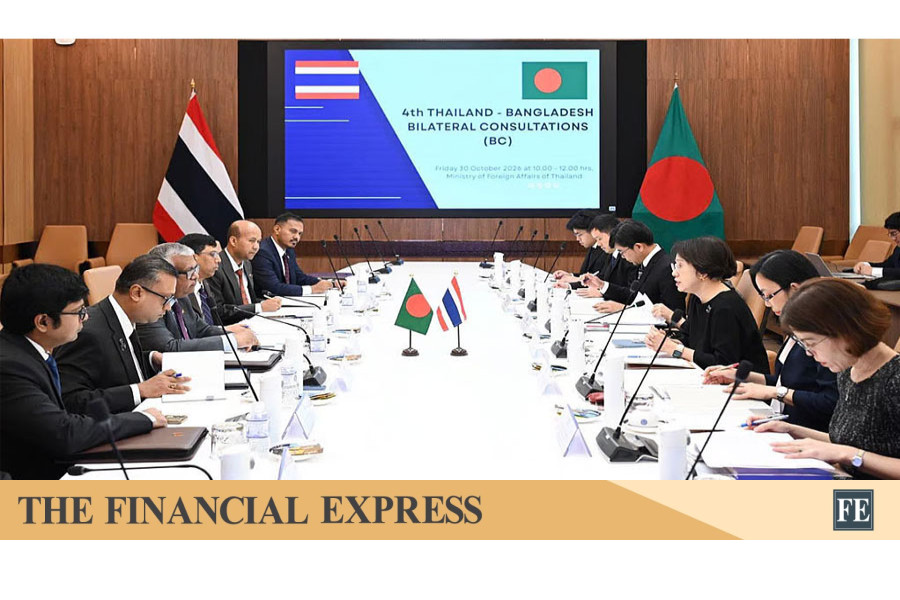
Bangladesh and Thailand have agreed to elevate economic, trade, and diplomatic cooperation following the 4th Foreign Office Consultations (FOC) held at the Ministry of Foreign Affairs of Thailand in Bangkok.

Foreign Secretary Asad Alam Siam led the Bangladesh delegation, while Permanent Secretary Eksiri Pintaruchi headed the Thai side.

The discussions covered the entire range of bilateral relations, including trade and investment, maritime connectivity, labour migration, agriculture, energy, cultural exchanges, and climate change.

To narrow the bilateral trade deficit, Bangladesh put forward proposals for duty reductions on Bangladeshi goods and encouraged Thailand to import more pharmaceuticals and jute products. The Thai delegation agreed to evaluate the proposals and requested the early initiation of negotiations for a bilateral Free Trade Agreement (FTA).

On connectivity, both delegations welcomed the planned launch of direct shipping between Chattogram and Ranong ports in September 2026, which will reduce transit time from 15 days to just four, significantly lowering freight costs. Bangladesh also requested Thai technical assistance in converting agricultural waste into renewable electricity to support its national goal of achieving 20 percent renewable energy generation by 2030.

Regarding regional affairs, Bangladesh acknowledged Thailand’s continued backing for its candidacy as an ASEAN Sectoral Dialogue Partner and its accession to the Regional Comprehensive Economic Partnership (RCEP). Foreign Secretary Siam also sought Bangkok's support for the repatriation of displaced Rohingyas to Myanmar.

To address cross-border crimes -- including human trafficking, arms smuggling, online scams, and narcotics trade -- both nations agreed to work toward establishing a joint committee under their respective home ministries.

Looking ahead to the 55th anniversary of diplomatic relations next year, both delegations emphasised political exchanges, expressing hope that visits by their respective heads of government would mark the milestone.​
 

Can Bangladesh turn connectivity with Thailand into strategic leverage?

Mohd Amdadul Haque

A four-day shipping connection between Chattogram and Thailand’s Ranong Port may look like a modest logistics improvement. For Bangladesh, it raises a foreign policy question: can a new maritime link create strategic options as ports, supply chains and geopolitical competition become more interconnected? The route will not replace the Strait of Malacca or make Bangladesh a regional hub overnight. Its value depends on whether Dhaka can convert geography into commercial leverage through reliable services, balanced trade and regional cooperation.

The first direct shipping service between Chattogram and Ranong began in September 2026. At the fourth Bangladesh–Thailand Foreign Office Consultations on 30 October, both governments welcomed the connection and said it could reduce transportation time from approximately 15 days to four. The Bangladesh foreign ministry’s account of the consultations places the route within a wider agenda covering trade, investment, labour migration, energy and regional cooperation. That is the right context: a shipping service becomes strategically relevant only when it supports a wider economic relationship.

A strategic route, not a replacement for Malacca

Ranong lies on Thailand’s Andaman coast; Chattogram is Bangladesh’s principal seaport. A direct connection creates a shorter option for cargo moving between Bangladesh and Thailand’s western maritime gateway and may strengthen links between South Asia and mainland Southeast Asia. But four days is an expected port-to-port transit time, not a door-to-door guarantee. Cargo moving onwards to Thailand’s Gulf coast or East Asia may still require road, rail, feeder or conventional sea connections. The route’s value is specific, not universal.

The Strait of Malacca remains central to global commerce, linking the Indian and Pacific Oceans and carrying substantial energy flows. The US Energy Information Administration estimates that around 23.2 million barrels per day of oil passed through it in the first half of 2025, according to its global chokepoint data. Chattogram–Ranong cannot displace this artery, but it can provide another option for selected cargoes.

The commercial imbalance is the first test

The central challenge is cargo availability in both directions. Thailand’s trade with Bangladesh is heavily imbalanced. According to 2025 UN Comtrade figures compiled by Trading Economics, Thailand exported about US$913.54 million worth of goods to Bangladesh, while its imports from Bangladesh were approximately US$88.04 million. The gap is visible in the reported Thai exports to Bangladesh and Thai imports from Bangladesh. These are total merchandise values, not container figures for the new service, but they raise a basic commercial question: can operators secure enough return cargo to sustain competitive rates?


1794096955843.webp

An AI-generated tentative map illustrating the direct maritime connection between Chattogram Port in Bangladesh and Ranong Port in Thailand. The route is expected to reduce shipping time from approximately 15 days to four. The route shown is illustrative, not an exact navigational track.

Dhaka has recognised the problem. At the October consultations, Bangladesh asked Thailand to import more pharmaceuticals, jute and jute products, and to reduce duties on Bangladeshi goods. Bangkok said it would consider the proposals and called for early discussions on a bilateral free trade agreement. Thailand’s own summary of the bilateral consultations also highlights trade, investment and connectivity as shared priorities. Yet diplomatic willingness does not guarantee market access. The route will not correct the imbalance unless Bangladeshi firms can meet Thai standards, find distributors and compete on price.

Bangladesh should focus on export sectors with realistic demand. Pharmaceuticals and jute-based products were raised during the talks; garments, seafood, processed foods and leather goods merit market testing. Each faces different certification and sanitary requirements. The government should help exporters identify Thai buyers and resolve regulatory barriers. Success should be measured by repeat orders and export growth, not trade missions.

Port capacity and the missing links

Bangladesh has a substantial maritime base, but also faces a concentration risk. Chattogram handled 3.409 million twenty-foot equivalent units (TEUs) in 2025 and processed about 92 percent of the country’s seaborne general cargo and nearly 98 percent of containerised imports and exports. These figures show why domestic port efficiency is central to the corridor’s success. A faster overseas leg cannot compensate for delays in berth allocation, container handling, customs, road access or inland depots.

Ranong is a smaller port whose regional role is still developing. In the first seven months of Thailand’s 2026 fiscal year, it reportedly handled 7,000 TEUs, 106,000 tonnes of cargo and 217 vessel calls. Container throughput rose 55.56 percent year on year, but the volume remains modest compared with Chattogram. The reported operating figures for Ranong Port show growth, but not yet the capacity of a major regional hub. This asymmetry can be useful if the route serves specialised cargo at a manageable scale.

Bangladesh should assess Ranong’s handling equipment, storage, customs facilities and onward transport before shifting large volumes. Operators should publish sailing frequencies, freight rates, actual transit times and records of delays. Businesses need predictable door-to-door costs, not simply a four-day sea passage.


1794097030980.webp

Delegations from Bangladesh and Thailand attend the fourth Foreign Office Consultations in Bangkok on 30 October 2026. Both sides welcomed the launch of direct shipping between Chattogram and Ranong ports to strengthen bilateral trade and connectivity. Photo: Bangladesh Ministry of Foreign Affairs

From bilateral shipping to regional architecture

The corridor’s greater potential lies in the Bay of Bengal’s regional institutions. BIMSTEC brings together Bangladesh, Thailand and other littoral and nearby states. Its Master Plan for Transport Connectivity, supported by the Asian Development Bank, treats ports, maritime transport, road and rail links, multimodal systems and trade facilitation as interconnected elements of regional integration. Chattogram–Ranong can provide a practical demonstration of this agenda, but only if the maritime service is linked to inland transport and compatible border procedures.

BIMSTEC members have also signed an Agreement on Maritime Transport Cooperation, listed in the organisation’s official register of agreements. Bangladesh can use this framework to pursue port cooperation, information exchange, maritime safety and more predictable shipping procedures. Still, a regional agreement cannot, by itself, eliminate customs delays or infrastructure gaps. Implementation—not merely the existence of an agreement—will determine whether the corridor becomes a working example of regional cooperation.

Thailand’s support for Bangladesh’s aspiration to become an ASEAN Sectoral Dialogue Partner and its accession to RCEP adds a diplomatic dimension. The route may demonstrate Bangladesh’s commitment to regional connectivity, but it offers no shortcut to either process. Both require separate political engagement and domestic preparation. Dhaka should treat the corridor as supporting evidence, not a substitute for integration.

The geopolitics of resilience

Thailand’s interest in Ranong is part of a wider effort to strengthen its Andaman-facing economy. Its proposed southern Land Bridge was presented as a way to connect the Andaman coast with the Gulf of Thailand and offer an alternative to Malacca. Yet concerns over cost, demand and environmental impacts have challenged the megaproject. In July 2026, Thailand moved to scale back the US$30 billion plan and focus instead on expanding Ranong Port and related rail links, according to Reuters’ report on the revised project. For Bangladesh, the lesson is to plan around realistic port improvements rather than depend on a grand infrastructure vision that may not materialise.

Dhaka should welcome Thai investment where it improves capacity, but assess proposals against demand, financing, environmental safeguards and local impacts. A corridor dependent on a single operator, port or political initiative is not resilient. Leverage comes from multiple workable options, not from creating a new dependency.

1794097070305.webp

A container vessel at Chattogram Port, Bangladesh’s principal seaport. The new direct shipping connection with Thailand’s Ranong Port is expected to reduce transit time from approximately 15 days to four, strengthening trade connectivity across the Bay of Bengal. Photo: Rajib Raihan

Security must accompany connectivity. The October consultations addressed human trafficking, arms smuggling, online scams and narcotics, and the two sides agreed to consider establishing a joint committee. Increased cargo traffic requires effective screening, vessel monitoring and intelligence-sharing. A faster route that weakens border oversight would create new vulnerabilities.

What Bangladesh should do next

Bangladesh should establish a corridor coordination mechanism involving both governments, port authorities, shipping companies, customs agencies and exporters. It should publish quarterly data on sailings, transit times, freight rates, cargo volumes, delays and the imbalance between inbound and outbound cargo loads. Dhaka should also pursue targeted access to the Thai market and pilot electronic documentation, advance cargo information and risk-based inspections.

It must also improve Chattogram’s road and rail links, inland depots and port operations, while connecting the service to BIMSTEC’s maritime agenda on safety and harmonised procedures. These steps could transform a bilateral shipping link into a platform for regional economic diplomacy.

A four-day voyage is an opening, not leverage in itself. The route will matter only if it attracts regular cargo, expands Bangladeshi exports, reduces total delivery costs and gives firms a dependable alternative. Bangladesh need not claim that it can challenge major maritime chokepoints to benefit from a secondary route. In a region shaped by competition over access and supply chains, Dhaka’s advantage will come from widening its options and demonstrating that connectivity delivers measurable gains.

Mohd Amdadul Haque is a doctoral candidate in the Department of International Politics at Shandong University and an assistant professor in the Department of Political Science at Gopalganj Science and Technology University.​
 
Back
Top