Can Bangladesh turn connectivity with Thailand into strategic leverage?
Mohd Amdadul Haque
A four-day shipping connection between Chattogram and Thailand’s Ranong Port may look like a modest logistics improvement. For Bangladesh, it raises a foreign policy question: can a new maritime link create strategic options as ports, supply chains and geopolitical competition become more interconnected? The route will not replace the Strait of Malacca or make Bangladesh a regional hub overnight. Its value depends on whether Dhaka can convert geography into commercial leverage through reliable services, balanced trade and regional cooperation.
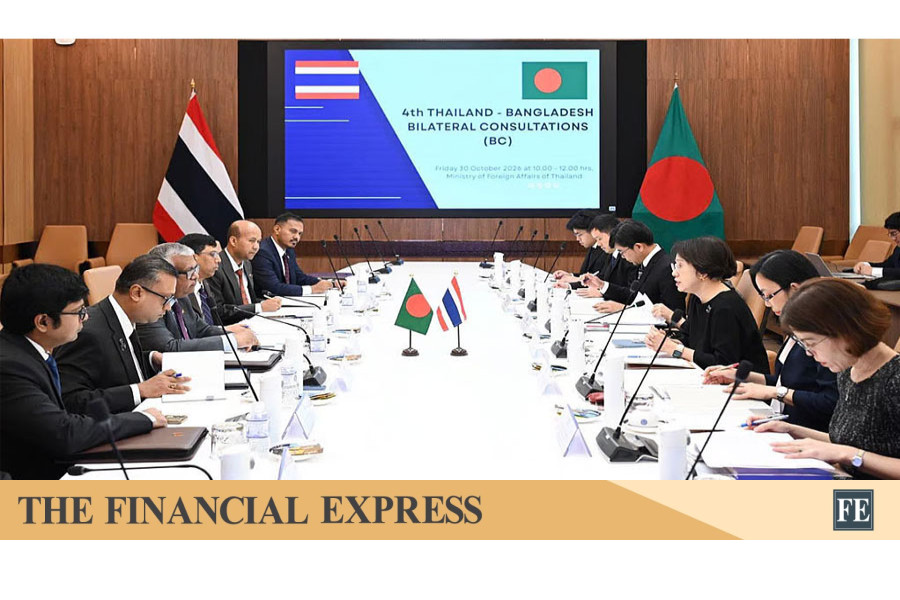
The first direct shipping service between Chattogram and Ranong began in September 2026. At the fourth Bangladesh–Thailand Foreign Office Consultations on 30 October, both governments welcomed the connection and said it could reduce transportation time from approximately 15 days to four. The Bangladesh foreign ministry’s account of the consultations places the route within a wider agenda covering trade, investment, labour migration, energy and regional cooperation. That is the right context: a shipping service becomes strategically relevant only when it supports a wider economic relationship.
A strategic route, not a replacement for Malacca
Ranong lies on Thailand’s Andaman coast; Chattogram is Bangladesh’s principal seaport. A direct connection creates a shorter option for cargo moving between Bangladesh and Thailand’s western maritime gateway and may strengthen links between South Asia and mainland Southeast Asia. But four days is an expected port-to-port transit time, not a door-to-door guarantee. Cargo moving onwards to Thailand’s Gulf coast or East Asia may still require road, rail, feeder or conventional sea connections. The route’s value is specific, not universal.
The Strait of Malacca remains central to global commerce, linking the Indian and Pacific Oceans and carrying substantial energy flows. The US Energy Information Administration estimates that around 23.2 million barrels per day of oil passed through it in the first half of 2025, according to its global chokepoint data. Chattogram–Ranong cannot displace this artery, but it can provide another option for selected cargoes.
The commercial imbalance is the first test
The central challenge is cargo availability in both directions. Thailand’s trade with Bangladesh is heavily imbalanced. According to 2025 UN Comtrade figures compiled by Trading Economics, Thailand exported about US$913.54 million worth of goods to Bangladesh, while its imports from Bangladesh were approximately US$88.04 million. The gap is visible in the reported Thai exports to Bangladesh and Thai imports from Bangladesh. These are total merchandise values, not container figures for the new service, but they raise a basic commercial question: can operators secure enough return cargo to sustain competitive rates?
An AI-generated tentative map illustrating the direct maritime connection between Chattogram Port in Bangladesh and Ranong Port in Thailand. The route is expected to reduce shipping time from approximately 15 days to four. The route shown is illustrative, not an exact navigational track.
Dhaka has recognised the problem. At the October consultations, Bangladesh asked Thailand to import more pharmaceuticals, jute and jute products, and to reduce duties on Bangladeshi goods. Bangkok said it would consider the proposals and called for early discussions on a bilateral free trade agreement. Thailand’s own summary of the bilateral consultations also highlights trade, investment and connectivity as shared priorities. Yet diplomatic willingness does not guarantee market access. The route will not correct the imbalance unless Bangladeshi firms can meet Thai standards, find distributors and compete on price.
Bangladesh should focus on export sectors with realistic demand. Pharmaceuticals and jute-based products were raised during the talks; garments, seafood, processed foods and leather goods merit market testing. Each faces different certification and sanitary requirements. The government should help exporters identify Thai buyers and resolve regulatory barriers. Success should be measured by repeat orders and export growth, not trade missions.
Port capacity and the missing links
Bangladesh has a substantial maritime base, but also faces a concentration risk. Chattogram handled 3.409 million twenty-foot equivalent units (TEUs) in 2025 and processed about 92 percent of the country’s seaborne general cargo and nearly 98 percent of containerised imports and exports. These figures show why domestic port efficiency is central to the corridor’s success. A faster overseas leg cannot compensate for delays in berth allocation, container handling, customs, road access or inland depots.
Ranong is a smaller port whose regional role is still developing. In the first seven months of Thailand’s 2026 fiscal year, it reportedly handled 7,000 TEUs, 106,000 tonnes of cargo and 217 vessel calls. Container throughput rose 55.56 percent year on year, but the volume remains modest compared with Chattogram. The reported operating figures for Ranong Port show growth, but not yet the capacity of a major regional hub. This asymmetry can be useful if the route serves specialised cargo at a manageable scale.
Bangladesh should assess Ranong’s handling equipment, storage, customs facilities and onward transport before shifting large volumes. Operators should publish sailing frequencies, freight rates, actual transit times and records of delays. Businesses need predictable door-to-door costs, not simply a four-day sea passage.
Delegations from Bangladesh and Thailand attend the fourth Foreign Office Consultations in Bangkok on 30 October 2026. Both sides welcomed the launch of direct shipping between Chattogram and Ranong ports to strengthen bilateral trade and connectivity. Photo: Bangladesh Ministry of Foreign Affairs
From bilateral shipping to regional architecture
The corridor’s greater potential lies in the Bay of Bengal’s regional institutions. BIMSTEC brings together Bangladesh, Thailand and other littoral and nearby states. Its Master Plan for Transport Connectivity, supported by the Asian Development Bank, treats ports, maritime transport, road and rail links, multimodal systems and trade facilitation as interconnected elements of regional integration. Chattogram–Ranong can provide a practical demonstration of this agenda, but only if the maritime service is linked to inland transport and compatible border procedures.
BIMSTEC members have also signed an Agreement on Maritime Transport Cooperation, listed in the organisation’s official register of agreements. Bangladesh can use this framework to pursue port cooperation, information exchange, maritime safety and more predictable shipping procedures. Still, a regional agreement cannot, by itself, eliminate customs delays or infrastructure gaps. Implementation—not merely the existence of an agreement—will determine whether the corridor becomes a working example of regional cooperation.
Thailand’s support for Bangladesh’s aspiration to become an ASEAN Sectoral Dialogue Partner and its accession to RCEP adds a diplomatic dimension. The route may demonstrate Bangladesh’s commitment to regional connectivity, but it offers no shortcut to either process. Both require separate political engagement and domestic preparation. Dhaka should treat the corridor as supporting evidence, not a substitute for integration.
The geopolitics of resilience
Thailand’s interest in Ranong is part of a wider effort to strengthen its Andaman-facing economy. Its proposed southern Land Bridge was presented as a way to connect the Andaman coast with the Gulf of Thailand and offer an alternative to Malacca. Yet concerns over cost, demand and environmental impacts have challenged the megaproject. In July 2026, Thailand moved to scale back the US$30 billion plan and focus instead on expanding Ranong Port and related rail links, according to Reuters’ report on the revised project. For Bangladesh, the lesson is to plan around realistic port improvements rather than depend on a grand infrastructure vision that may not materialise.
Dhaka should welcome Thai investment where it improves capacity, but assess proposals against demand, financing, environmental safeguards and local impacts. A corridor dependent on a single operator, port or political initiative is not resilient. Leverage comes from multiple workable options, not from creating a new dependency.
A container vessel at Chattogram Port, Bangladesh’s principal seaport. The new direct shipping connection with Thailand’s Ranong Port is expected to reduce transit time from approximately 15 days to four, strengthening trade connectivity across the Bay of Bengal. Photo: Rajib Raihan
Security must accompany connectivity. The October consultations addressed human trafficking, arms smuggling, online scams and narcotics, and the two sides agreed to consider establishing a joint committee. Increased cargo traffic requires effective screening, vessel monitoring and intelligence-sharing. A faster route that weakens border oversight would create new vulnerabilities.
What Bangladesh should do next
Bangladesh should establish a corridor coordination mechanism involving both governments, port authorities, shipping companies, customs agencies and exporters. It should publish quarterly data on sailings, transit times, freight rates, cargo volumes, delays and the imbalance between inbound and outbound cargo loads. Dhaka should also pursue targeted access to the Thai market and pilot electronic documentation, advance cargo information and risk-based inspections.
It must also improve Chattogram’s road and rail links, inland depots and port operations, while connecting the service to BIMSTEC’s maritime agenda on safety and harmonised procedures. These steps could transform a bilateral shipping link into a platform for regional economic diplomacy.
A four-day voyage is an opening, not leverage in itself. The route will matter only if it attracts regular cargo, expands Bangladeshi exports, reduces total delivery costs and gives firms a dependable alternative. Bangladesh need not claim that it can challenge major maritime chokepoints to benefit from a secondary route. In a region shaped by competition over access and supply chains, Dhaka’s advantage will come from widening its options and demonstrating that connectivity delivers measurable gains.
Mohd Amdadul Haque is a doctoral candidate in the Department of International Politics at Shandong University and an assistant professor in the Department of Political Science at Gopalganj Science and Technology University.
 Bangladesh Defense