| Global Defense, OSINT & Geopolitics Wire

[🇧🇩] Bangladesh Tourism

[🇧🇩] Bangladesh Tourism
105
7K
More threads by Saif

G Bangladesh Defense

900,000 tourists expected to flock to Cox's Bazar

Abdul Kuddus
Cox's Bazar
Published: 20 Mar 2026, 22: 24

1774052292017.webp

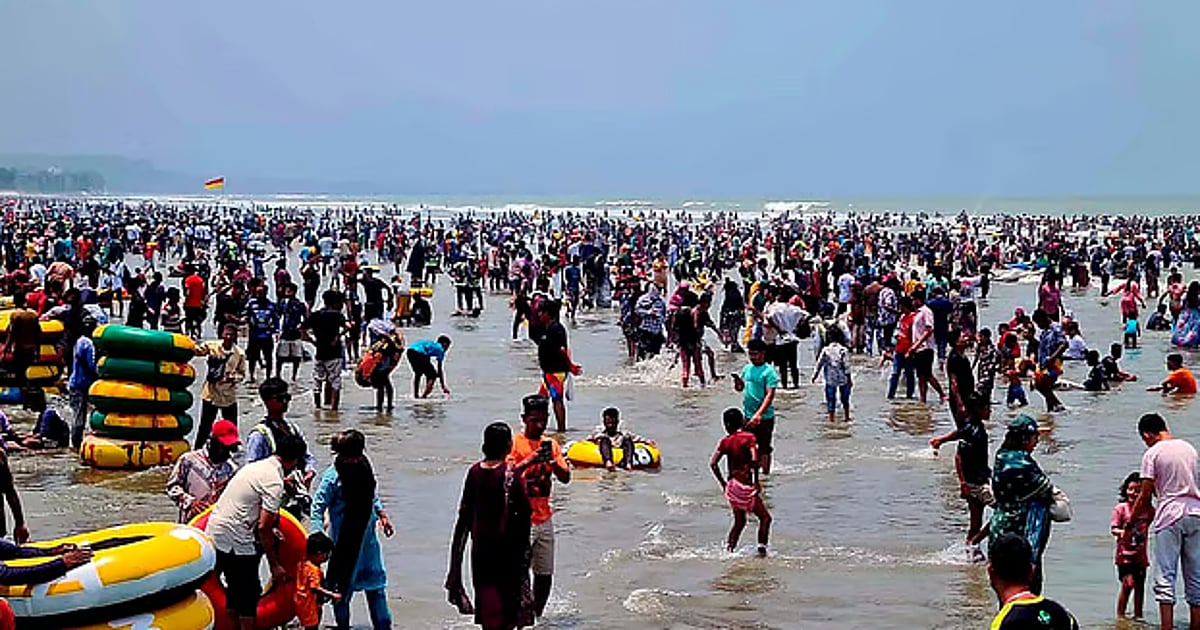
Crowd of tourists at Sugandha Point of Cox's Bazar beach Prothom Alo file photo

Cox's Bazar has yet to have an alternative as a travel destination during the Eid holidays. It is the most preferred destination for people from various parts of the country, and this time was no exception.

From several days before the holy Eid-ul-Fitr, 80 to 90 per cent of rooms in hotels, motels, and resorts in Cox's Bazar have been booked in advance.

Hotel owners in Cox's Bazar say that tourists will start arriving from the second day of Eid, March 22nd.

Rooms have been booked continuously for 8 days until 29 March. It is estimated that at least 900,000 tourists will visit during this time.

Over five hundred hotels, resorts, guesthouses, and cottages in the city have been prepared for tourists to stay overnight. Currently, there are a few hundred tourists in the hotels, which is why the entire beach is empty.

Mokim Khan, the general secretary of the Cox's Bazar Hotel Resort Owners' Association, told Prothom Alo that today, Saturday, is the holy Eid-ul-Fitr.

Tourists do not typically arrive on Eid day. However, from the next day, 22 March, tourists will start arriving at the beach. An estimated 70,000 to 80,000 tourists are expected on that day.

From the following day, March 23rd, it is expected that 100,000 tourists will arrive daily. Based on this, more than 900,000 tourists are expected to visit during the 8 days following Eid.

This will revitalise businesses, including shops and restaurants that were closed during the holy month of Ramadan.

Mokim Khan stated that as of 10 AM last Wednesday, more than 95 per cent of rooms have been booked in advance in over 30 star-rated hotels and resorts.

Additionally, 70 per cent of rooms in over five hundred standard hotels, guesthouses, and cottages have been booked in advance. On average, 80 per cent of rooms have been rented.

To attract tourists during Ramadan, a special discount of up to 70 per cent on room rentals was announced. From the day after Eid, this discount has been withdrawn and reduced to a maximum of 20 per cent. The daily capacity of over five hundred hotels, resorts, and guesthouses is around 167,000.

Preparation for welcoming tourists

Institutions involved in the tourism business have started preparing to welcome tourists coming during the Eid holidays. On Wednesday, visiting Sugandha beach, it was observed that rental chair vendors are repairing chairs. Various restaurants are undergoing cleaning work. However, the number of lifeguards responsible for overseeing the safety of a large number of tourists has not increased.

Imtiaz Ahmed, the manager of Sea-Safe Lifeguards, told Prothom Alo that although there are 27 lifeguards over the five kilometers from Kolatoli to Laboni Point beach, there are no lifeguards available for rescue operations at Dariyanagar, Himchhari, Inani, Patwarterk, Baharchhara, or Teknaf beaches.

80 per cent of hotel rooms booked in advance

On Wednesday afternoon, visiting several hotels on Kolatoli and Sugandha roads in the city, it was seen that renovation and painting work is ongoing. Mohammed Alam, an employee of a hotel, said that his hotel had 29 employees. Since the first day of Ramadan, 26 employees have been sent on leave. The remaining 3 are in the hotel. All the employees on leave will return in the afternoon on Eid day. From the next day, everyone will be busy attending to tourists.

Kallol, a picturesque star hotel, is located at Laboni Point on the beach. This hotel has about 140 air-conditioned rooms. Starting from the second day of Eid, 90 per cent of the rooms in this hotel have been booked in advance for 6 consecutive days. Similarly, in at least 30 hotels and resorts, including Seagull, Jaltaranga, Cox-to-Day, Sayeman Beach Resort, Mermaid Beach Resort, Ocean Paradise, Bay Watch, and Royal Tulip, 90 per cent of rooms have been booked in advance. Overall, 80 per cent of the rooms have been booked in advance.

Yasir Arafat Rishad, the manager of the eco-friendly ecotourism resort, Mermaid Beach Resort, on the Patchar Island along the Marine Drive, mentioned that 95 per cent of their cottages have been booked in advance for 8 days post-Eid.

During the month of Ramadan, over five hundred restaurants in the city were closed. Mentioning that all restaurants are prepared for the tourists coming during the Eid holidays, Javed Iqbal, the general secretary of the Cox's Bazar Restaurant Owners' Association, said that measures have been put in place to prevent any restaurant from charging extra for food despite the rush of tourists. A price list will be kept on the table.

Abdus Shukkur, president of the Cox's Bazar Chamber of Commerce and Industries, mentioned that at least 1 million tourists are expected during the 8 days of the Eid holidays. This could result in business worth Tk 7 to 8 billion across 13 sectors, including hotels, restaurants, and over 3,000 shops, dried fish, and marine fish.​
 

Govt forms National Tourism Council

Council chaired by PM Tarique Rahman, includes key ministers as members

UNB, Dhaka

1777855516800.webp

Tourists capture photos and enjoy the views at Double Hands View Point on Bandarban-Thanchi road, as the tourism sector bounces back after last year’s dip. The photo was taken recently. Photo: Mong Sing Hai Marma/Star

The government has formed a National Tourism Council to ensure sustainable and coordinated development of the country’s tourism industry.

The Cabinet Division recently issued a gazette notification in this regard.

The council headed by Prime Minister Tarique Rahman includes LGRD Minister Mirza Fakhrul Islam Alamgir, Finance and Planning Minister Amir Khosru Mahmud Chowdhury, Home Minister Salahuddin Ahmed, Foreign Minister Khalilur Rahman, Environment Minister Abdul Awal Mintoo, Minister of Cultural Affairs Nitai Roy Chowdhury, Land Minister Md Mizanur Rahman Minu, Civil Aviation and Tourism Minister Afroza Khanam, Commerce Minister Khandakar Abdul Muktadir, Minister of Water Resources Shahiduddin Chowdhury Anee, Minister of Chattogram Hill Tracts Affairs Dipen Dewan and Shipping Minister Shaikh Rabiul Alam as members.

M Rashiduzzaman Millat, state minister for Civil Aviation and Tourism, will also serve as a member, while the secretary of the same ministry will act as member-secretary of the council.

According to the notification, the council will be responsible for supervising, coordinating and providing policy direction for the implementation of tourism development plans.

It will also provide advice on the expansion of the tourism sector at national, regional and international levels.

The body will formulate policy decisions related to tourism laws and administrative measures, determine strategies to attract domestic and foreign investment, and strengthen coordination among relevant ministries.

It will also guide public-private partnerships for the development of the sector.

The council will also review and approve recommendations of other tourism-related committees and monitor the progress of implementing election pledges related to the sector.

It will have the authority to take decisions on any important matters when necessary.

The notification said council meetings will be held as required, and new members may be co-opted if needed.

The Ministry of Civil Aviation and Tourism will provide secretarial and administrative support to the council.​
 

Introducing low-cost tourism to ensure equality

Mir Mostafizur Rahaman

Published :
May 26, 2026 21:50
Updated :
May 26, 2026 21:50

1779838435505.webp


For decades, Eid travel in Bangladesh meant one thing: going home. Ferries overflowing with passengers, trains packed beyond capacity, highways turning into rivers of buses and motorcycles -- all carrying people back to villages, parents, memories and roots. But quietly, another culture has emerged alongside this ritual of return. Increasingly, Bangladeshis are travelling not only to reunite with family, but to seek leisure, escape and discovery.

They are heading to the beaches of Cox's Bazar, the hills of Sajek Valley, the mangroves of the Sundarbans, the wetlands of the haor region and the waterfalls of the Chittagong Hill Tracts. Tourism, once considered a luxury of the affluent, is becoming woven into the social fabric of Bangladesh's expanding middle class.

The numbers tell the story of a country in transition. Millions now travel during every Eid holiday. Hundreds of thousands descend on Cox's Bazar within days. The economic activity generated during these festival seasons reaches tens of billions of taka. Tourism contributes around three per cent to GDP and sustains millions of livelihoods. Behind this boom lies a rapidly growing middle class empowered by rising incomes, digital booking platforms, improved infrastructure and the aspirational pull of social media.

Due to massive improvements in communication infrastructure, destinations once considered distant are now weekend possibilities. Facebook reels and TikTok videos have transformed remote waterfalls and village homestays into viral aspirations. Travel has become not just recreation, but identity -- a marker of participation in a modern consumer society.

Yet beneath this apparent success lies an uncomfortable truth: Bangladesh's tourism revolution is becoming deeply unequal.

During every major holiday, the same cycle repeats itself. Hotel prices triple overnight. Restaurants abandon printed menus. Tourists without advance bookings are forced into exploitative arrangements. Transport fares soar beyond affordability. Safety collapses under overcrowding. Beaches become hazardous. Hill stations exceed carrying capacity. Local communities are pushed to the margins while middlemen and opportunists extract short-term profit.

And for millions of poorer Bangladeshis, tourism remains something they can only watch through smartphone screens.

This inequality matters more than policymakers realise. Because tourism is not merely an economic sector. It is increasingly part of social citizenship -- tied to rest, dignity, mental well-being and the right to experience one's own country.

In many societies, access to leisure is treated as an extension of equality itself. The ability to travel, to see landscapes beyond one's neighbourhood, to allow children moments of joy outside economic struggle -- these are not trivial luxuries. They shape social belonging and quality of life. When only affluent or upper-middle-class families can meaningfully participate in tourism, leisure itself becomes another frontier of exclusion.

Bangladesh risks moving rapidly in that direction.

A garment worker earning daily wages may spend nearly an entire week's income simply reaching a tourist destination during Eid. A marginal farmer may find hotel prices utterly unimaginable. Elderly travellers, people with disabilities and transgender individuals encounter almost no inclusive planning. Tourism infrastructure assumes a narrow demographic: urban, digitally connected, financially secure and socially privileged.

But a different model is possible.

Across Asia, countries facing similar inequalities have begun treating tourism not solely as a profit industry, but as a tool of social integration. In Indonesia, subsidised ferry systems enable working-class families to travel between islands at affordable rates. In Bali, community-based homestays ensure tourism income reaches fishing families rather than only large corporations. In India, discounted railway tourism packages have expanded domestic travel opportunities for lower-income citizens. Thailand and Malaysia have increasingly prioritised visitor experience, safety and repeat tourism rather than uncontrolled seasonal profiteering.

Bangladesh has much to learn from these examples.

The country's tourism economy today suffers from dangerous concentration. A handful of destinations absorb overwhelming pressure while countless others remain ignored. Sajek becomes overcrowded while Tetulia stays nearly empty. Cox's Bazar struggles under impossible numbers while Birisiri receives little attention. The same tourists repeatedly rotate between the same over-marketed destinations because state planning has failed to diversify tourism geography.

This imbalance is not merely inefficient; it is environmentally destructive. Overcrowding accelerates coastal erosion, waste accumulation, deforestation and water scarcity. It weakens safety management and increases accidents. Every Eid season, drownings at Cox's Bazar become grim reminders of institutional negligence rather than unavoidable tragedy.

At the same time, untapped regions remain economically excluded from tourism's benefits. Places like Mainamati, Puthia, Ratargul Swamp Forest, river islands, wetlands and rural cultural zones possess immense potential for sustainable tourism. Yet they lack coordinated investment, transport integration, marketing and accommodation networks.

What Bangladesh needs now is not simply "more tourism," but a democratisation of tourism.

That begins with affordability.

The government should introduce low-cost Eid tourism schemes through Bangladesh Railway and Bangladesh Inland Water Transport Corporation. Special discounted trains and ferries to destinations such as Cox's Bazar and Kuakata could open travel opportunities for lower-income families who are currently priced out of tourism altogether.

Such programmes would not merely benefit travellers; they would stimulate local economies by expanding visitor diversity beyond affluent consumers. Tourism that depends exclusively on upper-income spending becomes economically fragile and socially narrow.

Bangladesh urgently needs regulation of seasonal price exploitation. Holiday pricing mechanisms are common globally, but unchecked profiteering destroys trust in tourism markets. Hotels, restaurants and transport operators should operate under transparent seasonal pricing frameworks with mandatory digital receipts and monitoring mechanisms. Consumers must know that travelling during Eid does not mean surrendering basic economic fairness.

Moreover, tourism development should move decisively toward community ownership. Instead of encouraging only corporate resort expansion, the state should support homestay economies through microcredit and local training. In coastal areas, wetlands and hill districts, local families should be able to convert parts of their homes into certified low-cost accommodation. This would decentralise income, reduce pressure on large hotels and ensure tourism benefits remain within communities.

This approach matters politically as well as economically. Tourism often displaces local populations while enriching external investors. Community-based tourism reverses that equation.

The authorities should keep in mind that accessibility must become central to planning. Public tourism infrastructure should include affordable sanitation, disability access, women-friendly facilities and safe public transport integration. Tourism cannot claim to represent national development while excluding vulnerable groups from participation.

Bangladesh needs a comprehensive national festival tourism strategy. Not an ad hoc response every Eid, but long-term planning grounded in sustainability, equity and environmental management.

Such a strategy should include live accommodation dashboards, crowd-management systems, emergency medical coordination, environmental carrying-capacity assessments and destination diversification campaigns. Tourism boards should actively promote under-visited regions rather than allowing social media algorithms alone to determine national travel flows.

The challenge facing Bangladesh is therefore larger than tourism itself. It concerns the kind of society the country is becoming.

Will leisure remain the privilege of a rising urban middle class while poorer citizens remain spectators? Or can tourism evolve into a genuinely democratic space where mobility, recreation and national belonging are shared more equally?

As Bangladesh grows wealthier and more connected, these questions will only become more urgent.

Because, ultimately, a nation's development is not measured only by bridges, GDP figures or hotel revenues. It is also measured by who are able to enjoy the country being built -- and who are left behind.​
 

Eid holidaymakers throng Sajek, other Rangamati tourist attractions

Kaptai Lake cruises remain popular; Sajek receives 3,500 visitors in a day

Our Correspondent, Rangamati

1780186435639.webp

Photo: Star

Tourist attractions of Rangamati, including Sajek, have become crowded during the Eid-ul-Azha holidays. Tourists from different parts of the country are visiting the scenic spots of Rangamati. Many are also visiting Kaptai Lake.

During a visit to the hanging bridge of the Rangamati Tourism Holiday Complex this afternoon, a large crowd of tourists was seen on the bridge. Many were seen taking pictures on the bridge. Tourists are renting boats from the side of the hanging bridge and travelling around Kaptai Lake.

Apart from the hanging bridge, tourists are also visiting the resort cottages centered around Kaptai Lake, including Polwel Park, DC Bungalow, Rangadip Resort, Asambasti Bridge, Asambasti-Kaptai connection road, and the hanging bridge. Additionally, the number of tourists has also increased in Sajek Valley.

Three friends -- Khorshed Alam, Sohel Rana and Habib -- who came from Feni, said, "We came to visit the hanging bridge in Rangamati for the first time. We used to see the pictures of the bridge on Facebook before, but now we feel very happy to see it with our own eyes."

Khaled Mahmud, who came from Dhaka, said, "I came to Rangamati once before. During last monsoon, there was water in the lake. Now the water in the lake has decreased, but it is still beautiful."

Lineman of the tourist boat ghat counter, Md Fakhrul Islam, said, "Currently, we have about 40 tourist boats plying on the lake. Of these, about 20 to 25 boats have been rented throughout the day today. A good number of tourists have arrived."

Alok Bikash Chakma, manager of Rangamati Parjatan Holiday Complex, said, “Today, on the third day of Eid, about 3,500 tourists travelled to the bridge. On the second day of Eid, 1,800 tourists travelled. The number of tourists today is more than the last two days. Besides, our hotel has about 60 percent bookings until June 1."

Suparna Deb Barman, president of Sajek Resort and Cottage Owners Association, said, “About 3,500 tourists have arrived today. We currently have 125 resort cottages, all of which are booked."​
 

Meaningful tourism key to unlocking Bangladesh's tourism potential: DIU roundtable


1784244563609.webp

​
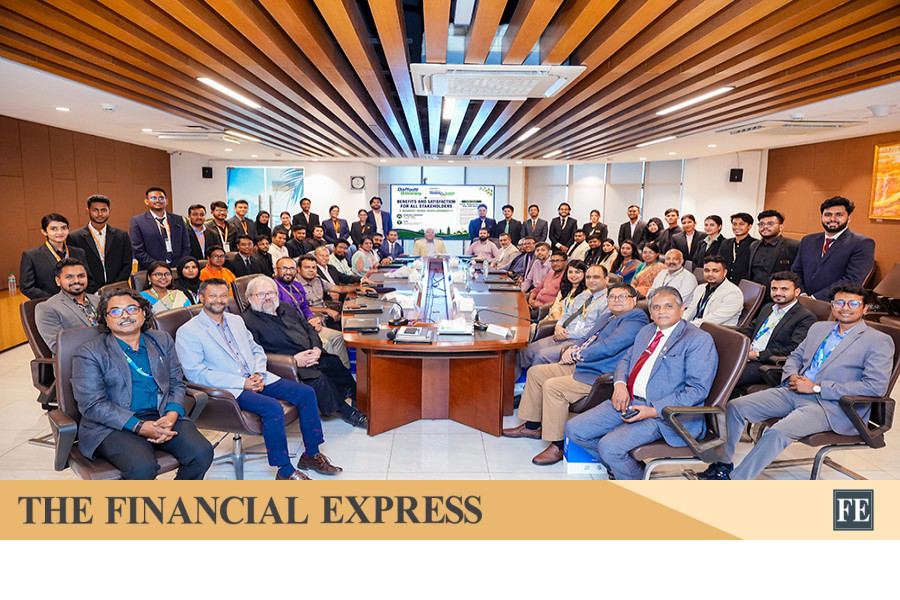
Distinguished leaders of the tourism industry, including internationally renowned German tourism expert Professor Dr Wolfgang Georg Arlt (FRGS, FRAS), attend the roundtable discussion titled "Meaningful Tourism: Perspectives on Planning and Sustainability," organised by Daffodil International University on Tuesday.

A roundtable discussion on promoting sustainable and 'meaningful tourism' in Bangladesh brought together key stakeholders from the country's tourism sector on Tuesday (July 14), with speakers highlighting the need for strategic planning, improved service quality and sustainable practices to unlock the country's tourism potential.

The roundtable, titled "Meaningful Tourism: Perspectives on Planning and Sustainability," was held at the International Conference Room of Daffodil International University (DIU) in Savar, Dhaka, says a press release Wednesday.

Professor Dr Wolfgang Georg Arlt (FRGS, FRAS), an internationally renowned tourism expert from Germany, presented the keynote paper and shared recommendations on the future of Bangladesh's tourism sector.

The discussion focused on the concept of 'meaningful tourism' as a tool to promote sustainable development in the tourism and hospitality sectors while ensuring economic benefits and broader value for stakeholders.

The session began with a welcome address by Professor Dr Mohammad Rakibul Kabir, Dean of the Faculty of Business and Entrepreneurship at DIU, and was moderated by Associate Professor Mahabub Parvez of the same faculty.

Among the participants were Mohammad Hanif, president of the Tour Operators Association of Bangladesh (TOAB); Md Ziaul Haque Howlader, general manager of Bangladesh Tourism Corporation; Md Jalal Uddin Tipu of the Association of Travel Agents of Bangladesh (ATAB); Md Tawfiq Rahman, secretary general of PATA Bangladesh; Mofizur Rahman, managing director of Novoair; Rizwan Maruf, director (Marketing) of InterContinental Dhaka; Md Sakhawat Hossain, chief executive officer of The Westin Dhaka; and other leaders from the tourism industry.

Speakers said the global tourism industry is undergoing rapid transformation due to climate change, artificial intelligence (AI), and changing tourist preferences and behaviour. They noted that while many traditional business models are becoming obsolete, these changes are also creating opportunities to develop new tourism services and destinations.

They observed that Bangladesh currently attracts a negligible number of international tourists and ranks among the world's lowest countries in terms of per capita tourist arrivals.

The speakers said that if both the public and private sectors remain vigilant and learn from the experiences of other destinations -- including environmental and cultural degradation, the challenges of over-tourism and the outflow of a large share of tourism revenue abroad -- Bangladesh could turn these challenges into opportunities.

They also said that despite its rich cultural heritage, diverse landscapes and biodiversity, Bangladesh has yet to fully realise its tourism potential. In 2025, the country received around 650,000 foreign tourists, who spent about US$440 million.

Although Bangladesh is home to more than 2 per cent of the world's population, it attracts only 0.05 per cent of international tourists, the speakers noted.

They added that nearly half of the world's population lives within a four-hour flight of Bangladesh. By prioritising service quality over visitor numbers and developing specialised tourism products tailored to regional source markets, Bangladesh could significantly strengthen its position as an international tourism destination in the second half of the twenty-first century.​