| Global Defense, OSINT & Geopolitics Wire

[🇧🇩] Bangladesh Tourism

[🇧🇩] Bangladesh Tourism
105
7K
More threads by Saif

G Bangladesh Defense

Govt formulating ‘National Tourism Policy 2026’: Millat
1786662099478.webp


State Minister for Civil Aviation and Tourism M Rashiduzzaman Millat today said the government is formulating the ‘National Tourism Policy 2026’ to ensure realistic and effective development of tourism destinations across the country.

“We’re formulating the ‘National Tourism Policy 2026’. We will take realistic decisions for the development of tourism destinations and implement them,” he said.

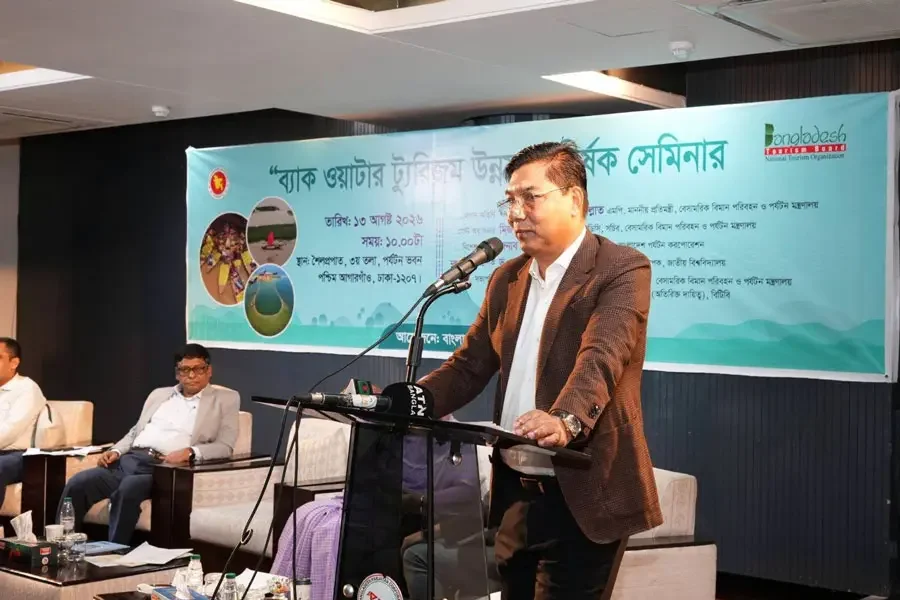
The State Minister was addressing a seminar titled “Development of Backwater Tourism”, organised by the Bangladesh Tourism Board (BTB) at Tourism Bhaban in Dhaka city's Agargaon area.

Millat said the government has already taken steps to transform Bangladesh into a tourism hub and is working to implement its electoral commitments regarding the sector.

He said initiatives have also been taken to sign Memorandums of Understanding (MoUs) with several ministries to overcome longstanding inter-ministerial coordination gaps that have impeded tourism development.

However, the State Minister stressed that private-sector stakeholders must come forward to accelerate the industry's growth.

“We will formulate private investment-friendly policies for the tourism sector. Besides, the manpower of the Bangladesh Tourism Board and Bangladesh Tourist Police will be increased,” he said.

Millat said the ministry would request Prime Minister Tarique Rahman to convene meetings of the National Tourism Council every six months to ensure regular policy-level coordination and monitoring.

Expressing optimism over the industry’s prospects, he said the contribution of tourism to Bangladesh's GDP could reach 10 percent in the foreseeable future with coordinated efforts from all stakeholders.

The state minister said the present government believes in action rather than words and is taking concrete measures to advance the country's tourism industry.

He said the present government had remained out of power for 20 years and alleged that, due to a lack of media freedom during that period, people could not adequately learn about the setbacks suffered by the tourism sector.

Civil Aviation and Tourism Secretary Fahmida Akhter, who attended the seminar as guest of honour, said the government has already started work on the Tourism Satellite Account (TSA) to address the shortage of reliable tourism data.

She said a development project for Tanguar Haor has also been included in this year's Annual Development Programme (ADP).

“The sector failed to make adequate progress in the past because of a lack of coordination. With your cooperation, we will be able to overcome the coordination gaps and move the tourism sector forward,” she said.

Bangladesh Parjatan Corporation Chairman Md Samimuzzaman said the scope of backwater tourism encompasses virtually the entirety of riverine Bangladesh, creating significant potential for developing the segment.

He stressed the importance of involving local communities in tourism development, saying employment generation among local people would also contribute to enhancing tourist safety.

Bangladesh Tourism Board Chief Executive Officer Md Abdur Rouf, chaired the seminar, while Bangladesh Parjatan Corporation Chairman Samimuzzaman attended as special guest.

The seminar discussed the importance and present status of backwater tourism in Bangladesh, challenges facing its development, prospective action plans and measures needed to unlock its potential.

Dr Md Anwar Hossain Bhuiyan, Associate Professor at National University, presented the keynote paper.​
 

St Martin's Island: Before and after 6 months without tourists

1786662805300.webp
 

Governance gap in haor tourism

1786753238283.webp

Unregulated haor tourism threatens ecology. | Web

EVERY monsoon now, the roads to Sunamganj fill up with buses and private cars headed for haors. As the rains arrive and the haors swell into what looks like an inland sea, houseboats — some with air conditioning, rooftop decks and space for thirty guests — carry tourists out past the Hijal-Koroch swamp forest toward Tekerghat and Niladri lakes, with the Meghalaya hills rising across the border. Winter brings a different rhythm. As the water recedes, the same haors turn into farmland and families transplant boro paddy on land that was, months earlier, a tourist’s inland sea. A smaller crowd also arrives for bird-watching when the drier land and migratory flocks make the haors a different kind of destination. The boom that made Sunamganj into a household name is the monsoon houseboat phenomenon layered onto a landscape that dry-season farmers depend on for one of the country’s most important rice harvests. Roughly 200 registered houseboats and an unknown number of unregistered ones now operate on Tanguar alone and the government’s own budget treats tourism as a genuine national opportunity: this year’s allocation rose nearly 45 per cent, with haor and wetland eco-tourism named explicitly as a pillar of rural livelihoods. On paper, that is exactly the right instinct.

The trouble is that a haor is not a beach or a hill resort. It is a common-pool resource — open, seasonal, ecologically fragile, used around the year by fishers, boro farmers, migratory birds, boatmen and now tourists, often with conflicting claims on the same land and water at different points in a single seasonal cycle. Natural resource management offers two classic, opposing benchmarks here. Garrett Hardin’s ‘tragedy of the commons’ is the pessimistic one: when a resource is open to all and no one owns the consequences of overuse, each user has a rational incentive to extract as much as possible before someone else does and the resource collapses under the weight of individually reasonable decisions. Elinor Ostrom spent much of her career showing this outcome is not inevitable — that communities routinely govern shared resources sustainably when certain conditions hold: clear boundaries around who can use a resource, rules matched to local ecological conditions, real monitoring, graduated sanctions and a genuine voice for the people who depend on the resource daily. Measured against this checklist, haor tourism sits closer to Hardin’s open-access scenario than to Ostrom’s managed commons.

Anthropology sharpens the diagnosis further. Political ecology asks who gains and who loses when a resource is reframed and re-developed. In this case, it asks whether the houseboat economy’s benefits flow mainly to urban tour operators and outside investors while ecological costs and the consequences of crowding fall on fishing and farming households who have used the haor the longest. The idea of moral economy, developed by EP Thompson and extended to agrarian settings much like this one by James Scott, points to something else worth taking seriously: haor communities already carry customary norms around seasonal use — when to fish, when to leave a breeding ground alone, when the land belongs to the plough rather than the boat — that were never written into any government plan but have functioned, informally, as exactly the kind of system Ostrom describes. Cultural ecology adds a third lens: the haor’s whole value comes from its dual identity — wet and dry seasons, water and grain. A tourism model that treats it as a static ‘destination’ rather than a seasonally shifting one works against the very adaptation that has sustained these communities for generations.

Anyone who has taken a houseboat trip on Tanguar in peak season has seen the symptoms of strain: diesel engines idling through the night, waste going straight into the water, noise that pushes birds and fish from their usual habitat, and jetty or ‘eco-cottage’ construction that interrupts natural water flow. The scale of the informality became impossible to ignore this month. On August 1, the Sunamganj district administration banned all houseboats and tourist vessels from Tanguar’s Ecologically Critical Area outright and ordered every operator to re-register with the deputy commissioner’s office by August 10 or be barred from returning to the water. That a blanket ban and a hard re-registration deadline were the tools reached for, rather than a routine enforcement notice, says plainly how far voluntary registration had fallen behind the boom. None of this is malicious. It is what happens, predictably, when demand for a resource rises steeply and the machinery that governs access rises more slowly.

Parliament’s passage of the Bangladesh Haor and Wetland Conservation Act, 2026 in April is a genuinely significant step — the country’s first dedicated legal framework for wetlands as such, rather than a patchwork of water, forest and fisheries law that touches haors only incidentally. It puts the Bangladesh Haor and Wetland Development Department on permanent statutory footing under the Ministry of Water Resources, headed by a Director General with authority to open regional offices in haor districts. The law is not toothless: encroachment, unauthorised filling or excavation, pollution, unapproved mineral extraction, hunting of migratory birds and destructive fishing are all made cognisable, non-bailable offences, tried through mobile courts, with penalties reported at up to two years’ imprisonment and fines reaching several lakh taka depending on the offence. Anybody undertaking work inside haor boundaries must now seek the department’s opinion, or clearance, before proceeding — legal commentary on the act is not fully settled on how binding this requirement is, a distinction that will matter once the implementing rules are published. For an ecosystem under slow-moving, largely invisible pressure for years, the act itself is overdue and welcome.

What the act does not solve on its own is coordination. The updated Haor Master Plan, aligned with the Bangladesh Delta Plan 2100, does formally fold tourism in as one of 22 integrated sectors alongside agriculture and fisheries — so tourism is not, on paper, an afterthought in wetland planning. But it is written and administered from the Ministry of Water Resources, on a climate-resilience logic that also has to protect the boro season. Meanwhile the separate Tourism Mega Plan, 2026–2040, from the Ministry of Civil Aviation and Tourism, is built around attracting 55.7 million tourists and creating 2.19 crore jobs by 2040. Stakeholders have flagged the disconnect themselves: at a Dhaka roundtable this year, tourism officials and operators pointed to the absence of research-based, coordinated policy support as a central constraint and UNDP’s own analysis of Bangladesh’s tourism data systems reaches the same conclusion — a lack of coordination across stakeholders is holding the sector back. Two national plans, each legitimate, each touching the same haors across two different seasons of use, without a coherent mechanism to work together, forcing them to reconcile with targets against ecological and agricultural limits.

What would that reconciliation look like in practice?

First, carrying capacity has to become a real planning input at the haor level, tied to the seasonal calendar rather than treated as a year-round constant — how many houseboats can a given water body absorb in monsoon without degrading breeding grounds or bird habitat and how tourism infrastructure on the kandas is kept clear of the land boro farmers will need when the water recedes. The Haor and Wetland Development Department’s new clearance authority is responsible for this, but it needs the technical capacity and field presence to apply it, not just the legal power to withhold approval on paper.

Second, registration and licensing need to become a standing system rather than an emergency measure. Sunamganj’s district administration has now had to reach for a blanket ban and a hard re-registration deadline just to get a basic count of who is operating on Tanguar — a reactive fix for a gap that better routine licensing should have closed years earlier. Tying houseboat and tour-operator registration permanently to the Haor and Wetland Development Department’s approval process, administered jointly with district administrations and the Tourism Board rather than left to periodic crackdowns, would give the new laws’ penalties something durable to adhere to.

Third, local communities need to be recognised as co-managers, not bystanders. Ostrom’s most consistent finding, echoed in the anthropological literature on moral economy, is that resource users with a real stake in outcomes — through revenue-sharing, licensing preference for local operators and a formal seat in decision-making — police each other and the resource far more effectively than any distant department can. The Houseboat Owners’ Association in Sunamganj and local fishing and farming communities already carry informal norms about seasonal practice; those are an asset to formalise, not a nuisance to route around.

Fourth, someone needs to own the coordination function itself. A standing haor tourism coordination platform, bringing together the Haor and Wetland Development Department, the Tourism Board, district and upazila administrations and community representatives, with joint authority over new tourism infrastructure, would close the gap between two well-intentioned national plans that currently risk operating past each other.

None of this requires abandoning the ambition behind the budget increase. Wetland tourism can genuinely be one of the better livelihood diversification tools available to haor communities, who face increasing climate stress on both fishing and single-cropped agriculture. But the window in which haor tourism can still be shaped, rather than cleaned up after, is closing quickly. The 2026 Act gives Bangladesh a legal foundation, with real penalties, that it did not have before. What it does not yet have is the connective tissue between institutions and recognition of the communities who have managed this landscape’s dual identity for generations that would let that foundation actually hold.

Shuvo Roy is a development professional focusing on monitoring, evaluation, accountability and learning in the humanitarian and development sector.​
 

Mayhem of Saint Martin's Island


1788218369922.webp


The country's only coral island Saint Martin's Island, known for its rich marine bio-diversity, once again, is making news for all the wrong reasons. Pictorial reports carried in a few contemporaries show that construction of tourist resorts and cottages on the island are going on in defiance of the ban on all kinds of permanent constructions. The island was declared an Ecologically Critical Area (ECA) as early as 1989. A formal gazette notification was issued in 1999, confirming the ECA status and prohibiting construction of all unauthorised buildings. In 2022, the island was further designated as a Marine Protected Area.

However, the irony is that no fewer than 230 resorts and cottages were constructed there in the past three decades. Right now 12 such permanent buildings are under construction. Their construction started after the July 2024 uprising. During the last leg of Awami League rule, 70 such resorts and cottages were built. At a time when the island is declared a Marine Protected Area, resorts and cottages also come up undeterred. The contradiction and hypocrisy could not be more glaring. If the fresh batch of resorts under construction is completed, the total number would be more than 300. That is too much for this small island.

On August 8 last, State Minister for Environment, Forest and Climate Change Sheikh Faridul Islam paid a visit to St. Martin and instructed Cox's Bazar development authority, district administration and the Department of Environment to take action against such construction. What kind of actions those authorities are supposed to take? His instruction is vague and far from precise. In such cases, the authorities usually impose fines on the lawbreakers. But there was need for a clear order to dismantle the permanent structures under construction. This is unlikely to happen.

Carrying construction materials to the island is legally restricted but it is clear that the restriction has been circumvented by those who have started the illegal construction. These are undesirable developments and the authorities do nothing more than paying lip services to this critical ecosystem of the island. First of all, the island has lost many of its marine resources because of unplanned and illegal constructions. Once, there were 1076 species including migrant birds that found a safe sanctuary there. Excessive and mindless tourism is also responsible for spoilage of its fragile environment.

Indeed, many of the lost species cannot be brought back but some can still be given a new lease of life. The ban on tours to the island for nine months during the caretaker government helped recover the island to a large extent. The bushes of screw pines (kewda) had lush growth allowing crabs to proliferate and tortoise to lay eggs there. Even the coral reefs showed clear evidence of recuperation. But the latest spree of construction is damaging the screw pine bushes so important for keeping the sandy barrier intact against storms and cyclones.

What is particularly worrying is that a Tk 89-million project under implementation for recovery of the island against the climate change will face a stiffer challenge if the latest construction of resorts and cottages is allowed. The project will fail to achieve its stated objective if the screw pine bushes are destroyed and the invasion of tourists continues. Tourism should be restricted and the structures under construction dismantled immediately. Those who have initiated the illegal construction should be held accountable for violating the legal provisions.

The island has to be saved at all costs. No political considerations should prove overriding over the ecological sustainability of the island. If the island faces the danger of getting wiped out because of human infringement, even the resorts and cottages already constructed or being constructed will have no existence. This small island can survive only when its ecological sustainability is maintained by restorative projects like the one already in progress. The minister concerned must live up to the challenge before it is too late.​
 

Redesigning tourism for the digital era in Bangladesh


1790465882705.webp


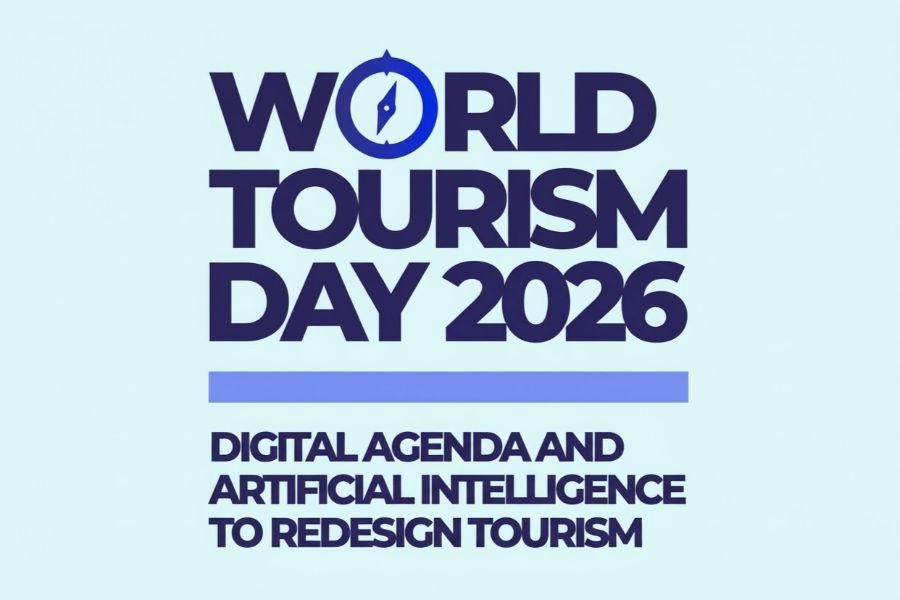
Every year, World Tourism Day (WTD) is observed on September 27 in the member countries of UN Tourism (previously UNWTO) in a meaningful manner. This year the theme of this day is ‘Digital Agenda and Artificial Intelligence to Redesign Tourism’. El Salvador, a country in Central America, is the host of this day this year. This theme is suitable for building smart, sustainable, and inclusive tourism development through digital transformation and Artificial Intelligence (AI) based initiatives. The member countries can optimise destination management through proper decision-making to enhance traveler experiences using the digital platform and AI.

According to Forbes, the global AI market will become a $15.7 trillion industry by 2030 due to its profound contribution to revolutionising growth and transformation. World Economic Forum (WEF) predicted that 86 per cent of employers will transform their business by 2030, while 47 per cent of employers plan to create new roles and 41 per cent of employers foresee downsizing. AI is integrated into the service sector to provide interactive and instant solutions. For instance, AI generates personalised suggestions based on inquiries and travel advice. AI and security measures enable safer travel, extract data from passports, reduce potential threats, and visualise security protocols. AI in transportation and navigation optimises the fastest routes, provides real-time traffic updates, and predicts potential delays.

The tourism sector uses AI to improve customer satisfaction and provide personalised experience in terms of lead to tailored travel recommendations, efficient reservation processes, and customised service solutions. Advanced algorithms for tailored itineraries provide tourists with optimised pricing and forecast travel trends, market demand, and tourist behaviour. Again, an AI-powered automated booking system can ease the reservation procedures for tourists. Moreover, tour guides use AI-powered augmented reality and machine learning to provide interactive and personalised tours. They provide immersive travel experiences to improve tourists’ understanding of historical and cultural sites. Furthermore, AI systems are used for halal culinary networks, prayer facilities, and gender-sensitive privacy infrastructure.

Through a conference outcome, WiT Singapore highlighted that 60 per cent of Asia-Pacific travelers are using AI tools to search and book their travel destinations, to secure the best deals, to find more reliable information, and overcome language constraints. Another prediction of the World Economic Forum is that AI adoption in the hospitality industry will reach $110.6 billion by 2031. However, luxury hotels utilize the integration of AI and human touch for better services. For instance, Marriott uses AI-powered chatbots and data analytics; Hilton includes robotic concierge and smart room technologies and integrates with chatbots; Accor hotels use AI-powered revenue management; InterContinental Hotel Group (IHG) employs AI-powered mobile apps for real-time travel assistance, digital concierge and smart room control, and uses AI-driven data analytics for identifying travel trends and proactive business decisions.

The Government of Bangladesh (GOB) has emphasised redesigning the tourism sector through digital transformation. Department of ICT is supporting entrepreneurs by providing funding and training on innovation and technology under the programme on Digital Entrepreneurship and Innovation Ecosystem Development. Again, Hi-Tech Parks can develop AI-powered tools to provide support rt to the airlines, hotels, and travel agencies. TripBooking.AI is Bangladesh’s first AI-powered travel assistant, launched in 2025, where “Zoe” guides tourists to plan the best trip. Banglalink is collaborating with Bondstein to provide AI-powered analytics, GPS tracking, IoT connectivity, and advanced software for fleets and cruises in 2026. A restaurant management software, namely Engaze.ai, is used in Bangladesh to operate luxurious restaurants and food courts.

According to the recommendation of UNESCO, the National AI Policy (2026-2030) has been drafted to emphasise ethical AI practices, data privacy, cyber security, and digital transparency so that the AI ecosystem can be used for the benefit of government, academia, private sectors, and civil society organisations. The Department of Information and Communication Technology (DICT) is working as a key contributor to AI governance in Bangladesh for the maintenance of a central AI framework across ministries. The DICT is ensuring AI transparency, investing in capacity-building programmes, and focusing on infrastructural development for digital transformation at the grassroots level. UNDP Accelerator Lab, Bangladesh, has integrated AI for sustainable tourism development through data-driven policymaking, algorithm-based decision-making, cultural heritage conservation, and mapping tourist preferences and real-time reviews. The lab suggested developing an integrated tourism dashboard, GIS-based tourism planning and marketing, and data mapping for sustainable tourism growth. The international intergovernmental organization ICIMOD and Bangladesh Bureau of Statistics (BBS) jointly conducted a training program on dissemination and monitoring of tourist spots and tourists’ movement, where GIS and data mining were incorporated so that real-time insights can be developed from travel blogs, comments, photos, and videos from social media. Moreover, the Bangladesh Tourism Board (BTB) and BBS have taken the initiative to conduct Tourism Satellite Accounts (TSA) as an integrated tourism database for structural and sustainable tourism development in the country.

There are some challenges for digitalisation and the use of AI for the tourism sector in Bangladesh. Firstly, the country needs to formulate legal principles and regulations for maintaining data sovereignty and the use of digital information in tourism. Secondly, data privacy and transparency are also important for maintaining the accuracy of data for the tourism sector. Thirdly, digital transformation needs to be free of bias and discrimination for tourism development. Fourthly, the required digital transformation infrastructure and AI software are not adequate in Bangladesh. Fifthly, the high cost of digital transformation is a significant barrier to AI adoption and implementation for the tourism sector. Lastly, digital transformation and AI implementation need to be in accordance with the cultural and personal preferences of tourists for their willingness.

Some initiatives can enhance digital transformation and AI-based implementation to redesign the tourism sector in Bangladesh. Firstly, the hotel owners can develop an AI-based network among themselves to provide booking facilities and satisfactory services to the guests. This network also helps them to monitor and analyse their service performance for corrective actions. Secondly, digital transformation and AI-driven efforts can support tourism companies to attract tourists from home and abroad through various promotional materials such as blogs, mobile apps, podcasts, and maps. Thirdly, travel agents and tour operators offer their tour packages, including booking flight tickets, shopping opportunities, hiring transportation, restaurant reservations, tourism activities, and other facilities through digital facilities and AI-driven opportunities. Fourthly, tourism enterprises can conduct demand analysis and provide information on their services and recreational facilities to tourists using AI integration with the Internet of Things (IOT) concept. Fifthly, Semantic Social Networks (SSN) and Virtual Reality (VR) technology provide information to tourists for shopping, decision-making experiences, learning about history, and exploring tourist places according to their interests. Sixthly, the BTB should develop a national AI-driven dashboard so that streamlining data sharing and real-time decision-making for the tourism sector can be easier. Finally, the GOB can develop an AI-powered predictive model and real-time monitoring system to manage tourist flow and ensure environmental compliance in sensitive areas with proper cooperation from relevant public agencies and international organizations.

Dr Md Anowar Hossain Bhuiyan is an Associate Professor and Deputy Director of the Innovation and Sustainability Lab (ISL) at National University, Bangladesh. anowarlestari@gmail.com. Manzuma Sharmin Munne is a Lecturer and Member of the operational body of the Innovation and Sustainability Lab (ISL) at National University, Bangladesh.​