Home Watch Videos Wars

[🇧🇩] Banking System in Bangladesh

[🇧🇩] Banking System in Bangladesh
275
9K
More threads by Saif

G Bangladesh Defense

Reforming Bangladesh's banking sector - piecemeal or holistic approach?

Haradhan Sarker
Published :
Nov 22, 2025 23:56
Updated :
Nov 23, 2025 00:03

1763861759057.webp

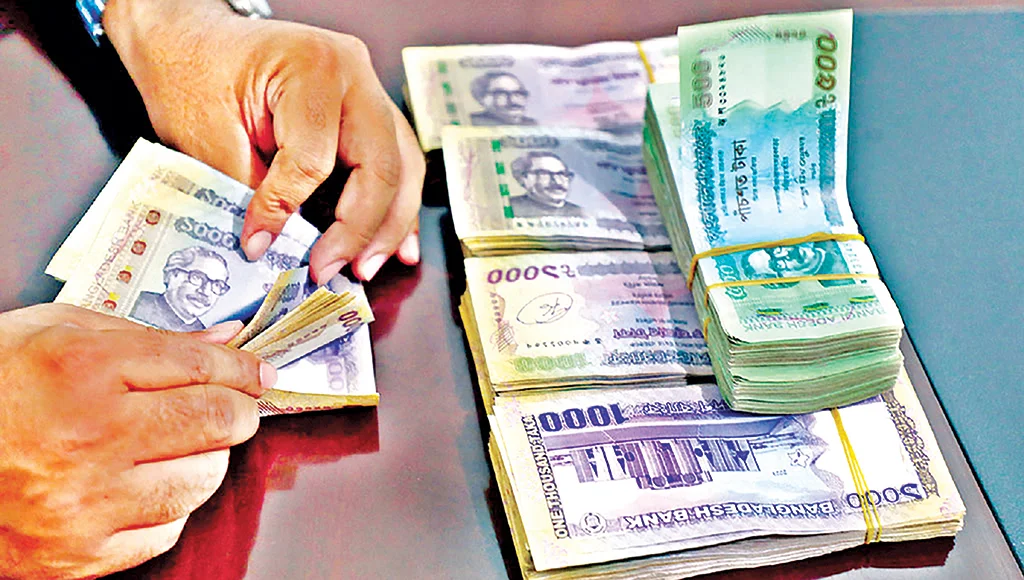
A bank staff counting notes at a bank in Dhaka —FE Photo

Bangladesh Bank (BB) in the current regime of the interim government is committed to reforming the banking sector. It is a long-awaited requirement to streamline the banking system of the country, and fortunately, the steps already taken by the central bank deserve appreciation. However, planned efforts are a must for reforms to be effective and sustainable. Present focus would, therefore, be upon the nature and structure of reform initiatives as well as their cohesiveness and congruence towards development of a good banking governance model. Obviously, a holistic approach to reforms instead of a piecemeal one is critically required to align with the excellence of governance in banking in the modern context.

OVERVIEW OF REFORM INITIATIVES: The entire set of reform initiatives is not easily available in a single source. However, most of the reform activities/steps/decisions have been obtained from the monetary policy statement (July-December 2025), some from BB circulars and newspapers. These are briefly described below:

Bangladesh Bank (BB) has formed three task forces-- Banking Sector Reforms Task Force (BSR-TF) entrusted with strengthening regulatory framework, improving asset quality, and developing effective bank resolution, the second Task Force entrusted with strengthening Bangladesh Bank's institutional capacity and restructuring its operations, and the third Task Force entrusted with identification, investigation, and repatriation of assets siphoned off from Bangladesh.

The BSR-TF has introduced the Asset Quality Review (AQR) framework and issued suitable regulations to facilitate independent assessments by internationally recognised consulting firms. Accordingly, BB has signed a Memorandum of Understanding (MoU) with the UK's Foreign, Commonwealth & Development Office (FCDO) to get technical assistance from Deloitte LLP for the reforms .

BB has set up Bank Resolution Department and subsequently finalised the Bank Resolution Ordinance (BRO) 2025 empowering BB to initiate a resolution process for distressed banks.

A draft Bangladesh Bank Order 2025 has been framed and is currently under review.

Bangladesh Bank dissolved 15 Boards of Directors and reconstructed them to restore effective governance and ensure sound bank management. BB also issued a circular titled "Transactions with Bank-Related Persons or Institutions" on May 8, 2025. The bank-related persons or institutions include current directors, MDs or CEOs, significant shareholders, their family members, the ultimate beneficial owner (UBO), and affiliated institutions. In fact, the circular imposes stricter limits and provisions on extending credit facilities to such bank-related persons or institutions.

To expedite proceedings, managing recovered assets, coordinating with international partners for information sharing, and strengthening institutional capacity and internal coordination to ensure effective asset recovery, the Ministry of Finance issued two circulars on June 15, 2025, restructuring the Inter-Agency Task Force on Stolen Asset Recovery and Management, chaired by the Governor of the Bank and coordinated by the Head of the BFIU. The BFIU has formed Joint Investigation Teams (JITs), led by the Anti-Corruption Commission (ACC).

7.Bangladesh Bank revised Core Risk Guidelines, including the Guidelines on Credit Risk Management (CRM) for banks and issued a circular addressed to all scheduled banks regarding introduction and implementation of Risk-Based Supervision (RBS) in banking from January, 2026.

A total of 17 banks were selected for AQR in three phases. The first phase covering six banks has been completed with KPMG and Ernst & Young (EY) Sri Lanka engaged to conduct the assessments. BB continued its coordination with development partners including the World Bank and the Asian Development Bank (ADB) to launch the second and third phases of the AQR, covering the remaining 11 banks.

Amendments were made to the Bank Companies Act, Money Laundering Act, and Deposit Insurance Act to improve accountability and loan recovery. Reforms are being made to Money Loan Court Act to help resolve long-pending loan default cases more effectively.

Bangladesh Bank provided stringent guidelines on loan classification, provisioning, and recovery, effective from April 2025. BB has decided to implement an Expected Credit Loss (ECL) methodology (similar to IFRS 9) by 2027. Under Phase I, scheduled banks are now complying with BB's directives and have submitted Time-Bound Action Plans. These plans include pre-assessment reports detailing the transition from the existing rule-based model to the ECL model, anticipated challenges, and necessary actions for full implementation of IFRS 9.

The Prompt Corrective Action (PCA) framework was put into effect on March 31, 2025. This provides early-warning tools (capital, NPL, liquidity, governance metrics) for regulator's intervention to address financially weak banks.

OBSERVATIONS: Reform efforts are going on but seem to be not backed by any master plan. Problems are cropping up and then courses of actions are being designed and implemented. We observe no integrated framework to develop a sustainable, effective, efficient, transparent, accountable and dynamic governance model in banking industry.

Now what is going in the name of reforms is just on piece-meal and major problem-centred basis. Individually many reform steps are appropriate and essential but collectively lack strategic cohesiveness. For examples : (i) mounting NPLs have led to Assets Quality Review (AQR); (ii) Dissolution of Boards of Directors triggered by governance failure in selected banks; (iii) Amendment to Deposit Insurance Act is the outcome of eroding depositors' confidence; (iv) Huge bank money siphoned off has caused amendments to money laundering Act; and so on. Undoubtedly , the problems are severe and need urgent actions All these phenomena along with related minor and major issues should be analysed introspectively and considering short and long-run perspectives.

Now-a-days, spurred by rapidly flourishing technology and ever-increasing competitive environment, banks are facing new challenges, risks, situations, and new activities are being added to the conventional set of banking activities. Against this backdrop, renovation of the existing governance system in banking is crucial. Since even 54 years after independence, we could not construct a solid foundation for banking sector governance, we need fundamental reforms. Partial reforms would be something like patch-work. We ardently expect our newly-constituted task forces to present before the nation a good governance model for our banking sector. Successful implementation of a new model is, among other several factors, largely determined by the commitment of the political government.

Haradhan Sarker, PhD, is ex-Financial Analyst, Sonali Bank & retired Professor of Management.​
 
Analyze

Analyze Post

Add your ideas here:
Highlight Cite Fact Check Respond

‘Deposit Protection Ordinance’ issues to boost confidence in banking sector

UNB
Published :
Nov 23, 2025 22:01
Updated :
Nov 23, 2025 22:01

1763947774082.webp


The government has issued the ‘Deposit Protection Ordinance, 2025’ to enhance the protection of depositors and increase public confidence in the country’s banking sector.

Considering the importance of financial sector stability during the dissolution of parliament, the president promulgated the ordinance using the power vested under Article 93(1) of the constitution. This ordinance repeals the existing ‘Deposit Insurance Act, 2000,’ and introduces a modern framework.

The information was revealed through a circular published on Sunday (November 23) by the Deposit Insurance Department of the Bangladesh Bank.

The primary objective of the new law is to ensure the protected return of deposits placed with both Bank Companies and Finance Companies.

New Department: A separate Deposit Protection Department will be established under the Bangladesh Bank to oversee the protection programme. This department will be responsible for collecting regular premiums, fund management, inspecting member institutions, settling claims, and conducting awareness programs.

Fund Structure: The ordinance mandates the formation of two separate Deposit Protection Funds for bank and finance companies. These funds will be managed using premiums collected from member institutions, fines, investment income, and other approved sources.

Governing Body: The administration of the funds will be overseen by the Bangladesh Bank’s Board of Directors, which will act as the ‘Trustee Board’.

Membership: Newly licensed bank and finance companies must submit an initial premium at a prescribed rate. All existing bank companies will automatically be considered member institutions under this law, while finance companies will be included from July 1, 2028. The law also includes provisions for the collection of risk-based premiums on a quarterly basis.

Coverage and Claim Settlement

The ordinance explicitly excludes certain classes of deposits from protection, including those belonging to the government, foreign entities, and international organizations. Conversely, deposits made by general individuals or institutions will be considered ‘protectable’ and will be secured up to a defined limit.

In the event of a bank or finance company’s liquidation or resolution, the Deposit Protection Department will directly pay the secured deposits. If necessary, the protection process can also be managed by transferring assets and liabilities to a bridge bank or a third party through the resolution authority.

The Bangladesh Bank has also been empowered under this law to sign Memoranda of Understanding (MoU) with domestic and foreign regulators, exchange information, receive technical assistance, and conduct deposit protection activities in line with international standards.

Experts believe the implementation of this new law will increase the financial sector’s capacity to manage risk and combat crises, providing depositors with greater protection.​
 
Analyze

Analyze Post

Add your ideas here:
Highlight Cite Fact Check Respond

Merger of financially weak banks
1764035919718.webp


After a long period of faulty medical treatment, when a patient is sent to the ICU, doctors then have a limited scope for any aggressive treatment, and the chance of recovery becomes faint. A similar situation has unfolded in the banking sector. Over many years of severe and continuous mismanagement, some banks have been pushed to a position from which recovery is almost impossible. A process has been launched to merge five banks out of the reportedly 14 that are financially weak.

This crisis in the banking sector did not happen in a day, nor did it begin after August 5, 2024. It is the result of longstanding governance failures that include a lack of internal controls, poor accountability and board-level interference that have undermined professionalism. Other factors that have contributed to the decline include the syphoning of funds, weak business conditions linked to the foreign currency crisis, and withdrawals from weak banks to stronger ones due to depositor panic over the last few years. Undue interference by the central bank, the impact of Covid-19 and other pressures have added to the strain. Political pressure has also played a role, with loan approvals and write-offs often influenced by politically connected groups rather than sound credit assessments.

Loan default culture is not new, but it has deteriorated alarmingly over the past two decades. Chronic non-performing loans (NPLs) caused by habitual defaulters and lenient enforcement of recovery laws remain major problems. Regulatory weaknesses, including inconsistent supervision, delayed interventions by the Bangladesh Bank and limited penalties for non-compliance, have compounded the crisis. Corruption and fraud, such as embezzlement, insider lending and falsified collateral, have come to the surface, damaging trust and eroding capital. Over-banking and weak risk management, with too many banks operating in a small market and aggressive lending without proper due diligence, cannot be ignored. Judicial delays and inefficient legal processes have slowed loan recovery, while weak bankruptcy systems have held back effective resolution. More recently, macroeconomic factors such as inflation, dollar shortages, liquidity pressures and declining confidence have contributed further to the problem.

Valuation and restructuring of capital, including fresh capital infusion, are essential elements of the current effort. Full implementation of IFRS 9 may not be feasible at the moment, but relevant BRPD circulars should be applied alongside the valuation of securities and collateral to determine a fair value for the banks. Provisions already made and interest suspense should also be taken into account.

There is an expectation that foreign investors may be approached for new funding. The question is why investors, foreign or local, would be interested when there is little prospect of a good rate of return or capital gain in the foreseeable future.

Conversion of deposits into share capital is one possible measure to ease liquidity pressure, but it requires further discussion. Such a move should be voluntary for depositors and may yield better results if the outlook for the merged entity is strong in the long run.

Penalising sponsors, directors and senior management, especially those who benefited from these episodes, is vital to restore public confidence. Banks have become distressed either through normal business failings or through deliberate and planned syphoning of funds. The creation of false loan accounts for this purpose is a criminal offence, and beneficiaries should face strict penalties.

Fraud examinations generally focus on three key questions: what the process lapses were, who approved and processed them, and who ultimately benefited. Action should be taken under existing laws and, if necessary, new laws should be introduced to protect the public interest.

Temporary government funding for restructured banks may be necessary, but public money must be safeguarded in the long term.

It is now important to see what reform or rehabilitation proposals come from the authorities working in this area.

The writer is a senior partner of Hoda Vasi Chowdhury & Co, and a past president of ICAB​
 
Analyze

Analyze Post

Add your ideas here:
Highlight Cite Fact Check Respond

Bangladesh Bank targets fully digital transactions by July 2027
BB governor says at the signing of a deal with the Gates Foundation’s Mojaloop

1764121125321.webp


Bangladesh Bank (BB) plans to bring all financial institutions, including banks, mobile financial service (MFS) providers, insurance companies, and other relevant entities, under an interoperable transaction system by July 2027.

Under this system, cash-outs will no longer be required, BB Governor Ahsan H Mansur said today at an event at the Westin Dhaka, organised by BB.

At the event, BB signed an agreement with the Gates Foundation's Mojaloop—an open-source software platform for financial service companies, government regulators, and others—to establish the interoperable transaction platform virtually.

The Mojaloop-based platform will be named the Inclusive Instant Payment System (IIPS).

Mansur said digitisation is essential for ensuring transparency in financial transactions, adding that the interoperable transaction system is crucial to achieving this.

"There is no alternative to moving towards this system in the future. It will enhance transparency, reduce corruption, and increase revenue collection," he added.​
 
Analyze

Analyze Post

Add your ideas here:
Highlight Cite Fact Check Respond

Default loans reveal true state of banking sector: Debapriya

1764293569685.webp


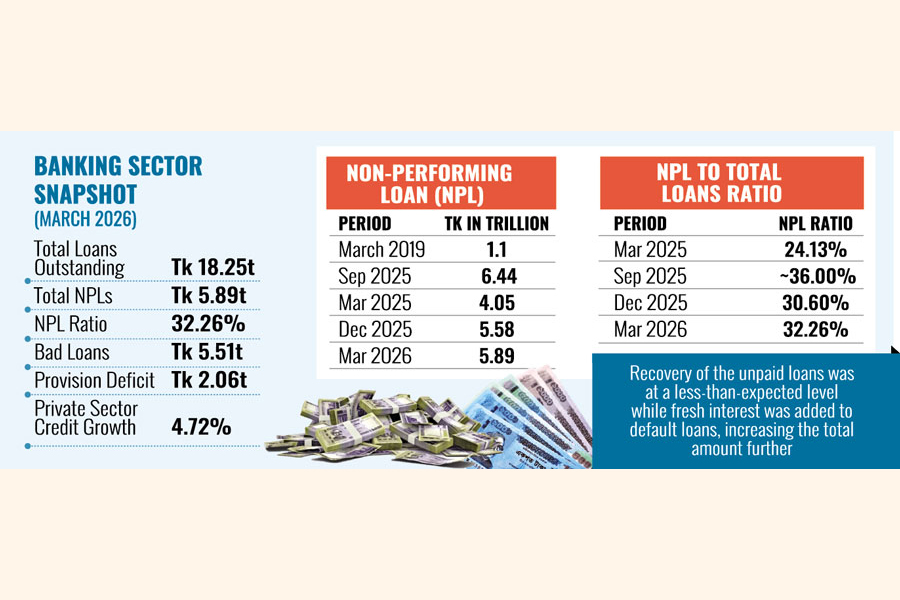
Eminent economist Debapriya Bhattacharya yesterday said the amount of non-performing loans (NPLs) or default loans exposes the real picture of the banking sector.

"In the past, it had been concealed. Shortfalls in provisions and deficits in reserves have also been revealed.

"It is not just that NPLs have increased; capital shortfalls have also come to light," said Bhattacharya, who is a distinguished fellow of the Centre for Policy Dialogue.

He made the comment at the Economic Reporters' Forum (ERF) auditorium while he spoke as the chief guest at the launch of a book, titled "Arthanaitik Sangbadikata" (Economic Journalism), written by economists, experts and economic and business journalists.

The book contains articles on 21 topics ranging from challenges and the way forward after Bangladesh's LDC graduation, inflation, reporting on macroeconomic issues, the budget and reporting related to the budget, financial crime and reporting on the banking sector.

Edited by Ziaur Rahman, editor of the Bangla news portal Arthosuchak, Chandrabati Academy published the book, aiming to inform students of journalism and business journalists on major issues related to the economy and business.

Replying to a question, Debapriya said, "In truth, you did not know your body had so many illnesses. Now that the illnesses have been identified, you are feeling alarmed. I believe there is no reason for distress simply because these internal problems have been exposed."

"The question is: what steps has the current government taken during this period to address these issues?" he said.

"Other than merging the five banks, making these accounts more compliant, appointing administrators in different institutions, and reverting the Banking Companies Act to its previous form — what else has been done? We want to see what has been achieved in terms of good governance."

Debapriya, who headed a panel on the white paper on the state of Bangladesh's economy, said the bureaucracy provided strong support to the previous government in carrying out its misappropriations.

"If we have to name two or three individuals, the head of the central bank would be among the key accused. Within this entire process, his wrongdoing is particularly serious because it was his responsibility to ensure accountability, transparency and related matters," he said.

At the event, he lauded the role of economic reporters for uncovering issues, including loan scams during the tenure of the Awami League government ousted in August last year. Now, they can play a significant role in accelerating efforts to bring transparency and carry out reforms.

Responding to another question on the interim government's move to sign deals with foreign investors for the operation of two terminals at the Chattogram port, he said, despite the slow pace of reforms in other areas, the government moved fast here.

"In one area the government undertook no reforms at all, yet in another area it completed such a major task within 13 days," he said. "I was stunned. This means that if you want to, you can. Then why was it not done elsewhere?"

This means that somewhere there remains a lack of political intent, a lack of incentives, he said.

If good work is not done properly, and if stakeholder participation does not take place with transparency, then such work does not become sustainable, he said.

Moreover, among the three port agreements, one was started during the previous government, and yet, even in that case, we did not see proper transparency.

"The overall lack of transparency has given me room to doubt your intentions. As a result, you have handled the entire matter in such a way that you have created a burden for the next government."

"What I fear is that, in the end, this may stand as a negative example when it comes to attracting foreign direct investment."

Later at the event, Md Faruque Hossain, a former secretary and now procurement policy consultant, said the initiatives to hire a foreign operator for the Laldia terminal were taken several years ago.

So, it cannot be said that the process was completed in 13 days.

Debapriya also criticised the government for its inertia in undertaking reform in line with the recommendations of the Media Reform Commission.

"The outcome of this Media Commission may now be tied to the frustration over the government's inaction regarding the White Paper, because they did not take any steps in this regard."​
 
Analyze

Analyze Post

Add your ideas here:
Highlight Cite Fact Check Respond

Members Online

Latest Posts

Back
 
G
O
 
H
O
M
E