Home Watch Videos Wars

[🇧🇩] Textile & RMG Industry of Bangladesh

[🇧🇩] Textile & RMG Industry of Bangladesh
429
17K
More threads by Saif

G Bangladesh Defense

BKMEA chief for curbing deferred-payment exports

FE ONLINE DESK
Published :
Jan 22, 2026 22:07
Updated :
Jan 23, 2026 00:01

1769128906724.webp


BKMEA President Mohammad Hatem has called on policymakers and the central bank to address what he described as worsening bottlenecks in export financing and payment recovery.

Deferred payment structures allow buyers to extract excessive advantages and contribute to large sums of export proceeds remaining unpaid, he said at the MTB–FE roundtable titled “Banking Sector Reforms” at Six Seasons in Dhaka city on Thursday. The Financial Express organised it.

The BKMEA president added that Bangladesh Bank should consider stopping or limiting exports under deferred payment terms, even if that goes against some interests.

He praised the reform initiative and expressed confidence that it could deliver results if completed within the current timeframe.

Dr Salehuddin Ahmed, Adviser, Ministry of Finance, attended the event as the chief guest, while Dr Ahsan H Mansur, Governor, Bangladesh Bank, as the special guest.

Dr Shah Md Ahsan Habib, Professor, BIBM, delivered the keynote speech.

The event was chaired and moderated by Mr Shamsul Huq Zahid, Editor and CEO of The Financial Express.

Mutual Trust Bank PLC was the title sponsor of the roundtable, while BRAC Bank PLC and NCC Bank PLC were gold sponsors. Trust Bank PLC, Shahjalal Islami Bank PLC, Eastern Bank PLC, and Mercantile Bank PLC joined as co-sponsors.​
 
Analyze

Analyze Post

Add your ideas here:
Highlight Cite Fact Check Respond

Can Bangladesh diversify beyond the garment sector?

22 January 2026, 13:49 PM
UPDATED 22 January 2026, 16:10 PM
By Dr Mohammad Abdur Razzaque

1769132621990.webp

Bangladesh’s export problem is not a lack of products, but a policy environment that rewards selling at home and leaves most industries unprepared for the demands of global markets. Photo: Anisur Rahman

After more than three decades of policy debates, hundreds of research papers, and countless newspaper columns, yet another piece on export diversification in Bangladesh may seem redundant, but its very repetition underlines both the gravity of the problem and how elusive a credible way out has remained. If anything, the problem has worsened, as Bangladesh’s exports have become increasingly concentrated, with readymade garments now accounting for around 85 per cent of total merchandise exports. The country’s export basket is among the least diversified in the world. According to one export diversification index due to UNCTAD, where higher values indicate greater concentration and scores range from 0 (most diversified) to 1 (most concentrated), Bangladesh recorded a score of 0.87 on average during 2020–2022, far higher than the LDC average of 0.66 and well above Viet Nam at 0.54, India at 0.45, and China at 0.38. It has been estimated that since 2000, new products have contributed less than 5 per cent of Bangladesh’s export growth, compared with 19 per cent in India, 22 per cent in Cambodia, 25 per cent in Sri Lanka, 33 per cent in China, 42 per cent in Viet Nam, and 62 per cent in Malaysia.

Why garments were the exception, not the model

The dominance of the readymade garment sector did not emerge from a neutral policy environment but from a particular set of global and domestic circumstances that no other industry in Bangladesh ever enjoyed. From the 1970s until the early 2000s, the global trade regime under the Multi-Fibre Arrangement restricted textile and clothing exports from many developing countries, including the newly industrialised economies of East Asia. This diversion of global sourcing pushed investment towards lower-cost locations such as Bangladesh. Combined with duty-free market access under LDC provisions, this created an exceptional and time-bound competitive advantage for garments, one that never materialised for other sectors. The effect was amplified by the fact that tariffs on garments in major markets are substantially higher than for most other products, in the European Union, for example, MFN tariffs on many manufactured goods are typically around 3–4 per cent, compared with roughly 12 per cent for garments, making preferential access far more commercially valuable for clothing exports and reinforcing firms’ incentives to specialise in this sector. Domestic trade policy reinforced this asymmetry. The garment sector benefited from a suite of targeted export support measures, which facilitated it to scale rapidly.


1769132671766.webp


Why non-RMG entrepreneurs remained focused on the domestic market

Any discussion on export diversification needs to address one basic myth. It is often argued that Bangladesh failed to diversify despite having policies intended to support exporting activities, particularly outside the garment sector. Trade policy in Bangladesh has, however, remained largely inward-looking. High tariffs and other trade taxes have made selling in the domestic market far more attractive than exporting.

The average nominal protection rate is now around 28 per cent, making Bangladesh one of the most protected economies in the world. For many products, once all duties are added, protection becomes much higher. Under such conditions, investing to serve the domestic market is a safer and more profitable choice than entering export markets, which involve unfamiliar demand, stricter requirements, and higher commercial risk.


Quality and standards further worsen the lack of export diversification. Export markets require higher product quality and compliance with labour and environmental standards. In the domestic market, these standards are grossly absent. Producing for local consumers is therefore easier and often more profitable. This explains why Bangladesh has many industries thriving at home, from food to footwear to fertilisers, from cement to ceramics, and from furniture to pharmaceuticals, yet only a few are exported in any meaningful way. As a result, while we produce a wide range of goods for domestic consumers, most are simply not export-ready.


A natural question then is how garments managed to overcome these difficulties while most other sectors did not. The key reason is that the RMG industry was almost entirely export-oriented from the very beginning and deeply embedded in global value chains. Producing almost exclusively for foreign buyers, garment firms aligned themselves with international sourcing networks, buyer requirements, and delivery schedules, rather than with domestic market conditions. This allowed them to remain largely insulated from the domestic protection regime. Facilities such as bonded warehouses enabled duty-free access to imported inputs, while competition was determined by global prices and standards, not by protection at home. Preferential market access under the LDC framework further reinforced this model. Non-garment sectors, lacking such integration into global value chains, remained exposed to domestic protection and had little incentive to incur the costs and risks required to become export-ready.


Why non-RMG exports remain limited: domestic production, missing the global value chain

While applied trade policy in Bangladesh, together with weak enforcement of quality and standards, has largely encouraged firms to produce for the domestic market, far less attention has been given to integration into global value chains. In today’s world, exporting is not just about manufacturing a product. Design, branding, compliance, logistics, retailing, and even after-sales services are all part of a complex but essential system. For a shoe manufacturer or a furniture maker, focusing only on production is rarely sufficient unless they are producing for established brands or retailers abroad. In a long-standing protectionist economy like Bangladesh, these realities have been largely overlooked, not only in policy debates but also in official strategy documents, which tend to treat exporting as an extension of domestic production rather than as participation in an integrated global system.

Why FDI is the missing link

This is where foreign direct investment usually plays a critical role. FDI often brings with it direct links to global buyers, established brands, supply chains, technology, and managerial know-how. Through foreign firms or joint ventures, local producers gain access to design specifications, quality control systems, compliance practices, and international distribution networks that would otherwise be extremely difficult to achieve. Without such links, firms must independently identify buyers, meet complex standards, and establish credibility in competitive markets, all of which are costly and risky. In Bangladesh, this role of FDI has been limited outside garments. Ironically, while most garment exporters are local entrepreneurs, their success has depended heavily on close and sustained relationships with foreign buyers and global supply chains, a dimension that is often underappreciated in policy discussions.

Perhaps the most critical precondition for non-garment export success and meaningful diversification in Bangladesh is attracting foreign direct investment. Bangladesh has struggled to attract FDI because of high trade protection, regulatory complexity, weak contract enforcement, infrastructure bottlenecks, and the absence of a clear, sector-specific investment strategy. In contrast, countries that have expanded exports rapidly and diversified successfully, such as Viet Nam, China, Cambodia, and Malaysia, placed FDI at the centre of their export strategies, using foreign firms and joint ventures to anchor domestic production within global value chains. While addressing infrastructure gaps, skills shortages, and institutional weaknesses will inevitably take time, export diversification cannot wait for all these constraints to be fully resolved. What is needed now is a focused and credible push to attract FDI into non-garment sectors through targeted measures and a clearer investment policy that recognises FDI as a catalyst for export growth rather than a peripheral objective.

Dr Mohammad Abdur Razzaque is an economist and serves as Chairman of Research and Policy Integration for Development (RAPID), a Dhaka-based think tank.​
 
Analyze

Analyze Post

Add your ideas here:
Highlight Cite Fact Check Respond

Bangladesh imports 7.82m bales of cotton in 2025
Saddam Hossain 24 January, 2026, 23:42

1769304511202.webp

Containers being loaded and unloaded at Chattogram Port. | New Age Photo

Bangladesh imported 7.82 million bales of cotton in the calendar year 2025, according to data from National Board of Revenue.

However, cotton imports declined by 6.1 per cent from 8.33 million bales in 2024, mainly due to weak global demand for readymade garments.

Meanwhile, during the year, cotton imports witnessed diversified sourcing towards Brazil, the United States, and Australia.

Most notably, surpassing India, Brazil emerged as Bangladesh›s single-largest source of cotton imports for the first time, NBR data showed.

Industry insiders said that the shift was driven by quality considerations, pricing advantages, and reciprocal tariff issues linked to US trade policies.Daily newspaper subscription

Fazlul Hoque, former vice-president of the Bangladesh Textile Mills Association, said that Brazil experienced a surge in cotton production, which kept prices comparatively low.


‘Although Brazil is far from our country, prices remained competitive despite the long route,’ he said, noting that Brazilian cotton sellers stocked cotton at various ports, from where importers could easily source it.

Brazilian cotton prices remained lower than those in West Africa and India, prompting millers to lean toward the South American country, he added.

According to NBR data, in value terms, cotton imports also fell by 10.27 per cent to $3.52 billion in 2025 from $3.92 billion in 2024.

Industry insiders said that the decline in both volume and value occurred due to a prolonged slowdown in export orders.

During the July–December period of FY26, readymade garment exports also recorded negative growth of 2.63 per cent to $19.37 billion, down from $19.88 billion in the same period of FY25, according to the Export Promotion Bureau.

Bangladeshi RMG exports witnessed negative growth for the fifth consecutive month in FY26.

During the period, exports lost momentum in most major destinations, including the United States, the European Union, and non-traditional markets, amid mounting domestic and global challenges such as political tensions, weak demand, economic slowdown, and tariff-related complications.

According to NBR data, in 2025, Brazil emerged as the largest cotton supplier to Bangladesh, exporting 2.11 million bales, an increase of 18.7 per cent from 1.56 million bales in 2024.

The import value from Brazil stood at $943.8 million, accounting for 27.0 per cent of total cotton imports in 2025.

During the period, India slipped to second place, with imports falling by more than 21 per cent to 1.24 million bales in 2025 from 1.57 million bales in 2024, accounting for 18.9 per cent of total cotton imports.

Benin remained the third-largest supplier, although imports from the country declined sharply by 31 per cent to 0.8 million bales in 2025 from 1.16 million bales in 2024.

However, imports of cotton from the US and Australia increased significantly in 2025.

US cotton imports rose by 30.5 per cent to 0.77 million bales from 0.59 million bales in 2024, while imports from Australia grew by nearly 32 per cent to 0.70 million bales from 0.53 million bales.

According to NBR data, imports from other major African suppliers declined sharply in 2025. Imports from Burkina Faso dropped by nearly 40 per cent to 0.38 million bales, while Mali’s shipments declined by more than 41 per cent to 0.35 million bales.

Moreover, purchases from Cameroon, Chad, and the Ivory Coast also plunged or recorded marginal growth in 2025.

Although West and Central Africa remained Bangladesh’s largest cotton-supplying region, their market share and growth rates declined.

Cotton imports from the Commonwealth of Independent States recorded the steepest decline, plunging by more than 57 per cent to 0.06 million bales in 2025, the NBR data showed.

Meanwhile, according to United States Department of Agriculture data, Bangladesh became the world’s largest importer of cotton, importing 8.05 million bales in the marketing year 2024–25, which began on August 1.

Imports were 5.2 per cent higher than in MY2023–24, when they stood at 7.8 million bales.

However, the USDA forecast that Bangladesh will import 8 million bales of cotton in MY2025–26, slightly lower than the previous year’s 8.05 million bales. Cotton consumption is also forecast to decline slightly from 8.1 million bales, as projected in November and August 2025.Bangladesh travel guides

Regarding increased imports from the US, industry insiders said that the rise was driven by growing demand for high-grade, contamination-free cotton and efforts to narrow the trade gap with the North American country amid reciprocal tariff issues.

Moreover, the Bangladesh government removed several tariff barriers, including the mandatory double-fumigation requirement, to increase cotton imports from the US.

Meanwhile, industry insiders said that trade disruptions, low demand, and geopolitical issues forced Bangladesh to import less cotton overall.

According to the USDA, in MY26, Bangladesh’s domestic cotton production could be around 155,000 bales from 46,000 hectares, accounting for less than 2 per cent of total consumption.​
 
Analyze

Analyze Post

Add your ideas here:
Highlight Cite Fact Check Respond

India-EU free trade deal may affect Bangladesh’s garment market: Report

bdnews24.com
Published :
Jan 30, 2026 19:20
Updated :
Jan 30, 2026 19:20

1769819226086.webp


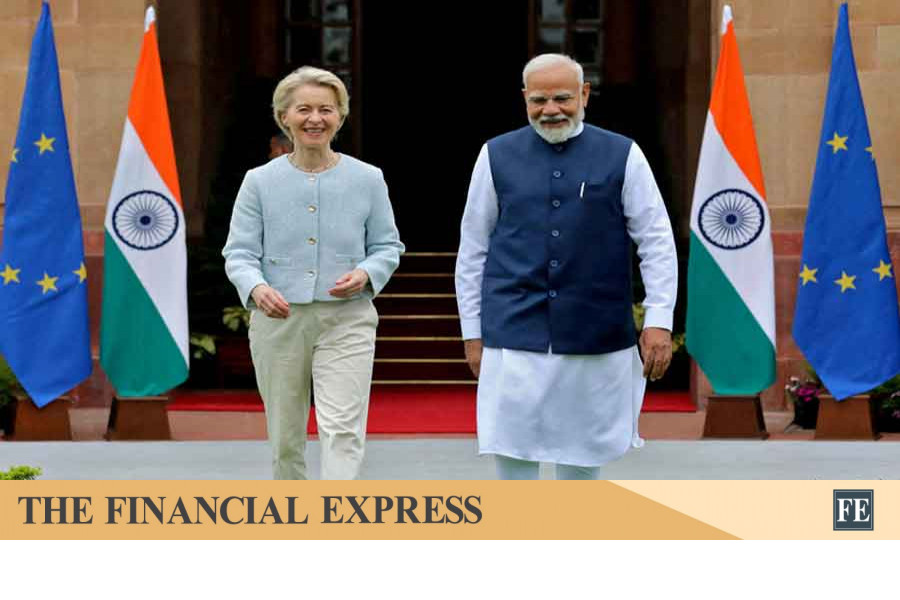
India’s historic free trade agreement with the European Union (EU) is already reverberating across South Asia, with Bangladesh and Pakistan among the countries most immediately affected, bdnews24.com reports citing Zee News.

The deal will eliminate or sharply reduce tariffs on over 90 percent of EU exports to India, including machinery, chemicals, and pharmaceuticals, enabling New Delhi to expand its presence in the European market, the report added.

For Bangladesh, the impact is direct.

With India now entering the EU at lower tariffs, Bangladeshi exporters face intensified competition.

Indian Commerce Minister Piyush Goyal was quoted as saying, “India can boost textile exports to Europe from $7 billion to $30–40 billion quickly.

“We were always asked how Bangladesh exports so much to Europe. They had zero duties and captured a $30 billion share.”

Pricing and quality competition from Indian garments could shrink Bangladesh’s market share in the near term, the report added.

Pakistan, struggling with economic fragility, views the deal with concern, it said.

Zee News notes that Islamabad fears closer India–EU trade and strategic cooperation, including counter-terrorism partnerships, could disadvantage Pakistan-backed Khalistani groups active in Europe.

Turkey is also indirectly affected. Relations between Ankara and New Delhi have been strained since Turkey supported Pakistan during Operation Sindoor, according to Zee News.

Under the EU–Turkey Customs Union, Ankara is obliged to match tariff reductions given to EU partners like India, without reciprocal benefits.

Zee News observes that previous concerns raised by Turkey on this asymmetry have seen little resolution.

Beyond South Asia, the agreement has unsettled the United States, where stalled Indo-US trade talks now contrast with Europe’s growing economic partnership with India, Zee News reported.​
 
Analyze

Analyze Post

Add your ideas here:
Highlight Cite Fact Check Respond

RMG makers seek fair prices from buyers to sustain green transition
Staff Correspondent 01 February, 2026, 00:24

1769909706435.webp


HAMS Garments Limited managing director Shafiqur Rahman receives a memento crest for HAMS Garments achieving highest score among green factories worldwide from USGBC consultant and 360 TSL managing director Ananta Ahmed at an event in the capital on Saturday. Senior BGMEA officials were also present. | Press release

Bangladesh’s readymade garment manufacturers urged global apparel brands to ensure fairer pricing for environmentally compliant factories to sustain the green transition.

They said that substantial private investment in green production was yet to yield meaningful financial returns, despite improved global branding and order priority.


They were speaking at a reception ceremony for HAMS Garments Limited, in recognition for achieving the highest score among green factories worldwide, organised by the Bangladesh Garment Manufacturers and Exporters Association.

In January, Gazipur-based HAMS Garments Limited obtained a platinum certificate of the United States Green Building Council’s Leadership in Energy and Environmental Design under the O+M: Existing Buildings v4.1 rating system, achieving a world record score of 108 out of 110.

According to the BGMEA, the total number of LEED-certified green factories reached 273, of which 115 were platinum-rated, 139 gold-rated, 15 silver-rated and 4 certified. Of the world’s top 100 highest-rated green factories, 69 are located in Bangladesh.

Industry insiders said that one factory after another was securing top-tier LEED green certification, but buyers must now ‘step up’ by rewarding sustainable producers through better prices and long-term financial incentives.

BGMEA director Faisal Samad said that establishing a green factory required significant capital investment, which manufacturers were currently bearing largely on their own.

‘It is good for our environment, but now buyers should provide some financial rewards to encourage others,’ he said, calling on global brands to take the initiative to incentivise green transition across the supply chain.

He also said that many manufacturers were going green out of ‘self-satisfaction’ and a sense of responsibility rather than immediate financial gain.

‘Now it is time for both buyers and the government to play their part,’ he said.

He noted that although the Bangladesh Bank had a Green Transformation Fund, accessing it remained difficult due to bureaucratic hurdles, urging the authorities to simplify the process so that more factories could benefit.

Director Faruque Hassan said that Bangladesh had been continuously breaking its own records in green manufacturing, with one RMG unit surpassing another in LEED scores.

‘LEED certification is helping our branding and global image, but financially it has not brought real benefits yet,’ he said.

He said that manufacturers had repeatedly explained to buyers that while they were investing heavily in sustainability, the prices offered had not increased accordingly.

Although green factories are getting priority in orders, fair pricing must be ensured, he said, adding that the existing reduced corporate tax rate for green factories should not be withdrawn after its initial tenure ends.

The government in 2022 cut corporate tax for LEED-certified factories to 10 per cent from 12 per cent for six years, alongside allowing a 0.17 per cent advance income tax refund for such units.

HAMS Group managing director Shafiqur Rahman said that the industry must advance productivity and sustainability together.

While acknowledging that buyers are not yet increasing prices, he said that the green transition gave manufacturers a sense of achievement.

‘We want a day when all factories in Bangladesh would be green,’ he said.

He, however, criticised policy inconsistencies, noting that while the government talks about green energy, duties were imposed on the import of solar equipment and key chemicals used in effluent treatment plants.

‘These need to be fixed through supportive policies so that we can move forward,’ he said.

BGMEA senior vice-president Inamul Haq Khan said that a green factory required millions of dollars in investment and that buyers must offer tangible returns, not just appreciation.

He said that government incentives, such as lower corporate tax rates and AIT refunds, had helped, but more predictable, long-term policy support was necessary.

He warned that a future free trade agreement between the European Union and India could pose a challenge to Bangladesh’s apparel exports.

To remain competitive, Bangladesh must improve efficiency, productivity, sustainability and circularity, and pursue its own trade deals before graduating from least developed country status, he said.

He also stressed the need for technology upgrades, skills development and wider access to green finance, particularly for small and medium factories.

‘We have to work in a way so that Bangladesh always leads in sustainable RMG,’ he said, calling for stronger policy support to help smaller factories join the green transition.

USGBC consultant and managing director of 360 TSL, Ananta Ahmed, and convener of the Institution of Textile Engineers and Technologists, Ehsanul Karim Kayser, also spoke at the event.​
 
Analyze

Analyze Post

Add your ideas here:
Highlight Cite Fact Check Respond

Members Online

No members online now.

Latest Posts

Back
 
G
O
 
H
O
M
E