New Tweets

[🇧🇩] Banking System in Bangladesh

G Bangladesh Defense
[🇧🇩] Banking System in Bangladesh
307
10K
More threads by Saif


Roadmap for banking reforms: Old wine in a new bottle?
1720745972532.webp


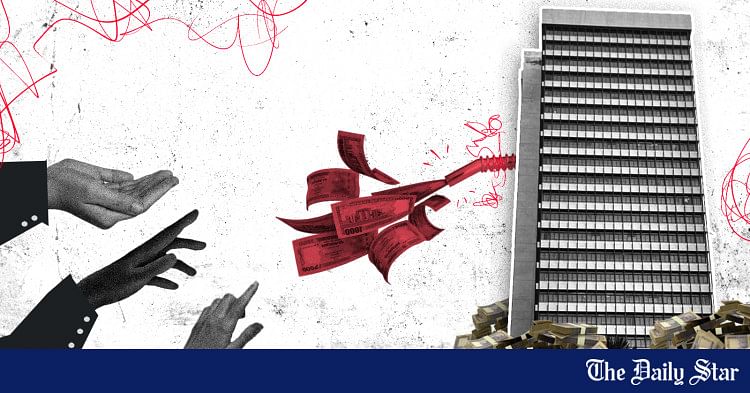
A few days before the one-sided election of January 7, Prime Minister Sheikh Hasina asked voters to forgive her (and her party, I assume) for any mistakes that were made since the Awami League came to power, with a promise to rectify them if her party returned to office. And nothing, perhaps, requires as urgent a rectification as the AL's policy in regards to the country's banking sector.

When the AL assumed office in 2009, the total defaulted loans amounted to Tk 22,481 crore, whereas at the end of September last year, non-performing loans (NPLs) stood at Tk 155,397 crore. During the last July-September period, NPLs in the banking sector decreased slightly. But that was only because Janata Bank rescheduled the defaulted loans of Beximco and S Alam, two of the country's biggest business groups which have received quite a few favours from the government. Such rescheduling tricks—which create the illusion of NPLs going down by hiding the figure from banks' balance sheets even though the liabilities still remain—have been at the core of the AL's banking sector policy. They have allowed the government—and vested interest groups—to continually hide the real amount of NPLs in the sector.

According to Moinul Islam, a former professor of economics at Chittagong University, "If the entire amount of the loans involved in the court cases and the written-off loans are taken into consideration, the total bad loans in the banking sector will be Tk 450,000 crore." Similarly, according to economist Ahsan H Mansur, the actual amount of bad loans accounts for around 24-25 percent of the total loans disbursed, whereas via accounting tricks, this is being shown to be below 10 percent.

This buildup of NPLs, according to the Asian Development Bank (ADB), poses a serious risk to the health of banks' balance sheets and financial soundness, reducing interest income, lowering profitability, and depleting their capital bases. They also require higher risk weights and minimum loss coverage in banks' capital requirements, putting a strain on liquidity and increasing funding costs. Hence, it should come as no surprise that the central bank has had to provide increasing amounts of liquidity to credit-hungry banks.

According to Bangladesh Bank statistics, the central bank provided liquidity support amounting to Tk 633.47 billion to banks in June 2023. In the following month, the handouts more than doubled, to Tk 1.28 trillion. And since then, it has been rising every month, ultimately reaching Tk 3.63 trillion in January 2024.

According to a central bank official, if Bangladesh Bank does not "continue cash feeding to the banks as per their requirements," they "will be in severe liquidity crisis." Among other consequences, the interest rate would go up to a level that may be difficult for the economy to absorb. Already, a tight liquidity situation facing both the government and banks has pushed up yields of treasury bills and bonds, as well as the lending rate, in the banking sector. And overall, there is a lack of trust in the financial sector which is adversely impacting the country's economy.

With the banking sector in so much trouble and the authorities walking a tightrope to balance the economy and finance, the Bangladesh Bank on February 4 unveiled its roadmap for reining in defaulted loans and bringing good governance to the sector. The most obvious concern about it, of course, is how genuinely it will be implemented. Given our track record, proper implementation remains highly unlikely. Moreover, some of the action plans and policy reforms already exist or were added in the Bank Company (Amendment) Act, 2023. Yet, none of those prevented things from getting worse.

For example, the roadmap says that the banking regulator will provide necessary instructions to prevent lenders from exceeding the single-borrower limit. However, the same provision existed in the Bank Company Act for more than a decade. And yet, exceeding the single-borrower limit has become the norm in our banking industry, with around 89 borrowers of four state-run banks exceeding it as of June last year, as per a central bank report. What is worse is that, in its attempt to reduce the higher volume of bad loans in the banking sector, the roadmap further relaxed the loan write-off policy by letting banks write off from their balance sheet defaulted loans that have been in the "bad and loss category" for two years, down from three years previously. Again, this will only "artificially" reduce bad loans as the liabilities will remain—meaning that this so-called reform is just old wine in a new bottle.

In February 2019, the central bank lowered the timeframe to three years from five years. And what has that achieved? Default loans since then have gone up from Tk 943 billion to as high as Tk 1,560 billion.

During the discussions prior to the unveiling of the roadmap, the Bangladesh Bank governor was apparently told to bring down default loans by taking any measures necessary, including ignoring political pressure. After its unveiling, former BB Governor Salehuddin Ahmed said the central bank must have enough strength to tackle political interference and pressure from influential groups to implement the roadmap.

However, what is interesting is that back in January, central bank Governor Abdur Rouf Talukder said that the BB's activities have never been influenced by outside forces—a blatant farce of a statement that no one in their right mind would believe.

So, if the governor does not have the courage to even admit the fact that the central bank has bowed to political pressure time and again, has broken its own rules, and made special concessions for vested interests, how can he be counted on to have the courage to stand up to them now? And unless Bangladesh Bank can carry out the necessary reforms by standing up to political pressure—which will most definitely be there—this new roadmap will be nothing but another failed reformation plan.

It is time for the prime minister to prove that her promises to the people were legitimate, and ensure that the regulators have her backing in carrying out the reforms—in spite of any and all political pressure.

Eresh Omar Jamal is a journalist at The Daily Star.​
 
Analyze

Analyze Post

Add your ideas here:
Highlight Cite Respond
  • Like (+1)
Reactions: Bilal9

How default culture plagues Bangladesh's banking sector
1720746120398.webp

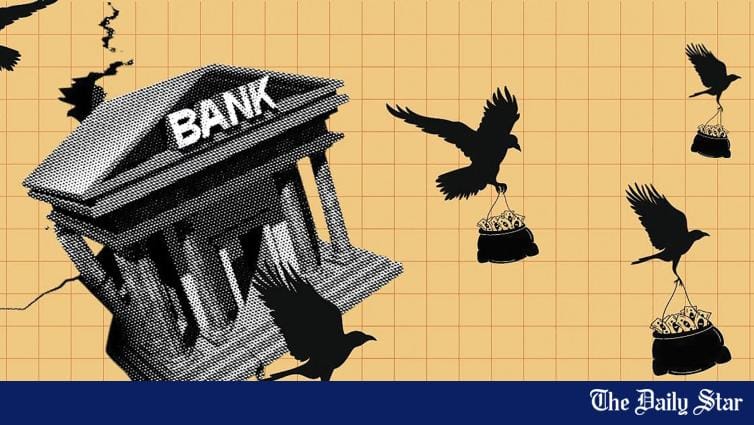
The role of the central bank to regulate the banking industry has come under criticism since the 1980s. VISUAL: STAR

A pre-Socratic Greek philosopher named Parmenides first articulated the famous idea: "Nothing comes from nothing." Later, it appeared in Aristotle's Physics. The Roman philosopher, Lucretius, echoed the same, and so did William Shakespear in his famous play "King Lear." The quote was also used in a song from the famous classic movie, "The Sound of Music." The same is true for Bangladesh's banking sector and the emerging default culture which has reached an extreme level because of three things: i) inept institutional leadership; ii) various wrong policies in banking and loan management; and iii) the indulgence of financial plundering by politically mighty business tycoons.

Simply put, Bangladesh's default bonanza did not emerge from either economic debility or financial crises. Nor was it the consequence of political instability. Not a single global factor is attributable to this steadily rising trend in bad loans. It is simply the outcome of government indulgence to habitual defaulters who somehow managed to get crooked politicians to back them no matter which party comes to power. And this is threatening the country's prospect of becoming a developed nation by impinging on private investments, reducing employment opportunities, promoting money laundering, and eventually dampening GDP growth.

BANKS, FIS, AND FINANCIAL INCLUSION

The banking industry after independence included six nationalised commercial banks, three specialised banks, and nine foreign banks. They operated under the guidance of the Bangladesh Bank (BB), the central bank of the country. The BB Order 1972 was the de facto constitution which BB followed in regulating the industry. Due to policy changes in the 1980s and financial deregulation in the 1990s, the industry kept on expanding because private banks were allowed to enter the field under the Banking Company Act 1991.

Currently, the list of scheduled banks includes six state-owned commercial banks, three specialised banks to serve agriculture and industry, 33 conventional private commercial banks, 10 Islami Shariah-based commercial banks, and nine foreign banks. Non-Bank Financial Institutions (FIs) are those types of financial organisations which are regulated under the Financial Institution Act 1993 and controlled by BB. Now, 35 FIs are operating in the market. The architecture of banking and finance is huge, even though the measure of financial inclusion among adult Bangladeshis is not correspondingly satisfactory. According to the Global Findex Database 2021, financial account ownership in Bangladesh has grown substantially since the Awami League took office in 2009. Among Bangladeshi adults particularly, it grew by 22 percentage points, from 31 percent in 2011 to 53 percent in 2021.

However, as Brac observes, the momentum is decelerating—account ownership rose by just three percentage points from 50 percent to 53 percent between 2017 and 2021, suggesting that nearly half of the adult population remains outside of the financial sector's purview. And the current state of banking being mired in malfunctions does not bode well to accelerate the pace of financial inclusion anytime soon.

THE BELEAGUERED BANKING SECTOR

A BB fortnightly report in November 2023 revealed that the total bank deposits that include both demand and time deposits amounted to Tk 16.4 lakh crore in November 2023. Domestic credit amounted to Tk 19.6 lakh crore while credit to the private sector was Tk 15.5 lakh crore, and the rest is credit to the public sector. The banking sector is deeply troubled with a huge share of nonperforming loans (NPLs)—which did not occur as a result of economic distress, but because of judicial tardiness and political favouritism toward wilful defaulters.

The BB Financial Stability Report 2022, released in August 2023, revealed that Bangladesh's banking sector's risky loans amounted to Tk 377,922 crore by December 2022. This amount is the summation of total NPLs, outstanding rescheduled and restructured loans, as well as written-off loans. At the end of 2022, the banking sector's NPL stood at Tk 120,649 crore, outstanding rescheduled loans at Tk 212,780 crore and outstanding written-off loans at Tk 44,493 crore. The report also acknowledged that the overall asset quality has dropped and the NPL ratio has edged up. The percentage share of classified loans peaked at 10.11 percent of total outstanding loans in June 2023, while it was 7.66 percent in December 2020.

DEFAULT LOANS AND SOFT DEFINITIONS

The number game in the banking sector is complicated because of the mismatch between the timeliness of data and its mischievous quality. BB often finds some banks hiding their real data to show a lower amount of NPL and less amount of capital provisioning which enables them to show higher profits. The circus goes on. Roughly, while Tk 16 trillion remains as outstanding loans to the private sector in the economy, almost one-fourth of that amount comprises risky loans. Thus, Tk 4 trillion turns out to be the amount of risky loans, of which, around 40 percent—around Tk 1.6 trillion—appears to be declared as defaulted loans. A Prothom Alo report on October 3 of last year found the total amount of defaulted loans to be Tk 1.56 trillion, while the actual amount would have been more than double had the soft definition of default loans not been used.

The default figure remains highly undervalued on purpose. The report refers to the World Bank website that publishes data and analysis on default loans by collecting information from various central banks. Bangladesh occupied the second highest position in South Asia following Sri Lanka, whose default loans amounted to 13.33 percent of total loans. Bangladesh's default loan stood at 10.11 percent, while it was only 4.8 percent in 2013 according to the report. The corresponding figure for Pakistan was 7.4 percent and India only 3.9 percent.

While Sri Lanka should be seen as an exception because of its unprecedented financial disaster in 2023, Bangladesh turns out to be South Asia's champion in generating default loans, even though the country witnessed a respectable GDP growth rate above six percent since 2013, illustrating that the rise in defaulted loans in Bangladesh has not been economy-driven for sure. It is entirely due to an indulgent culture orchestrated by wilful financial delinquents who are fuelled by political patrons. The lobbyists and advocates of default loans eventually benefit from this institutional method of embezzling funds and rent seeking.

Hence, the first public impression about the banking sector is that it is obliged to embrace the looting of funds by big business tycoons who maintain solid lobbying power with powerful politicians. They can manage delaying numerous cases on default loans in courts, convince the finance ministry to pressurise the central bank to act in their favour and, finally, compel the central bank to reschedule or restructure their loans so they can either contest in the election or take further loans to cater for money laundering, or both. In case the banks sue the defaulters, the litigations take ages to be resolved and, meanwhile, the defaulters manage to get the authorities to come up with new ways to whitewash their misdeeds.

1720746279522.webp

Bangladesh occupied the second highest position in South Asia following Sri Lanka, whose default loans amounted to 13.33 percent of total loans. VISUAL: STAR

GLOBAL OR DOMESTIC REASONS FOR DEFAULT LOANS?

The banking sector suffers from leadership issues. The role of the central bank to regulate the banking industry has come under criticism since the 1980s. But it has been much worse during the third term of the Awami League government (2019-2023) when both threats and opportunities reigned the market. The Covid-19 pandemic paralysed the world economy. Global GDP growth was on average three percent from 2013 to 2019. It plunged to negative 3.1 percent in 2020 during the pandemic.

However, the rebound of the world economy was spectacularly rewarding with global growth as high as six percent in 2021—an unprecedented rate in the postwar era. Growth reached 3.1 percent again in 2022, suggesting that it had returned to normal. The Russian attack on Ukraine in early 2022 caused a spike in inflation globally, but GDP growth did not fall from its average of three percent or so. Moreover, the labour market was tight and unemployment rates did not go up in most developed countries. The US had an unemployment rate of 3.6 percent in 2022—never seen in its past 50 years.

As WB data suggests, Bangladesh's growth always remained in the positive territory since the 1990s, and the country never saw a recession. Its growth even in the Covid year of 2020 turned out to be 3.45 percent—still in the positive territory—while it was 7.88 percent in 2019, 6.94 percent in 2021, and 7.1 percent in 2022. The figure is expected to be around 6.5 percent in 2023, as the government predicts. Thus, the average growth rate during the third term of Awami League becomes 6.4 percent, while it was 6.7 percent in the second term (2014-2018), suggesting that the economic performance during Awami League's third term does not justify a drastic rise in the volume as well as the ratio of NPLs.

Under the Awami League government, defaulted loans amounted to Tk 225 billion in 2009, Tk 502 billion in 2014, Tk 943 billion in 2019, Tk 887 billion in 2020, and surprisingly as high as Tk 1,560 billion in 2023—almost double the amount of what it was during the Covid year. This upward trend does not justify any rationale related to the real economic situation.

1720746345551.webp

The percentage share of classified loans peaked at 10.11 percent of total outstanding loans in June 2023. VISUAL: SALMAN SAKIB SHAHRYAR
POOR LEADERSHIP AND POLITICAL INDULGENCE

The central bank and the ministry of finance (MOF) are jointly responsible for the default loan culture. While the central bank is primarily responsible for regulating the banking sector, the Bangladesh story is different. Here, the MOF keeps the central bank in its grip. Since the mid-2010s, central bank governors have usually been retired secretaries of the MOF. And the central bank leadership has virtually obliged with what the MOF has wished politically. This mechanism is pushing the state of the banking sector from bad to worse.

The amount of default loans that we see today is just the tip of the iceberg. The provision of rescheduling, which is dominantly the brainchild of a previous finance minister and has been unquestionably carried out by the obedient governors since 2016, perverted the definition of default loans. The restructuring provision allowed the big loan takers to extend their repayment dates for an unconscionable amount of time for loans of Tk 500 crore or above. The rescheduling provisions allowed defaulters to make their loans regular and normal by adjusting only 5-10 percent of their default loans. This a perversion that corrupted the normal practice of prudential banking governance. And that is how the default rate has been forcibly shown as low as 10 percent, which would be above 20 percent otherwise—had these two redefinitions not been adopted.

To read the rest of the news, please click on the link above.
 
Analyze

Analyze Post

Add your ideas here:
Highlight Cite Respond
  • Like (+1)
Reactions: Bilal9

Internet outage, curfew: Default loans to soar, banks' profit to dip
1722124092166.webp

ILLUSTRATION: REHNUMA PROSHOON

Bankers are dreading a big drop in their profits as their defaulted loans are likely to increase further due to the curfew and the five-day internet blackout.

The defaulted loans are likely to increase further as business people are suffering due to the ongoing unrest, said Naser Ezaz Bijoy, chief executive officer (CEO) of Standard Chartered Bangladesh.

At the end of March, total defaulted loans stood at a record Tk 182,295 crore, which is 11.10 percent of total disbursed credit, as per the latest published data of the central bank.

However, the actual volume of bad loans is at least three times the central bank figure, according to industry insiders.

Inflation may also increase in the coming days, Bijoy said.

Average inflation overshot the government's target of 7.5 percent in fiscal 2023-24; it stood at 9.73 percent.

"Not only was infrastructure damaged due to the unrest, but it also damaged the country's image -- the country will face a confidence crisis with investors," Bijoy said, adding that the priority now should be to bring the situation back to normal.

The bad loans will increase further as some business people have lost their capacity to repay the bank loans, said Anis A Khan, the former chairman of the Association of Bankers, Bangladesh Ltd (ABB), a platform of banks' chief executive officers and managing directors.

Already, some export orders of the garment sector have been cancelled amid the weeklong unrest, he said.

Banks' profitability will be impact adversely when they will have to keep higher provisioning for the higher bad loans, said Khan, also the former MD of Mutual Trust Bank.

There will be multiple effects on the banking sector and the overall economy because of the ongoing unrest, he said, adding that foreign investors will lose their trust in the country.

"It will be very difficult to rebuild the trust of foreign investors."

The country's economic capacity will be reduced because of infrastructural damage.

"There will be a need for incentive packages for business people but the government is facing a cash crisis of its own. So the overall economic situation is not so good," Khan added.

Borrowers failed to repay the bank loans and other payments amid the internet blackout and curfew, which will adversely affect the banking sector alongside the bank's profitability, said Mohammad Ali, managing director of Pubali Bank.

Last week, Bangladesh Bank instructed banks and non-bank financial institutions (NBFIS) to refrain from imposing fees or interest on delayed repayment of loan and saving scheme instalments and credit card bills between July 18 and July 25 if they clear their dues by the end of this month.

Banking services were stopped from 9 pm on July 18 for the countrywide internet blackout. From July 24, banking services were resumed on a limited scale, with many banks unable to conduct foreign transactions because of the slow internet.

"There is a lot of uncertainty regarding the economic situation in the coming days because of the recent unrest," said Zahid Hussain, a former lead economist of the World Bank's Dhaka office.

There will be a double blow to the economy compared with the Covid-19 pandemic period.

"One will be for the internet shutdown and the other will be for the nationwide curfew. This may adversely impact the country's exports and imports," he added.​
 
Analyze

Analyze Post

Add your ideas here:
Highlight Cite Respond

Depositors losing trust in banks
SYED FATTAHUL ALIM
Published :
Jul 28, 2024 21:52
Updated :
Jul 28, 2024 21:52

1722211703717.webp

Of the many vulnerabilities that the country's banking sector is exposed to, its acute liquidity crisis is one. Tightening of money supply as part of the central bank's contractionary monetary policy, crisis in the forex market, slow pace of loan recovery, rising amount of bad loans, purchase of government bonds and securities by people and so on are the commonly discussed reasons for liquidity crunch in the banks. But over and above all these issues, there is yet another element that has factored in to deepen the bank's liquidity crisis. It is that the members of the public seem to have lost their interest in keeping their money in banks. As a result, banks are being forced to borrow money from the central bank to carry out their day-to-day business. The widespread violence and destruction that shook the nation in the wake of the students' movement for quota provision in government service has again been instrumental in making the public distrustful of the banking service. For it is during time of social unrest and crisis that people need money most to meet emergencies. But the complete internet shutdown for five consecutive days from July 19 to July 23, brought banking transaction to a complete halt. As the internet blackout came without any prior notice, so did the shutdown in the banking service.

To the members of the public, it was totally irresponsible on the part of the banks. Even the ATM booths went dysfunctional. But the banks had nothing to do either as the internet service was not under their control. The enforcement of curfew by the government to restore public order made matter worse. Nothing like this happened within the living memory of many who are below 50. Small wonder that there was a desperate rush at the banks and ATM booths on July 24, when the internet service hesitantly returned. It could be learnt that to meet the demands of some 30 cash hungry commercial banks, the Bangladesh Bank (BB), lent over Tk255 billion in cash to them. The commercial banks conducted their normal banking service with this borrowed money. Why did the banks have to turn to the BB for cash? The simple answer is that they did not have enough cash in their vaults to meet the demands of their depositors. People keep their money in banks for convenience and safety. But when the banks fail to serve them in times of need, let alone during serious emergencies, the public might then ask, what is the use of keeping their money in banks?

So, massive borrowing from the central bank to carry out normal banking is not a healthy sign for the banking sector. Neither is it safe for the central bank to continue doing so. For the central bank at a stage will be forced to print money against the advice of the International Monetary Fund (IMF) to help the commercial banks operate. The central bank has reportedly been doing so already to the detriment of its own policy of keeping money supply under control. But high-octane newly printed money will only defeat that purpose. It is indeed a recipe for disaster as continuation of this practice could pave the way for hyperinflation, a situation that the banking regulator must avoid under any circumstances. According to reports, on June 20 last, the bank notes issued by the central bank in the country was worth over Tk3.275 trillion. This was the highest number of bank notes ever issued in the country. Worse yet, the overwhelming portion, about 95 per cent, of the bank notes are circulating outside the banking system.

Obviously, the latest disruption in the banking service has further damaged public trust in the banks. The umpteen cases of looting of banks in connivance with top bank executives including the directors of private banks and failure, in most cases, of the banking regulator and the government to hold those looters and bank directors to account, has only contributed to further erosion of the public's trust in the banking system. The banking regulator has not been able to exercise its authority to put an end to the culture of inside-robbery in the banking sector, not to mention the pervasive culture of delinquency by the holders of non-performing loan accounts. How long are the common people going to stand this free-for-all in the banking sector? Some people are becoming billionaires not by doing any business, but by just looting public money kept in the banks! The common depositors cannot be blamed if they decide to withdraw their money from banks. It is, as it were, a return to the pre-banking era.

This does not simply pose a mortal risk to the banks alone. It also poses a danger to society itself. If the common depositors turn their back on the banking system, where are they going to save their money? By keeping it in their own homes? But that is yet another recipe for disaster because it will be an open invitation to robbers and thieves. The matter is going far beyond the jurisdiction of the banking regulator.

To make the matter worse, many expatriate workers reportedly were campaigning during internet disruptions against sending their remittance through the banking channel. If true, that's real bad news not only for the banking sector, but also for the country's foreign exchange reserves. After the very low record of remittance receipt in March this year, which was below two billion (actually, US$1.99billion plus), the highest ever record of remittance receipt in the last 47 months was in June at US$2.54 billion plus. But till July 24, the receipt recorded was a mere US$1.5 billion. Will the situation improve with resumption of the internet service?

Let's keep our fingers crossed that things may improve soon.​
 
Analyze

Analyze Post

Add your ideas here:
Highlight Cite Respond

Banks asked to join BB intranet
Smooth services during internet disruption
FE REPORT
Published :
Aug 02, 2024 00:12
Updated :
Aug 02, 2024 00:12
1722557312269.webp


The Bangladesh Bank (BB) is trying to develop its own full-fledged banking-network system to prevent service disruptions during internet outages, officials and bankers said.
As part of the plan, the central bank has initially developed an intranet and is asking commercial banks, financial institutions and mobile financial services to join it.

This would allow them to run the services even if internet communications are completely cut off.

BB Governor Abdur Rouf Talukder made the call at a meeting with top executives of several commercial banks on Thursday, according to meeting sources.

The meeting was held to assess the damage to the banking sector caused by recent violence following student protests over job quotas.

Bankers reported physical damage and mentioned the five-day nationwide internet outage that severely disrupted banking operations across the country.

Seeking anonymity, a BB official who attended the meeting said the central bank has developed a separate IT infrastructure called an intranet. Some banks have already connected to this system and were able to serve customers during the internet shutdown.

At the meeting, the central bank asked all banks, MFS providers and financial institutions to connect to the intranet to ensure uninterrupted service, the official said.

The Internet is a global collection of computer networks. It is an open network, accessible to anyone with a device and an internet connection.

In contrast, the intranet is a closed online network, only accessible to company employees. Employees use some form of login to access the company intranet.

Contacted, Selim RF Hussain, chairman of the Association of Bankers Bangladesh Limited (ABB) and managing director and chief executive officer of BRAC Bank, said the country's banking system depends heavily on the internet for online services.

The recent nationwide internet shutdown severely affected banking operations, he said. The importance of a separate infrastructure for the banking industry came up at the meeting.

He said the central bank also shared its plan for a separate communications infrastructure that will be different from the public internet.​
 
Analyze

Analyze Post

Add your ideas here:
Highlight Cite Respond

Bangladesh Bank discusses 24/7 banking without internet
FE ONLINE DESK
Published :
Aug 01, 2024 22:13
Updated :
Aug 01, 2024 22:13
1722557485493.webp

Bangladesh Bank has initiated discussions on how to keep banking services operational around the clock without relying on the internet.
The discussions took place during a meeting between the managing directors (MDs) of about a dozen banks and Bangladesh Bank Governor Abdur Rouf Talukder.

During the meeting, the governor inquired about the losses and casualties in the banking sector amid the recent unrest.

It was then reported on behalf of the MDs that four employees from Dutch-Bangla Bank and Standard Chartered Bank were killed, and some ATM booths and branches were damaged.

The MDs also said that while bank branches were closed, ATMs remained operational. However, the internet shutdown disrupted online banking services.

The central bank then proposed an alternative system to keep banking services running without internet, and talks on this followed.

MDs from Sonali Bank, Dutch-Bangla Bank, The City Bank, Eastern Bank, Mutual Trust Bank, BRAC Bank, Bank Asia, Prime Bank, and Trust Bank attended the meeting.​
 
Analyze

Analyze Post

Add your ideas here:
Highlight Cite Respond

Crisis in banks deeper than anyone could imagine
Experts call for urgent measures to ensure good governance


1723708074007.webp


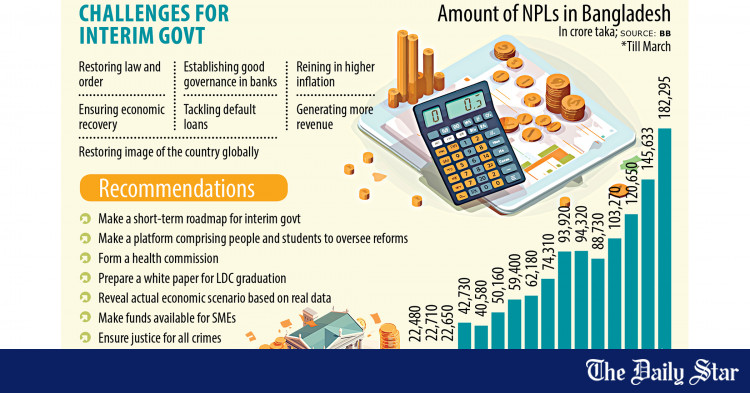
Experts and businesspeople yesterday urged the newly formed interim government to adopt urgent measures to ensure good governance in the banking sector, saying that the crisis in financial institutions is much deeper than anyone could imagine.

They also demanded punishment for those involved in financial crimes in banks and financial institutions.

"The banking sector has become fragile over the past 15 years during the rule of Sheikh Hasina-led government. The situation is even worse than one can imagine," said Selim RF Hussain, chairman of the Association of Bankers, Bangladesh.

That fragile state is illustrated by the amount of non-performing loans in the sector, which hit Tk 182,000 crore in March this year, up from around Tk 22,000 crore in 2009.

"You see the names of some banks in the newspaper [for corruption]. But many are yet to be unveiled," Hussain added.

Hussain made the remarks at a dialogue organised by the Centre for Policy Dialogue (CPD) at the Lakeshore Hotel in Dhaka to discuss and address the challenges facing the interim government.

It included representatives from civil society, economists, bankers, entrepreneurs and students.

After restoring law and order, the priority should be focusing on the banking sector, Hussain said.

"The interim government should revive the central bank and I think this has already started with the appointment of a new governor."

The banker also congratulated protesting students, saying: "We now have freedom of speech. We did not have it in the last 14-15 years."

Hussain, also managing director and chief executive officer of BRAC Bank, then criticised bureaucratic tangles in the system.

Shams Mahmud, director of the Bangladesh Garment Manufacturers and Exporters Association, demanded stern action against corrupt directors of banks.

Accounts belonging to directors of scam-hit banks should be frozen and th
He also said it is important to prepare white papers to address data anomalies, especially in light of Bangladesh's impending graduation from least developed country status in 2026.

"There are major mismatches in the data based on which economic indicators were calculated. So, a white paper should be formulated on the actual economic scenario. Then we can have a vote. If a majority agrees, LDC graduation can be delayed by 10 to 15 years," he added.

Mahmud also labelled former National Board of Revenue Chairman Abu Hena Md Rahmatul Muneem as the leader of corruption, saying he had destroyed the tax system.

The government removed Muneem from his post yesterday.

Inadequate revenue collection, slow pace of implementation under the Annual Development Programme, and significant government borrowing from the banking sector have squeezed the country's economy, according to Fahmida Khatun, executive director of the CPD.

"Hikes in commodity prices, rising default loans and a liquidity crisis in the banking sector, slow export earnings, slow flow of remittance, stagnation in private sector investment and other problems have to be resolved quickly," she said.

To boost the economy, initiatives must be taken to solve the problems plaguing the power and energy sector. The deterioration of foreign exchange reserves, the declining trend of imports, and the massive devaluation of the taka must also be addressed, Fahmida added.

Another issue is that a large portion of the youth remain unemployed due to a lack of employment opportunities stemming from bribery and corruption, unreasonable job expectations, financial constraints or because they are waiting to land government jobs.

AKM Fahim Mashroor, chief executive officer of Bdjobs.com, said the government had violated civil rights by spying through digital devices over the past 15 years.

"In an independent country, why am I not able to use technology freely?" he questioned.

He emphasised the disclosure of all types of software used to violate human rights and civil rights, adding: "A white paper is required to explain how civil and human rights have been curtailed."

He further mentioned that the entire banking sector had been tailored to support corporate entities, depriving small and medium enterprises.

Legal and constitutional reforms to prevent the return of injustice, corruption, and authoritarianism were sought by Badiul Alam Majumdar, secretary at SHUJAN: Citizens for Good Governance.

He said three crimes occurred during the past government's tenure: crimes against humanity, criminal offences, and financial crimes. He added that the government should be given the chance to defend its actions in a fair trial.

Majumdar also lamented the use of law enforcement as a tool of the ruling party, he said.

One of the coordinators of the Anti-Discrimination Movement, Nusrat Tabbassum, said the interim government should reform law enforcement agencies which were destroyed by the past government.

She further said the interim government should work to restore the country's reputation, which was lost when the government imposed a five-day internet blackout in mid-July to quell protests that left more than 500 people dead as of August 7.

Mushtaque Raza Chowdhury, convenor at Bangladesh Health Watch, said the interim government should form a health commission to make a roadmap and look into existing healthcare services.

Through this commission, it can leave a legacy for future governments, he said.

Prof Mustafizur Rahman, a distinguished fellow at the CPD, demanded justice for recent injustices and loss of lives.

"We need a platform or framework with students and general people. They will work as guarantors of the expected reforms, which help an inclusive society," he said.

"The country has fallen into a vicious cycle. We have deviated from economic progress due to high inflation, low investment and anarchy in the banking sector."

In the last 53 years, Bangladesh has overcome many first-generation challenges. But we still have not overcome second-generation challenges, he added.​
 
Analyze

Analyze Post

Add your ideas here:
Highlight Cite Respond

Urgent bank reforms are crucial
Recover bad loans, punish those who exploited the sector

1723853752119.webp

VISUAL: STAR

Since the fall of the Awami League regime, there have been several chaotic incidents in the banking sector—from the resignation of Bangladesh Bank (BB) governor and other top officials to the conflicts between rival groups at the Motijheel branch of Bangladesh Islami Bank yesterday—sending out an alarming signal. These incidents are but an indication about how quickly a sector, long lying on the edge of the precipice, can unravel when push comes to shove.

A recent report by Prothom Alo sheds light on what led to the woeful state of this sector. It talks about the BB's questionable steps taken during the erstwhile government to keep several failing banks afloat by providing liquidity support without collateral; alleged unethical connections of the BB governor and deputy governors with top loan defaulters; and the change of ownership forced on several banks including the Islami Bank, creating an environment of mistrust. Moreover, the BB's choice of lending foreign currency loans from the reserve to various influential businesses through the export development fund, without proper evaluation, also resulted in many classified loans. Just think: 20 local businesses currently owe BB about $70 million taken out of the foreign currency reserve!

The default loan amount reported by BB—Tk 1.822 trillion—is also under scrutiny. Experts estimate that the actual figure would be close to four trillion, considering rescheduled and bad/written-off loans and those currently under legal dispute. Meanwhile, depositors of the failing banks, many of which were forced to change ownership, cannot withdraw their savings. Yet, the owners of the banks are taking out loans under different names.

While some of these irregularities were mentioned in the BB's own reports, several central bank officials allege that many such activities have remained out of BB's and Bangladesh Financial Intelligence Unit's regulatory radar. This raises serious questions about the responsibility and ethics of top officials of not just the central bank but also the governing bodies of several private and public commercial banks. There is no doubt that political appointments in the banking sector, incorrect or manipulative accounting practices, nepotism, and lack of transparency in the lending process brought the sector to its current state.

It is, therefore, imperative that the interim government urgently launches an investigation to find out the actual amount of default loans, and identify and bring to book the big defaulters along with officials who aided these questionable borrowings. Also, the government must prioritise depositors' interests and prevent any further withdrawal of money by the unholy nexus of unscrupulous owners, borrowers, and defaulters that are bleeding the sector dry.​
 
Analyze

Analyze Post

Add your ideas here:
Highlight Cite Respond

Latest Posts

Back
PKDefense - Recommended Toggle