[🇧🇩] Banking System in Bangladesh

[🇧🇩] Banking System in Bangladesh
355
12K
More threads by Saif

G Bangladesh Defense

Remittances through agent banking outlets growing

Agent banking outlets handled Tk 8,959.8 crore in inward remittances in the January-March period of 2026

Star Business Report
1778717292403.webp

Photo: Star

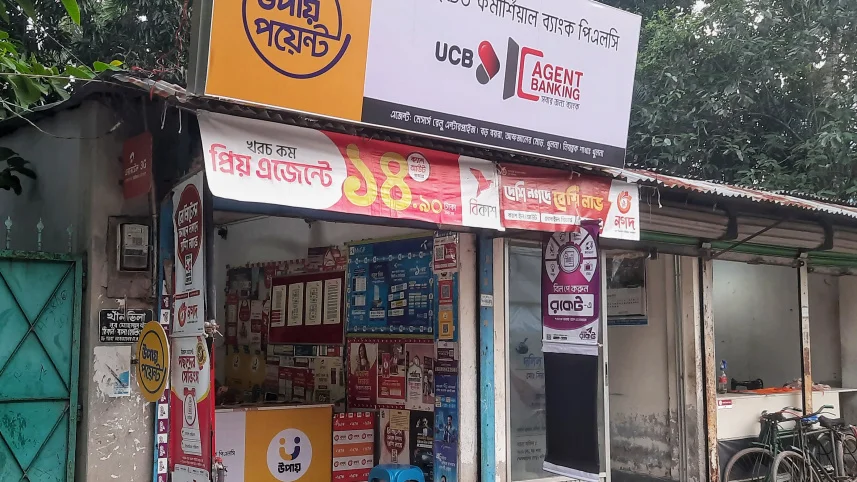
Remittance disbursement through agent banking outlets in Bangladesh is growing because of their rising popularity as rural households find the service convenient.

During the January-March period of 2026, agent banking outlets handled Tk 8,959.8 crore in inward remittances, posting a 15 percent year-on-year increase. Banks disbursed Tk 7,814 crore in remittances in the first quarter of 2025.

The amount of remittance disbursement, a key pillar for net-importing Bangladesh, accounted for 7.4 percent of the country’s total remittance inflows during January-March 2026.

However, remittance inflows through agent banking were overwhelmingly concentrated in rural areas, according to the latest Bangladesh Bank quarterly report on agent banking statistics published today.

The report said that of the total remittances received through agent banking outlets during the quarter, Tk 8,133 crore, or more than 90 percent, went to rural areas, while urban areas received Tk 826.6 crore, which was less than one-tenth of the amount.

The BB said remittances received in rural areas through the agent banking channel were 9.8 times higher than those received in urban areas.

The central bank earlier said agents were contributing significantly to remittance disbursement since customers were able to receive doorstep banking services within the shortest possible time.

“Agent banking operations in remote areas remove the gap created by the insufficient presence of bank branches, thereby enhancing accessibility to financial services for marginalised communities,” said the BB’s latest report.

Agent banking provides an efficient and cost-effective alternative to traditional branch banking, enabling broader access to financial services and facilitating economic development.

The BB said 30 scheduled banks were operating agent banking services through 20,339 active outlets. On average, each outlet serves approximately 8,551 people in Bangladesh.

More than 85 percent of the outlets are located in rural areas, highlighting banks’ focus on extending formal financial services beyond urban centres.

As such, agent banking transactions remained heavily rural-centric.

During January-March 2026, agent banking outlets handled transactions worth Tk 1.43 lakh crore, mostly in rural areas, said the BB, which introduced agent banking in 2013 as an alternative delivery channel to expand banking services in remote and underserved regions.

The BB report said that at the end of March 2026, total deposits held through agent banking accounts stood at more than Tk 50,560 crore, marking an 18.6 percent increase from a year earlier. Rural areas accounted for Tk 41,695 crore of the deposits.

Deposit growth was higher in urban areas than in rural areas.

At the end of March 2026, total outstanding loans stood at Tk 11,906 crore, with urban areas accounting for 37 percent of the total outstanding amount.

The BB data showed that outstanding loans were nearly one-fourth of the total deposit balance at agent banking outlets.

The BB also highlighted growing female participation in agent banking activities.

The central bank said that in March 2026, the number of female-owned agents increased compared with March 2025, while deposit accounts owned by women increased noticeably.

“Both deposit and loan accounts for women increased,” said the report, adding that deposit accounts owned by women rose by 8 percent in March from a year earlier.​
 

BB eases lending limits for big businesses

Exposure cap raised to 25%, non-funded exposure weights cut and large loan ceilings adjusted based on banks’ classified loan ratios

Star Business Report

1778805406301.webp


The Bangladesh Bank (BB) has temporarily loosened the rules so commercial banks can lend more to big borrowers, treat trade guarantees more lightly, and adjust large loan limits based on how healthy their loan books are.

In a circular issued yesterday, the banking regulator said commercial lenders may lend up to 25 percent of their capital to a single client or group until June 2028. This is 10 percentage points higher than the existing ceiling of 15 percent.

Besides, non-funded exposures, such as letters of credit (LCs), will be weighted at just 25 percent until mid-2027, down from the current 50 percent.

At the same time, banks will be allowed to extend higher large-loan limits depending on their classified loan ratios.

In the circular, the central bank said the changes are meant for easing international trade finance for businesses and industries.

However, several BB officials said the facility came after a few large industrial groups exceeded their exposure limits at a number of banks.

Business leaders welcomed the decision by the BB, but economists and bankers were critical of the move. They said that looser rules could concentrate credit further in the hands of a small number of large conglomerates and politically connected economic actors.

NEW EXPOSURE LIMITS

Under the relaxed rules, banks will be allowed to extend funded loans of up to 25 percent of their total capital to a single borrower, up from the existing limit of 15 percent.

However, the combined exposure of funded and non-funded facilities must not exceed 25 percent under any circumstances, the central bank said.

Under the new rules, the conversion factor for non-funded exposure has been reduced to 25 percent from 50 percent. This means banks will now count only 25 percent of their total non-funded exposure when calculating large loan limits.

The facility will remain in place until June 30, 2027. The conversion factor will then increase in phases, rising to 30 percent by December 31, 2027; 40 percent by December 31, 2028; and 50 percent by December 31, 2029.

As per the single borrower exposure rules, a borrower may take up to 25 percent of a bank’s capital in total exposure, including both funded and non-funded facilities. Of this, 15 percent may be funded exposure and 10 percent non-funded exposure.

Previously, funded loans were capped at 15 percent of a bank’s capital. Under the new rules, banks may extend funded loans of up to 25 percent, but only if no non-funded exposure is provided. If funded exposure stands at 20 percent, a further 5 percent may be non-funded exposure.

For example, an LC worth Tk 100 was previously converted into funded exposure at Tk 50. Under the new framework, only Tk 25 will be counted.

The central bank has also revised limits on large loans based on banks’ classified loan ratios.

Under the previous rules, banks with classified loans of up to 3 percent could extend large loans amounting to 50 percent of their total loans and advances. Under the new rules, this threshold has been extended up to 10 percent.

Banks with classified loans between 10 percent and 15 percent may now maintain large loans of up to 46 percent of total loans and advances. Those with ratios between 15 percent and 20 percent will be allowed up to 42 percent, while banks in the 20 percent to 25 percent range may go up to 38 percent. For those between 25 percent and 30 percent, the ceiling will be 34 percent.

Where classified loans exceed 30 percent, large loans will be capped at 30 percent of total loans and advances.

The central bank has also raised the overall ceiling for large loans to 600 percent of a bank’s capital, up from 400 percent.

WAS IT NECESSARY NOW?

Several central bank officials, speaking on condition of anonymity, said a few large industrial groups have exceeded their exposure limits at several banks. The facility has been introduced in response to their requests.

A managing director of a commercial bank, who asked not to be named, said the current condition of the banking sector is not good.

“So, this kind of forbearance was not necessary at this time,” he said, adding that it sends the wrong signal and is contrary to international standards.

However, Mir Nasir Hossain, former president of the Federation of Bangladesh Chambers of Commerce & Industry (FBCCI), welcomed the central bank’s move.

He said the economy has expanded and many large companies often need consortium financing.

“Increasing the exposure limit will be beneficial for trade and business. It is a business-friendly decision,” said Hossain.

Ashikur Rahman, principal economist at the Policy Research Institute of Bangladesh, took a different view.

“At a time when concerns over governance, non-performing loans, and weak risk management already plague the banking sector, such relaxation may deepen systemic vulnerabilities rather than strengthen financial intermediation,” Rahman told The Daily Star.

He said that excessive concentration of lending not only undermines diversification of bank portfolios, but also amplifies the “too-connected-to-fail” problem within the financial system.”

The economist argued that a more prudent long-term approach would gradually steer large borrowers towards corporate bond issuance and capital market financing, reducing reliance on banks for major industrial projects.

“Deepening the bond and equity markets is essential if Bangladesh wishes to build a more balanced and resilient financial architecture. Unfortunately, this decision appears to move in the opposite direction, reinforcing existing distortions instead of correcting them,” he commented.​
 

Time to fix the foundations of Islamic banking in Bangladesh

Mezbah Uddin Ahmed

1778892153528.webp

VISUAL: SALMAN SAKIB SHAHRYAR

It is no secret that the Islamic banking industry in Bangladesh is under significant stress. State-backed takeovers during the Sheikh Hasina era have left a legacy of extremely high non-performing assets, while protests by depositors and dismissed staff that began during the interim period continue. There are also widespread concerns over the potential return of crony shareholders, particularly triggered by Section 18ka of the newly enacted Bank Resolution Act 2026, along with uncertainties surrounding leadership positions. However, these developments do not fully capture the underlying issues facing the industry, many of which are rooted in structural weaknesses that have accumulated over decades. While the sector has achieved impressive growth in scale over time, it has done so without establishing the necessary institutional and regulatory foundations for long-term sustainability.

Policy development for Islamic banking has so far been fragmented, driven largely by the preferences of officeholders rather than by a coherent long-term strategy. The role of Islamic banking within the country’s financial system also remains undefined, creating a structural paradox: a large industry with no clear strategic direction. The sector is often treated as conventional banking with a veneer of Shariah compliance, so long as it can be marketed as such. By contrast, jurisdictions that have advanced Islamic finance have relied on clear policy articulation, legislative backing, and coordinated institutional frameworks.

Closely related is the lack of a dedicated and well-designed legal framework. Although calls for an Islamic Banking Act are longstanding, there is limited clarity—even among its proponents—regarding its intended scope. Legislation alone, without being conceptually sound, operationally enabling, and recognising that Islamic banking is a distinct system with its own principles and requirements, would not deliver the desired benefits. Asset-based transactions, true ownership requirements, profit-and-loss sharing, and fiduciary relationships require tailored legal treatment. Replicating conventional laws risks distorting Shariah-compliant structures, undermining the system’s objectives, and constraining innovation.

Furthermore, shortcomings in tax laws, insolvency and resolution frameworks, depositor protection, property rights, and financial reporting standards continue to create inefficiencies, legal uncertainties, and barriers to effective Shariah compliance. This underscores the need for comprehensive and coordinated reform. Alongside this, dedicated judicial consideration for Islamic banking is essential to ensure that disputes are adjudicated with a proper articulation of Shariah principles, contractual structures, and their distinct legal implications.

The regulatory environment presents an equally pressing concern. Bangladesh Bank has, in many instances, issued unified regulations for both conventional and Islamic banks without sufficient adaptation for the latter, often creating trade-offs between regulatory and Shariah compliance in Islamic banking practices. These trade-offs are typically resolved in favour of the former. At the same time, Islamic banking-specific regulations remain limited and outdated. The 2009 Islamic banking guidelines, for example, no longer reflect current global standards and are even inconsistent with newer legislation such as the Financial Reporting Act 2015.

Although the establishment of the Islamic Banking Regulations and Policy Department (IBRPD) in 2025 marked a positive step, its capacity and structure require further strengthening. For the department to effectively deliver on its mandate, it should have specialised units for regulation, supervision, reporting, market development, and a Shariah secretariat to support the Shariah Advisory Board (SAB), with clear segregation of duties.

Perhaps the most consequential challenge lies in Shariah governance—where credibility is paramount—as Islamic banking’s legitimacy depends on strict adherence to Shariah principles, and any ambiguity or inconsistency carries systemic implications. One may recall how weaknesses in the central bank’s SAB functioning were exposed in January when the then governor attributed the decision to impose a “haircut” on depositors’ profits at five crisis-hit Islamic banks to SAB “recommendations,” which was later denied by the board’s own members and contested by other Shariah experts. So to establish credibility, there must be transparent disclosure of Shariah decisions, along with their underlying reasoning, while ensuring procedural rigour and clear documentation of deliberations. Furthermore, the lack of legal standing for Shariah opinions issued by appointed Shariah committees—both at the central bank and at individual banks—remains a significant limitation in establishing robust Shariah governance.

A wide gap also persists between the theoretical foundations of Islamic banking and its practical implementation. While Islamic finance emphasises risk-sharing, asset-backing, and real economic linkages, the sector in practice relies heavily on debt-like instruments, often accompanied by practices that fall short of ideal standards. The distance from foundational principles reduces the sector’s distinctiveness and its capacity to absorb shocks. This vulnerability is evident in troubled banks struggling to recover investments not linked to real assets. If their investments were genuinely tied to real trading and business activities, the current scale of non-recovery would have been far less likely. Reversing this trend requires targeted policy incentives and supportive regulations.

The position of depositors, particularly under Mudarabah arrangements, remains a critical concern. While they are expected to share profits and losses in principle, transparency around fund management, profit calculation, and risk allocation is largely absent in practice. Legal protections are also unclear, especially in cases of fiduciary failures. This creates a structural imbalance where depositors bear risks without adequate disclosures or safeguards. Addressing this requires clearer legal definitions, stronger disclosure standards, and enforceable accountability mechanisms.

The absence of robust Shariah-compliant liquidity tools and market infrastructure also continues to constrain the sector. In this context, Bangladesh Bank’s initiatives such as the issuance of Islamic investment bonds and sukuk, as well as recent steps to introduce an Islamic interbank money market and standing facilities, are welcome.

Meanwhile, human capital gaps also constrain Islamic banking. The sector requires skilled professionals to design, implement, and supervise modern financial structures while remaining true to Shariah requirements, yet present expertise remains limited across regulators, banks, and supporting institutions. Leadership development, as well as participation in advanced training and international exposure, also remains insufficient. There is an acute shortage of Shariah scholars with grounding in economics, finance, and operations, as well as board directors with expertise in Islamic finance.

Islamic banking in Bangladesh has strong potential to become a leading model of ethical, inclusive, and development-oriented finance. Realising this potential requires upholding its underlying principles in practice and strengthening the sector’s foundations through a clear national strategy, a comprehensive legal framework, and a specialised regulatory architecture. Such reforms would reduce operational vulnerabilities and reinforce public confidence. With coordinated reform, disciplined implementation, and decisive leadership, the sector can firmly position itself on an impressive growth trajectory.

Equally importantly, the banking industry must be insulated from all forms of political interference. No bank should give grounds for association with any political leaning. Rather, banks must be run solely on professionalism, sound governance, regulatory compliance, and—in the case of Islamic banks—unwavering adherence to Shariah principles.

Mezbah Uddin Ahmed is a research fellow at the International Shari’ah Research Academy (ISRA) Institute of INCEIF University, Malaysia.​
 

A decision that may further endanger banks

The Bangladesh Bank’s decision to relax single borrower and large loan exposure limits appears a reckless retreat at a time when the banking sector is already standing on a fragile ground. The move effectively rewards the big borrowers that have pushed the sector into crisis. The central bank in February acknowledged that large corporate borrowers and wilful defaulters were primarily responsible for the unprecedented surge in non-performing loans, now standing at more than 30 per cent, one of the highest in the world. The February report showed that more than half of all loan accounts above Tk 50 crore had reportedly turned non-performing by September 2025. Yet, instead of tightening oversight and enforcing discipline, the central bank has now opened the door for banks to lend even more to the powerful business groups. The revised rules, keeping to a circular issued on May 14, allow funded exposure to rise from 15 per cent to 25 per cent of a bank’s capital while also reducing the regulatory weight of non-funded exposure such as letters of credit and guarantees, which, in effect, means that banks are now permitted to conceal larger risks on paper while assuming greater liabilities in practice.Bangladeshi Culture Course

The central bank has also relaxed large loan portfolio restrictions for banks with high default loans. Previously, banks with default loans below 3 per cent were allowed to disburse 50 per cent loans of the total loan portfolio. But under the revised rules, banks with default loans below 10 per cent non-performing loans are allowed to disburse the same per cent of total loans. Moreover, the new rules permit banks with non-performing loans as high as 25 to 30 per cent to continue maintaining substantial large borrower exposure. This effectively allows financially distressed institutions to deepen the very concentration risks that threaten their survival. All this may undermine the essential safeguard in banking regulation — limiting concentration risk. When a banking system becomes excessively dependent on a handful of politically connected conglomerates, any collapse within those groups can trigger wider institutional instability. Such a move by the central bank is, therefore, beats logic. Equally concerning is that when senior banking executives and Bangladesh Bank officials opposed the relaxation, as the media report, they were ignored. Such a situation suggests that the regulatory policy may have been shaped by influential business groups that had pushed for such relaxation on grounds of facilitating international trade and fuel import.

The argument that such relaxations are necessary for trade and fuel import is unconvincing and if any flexibility was required, it could have been selectively granted to financially sound banks with strong governance and low default ratios. The central bank should, therefore, review its decision as it might further endanger an already weakened banking system.​
 

Latest Posts

Back