0

[🇧🇩] Banning Awami League, Chhatra League and Jubo League

Press space to scroll through posts
G Bangladesh Defense
[🇧🇩] Banning Awami League, Chhatra League and Jubo League
83
2K
More threads by Saif


Hasnat’s statement ‘laughable’, ‘immature’: Army HQ to Netra News
Staff Correspondent
Dhaka
Published: 23 Mar 2025, 20: 33

1742777805747.png


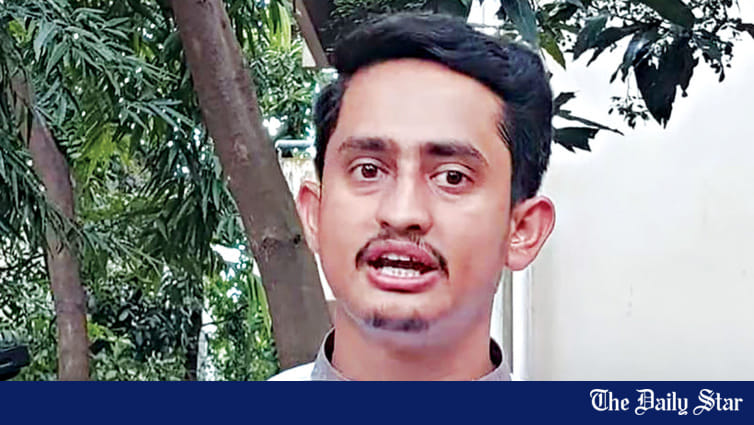
The Army Headquarters has reacted to the Facebook post of Hasnat Abdullah, principal coordinator of National Citizen Party (NCP), regarding pressure from the army to form a “refined Awami League”.

Sweden-based Netra News on Saturday published a report on the reactions. It said the post of Hasnat Abdullah is nothing but an “extremely laughable and an immature array of stories”.

In his Facebook post, Hasnat Abdullah on Friday wrote, “11 March, 2:30 pm.

“A few days ago I told you about a new conspiracy in the name of ‘refined Awami League’. This is a plan by India. The plan is being done centering Saber Hossain Chowdhury, Shirin Sharmin and Taposh.

“The plan was presented to me and two others from the cantonment at 2:30 pm on 11 March. We were requested to accept the proposal in exchange for sharing some seats. We were said, this was proposed to several political parties already and they have agreed to rehabilitate Awami League on condition. It is better to have several opposition parties including a weaker Awami League than just one opposition party. As a result, you will find several politicians speaking in the media in favour of the Awami League for the last two days.”

The Netra News report said, “In a statement shared with Netra News, the army headquarters acknowledged that its chief, General Waker-uz-Zaman, met Hasnat Abdullah on March 11th in Dhaka Cantonment. However, the Army described Abdullah’s assertions as ‘extremely laughable and an immature array of stories’.”

“The meeting wasn’t ‘a matter of summoning them and proposing or pressuring them about the rehabilitation of the Awami League’, the statement said. Instead, it insisted, the meeting occurred at the request of Abdullah and another coordinator of his party, Sarjis Alam, who had long sought a ‘courtesy meeting’ with Waker-uz-Zaman,” the report added.

Hasnat Abdullah, 27, is a former student activist who helped lead the Anti-discrimination Student Movement that emerged after protests against a court order reinstating a quota system for government jobs.

These demonstrations eventually contributed to the downfall of Sheikh Hasina’s government on 5 August last year.

Several student leaders from the movement have served in the subsequent interim cabinet. Among them, Nahid Islam later resigned to establish the National Citizen Party, appointing Hasnat Abdullah and Sargis Alam as regional chief organisers.

The report further said NCP called a media conference on the very night of Hasnat Abdullah’s post. “Speaking at a party press conference on Friday night, Abdullah and his party colleagues doubled down on their claims. But he refused to confirm whether the 11 March meeting he referred to involved Waker-uz-Zaman.

“I have mentioned ‘cantonment’ there (in the Facebook post); you can talk to them,” he said, declining to give a “binary” yes-or-no answer when pressed by a Netra News reporter. He also claimed they had been “invited to talk” about issues of magistracy power and law and order.

“The Army’s statement contradicts much of Abdullah’s version of events, saying that Abdullah and Alam had “for a long time” sought a courtesy call with the general,” the Netra News report said.

On 11 March, the Army said, “Sarjis Alam phoned the Military Adviser to the Army Chief to arrange the meeting, and was asked to come to army headquarters.” Instead, the pair was said to have waited at Sena Bhaban, where the general met them after finishing his official duties.

The Netra News report stated that the news portal was unable to verify what was discussed during the meeting, although a senior army officer said the initiative originated with Hasnat Abdullah and Sarjis Alam. Both men, as well as Patwari, have since maintained that they do not harbour any animosity towards the army or its leadership.

The report further said, “Waker-uz-Zaman became a focus of national attention after Hasina was toppled. He was involved in negotiations with various political actors that eventually led to an interim government under Muhammad Yunus.

“Bangladesh’s army has historically played a pivotal role in the country’s political upheavals and continues to wield considerable sway in public life. The general himself has issued warnings about how protracted mudslinging among different factions could ‘threaten Bangladesh’s stability and sovereignty’.

“But the soft-spoken general has repeatedly denied any desire for direct military intervention, even as speculation continues about the armed forces’ influence on civilian politics.

“Nevertheless, unease remains.”

When Prothom Alo contacted the Inter-Services Public Relations (ISPR) directorate about the Army Headquarter’s statement published in Netra News, ISPR said it was not aware of any such statement.​
 
হাসনাতের ফেসবুক স্ট্যাটাস নিয়ে নেত্র নিউজকে যা জানিয়েছে সেনাসদর


When the agenda is to ban the Awami League
Zahed Ur Rahman
Political analyst and university teacher
Updated: 23 Mar 2025, 14: 55

1742778132738.png

NCP convener Nahid Islam speaks at a press briefing in Dhaka on 21 March 2025. Prothom Alo

It became clear to me, at least, on Wednesday, 20 November, that the current interim government is not moving toward banning Awami League. On that day, during a meeting of the advisory council, it was decided that under the International Crimes (Tribunal) Act, no party or organisation could be held accountable or tried for crimes against humanity. This was despite the fact that the version of the law brought before the advisory council included provisions for trying parties accused of crimes against humanity. It goes without saying that in trying to maintain illegal power in Bangladesh, Awami League, as a party, committed crimes against humanity.

Although there are legal avenues under two other laws to take action against the Awami League, I personally believe that by removing the provision to try organisations or parties under the ICT law, the government essentially signaled in November that they were not moving toward banning the Awami League. A few days earlier, the chief adviser had finally stated the government's position against banning the Awami League during a meeting with representatives from the International Crisis Group.

The chief adviser had made similar statements before, but this time, two events occurred immediately afterward that dramatically shifted the situation. Hasnat Abdullah, the chief organiser (South Region) of the National Citizen Party (NCP), revealed on a Facebook post that during a meeting at a cantonment, some of their members were asked to support the creation of a ‘refined Awami League’ and bring it into the elections.

Although Hasnat didn’t explicitly state who sat with him at the cantonment meeting, his response to a question at an NCP press conference the next day strongly implied the involvement of the army chief. Hasnat believes that the army chief’s recent comments about inclusive elections imply an intention to hold elections with the Awami League. It is assumed that everyone has associated the army chief with his cantonment meeting.

Within hours of this post, Asif Mahmud Shojib Bhuyain, a government adviser, shared a brief statement made by Hasnat, which later appeared in more detail during an interview with the adviser on a television channel. The statement, which went viral immediately, featured Asif Mahmud accusing the army chief of strongly opposing their chief adviser Yunus’ appointment. According to Asif, the army chief was unconvinced until the last moment and only reluctantly accepted the decision. Setting aside the truth of Asif’s claim, an important question arises: Why would a government adviser make a statement that puts the army chief under intense pressure at this critical moment?

A group that has long sought to create public opinion against the army chief and remove him from his post began using these two recent events against the army chief. Not only that, this time, they also called on the public to take to the streets against the army chief.

It is true that the army chief has previously discussed election timelines in an interview with Reuters after Sheikh Hasina’s fall and escape. His recent comments on inclusive elections are seen by some as military interference or influence in politics, which is not entirely unreasonable. Therefore, some legitimate criticism of the army chief is understandable. However, even before these recent events, efforts to build a context for removing the army chief were already underway.

Whether the Awami League will be banned or not, there can be debate, even arguments, over this issue. Politics will continue, but we must be vocal against any attempt to create instability and obstruct elections and the restoration of democracy.

It’s worth noting that the same accusation being leveled against the army chief could be more strongly directed at the chief adviser. As head of government, he himself stated that they were not banning the Awami League. Therefore, the responsibility for preserving and rehabilitating the Awami League should have fallen on Professor Yunus, but it did not happen. This suggests that whether or not the Awami League will continue is becoming more of a political conspiracy game.

The NCP press conference I mentioned was organised mainly in response to the chief adviser’s statement, criticising the chief adviser’s remarks about the Awami League. For some time, I have believed and mentioned in various occassions that the NCP would make banning the Awami League part of their political agenda. Even before forming the party, their two organisations, the Anti-Discrimination Student Movement and the Jaitya Nagorik Committee, had discussed this issue in depth.

Given the current political situation, the NCP likely sees this issue as one of the few ways to engage the general public. I’m not saying they are doing this without good intentions, but politics is politics. It requires issues that a political party can use to connect with the public and gain support. This explains why, despite being part of the government, adviser Mahfuj Alam (who could join the NCP at any time) has spoken against the Awami League’s political rights.

On the other hand, the issue of banning the Awami League has become part of a conspiracy game. The chief adviser has consistently mentioned that elections will be held by June next year. While some may have reservations about the June timeline, there is broad consensus across society that, provided certain reforms and the trial of Sheikh Hasina and her associates proceed, December would be an acceptable deadline.

A faction has openly taken a stance against elections, advocating for elections much later than the June timeline. While some criticism of the army chief’s actions is understandable, the current situation—after Sheikh Hasina’s fall and the country’s precarious state—does not allow for calm and reasoned judgment. However, it is clear that the military, under the army chief’s leadership, remains stable and strongly supports holding elections and restoring democracy at the right time.

It is true that the political future of the Awami League is a significant question in Bangladesh's politics now and in the near future. There is considerable international and geopolitical pressure against banning the Awami League. Even the United Nations Human Rights Commission, which has issued harsh reports against Sheikh Hasina, her associates, and her party, opposes banning the Awami League.

As mentioned earlier, while the ICT law does not allow banning a political party, at least two other laws do. The 2009 Anti-Terrorism Act allows the government to ban a political party through administrative order. According to the Political Parties Ordinance of 1978, the government can appeal to the High Court to ban a political party or suspend its activities. If desired, the government could specifically seek the High Court’s opinion on the Awami League through this law.

Whether the Awami League will be banned or not, there can be debate, even arguments, over this issue. Politics will continue, but we must be vocal against any attempt to create instability and obstruct elections and the restoration of democracy.

*Zahed Ur Rahman, political analyst and university teacher.

*This column appeared in the print and online edition of Prothom Alo and has been rewritten for the English edition by Rabiul Islam​
 

NCP to proceed with demand to revoke Awami League's registration
Asif Howladar
Dhaka
Published: 27 Mar 2025, 19: 42

1743121060618.png


The National Citizen Party (NCP) wants the Awami League to be banned through a judicial process instead of executive order on charges of genocide during the July uprising.

Before that, the party wants the cancellation of the Awami League’s registration. The party will be holding programmes with this demand.

The NCP also wants a ban on political activities of Awami League until the judicial process is finished. They will take a strong stand against any attempt to rehabilitate the Awami League.

At the same time the NCP leaders will be cautious in their statements regarding the Bangladesh Army and army chief General Waker-Uz-Zaman.

The party does not support the negative campaigns being run against the army chief. However, the party will be against any attempt of depoliticisation and political militarisation.

Three top level NCP leaders have clarified this political stance of their party to this correspondent.

Speaking to Prothom Alo, senior joint convener of the party Samanta Sharmin told Prothom Alo, “NCP is focusing on the demand to cancel Awami League’s registration at the moment. However, we will have to move towards banning the Awami League by going through various steps, including the judicial process.”

The NCP, which was formed at the initiatives of the student leaders who led the July uprising, officially started its journey on 28 February. Since then, the leaders of the party have been demanding a ban on the Awami League.

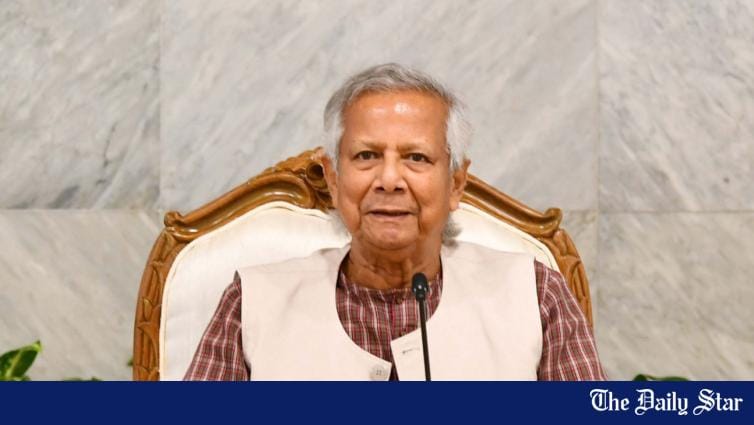
However, interim government chief adviser professor Muhammad Yunus said in a meeting with a delegation from the International Crisis Group on 20 March that the government have no plan to ban Awami League.

NCP is focusing on the demand to cancel Awami League’s registration at the moment. However, we will have to move towards banning the Awami League by going through various steps, including the judicial process. Samanta Sharmin, senior joint convener, NCP.

The NCP condemned the statement from the chief adviser in a press conference the next day. It has been learnt that the party has moved away from its demand to ban Awami League through an executive order. Instead they will be demanding cancellation of Awami League’s registration with the election commission (EC).

Sources in the party say the party does not want Awami League to get any chance to become active in politics ever again. They are also against giving Awami League any chance to participate in the upcoming polls.

They believe it would take time to ban Awami League through a proper judicial process. Therefore their registration has to be cancelled to close down their opportunity to participate in the next polls.

The NCP leaders feel it would be difficult for them to change the government’s stance in this regard as Dr Yunus has said that his government has no plan to ban the Awami League. However, it is possible to cancel Awami League’s registration through putting pressure on the government.

Preferring not to be named, a NCP leader told Prothom Alo that their stance on their demand to ban the Awami League through an executive order has changed a little. The main reason behind the change is the United Nations (UN) report which recommended not to ban any political party. Following that, they have brought forward the demand to revoke the AL’s registration.

The party is going to announce more programmes after Eid. The party leaders will be cautious in their statements regarding the army or the army chief.

The NCP leader feels the ban of Awami League through a proper judicial process will prevent any controversy or questions regarding this.

The party will remain active to prevent Awami League from being active in politics and any attempt to rehabilitate them.

Addressing an iftar event in Old Dhaka on 22 March, NCP convener Nahid Islam said they would foil any attempt to rehabilitate the Awami League.

In another event on the same day in the capital’s Shahbagh, NCP chief coordinator (South) Hasnat Abdullah said they didn’t want the Awami League to be banned under an executive order. He demanded speedy trial of the party.

Party sources say the NCP will announce more programmes demanding cancellation of Awami League’s registration.

Caution to talk about Army

On the night of 20 March, Hasnat Abdullah created a controversy with a Facebook post. He wrote that a new conspiracy was being brewed in the name of ‘Refined Awami League’. This plan has been hatched entirely by India. He mentioned that one such proposal was made to them by inviting them to the cantonment.

Various discussions were created following this statement from Hasnat. Later, the Army headquarters told Sweden-based media outlet Netra News in a statement that Hasnat’s post was “nothing but a complete political stunt”. Hasnat and Sarjis Alam (chief organiser of NCP in the northern region) had a meeting with the Army Chief on 11 March. However they were not invited, rather the meeting took place indeed at the interest of Hasnat and Sarjis.

The army headquarters dismissed the claim of “inviting them over and propose or pressurise them about rehabilitation of Awami League” adding that Hasnat’s statement was “extremely laughable and an immature array of stories”.

The next day, Sarjis wrote in a Facebook post that they were not invited to the meeting. They themselves wanted to meet. He also stated that he does not think that they were ‘pressurised’. Chief coordinator of NCP Nasiruddin Patwari labeled Hasnat’s Facebook post as discourteous.

Public statements instead of discussing it within the party created uneasiness among NCP leaders. Then the policymakers of NCP agreed on being cautious while talking about the army and the army chief.

Two NCP top leaders told Prothom Alo that they would not support the campaign that is being carried out for removing the army chief. For this could lead the country to more uncertainties. However, they said they will send a message that political decisions will indeed be taken by the political parties and not by anyone else.

During a programme at Shahbagh on 22 March, Hasnat Abdullah said, “Our stance is not against the army. Our stance is against those who want to misuse the army.”

Programmes after Eid

The NCP has plans for field-level programmes after Eid to counter the rumours of a military coup, ‘rehabilitation’ of the Awami League and the abrupt programmes from Awami League. However, what sort of programmes will be held has not been decided yet.

A leader of the party told Prothom Alo on condition of anonymity, “We will hold the programmes keeping in mind the demand of Awami League’s trial and revocation of their registration.”​
 

Awami League question: to ban or not to ban
by M Adil Khan 30 March, 2025, 00:00

1743383920527.png


THE recently deposed Awami League government left a sordid history. Its decade-and-a-half-long reign (2009–August 2024) witnessed rampant corruption, violent and ruthless suppression, and repression of opponents. During this time, a mutiny among the paramilitary force, BDR, took place. The cause and the sources of the mutiny that resulted in the murder of 57 army officers remain a mystery to this day. There are suggestions that the mutiny was orchestrated from within and outside and was initiated to weaken the Bangladesh army.

There is now evidence that suggests that the Awami League’s deposed leader Sheikh Hasina bartered the country’s sovereignty to India to stay in power, which favoured India at the cost of Bangladesh. Indeed, the deposed government’s ties, more like subservience, to India have been so strong and intimate that in the face of the mass uprising, the leadership of the deposed ruling party, including its leader, Sheikh Hasina, fled to India, where they are safely ensconced to this day.

Far from being repentant of the wrongs they had committed during their decade-and-a-half-long reign and, lately, for the brute force with which she and her loyal forces tried to suppress the July-August 2024 mass uprising that killed and injured thousands, mostly young, Sheikh Hasina and her loyalists have branded the uprising a conspiracy and, much worse, are said to be planning revenge.

This is the backdrop against which the post-Hasina interim government led by Muhammad Yunus has indicated that in the forthcoming elections all registered political parties, including the Awami League, will be allowed to participate. This proposed idea did not go down well with most people.

Ban or not to ban

INDEED, given the Awami League’s horrific track record in human rights abuse and criminalities, many people are demanding that the Awami League should not only be disallowed from participation in the forthcoming election, but the party itself should be banned, just as the Nazis and fascists were banned, and for the same reason, the Bangladesh Awami League should be banned.

Others have been a bit conciliatory, who argue that ‘We want justice first; none of those killers and autocrats have been sentenced yet. Most of them were given safe exit out of the country. We want justice first. If proper justice can be achieved, then we have no problem with the Awami League coming back in a reformed way.’

Yet others have argued that the Awami League and good people are mutually exclusive, meaning that it is the Awami Leaguers that have made Awami League a wicked organisation, and thus banning Awami League is the only way to bar bad people from reentering politics in Bangladesh.

Some, however, believe that there is no need to officially ban Awami League, for given its despicable track record, it would die its own death. ‘Remember the Muslim League, which had spearheaded the vigorous movement for a separate homeland for the Muslims…. Didn’t the party enjoy the overwhelming support of the people before and after independence in 1947? But because of the follies of its leaders (nothing compared to what the Awami League did), their popularity dwindled in quick time and the party almost died, rejected by the people.… Outright banning [of Awami League] will not do any good, except for creating more tension,’ and therefore, ‘let it die a natural death!’

So, what is the verdict — should the Awami League be banned or be given another opportunity to repent and apologise for their bad deeds and assist the interim government to bring to justice its leaders who face criminal charges, including charges of mass murder, and redeem itself?

Some, however, doubt that the Awami League can be remedied and trusted and suggest that ‘old habits die hard’, implying that the Awami League’s past behaviour has repeated in the present and so would be in the future. Let us appraise the Awami League generically.

Appraising Awami League

BASED on its pre-liberation and post-liberation politics, it is obvious that the Awami League is a party of contradictions — from champion of democracy, it degenerated, especially after it came to power, into a horrific persecutor autocracy. In summary, the Awami League reveals the following interesting characters:

— the Awami League is the most avid advocate of democracy, only when it is in opposition, but once in power, it uses its authority to stifle democracy and adopt autocracy (1975; 2009-2024).


— the Awami League uses democracy to come to power and then uses democracy to kill democracy, for example, the abolition of parliamentary democracy and transition to one-party BaKSAL rule (1975); and the abolition of the caretaker system, which paved the way to rigged elections with impunity and a march towards autocracy (2009–2024).

— the Awami League makes hatred its political capital and, when in government, uses political othering, repression, and patronage distribution as its tools of control and, more recently, bartered the country’s sovereignty to an external entity to entrench itself in the seat of the government (2009-2024).

— Another redeeming feature of the Awami League is that its supporters support the party and its leaders unquestionably, and such blind loyalty has allowed it to get away with murder, literally, so much so that the Awami League looks less a political party and more a cult where its supporters put the party ahead of the country and the leader ahead of both the party and the country into the position of a deity.

So, given this scenario, which only confirms the Awami League’s uninterrupted propensity to abuse, should the party be given the opportunity to reform itself and join the ensuing democratic process?

There are those who argue that the Awami League’s road to recovery lies in self-reflection, ideological recommitment, and rebuilding trust with the people, and yet others are less convinced and suggest that if past records are any guide, ‘reflection’ is not one of the Awami League’s strongest points.

So, where do we go from here?

If we probe deep, we see that the root of the problem is not the Awami League and, for that matter, not political parties as such nor the constitutions of political parties that are replete with good intentions but the people that run political parties. So, the remedy may lie not in banning a badly behaving party but in preventing bad people from entering political parties, and if so, how do we go about it?

The remedy

A RECENT UN study has shown that you may have the world’s best system, but if you have crooks running them, systems will be crooked. Take, for example, the case of the US — same constitution and same party and yet under Abraham Lincoln, America looked and behaved one way, and under Trump? Less said is better.

So, are there models that help keep the crooks out of the systems, both political and government systems?

Indeed, there are. For example, South Korea’s integrity check system, called the Personnel Verification System (PVS), is a good model to consider.

The PVS undertakes integrity checks of politicians (the executives of political parties, including party leaders) and heads of government departments, including heads of the police and the army, after they get nominated and prior to their appointments to respective positions. These nominated individuals get formally appointed only after obtaining PVS clearance.

In South Korea, the introduction of PVS, which was introduced a couple of decades ago, has since successfully prevented people with questionable track records from entering systems, politics and government — only the competent and the honest are appointed to the high positions in South Korea these days. More importantly, the PVS ensures that even if someone passes the initial integrity checks and later deviates from ethical norms, they get sacked and are brought to justice (recently, the sitting president was indicted and sacked on charges of nepotism).

In the context of the above, it is suggested that instead of banning a political party, any party the interim government may consider adopting PVS-like provisions that ensure improved ethics in politics such as: (i) firstly, compels the political parties to democratically elect their leaders including office bearers and that these party elections are held under the supervision of the election commission; (ii) secondly, introduces integrity checks such as that of South Korea’s PVS to help keeping the corrupt and the crooks out of political parties; (iii) ensures that constitution of political parties are not in variance with the reformed constitution of the country and to facilitate implementation of (i) and (ii) above; (iv) de-registers all the current registered political parties including the Awami League and re-registers them under the proposed reformed codes of conduct of political parties.

It is expected that the reformed governance of political parties that would also include the integrity checks of office bearers such as that of South Korea’s PVS will significantly improve both the quality of the politicians as well as that of political parties and, by extension, governance of the country.

M Adil Khan is an academic and former senior policy manager of the United Nations.​
 

Awami League is ‘already banned in people’s hearts’, says Jamaat chief Shafiqur
FE ONLINE DESK
Published :
Mar 31, 2025 17:48
Updated :
Mar 31, 2025 22:46

1743468158652.png


Jamaat-e-Islami chief Shafiqur Rahman has said the Awami League, ousted through mass uprising, is “already banned in the hearts and minds of the people”.

He made the statement while speaking to reporters on Monday after attending Eid prayers at the Baitul Mukarram National Mosque and visiting the families of several victims of the July-August Uprising.

According to a bdnews24.come report, Shafiqur said: “It is Allah who has banned them [the Awami League] and the people have done the same in their hearts. If they are not a banned group, then why have they all fled?”

On the issue of justice for the victims of the uprising that ended the Awami League’s 15-year rule, he added: “Justice is their right—an undeniable right of the families who have suffered. Justice must be served.”

“True justice will come in the hereafter, but in this world, they deserve justice too—and it will happen.”

Earlier, after offering Eid prayers at Baitul Mukarram, Shafiqur said many families in Bangladesh were unable to celebrate the festival as they continued to grieve their loved ones, who lost their lives during the July Uprising. “Many mothers are still grieving for their children. Those responsible for the July-August massacre must be brought to justice.”

“People want to see justice that deters future atrocities—justice that ensures no killer can again toy with human lives. If those who were injured or lost loved ones see that justice is truly served, it might bring them some comfort.”

Sharing his vision for a future Bangladesh, Shafiqur said: “We want a country where bloodshed is no longer part of politics. Where human lives are not treated as disposable. A society where people live with love, dignity, equality, and respect.”

“No one should be judged or deprived of their rights based on their religion. All citizens must enjoy equal rights. And we believe such a society can only be achieved by implementing the laws of Allah as set forth in the Quran. That’s the society we’re fighting for—a hunger-free, just society.”​
 

Political parties divided over AL return to politics
Staff Correspondent 21 March, 2025, 23:30

View attachment 15807

Political parties are divided over the question of allowing Awami League to return to politics as some of them are ready to tolerate the AL politicians with no criminal record, while others demand a complete ban on the party for its involvement in the July-August massacre.

BNP senior joint secretary general Ruhul Kabir Rizvi on Friday questioned why the Awami League should not be allowed to engage in politics under the leadership of people with a clean image.

Bangladesh Jamaat-e-Islami ameer Shafiqur Rahman, however, said that the people of Bangladesh would not accept the rehabilitation of AL.

The division in the views regarding Awami League’s return to politics became visible a day after the chief adviser, Professor Muhammad Yunus, on Thursday said that the interim government had no plans to ban the party.

His remarks came when the chief adviser was attending a meeting with a delegation led by the International Crisis Group president and chief executive officer, Comfort Ero,

Rizvi, while addressing an Eid gift distribution ceremony in the capital’s Dakshinkhan area, said, ‘If someone who did not commit crimes, was not involved in student killings and did not embezzle or launder money leads Awami League—then why can AL not do politics?’

‘If speedy justice is ensured, criminals are prosecuted and people then allow them to do politics, we have nothing to say,’ he said.

‘But those who have laundered money, those who are responsible for the killing of children and teenagers like Ahnaf, Abu Sayeed and Mugdho—justice must be ensured,’ Rizvi said.

He said some people were debating whether AL should be allowed to do politics, but they were not demanding the perpetrators of mass killings be held accountable.

The senior BNP leader also questioned Sheikh Hasina’s integrity saying, ‘I even doubt whether Sheikh Hasina believes in Allah. Her only god is money. And someone who worships money can never serve the people.’

‘Her relatives, her chosen individuals and certain businessmen are involved in money laundering. They must be brought to trial,’ he added.

Jamaat chief Shafiqur Rahman in a post on his verified Facebook on Friday morning said that the people of Bangladesh would not accept AL’s rehabilitation.

He urged people from all walks of life to remain restrained, vigilant and united, rising above party affiliations to play a responsible role in the greater interest of the country.

Shafiqur Rahman also wrote, ‘Bangladesh is crossing a significant turning point in its history. After a long period of fascist rule, on July 36, 2024, the nation was gifted with a new Bangladesh by the mercy of Almighty Allah. For this, we offer countless thanks to the Almighty.’

The fallen fascists are engaged in various conspiracies both within the country and abroad to destabilise the nation, he stated.

The Jamaat chief also wrote, ‘At this moment, the people want to see the trial of the genocide as a priority. There is no room to think about anything else beyond this.’

Besides, the Nationalist Democratic Movement in a statement

said that the interim government must take immediate legal steps to keep the AL away from elections and politics.

The people did not want to see this fascist force anymore, it said.

Noting that the NDM would be in the streets in any movement to ban Awani League, the party said that those who wanted to rehabilitate AL inside or outside the government would have to be accountable to people.

Meanwhile, Jatiya Party chairman GM Quader opposed banning AL, saying that while some individuals within the party might be bad, the party itself was not.

Speaking to journalists at his ancestral residence in Rangpur, he said, ‘Awami League is like a car. The driver may be bad, but that does not mean the car is bad.’

Quader also said that the government was trying to hold elections while excluding ‘half’ of the country’s population but such an election would not be acceptable and would fail to bring stability.

Such action would only push the country towards more conflict and crisis, he warned.

Hefazat-e-Islam joint secretary general Mamunul Haque at a protest rally at the north gate of the Baitul Mukarram National Mosque after Friday prayers said that ‘The “towhidi janata” of this country have sent them away, any attempt to rehabilitate them will not be tolerated,’ he stated.

‘If an attempt is made to establish AL in the country, it will have to be done over our dead bodies,’ he added.​
All corrupt India Dalal people (Rizvi of BNP, GM Quader of JP) are for bringing back AL. They want to resume their India Dalali business activity. These people should be ousted too.
 

Hasnat’s statement ‘laughable’, ‘immature’: Army HQ to Netra News
Staff Correspondent
Dhaka
Published: 23 Mar 2025, 20: 33

View attachment 15872

The Army Headquarters has reacted to the Facebook post of Hasnat Abdullah, principal coordinator of National Citizen Party (NCP), regarding pressure from the army to form a “refined Awami League”.

Sweden-based Netra News on Saturday published a report on the reactions. It said the post of Hasnat Abdullah is nothing but an “extremely laughable and an immature array of stories”.

In his Facebook post, Hasnat Abdullah on Friday wrote, “11 March, 2:30 pm.

“A few days ago I told you about a new conspiracy in the name of ‘refined Awami League’. This is a plan by India. The plan is being done centering Saber Hossain Chowdhury, Shirin Sharmin and Taposh.

“The plan was presented to me and two others from the cantonment at 2:30 pm on 11 March. We were requested to accept the proposal in exchange for sharing some seats. We were said, this was proposed to several political parties already and they have agreed to rehabilitate Awami League on condition. It is better to have several opposition parties including a weaker Awami League than just one opposition party. As a result, you will find several politicians speaking in the media in favour of the Awami League for the last two days.”

The Netra News report said, “In a statement shared with Netra News, the army headquarters acknowledged that its chief, General Waker-uz-Zaman, met Hasnat Abdullah on March 11th in Dhaka Cantonment. However, the Army described Abdullah’s assertions as ‘extremely laughable and an immature array of stories’.”

“The meeting wasn’t ‘a matter of summoning them and proposing or pressuring them about the rehabilitation of the Awami League’, the statement said. Instead, it insisted, the meeting occurred at the request of Abdullah and another coordinator of his party, Sarjis Alam, who had long sought a ‘courtesy meeting’ with Waker-uz-Zaman,” the report added.

Hasnat Abdullah, 27, is a former student activist who helped lead the Anti-discrimination Student Movement that emerged after protests against a court order reinstating a quota system for government jobs.

These demonstrations eventually contributed to the downfall of Sheikh Hasina’s government on 5 August last year.

Several student leaders from the movement have served in the subsequent interim cabinet. Among them, Nahid Islam later resigned to establish the National Citizen Party, appointing Hasnat Abdullah and Sargis Alam as regional chief organisers.

The report further said NCP called a media conference on the very night of Hasnat Abdullah’s post. “Speaking at a party press conference on Friday night, Abdullah and his party colleagues doubled down on their claims. But he refused to confirm whether the 11 March meeting he referred to involved Waker-uz-Zaman.

“I have mentioned ‘cantonment’ there (in the Facebook post); you can talk to them,” he said, declining to give a “binary” yes-or-no answer when pressed by a Netra News reporter. He also claimed they had been “invited to talk” about issues of magistracy power and law and order.

“The Army’s statement contradicts much of Abdullah’s version of events, saying that Abdullah and Alam had “for a long time” sought a courtesy call with the general,” the Netra News report said.

On 11 March, the Army said, “Sarjis Alam phoned the Military Adviser to the Army Chief to arrange the meeting, and was asked to come to army headquarters.” Instead, the pair was said to have waited at Sena Bhaban, where the general met them after finishing his official duties.

The Netra News report stated that the news portal was unable to verify what was discussed during the meeting, although a senior army officer said the initiative originated with Hasnat Abdullah and Sarjis Alam. Both men, as well as Patwari, have since maintained that they do not harbour any animosity towards the army or its leadership.

The report further said, “Waker-uz-Zaman became a focus of national attention after Hasina was toppled. He was involved in negotiations with various political actors that eventually led to an interim government under Muhammad Yunus.

“Bangladesh’s army has historically played a pivotal role in the country’s political upheavals and continues to wield considerable sway in public life. The general himself has issued warnings about how protracted mudslinging among different factions could ‘threaten Bangladesh’s stability and sovereignty’.

“But the soft-spoken general has repeatedly denied any desire for direct military intervention, even as speculation continues about the armed forces’ influence on civilian politics.

“Nevertheless, unease remains.”

When Prothom Alo contacted the Inter-Services Public Relations (ISPR) directorate about the Army Headquarter’s statement published in Netra News, ISPR said it was not aware of any such statement.​
Army should stay out of politics and not comment on it.

They should stay in the barracks. Too many India dalals in the Armed forces.
 

NCP to proceed with demand to revoke Awami League's registration
Asif Howladar
Dhaka
Published: 27 Mar 2025, 19: 42

View attachment 16000

The National Citizen Party (NCP) wants the Awami League to be banned through a judicial process instead of executive order on charges of genocide during the July uprising.

Before that, the party wants the cancellation of the Awami League’s registration. The party will be holding programmes with this demand.

The NCP also wants a ban on political activities of Awami League until the judicial process is finished. They will take a strong stand against any attempt to rehabilitate the Awami League.

At the same time the NCP leaders will be cautious in their statements regarding the Bangladesh Army and army chief General Waker-Uz-Zaman.

The party does not support the negative campaigns being run against the army chief. However, the party will be against any attempt of depoliticisation and political militarisation.

Three top level NCP leaders have clarified this political stance of their party to this correspondent.

Speaking to Prothom Alo, senior joint convener of the party Samanta Sharmin told Prothom Alo, “NCP is focusing on the demand to cancel Awami League’s registration at the moment. However, we will have to move towards banning the Awami League by going through various steps, including the judicial process.”

The NCP, which was formed at the initiatives of the student leaders who led the July uprising, officially started its journey on 28 February. Since then, the leaders of the party have been demanding a ban on the Awami League.

However, interim government chief adviser professor Muhammad Yunus said in a meeting with a delegation from the International Crisis Group on 20 March that the government have no plan to ban Awami League.

NCP is focusing on the demand to cancel Awami League’s registration at the moment. However, we will have to move towards banning the Awami League by going through various steps, including the judicial process. Samanta Sharmin, senior joint convener, NCP.

The NCP condemned the statement from the chief adviser in a press conference the next day. It has been learnt that the party has moved away from its demand to ban Awami League through an executive order. Instead they will be demanding cancellation of Awami League’s registration with the election commission (EC).

Sources in the party say the party does not want Awami League to get any chance to become active in politics ever again. They are also against giving Awami League any chance to participate in the upcoming polls.

They believe it would take time to ban Awami League through a proper judicial process. Therefore their registration has to be cancelled to close down their opportunity to participate in the next polls.

The NCP leaders feel it would be difficult for them to change the government’s stance in this regard as Dr Yunus has said that his government has no plan to ban the Awami League. However, it is possible to cancel Awami League’s registration through putting pressure on the government.

Preferring not to be named, a NCP leader told Prothom Alo that their stance on their demand to ban the Awami League through an executive order has changed a little. The main reason behind the change is the United Nations (UN) report which recommended not to ban any political party. Following that, they have brought forward the demand to revoke the AL’s registration.

The party is going to announce more programmes after Eid. The party leaders will be cautious in their statements regarding the army or the army chief.

The NCP leader feels the ban of Awami League through a proper judicial process will prevent any controversy or questions regarding this.

The party will remain active to prevent Awami League from being active in politics and any attempt to rehabilitate them.

Addressing an iftar event in Old Dhaka on 22 March, NCP convener Nahid Islam said they would foil any attempt to rehabilitate the Awami League.

In another event on the same day in the capital’s Shahbagh, NCP chief coordinator (South) Hasnat Abdullah said they didn’t want the Awami League to be banned under an executive order. He demanded speedy trial of the party.

Party sources say the NCP will announce more programmes demanding cancellation of Awami League’s registration.

Caution to talk about Army

On the night of 20 March, Hasnat Abdullah created a controversy with a Facebook post. He wrote that a new conspiracy was being brewed in the name of ‘Refined Awami League’. This plan has been hatched entirely by India. He mentioned that one such proposal was made to them by inviting them to the cantonment.

Various discussions were created following this statement from Hasnat. Later, the Army headquarters told Sweden-based media outlet Netra News in a statement that Hasnat’s post was “nothing but a complete political stunt”. Hasnat and Sarjis Alam (chief organiser of NCP in the northern region) had a meeting with the Army Chief on 11 March. However they were not invited, rather the meeting took place indeed at the interest of Hasnat and Sarjis.

The army headquarters dismissed the claim of “inviting them over and propose or pressurise them about rehabilitation of Awami League” adding that Hasnat’s statement was “extremely laughable and an immature array of stories”.

The next day, Sarjis wrote in a Facebook post that they were not invited to the meeting. They themselves wanted to meet. He also stated that he does not think that they were ‘pressurised’. Chief coordinator of NCP Nasiruddin Patwari labeled Hasnat’s Facebook post as discourteous.

Public statements instead of discussing it within the party created uneasiness among NCP leaders. Then the policymakers of NCP agreed on being cautious while talking about the army and the army chief.

Two NCP top leaders told Prothom Alo that they would not support the campaign that is being carried out for removing the army chief. For this could lead the country to more uncertainties. However, they said they will send a message that political decisions will indeed be taken by the political parties and not by anyone else.

During a programme at Shahbagh on 22 March, Hasnat Abdullah said, “Our stance is not against the army. Our stance is against those who want to misuse the army.”

Programmes after Eid

The NCP has plans for field-level programmes after Eid to counter the rumours of a military coup, ‘rehabilitation’ of the Awami League and the abrupt programmes from Awami League. However, what sort of programmes will be held has not been decided yet.

A leader of the party told Prothom Alo on condition of anonymity, “We will hold the programmes keeping in mind the demand of Awami League’s trial and revocation of their registration.”​

This is a classic by all political parties, and by NCP too. Agitation program resumes "break-ke-baad"!

Eid er porey andolon!
 

Govt will not make decision to ban AL alone: Mahfuj

1743640315810.png

Information and Broadcasting Adviser Mahfuj Alam today spoke at journalists after visiting the Purba Narayanpur Islamia Junior Dakhil Madrasa in Lakshmipur. Photo : BSS

Information Adviser Mahfuj Alam yesterday said the government will not make any unilateral decision regarding the ban on the Awami League; rather, the decision will be taken following consultation with political parties, development partners, and other stakeholders.

"The government believes it cannot make the decision alone to ban the AL without consulting other political parties, as well as our local and foreign partners and stakeholders," he said.

Although the country's people have repeatedly demanded the banning of the AL, the adviser said, "We believe the government will make this decision after consultation and a thorough review of the matter involving all parties."

Mahfuj made these comments in response to a query from a journalist after visiting the Purba Narayanpur Islamia Junior Dakhil Madrasa in the Isapur Union of Ramganj upazila in the afternoon.

Earlier, he arrived at his village home and met with family members. Mahfuj also offered prayers at his paternal grandparents' graves.

Speaking on the next general elections, the adviser said the chief adviser had said elections would be held between December of this year and June 2026.

"It will depend on how much reform takes place and how these will be implemented. We should keep the elections limited to this period. The government has no ambition beyond that," Mahfuj said.

Noting that there is no ambiguity regarding the elections, he categorically stated that the polls will definitely be held.

"There are two timelines -- December or June -- and the election will take place within this timeframe. The government may not go beyond these timelines. Political parties should prepare. The election will happen," he added.

Regarding the Media Reform Commission, Mahfuj said the recommendations of the commission will be reviewed with the involvement of all stakeholders.

"We will reform as much as we can during the current interim government's tenure. Specifically, the issue of media workers' wages and benefits is a top priority. The issue of ownership is also under review," he added.​
 

NCP will not accept rehabilitation of Awami League: Akhtar Hossain
BSS
Published: 05 Apr 2025, 19: 34

1743905173167.png


NCP Member Secretary Akhtar Hossain addressed at a discussion held with NCP organizers at the Rangpur Chamber Building Auditorium on Friday night BSS

National Citizen Party (NCP) Member Secretary Akhtar Hossain said they will never accept the rehabilitation of the Awami League, accusing the ousted party of committing genocide and crimes against humanity in Bangladesh.

"If anyone from the Awami League dares to join any programme of NCP in any way, we will resist and hand them over to the law. We believe that those who established fascism in Bangladesh have no moral right to do politics in the country," he said.

Akhtar said this while talking to local journalists after attending a discussion held with NCP organizers at the Rangpur Chamber Building Auditorium on Friday night.

In response to a question, he said, "In the current situation in Bangladesh, it is crucial to bring to justice those who committed genocide during the 2024 mass uprising."

"This trial should not only focus on individuals, but also address the crimes against humanity that the Awami League, as a party, has inflicted on Bangladesh," he added.

Akhtar Hossain said the NCP, the Anti-Discrimination Student Movement and the National Citizens Committee are distinct and independent organisations.

"NCP will operate as a political party, while the National Citizens Committee and the Anti-Discrimination Student Movement will continue to work to implement the aspirations of the July Uprising as political and civil society platforms," He added.

Akhtar said, "All the organizations are certainly making decisions based on their own views."

"We think that activities of the Anti-Discrimination Student Movement and the National Citizens Committee have come to an end with the joining of many people to NCP from those two platforms. We are currently working with NCP," he said.

Regarding the meeting between Indian Prime Minister Narendra Modi and Bangladesh's interim government Chief Adviser, Professor Dr Muhammad Yunus, in Bangkok, NCP Member Secretary stated, "The Chief Adviser has reflected the aspirations of the people of Bangladesh."

"However, it is essential to follow the appropriate bilateral and international frameworks in dealing with India. The relationship between Bangladesh and India should not be seen as one between any political party and a foreign nation," he added.

"The interim government must take all necessary steps to ensure the trial of Sheikh Hasina. The people of Bangladesh want a solution to the Teesta and Ganga water-sharing and border-killing issues," he said.

At the event, Akhtar urged all political parties to cooperate the reform initiatives that the interim government has taken.

NCP joint chief organiser Farzana Dina and leaders of various levels of Bangladesh Democratic Students' Union, Anti-Discrimination Students' Movement, and National Citizens' Committee were, among others, present at the event.​
 

On rehabilitating Awami League
by Obaidul Hamid 12 April, 2025, 00:00

1744417188473.png


DEALING with the fallen Awami League has posed a political and diplomatic challenge for Professor Yunus’s interim government. While this appears to be a tricky issue, Awami League’s de facto national identity as a political entity needs foregrounding.

Rehabilitating this marauding political party is not a popular demand. It’s the wish of Awami activists and beneficiaries who occupied different organs of the state body during Hasina’s atrocious regime. The end of the regime in August 2024 has eliminated only a fraction of the Awamised force. The larger part is still functional in different forms and modalities. Awami leaders who were allowed to escape the public wrath and take refuge in other countries have also been actively pursuing the rehabilitation project. One host nation is using both diplomatic and undiplomatic strategies on their behalf to pressurise the new government in Bangladesh.

From the people’s perspective, it’s a question of banning — rather than restoring — Awami League. However, banning may not be a wise move in longer terms. Professor Adil Khan examined the banning option in an article in New Age about two weeks ago. One of his conclusions was that ‘the remedy may lie not in banning a badly behaving party [read Awami League] but in preventing bad people from entering political parties.’

The ‘remedy’ as mentioned by Professor Khan is a Personnel Verification System (PVS) which is an integrity check for people entering politics and monitoring their integrity while they are in office. He noted that the model worked for South Korea. In his view, it’s worth exploring for Bangladesh in the new political environment. The model emphasises democratic norms and practices within political parties including the selection of their leaders.

However, the known and unknown agents of Awami rehabilitation may not endorse the PVS. For them, rehabilitation is bringing the old system (with all its evils) back and maintaining the status quo. For example, they would ask for reinstating Hasina, regardless of the volume of crimes that she committed in her political life.

Can Bangladesh rehabilitate a political party whose Bangladeshi identity is suspect and whose affiliation with a foreign country may have erased all marks of suspicion? Awami League’s connection with this country is proverbial. The 1971 war may not be imagined without Awami League being patronised by this country. Then, after the events of 1975, Hasina was sheltered by the same country as a special guest. Since Awami League’s first rehabilitation during Ziaur Rahman’s rule, it’s the only party in Bangladesh that this country has trusted. Without doubt, this trust in Awami League has been at the expense of the trust in or concern for the people.

This neighbouring power has come to Awami League’s rescue at every political juncture. Following the political turmoils and the 1/11 government during the first decade of this century, Awami League was resaddled to power by this neighbour’s intervention. To ensure that the party can stay in power, this country intervened at each of the subsequent elections. Its position was crystal clear: Democracy or no democracy, election or no election, Awami League should be in power. Diplomatically, it declared that elections were internal matters for Bangladesh in which it should not interfere. However, its interference has been an open secret. In the current political circumstances, the country has removed the veil of non-interference. It now demands a participatory election in Bangladesh, obviously in the interest of Awami League and of itself.

The metaphorical ‘husband-wife’ relationship that was promoted during Hasina’s rule was not between Bangladesh and this country; its affinity was with Awami League. However, it wasn’t a ‘conjugal’ affair after all. The so-called ‘husband’ can be seen — more appropriately — as the parental home for Awami League. Being thrown out of power, Hasina fled to this home. She also had returned to Bangladesh from this resort about four and a half decades ago.

Awami League’s filial obligation to the ‘parent’ nation may have no match in the world. Hasina’s autocratic rule presented many anomalies, violations, and contradictions. However, there was one clear method in all her madnesses. This was to make sure that the parental home remained ever happy with her, no matter what.

Minority Muslims have gone through terrible times in this ‘secular’ nation, especially under Hindutva rule. However, Tahajjud-praying Hasina never said a word about the inhuman treatment inflicted upon the Muslims or other minorities. Bangladeshis have been killed on the borders on regular intervals. Instead of requesting the authorities — not to speak of protesting — to stop the killing, her ministers defended it, attributing the blame to Bangladeshis. Hasina’s own public assertion that what she had given to this country can never be forgotten by the latter does not fall into the remit of political giving. It’s an instance that contributes to defining the national identity of Awami League.

This Awami identity is substantiated by countless examples of serving this nation’s interests. Abrar Fahad was beaten to death by Hasina’s hooligans simply because he spoke in the interest of Bangladesh and against Awami League’s limitless giving to this country. Bangladeshis were shot to death on the street because they protested the visit of its Muslim-butchering leader. Criticising public authorities of this nation was made a criminal offence in Bangladesh during Hasina’s rule. Bangladesh’s judicial system was mutilated to kill a group of Muslim leaders as per the prescription of this power. Giving transit to this nation, employing its nationals, buying electricity from them at exorbitant costs — all were done for this nation’s and Awami League’s own benefits.

The rehabilitation question needs to be addressed in Awami League’s own terms. Pakistanising the Jamaat and BNP was part of its key political discourses. From the Awami point of view, Jamaat and BNP leaders deserved to be exported to Pakistan because of their alleged connection with this Muslim country. In fact, Hasina did ban Jamaat days before her fall and escape to India. The Pakistan affinity of Jamaat and BNP has never been proven. On the other hand, Awami exchanges with the other nation against Bangladesh’s interests have left no doubt. If Jamaat or BNP did what Awami League has done with the other country, would the former deserve rehabilitation after their fall for reasons of their own making? If the answer is no for them, it should be no for Awami League too.

Awami League’s political asylum bid calls for a critical and rigorous scrutiny. This is not the first such request by or on behalf of the party. It was shown mercy earlier. In return, the people were rewarded with the longest rule of tyranny with, among other consequences, enforced disappearances, aynaghors and capital flight as its hallmarks. Rehabilitating this mafia-style fascist party is not just giving it a second chance. It is also capitulating to the sub-imperial hegemon in the region.

The neighbouring nation wouldn’t fall short of voicing Awami League’s innocence and goodness. It is unlikely to see the evil that led to its dethronement. This may lead to a logical proposition: Why not rehabilitate Awami League in this country rather than in Bangladesh? Awami League is neither needed nor wanted in Bangladesh. The neighbouring nation has sheltered a sizable body of Awami leaders since last year. Maybe they can join politics in the host country and continue serving the host’s interests, not worrying about Bangladesh.

Awami League’s rehabilitation bid is one of the many ironies defining the fallen regime. Hasina arrogantly said that there was no power in Bangladesh that could dethrone her. Bangladeshis were considered her enslaved subjects. With her monarchic hubris, she said that she fed, clothed, housed, lighted, and medicated 170 million people. She mythologised herself as a beneficent goddess and viewed the people of Bangladesh as recipients of her beneficence. Ironically, she is now in need of her beneficiaries’ mercy.

Hasina’s fall is natural justice. She should be allowed to suffer her destiny. Showing undue mercy to Awami League may not augur well for Bangladesh. It may be the case of a Trojan horse with sabotaging intentions and plans.

Obaidul Hamid is an associate professor at the University of Queensland in Australia. He researches language, education, and society in the developing world. He is a co-editor of Current Issues in Language Planning.​
 

NCP demands trial of AL

1745456449447.png

Photo: Anisur Rahman

The National Citizen Party (NCP) yesterday brought out a torchlight procession in the capital's Jatiya Press Club area, demanding the trial of Awami League and a ban on its political activities.

The procession began around 7:00pm and paraded through the surrounding area.

NCP leaders also called for political reforms and a constituent assembly election.

They held a brief rally following the procession.​
 

Govt shows excuse of West’s viewpoint when calls grow to ban AL: Sarjis
Staff Correspondent Dhaka
Published: 25 Apr 2025, 23: 03

1745627060935.png


Sarjis Alam speaks at a rally in front of the national museum in Dhaka on 25 April, 2025.Tanvir Ahmmed

Whenever demands are raised to ban Awami League, the government gives the excuse of the West’s support, Sarjis Alam, the chief organiser (north) of the National Citizen Party (NCP) said.

He made the statement while addressing a rally in front of the National Museum in Dhaka on Friday, hosted by Inqilab Mancha to demand the trial of ‘July, Pilkhana, and Shapla massacres’ and ban on Awami League.

Sarjis Alam said the demand for banning the Awami League, which they are raising today, was supposed to be fulfilled by August 2024. “Whenever we tell them to ban the Awami League, they give the excuse of the West’s viewpoint. Where was the West’s viewpoint when thousands were killed at Shapla Chattar, Pilkhana, and in July?”

He, however, refrained from naming any specific individual from the interim government or any Western country in support of his statement.

Addressing political parties, Sarjis said “Fear this generation. If you stand on this generations’ blood and play with their emotions, they will rise against all powers and pull anyone down from power.”

1745627101259.png

People chanting slogan at the rally Prothom Alo

Mosaddek Ibne Ali, former co-coordinator of the anti-discrimination student movement, said a political party has been formed after the July uprising. “They sold their spines to foreign embassies. After formation, they issued two press releases but did not mention the demand to ban the Awami League. Though the kite of this government spins during the interim period, its reel remains in the hands of foreign embassies.”

Asaduzzaman Fuaad, general secretary of the AB Party, called on the government to clarify the progress of trials. “In the world, there are precedents of permanently banning many fascist parties. The interim government must follow suit and ban the Awami League.”

Addressing the programme, Rifat Hawlader, who lost a leg during the July uprising, said “I want to declare standing on my only leg that no more brothers should lose their legs like I did. As long as I am alive, I will continue the fight against efforts to rehabilitate the Awami League.”

1745627140412.png

The rally Prothom Alo

Ali Ahsan Junaid, chief organiser of United People’s Bangladesh (UP Bangladesh), said, “As long as we are alive, the Awami League will not be able to do politics in this country. We did not fear in July, and no evil force has the capacity to contain us. We want to tell the government – take action immediately to ban Awami League. Otherwise, you will be pulled out of the power.”

Nurul Islam Saddam, secretary general of Bangladesh Islami Chhatra Shibir, alleged that the interim government failed to prosecute a single murder that took place in the last 16 years. Describing the Awami League as a “terrorist organisation,” he demanded its immediate ban.

In his speech, Sharif Osman Hadi, spokesperson of Inqilab Mancha, vowed to ensure the trial of Awami League until one of the Inqilab Manch members is alive.

At the programme, his organisation presented some demands, including the visible opening of the July massacre trials within the next 100 days, banning Awami League through executive order, official recognition and trial of Shapla massacre, publication of a list of martyrs with help of the United Nations, disclosure of full report of the Pilkhana carnage investigation, and incorporation of a clause to try Awami League in the electoral manifesto of all political parties.

Sharif Osman Hadi warned that if no steps are taken in the next 100 days, they will besiege the secretariat after a ‘march for Bangladesh’ programme on 36 July (5 August). Until the date, they will carry out public campaigns in all 64 districts.​
 

AL’s registration must be cancelled, activities banned: Nahid Islam
Published :
May 02, 2025 17:42
Updated :
May 02, 2025 17:42

1746232919047.png


Convener of the National Citizen Party (NCP) Nahid Islam has called for immediate cancellation of the Awami League’s registration as a political party and a complete ban on its political activities.

“The people of Bangladesh gave a clear verdict against the Awami League on August 5 (2024). They declared that this party should no longer be allowed to do politics in this country,” he told the 5th founding anniversary programme of the AB Party at Jatiya Press Club (JPC) on Friday.

Nahid Islam said, “On August 5, the people of Bangladesh delivered a verdict against the Awami League that it should no longer be allowed to engage in politics in this country.”

“When we say the people will decide the fate of Awami League, there are two paths – one through voting and the other through street protests. On August 5, the latter occurred through a public uprising,” he added.

Nahid, former information and broadcasting adviser of the interim government, further said a mass uprising has taken place in the country in which the people rejected both Mujibism and the Awami League, reports BSS.

“Amid the public outrage, Awami League leaders fled the country,” he said, adding, “Now, there should be no debate about whether the Awami League can continue in politics. They have lost the moral grounds to do so. Now the issue is how the legal process will proceed.”

“We must find a democratic path forward. The Awami League’s registration must be cancelled, and its organisational activities must be banned immediately. Only then can we reach a final decision through a judicial process,” he said.​
 

Protesters gather in front of Jamuna demanding ban on Awami League
FE ONLINE DESK
Published :
May 08, 2025 23:35
Updated :
May 08, 2025 23:35

1746753086524.png


Students and the public have started a sit-in programme in front of the Jamuna, the residence of the chief advisor, demanding that the Awami League be tried as a genocide perpetrator and that the party be banned.

The programme began at 10 pm on Thursday (May 8) under the leadership of NCP's chief organiser (south) Hasnat Abdullah, according to local media.

Hasnat Abdullah appeared in front of the Jamuna at 10 pm that night. Since then, protesters have been gathering there with processions demanding a ban on the Awami League.

Earlier, Hasnat Abdullah announced on his verified Facebook ID that he would start a sit-in programme in front of the chief advisor's residence, Jamuna.​
 

'March to Dhaka' again if decision is not made quickly: Nahid
FE ONLINE DESK

Published :
May 09, 2025 23:06
Updated :
May 09, 2025 23:06

1746833427834.png


On Friday night, National Citizen Party (NCP) Convener Nahid Islam warned that if the government does not promptly decide to ban the Awami League (AL), a nationwide "March to Dhaka" will be organised, similar to previous mass mobilisations. This warning was issued via a post on his verified Facebook page during the ongoing Shahbagh blockade.

In his statement, Nahid Islam emphasised that the sit-in at Shahbagh would continue and called upon all forces, regardless of political affiliation, to unite in the demand to ban the Awami League, citing concerns over national sovereignty, according to local media.

The protest at Shahbagh began earlier in the day, with Hasnat Abdullah, NCP's chief organiser for the southern region, leading a rally that moved from the Chief Adviser's residence to the Shahbagh intersection. By 5:00 PM, approximately a thousand protesters had gathered, chanting slogans demanding the banning of the Awami League.

The Shahbagh blockade is part of a broader movement that includes various political and student organisations, all calling for the prohibition of the Awami League's political activities. This movement follows the ousting of Prime Minister Sheikh Hasina after a mass uprising in July 2024, during which hundreds were killed.

Despite the formation of an interim government led by Nobel laureate Muhammad Yunus, tensions persist over the Awami League's potential participation in future elections. Student leaders and NCP members have expressed strong opposition to any attempt to reintegrate the party into the political process without holding its leaders accountable for past actions.

The ongoing protests and blockades underscore the deep divisions within Bangladesh's political landscape and the demand for accountability and reform.​
 

We have no disagreement on taking action against Awami League: Asif Nazrul
BSS
Published :
May 09, 2025 18:25
Updated :
May 09, 2025 18:25

1746834189312.png


Law, Justice, and Parliamentary Affairs Adviser Dr Asif Nazrul on Friday said the law will be no problem in banning the Awami League (AL) as there are some laws, including the Anti-Terrorism Act, for banning the party.

"We (advisers) have no disagreement on the issue of taking action against the Awami League. However, everyone can have their own opinion on the method. We need to remember that if we want, we can amend the ICT Act within a few days. There are other laws, including the Anti-Terrorism Act, to ban the Awami League. So, the law is not a problem," he said in a post on his verified Facebook account on Friday.

The adviser, who is a professor of law himself, said if the political parties demand the banning of the Awami League and the trial courts concerned come up with any judgment or observation in this connection, Awami League can be banned legally for sure.

"The Law Ministry's draft included a provision to ban an organization, in the ICT Act to create an opportunity to ban the Awami League. As the law adviser, I myself raised this in the Advisory Council meeting. How is it possible that I would oppose the draft that was raised by me? Please refrain from blaming me, the student advisers or anyone else for whatever role played by whichever adviser in the Advisory Council meeting." he added.

On the issue of allowing former president Abdul Hamid to leave the country, the law adviser said that it was the duty of police and intelligence agencies to stop the former president, who is a murder case accused, from leaving the country, adding, "Which is in no way a matter under the jurisdiction of my Law Ministry."

"The lower court judges are under the jurisdiction of my ministry. As you probably know, it is not the responsibility of the judges to guard airports or to prevent anyone from travelling," he further said.​
 

'Shahbag blockade will be withdrawn as soon as notification to ban AL is issued'
FE ONLINE DESK
Published :
May 09, 2025 23:23
Updated :
May 09, 2025 23:23

1746834331288.png


On Friday, 9 May 2025, protesters blocked Dhaka's Shahbagh intersection, demanding the immediate banning of the Awami League (AL). The demonstration, led by the National Citizen Party (NCP), began in the afternoon and continued into the night. Protesters declared they would not vacate the area until the government issued an official notification banning the AL.

The protest commenced near the Chief Adviser's residence, Jamuna, and moved to Shahbagh around 4:30 PM, following an announcement by Hasnat Abdullah, the NCP's chief organiser (South). He stated, "We will leave here and blockade Shahbagh. We will continue the blockade until a notification is issued banning the Awami League."

Protesters chanted slogans such as "Ban the Awami League now" and "No place for AL in Bangladesh," while holding national flags and placards demanding the party's prohibition, according to local media. The demonstrators, comprising students, political activists, and members of various Islamic organisations, accused the AL of undermining national sovereignty and democracy.

NCP Convener Nahid Islam warned that if the government delayed banning the AL, a nationwide 'March to Dhaka' would be organised. He emphasised that all forces, regardless of political affiliation, should unite in this demand.

The protest follows the July 2024 uprising, which led to the ousting of former Prime Minister Sheikh Hasina. Since then, there have been increasing calls for the AL's political activities to be banned and for those responsible for the crackdown on protesters to be held accountable.

As of late Friday night, the blockade at Shahbagh remained in place, with protesters vowing to continue their sit-in until their demands are met.​
 

Latest Posts

Latest Posts

Back
PKDefense - Recommended Toggle
⬆️ Top
Read Watch Wars