[🇧🇩] Blue and Ocean Economy of Bangladesh

Afghanistan Albania Algeria Andorra Angola Antigua Austria Azerbaijan Bahamas Bahrain Bangladesh Barbados Canada China Egypt Finland Germany India Iran Israel Japan Lebanon North Macedonia Pakistan Palestine Qatar Russia Syria Turkey Ukraine United Kingdom United States Yemen
[🇧🇩] Blue and Ocean Economy of Bangladesh
20
1K
More threads by Saif

G Bangladesh Defense

Govt considering institutional framework for blue economy in FY27: PM

FE ONLINE DESK

Published :
Apr 15, 2026 14:02
Updated :
Apr 15, 2026 14:02
1776298629991.webp


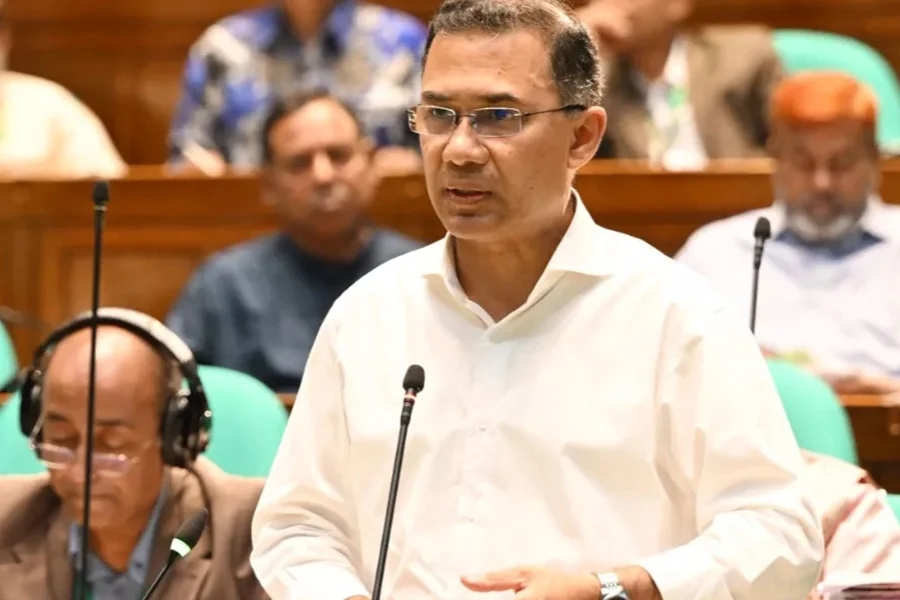
Prime Minister Tarique Rahman on Wednesday said the government is actively considering establishing an institutional framework in the 2026–27 fiscal year to ensure the sustainable and long-term development of the blue economy.

“We are actively considering, if necessary, establishing an institutional framework in the 2026–27 fiscal year to ensure balanced coordination among marine resources, fisheries, tourism and environmental protection and to promote the sustainable and long-term development of the blue economy,” he said.

The government has already taken steps to formulate a Maritime Spatial Planning (MSP) framework in view of the potential benefits and opportunities of the country’s maritime resources, the Prime Minister said while replying to a starred question from M Nurul Islam (Barguna-2) during the question-answer session in Parliament, UNB reports.

He said the BNP’s election manifesto includes a plan for developing the blue economy through the science-based and sustainable use of the country’s vast maritime resources as well as the establishment of a National Blue Economy Authority.

The Prime Minister said the then BNP government formulated the Coastal Zone Policy 2005, which marked an important milestone in the development and protection of coastal areas.

In response to a supplementary question, he said the ruling party’s election manifesto also includes a fairly detailed plan on the blue economy.

“A large population of Bangladesh lives in coastal and maritime areas including Bhola, Barguna, Patuakhali, Cox’s Bazar and Chattogram among others. Naturally, if we can gradually develop the various components of the blue economy by assessing their economic potential, we will be able to improve the living standards of many people,” he said.

Tarique also said an extensive economic zone will emerge around the coastal region, which will further strengthen the country’s overall economy.

“Taking all these factors into consideration, we have placed special importance on the blue economy in our election manifesto and various ministries have already started formulating plans in phases,” he said.

The parliamentary session began in the morning with Speaker Hafiz Uddin Ahmed in the chair following a recess on April 10, with the Prime Minister’s question-answer session scheduled first on the day’s agenda.

Members of Parliament took part in the scheduled question-answer session at the start of the sitting.​
 
Blue economy & BD's fisheries: promise or paradox?

Nuzhat Fatima Purnota and Md Shanawez Hossain

Published :
Jun 15, 2026 23:24
Updated :
Jun 15, 2026 23:24

1781758996359.webp


The pride of Bengal, the Bay of Bengal, is not just a matter of global recognition for the people of Bangladesh, but also a gold mine of opportunities and regional cooperation. But how little do we do to utilise the opportunities it offers us? How well are we treating the resources that have the potential to drive economic growth on the next level if utilized sustainably? Such questions remain very pertinent to proper utilisation of fisheries and related marine resources on which life and livelihoods of millions of people depend.

BLUE ECONOMY OF BANGLADESH: POTENTIALS AND GOVERNANCE MECHANISMS: The Blue Economy is widely renowned for sustainable economic development based on marine and coastal resources. The Bay of Bengal is both a curse and a blessing for Bangladesh due to its extreme climate vulnerability and the immense resources it provides. It is an opportunity for growth for us, especially with regional cooperation at play in the Indo-Pacific region. Bangladesh has been promoting the utilisation of the ocean economy since 2014, establishing a memorandum of understanding with India in 2015 in order to develop the blue economy in the Bay of Bengal. The country also launched its seventh five year plan where the inclusion of blue economy development was ensured and identified the prospects as a potential driver of growth. The total value of ocean resources is estimated to be at US$24 trillion, where the government of Bangladesh has identified approximately US$16 Billion investment opportunities across its 26 blue economy sectors. The expected GDP return is estimated to be approximately 4-4.5 per cent by 2030 which includes fisheries sector, eco-tourism, renewable energy, maritime trade etc. Investment efforts include projects like the Matarbari deep sea port construction which aim to open up further trading opportunities for Bangladesh. However, threats to ocean habitats and estuarine ecosystems will remain if external factors are not considered.

Bangladesh has been focusing on its blue economy initiatives since 2017, first launching its "Blue Economy Initiatives". The government bodies working on Blue Economy are the Planning Commission, Ministry of Foreign Affairs, Ministry of Finance and the Ministry of Power, Energy and Mineral Resources. The Ministry of Foreign Affairs and has identified 26 sectors for the country's blue economy development. The government also launched a Bangladesh Blue Economy Cell in 2016 under the Energy and Mineral Resources Division, which failed miserably due to lack of adequate resources, lack of strategic plans, implementation, and policies. Its role has been heavily criticised over the years. Several multilateral partners work in the development of the blue economy in Bangladesh, for example UNDP has assisted in developing the National Blue Economy Action Plan, led by the Ministry of Foreign Affairs. Additionally, the UNDP has also organised a national dialogue on Blue Bonds, in partnership with UNEP-PEA4SDGs and the General Economics Division, aiming to promote innovative financing mechanisms for marine-based sustainable development while addressing the estimated USD 928 billion SDG financing gap by exploring tools such as bonds in order to enhance sustainable fisheries, offshore energy and waste management. Several policies, like the Hilsa Ban which refrains fishermen from catching and selling wild Hilsa during breeding seasons, particularly during October, and protection of smaller (Jhatka) at peak seasons, also promotes sustainability. Other initiatives include the establishment of the Swatch of No Ground Marine Protected Area in 2014 that aims to protect marine biodiversity in the Bay of Bengal.

Thus, on the internal front, the government has taken short-term and long term measures for sustainable development of the fisheries sector. However, on the external front, there remains many disputed issues that still threaten the long term sustainability of this sector.

REGIONAL AND GLOBAL MECHANISMS IN MARINE RESOURCES GOVERNANCE: Bangladesh's maritime dispute with India and Myanmar had also been an issue for quite a long time, obstructing economic growth in the country's Exclusive Economic Zone (EEZ). But despite the conflict resolution, the country faces immense exploitation of marine resources from neighbouring countries and ranks 85th among the 152 most vulnerable countries to Illegal, Unreported and Unregulated (IUU) fishing according to the IUU Fishing Index 2021. Bangladesh has also amended the Territorial Waters and Maritime Zones Act in 2021. The World Trade Organisation (WTO) members adopted the Agreement on Fisheries Subsidies during their 12th Ministerial Conference in June 2022 which entered into force on September 15, 2025 with two thirds of its members formally accepting the Protocol of the Agreement on Fisheries Subsidies by depositing an "instrument of acceptance". As a Least Developed Country, Bangladesh has been exempted from dispute settlement for continuing subsidies within its Exclusive Economic Zone (EEZ) up to 200 nautical miles. It also has access to benefits like a voluntary WTO funding mechanism for technical and capacity building assistance, extended reporting timelines and support for implementing the agreement's disciplines.

CHALLENGES AND WAY FORWARD: Native fishermen are at the heart of Bangladesh's coastal community whose lives depend heavily on native fishing techniques and practices. Despite their lives being so intricately tied to the sea, they are often marginalised and treated like passive beneficiaries in development efforts rather than considering or including them as key stakeholders. They often lack access to sustainable fishing practices due to inadequate training, modern equipment and market connections, making them more vulnerable to exploitation and climate shocks, especially with the presence of foreign pirates in our EEZ. Despite their equitable inclusion, Bangladesh won't be able to succeed in their blue economy efforts if institutional incapacities persist. Bangladesh has strengthened its maritime security and the presence of Navy and Bangladesh Coast Guard to ensure safety and security within its EEZ. The incapacities in question include lack of coordination between government agencies, governance challenges, lack of participatory actions, technical capacities, etc. Prioritisation of ecological conservation over economic acceleration is also a challenge for a developing country like Bangladesh that has a poverty rate of 27.93 per cent as of mid-2025, according to a study by the Power and Participation Research Centre (PPRC).

As a potential solution and way forward to the development of the fisheries sector various measures are required at national, regional and global levels. First, more research and development with extensive data is required in order to plan the utilisation of the marine and coastal resources sustainably. Funding oceanographic and marine research should be prioritised to fill in data gaps and surveillance of piracy activities. Bangladesh should invest heavily in capacity building of stakeholders-- from grassroot to government levels.

Second, inclusivity of local coastal communities and their empowerment should be the core focus, building resilience and knowledge while promoting community-led conservation and co-management of resources. In addition to that, infrastructure projects should undergo rigorous Environmental Impact Assessments (EIA) in order to ensure environmental sustainability and protection of marine resources. Coastal tourism facilities and ports should be environmentally friendly and not cause destruction. Significant monitoring, evaluation and reporting are thus required for actionable solutions.

Furthermore, a comprehensive national blue economy framework should be established where all government institutions overseeing marine and coastal affairs should ensure cross-sectoral coordination in management of the associated resources. Public-Private Partnerships should also be considered for better economic development and resource management.

Finally, Bangladesh can strengthen its regional cooperation through the Indo-Pacific that has the potential to connect the South Asian countries to the Southeast Asian countries, and enhance economic development through regional bodies like Bay of Bengal Initiative for Multi-Sectoral Technical and Economic Cooperation (BIMSTEC) and Indian Ocean Rim Association (IORA). Engagement with these organisations and exchange of knowledge & learning outcomes from best practices for marine and community conservation can further develop Bangladesh's capacity, facilitate joint research, promote peace & prosperity and build economic relations that benefits all the entities involved.

Bangladesh's blue economy is not just an untapped sector but a vision for inclusive, resilient, and sustainable development. It is a bridge for the Indo-Pacific that offers a future of prosperity, resilience, and ecological harmony within neighbouring countries. But realising this vision demands a shift from extractive practices to regenerative ones, from exclusion to empowerment, and from fragmented governance to integrated actions at the national, regional and global levels.

Nuzhat Fatima Purnota is a development professional working in the field of Climate Change & Disaster Management. Dr. Md Shanawez Hossain is an Associate Professor of the Department of Global Studies and Governance (GSG) at Independent University, Bangladesh (IUB).​
 

The budget has revived focus on blue economy, but there's a lot of catching up to do

1781762093234.webp

FILE VISUAL: Salman Sakib Shahryar

On July 7, 2014, the Permanent Court of Arbitration in The Hague handed Bangladesh the second half of its maritime triumph. Two years earlier, judges at the International Tribunal for the Law of the Sea (ITLOS) in Hamburg had done much the same against Myanmar. Between them, the two awards left Bangladesh with sovereign rights over roughly 1,18,813 square kilometres of the Bay of Bengal, an aquatic territory close in size to the land we already had. Since then, there has been much discussion framing the collective victory as the start of a “blue economy revolution.” Twelve years on, however, that promise remains largely untapped.

The Blue Economy Cell, established in 2017 to map opportunities in the new maritime estate, identified more than two dozen potential sectors: fisheries, deep-sea hydrocarbons, shipbuilding, salt, marine biotechnology, ocean renewables, tourism. Yet, marine fish catches in FY 2023-24 fell to their lowest level in nine years, at just over 6,28,000 tonnes, and the figure reportedly dropped even further in FY 2024-25. Multiple bidding rounds for deep-sea hydrocarbons have yet to produce a single commercial discovery run by a domestic firm. The marine spatial plan the World Bank flagged years ago as the prerequisite for everything else still sits in draft. Inter-ministerial coordination, divided uneasily among the navy and four civilian ministries, works much as it did before the verdict: indifferently.

Amid these, the proposed budget for the next fiscal year has set aside Tk 200 crore for the blue economy. This includes Tk 100 crore for a new “Blue Economy Research Fund” and Tk 100 crore for development, alongside plans to run commercial vessels for deep-sea tuna, scale up seaweed cultivation, declare new marine protected areas at Kuakata and Salimpur, build a fishing port at Matarbari and upgrade the landing centre in Cox’s Bazar. It is a welcome line in the ledger, and an instructive one. For the first time in years, the blue economy has been given not only some significance but also dedicated allocations. But this is only a start. A research fund is not the same as research capacity. The real test will be to see whether this allocation builds the standing human and institutional architecture needed to decide what to do with the sea portions that Bangladesh won.

It is also relevant to look at how the abovementioned cases had been won. For The Hague and Hamburg, the state had spared no expense on counsel. Foreign barristers had been briefed and international advisers retained; a technical record was assembled with care. Unfortunately, to govern the gains, the government has built no comparable bench at home. We have no national maritime commission of the kinds Singapore or Norway use to drive strategy. We have no steady pipeline of marine geophysicists, fisheries economists, or offshore engineers feeding into policymaking. The country that knew to hire world-class counsel to win 1,18,813 square kilometres of sea never thought to hire a local cadre to govern it.

Meanwhile, the sea around us has filled up. In March 2025, India retired the SAGAR framing it had used for a decade and announced MAHASAGAR (Mutual and Holistic Advancement for Security and Growth Across Regions) as the new banner for its maritime engagement, now stretched well past the Indian Ocean. China’s Maritime Silk Road has thickened into a steady traffic of port deals, undersea cables and logistics agreements. The US’s Indo-Pacific Strategy now binds together security pacts, technology controls, and supply chain initiatives that converge on the Bay. Bangladesh’s own Indo-Pacific Outlook of April 2023, a careful and non-aligned 15-point document, was a sensible attempt at staying out of trouble.

But hedging is not a posture; it is a workload. Every port concession, security memorandum, dual-use logistics agreement has to be read against a sovereignty checklist that only the country’s own experts can credibly write. When three competing powers arrive at the same time with detailed proposals on deep-water terminals, undersea cable landings, hydrographic surveys, joint exclusive economic zone patrols or rare-earth prospecting, the negotiating table requires not goodwill but specialists who can tell a commercial partnership from a strategic mortgage. We do not have enough of such specialists.

The real problem is the gap between the complexity of what is offered and our ability to interrogate it. Call it epistemic vulnerability if you like, or call it being out-staffed. It rarely makes the front page. It surfaces, instead, in fine print: in clauses we did not push back on, in side-letters we did not read closely, in strategic doors we left a little ajar because we weren’t entirely sure what we were signing.

This gap has only widened, for obvious geopolitical reasons, since August 2024. The political transition effectively cooled the historically close Dhaka-Delhi axis. Across the Naf, and in the waters around Saint Martin’s, the Arakan Army’s effective control of much of Rakhine State has made the eastern flank of Bangladesh’s maritime border one of the most volatile in the region. We are negotiating from a tighter spot than we’ve had to at any point in time since 2014, but with much the same institutional toolkit we had over a decade ago.

There is, however, one asset we have not yet begun to draw on. Across the International Maritime Organization (IMO), the International Seabed Authority (ISA), major shipping conglomerates, the world’s leading naval academies, and a number of well-funded ocean-science laboratories, several hundred Bangladeshis hold senior-level technical positions. Many of them spent years inside the very institutions whose rules now shape our maritime fate. Almost none of these experts is formally connected to Dhaka’s policymaking architecture.

This is odd, and out of step with what other countries do. India treats its diaspora as a strategic resource: through Pravasi Bharatiya Divas (a day to recognise the contributions made by Non-Resident Indians), overseas advisory councils, and the quiet practice of seconding civil servants to multilateral bodies. China does much the same through Maritime Silk Road technical networks. Even Vietnam, with less to spend, regularly calls back its IMO and ISA personnel to shape national positions on seabed mining or shipping decarbonisation. Bangladesh, alone among countries with a serious maritime stake, has built no such mechanism. The diaspora’s willingness to help is not in doubt; the issue is that institutional response has been silence.

A standing Ocean Affairs Advisory Council, attached to the Prime Minister’s Office or a future Ministry of Maritime Affairs, could pair domestic policy officers with diaspora specialists by sector: hydrocarbons, deep-sea mining, port concessions, fisheries, IMO, ISA, and Indian Ocean Rim Association (IORA) negotiations, and maritime law. Its work would be to carry out technical reviews of inbound proposals, mentoring of junior officials, continuous horizon scanning, and so on. Its annual cost would be a rounding error against the Tk 200 crore the budget has just earmarked. A sliver of that research fund, redirected towards the people who would actually read the contracts, would do more for Bangladesh’s blue economy than acquiring another vessel. The question is no longer whether Bangladesh will spend on the sea, but whether it will spend to build the people and institutions capable of governing it. Think of it as “intellectual remittance.” And unlike the financial kind, this one the state can structure on its own terms.

The lesson of the past 12 years is uncomfortable but plain: winning at a tribunal is not the same as governing the space won. The 1,18,813 square kilometres will go on existing on the map whether or not we do anything about it. Whether this portion of the sea ends up as an economy of our own or becomes a buffer in someone else’s calculations will depend on the decisions Bangladesh makes in the coming days and the institutional capacity we choose to build around these decisions.

Md Syful Islam is a PhD research fellow in the Department of Maritime, Transport Law, and Politics at Ankara University in Türkiye.​
 

FDI envisaged to unlock blue economy potential
United News of Bangladesh . Dhaka 29 June, 2026, 23:50

1782792891389.webp

Bangladesh Investment Development Authority executive chairman Chowdhury Ashik Mahmud Bin Harun speaks at a seminar on Monday. | BSS photo

Bangladesh Investment Development Authority (BIDA) executive chairman Chowdhury Ashik Mahmud Bin Harun on Monday said Bangladesh is prioritising foreign direct investment (FDI) and joint ventures to tap its massive, unutilised deep-sea marine resources centring on the Matarbari strategic business hub.

He made the remarks while addressing a seminar titled ‘Investment Potential in Fisheries and Marine Economy in Bangladesh’ organised by the Moheshkhali Integrated Development Authority (MIDA) in cooperation with the Japan International Cooperation Agency (JICA) at a city hotel.

Due to a lack of industrial capacity, hundreds of kilometres in the country’s deep-sea areas remain out of economic activity. In the absence of Bangladeshi entrepreneurs, neighbouring nations are harvesting valuable tuna and other high-value fish from the Bay of Bengal.

Speaking as the chief guest at the seminar, the BIDA executive chairman said as local entrepreneurs currently lack the capacity for deep-sea fishing, the government is prioritising foreign direct investment in collaboration with local businesses.

He revealed that a Japanese company has already applied for permission to conduct fishing and economic activities in these deep-sea zones, opening up immense opportunities to earn foreign currency through marine exports.

Minister at the Embassy of Japan in Dhaka Takahashi Naoki and Chief Representative of JICA Bangladesh Takahashi Junko made special remarks at the event.

Naoki emphasised that Japan, through JICA, is actively promoting public and private sector investments in Bangladesh’s marine economy, including a flagship support programme at the Matarbari deep-sea port to assist the coastal fishing communities in Cox’s Bazar.

Former Secretary of the Maritime Affairs Unit Rear Admiral (retd) Md Khurshed Alam noted that MIDA is a visionary government programme designed to transform Moheshkhali and Matarbari into a multi-dimensional business hub for energy, supply chains, aquaculture, seafood processing, mariculture, and deep-sea fishing.

The seminar highlighted four crucial sectors primed for scalable investment to unlock Bangladesh’s marine potential.

The country’s offshore waters contain vast fish resources, including commercial Yellowfin and Skipjack tuna. Capitalising on this requires deployment of industrial longliner fleets, deep-sea port facilities, and an enabling regulatory framework.

Bangladesh’s coastal ecology is highly suitable for commercial seaweed, finfish, and shellfish farming. Transitioning from traditional methods to scalable farming systems can target rapidly rising regional demand.

As the country’s second-largest export commodity, the shrimp sector needs species diversification and strict certification compliance to successfully shift from volume-driven output to premium global markets.

To minimise value-chain gaps, major investment is required to establish modern processing plants, integrated cold chains, and preservation technologies that meet strict international market standards.

According to technical presentations, establishing a standard commercial fleet of 10 modern longliner vessels requires an estimated investment of Tk 150 crore per vessel, but yields a lucrative 37 percent net profit margin and a five-year payback period.

Sector visions project that deploying 25 to 50 vessels could generate millions of dollars annually in seafood exports by 2035.

Fisheries and Livestock Secretary Delwar Hossain stated that the ministry is fully committed to transforming the Matarbari corridor into a flourishing marine economy hub by establishing direct trade connections with premium global markets.

The seminar featured several specialised keynote presentations by JICA fisheries expert Echigo Manabu, MIDA member (marine affairs) Commodore Tanzim Faruq, ACI Agrolink business director Syed M Istiak and Department of Fisheries researcher Tanvir Hossain Chowdhury.​
 

Blue diplomacy and maritime future
1785371291657.webp

Modern Diplomacy

BANGLADESH’S identity has long been shaped by its rivers, but the country’s future increasingly depends on its relationship with the sea. Bangladesh’s strategic maritime location links South Asia with Southeast Asia and the broader Indo-Pacific. The peaceful settlement of maritime boundary disputes with Myanmar in 2012 and with India in 2014 significantly expanded Bangladesh’s maritime jurisdiction, granting sovereign rights over approximately 118,813 square kilometers of maritime area.

This achievement created unprecedented opportunities across fisheries, marine resources, offshore energy exploration, maritime trade, tourism, renewable energy and the emerging blue economy. However, realising these opportunities requires more than domestic policies and investments; it demands effective blue diplomacy, a strategic approach that integrates foreign policy, marine governance, environmental sustainability, regional cooperation and economic development.

Blue diplomacy uses diplomatic engagement to protect maritime interests, sustainably manage ocean resources, promote marine security, strengthen regional partnerships and advance national development through ocean-based economic activities. It emphasises collaborative governance of shared marine ecosystems, navigation, climate resilience, fisheries management, marine scientific research and the sustainable use of ocean resources. Bangladesh’s maritime future depends on the sustainable development of the blue economy.

The Bay of Bengal offers abundant fisheries, offshore hydrocarbons, marine biotechnology, seaweed cultivation, aquaculture, coastal tourism and renewable energy resources. Bangladesh remains heavily dependent on marine fisheries for food security, employment and export earnings. Yet many fish stocks are overexploited due to illegal, unreported, and unregulated fishing, habitat degradation, and climate change. Effective blue diplomacy enables Bangladesh to negotiate regional fisheries agreements, strengthen maritime surveillance, exchange scientific information, and promote sustainable resource management with neighbouring countries.

Maritime trade is another pillar of the maritime future. Approximately 90 per cent of Bangladesh’s international trade by volume moves through seaports. Ongoing development of Payra Port, modernisation of port infrastructure, expansion of deep-sea port facilities and improvements in logistics could transform Bangladesh into a regional maritime hub connecting Nepal, Bhutan, northeastern India and Southeast Asia. Blue diplomacy plays a critical role in negotiating port connectivity, shipping agreements, customs cooperation, digital trade facilitation and multimodal transport corridors.

The Bay of Bengal’s geopolitical significance has grown markedly within the broader Indo-Pacific strategic landscape. Major powers, including India, China, the United States, Japan, Australia and the European Union, have expanded their economic, security and infrastructure engagement in the region. Bangladesh, therefore, faces the delicate task of maintaining strategic neutrality while maximizing economic opportunities. Effective blue diplomacy requires balancing relationships with competing powers without becoming entangled in geopolitical rivalries.

Regional cooperation is equally indispensable to maritime aspirations. Organisations such as BIMSTEC and the Indian Ocean Rim Association offer valuable platforms for collaboration on maritime security, disaster management, marine pollution control, blue economy initiatives, scientific research and sustainable fisheries. Bangladesh can leverage these regional institutions to promote joint ocean governance, strengthen marine scientific cooperation, facilitate technology transfer and coordinate responses to natural disasters.

Climate change poses perhaps the greatest challenge to maritime futures. Rising sea levels, coastal erosion, saltwater intrusion, cyclones, storm surges and declining marine biodiversity threaten coastal communities and economic activities. Bangladesh is among the climate-vulnerable countries, making climate diplomacy an integral part of blue diplomacy. International negotiations should prioritize financing for coastal resilience, mangrove conservation, climate adaptation, early warning systems, sustainable fisheries and marine ecosystem restoration.

Despite significant progress, several institutional constraints continue to impede maritime development. Maritime governance responsibilities remain fragmented across multiple ministries and agencies, resulting in overlapping mandates and limited coordination. Offshore resource exploration has advanced slowly because of technological limitations, regulatory uncertainty, and insufficient investment. Marine scientific research remains underdeveloped and shortages of skilled maritime professionals constrain effective ocean governance. Additionally, illegal fishing, marine pollution, plastic waste and weak enforcement of environmental regulations continue to undermine sustainable management of marine resources.

To strengthen the maritime future, a comprehensive blue diplomacy strategy is essential. First, stronger coordination among the ministry of foreign affairs, the ministry of shipping, the ministry of fisheries and livestock, the ministry of home affairs, the Bangladesh Navy, the Coast Guard and environmental agencies should be established. Second, investment in marine research institutions, hydrographic surveys, ocean observation systems and maritime education should be substantially increased. Third, active pursuit of international partnerships in offshore renewable energy, marine biotechnology, digital port management and sustainable aquaculture should be pursued. Fourth, maritime law enforcement capacities should be enhanced to combat illegal fishing, marine pollution, trafficking and other transnational maritime crimes. Last but not least, blue diplomacy should be fully integrated into national economic planning, climate adaptation policies and sustainable development strategies.

Bangladesh stands at a crossroads, with the sea offering immense possibilities for economic transformation, regional leadership and environmental stewardship. Realising this potential depends on visionary diplomacy, sound governance, scientific innovation and international cooperation. Blue diplomacy is not merely an extension of foreign policy; it is a comprehensive framework for safeguarding maritime interests and ensuring the sustainable use of ocean resources. If pursued strategically, blue diplomacy can transform the Bay of Bengal from a geographic frontier into a dynamic engine of national prosperity, regional cooperation and sustainable development.

Dr Nasim Ahmed is a former additional secretary to the government and currently works as associate professor of public policy at the Bangladesh Institute of Governance and Management (a constituent institute of the University of Dhaka).​
 

Latest Posts

Back