Bangladesh Defense
Saif
Senior Member
- Messages
- 21,773
- Likes
- 9,805
- Nation

- Residence
- Axis Group

The Financial Express | First Financial Daily of Bangladesh
Get latest stock share market news, financial news, economy news, politics news, breaking news, Bangladesh economy news at The Financial Express.
Police should act, prevent crime
SYED FATTAHUL ALIM
Published :
Jun 15, 2026 23:25
Updated :
Jun 15, 2026 23:25
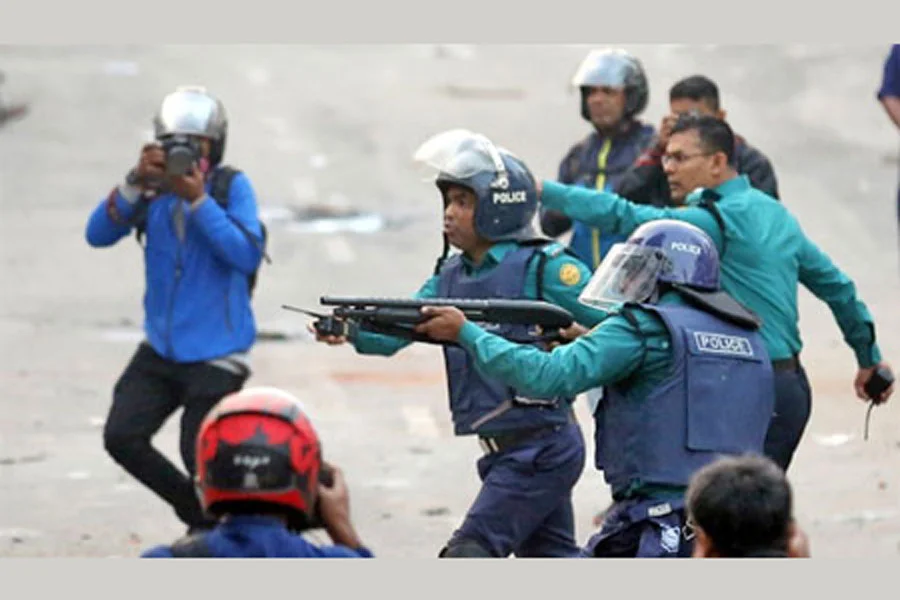
Of late, the violent crimes has not only increased in number, but their nature has also changed. Consider the sharp rise in crimes involving rape and murder of the vilest kind in the victims' supposedly secure homes, incidents of shooting to death in broad daylight, vigilantes beating suspected outlaws to death, eruption of gang wars leading to shootouts and resulting deaths, to mention but a few of the grave offences taking place about every day. Records with Bangladesh Police show that between January and May this year (2026), the number of murders committed was1,452, while that of kidnapping was 437. The cases of robbery or burglary are not included here. On the other hand, in nine months since July 2025, cases of repression against women and children saw their highest rise in April, 2026, marking a 35.4 per cent surge over the previous month of March. However, experts often question the veracity of the crime statistics produced by the authorities concerned. For, year-on-year, comparison in crime rates usually shows a declining trend, which may not quite reflect the real-world situation.
However, the recent spike in the incidence of violent crimes such as hacking to death of a mother and her teenage daughter in their house in the Anowara upazila of Chattogram by unidentified criminals, or the killing of a youth with sharp weapon after calling him out of his houses by one of the victim's close acquaintances in Khulna city in broad daylight, or the shooting and critically injuring of the listed criminal, Yasin Khan Palash or Kayla Palash in broad daylight last Friday near Rampura TV centre in the Hatirjheel area of the capital city, shooting to death of BNP leader Rafiqul Islam on the same day in the Labonchora area in Khulna-it all loks like an unleashed demon that has gone on a killing spree. However, committing deadly violence by desecrating a place of worship is rare in this country. Perhaps, criminals have by now grown bolder and are no more respecters of religious shrines. Last Sunday during the Fazr prayers at the West Kashipur Power Plant Jam-e-Masjid in Daulatpur of Khulna city, assailants entered the mosque, opened fire and injured two individuals, one of whom was reportedly in critical condition.
The critically injured was learnt to be the secretary of the mosque committee. Whatever the motive of the assailants, the choice of a mosque to attack their targeted persons shows that it is an instance of perpetrating crime with no holds barred. Why have the violence-mongers or criminals turned so desperate? Is it just that we are witnessing a complete breakdown in law and order during a government that is hardly three months in office? Is Home Minister Salahuddin Ahmed aware that all such deadly crimes are taking place under his watch? The patten of crime points to something sinister about them. It appears, all the criminal activities from the incidents of rape and killing of women and children to hacking of women and girls in their homes to gunning down of members of crime syndicates to shooting of political leaders and so on are well-orchestrated. The government seems to be either clueless about what lies behind the spate of murders and rapes or is considering those as nothing serious. If the government is too complacent and unconcerned about these violent crimes, the victims and their families cannot just resign to fate and accept the tragedies befalling them as normal. So, the government has a duty to protect the citizens from the machete-wielding and gun-toting gangs, who have, as though, gone on a rampage through the country. It is not enough that law enforcement department is quick to act after a deadly crime has taken place. In fact, it is pointless to shut the proverbial stable door after the horse has bolted. The police and their intelligence networks should rather be more proactive and be able to save lives by preventing serious crimes from happening in the first place.
SYED FATTAHUL ALIM
Published :
Jun 15, 2026 23:25
Updated :
Jun 15, 2026 23:25
Of late, the violent crimes has not only increased in number, but their nature has also changed. Consider the sharp rise in crimes involving rape and murder of the vilest kind in the victims' supposedly secure homes, incidents of shooting to death in broad daylight, vigilantes beating suspected outlaws to death, eruption of gang wars leading to shootouts and resulting deaths, to mention but a few of the grave offences taking place about every day. Records with Bangladesh Police show that between January and May this year (2026), the number of murders committed was1,452, while that of kidnapping was 437. The cases of robbery or burglary are not included here. On the other hand, in nine months since July 2025, cases of repression against women and children saw their highest rise in April, 2026, marking a 35.4 per cent surge over the previous month of March. However, experts often question the veracity of the crime statistics produced by the authorities concerned. For, year-on-year, comparison in crime rates usually shows a declining trend, which may not quite reflect the real-world situation.
However, the recent spike in the incidence of violent crimes such as hacking to death of a mother and her teenage daughter in their house in the Anowara upazila of Chattogram by unidentified criminals, or the killing of a youth with sharp weapon after calling him out of his houses by one of the victim's close acquaintances in Khulna city in broad daylight, or the shooting and critically injuring of the listed criminal, Yasin Khan Palash or Kayla Palash in broad daylight last Friday near Rampura TV centre in the Hatirjheel area of the capital city, shooting to death of BNP leader Rafiqul Islam on the same day in the Labonchora area in Khulna-it all loks like an unleashed demon that has gone on a killing spree. However, committing deadly violence by desecrating a place of worship is rare in this country. Perhaps, criminals have by now grown bolder and are no more respecters of religious shrines. Last Sunday during the Fazr prayers at the West Kashipur Power Plant Jam-e-Masjid in Daulatpur of Khulna city, assailants entered the mosque, opened fire and injured two individuals, one of whom was reportedly in critical condition.
The critically injured was learnt to be the secretary of the mosque committee. Whatever the motive of the assailants, the choice of a mosque to attack their targeted persons shows that it is an instance of perpetrating crime with no holds barred. Why have the violence-mongers or criminals turned so desperate? Is it just that we are witnessing a complete breakdown in law and order during a government that is hardly three months in office? Is Home Minister Salahuddin Ahmed aware that all such deadly crimes are taking place under his watch? The patten of crime points to something sinister about them. It appears, all the criminal activities from the incidents of rape and killing of women and children to hacking of women and girls in their homes to gunning down of members of crime syndicates to shooting of political leaders and so on are well-orchestrated. The government seems to be either clueless about what lies behind the spate of murders and rapes or is considering those as nothing serious. If the government is too complacent and unconcerned about these violent crimes, the victims and their families cannot just resign to fate and accept the tragedies befalling them as normal. So, the government has a duty to protect the citizens from the machete-wielding and gun-toting gangs, who have, as though, gone on a rampage through the country. It is not enough that law enforcement department is quick to act after a deadly crime has taken place. In fact, it is pointless to shut the proverbial stable door after the horse has bolted. The police and their intelligence networks should rather be more proactive and be able to save lives by preventing serious crimes from happening in the first place.