[🇧🇩] Insurgencies in Myanmar. Implications for Bangladesh

[🇧🇩] Insurgencies in Myanmar. Implications for Bangladesh
438
19K
More threads by Saif

G Bangladesh Defense

Repatriation without rights

1786664680885.webp

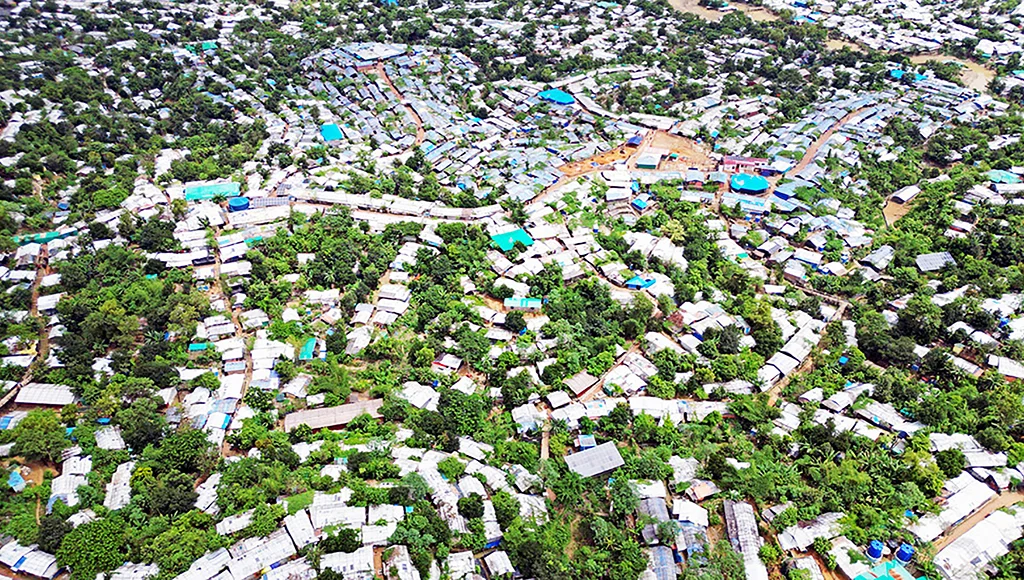
The photograph shows a view of the Kutupalong Rohingya camp in Ukhiya, Cox’s Bazar. | Agence France-Presse/Munir uz Zaman

THE Rohingya crisis remains one of South and Southeast Asia’s most enduring humanitarian and political failures. Since the mass expulsion of Rohingyas from Myanmar’s Rakhine State in 2017, Bangladesh has hosted more than one million refugees in Cox’s Bazar and Bhasan Char while Myanmar has failed to create the conditions for their safe return. What began as an emergency has become a protracted crisis marked by statelessness, insecurity, aid dependency and diplomatic fatigue. Repatriation continues to be presented as the preferred durable solution, yet every major initiative has failed because the central political issue remains unresolved: the Rohingyas cannot safely return to a country that still denies them citizenship, protection and equal belonging.

Bangladesh and Myanmar signed a bilateral repatriation agreement only months after the 2017 exodus. Yet the arrangement was non-binding and failed to address the guarantees that mattered most to the refugees, including citizenship, freedom of movement, property restitution and independent monitoring. Since then, every major repatriation effort has followed the same pattern. Attempts in 2018 and 2019 collapsed because refugees refused to return without credible assurances of safety and rights. A China-facilitated pilot initiative in 2023, which included visits by Rohingya representatives to Rakhine, also stalled as renewed fighting, cyclone damage and deteriorating security made even limited returns unrealistic. More fundamentally, refugees remained unconvinced that conditions had changed. Their reluctance was not a rejection of repatriation but a rational response to continued uncertainty. Returning to fenced settlements or tightly controlled villages without legal status would simply replace exile in Bangladesh with confinement in Myanmar.

These repeated failures expose the central weakness of the repatriation agenda. Too much attention has been given to moving refugees across the border and too little to creating the conditions that would allow them to return as citizens with rights, security and dignity. Myanmar’s 1982 citizenship law, long-standing restrictions on movement and entrenched discrimination remain fundamental obstacles. The 2021 military coup has made matters worse, fragmenting authority and turning Rakhine into an active conflict zone contested by the Myanmar military, the Arakan Army and other armed groups. Bangladesh is therefore no longer negotiating with a single reluctant government but with an increasingly fragmented political and security landscape.

The challenge extends well beyond Bangladesh and Myanmar. China has sought to mediate because stability in Myanmar serves its strategic interests, but its diplomacy has focused more on facilitating dialogue than addressing the rights that underpin sustainable return. India has balanced humanitarian concerns with security and geopolitical priorities, while ASEAN has struggled to move beyond its tradition of consensus and non-interference. Western governments have backed accountability efforts and imposed sanctions, yet these measures have done little to change realities inside Rakhine. The result is a fragmented diplomatic response in which no external actor has applied sufficient leverage or sustained pressure to make a rights-based solution politically unavoidable.

Bangladesh’s position has become increasingly difficult. Its humanitarian response has evolved into a long-term national responsibility, placing growing pressure on land, forests, water resources, public services and host communities. Security concerns have also intensified as trafficking, armed groups and criminal networks exploit a refugee population with limited education, livelihood opportunities and freedom of movement. At the same time, declining international funding has reduced food assistance, healthcare and education, deepening frustration in the camps and encouraging dangerous onward journeys by sea to countries such as Indonesia and Malaysia. Yet these mounting pressures cannot justify premature repatriation. Any return must remain voluntary, safe, dignified and firmly grounded in rights.

The crisis also exposes the limits of humanitarianism. Aid can keep people alive, but it cannot resolve statelessness or political exclusion. For years, the international response has operated on separate tracks: humanitarian agencies sustain refugees in Bangladesh, legal institutions pursue accountability, diplomats negotiate repatriation and development partners support host communities. Each effort is necessary, but together they have failed to produce a coherent political strategy. The Rohingya have too often been treated as beneficiaries of assistance rather than stakeholders in decisions about their future. Any durable solution must give them a meaningful voice in shaping the conditions of return, including citizenship, security, education and mechanisms to monitor implementation.

The way forward requires realism rather than rhetoric. Repatriation should remain the long-term objective, but only after verifiable changes inside Rakhine. Refugees need more than transport across a border; they need a credible pathway to citizenship, freedom of movement, access to services, protection from abuse and either the restoration of, or compensation for, lost property. Any future agreement should include independent international monitoring with meaningful access to return areas. Diplomacy must also adapt to Myanmar’s fragmented political landscape by engaging relevant actors without compromising the principle that rights, not expediency, should determine the terms of return.

Nor can the camps in Bangladesh remain indefinite waiting rooms. Refugees need education, skills development, legal protection and limited livelihood opportunities to prevent social deterioration and preserve their capacity to rebuild their lives when return eventually becomes possible. These measures should not be viewed as local integration but as responsible crisis management. International partners must also do more by sustaining humanitarian funding, expanding resettlement for the most vulnerable, supporting host communities and maintaining coordinated diplomatic pressure on Myanmar. Accountability efforts must continue because impunity remains one of the principal obstacles to safe return.

Ultimately, the Rohingya crisis is not a logistical failure but a political one. Refugee lists, reception centres and pilot projects cannot substitute for citizenship, security and recognition. Bangladesh seeks relief from a burden it cannot carry indefinitely; Myanmar continues to avoid confronting the policies that created the crisis; regional powers prioritise stability; and donors struggle to sustain international attention. The Rohingya seek something far simpler: the right to return home as equal citizens. Until repatriation efforts are anchored in that principle, they will continue to produce agreements without trust, announcements without returns, and roadmaps without roads.

Dr Mohammad Zaman is an expert in resettlement and development. His recent edited book (co-editors Robert Anderson and Kawser Ahmed) is titled Rohingya Stories: History and Geopolitics in a Multipolar World (Springer, 2025).​
 

A new political voice is emerging from the Rohingya diaspora. Why it matters

Anas Ansar

The Rohingya crisis has undergone a significant transformation over the past five years, particularly since the military coup in Myanmar in 2021. As the civil war continues to intensify, the prospects for durable solutions to protracted displacement and a return to their homeland remain a distant reality. Amidst this politics of forgetting, nearly a decade after almost a million Rohingya fled Myanmar for Bangladesh, a new generation of Rohingya is building something that did not exist in quite this form before: a transnational, digitally connected political community. The world should start listening to it.

On Aug 25, 2017, the Rohingya exodus began on a scale that few could have imagined. In the weeks that followed, roughly 700,000 Rohingya men, women and children fled Myanmar’s Rakhine State for Bangladesh, joining hundreds of thousands who had escaped earlier waves of persecution. Today, more than a million Rohingya refugees live in Bangladesh, most in the sprawling camps of Cox’s Bazar, next to a porous borderland.

Nearly a decade later, however, the central question is no longer simply how to sustain the camps, what is needed on a daily basis or under what terms Bangladesh should engage in repatriation dialogue. It is about what kind of political community is emerging from this prolonged exile—and whether the international community is prepared to recognise it as part of the solution.

The Rohingya did not simply become refugees in 2017. They emerged as a diaspora, and this distinction matters.

For decades, persecution, exclusion from citizenship and repeated displacement had already scattered Rohingya communities across South and Southeast Asia. The 2017 catastrophe accelerated that process dramatically, expanding the Rohingya presence into countries including Malaysia, Indonesia, Australia, the United States, Canada and parts of Europe.

Exile, therefore, has produced something paradoxical. The Rohingya are geographically fragmented, politically marginalised and largely immobilised. Yet they are also more connected to one another than at any previous point in their history.

Much of that connection is digital.

The emergence of a Rohingya “digital diaspora” deserves far more attention from policymakers than it has received. Social media has become a space in which Rohingya dispersed across countries can preserve memories, debate identity, share information, support one another and advocate for political recognition.

The significance is not merely technological. It is political.

When a stateless population is denied meaningful political space in its homeland and faces restricted physical mobility in exile, the internet can become a substitute public sphere. It allows people separated by borders and refugee camps to communicate as members of a community with shared interests and aspirations.

Any durable political settlement will require more than negotiations among governments and male political elites. It will require a representative Rohingya constituency capable of articulating what return, citizenship, security, justice and coexistence should actually mean. The digital diaspora could help build that constituency.
Digital platforms have created a “community of hope”, where Rohingya construct a sense of virtual togetherness and collective identity, while also facilitating civic resistance, political mobilisation, and material and emotional support.

That is not a trivial development.

A recent study provides an indication of its scale. Examining Rohingya diaspora activity on Facebook between 2017 and 2022, the researchers identified 47 diaspora pages that collectively published nearly 35,000 posts and generated almost 8 million interactions. These pages were not focused solely on politics. They covered human rights, education, news, youth development, culture and diaspora community life.

In other words, the Rohingya digital diaspora is beginning to look less like a collection of refugee voices and more like an embryonic civic ecosystem.

There is another important dimension: women.

The traditional image of Rohingya political leadership has often been overwhelmingly male. But exile has begun to disrupt that pattern. International attention and the new social spaces created in the diaspora have enabled increasing numbers of Rohingya women to enter civic and political domains historically dominated by men. Education, language skills, technical knowledge, exposure to international organisations and opportunities in host countries have helped determine who can participate and how effectively.

This matters because any durable political settlement will require more than negotiations among governments and male political elites. It will require a representative Rohingya constituency capable of articulating what return, citizenship, security, justice and coexistence should actually mean.

The digital diaspora could help build that constituency.

But it would be a mistake to romanticise social media. The same platforms that can empower persecuted communities can also divide them, amplify misinformation and expose vulnerable people to surveillance and manipulation. Indeed, Facebook was itself implicated in the spread of anti-Rohingya hate and dehumanising narratives before and during the 2017 violence. Researchers have therefore rightly cautioned against excessive “digital optimism”. Unequal access to technology, differences in age, gender and economic status, and the realities of life in refugee camps all shape who gets heard online.

The lesson is not to retreat from digital politics. It is to make it more inclusive, secure and consequential. For governments and international organisations, that should mean a fundamental shift in how the Rohingya are engaged.

The objective in this regard should not be to create a single “Rohingya voice”. Diasporas are rarely that homogeneous. The objective should be to build a legitimate, representative ecosystem in which different Rohingya constituencies can debate their future and develop common positions on the issues that matter most.

That could prove crucial when a political opening eventually emerges in Myanmar.

The international community has spent years searching for a solution to the Rohingya crisis: repatriation agreements, diplomatic pressure, humanitarian assistance, international litigation and accountability mechanisms. All remain important. But sustainable return cannot mean merely transporting people across a border.

1786924950274.webp

Rohingya youth Mohammad Rafiq uses his mobile phone to photograph and tell the stories of Rohingya refugees living in the Kutupalong camp. Such digital storytelling, amplified by the Rohingya diaspora, is helping bring Rohingya voices and their plight to a global audience. Photo: AFP

Return must involve rights.

It must involve security, citizenship or a credible pathway to it, freedom of movement, access to education and livelihoods, restitution and accountability. Most importantly, it must be shaped with the participation of the people who are expected to return.

This is where the Rohingya diaspora could become a game changer. It can transform a population scattered by persecution into a transnational community capable of speaking to governments, courts, journalists and international institutions.

This August, as we commemorate another anniversary of the Rohingya exodus, the question is no longer whether the Rohingya have a future. The question is whether the world will allow them to help define it.

The international community must take into account that, amid the tragedy of exile, something important has been built. A diaspora is quietly emerging as a political community.

And in a crisis defined for decades by the Rohingya’s lack of power, that emerging community—connected across borders and increasingly confident in its own voice—may be one of the few sources of political power the Rohingya can carry with them into whatever future awaits. The Rohingya diaspora may hold the key to solving a crisis the world has learned to ignore.

Dr Anas Ansar is an assistant professor in the Department of Political Science and Sociology and a member of the Centre for Peace Studies at North South University.​
 

Rohingya repatriation trapped in geopolitics


1787009776620.webp


On 25 August, Bangladesh will mark nine years since more than 700,000 Rohingyas fled across the border from Myanmar's Rakhine State, joining earlier waves of refugees and creating one of the world's largest and most protracted displacement crises. Nine years on, the central promise that accompanied the international response remains unfulfilled: the Rohingyas have not returned home.

More than one million Rohingyas are now living in Bangladesh, overwhelmingly in crowded camps in Cox's Bazar. A generation of children has grown up knowing Myanmar only through the memories of parents and grandparents. For many, the word "home" describes a place they have never seen.

The most disturbing feature of this crisis is not merely its duration. It is the way the Rohingyas have remained trapped in a geopolitical contest over Myanmar, while the international community has struggled to translate concern into a viable political solution.

China and India, two of the most influential powers in Myanmar's neighbourhood, have important strategic and economic interests there. Both have maintained engagement with Myanmar's military authorities, seeking to protect their own interests and preserve influence. The military leadership, meanwhile, has continued to manoeuvre between competing external powers while the country sinks deeper into conflict.

Myanmar's recent political developments have done little to improve the prospects of the Rohingyas returning to their homeland. The military authorities have sought legitimacy through a general election widely criticised by opponents as manipulated and lacking credibility. The emergence of a new political administration under military influence does not, by itself, alter the fundamental reality: those claiming authority in Naypyidaw do not exercise effective control over much of the territory where the Rohingyas once lived.

That contradiction is at the heart of the repatriation problem.

The Arakan Army, which has established control over large parts of Rakhine State, including areas of significance to the Rohingya population, has emerged as a crucial actor. Yet its previous assurances that it would facilitate or initiate the return of Rohingyas have not translated into a meaningful repatriation process.

The Myanmar authorities have recently spoken of taking back more than 300,000 Rohingyas whose identities have been verified. But such assurances create little confidence when the relevant authorities lack effective control over the Rohingyas' homeland.

Repatriation cannot be reduced to a bureaucratic exercise of verifying names and issuing promises. A safe return requires security, citizenship, freedom of movement, access to homes and land, livelihoods and basic rights. Most importantly, it requires confidence that those who return will not once again become victims of persecution or violence.

None of these conditions appears remotely secure.

The civil war has made an already complex crisis still more dangerous. Myanmar is no longer dealing simply with a confrontation between the military and ethnic minorities. Armed groups have seized territory, alliances have shifted and the authority of the central government has been severely weakened. Rakhine State itself has become a major theatre of conflict.

For Bangladesh, this is not an abstract geopolitical problem. It is an increasingly heavy national burden.

The camps accommodating Rahingya have consumed enormous financial and administrative resources. Bangladesh has provided shelter to a population that is not its own and for a crisis over which it has little control. The pressure on land, forests, public services and local communities has been substantial. The humanitarian situation also creates serious security concerns, particularly as young people in the camps face limited opportunities, uncertainty about their future and exposure to criminal networks and extremist recruitment.

At the same time, the generosity of the international community is showing signs of fatigue.

Humanitarian funding for the Rohingyas has been declining even as their needs remain immense. The world's attention and resources are being pulled towards other devastating crises, from Sudan to Gaza and beyond. That is understandable in a world confronted by multiple wars and humanitarian emergencies. But competing crises cannot become an excuse for abandoning a problem that has remained unresolved for nearly a decade.

The international community must resist the temptation to regard the Rohingya crisis as a humanitarian problem that can simply be managed indefinitely.

It is a political crisis requiring a political settlement.

There are already voices advocating some form of long-term integration of the Rohingyas into Bangladeshi society. Such proposals may appear pragmatic to those observing the crisis from afar. They are not, however, an acceptable substitute for repatriation.

Bangladesh is a densely populated developing country with limited land and resources. It cannot reasonably be expected to permanently absorb more than one million refugees whose displacement resulted from events in a neighbouring country. Nor would permanent settlement resolve the underlying political and security conditions that produced the exodus in the first place.

The international community therefore needs to move beyond declarations of solidarity and humanitarian appeals. China, India and other countries with influence over Myanmar must use that influence to push all relevant actors towards a credible political process. The United Nations and major international powers must maintain pressure for accountability, citizenship rights and guarantees of safe and dignified return.

Bangladesh, for its part, needs sustained international diplomatic and financial support while continuing to insist on the principle that repatriation must be voluntary, safe, dignified and sustainable.

Nine years is far too long for a temporary refuge to become a permanent limbo.

The Rohingyas cannot remain indefinitely as pawns in Myanmar's civil war or as collateral damage in the strategic calculations of regional powers. Nor can Bangladesh be left to shoulder an ever-growing burden while the world gradually loses interest.

The danger extends beyond the camps. Prolonged displacement, political exclusion, armed conflict and growing frustration can create conditions for criminality, radicalisation, trafficking and cross-border instability. What is now principally a humanitarian crisis could become a far wider regional security problem.

The ninth anniversary should therefore be more than another occasion for speeches, appeals and expressions of sympathy. It should be a deadline for renewed diplomacy.

The goal must remain clear: a safe, voluntary and dignified return to a Rakhine State where Rohingyas can live with security, rights and a recognised place in society.

If the international community allows another year to pass without changing the political equation, it will not merely be postponing a solution. It will be allowing a generation to grow up without a home -- and allowing a regional crisis to deepen beneath the surface.​
 

Dhaka urges correction as Myanmar statement based on erroneous statistics

Diplomatic Correspondent
Dhaka
Published: 18 Aug 2026, 20: 48

1787096151597.webp

On 8 June, Rohingya leaders presented four demands as part of the ‘Go Home’ campaign in the Rohingya refugee camps. Photo: Prothom Alo

Referring to the latest press statement issued by the Myanmar Foreign Ministry on the Rohingya matter on 15 August, Bangladesh mentioned that many elements of the statement were based on erroneous statistics, including the number of the displaced Rohingya population.

Requesting the Myanmar government on expediting the verification process of the displaced Rohingyas based on agreed bilateral instruments, the foreign ministry said that the data of Rohingyas registered under the UN system reflects their accurate numbers, according to a release posted on the Facebook page of the foreign ministry.

DG (Myanmar) Md Toufiq-ur-Rahman made the request while holding a meeting with Ambassador U Kyaw Soe Moe of Myanmar to Bangladesh at his office at the foreign ministry today, Tuesday.

In a press release last Saturday, Myanmar's Ministry of Foreign Affairs stated that Myanmar had verified a list of 828,824 refugees provided by Bangladesh as of late July. Authorities confirmed that among the 426,545 individuals verified, 308,797 were residents of Rakhine.

The Myanmar's Foreign Ministry noted that the identities of 113,507 individuals could not be successfully verified. On the other hand, the government claimed that 4,241 individuals had participated in terrorist activities. The country also denied that more than one million people were displaced from Rakhine.

DG Md Toufiq-ur-Rahman requested the Ambassador on expediting the verification process of the displaced Rohingyas based on agreed bilateral instruments including taking into account of the children born in the camps, and the new arrivals, forced to leave Rakhine after 2017.

It was also informed in the meeting that Bangladesh is in the process of registering them and the information of Rohingyas after the caseload of 828,824 would be shared with the Myanmar authorities in due course.

The DG requested to duly reflect these added information in the verification exercise. It was also pointed out that Rohingyas are not ‘Bengalis’ as they have their own ethnic identities accepted by the Myanmar authority until recently.

Ambassador Soe Moe assured to convey Bangladesh’s concerns and observations to his capital and expressed his government’s commitment to expedite the verification process to begin the repatriation of the verified Rohingyas.

The DG reiterated that the only sustainable solution of the crisis lies in safe, dignified, and voluntary repatriation of the Rohingyas to Rakhine.

In 2017, due to a brutal military campaign, nearly 700,000 Rohingya (over 800,000 according to Bangladesh's estimates) were forced to flee across the border into Bangladesh.

Hundreds of thousands of Rohingya refugees were already living in Cox's Bazar, Bangladesh, having fled earlier to escape brutal violence by the Myanmar military and ethnic militias. They have been living in Bangladesh for a long time.​
 

Rohingya leaders slam Myanmar’s ‘3 lakh repatriation’ offer
Tarekur Rahman . Cox’s Bazar 19 August, 2026, 01:19


1787097731550.webp

File photo

Rohingya leaders have described Myanmar’s latest offer to repatriate slightly more than 300,000 Rohingyas from Bangladesh as a ‘drama’, saying the conditions attached to the proposal could further delay the long-stalled repatriation process.

They fear that Myanmar may prolong the process by questioning the Rohingyas’ identity, creating complications over verification and imposing additional conditions for their return.

Mohammad Zubair, a senior leader of the Arakan Rohingya Society for Peace and Human Rights, told New Age on Tuesday that Myanmar’s recent statements and conditions on repatriation were deepening the crisis of confidence among Rohingyas.

He said there was concern that Myanmar could use the condition of restoring peace in Rakhine State as a pretext to delay repatriation. ‘It is uncertain when stability will return to the area amid the ongoing conflict,’ he said.

‘The verification lists are available with Myanmar and the Rohingyas. Based on those lists, the Rohingyas’ claims should be considered and steps should be taken for safe and dignified repatriation,’ Zubair said.

He also expressed concern that Rohingyas could face renewed persecution if they were sent back to Myanmar without guarantees of security and citizenship rights.

Criticising Myanmar’s continued refusal to recognise the Rohingya identity, Zubair said, ‘Rohingyas have long been demanding recognition of their ethnic identity as Rohingya. But Myanmar continues to describe them as “Bengali”, which goes against their demand.’

Meanwhile, the United Council of Rohingya (UCR), the elected representative body of Rohingya refugees in Cox’s Bazar, also rejected Myanmar’s August 15 statement, describing it as ‘misleading propaganda.’

In a statement issued on Monday, the UCR accused Myanmar’s military-backed government of attempting to ‘rewrite history’ and avoid accountability for atrocities committed against the Rohingya.

The organisation particularly condemned Myanmar’s continued use of the term ‘Bengalis’, saying it was an attempt to erase the Rohingya’s ethnic identity and historical presence in Rakhine State.

The UCR maintained that any repatriation must be voluntary, safe and dignified, with guarantees of citizenship rights, security and international protection for the returnees.​
 

Myanmar’s partial Rohingya repatriation plan: Another attempt to mislead Bangladesh?

Md Himel Rahman

“A sincere diplomat is like dry water or wooden iron.” [Joseph Stalin, The Elections in St. Petersburg, 1913]

On 15 August, the Myanmar Ministry of Foreign Affairs issued a press statement on the state’s “ongoing efforts” towards the repatriation of Rohingya refugees. In its statement, Naypyidaw presented its own version of the Rohingya crisis and accused international media outlets of “partiality” and “disseminating disinformation”. Most importantly, the statement argued that only 308,797 persons residing in refugee camps in Bangladesh have been “verified” as former residents of Myanmar’s Rakhine State. Since this statement reflects the official position of the Myanmar government on the Rohingya issue, it needs to be examined in depth.

First, consistent with its earlier position, Myanmar has refused to accept the distinct identity of the Rohingyas and branded them as “Bengalis” in the statement. However, the Rohingyas do not self-identify as Bengalis and view themselves as a distinct ethnic community. According to renowned British historical sociologist Anthony Smith, an ethnic community is defined by six features: a common proper name, a myth of common ancestry, shared historical memories, one or more elements of common culture, a link to a historic homeland, and a measure of solidarity.

The Rohingyas unanimously use the name “Rohingya” for themselves. They trace their history back over a millennium through a fusion of local roots and interactions with Arab, Mughal and Portuguese merchants. They speak a common language, predominantly subscribe to Islam, and display distinct cultural traits. They share links with northern Rakhine State and view it as their homeland. Moreover, they have demonstrated a measure of solidarity and collectively survived a series of ethnic-cleansing campaigns since 1978. Hence, the Rohingyas constitute a distinct ethnic community.

Moreover, according to Article 27 of the 1966 International Covenant on Civil and Political Rights (ICCPR), the cultural, religious and linguistic identities of ethnic minorities must be protected. By misrepresenting the Rohingyas as “Bengalis”, therefore, the Myanmar government is effectively seeking to deprive the Rohingyas of their distinct cultural and linguistic identities. This amounts to an implicit violation of international human rights law.

1787181620009.webp

Rohingya camps in Cox’s Bazar. Photo: Anisur Rahman

Second, the statement argues that the Rohingyas fled their homes in 2017 in response to Myanmar’s “counter-terrorism measures”. By making this claim, it seeks to fully exonerate Myanmar from any wrongdoing. However, the so-called “counter-terrorism measures” were, in actuality, accompanied by massacres, rapes, arson, plunder and the destruction of villages, and the United Nations (UN) called the campaign “a textbook example of ethnic cleansing”.

Third, the statement claims that 740,000 Rohingyas lived in northern Rakhine State prior to the crackdown and that 540,000 of them took shelter in Bangladesh. Both claims are factually incorrect. According to the General Administration Department (GAD) of Myanmar, 767,038 Rohingyas lived in northern Rakhine State in 2016, and only 79,038 of them remained in 2018, with at least 688,000 Rohingyas taking shelter in Bangladesh. Thus, the Myanmar government’s own internal records contradict the statement. Moreover, according to a quantitative study conducted in 2017, at least 898,499 Rohingyas lived in northern Rakhine State in 2017. Naypyidaw is therefore deliberately scaling down the number of Rohingyas formerly living in northern Rakhine State and the number of Rohingyas who fled to Bangladesh in 2017.

Fourth, the statement puts forward the claim that the number of Rohingya refugees in Bangladesh is less than a million. It bases its argument on deliberately scaled-down figures for the number of Rohingyas living in northern Rakhine State before 2017 and the list of refugees provided by Bangladesh in 2018. However, it is clear from the Myanmar government’s own records that it has misrepresented data about the number of Rohingyas in northern Rakhine State. Moreover, Bangladesh provided a list of 828,824 refugees between 2018 and 2021. As 30,000–35,000 children are born every year to Rohingya refugees, the overall refugee population has increased substantially since 2018. Also, at least 153,640 Rohingyas took shelter in Bangladesh in 2025–2026 owing to atrocities committed by the Arakan Army. Furthermore, Myanmar conveniently ignores the 300,000 Rohingya refugees who lived in Bangladesh before 2016.

Most importantly, the Office of the UN High Commissioner for Refugees (UNHCR) documents the presence of 1,200,171 registered Rohingya refugees in Bangladesh, while a large number of Rohingya refugees remain unregistered and scattered across the country. Hence, Myanmar’s claim about the number of Rohingya refugees in Bangladesh is factually incorrect.

Fifth, the statement posits that Myanmar has “verified” only 308,797 Rohingyas as former residents of Rakhine State, indicating that it is willing to repatriate only these individuals. While some Bangladeshi media outlets have portrayed this as a positive development, Myanmar has effectively refused, through this statement, to repatriate the majority of Rohingya refugees. According to the UNHCR, 1,200,171 Rohingya refugees currently reside in Bangladesh, and there are tens of thousands of unregistered refugees. In fact, some estimates place the number of Rohingya refugees in Bangladesh at well over 1.5 million. Hence, Myanmar has agreed to repatriate only 20–25 percent of the Rohingya refugees while seeking to avoid responsibility for the remaining 75–80 percent. This does not serve the interests of either Bangladesh or the vast majority of the Rohingyas.

1787181654838.webp

Without grasping the full extension of Myanmar's ploy of only taking “legitimate citizens” back, Bangladesh will always keep struggling with any sort of decision on Rohingya issue. Photo: STAR

Sixth, the statement mentions that Myanmar previously repatriated 186,968 Rohingyas between 1978 and 1979 and 236,495 Rohingyas between 1992 and 2005. However, it conveniently ignores the fact that many Rohingyas displaced during these periods were not repatriated and that, before 2017, approximately 300,000 Rohingya refugees resided in Bangladesh. Myanmar has effectively denied their existence.

Finally, the statement points out that the repatriation of the “verified” Rohingya refugees would take place only after the security situation in Rakhine State is stabilised. However, the Arakan Army controls some 90 percent of the state, and the Tatmadaw is yet to achieve any breakthrough on the battlefield against it. So, the repatriation of even the limited number of “verified” refugees remains uncertain for an indefinite period.

The statement by the Myanmar Ministry of Foreign Affairs, therefore, contains numerous factual errors and misleading claims, while seeking to absolve the government of Myanmar of any responsibility for triggering the Rohingya refugee crisis. Through this statement, it has repeated dehumanising rhetoric that denies the Rohingyas their identity, denied their distinctness as a community, and squarely blamed the Rohingyas themselves for the crisis. Moreover, the statement deliberately reduced the number of refugees and suggested the possible repatriation of only 20–25 percent of them, and that too at some point in the distant future.

In fact, a distinct pattern can be discerned from Myanmar’s behaviour. In 1978, Myanmar expelled between 200,000 and 250,000 Rohingyas into Bangladesh and, after extensive negotiations, took back 186,968 Rohingyas, leaving thousands stranded in Bangladesh. Afterwards, it stripped nearly all Rohingyas of citizenship through the 1982 Citizenship Law. Then, in 1991–1992, Myanmar again expelled between 250,000 and 270,000 Rohingyas into Bangladesh and, after extensive negotiations, repatriated 236,495 Rohingyas, again leaving thousands stranded in Bangladesh. Finally, in 2016–2017, it again expelled between 700,000 and 750,000 Rohingyas into Bangladesh and, after extensive negotiations, is now offering to repatriate only a minority of them. So, Myanmar is effectively seeking to replicate the scenarios of 1978 and 1991–1992, but on a grander scale.

1787181692643.webp

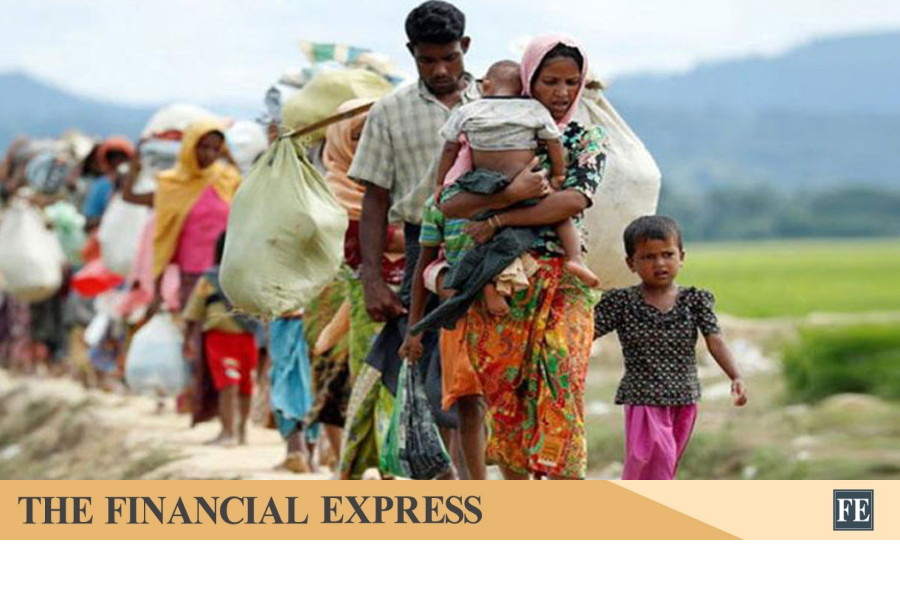
Rohingya refugees carry their belongings as they flee Myanmar for Bangladesh. Photo: Reuters

Accordingly, Bangladesh and the international community should recognise the fact that unless Myanmar agrees to provide full citizenship to the Rohingyas and end their prolonged statelessness, the vicious cycle of expulsion and partial repatriation will continue. The cycle needs to be broken, and this will only be possible if Myanmar provides full and unconditional citizenship to the Rohingyas, with a sincere commitment to protecting all their civil, political, social, economic and cultural rights.

Hence, the only durable solution to the Rohingya refugee crisis is the safe, voluntary, dignified and sustainable repatriation of all Rohingya refugees from Bangladesh to Myanmar, with credible guarantees for their rights. Any other solution, including Myanmar’s latest proposal to repatriate only “verified” Rohingyas without any credible guarantees, is likely to prove insufficient and unsustainable in the long run.

The central issue, therefore, is not simply how many refugees Myanmar is prepared to receive, but whether their return can occur within a political and legal framework that prevents renewed persecution. A credible repatriation process must address the conditions that produced displacement in the first place, particularly the Rohingyas’ statelessness, exclusion and lack of effective protection. Bangladesh should therefore resist any arrangement that reduces repatriation to a numerical exercise, while the international community should ensure that Myanmar’s commitments are independently monitored and verifiable. At the same time, responsibility for resolving the crisis must remain firmly with Myanmar, rather than being shifted onto the refugees or Bangladesh. Without meaningful guarantees of equality, security and rights, repatriation risks becoming a temporary relocation rather than a genuine resolution of the crisis.

Md. Himel Rahman is a lecturer in the Department of International Relations at Gopalganj Science and Technology University.​
 

Inside Rohingya camps


1787182672906.webp

A Rohingya camp in Cox’s Bazar. | New Age

AS THE global community observed World Humanitarian Day on August 19, my mind inevitably drifted to the rolling, densely populated hills of Cox’s Bazar, Bangladesh. Nine years after the massive 2017 influx, the region remains home to more than one million Rohingya refugees, making it the largest and most congested refugee settlement on earth.

For those of us who have walked these narrow camp pathways, humanitarianism is not a temporary job; it is a permanent lens through which we view the world. My journey working alongside giants of the sector in BRAC, Caritas and Christian Aid has fundamentally shaped this worldview. It has taught me a profound, non-negotiable truth: refugees must never be neglected; they must be respected as resilient equals. As we honour fallen humanitarians and demand protection for those on the frontlines today, I want to reflect on the evolution of this unprecedented crisis, the urgent need for sustainable solutions and the critical global advocacy required to secure a dignified future for the Rohingya.

Working in Cox’s Bazar rewired my understanding of human endurance. Through the community-led frameworks of Caritas, the operational scale of BRAC and the partnership models of Christian Aid, I witnessed firsthand that refugees are not passive recipients of aid. They are first responders, teachers, engineers and community leaders.

A true humanitarian lens demands that we replace narratives of pity with profound respect. Despite losing their homeland, enduring statelessness and surviving in tarpaulin shelters, the Rohingyas have maintained their cultural dignity. My philosophy that ‘once a humanitarian, always a humanitarian’ is anchored in this respect. We do not merely deliver food or shelter; we work to uphold the inherent human rights of our neighbours.

The humanitarian landscape in 2026 is vastly different from the chaotic emergency days of 2017. We have built robust systems, but we are also facing unprecedented systemic threats.

The synergy between national organisations such as BRAC and international networks such as Christian Aid and Caritas has created a formidable response mechanism. Disaster risk reduction protocols, public health surveillance and community-based protection mechanisms have strengthened the response, while the localisation of aid has empowered Bangladeshi staff and Rohingya volunteers to take the helm of daily operations.

Yet the most severe challenge is acute donor fatigue. Global attention has fractured, drawn away by newer geopolitical crises, resulting in a devastating grants shortfall. Essential assistance has been slashed, with food vouchers falling to alarmingly low levels, in some cases as little as $6 a month per person.

When funding dries up, the very fabric of the response is threatened. Nutrition programmes for pregnant women stall, child protection spaces close and critical infrastructure maintenance is delayed just as the brutal monsoon season arrives.

Nine years into a protracted crisis, traditional emergency relief is no longer enough. We must move towards sustainable solutions that empower the community, protect the host country’s environment and stretch every dollar further.

One of the most inspiring shifts has been towards green energy. Cox’s Bazar’s fragile ecosystem has been heavily affected by the camps’ footprint. Solar-powered water networks and the conversion of human and organic waste into biogas for cooking can reduce deforestation, cut operational costs and provide safer, smoke-free environments for families.

Camp infrastructure must also become more resilient. Instead of relying solely on fragile temporary structures, shelters using treated bamboo and elevated foundations can better withstand monsoon floods and landslides.

Sustainability, however, is ultimately about people. Investing in training for Bangladeshi staff and Rohingya community workers strengthens a workforce capable of managing disaster preparedness, health campaigns and psychosocial support. Livelihood initiatives, vocational training, upcycling and community-led micro-economies, where policy permits, can further reduce dependence on relief while respecting the agency of refugees.

The aim should be to help refugees move from being passive beneficiaries to active participants in building resilient communities.

While we innovate within the camps, the ultimate solution lies outside them. The camps in Cox’s Bazar were never meant to be permanent. Bangladesh has borne a massive burden with extraordinary generosity, but it cannot shoulder this crisis alone.

Recent diplomatic efforts and verification of lists for potential voluntary returns to Myanmar’s Rakhine State offer a fragile roadmap. Yet repatriation cannot simply be a logistical transfer of people; it must be rooted in fundamental human rights.

Global advocacy involving UN agencies, INGOs, Christian Aid, Caritas, BRAC and other international bodies must demand four essential conditions: returns must be entirely voluntary and conducted with safety and dignity; the root cause of the crisis, statelessness, must be addressed through legal rights and recognition; international observers and humanitarian agencies must have unfettered access to Rakhine State; and, until safe return becomes possible, the international community must honour its financial commitments to Bangladesh.

World Humanitarian Day is a stark reminder of the physical and emotional risks aid workers face globally, but it is also a celebration of the unbreakable human spirit.

My experiences with BRAC, Caritas and Christian Aid in the world’s largest refugee settlement have permanently inscribed a humanitarian ethos into my life. Funding shortfalls, monsoon devastation and geopolitical uncertainty are immense challenges, yet they are met every day by the courage of local staff, the resilience of the Rohingyas and the push towards sustainable solutions. Refugees are not a burden to be hidden; they are human beings deserving of respect and dignity. As long as people are forced to flee their homes, our collective duty remains. Once a humanitarian, always a humanitarian, standing in unwavering solidarity with those who wait, with hope, for a safe return home.

Manik Esahak Biswas is a development professional.​
 

Latest Posts

Back