Home Login Watch Videos Wars

[🇧🇩] China is a Time Tested Friend and a Strategic Partner of Bangladesh

[🇧🇩] China is a Time Tested Friend and a Strategic Partner of Bangladesh
258
10K
More threads by Saif

G Bangladesh Defense

Beijing interested to lend $5b, not $7b
Raheed EjazDhaka
Updated: 07 Jul 2024, 11: 27

1720335808618.webp

PM Sheikh HasinaFile photo

Prime minister Sheikh Hasina is scheduled to set out for China on a bilateral official visit on Monday one year ahead of marking the golden jubilee of diplomatic relations between Dhaka and Beijing.

The prime minister will discuss with Chinese president Xi Jinping to take the 'partnership' of two countries to new heights during her visit to Beijing after five years. Alongside deepening relations between two governments in the political arena, issues like more involvement of China in Bangladesh economic activities will get priority.

Speaking to Prothom Alo, diplomatic sources said Bangladesh will give priority on trade and economy during this trip. Chinese partnership on issues like coordinated development in Bangladesh north and loans in Chinese currency will get priority. China is interested in providing a loan in local currency equivalent to around USD 5 billion. Bangladesh wanted USD 7 billion.

Diplomatic sources said a number of important issues may be resolved during the meeting of top politicians of two countries during the prime minister's trip.

Although the trip is bilateral, in the context of contemporary global and regional incidents, various issues including geo-politics and geo-economy may emerge in the talks.

Speaking to Prothom Alo, foreign secretary Masud Bin Momen said discussions are going on with China on various issues. In these discussions, various issues of economic cooperations are getting priority.

20 documents for signing

On the 3rd day of the visit, prime minister Sheikh Hasina will hold a formal meeting with Chinese prime minister Li Qiang at the Great Hall of Beijing. In presence of two leaders, 20 documents including a number of MoUs may be signed between two countries.

Diplomatic sources in Dhaka said, no agreements will be signed between two countries during this trip. MoUs on various issues and similar types of documents will be signed. Till Friday last, two countries have finalised at least 15 MoUs for signing.​
 
Analyze

Analyze Post

Add your ideas here:
Highlight Cite Fact Check Respond
  • Love (+3)
Reactions: Bilal9
Bangladesh will offer China to invest in ceramic, leather, pharmaceuticals, electric cars, high-end garnets, and household appliances.

I don't know if we need additional investments in Ceramic stuff - because we already have enough (even from China). but sourcing maybe and tech expertise, because Chinese high quality ceramic products are at another level.

Leather, pharma, electric cars and appliances, definitely.

Garnets can be processed - and also other semi precious stones, which can be mined in Myanmar and processed in Bangladesh at lower cost.
 
Analyze

Analyze Post

Add your ideas here:
Highlight Cite Fact Check Respond
Bangladesh mainly imports from China industrial raw materials, capital machinery, and electrical products, which factories can be set up in Bangladesh.

Currently, Bangladesh imports around US $24 billion (according to Chinese customs data) annually while Bangladesh exports less than $1.0 billion.

This is exactly the scenario. Machinery (Capital equipment) and raw materials from China costs much more than finished products exports to China. This will be the trade imbalance for a while for Bangladesh, as it is for many low labor-cost countries other than China.
 
Last edited:
Analyze

Analyze Post

Add your ideas here:
Highlight Cite Fact Check Respond
  • Like (+1)
Reactions: Saif

Dhaka, Beijing to ink 20 MoUs but loan deal unlikely
Says foreign minister; PM leaves for China today

"There is no loan agreement on the list. An MoU will be signed on economic cooperation. If parameters are met under this MoU, we may go for a loan in future."

1720394434074.png

— Foreign Minister Hasan Mahmud

Dhaka and Beijing will sign around 20 MoUs, including some on trade and economic cooperations, during Prime Minister Sheikh Hasina's visit to China that begins today.

However, the two countries may not sign any loan agreement on reserve or budget support.

"There is no loan agreement on the list. An MoU will be signed on economic cooperation. If parameters are met under this MoU, we may go for a loan in future," Foreign Minister Hasan Mahmud said at a press briefing at the foreign ministry yesterday.

He said different countries make different proposals for loans, but Bangladesh does not accept all. For example, the World Bank had offered a loan after refusing fund for the Padma Bridge project, but Dhaka did not accept it.

"The reserve situation is improving in Bangladesh and the trend will continue," he said.

Dhaka and Beijing were discussing a loan of $5 billion in Yuan for trade facilitation amid foreign currency shortage. However, the countries were yet to agree on the terms and conditions of the loan. Besides, there were also discussions on budget support from China, according to diplomatic sources.

Hasan Mahmud said the two countries will announce the inauguration of some development projects.

The MoUs expected to be signed will be on economic and banking sectors; trade and investment; digital economy; infrastructure development; assistance in disaster management; construction of the 6th and 9th Bangladesh-China Friendship Bridge; export of agricultural products from Bangladesh; and people-to-people connectivity.

"Bangladesh will seek China's assistance in the areas of investment and trade; and financial assistance and repatriation of Rohingyas to their homeland. At the same time, Bangladesh will continue to provide support to China as its friend in the global context," he said.

Hasina is going to China at the invitation of Chinese Premier Li Qiang. The visit from July 8 to July 11 comes two weeks after her visit to India. This will be Hasina's first visit to China since her new term began in January and five years after her last visit in 2019.

Analysts believe the back-to-back India and China visits are Bangladesh's way of balancing relations between the two Asian powers.

Hasan Mahmud said Dhaka is discussing Chinese cooperation on the Southern Integrated Development Initiative (SIDI), which will include the development of Mongla Port.

On Teesta project, he said, "As it is a common river of Bangladesh and India, India has made a proposal, and we have to consider it first. It is also good that China made a proposal. As India has made a proposal, we think it is good. If they [China] want, it will be discussed during the visit."

Asked about Dhaka's position on Beijing's interest in upgrading the strategic partnership with Bangladesh to Comprehensive Strategic Cooperative Partnership, the foreign minister said, "Our relationship with China is deep, it is a strategic relationship. This will get stronger."

During a briefing on July 4, Chinese foreign ministry spokesperson Mao Ning said the leaders of the two countries will have an in-depth exchange of views on how to deepen the friendship; on expanding beneficial cooperation; and on regional and international issues of mutual interest.

The PM will reach Beijing around 6:00pm today. Tomorrow morning, she will make a courtesy call on Asian Infrastructure Investment Bank President Jin Liqun.

She will then attend the "Summit on Trade Business and Investment opportunities between Bangladesh and China". Hasina will then hold a bilateral meeting with Wang Huning, chairman of the 14th National Committee of the Chinese Peoples' Political Consultative Conference.

On July 10, she will meet Chinese Premier Li Qiang at the Great Hall of the People and will attend a reception. The meeting will be followed by a banquet in her honour.

That afternoon, Hasina will hold a bilateral meeting with Chinese President Xi Jinping at the Great Hall of the People.

Finance Minister AH Mahmood Ali; Foreign Minister Hasan Mahmud; Prime Minister's Private Industry and Investment Adviser Salman F Rahman; State Minister for Commerce Ahasanul Islam Titu; State Minister for Power, Energy, and Mineral Resources Nasrul Hamid; State Minister fort Posts, Telecommunications, and Information Technology Zunaid Ahmed; Foreign Secretary Masud Bin Momen and other high officials of the ministries concerned will accompany Hasina.​
 
Analyze

Analyze Post

Add your ideas here:
Highlight Cite Fact Check Respond
  • Like (+1)
Reactions: Bilal9

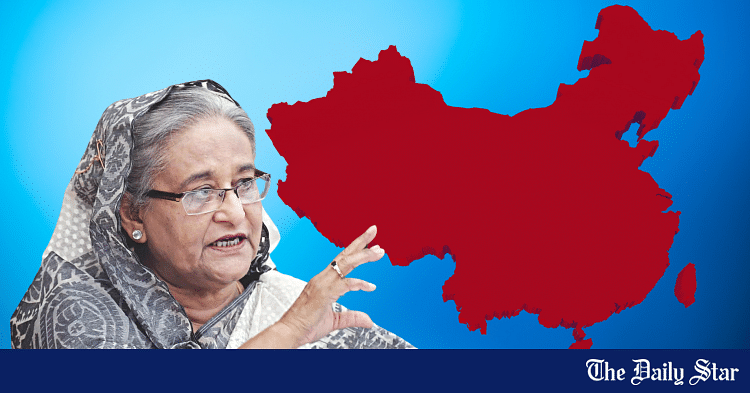
Mission to China: Is the PM ready to take a bold position on RCEP?

1720395074139.webp

VISUAL: STAR

Bangladesh is not a member of the Shanghai Cooperation Organisation (SCO). Nor is it a member of BRICS+. It is not ensconced within ASEAN either. By extension, Dhaka feels it can remain outside the planet's largest trading area, Regional Comprehensive Economic Partnership (RCEP). I have lost count of the times I mentioned RCEP in conversations in Dhaka, only to be met with a blank stare. The RCEP does not elicit curiosity.

The fault lies with the strategic community in Dhaka. They have failed (perhaps even wilfully) to argue for a coherent strategy towards China and Southeast Asia. The result of apathy and opaque concepts is that Bangladesh has "Brexited" itself away from the new core of the world economy on our doorstep. Metaphorically, it has plumped for the slow train, drifting around in South Asia, rather than hitch a ride on the high-speed trains of China, Japan, Korea and ASEAN. We could have both. Geography and history demand it.

Are we aiming low, missing RCEP?

So, what can we hope for from the PM's flight to Beijing? I am worried that no one seems to be worried.

Over two days on July 9 and 10, Prime Minister Sheikh Hasina is expected to have intense talks with Prime Minister Li Qiang, and a broader discussion about a deeper relationship with President Xi Jinping. Are her advisors failing to grasp what is at stake and not feeding talking points for a much more ambitious undertaking?

The current batch of "goodies" look like a string of projects at best, where the parts outweigh the sum. At worst, to cynics, it looks like a shopping trip of cash and projects. Even working on a free trade area with China is insufficient.

Fundamentally, we need to move on from merely pleading for more infrastructure, funded by foreign loans but not by themselves earning foreign currency. The vulnerable economy is crying out for foreign (Chinese) investment into export-producing industrial platforms, to earn the dollars and Yuan to pay back ever higher foreign debt, which is mostly non-Chinese. Instead of acting as a supplicant for aid, we should be negotiating terms of a partnership where both China and Bangladesh gain something (a win-win, as Chinese diplomats like to say).

Contrast this with the trip by the Sri Lankan president in mid-2023 and how, before and after his visit to Beijing, he made joining RCEP the centrepiece of a new strategy towards the East and Southeast Asia. Colombo understands that RCEP offers a priceless opportunity to leapfrog the most industrialised state in India, neighbouring Tamil Nadu, by entering the Chinese-led trading area.

New nodes of supply chains will appear on that island, if admitted. In other words, selected sections of manufacturing processes will decamp from, say, China or Malaysia, and seek low-cost destinations within the trade area. The latter point is important because RCEP is not merely about lowering tariffs but adhering to new technical standards and industrial practices. Diversification, better quality, and higher technology are the prizes.

The oft-stated visions of a Digital Bangladesh and its offspring, Smart Bangladesh, require plugging into the world of Huawei, Xinyi Solar and BYD. That undertaking can quite easily function in parallel to Indian connectivity links through Bangladeshi territory (another win-win).

From strategic ambiguity to strategic clarity

Too often, Dhaka has followed the Indian posture of strategic ambiguity. Others might consider this ever-so-clever "balancing" as strategic dithering, founded on short-term opportunities, laced within an ambience of fear of offending any or all of the Big Three (India, US, and China, in that order).

The PM, with her political instincts, understands the downsides of committing too much to Delhi's demands. Wiser heads know that Delhi has its own fears and interests. They recognise that cooperation, not confrontation, is the sine qua non of Delhi-Dhaka ties. Yet, this cannot be to the detriment of Bangladeshi economic imperatives. Dhaka has given much more than would have been possible two decades ago—ending separatist bases for Northeast Indian guerillas forces, allowing transport corridors from Kolkata through Bangladesh to Tripura and Assam, and deferring to Indian pressure to "go slow" on Chinese projects. The last point is now no longer acceptable to the sovereign and economic interests of Bangladesh, nor its restive population.

Delhi has been heavily criticised within opposition quarters in Bangladesh for its support to the Awami League during the one-sided elections in January. Now, Delhi has nowhere else to go. It can hardly try to not back the Awami League since the alternative forces are viscerally against Delhi. Moreover, with Modi electorally weakened, he has other agendas to attend to.

Were Dhaka to take bold steps in its approach to Beijing and the wider region, Delhi would be as passive as Washington was in January.

Acting firmly but fairly by retaining commitments to India alongside pursuing a new, enhanced economic partnership with China would extinguish some domestic fires. This reminds me of the PM's rather strange journey to the Munich Security Conference a few months ago. The PM acquiesced with her foreign policy wonks and Western personages to hobnob with Western military officials, primarily focused with war in Eastern Europe and forthcoming adventures on the South China Sea. Not only did Sheikh Hasina skilfully avoid antagonising Russia as well as her Western hosts by stating the position of neutrality (as per the Global South position), but she also made some brave remarks, strongly condemning the slaughter in Gaza.

The mission to Beijing offers her another opportunity to act on her instincts. She can make her move, telling her Chinese hosts that Bangladesh wants an early entry into RCEP. Missing this boat now will mean facing the music soon enough.

Farid Erkizia Bakht is a political analyst.​
 
Analyze

Analyze Post

Add your ideas here:
Highlight Cite Fact Check Respond
  • Love (+3)
Reactions: Bilal9

Members Online

Latest Posts

Back
PKDefense
G
O
 
H
O
M
E