[🇧🇩] China is a Time Tested Friend and a Strategic Partner of Bangladesh

Afghanistan Albania Algeria Andorra Angola Antigua Austria Azerbaijan Bahamas Bahrain Bangladesh Barbados Canada China Egypt Finland Germany India Iran Israel Japan Lebanon North Macedonia Pakistan Palestine Qatar Russia Syria Turkey Ukraine United Kingdom United States Yemen
[🇧🇩] China is a Time Tested Friend and a Strategic Partner of Bangladesh
324
13K
More threads by Saif

G Bangladesh Defense

China won't oppose India's entry into economic corridor: Envoy
Chinese envoy says Beijing to send experts for Teesta feasibility study

FE ONLINE REPORT

Published :
Jul 02, 2026 19:38
Updated :
Jul 02, 2026 19:38
1783045163341.webp


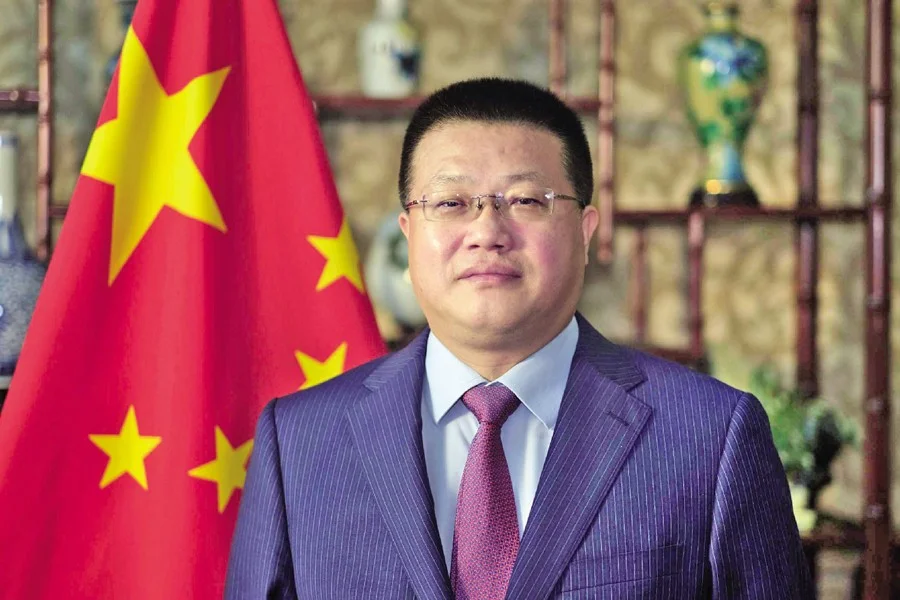
Chinese Ambassador to Bangladesh Yao Wen said on Thursday that China would not oppose India's participation in the proposed China-Myanmar-Bangladesh Economic Corridor if New Delhi decides to join the initiative.

Responding to a question at a media briefing on Prime Minister Tarique Rahman's recent visit to China, the ambassador said China remained open to the participation of other countries.

"We are open. We welcome other countries if they are ready. But it is up to them to make that decision," he said.

Yao noted that the proposal was not new, recalling that China had earlier floated the Bangladesh-China-India-Myanmar (BCIM) Economic Corridor.

"That could not be achieved. Since China, Bangladesh and Myanmar all seek greater regional connectivity, the three countries can begin the initiative together," he said, adding that the door would remain open for others to join later.

Describing Prime Minister Tarique Rahman's visit to China as a "complete success", the ambassador said it marked a new stage in bilateral relations and expanded cooperation in trade, investment and regional affairs.

On the proposed Teesta project, Yao said the initiative had been proposed by the Bangladesh government, which sought China's assistance for its implementation.

He said China had agreed to support the project and would send a team of experts to conduct a joint feasibility study with the Bangladesh government.

"The most important thing is a sound scientific feasibility study. Whatever we do should be based on that," he said.

Responding to another question, the ambassador said the proposed "2+2" dialogue mechanism was not a new concept, noting that Bangladesh had already agreed to establish a similar arrangement with Türkiye and that China maintained such mechanisms with several countries.

Under the new format, Bangladesh and China will hold regular strategic dialogues alongside existing engagements between their foreign ministries, he added.

On the Memorandum of Understanding (MoU) on the Global Development Initiative (GDI), Yao said Bangladesh's decision to join the initiative would create new opportunities for bilateral cooperation.

He added that more than 190 countries and international organisations had joined the initiative.

Regarding Chinese foreign direct investment (FDI), the ambassador said many Chinese companies had expressed interest in investing in Bangladesh during the visit, while the Chinese economic and industrial zones in Bangladesh would provide a strong platform for investment.

According to the Bangladesh Investment Development Authority (BIDA), Chinese companies have so far committed investments worth US$9.0 billion in Bangladesh, he said.

Yao also said Prime Minister Tarique Rahman's father, late President Ziaur Rahman, and former prime minister Begum Khaleda Zia had played important roles in strengthening Bangladesh-China relations.

He said the visit's most significant outcome was the decision to upgrade the existing China-Bangladesh Comprehensive Strategic Cooperative Partnership to a China-Bangladesh Community with a Shared Future in the New Era.

According to the ambassador, the new framework provides for enhanced cooperation between the two governments, legislatures and political parties, the establishment of a strategic dialogue between the foreign ministers and exploration of a "2+2" dialogue involving foreign affairs and defence officials.

Quoting Chinese President Xi Jinping, Yao said Beijing would remain a trusted friend, neighbour and development partner of Bangladesh regardless of changes in the international environment.

He said China reaffirmed its support for Bangladesh's sovereignty, independence and territorial integrity, while Bangladesh reiterated its commitment to the one-China principle by recognising Taiwan as an inalienable part of China and opposing "Taiwan independence".

The ambassador said the two countries also agreed to deepen cooperation under the Belt and Road Initiative by expanding collaboration in green development, the digital economy, information technology, artificial intelligence, finance, healthcare, education and cultural exchanges.

They also agreed to continue implementing major infrastructure projects, including cooperation in ports and water resources development.

Among the key outcomes of the visit, Bangladesh announced that it would establish its first overseas investment office in China to facilitate bilateral investment.

During an investment forum held alongside the visit, agreements were signed on developing the Chinese Economic and Industrial Zone in Chattogram and the Mongla Port Economic Zone. The two countries also agreed to advance the Mongla Port Facilities Modernisation and Expansion Project.

Bangladesh and China also signed a phytosanitary protocol allowing exports of fresh Bangladeshi jackfruit to China, following the opening of the Chinese market to Bangladeshi mangoes. The two sides also signed a joint action plan to strengthen Bangladesh's export capacity.

China welcomed Bangladesh's participation in the Group of Friends of the Global Development Initiative and pledged to work closely with Dhaka to implement the newly signed memorandum.

The ambassador also said China supports Bangladesh's greater role in multilateral institutions, including the United Nations, as well as its participation in BRICS and its application to become a partner of the Shanghai Cooperation Organisation.

Concluding the briefing, Yao said China was ready to work with Bangladesh to implement the understandings reached during the visit and translate them into concrete outcomes that would benefit the people of both countries.​
 

Geopolitics: Prime Minister's China visit and the diplomacy ahead

AKM Zakaria

1783046313639.webp


The new government of Tarique Rahman has taken charge amidst various economic pressures and challenges; there is a need to increase foreign exchange reserves, attract new investments, create employment opportunities, rejuvenate industrialisation, at the same time not halting infrastructure development. Amidst this, the Iran war breaks out, exacerbating the situation. Given these circumstances, Prime Minister Tarique Rahman's choice of countries for his first foreign trip naturally carried significant economic considerations.

The Prime Minister visited Malaysia and then China. From an economic standpoint, both countries are important for Bangladesh. Malaysia is a major source of remittances for Bangladesh. Lifting the current ban on the labour migration to Malaysia is a key expectation for Bangladesh.

Additionally, China is one of Bangladesh's major partners for economic development, providing loans on easy terms, investments, infrastructure assistance, and trade relations. However, considering regional geopolitics and strategic perspectives, the visits to these two countries carry different dimensions and distinctions.

In such a reality, an effective path for Bangladesh is not to align itself with a specific sphere of regional and global politics. Instead of becoming part of one party's strategic rivalry, it is effective for smaller and medium countries to maintain parallel relationships with competing nations while keeping national interests in mind and balancing relationships with multiple powers.

The visit to Malaysia can be seen largely in light of economic-commercial cooperation and interests, and the relationship between two Asian or Muslim countries, with little scope for broader analysis. On the other hand, even though China is a major economic, commercial, development, and investment partner for Bangladesh, the relationship between the two countries cannot be considered solely on this basis. There are deeper connections with changing global politics, regional and global geopolitical competition, and influence. This visit by Prime Minister Tarique Rahman must be viewed separately from previous visits of this kind. Why? That would be addressed later.

Since the establishment of diplomatic relations in October 1975, politics in Bangladesh and China has gone through various changes, but the fundamental character of the relationship between the two countries has not changed significantly. China's general policy is to maintain good relations with all types of governments, prioritising trade and economic interests above all. Whether a country has a democratic government in power or a military or authoritarian government is not their concern. This has been observed in the case of Bangladesh. It can be said that China's relationship with any Bangladeshi government has not ever been particularly bad in that sense.

In regional geopolitics, the India-China relationship is highly competitive. We know that during the last Awami League regime, Bangladesh became completely immersed in India's sphere of influence. However, this did not pose a major problem for China. They maintained close ties with the Hasina government, and many major projects were implemented with Chinese assistance during that time. During Hasina's era, China became Bangladesh's largest trading partner, and they faced no issues with her downfall either.

Now, I will address why this visit needs to be seen differently from previous visits by Bangladeshi heads of government to China. Among the five decades of relations between the two countries, during Prime Minister Tarique Rahman's visit, the Bangladesh-China joint communique was issued for the third time. If we analyze this communique and the overall visit, it's evident that for the first time, more emphasis was placed on the political relationship between the two countries than on financial assistance or development project-based discussions.

I have already discussed China's general foreign policy stance; they prioritise economics over politics. However, in the past decade, changes have begun to appear in China's diplomacy. Economic cooperation remains their primary tool, but political relations are receiving more importance as well. It can be said that after the initiation of the Belt and Road Initiative (BRI), China is not limiting its role to infrastructure development alone. They have adopted a policy of building relationships with political parties, policymakers, think tanks, and the media as well.

Before the Prime Minister's visit to China, a column by Liu Zongyi, director of the Center for South Asia Studies, was published in China's Global Times, indicating this shift in China's position. It became evident that China is now starting to place importance on political relationships alongside economic ties with partner countries.

His argument is that Bangladesh's intellectuals and high-ranking groups are largely influenced by the Western development model. They practice Western economic theories and governance systems and remain cautious regarding China's development framework and production capacity enhancement collaboration. He believes that Bangladesh needs to find a ''path of development suited to its national context. '' To find this path, he suggested increasing institutional communication between the political parties, think tanks, and local governments of the two countries.

We have seen visits to China by leaders from various political parties and ideologies in Bangladesh at the invitation of the Chinese government after the mass uprising in July. Confucius Institutes have been established in various universities across the country with China's assistance over the past few years. It is clear that such initiatives will increase in the future.

Among the 13 memorandums of understanding signed this time, subjects like Chinese language education and media cooperation are included. A memorandum of understanding was signed between the BNP and the Communist Party of China. It is not merely a formality; party-to-party communication holds strategic significance in diplomacy. China is now adopting this strategy in South Asia.

The world is going through changes in global politics. Considering political and economic factors, China's influence and importance are increasing worldwide. It is natural for the country to adopt a strategy of politically engaging with various countries beyond trade and economics. On the other hand, for economic interest, Bangladesh needs easy sources of funds. Whether through loans or investment, it seems there is no alternative for Bangladesh other than China. If Bangladesh can secure its economic, commercial, and infrastructural development interests through China, it will take that route, which is only natural. Prime Minister Tarique Rahman's visit to China has delivered that message.

However, it is crucial to consider regional and global realities in this regard. In the regional context, India-China competition, globally, the US's efforts to counter China, the US Indo-Pacific strategy, or the country's Quad security dialogue involving India, Japan, and Australia cannot be overlooked. The expansion of the Mongla port, the industrial zone in Chittagong planned by China, maritime cooperation, or the China-Myanmar-Bangladesh economic corridor—India will not view these solely as economic projects; they will see them as strategic occurrences. In today's world, ports are not merely trade infrastructure. They are related to maritime control, supply systems, energy security, and military presence. Similarly, digital infrastructure, artificial intelligence, and power projects have now become significant elements in geopolitical competition.

We must remember that the United States is one of Bangladesh's primary export markets. The European union is also among them. Japan has been one of Bangladesh’s most reliable development partners for many decades. India is Bangladesh's most important neighbour, with a lengthy border, shared rivers, trade, communication, energy, and border security—interdependence cannot be denied. Altogether, Bangladesh and its economy are tied and dependent on relationships with many countries and powers.

In such a reality, an effective path for Bangladesh is not to align itself with a specific sphere of regional and global politics. Instead of becoming part of one party's strategic rivalry, it is effective for smaller and medium countries to maintain parallel relationships with competing nations while keeping national interests in mind and balancing relationships with multiple powers.

I mentioned earlier that within the Chinese visit of the Prime Minister, there is a message of focusing on the country's economic and commercial interests. We have to wait and see how Bangladesh maintains this continuity with other countries. However, it would not be accurate to consider this visit as the beginning of a major change in diplomacy or foreign policy. Because no single visit can determine the direction of diplomacy. It is determined by a series of steps and decisions and a long-term strategy. The challenge ahead for Bangladesh is to ensure a mature, confident, and pragmatic foreign policy or diplomacy.

#AKM Zakaria is a Deputy Editor at Prothom Alo.​
 

GEOSTRATEGIC DIVERSIFICATION

Not geopolitical realignment

1783135914842.webp

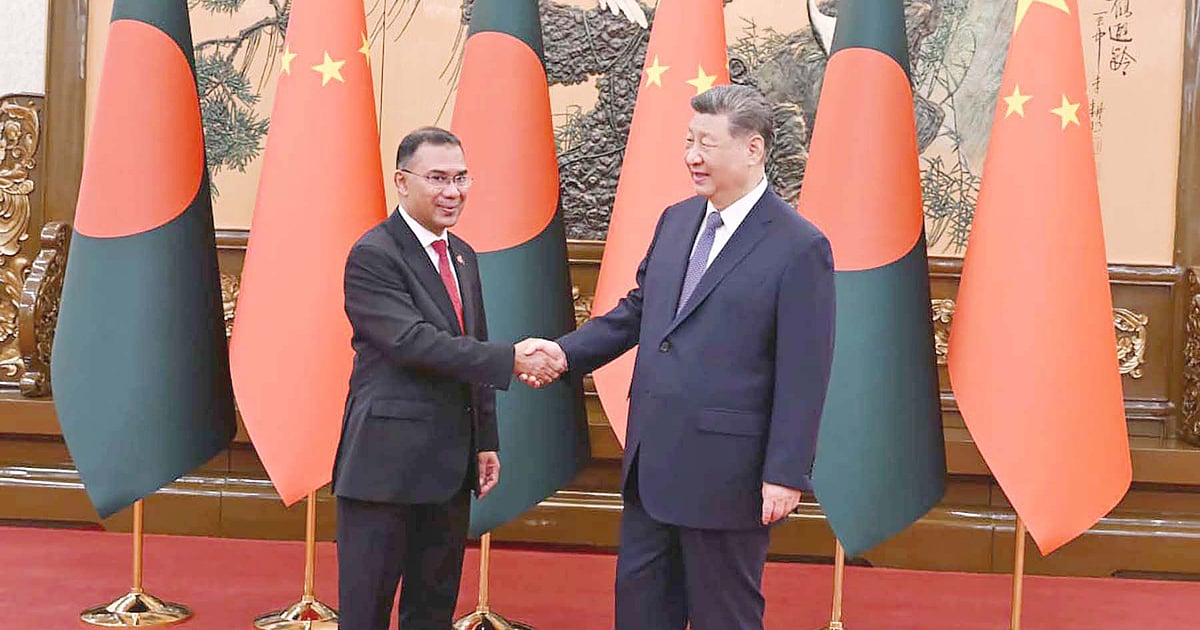
Bangladesh’s prime minister Tarique Rahman meets with China’s president Xi Jinping at the Great Hall of the People. | Bangladesh Sangbad Sangstha

SPEARHEADED by Beijing, the proposed China-Myanmar-Bangladesh Economic Corridor is a multilateral infrastructure and trade initiative designed to link China’s landlocked south-western Yunnan province directly to the Bay of Bengal. Formally introduced during talks between China’s president Xi Jinping and Bangladesh’s prime minister Tarique Rahman, the corridor seeks to represents a major strategic shift in South Asian geopolitics. Rather than building a network from scratch, China intends to use Bangladesh as a natural extension of the China-Myanmar Economic Corridor, creating a multimodal transit system of roads, railways, and maritime upgrades.

The blueprint places a heavy focus on Bangladesh’s coastline, with China pledging to modernise the Chittagong and Mongla ports to transform the region into a massive business hub. This integration also includes establishing a 150-acre Chinese industrial park adjacent to the Mongla port project. This new framework effectively re-engineers the stalled 1990s Bangladesh-China-India-Myanmar concept by explicitly excluding India. After a deterioration in Sino-Indian relations and New Delhi’s opposition to Belt and Road projects near its borders, routing strictly through Myanmar and Bangladesh allows China to bypass the Indian territory entirely while still securing vital access to the Indian Ocean.

Economically, the proposal is significant for Bangladesh’s export-led economy, especially apparel and light manufacturing, as high transport costs remain a major structural constraint before the LDC graduation. Studies show that even modest reductions in logistics costs can substantially improve trade competitiveness and regional value-chain integration.

Geopolitical challenges

THE first and most immediate challenge is Myanmar’s prolonged civil conflict. Large parts of Rakhine State, through which the Kyaukpyu corridor passes, remain contested between the military and the Arakan Army. Since the 2021 coup, fragmented state authorities have undermined border management, customs administration, infrastructure security and transport reliability. Scholarship consistently identifies political instability and armed conflict as the principal obstacles to connectivity projects in Myanmar, making the corridor’s commercial viability contingent on improved security.

A second challenge concerns Bangladesh’s relations with India. New Delhi has for long viewed Chinese infrastructure projects in South Asia through a strategic lens, a concern reinforced by the 2020 Sino-Indian border clashes and India’s withdrawal from the BCIM initiative. A China-Myanmar-Bangladesh corridor excluding India could, therefore, reinforce perceptions of Bangladesh moving closer to China’s strategic orbit. As India remains Bangladesh’s largest neighbour, an important transit partner and a key security interlocutor, Dhaka’s long-term interest lies in ensuring that CMBC complements, not replaces, existing cooperation in trade, energy, railway and inland waterways while maintaining strategic balance amid growing China-India-US competition in the Bay of Bengal.

Relations with the United States also require careful management. Although Washington supports regional connectivity, it has consistently expressed concerns about aspects of China’s Belt and Road Initiative, particularly infrastructure with potential dual-use applications. The recent US-Bangladesh Agreement on Reciprocal Trade does not preclude Bangladesh’s participation in the CMBC, but it validates cooperation on economic security, supply-chain resilience, investment screening and export controls. Consequently, Bangladesh should ensure that the corridor remains a commercially driven initiative rather than an instrument of exclusive geopolitical alignment.

Connectivity has become a source of geopolitical influence. Recent research demonstrates that transport corridors, ports, railways and logistics infrastructure create patterns of economic dependence and political influence that frequently outlast military deployment. Consequently, Bangladesh’s long-term objective should not be to avoid connectivity initiatives but to ensure that no single corridor acquires monopoly status within the country’s external economic relations. Diversification of connectivity, financing and investment, therefore, becomes a strategy for preserving national autonomy rather than limiting economic engagement.

Strategic equilibrium

RECENT scholarship shows that transport infrastructure has become an enduring instrument of geopolitical influence, as ports, railways and logistics corridors shape long-term patterns of trade and regional integration. This underscores the need to embed the CMBC within a diversified connectivity architecture rather than allowing it to become an exclusive corridor dominated by any single external power.

In a quest to preserve strategic equilibrium, Bangladesh should frame the CMBC as an instrument of national development rather than geopolitical alignment. Recent scholarship on middle-power diplomacy characterises this approach as strategic hedging, maintaining productive relations with competing major powers while avoiding exclusive security or economic dependence on any one of them. For Bangladesh, strategic diversification offers greater resilience than strategic alignment.

First, the CMBC should be embedded within Bangladesh’s broader connectivity strategy by complementing the BBIN, BIMSTEC, India-linked transport networks, Japan’s BIG-B initiative, ASEAN connectivity and partnerships with the United States, the European Union, Gulf states and multilateral institutions.

Second, the corridor must remain strictly commercial, excluding military, intelligence, or other dual-use functions. Third, financing should be diversified through multilateral development banks, private investors and China to enhance transparency, reduce geopolitical risks and strengthen project viability. Fourth, Dhaka should maintain close consultations with India to underscore that CMBC should complement, rather than replace, bilateral cooperation. Finally, implementation should proceed only when Myanmar’s security situation permits reliable commercial operations as infrastructure in conflict zones rarely delivers sustained economic returns.

The China-Myanmar-Bangladesh Economic Corridor should be understood neither as a geopolitical alignment with China nor as a challenge to Bangladesh’s partnerships with India, the United States, Japan or other development partners. Rather, it represents one component of Bangladesh’s broader strategy of geostrategic diversification, expanding connectivity, reducing logistical constraints and strengthening the country’s role as the principal commercial bridge between South Asia, Southeast Asia and the Bay of Bengal. It is not a geopolitical realignment.

For Bangladesh, the central policy objective is not choosing among competing powers but diversifying partnerships. If implemented through transparent financing, commercially viable projects, diversified investment, strong institutional safeguards and complementary engagement with India, Japan, the United States, multilateral development banks, ASEAN and the Gulf states, the CMBC can intensify Bangladesh’s economic resilience while preserving its strategic autonomy. The corridor’s success should, therefore, be measured not by which major power benefits most, but by whether it advances Bangladesh’s long-term national development and its journey towards becoming a trillion-dollar economy.

Kausar Mumin is a 2026 legislative policy fellow in the US Congress.​
 

Prime Minister’s China visit gives message of ‘strategic autonomy’

M Sakhawat Hossain
Updated: 08 Jul 2026, 10: 44

1783490804936.webp

Bangladesh's Prime Minister Tarique Rahman and Chinese Prime Ministe Li Qiang. PID

Nearly four months after assuming office, Prime Minister Tarique Rahman undertook a visit to China via Malaysia. This marked his maiden state visit. Although the itinerary spanned two nations, given the current global geopolitical landscape, public attention was overwhelmingly focused on his meeting with President Xi Jinping. In particular, Bangladesh’s large neighbour, India, kept a close watch on this visit.

Whether globally or regionally, the historical backdrop of Sino-Indian relations in the subcontinent’s geopolitics, alongside India’s perspective on China’s strategic ties with neighbouring countries, is bound to exert influence. Far from being a mere influence, it remains a critical subject of deliberation among India’s geopolitical and military analysts. This reality was clearly reflected across various discussions surrounding the prime minister’s maiden China visit.

The reason for highlighting these aspects is that the somewhat disproportionate relationship between Bangladesh and India, which developed over a long period—specifically during Sheikh Hasina’s 15-year tenure—is undergoing a noticeable shift in the current context.

My view is that for the majority of the time, we failed to maintain the necessary distinctiveness or strategic autonomy in formulating our foreign and strategic policies. This becomes glaringly evident in inter-state relations within the subcontinent revolving around China. I believe that the shifts brought to subcontinental geopolitics by the Afghan war, the Iran-US-Israel conflict, and the unprecedented rise of China are profoundly impacting the foreign and defence policies of countries like ours.

Against this backdrop, it is imperative to sustain the dialogue regarding Bangladesh’s ongoing and evolving relationship with China. China recognised an independent Bangladesh on 31 August 1975, and diplomatic ties were established in October of the same year. Following subsequent political developments in Bangladesh, President Ziaur Rahman came to power and visited China for the first time in January 1977 as the Chief Martial Law Administrator. He was accorded a significant state reception by the Chinese leadership.

He visited China for a second time in July 1980 as the President of Bangladesh. These two visits laid the foundation for a strategic relationship between Bangladesh and China in the military sphere. Subsequently, ties expanded into other sectors as well. In 2016, Bangladesh joined China’s Belt and Road Initiative (BRI), which brought with it an announcement of development projects worth approximately USD 40 billion.

However, as Bangladesh’s foreign policy over the past 15 years was predominantly India-centric, political relations with China remained somewhat lukewarm. Despite China’s substantial participation in commercial and development ventures, only about USD 4.5 billion worth of projects have been implemented out of the promised USD 40 billion development package so far.

In this context, there is ample reason to view Prime Minister Tarique Rahman’s China visit as following in the footsteps of his father, the late President Ziaur Rahman, and his mother, former Prime Minister Begum Khaleda Zia. I believe this visit has reflected the national interests and public aspirations of Bangladesh. During the tour, 13 Memorandums of Understanding (MoUs) were signed with China. Among these, three specific matters are being widely discussed within the country.

The prime minister’s visit is both timely and highly significant. Tied to it are Bangladesh’s geopolitical positioning and strategic autonomy, which constitute the natural right of an independent and sovereign state. In the recent past, this independence appeared to have been curtailed to a great extent.

Steering clear of other matters, I would like to highlight two primary areas. The first is the expansion and modernisation of the Mongla Seaport, which has also become a focal point of discussion among geopolitical analysts in our neighbouring country. This project is not new. Its core objective is to upgrade Mongla Port to handle container cargo efficiently. To this end, plans were drawn up for new terminals, necessary equipment, and yard expansion.

A project proposal worth approximately Tk 40.68 billion (4,068 crore) was formulated on a G-to-G (Government-to-Government) basis to construct two jetties and associated infrastructure with Chinese assistance. Of this amount, China’s assistance constitutes around Tk 35.93 billion, with the Bangladesh government covering the remainder.

Once implemented, the project will enable Mongla Port to handle roughly 400,000 TEUs (20-foot Equivalent Units of containers) annually. Notably, Mongla Port currently lacks dedicated container berths; all existing berths are utilised for bulk cargo. Consequently, this capacity should have been developed much earlier.

During the tenure of the interim government, the project was re-evaluated, and its cost was reduced by approximately Tk 2.14 billion. Despite receiving approval from ECNEC for a second time and the signing of the agreement, work could not commence due to delays in the release of funds from China. Later, this initiative was integrated with the proposed Chinese EPZ project in Mongla. Reports indicate that progress on this front was achieved during the prime minister’s recent visit. Meanwhile, an Indian proposal to construct and expand two additional container berths was also under consideration. However, due to escalating costs and other variables, the interim government chose not to proceed with that project.

Therefore, expansion remains the only viable alternative to transform Mongla Port into a modern and regional hub. In my assessment, China’s proposal is far more cost-effective and efficient for Bangladesh from both an economic and technical standpoint. Even in the absence of a container terminal, the port generated a revenue of approximately Tk 3.44 billion in the 2024–25 fiscal year, yielding a surplus of over Tk 620 million for the first time. At present, container handling is carried out solely by utilising bulk berths. Consequently, following the expansion, the port’s utility and regional significance will increase exponentially. Furthermore, the Chinese EPZ in Mongla will accelerate the economic development of the entire region, not just the port.

Beyond Mongla Port, the China-proposed economic corridor involving Bangladesh-Myanmar-China holds immense strategic importance. This is essentially a rebranded iteration of the earlier BCIM (Bangladesh-China-India-Myanmar) initiative. This corridor is vital for establishing connectivity and expanding future trade between Bangladesh, China, and Myanmar.

Concurrently, the regional prominence of Chittagong Port, the Bay Terminal, the APM Terminal, and the Matarbari Deep Sea Port as regional hubs will multiply manifold. In the interest of Bangladesh’s future socio-economic progression, the government must accord serious consideration to this proposal. This corridor will also integrate Bangladesh more effectively with ASEAN. It is worth noting that China has extended the invitation to join this economic corridor to India as well. This can be termed a new version of the BCIM initiative.

In conclusion, it is entirely natural and desirable for Bangladesh, as a sovereign state, to adopt an independent foreign and defence policy. However, the objective of this policy is not to cause detriment to any nation. Rather, our goal is to maintain amicable relations with all countries, particularly our neighbours. It is the expectation of the nation’s citizens that the current government will steadfastly continue to make independent strategic decisions in the national interest of Bangladesh.

* M Sakhawat Hossain is a former Adviser to the Interim Government​
 

Cooperation in agriculture, renewable energy
BD, China's Fujian Province forge new partnership

FE REPORT

Published :
Jul 10, 2026 11:31
Updated :
Jul 10, 2026 11:31


1783726613043.webp


Bangladesh and China's Fujian Province have agreed to establish new partnership to expand cooperation in agriculture, fertiliser supply, rural development, fisheries, food processing and renewable energy.

Both sides reached a broad understanding to work together on technology transfer, agricultural research, fertiliser security, agricultural modernisation, cold-chain development, rural infrastructure and sustainable development initiatives, says a press release.

The understanding came on Wednesday in a series of meetings at the Bangladesh Secretariat attended by Agriculture Minister Mohammad Amin Ur Rashid, Agriculture Secretary Dr Rafiqul E Mohamed, and Bangladesh Agricultural Development Corporation (BADC) Chairman Md. Azizul Islam and Lin Guoshan, Secretary of the CPC Party Leadership Group and Director of the Fujian Provincial Supply and Marketing Cooperative.

A key focus of the discussions was the renewal of the existing DAP fertiliser supply agreement between the government of Bangladesh and Banyan International Trading Limited and Fujian Funong Agricultural Means of Production Group Co., Ltd. of Fujian Province.

The Chinese delegation stressed the importance of renewing the agreement within this month to ensure uninterrupted fertiliser supplies ahead of Bangladesh's September-October procurement season.

According to the delegation, an early renewal would help ensure the timely availability of DAP fertiliser for Bangladeshi farmers during the upcoming cultivation season.

The Bangladesh side informed the delegation that the Ministry of Agriculture had already initiated the renewal process and expected the required government procedures to be completed within the next few days.

They noted that the government's fertiliser procurement programme would begin shortly, making the timely renewal of the agreement essential to maintaining uninterrupted supplies.

The Chinese delegation reaffirmed its commitment to supporting Bangladesh's fertiliser requirements and expressed willingness to further strengthen long-term cooperation with the government of Bangladesh in the fertiliser sector.

During the meetings, the Fujian delegation also presented an overview of the province's agricultural achievements and technological capabilities.

The Bangladesh side at the meetings expressed keen interests in adopting Fujian's agricultural technologies to enhance domestic food production, particularly rice cultivation.

They said increasing rice productivity remains a national priority for ensuring food security.

The Chinese delegation said advanced hybrid rice varieties and scientific cultivation techniques developed in Fujian are capable of producing up to 3.67 tonnes of paddy per acre under favorable growing conditions.

At the meetings food processing was identified as another priority area for cooperation.

Bangladesh sought Chinese technical assistance for value-added processing of jackfruit and other fruits, particularly dried jackfruit chips and export-oriented food products.

The meetings also explored cooperation in crab hatcheries, commercial aquaculture and modern fish farming, including species such as tilapia and pomfret.

Bangladesh informed the delegation about its plans to gradually convert more than 200,000 electricity- and diesel-powered irrigation pumps into solar-powered systems.

Officials said the initiative could potentially save the country around US$1.0 billion annually in fuel import costs.

Beyond agriculture, discussions also covered rural development, waste management, safe drinking water, rural infrastructure and integrated agricultural services.

Lin Guoshan said the Chinese government is willing to expand cooperation through grant-funded development assistance and other cooperation programmes in sectors including agriculture, rural development, fisheries, education, scientific research and technology.​
 

Latest Posts

Back