[🇧🇩] China is a Time Tested Friend and a Strategic Partner of Bangladesh

Afghanistan Albania Algeria Andorra Angola Antigua Austria Azerbaijan Bahamas Bahrain Bangladesh Barbados Canada China Egypt Finland Germany India Iran Israel Japan Lebanon North Macedonia Pakistan Palestine Qatar Russia Syria Turkey Ukraine United Kingdom United States Yemen
[🇧🇩] China is a Time Tested Friend and a Strategic Partner of Bangladesh
340
14K
More threads by Saif

G Bangladesh Defense
Construction of Chinese industrial zone begins in Anwara, potential for lakhs of jobs
Chinese Ambassador Yao Wen said, "The commencement of construction of the CEIZ in Chittagong is an important step in implementing the benefits of Prime Minister Tarique Rahman's recent visit to China."

Naya Diganta Online
Published: Monday 27 July 2026, 07:22
1785216478571.webp

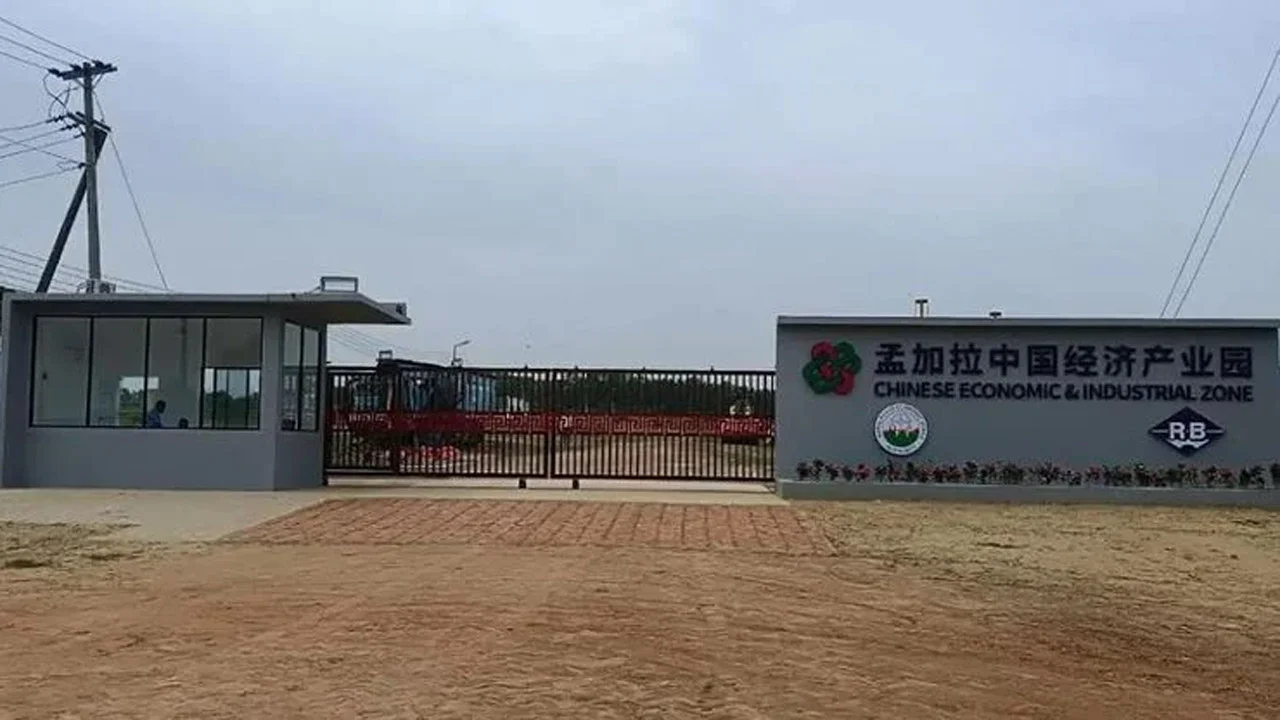
Anwara Chinese Economic and Industrial Zone (CEIZ) in Chittagong

The construction of the Chinese Economic and Industrial Zone (CEIZ) in Anwara, Chittagong has been officially inaugurated. If implemented, the project will attract investments worth about 1.3 billion US dollars and create more than 100,000 direct and indirect employment opportunities.

Finance Minister Amir Khosru Mahmud Chowdhury was the chief guest and Home Minister Salahuddin Ahmed was the special guest at the inauguration ceremony. Chinese Ambassador to Bangladesh Yao Wen, BEZA Executive Chairman Ashiq Chowdhury, State Minister for Land and Chittagong Hill Tracts Affairs Barrister Mir Mohammad Helal Uddin, Member of Parliament for Chittagong-13 constituency Sarwar Jamal Nizam, Vice President of China Road and Bridge Corporation (CRBC) Li Changgui and Chairman of Bangladesh CEIZ Company Limited Wang Benqian spoke at the event.

The Bangladesh Economic Zones Authority (BEZA), under the Prime Minister's Office, announced this information in a press release on Monday (July 27).

The event, attended by about 70 Chinese business representatives, saw the signing of several sub-lease agreements, the inauguration of the CEIZ's One-Stop Service Center, and the official commencement of construction work with tree planting.

Finance Minister Amir Khasru Mahmud Chowdhury said, "Investment will be the main driving force for the country's development, job creation and achieving its goal of becoming a trillion-dollar economy by 2034. The progress of CEIZ is an important foundation of the government's long-term economic plan."

Home Minister Salahuddin Ahmed said, "Bangladesh is open to domestic and foreign investment. The start of construction of the CEIZ is not just the inauguration of a project, but a new foundation for a long-term economic partnership between Bangladesh and China."

Chinese Ambassador Yao Wen said, "The commencement of construction of the CEIZ in Chittagong is an important step in implementing the benefits of Prime Minister Tarique Rahman's recent visit to China."

He said, "China is ready to work closely with Bangladesh to translate the consensus of the leaderships of the two countries into real development."

BEZA Executive Chairman Ashiq Chowdhury said that after the Prime Minister's visit to Beijing and Dalian in June, more than 30 Chinese companies have pledged to invest about US$500 million in the zone.

He said that within the next three months, a system will be introduced that will enable the necessary approvals for setting up new industries to be completed within 14 days.

The CEIZ is being developed on about 800 acres of land as a government-to-government (G2G) initiative. The project will be implemented by Bangladesh CEIZ Company Limited, with 30 percent ownership by the Bangladesh Economic Zone Authority and 70 percent by the China Road and Bridge Corporation (CRBC).

The Executive Committee of the National Economic Council (ECNEC) has approved a project worth around Tk 4,189 crore to build supporting infrastructure for CEIZ to build world-class industrial infrastructure. Under this, jetty, four-lane road, Central Effluent Treatment Plant (CETP), gas and water supply system, solid waste management, substation and other necessary infrastructure will be constructed.

The infrastructure construction period of the project has been set from January 2027 to December 2031. BEZA considers this economic zone strategically important for international trade and industrial investment due to its proximity to the Karnaphuli Tunnel, Chittagong Seaport, and Shah Amanat International Airport.

The press release said that the implementation of the CEIZ will open new horizons in export-oriented industrialization, increase foreign investment, create employment, and develop Chittagong as a modern industrial and logistics hub.

Source: BSS
 
Dr. Titumir
Bangladesh seeks manufacturing-oriented industrialization with Chinese investment
Regarding the Prime Minister's recent visit to China, Dr. Titumir said that the biggest achievement of that visit is that Bangladesh-China relations have been elevated to the highest strategic level. Now, economic cooperation must be further strengthened to deliver the benefits of this relationship to the people.

1785216667589.webp


Naya Diganta Online
Published: Sunday, July 26, 2026, 07:09

Prime Minister's Advisor on Finance and Planning Dr. Rashed Al Mahmud Titumir has emphasized on productive investment, industrialization and export diversification to further deepen economic relations between Bangladesh and China. He said that Bangladesh wants investment that not only increases investment but also increases production.

He made these remarks while delivering the chief guest speech at a seminar titled 'Bangladesh-China Relations: Increased Trust and New Directions' organized by the South Asian Institute of Policy and Governance (SIPG) of North South University (NSU) in the capital on Sunday.

Dr. Titumir said that the biggest potential area of Bangladesh-China relations is industrialization. By utilizing China's capabilities, experience and technology, Bangladesh wants to create a stronger position in the global production and supply chain.

He said Bangladesh's goal is to become a trillion-dollar economy by 2034. To achieve this goal, the economy must first be restored, then reestablished, and then restructured. This requires production-based investment, industrialization, human resource development, and export expansion.

Highlighting the imbalance in trade relations between Bangladesh and China, the advisor said that although the trade volume between the two countries has reached about 24 billion US dollars, Bangladesh's exports to China are still less than 1 billion dollars. Effective initiatives are needed to reduce this gap.

Emphasizing the need to utilize China's duty-free and quota-free market facilities, he said that in addition to ready-made garments, exports of value-added products such as jute and jute products, leather products, medicines, and agricultural products should be increased.

He also said that the initiative to open China's market for Bangladeshi guava and jackfruit is positive. Bangladesh hopes that access to the Chinese market will increase for more promising products in the future.

Dr. Titumir said that Chinese investment should not be limited to just one economic zone but should be expanded to other private economic zones and various sectors in the country. Bangladesh wants to create new opportunities in terms of industrial relocation and integration into global value chains.

Emphasizing the development of communication infrastructure, he said that Bangladesh wants to develop Chittagong as a regional logistics hub. In this regard, the goal is to increase connectivity with East Asia, the Middle East and other regions.

He also highlighted the need for modernization of Mongla Port, development of rail connectivity and Dhaka-Chittagong high-speed rail connectivity. According to him, the development of a modern multimodal transport system will play a major role in increasing trade and investment.

He also expressed positive sentiments regarding the Kunming-Chittagong Multimodal Transport Corridor and the Bangladesh-China-Myanmar Economic Corridor (BCM).

Dr. Titumir also emphasized the need to enhance cooperation with China in energy and water resources management. He said there are opportunities for cooperation in renewable energy, power generation, energy efficiency, and management technology.

Expecting technical and financial cooperation from China in the integrated management and restoration project of the Teesta River, he said that cooperation between the two countries can be further enhanced in flood control, river governance, dredging technology and water management.

Regarding the Rohingya crisis, the advisor said, Bangladesh appreciates China's constructive role in the safe and sustainable repatriation of displaced Rohingyas from Rakhine. Dhaka hopes that China's active role in this regard will continue.

Regarding the Prime Minister's recent visit to China, Dr. Titumir said that the biggest achievement of that visit is that Bangladesh-China relations have been elevated to the highest strategic level. Now, economic cooperation must be further strengthened to deliver the benefits of this relationship to the people.

He said, "In the current global uncertainty, there is no alternative to manufacturing-based investment to strengthen supply chains. Industrialization, investment, and human capacity building will be at the center of the new chapter of Dhaka-Beijing relations."

Policymakers, diplomats, researchers, Chinese experts, media personnel, teachers and students participated in the seminar. Source: BSS
 
Chinese economic zone to break ground in Ctg tomorrow
The zone is expected to boost international trade and foreign investment in a wide range of sectors

National flags of China and Bangladesh. Photo: Official Facebook handle of the Chinese embassy in Bangladesh.

1785217313305.webp


National flags of China and Bangladesh. Photo: Official Facebook handle of the Chinese embassy in Bangladesh.
Highlights:

-Construction of Chinese economic zone begins after decade-long project delays
-Zone expected to attract $500 million in foreign investment
-Project aims to create over 100,000 direct and indirect jobs
-Chinese and Bangladeshi governments jointly fund major infrastructure development
-Zone targets export industries including textiles, pharmaceuticals, and information technology
-Strategic location strengthens Bangladesh-China trade and manufacturing cooperation
-After more than a decade of delay, construction of the long-awaited Chinese Economic and Industrial Zone (CEIZ) in Chattogram's Anwara is finally set to begin tomorrow.

Authorities expect the project to attract around $500 million in foreign direct investment (FDI) and create more than 1 lakh direct and indirect jobs.

The Business Standard Google News Keep updated, follow The Business Standard's Google news channel
The groundbreaking ceremony for the economic zone will be held at 10am at the project site in Anwara, marking the formal start of the construction of the zone's core infrastructure.

Finance Minister Amir Khosru Mahmud Chowdhury, Home Minister Salahuddin Ahmed, Chinese Ambassador to Bangladesh Yao Wen, and Bangladesh Economic Zones Authority (Beza) Executive Chairman Ashik Chowdhury are expected to attend the event.

The government-to-government project is being developed on around 800 acres of land and is considered one of Bangladesh's flagship initiatives to deepen economic cooperation with China while expanding the country's export-oriented manufacturing base. The project is expected to be completed by 31 December 2031.

Business leaders have welcomed the government's move to expedite the long-delayed project, saying it could significantly boost investment, employment, and industrial growth.

Amirul Haque, president of the Chittagong Chamber of Commerce and Industry (CCCI), hoped a dedicated economic zone for Chinese companies would further strengthen trade and economic partnership between the two countries. "Besides creating employment opportunities, the zone will help expand international trade and attract more foreign investment," he told The Business Standard.

SM Abu Tayyab, a director of the Bangladesh Garment Manufacturers and Exporters Association (BGMEA), said the zone will bring substantial benefits to the country's readymade garment industry.

"We import fabrics, accessories and other raw materials from China, which increases both lead time and production costs. If Chinese manufacturers produce and supply these inputs from the economic zone in Chattogram, it will save both time and money, reduce production costs and enhance the competitiveness of our apparel sector," he said.

Officials said the zone is expected to host Chinese as well as domestic and other foreign investors in sectors such as advanced textiles, pharmaceuticals, light engineering, information technology and other export-oriented industries.

Major General (Retd) Md Nazrul Islam, executive member (planning and development) at Beza, said the project is scheduled for completion by 31 December 2031.

"Although the implementation period is five years, we expect to make at least 60% of the industrial plots ready for factory construction within the first three years," he said.

Fresh momentum after PM's China visit

The project gathered pace following Prime Minister Tarique Rahman's official visit to China on 22-26 June, during which the two countries signed several investment-related deals.

On 25 June, Beza exchanged a developer agreement with China Road and Bridge Corporation (CRBC) for the development of the economic zone.

Following the visit, Ambassador Yao Wen said the long-delayed project had achieved tangible progress, with almost all required documentation completed within four months of the new government's tenure. According to him, more than 30 Chinese companies have already committed around $500 million in investment for the zone.

The ambassador also said meetings between the prime minister and leading Chinese companies in Beijing and Dalian generated strong investment interest, describing the progress of CEIZ as a signal that Bangladesh is open for Chinese investment.

Tk4,189cr infrastructure project

The Executive Committee of the National Economic Council (Ecnec) approved a Tk4,189 crore supporting infrastructure project for the economic zone on 16 June, shortly before the prime minister's China visit.

Under the arrangement, the Chinese government will provide Tk2,467 crore through concessional financing, while the Bangladesh government will fund the remaining amount.

The supporting infrastructure includes a 1,235-metre jetty link road, a 330-metre bridge, a 1,181-metre four-lane road, a 25-million-litre Central Effluent Treatment Plant (CETP), a 20,000 deadweight-tonne multipurpose jetty, gas transmission facilities, power substations and transmission lines, water reservoirs, and nearly 12 kilometres of boundary wall.

Strategic location

Located near the Karnaphuli Tunnel, Chattogram Port and Shah Amanat International Airport, the economic zone is expected to benefit from strong transport and logistics connectivity, making it an attractive destination for export-oriented industries.

The government believes the project will play a key role in accelerating industrialisation, creating employment and increasing foreign investment inflows.

Bangladesh and China signed a memorandum of understanding on the project in 2014, while land acquisition was completed in 2016.

However, the project remained stalled for years due to delays in appointing a developer, finalising financing arrangements and resolving administrative issues.

Initially, China Harbour Engineering Company (CHEC) was considered for the role of developer, but negotiations did not progress.

In 2022, the Chinese government nominated CRBC to take over the development of the project, paving the way for its implementation.
 
Develop strategic hi-tech industries, make semiconductor chips: Bangladesh invites Chinese investors

The government is courting Chinese investment in high-tech manufacturing as work begins on the long-delayed Chinese Economic and Industrial Zone in Chattogram.
Finance Minister Amir Khosru Mahmud Chowdhury speaks at the foundation stone laying ceremony for the proposed Chinese Economic and Industrial Zone (CEIZ) in Anwara,

Chattogram on 27 July 2026. Photo: Mohammad Minhaj Uddin/TBS
1785217854038.webp


Finance Minister Amir Khosru Mahmud Chowdhury speaks at the foundation stone laying ceremony for the proposed Chinese Economic and Industrial Zone (CEIZ) in Anwara, Chattogram on 27 July 2026. Photo: Mohammad Minhaj Uddin/TBS

Highlights:

  • Govt seeks Chinese investment in semiconductor and high-tech industries.
  • CEIZ targets nearly $500m in investment and 100,000 jobs.
  • Chinese firms invited to list on Bangladesh's stock market.
  • Tk4,189cr approved for CEIZ infrastructure.
  • Zone to be completed by 2031.
  • Finance Minister Amir Khosru Mahmud Chowdhury today (27 July) urged Chinese investors to back high-tech and strategic sectors in Bangladesh, including semiconductor chip manufacturing.

Addressing the foundation stone laying ceremony for the proposed Chinese Economic and Industrial Zone (CEIZ) in Anwara, Chattogram, the minister highlighted the shifting focus of the country's economic priorities.

The Business Standard Google News Keep updated, follow The Business Standard's Google news channel
"While investment in readymade garments, medical equipment, and other traditional manufacturing sectors remains important, the time has come to pivot towards higher-tech and strategic industries. Bangladesh offers immense potential for advanced, tech-driven sectors, including semiconductor chips," he said.

Emphasising the need for knowledge sharing, Khosru added, "We are not looking merely for capital investment; technology transfer and the development of a skilled workforce are equally vital. The industries set up here will demand a large volume of highly skilled personnel."

1785217914521.webp


The minister outlined the government's broader economic vision, noting that investment would serve as the primary driver for economic growth, job creation, and achieving a $1 trillion economy by 2034.

Reaffirming the government's commitment to creating a business-friendly environment, Khosru added, "Bangladesh is now open for business. Investment is the top priority for the current administration, and we are working continuously to implement the changes required to facilitate it."

Furthermore, the minister reassured investors regarding the repatriation of capital and profits, addressing a long-standing concern for foreign companies. "In the past, this was a major hurdle. Investors will now be able to easily repatriate their earned profits or capital back to their home countries whenever necessary."

Turning to the financial markets, Khosru invited Chinese enterprises to get enlisted on the Bangladeshi stock market. Listing locally would enable Chinese firms to raise capital more efficiently while allowing Bangladeshi retail investors to participate in their growth — ultimately reducing reliance on high-interest bank loans.

Chinese Ambassador to Bangladesh Yao Wen; Li Changgui, vice president of the China Road and Bridge Corporation (CRBC); Home Affairs Minister Salahuddin Ahmed; State Minister for Land Mir Mohammed Helal Uddin; Chattogram-13 MP Sarwar Jamal Nizam; and Chittagong Chamber of Commerce and Industry President Amirul Haq; and Bangladesh CEIZ Company Limited Chairman Wang Benqian also addressed the event, which was chaired by Chowdhury Ashik Mahmud Bin Harun, the executive chairman of Bangladesh Economic Zones Authority (Beza).

Based on an agreement between China's commerce ministry and the Prime Minister's Office of Bangladesh, the economic and industrial zone will be developed on approximately 800 acres of land in the Belchura area of Anwara.

To develop and operate this zone, Beza is implementing the "Supporting Infrastructure Project for Chinese Economic and Industrial Zone Project", to construct the necessary supporting infrastructure.

Strategic location

The proposed economic zone will be located 12 kilometres from Chattogram Port, seven kilometres from Shah Amanat International Airport, and adjacent to the Karnaphuli Tunnel. As a result, it will benefit from strong transportation and logistics connectivity, making it an attractive location for industrial and economic activities.

Calling it one of the flagship projects of China-Bangladesh cooperation, Ambassador Yao Wen said the industrial zone has so far hosted visits from more than 110 companies, signed over 30 Letters of Intent (LoIs) with potential investors, and attracted prospective investments worth nearly $500 million.

These investments are expected to create more than 1,00,000 direct and indirect jobs, he said.

1785217956570.webp


The envoy said the zone is expected to attract investment not only in the readymade garment and textile sectors but also in high-tech industries such as electric vehicles (EVs), batteries, and medical equipment. "It is set to become a key foundation for the development of Bangladesh's high-tech manufacturing sector."

According to Beza, Bangladesh and China signed a memorandum of understanding on the project in 2014, and land acquisition was completed in 2016. However, the project remained stalled for years due to delays in appointing a developer, finalising financing arrangements, and resolving administrative issues.

Initially, China Harbour Engineering Company (CHEC) was considered for the role of developer, but negotiations did not progress. In 2022, the Chinese government nominated CRBC to take over the project development, paving the way for its implementation.

Later, Beza and CRBC formed a joint venture company, with Beza holding a 30% stake. The share was determined based on the value of a 50-year land lease. In return for investing $100 million in developing the economic zone, the Chinese company acquired a 70% stake.

The government-to-government project gathered pace following Prime Minister Tarique Rahman's official visit to China on 22-26 June, during which the two countries signed several investment-related deals.

Shortly before the PM's China visit, the Executive Committee of the National Economic Council (Ecnec) approved a Tk4,189 crore supporting infrastructure project for the economic zone on 16 June. Of the estimated budget, the Chinese government will provide Tk2,467 crore through preferential buyer's credit, while the Bangladesh government will fund the rest.

The supporting infrastructure includes a 1,235-metre jetty link road; a 330-metre bridge; a 1,181-metre four-lane road; a 25-million-litre central effluent treatment plant (CETP); a multipurpose jetty capable of handling 20,000 deadweight tonnes; gas transmission facilities; power substations and transmission lines; water reservoirs; and nearly 12 kilometres of boundary wall.

The project is expected to be completed by 31 December 2031.
 

Latest Posts

Back