Feed

[🇧🇩] China is a Time Tested Friend and a Strategic Partner of Bangladesh

G Bangladesh Defense
[🇧🇩] China is a Time Tested Friend and a Strategic Partner of Bangladesh
348
15K
More threads by Saif


Chinese solar firms eye bigger role in Bangladesh’s renewable goals
Staff Correspondent 15 August, 2026, 00:07

1786753375663.webp

Max Group chairman Ghulam Mohammad Alomgir, Astronergy APAC sales head David Zhang and BSREA president Mostafa Al Mahmud, among others, attend launch of Astronergy’s latest N7 Pro solar module at an event in the capital on Thursday. | Press release photo

Chinese solar technology companies are seeking to expand their role in Bangladesh’s renewable energy transition, as the country prepares for a major increase in solar generation and local businesses also move to tap into the emerging market.

The development comes amid government plans to expand solar power through utility-scale projects, rooftop systems and solar irrigation, creating growing opportunities for international technology providers and domestic companies.

Against this backdrop, China-based global photovoltaic company Astronergy organised its ‘Astronergy World Tour 2026 – Bangladesh Roadshow’ in the capital on Thursday, bringing together representatives of the company, local industrial groups, renewable energy businesses, distributors, strategic partners and other stakeholders.

A major highlight of the event was launch of Astronergy’s latest N7 Pro solar module on the Bangladesh market.

According to the company, the ASTRO N7 Pro series uses upgraded TOPCon 5.0+ cell technology, along with a quarter-cut design and 20BB technology.

The module offers high bifaciality, power output, efficiency and reliability, while reducing degradation and hot-spot risks.

The module has a maximum power output of 670 watts and maximum efficiency of 24.8 per cent, the company said.

The roadshow also marked the company’s 20 years in the solar industry and underscored its intention to strengthen partnerships in Bangladesh.

The company’s Bangladesh initiative comes as the country faces growing pressure to diversify its energy mix, reduce dependence on imported fossil fuels and meet rising electricity demand.

Speakers at the event said that the government was targeting the development of 10,000 megawatts of solar power within the next five years.

Attending the event, Max Group chairman Ghulam Mohammad Alomgir said that the timing of Astronergy’s initiative was appropriate as Bangladesh was increasingly focusing on renewable energy.

‘Government is very serious about solar power and solar business,’ he said, urging businesses and investors to take advantage of the emerging opportunities.

Alomgir said that he had known Chint Power System, the parent group of Astronergy, for more than a decade and had visited its factory in China around 10 years ago.

‘Today, I know that they are a global leader in the solar sector,’ he said.

He said that Bangladesh was now at an appropriate stage to accelerate solar development, particularly through utility-scale projects, rooftop solar and solar irrigation.

Max Group has experience in the power sector, including gas-based power generation and engineering, procurement and construction contracting, and has already installed around 2.5MW of solar capacity at one of its factories, he said.

The group is now preparing to expand into the solar business.

Alomgir said that Max Group had already invested around Tk 20 crore for solar-related materials, which are expected to arrive soon.

He viewed Chinese companies such as Chint as potential partners rather than competitors.

‘The market is big. The government is thinking of 10,000 megawatts of solar power within the next five years, and down the line it will be more and more,’ he said.

Alomgir also said that the company planned to introduce its own solar-related products and services in Bangladesh and work with Blue Carbon Technology, a manufacturer and supplier of photovoltaic solar systems, LiFePO4 lithium batteries, micro-energy storage units and solar lighting solutions.

Meanwhile, Bangladesh Sustainable and Renewable Energy Association president Mostafa Al Mahmud said that renewable energy had become a strategic necessity for Bangladesh.

He said that rising electricity demand, dependence on imported fuels and increasing climate risks made an accelerated transition to renewable energy increasingly important.

Solar power, rooftop systems and battery energy storage would play a growing role in improving energy efficiency and strengthening the country’s energy security, he said.

Mahmud, however, stressed that cooperation with international renewable energy companies should extend beyond technology sales.

He called for greater technology transfer, competitive financing, transparent and competitive bidding processes and long-term investment partnerships.

‘There is incredible potential for stronger cooperation between leading Chinese renewable energy companies and Bangladesh’s private sector,’ he said, adding that international companies should work closely with capable local partners.

The roadshow also featured an award ceremony recognising local organisations and representatives in Best Distributor, Best Strategic Partner and Best Solar Project categories.

A contract-signing session further highlighted the company’s plans to expand commercial cooperation in Bangladesh.

Head of APAC sales of Astronergy David Zhang, GTS engineer Kathy Kong, sales manager of CPS Jackie Jiang also spoke at the event.​
 
Analyze

Analyze Post

Add your ideas here:
Highlight Cite Respond

China's corridor proposal
Take the offer, but keep its options open


1786922630170.webp


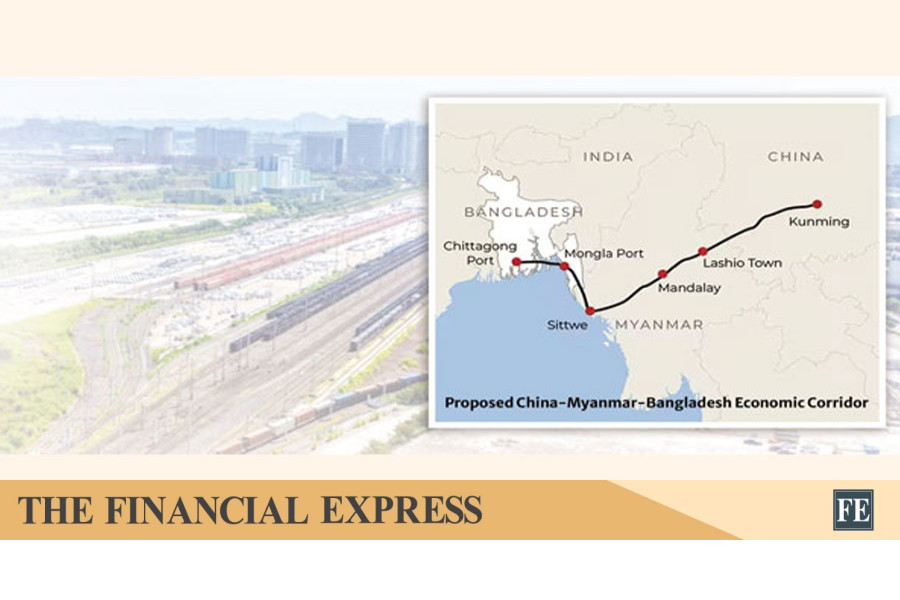
On June 26, at the Great Hall of the People in Beijing, Chinese President Xi Jinping put forward a concrete proposal to Bangladesh Prime Minister Tarique Rahman: the development of a China-Myanmar-Bangladesh Economic Corridor (CMBEC), linking China's Yunnan Province through Myanmar to Bangladesh's territory and ports. The proposal deserves serious consideration. It is not simply another expression of diplomatic goodwill. It is a potentially transformative connectivity initiative, and Dhaka now faces a strategic question: how much should it embrace, on what terms, and within what broader foreign policy framework?

The proposed corridor is ambitious. It envisages highways, railways, inland waterways, seaports, land ports, energy infrastructure, special economic zones, and digital connectivity, building on the existing China-Myanmar Economic Corridor (CMEC) and extending its reach toward Bangladesh's Chattogram and Mongla ports.

For Bangladesh, this is not connectivity beginning from scratch. Important pieces of the physical infrastructure are already in place. The Dohazari Cox's Bazar railway has been operational since 2023, while the proposed extension toward Ghumdhum on the Myanmar border has long been part of Bangladesh's connectivity plans. A functioning corridor could provide renewed strategic and economic justification for infrastructure that has remained incomplete or underutilized.

The economic argument is equally compelling. China has been Bangladesh's largest trading partner for years, but the relationship remains heavily imbalanced. Bangladesh imported goods worth around $18.56 billion from China in the last fiscal year, while its exports to China were only about $694 million. The resulting trade deficit, approaching $17.87 billion, highlights both the scale of Bangladesh's dependence on Chinese imports and the urgency of diversifying and deepening the country's export capacity.

This is where the corridor could become more than a transportation project.

China remains the world's largest manufacturing powerhouse, but its economy is also undergoing structural change. Rising production costs, demographic pressures, technological upgrading, and the relocation of some labour-intensive industries are encouraging Chinese companies to seek new production bases and international markets. Bangladesh, with its large workforce, expanding consumer market, strategic location, and growing industrial capacity, has an opportunity to attract a greater share of this investment.

The CMBEC could therefore help Bangladesh move from being primarily a major destination for Chinese goods to becoming a more integrated participant in regional production networks. If properly negotiated, improved connectivity could support Chinese investment in Bangladesh, facilitate technology transfer, strengthen local supply chains and create opportunities for Bangladeshi firms to enter wider Asian markets.

But Bangladesh should not confuse connectivity with dependency.

This distinction matters most in the digital component of the proposed corridor. Bangladesh is simultaneously trying to establish itself as a hub for technology and digital services. The government has begun promoting semiconductors as a potential next major export industry after ready-made garments, while the country is also seeking greater capacity in artificial intelligence (AI), data services and advanced digital technologies.

At the recent National Semiconductor Symposium and BEAR Summit in Dhaka, the government explicitly highlighted global partnerships as central to building Bangladesh's semiconductor future. The participation of companies such as GlobalFoundries, NXP, Applied Materials and SanDisk, as well as the Vietnam Semiconductor Alliance, demonstrates that Dhaka is already looking beyond a single technology partner.

That approach needs to continue.

Chinese investment in fibre-optic networks, data centres, cloud infrastructure, smart logistics, and digital platforms could significantly accelerate Bangladesh's technological development. But these investments should complement, not replace, partnerships with the United States (US), Japan, South Korea, the European Union (EU), Singapore, and other technology economies. Bangladesh's objective should be technological capability, not technological dependence.

The same principle should guide infrastructure development.

Bangladesh needs better roads, railways, ports, energy networks and digital infrastructure. China has demonstrated both the financial capacity and technical expertise to contribute to such projects. Refusing Chinese participation solely on geopolitical grounds would therefore be economically counterproductive. At the same time, accepting Chinese infrastructure without competitive procurement, transparent financing and careful assessment of long-term economic returns would be equally unwise.

The answer is not to choose between Beijing and Washington. It is to make Bangladesh valuable to both.

This is becoming increasingly important as geopolitical competition intensifies. Washington has its own expectations regarding Bangladesh's trade and strategic orientation, while China remains one of Bangladesh's most important sources of imports, infrastructure finance and investment. Bangladesh therefore has little to gain from entering a binary geopolitical contest in which it must choose one side.

Its strongest position is strategic diversification.

Vietnam offers a useful example. Its approach, often described as "Bamboo Diplomacy", seeks to maintain flexibility by deepening economic relations with competing major powers without formally aligning itself with any one of them. Hanoi has benefited from Chinese investment and supply chains while simultaneously expanding trade and investment ties with the US, Japan, South Korea and Europe.

Bangladesh should not copy Vietnam mechanically. Its economic structure, geopolitical position, and security environment differ. But the underlying lesson remains: a middle power can maintain strategic autonomy by ensuring no single external partner becomes indispensable.

The biggest obstacle to the CMBEC, however, may not be geopolitics between China and the US. It may be Myanmar itself.

The corridor depends heavily on stability and connectivity through Myanmar, a country that has been deeply affected by political conflict and armed violence since the military takeover in 2021. Previous projects under the CMEC have also faced delays. The proposed Mandalay Kyaukphyu railway, for example, has made limited progress despite earlier agreements.

For Bangladesh, Myanmar also cannot be viewed simply as a transit country. The Rohingya crisis remains a major security and humanitarian concern. Dhaka has consistently emphasised that any sustainable improvement in relations with Myanmar must include the safe, voluntary and dignified return of Rohingya refugees. China's willingness to facilitate dialogue between Bangladesh and Myanmar could therefore give Beijing a constructive diplomatic role beyond infrastructure development.

This is another reason Bangladesh should approach the corridor as a long-term strategic framework rather than a single construction project. The political and security conditions necessary for a fully operational corridor may take years to emerge.

Yet waiting for perfect conditions would also be a mistake.

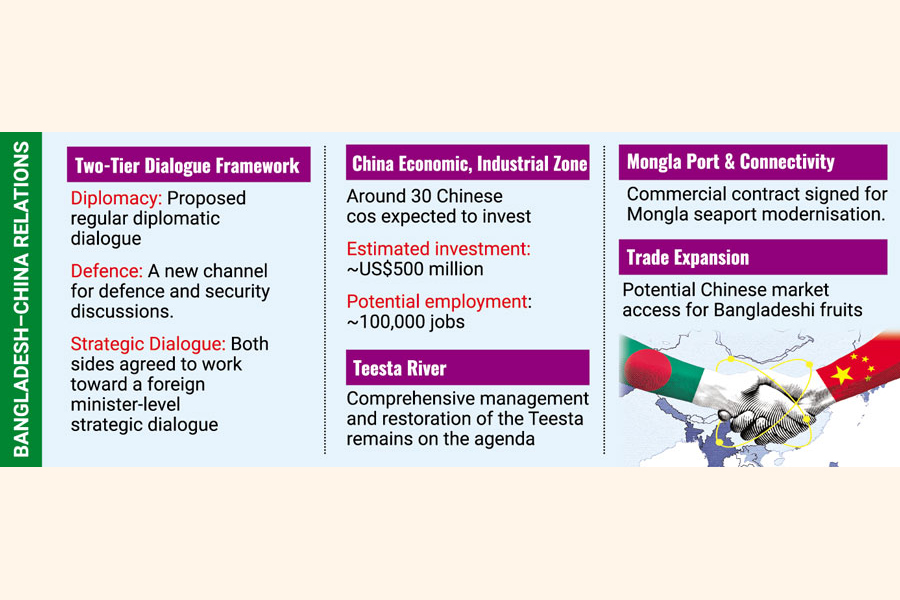
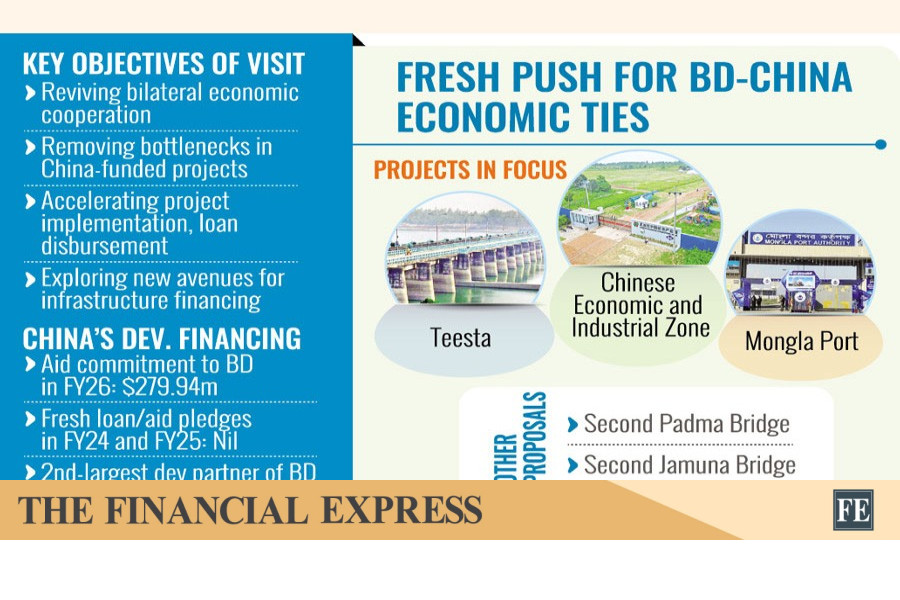
Bangladesh has already demonstrated its intent to deepen economic engagement with China. The groundbreaking of the Chinese Economic and Industrial Zone in Anwara, Chattogram, on an 800-acre site expected to attract more than $1 billion in investment and create around 100,000 jobs, is a key indicator of the direction economic relations are taking.

The more Bangladesh becomes connected to regional production networks, the more important it will be to ensure that its ports remain genuinely open and commercially competitive. Chattogram and Mongla should not become gateways for a single country. They should serve as platforms connecting Bangladesh with China, India, Southeast Asia, Japan, Europe and the wider global economy.

That is where the CMBEC can become strategically valuable.

A successful corridor could give Bangladesh access to new markets, lower logistics costs, attract investment and integrate the country more closely into Asian supply chains. It could also encourage greater regional interdependence, giving neighbouring countries a stronger economic stake in stability.

But Bangladesh must negotiate from its own interests.

Every major infrastructure agreement should be assessed on commercial viability, debt sustainability, technology transfer, local employment, environmental impact, and the extent to which Bangladeshi companies can participate. Infrastructure should generate productive capacity rather than simply increase physical connectivity.

The newly agreed "2+2" dialogue mechanism between the foreign and defence ministries of Bangladesh and China could also become useful in this regard. Rather than treating it as a ceremonial diplomatic arrangement, Dhaka should use the mechanism to discuss the security implications of connectivity, regional stability, maritime interests and the management of strategic dependencies.

The central principle should be simple: economic engagement with China should strengthen Bangladesh's strategic autonomy, not diminish it.

Bangladesh should therefore say yes to the corridor, but not yes to everything.

It should welcome Chinese capital, technology and infrastructure expertise while maintaining competitive engagement with the US, Japan, India, South Korea, the EU and other partners. It should use Chinese connectivity to expand Bangladeshi exports rather than deepen import dependence. It should welcome digital infrastructure while ensuring interoperability, competition and domestic technological capacity. It should pursue the corridor while remaining committed to peaceful regional diplomacy and resolving the Rohingya crisis.

The real opportunity presented by the CMBEC is not to place Bangladesh in China's economic orbit. It is to position Bangladesh at the centre of a wider network of Asian trade, investment and connectivity.

That distinction matters.

A confident Bangladesh need not choose between China and the West. It can work with China on infrastructure, with the US and Europe on markets and technology, with Japan and South Korea on industrial upgrading, and with India and Southeast Asia on regional connectivity. The objective should not be alignment. It should be diversification.

The CMBEC can become an important part of that strategy. But its success will ultimately depend less on the size of the Chinese offer than on the quality of Bangladesh's own decisions.

Bangladesh should take the corridor. It should take the investment. It should take the opportunity to deepen its connections with regional supply chains and emerging technologies.

But it should keep its options open.

That is not diplomatic indecision. It is strategic autonomy.

Md Saikat Hosen is a PhD candidate in the School of International Economics and Politics at Jiangxi University of Finance and Economics in China. Mohammad Saiyedul Islam, PhD, is a Senior Lecturer and Researcher in the School of Overseas Education (School of Foreign Languages) at Sanming University in Fujian Province, China, and a Senior Research Fellow at the Daffodil International University Belt and Road Research Centre in Bangladesh.​
 
Analyze

Analyze Post

Add your ideas here:
Highlight Cite Respond

FBCCI calls for joint investment to reduce China-Bangladesh trade gap

1787010513224.webp


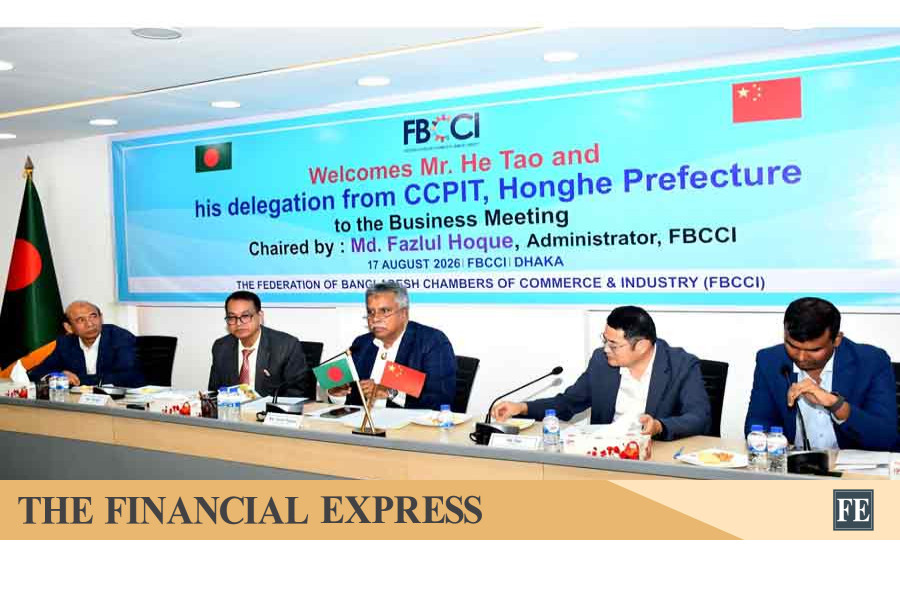
The Federation of Bangladesh Chambers of Commerce and Industry (FBCCI) has called for greater direct engagement between businesses of Bangladesh and China and joint investment in promising sectors to help reduce the trade gap between the two countries.

FBCCI Administrator Md Fazlul Hoque made the call at a meeting with a Chinese business delegation from the China Council for the Promotion of International Trade (CCPIT) at the FBCCI office in Motijheel on Monday.

Mr Hoque said Bangladesh imports a large volume of goods from China, as it does from many other countries.

Bilateral trade between the two countries is currently close to $20 billion, but Bangladesh runs a substantial trade deficit, with its exports to China amounting to less than $1 billion annually, he said.

The FBCCI administrator urged businesses from both countries to jointly identify sectors with potential for expanding trade and investment.

He said the visit of the Chinese business delegation would not only help expand bilateral trade but also create opportunities to increase exports of Bangladeshi products to the Chinese market.

The visit could also play an important role in increasing investment between the two countries, he added.

Mr Hoque assured the Chinese entrepreneurs that the FBCCI would remain active in providing necessary support for doing business in Bangladesh.

At the meeting, Bangladeshi business representatives invited Chinese entrepreneurs to make joint investments in several promising sectors, including food processing, medical devices and related products, pharmaceuticals and active pharmaceutical ingredients (APIs), renewable energy, and jute and jute products.

He Tao, director of the Bureau of Commerce of China’s Honghe region, expressed interest in increasing trade and investment between the two countries.

He said one of their key objectives was to further simplify import-export procedures between Bangladesh and China and explore new opportunities for business and trade.

Former FBCCI directors Abdul Haque, Priti Chakraborty and Obaidur Rahman, Secretary General Md Alomgir, FBCCI Safety Council Adviser Brigadier General (retd) Abu Naim Md Shahidullah, members of the FBCCI General Council, and leaders of various chambers and associations attended the meeting.

Other members of the Chinese delegation also participated in the meeting.​
 
Analyze

Analyze Post

Add your ideas here:
Highlight Cite Respond

Chinese traders eye Bangladeshi fruits, farm products at Kunming festival

1787355087532.webp

Photo: Collected

The 2026 Mekong-Lancang Fruit, Coffee, Flower and Beer Carnival began on Friday at the Hello World Living Mall in Kunming, capital of China’s Yunnan Province, with Chinese visitors and traders showing keen interest in Bangladeshi agricultural products and fruits.

Organised by the Department of Commerce of Yunnan Province, the international festival features 94 stalls showcasing fruits and agricultural products from countries in the Mekong-Lancang region, said a press release in Dhaka.

China, Cambodia, Vietnam, Myanmar, Malaysia, Laos, Bangladesh and Thailand are participating in the festival, displaying and selling a wide range of fruits, agricultural produce and food products from their respective countries.

The Bangladeshi stall attracted considerable attention from local visitors and businesspeople from the very beginning of the festival, providing an opportunity to showcase the country’s diverse agricultural products and explore new commercial links with the Chinese market.

Speaking at the inaugural ceremony, Consul General of Bangladesh in Kunming Shahnaz Ranu said agricultural trade and economic cooperation between Bangladesh and China reached a new level.

She said cooperation between the two countries is playing an important role in expanding agricultural exports, investment and bilateral trade.

Referring to developments since last year’s fruit festival, she said cooperation between Bangladesh and Yunnan had further strengthened under the “Three Frees and Three Facilitation” policy, creating new opportunities for Bangladeshi businesses to enter the Chinese market.

Shahnaz Ranu said the signing of a phytosanitary protocol during Prime Minister Tarique Rahman’s visit to China for exporting Bangladesh’s national fruit jackfruit to the Chinese market was an important development.

“Bangladeshi mangoes have already entered the Chinese market, while there is also potential for exporting guava and other tropical fruits in the future,” she said.

She described Yunnan as an important market in China for Bangladesh’s fresh agricultural products and expressed hope that greater mutual cooperation would further expand agricultural trade between the two countries.

The opening ceremony was held under the slogan “Share the Big Market, Export to China” and was attended by representatives and diplomats from Mekong-Lancang countries as well as officials from the agriculture and commerce sectors.

Deputy Director of the Lancang-Mekong Sub-regional Economic and Trade Development Centre Liu Zhi, Cambodian Consul General in Kunming Heng Pisal, Thai Commercial Representative Chanwit Ruangchaithawesuk, Vietnamese Consul General Nghiem Viet Chung and Chief Agronomist of the Yunnan Provincial Department of Agriculture and Rural Affairs Ke Bin also spoke on the occasion.

The organisers expect the festival will contribute to expanding markets for agricultural products of participating countries, strengthening trade relations and creating new opportunities for agriculture-based cooperation.

The festival will continue until August 23, offering visitors opportunities to see and purchase fruits, agricultural products, coffee, flowers and other products from participating countries.​
 
Analyze

Analyze Post

Add your ideas here:
Highlight Cite Respond

Remembering Zhu Rongji

A great Chinese leader and friend of Bangladesh

1787355611318.webp


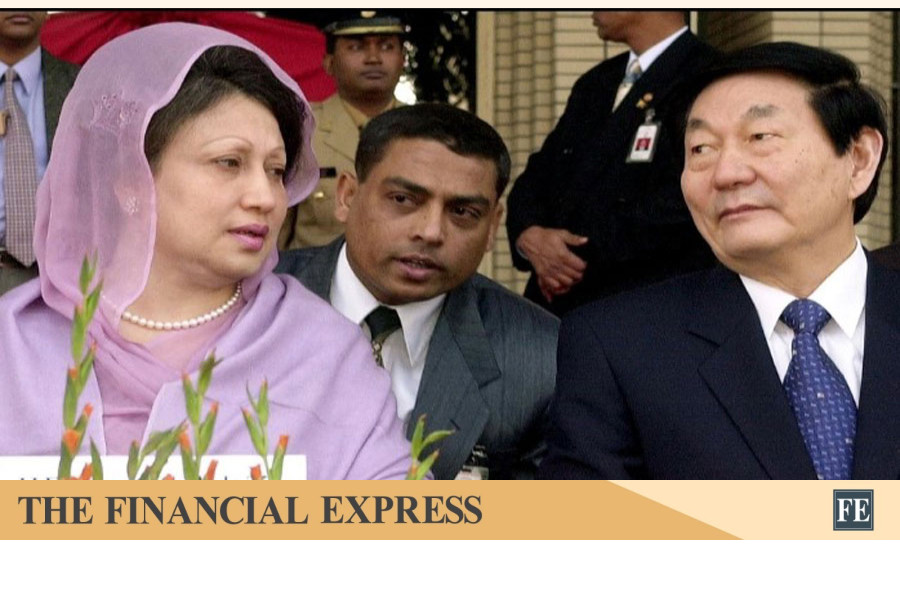
Khaleda Zia (L), former Bangladesh Prime Minister, and Zhu Rongji (R) former Chinese Premier
Source: Collected Photo

The passing of former Chinese Premier Zhu Rongji has brought a deep personal sadness to me. China has lost a great leader, and the world has lost one of the most influential statesmen of modern China. Bangladesh, too, has lost a great Chinese friend—one who personally contributed to deepening Bangladesh-China relations at an important stage of their development.

Zhu Rongji passed away in Beijing on August 12, 2026. He served as Premier of the State Council from 1998 to 2003 and was a central figure in China’s reform and opening-up. He played an important role in strengthening China’s economic and financial systems, reforming state-owned enterprises, controlling inflation, expanding China’s engagement with the global economy and guiding the negotiations that culminated in China’s accession to the World Trade Organisation (WTO) in 2001.

Those achievements will rightly be remembered by historians and the world. I want to remember him somewhat differently—not through statistics or official communiqués, but through moments I personally witnessed while serving as a Chinese-Bangla-English interpreter for Bangladeshi leaders.

I was fortunate to interpret for Premier Zhu Rongji on several occasions in Bangladesh and China. This gave me an unusual opportunity to observe a great statesman at close range—not as a historian looking back at him, but as an interpreter standing beside him and listening to him speak.

His January 2002 visit to Bangladesh remains particularly vivid in my memory. Zhu visited Dhaka from January 11 to 13, 2002, at a significant moment in bilateral relations. During the visit, he met Prime Minister Khaleda Zia, President AQM Badruddoza Choudhury, Speaker Jamiruddin Sircar, Foreign Minister M Morshed Khan and other senior Bangladeshi leaders. He also met Sheikh Hasina, then Leader of the Opposition and the leader of the Awami League. The official Chinese record confirms his January 11 talks with Prime Minister Khaleda Zia and his January 12 meeting with President Badruddoza Choudhury.

At a state banquet in Dhaka, Prime Minister Khaleda Zia was discussing with Premier Zhu how Bangladesh could reduce its trade deficit with China. Zhu explained several possibilities. One particular point stayed with me: Bangladesh should consider producing goods suited to the tastes and needs of Chinese consumers. If Bangladesh could produce products that ordinary Chinese people wanted to buy, China would naturally import more from Bangladesh.

It was not simply a diplomatic response to trade imbalance; it was an economic lesson. Instead of looking only at what Bangladesh wanted to sell, Bangladesh should understand what Chinese consumers wanted to buy and develop competitive products accordingly.

I have remembered that advice for years and have repeated its essence at seminars whenever Bangladesh-China trade imbalance has been discussed.

Another memory remains particularly striking to me. At a banquet at Bangabhaban, President AQM Badruddoza Choudhury, a physician by profession, began discussing Chinese medicine with Premier Zhu. What surprised me was not simply that Zhu could participate in the conversation, but the breadth and confidence with which he responded. The discussion continued for much of the dinner, with Zhu engaging the President on medical treatment and Chinese medicine with remarkable familiarity.

Zhu’s formal academic background was electrical engineering at Tsinghua University. Yet that evening I saw another side of him: an extraordinary ability to understand and discuss subjects far beyond his formal field of study.

While interpreting for him on different occasions, I noticed that Zhu often spoke apparently from memory and without depending heavily on prepared text. Yet his responses were comprehensive and remarkably relevant. Whether this came from his own extraordinary preparation, his experience or thorough briefings by his staff, I cannot say. But to me it demonstrated a leader who took his responsibilities extremely seriously.

One of my most unforgettable memories is connected with the Bangladesh-China Friendship Conference Centre. During his January 2002 visit, Premier Zhu and Prime Minister Khaleda Zia participated in the handover ceremony of the Chinese-built centre, which became a tangible symbol of friendship between the two countries.

I remember standing beside Premier Zhu and his wife, Lao An, on the small red-carpeted stage at the front of the centre during the unveiling. I wanted to remain close enough to hear him clearly.

In a low voice, he said in Chinese words to the effect that this was not merely a convention hall, but also a bridge of friendship between China and Bangladesh. Those words have stayed with me.

As Premier Zhu was departing Bangladesh, I was the last Bangladeshi person to speak directly with him. I was conveying Prime Minister Khaleda Zia’s wishes for his good health and safe return to China.

He replied gently in Chinese: “ 你是一个中孟桥 - ni shi yi ge zhong meng qiao” [You are a China-Bangladesh bridge.]

At that moment I was simply doing my duty as an interpreter. I could not have imagined that those few words would remain in my mind for the rest of my life. Today, after his passing, they have acquired an entirely different meaning.

As an official interpreter, I could not take photographs myself while performing my duties. Over the years, however, I have found many photographs and video images of those occasions in newspapers and electronic media. They now seem much more valuable to me than ordinary photographs. They preserve a period of history—and people who are no longer with us.

In recent times, I often found myself remembering those days because so many of the Bangladeshi leaders with whom I interpreted for Premier Zhu are also gone. Prime Minister Khaleda Zia, President Badruddoza Choudhury and Speaker Jamiruddin Sircar have all passed away. When I heard of Zhu’s death, memories of those people and those occasions began flashing through my mind like diamonds.

Zhu’s connection with Bangladesh did not end with his Dhaka visit. In December 2002, Prime Minister Khaleda Zia made an official visit to China and met Premier Zhu in Beijing. I as an official interpreter of Bangladeshi Prime Minister also had the opportunity to be part of that delegation for five-day state visit to China and interpreted between both. Their reciprocal visits in the same year represented an important period of high-level engagement between the two countries.

Zhu’s engagement with Bangladesh also extended beyond the government of the day. His meeting with Sheikh Hasina during his January 2002 Dhaka visit is another reminder that his interaction with Bangladesh encompassed leaders across the political spectrum.

The relationship he helped deepen continued through successive Bangladeshi and Chinese leaderships.

That continuity has now reached a new stage. Prime Minister Tarique Rahman, son of the late Prime Minister Khaleda Zia, visited China from June 22 to 26, 2026. On June 26, he met President Xi Jinping at the Great Hall of the People in Beijing. The two leaders jointly announced the decision to build a China-Bangladesh community with a shared future in the new era, elevating bilateral relations to a higher level. The same visit also included meetings with Premier Li Qiang and Zhao Leji, Chairman of the Standing Committee of the National People’s Congress.

The relationship that leaders such as Zhu Rongji helped deepen through political trust, economic cooperation, trade discussions, cultural exchanges and practical projects has continued to evolve through successive generations.

Zhu Rongji was therefore not simply a former Chinese Premier who once visited Bangladesh. He was a leader who personally engaged with Bangladesh at a formative stage of the relationship and helped give practical expression to the friendship between the two peoples.

Today, Premier Zhu Rongji is no longer with us. But the bridge remains. May his memory remain a blessing to the people of China and Bangladesh. May his contribution to friendship and cooperation between our two countries be remembered with respect. And may the bridge he helped strengthen continue to carry the peoples of China and Bangladesh towards a more peaceful, prosperous and shared future.

Lt Col (Retd) Md Shahadat Hossain, psc, MBA, MDS, is a graduate in Chinese Language, Beijing Language and Culture University (BLCU); Adjunct Professor, Institute of Professional Language, Bangladesh Maritime University; Chinese–Bangla–English interpreter, researcher and writer on China-Bangladesh relations.​
 
Analyze

Analyze Post

Add your ideas here:
Highlight Cite Respond

Latest Posts

Back
PKDefense - Recommended Toggle