Donate ☕
[🇨🇳] - China----News & Views | Page 3 | PKDefense

[🇨🇳] China----News & Views

⤵︎
Reply (Scroll)
Press space to scroll through posts
G   Chinese Defense
[🇨🇳] China----News & Views
54
3K
More threads by Saif


A new era in China-Africa cooperation
Imran Khalid 01 September, 2024, 00:00

1725149148315.webp

A motorist rides past a sign of the Forum on China-Africa Cooperation, scheduled to be held in September 4-6, in Beijing on August 30. | Agence France-Presse/Adek Berry

AS THE 2024 Summit of the Forum on China-Africa Cooperation approaches, the stage is set for a new chapter in Sino-African relations. From September 4 to 6, Beijing will host this pivotal gathering, where strategic partnerships between China and Africa are expected to deepen significantly. For China, this summit is more than a diplomatic event. It is a commitment to fostering long-term relationships that promote shared prosperity and address global challenges.

Observers across the African continent view this summit as a crucial opportunity to tackle significant issues, particularly the continent’s infrastructure funding gap, estimated by the African Development Bank to range between $130 billion and $170 billion annually. As Africa’s largest trading partner, China sees this partnership as essential not only for mutual benefits but also for the broader goal of sustainable development.

The summit will likely prioritise cooperation in education, infrastructure, healthcare and technology where collaboration can drive growth and innovation. African nations are keenly awaiting concrete commitments and actionable plans that translate into real progress. The outcomes of this summit could well shape the trajectory of Sino-African relations for years to come.

The Forum on China-Africa Cooperation, established in Beijing in October 2000, marked a moment in the relationship between China and Africa. Over the years, the forum has evolved into the bedrock of a lasting partnership, celebrated for its emphasis on practical, results-driven collaboration. From China’s perspective, this framework is a testament to its commitment to Africa’s sustainable development, focusing on infrastructure, human resource development and governance exchanges.

China’s journey over the past seven decades, characterised by innovation and progressive reforms, has not gone unnoticed by Africa. This model has increasingly resonated with global south countries, which see in China’s experience a roadmap for their own development. For China, the forum is not just diplomacy. It is a strategic alliance that reflects a mutual aspiration for progress. By fostering innovation and tailoring development strategies to unique contexts, this partnership offers a vision for a more interconnected and prosperous future.

China’s growing confidence on the global stage is deeply intertwined with its foreign policy objectives, particularly in fostering stronger ties with the global south. At the heart of this effort is the Forum on China-Africa Cooperation, a platform designed to elevate the traditional bond between Africa and China into a comprehensive, mutually beneficial partnership. Since its establishment, the forum has been instrumental in transforming rhetoric into action, delivering tangible benefits that resonate across both regions.

Between 2000 and 2023, Chinese lenders extended 1,306 loans worth $182.28 billion to 49 African governments and seven regional borrowers. Notably, 2023 saw a resurgence in Chinese lending with 13 new commitments totalling $4.61 billion across eight countries and two regional financial institutions. This marks the first increase in annual loan amounts to Africa since 2016 although it remains significantly below the high-water mark of the early Belt and Road Initiative years, when annual commitments exceeded $10 billion.

As China recalibrates its financial engagement with Africa, this uptick reflects a cautious revival of its investment strategy, signalling a strategic adjustment amid evolving global economic conditions. This strategic approach not only cements China’s role as a pivotal player in global development but also paves the way for deeper cooperation in the future.

In his 2021 FOCAC address in Dakar, Chinese president Xi Jinping charted a bold new course for China-Africa relations, resonating deeply with African leaders and citizens alike. His speech unveiled an ambitious blueprint for future collaboration, signaling China’s unwavering commitment to strengthening ties between the two regions. The Dakar conference resulted in a robust economic cooperation plan, skillfully attuned to the evolving dynamics of the global economy.

At the heart of this initiative lies the ‘China and Africa Vision 2035’, a strategic framework designed to bolster bilateral cooperation across key sectors. This vision prioritises health, poverty alleviation, agriculture, trade, digital innovation, green development, capacity building, cultural exchanges and peace and security.

Since the Dakar summit, notable progress has been made in these areas, with continued momentum expected as the forum’s agenda advances in Beijing. The Vision 2035 plan not only underscores China’s dedication to a mutually beneficial partnership but also reflects a broader strategy to navigate global economic shifts while promoting sustainable development.

Since the launch of the Belt and Road Initiative in 2013, Africa has reaped substantial benefits, largely driven by the active participation of Chinese private enterprises. These companies have emerged as pivotal players in forging a China-Africa community with a shared future, injecting much-needed momentum into the continent’s development. China’s strategy centres on infrastructure development, capital infusion and deploying skilled labor to dismantle growth barriers for African nations.

The impact is undeniable. In the past decade, China has enabled the construction of more than 6,000 kilometres of railways, 6,000 kilometres of road and nearly 20 ports across Africa. Landmark projects such as Kenya’s Standard Gauge Railway and the Addis Ababa-Djibouti Railway have not only enhanced Africa’s economic potential but also significantly strengthened regional connectivity, positioning the continent for sustained growth in the years to come.

As African nations convene for the forthcoming summit, the trajectory of the China-Africa partnership warrants thoughtful reflection. The Forum on China-Africa Cooperation has long served as the cornerstone of this relationship, providing a critical platform for policy alignment and joint initiatives. Meeting every three years, the forum has consistently delivered on substantial financial commitments, highlighted by a $40 billion pledge at the 2021 summit, aimed at bolstering infrastructure, agriculture, and manufacturing across Africa. The forum’s effectiveness is undeniable, with $155 billion of the $191 billion in promised loans implemented between 2006 and 2021.

Yet, this year’s summit unfolds in a challenging global landscape, marked by rising resistance to China from a US-led coalition. At the same time, Chinese companies have significantly impacted Africa’s energy sector, installing over 25GW of generation capacity, which represents more than 15 per cent of sub-Saharan Africa’s total. These investments have bolstered the region’s power infrastructure. This performance underscores the complexity of integrating large-scale Chinese energy projects into diverse African markets, highlighting both the substantial contributions.

In China’s grand global strategy, Africa’s economic value is evident, but its geopolitical importance is rapidly increasing. As Beijing strengthens economic ties with the continent, it simultaneously secures vital support in international forums, enhancing China’s ability to influence global diplomacy and security. This backing is crucial as China aims to challenge and redefine a world order it views as biased.

The 2024 summit, themed ‘Joining Hands to Advance Modernisation and Build a High-Level China-Africa Community with a Shared Future’, is poised to deepen these connections. This approach aligns with China’s broader geopolitical ambitions, potentially ushering in a new era of cooperation. If executed effectively, FOCAC could foster a sustainable and mutually beneficial partnership, reinforcing China’s strategic positioning on the global stage.​
 
Analyze

Analyze Post

Add your ideas here:
Highlight Cite Fact Check Respond

African leaders in Beijing eyeing big loans, investment
Agence France-Presse . Beijing 01 September, 2024, 22:29

African leaders descend on China’s capital this week, seeking funds for big-ticket infrastructure projects as they eye mounting great power competition over resources and influence on the continent.

China has expanded ties with African nations in the past decade, furnishing them with billions in loans that have helped build infrastructure but also sometimes stoked controversy by saddling countries with huge debts.

China has sent hundreds of thousands of workers to Africa to build its megaprojects, while tapping the continent’s vast natural resources including copper, gold, lithium and rare earth minerals.

Beijing has said this week’s China-Africa forum will be its largest diplomatic event since the Covid pandemic, with leaders of South Africa, Nigeria, Kenya and other nations confirmed to attend and dozens of delegations expected.

African countries were ‘looking to tap the opportunities in China for growth’, Ovigwe Eguegu, a policy analyst at consultancy Development Reimagined, told AFP.

China, the world’s number two economy, is Africa’s largest trading partner, with bilateral trade hitting $167.8 billion in the first half of this year, according to Chinese state media.

Beijing’s loans to African nations last year were their highest in five years, research by the Chinese Loans to Africa Database found. Top borrowers were Angola, Ethiopia, Egypt, Nigeria and Kenya.

But analysts said an economic slowdown in China has made Beijing increasingly reluctant to shell out big sums.

China has also resisted offering debt relief, even as some African nations have struggled to repay their loans — in some cases being forced to slash spending on vital public services.

Since the last China-Africa forum six years ago, ‘the world experienced a lot of changes, including Covid, geopolitical tension and now these economic challenges’, Tang Xiaoyang of Beijing’s Tsinghua University told AFP.

The ‘old model’ of loans for ‘large infrastructure and very rapid industrialisation’ is simply no longer feasible, he said.

The continent is a key node in Beijing’s Belt and Road Initiative, a massive infrastructure project and central pillar of Xi Jinping’s bid to expand China’s clout overseas.

The BRI has channelled much-needed investment to African countries for projects like railways, ports and hydroelectric plants.

But critics charge Beijing with saddling nations with debt and funding infrastructure projects that damage the environment.

One controversial project in Kenya, a $5 billion railway — built with finance from Exim Bank of China — connects the capital Nairobi with the port city of Mombasa.

But a second phase meant to continue the line to Uganda never materialised, as both countries struggled to repay BRI debts.

Kenya’s president William Ruto last year asked China for a $1 billion loan and the restructuring of existing debt to complete other stalled BRI projects.

The country now owes China more than $8 billion.

Recent deadly protests in Kenya were triggered by the government’s need ‘to service its debt burden to international creditors, including China’, said Alex Vines, head of the Africa Programme at London’s Chatham House.

In light of such events, Vines and other analysts expect African leaders at this week’s forum to seek not only more Chinese investment but also more favourable loans.

In central Africa, Western and Chinese firms are racing to secure access to rare minerals.

The continent has rich deposits of manganese, cobalt, nickel and lithium — crucial for renewable energy technology.

The Moanda region of Gabon alone contains as much as a quarter of known global reserves of manganese, and South Africa accounts for 37 per cent of global output of the metal.

Cobalt mining is dominated by the Democratic Republic of Congo, which accounts for 70 per cent of the world total. But in terms of processing, China is the leader, at 50 per cent.

Mounting geopolitical tensions between the United States and China, which are clashing over everything from the status of self-ruled Taiwan to trade, also weigh on Africa.

Washington has warned against what it sees as Beijing’s malign influence.

In 2022, the White House said China sought to ‘advance its own narrow commercial and geopolitical interests (and) undermine transparency and openness’.

Beijing insists it does not want a new cold war with Washington but rather seeks ‘win-win’ cooperation, promoting development while profiting from boosted trade.

‘We do not just give aid, give them help,’ Tsinghua University’s Tang said.

‘We are just partners with you while you are developing. We are also benefiting from it.’

But analysts fear African nations could be forced to pick sides.

‘African countries lack leverage against China,’ Development Reimagined’s Eguegu said.

‘Some people... think you can use the US to balance China,’ he said. ‘You cannot.’​
 
Analyze

Analyze Post

Add your ideas here:
Highlight Cite Fact Check Respond

Xi hosts two dozen African leaders at China’s biggest summit in years
Agence France-Presse . Beijing 04 September, 2024, 21:44

Chinese president Xi Jinping hosted more than two dozen African leaders at a banquet in Beijing on Wednesday, kicking off the city’s biggest summit in years with promises of cooperation in infrastructure, energy and education.

China, the world’s number two economy, is Africa’s largest trading partner and has sought to tap the continent’s vast troves of natural resources including copper, gold, lithium and rare earth minerals.

It has also furnished African countries with billions in loans that have helped build much-needed infrastructure but also sometimes stoked controversy by saddling governments with huge debts.

Twenty-five African leaders have arrived in Beijing or confirmed attendance at this week’s China-Africa forum, according to an AFP tally, including some whose countries face a rising risk of debt distress.

Xi and his wife Peng Liyuan welcomed guests as they arrived for a lavish dinner at the Great Hall of the People on Wednesday evening, live AFP footage showed.

There was also a ‘family’ photo of the gathered leaders and Xi will give a speech at an opening ceremony on Thursday morning.

Chinese state media has lauded Xi this week as a ‘true friend of Africa’, claiming Beijing’s ties were reaching ‘new heights’ under his stewardship.

The Chinese leader had held talks with more than a dozen African counterparts in Beijing by Wednesday, a tally of state media reporting showed.

Xi called during a meeting on Tuesday with president Bola Tinubu of Nigeria — one of China’s biggest borrowers on the continent — for great cooperation in the ‘development of infrastructure, energy and mineral resources’, state news agency Xinhua said.

He also promised cooperation in ‘investment, trade, infrastructure, mineral resources’ and other areas during talks on the same day with Zimbabwean president Emmerson Mnangagwa.

Xi backed Zimbabwe in its struggle against ‘illegal sanctions’ imposed by the United States in response to corruption and human rights abuses by the country’s leadership.

Analysts say that Beijing’s largesse towards Africa is being recalibrated in the face of economic trouble at home and that geopolitical concerns over a growing tussle with the United States may increasingly be driving policy.

‘Deepening economic engagement with Africa across the board’ is one of Beijing’s key goals this week, Zainab Usman, director of the Africa Programme at the Carnegie Endowment for International Peace, said.

‘In specific areas, even where such an expanded engagement may not make economic sense, it will be driven by geopolitical reasons,’ she said.

One goal may be narrowing the growing trade imbalance between China and Africa through increasing imports of agricultural goods and processed minerals, Usman said.

‘Meeting these African demands is in China’s geopolitical interest to keep them onside in the tussle with the US.’

For their part, African leaders are likely to seek backing for big-ticket items, as they have in the past, but also place greater emphasis on debt sustainability, analysts say.

Recent deadly protests in Kenya were triggered by the government’s need ‘to service its debt burden to international creditors, including China’, said Alex Vines, head of the Africa Programme at London’s Chatham House.

Vines and other analysts expect African leaders at this week’s forum to seek not only more Chinese investment but also more favourable loans in light of such events.​
 
Analyze

Analyze Post

Add your ideas here:
Highlight Cite Fact Check Respond

China unveils fresh stimulus to boost ailing economy

1727224000135.webp

A woman checks shoes for sale in a shopping area of Beijing. On Tuesday, China’s central bank chief Pan Gongsheng said that they would cut a slew of rates in a bid to boost growth. Photo: AFP/FILE

China unveiled some of its boldest measures in years on Tuesday aimed at boosting its struggling economy as leaders grapple with a prolonged property sector debt crisis, continued deflationary pressure and high youth unemployment.

The world's second-largest economy has yet to achieve a highly anticipated post-pandemic recovery and the government has set a goal of five percent growth in 2024 -- an objective analysts say is optimistic given the headwinds it is facing.

On Tuesday, central bank chief Pan Gongsheng told a news conference in Beijing that it would cut a slew of rates in a bid to boost growth, pledging to "promote the expansion of consumption and investment".

The moves represent "the most significant... stimulus package since the early days of the pandemic", said Julian Evans-Pritchard, head of China economics at Capital Economics.

But "it may not be enough", he warned, adding a full economic recovery would "require more substantial fiscal support than the modest pick-up in government spending that's currently in the pipeline".

Among the measures unveiled Tuesday was a cut to the reserve requirement ratio (RRR), which dictates the amount of cash banks must hold in reserve.

The move will inject around a trillion yuan ($141.7 billion) in "long-term liquidity" into the financial market, Pan said.

Beijing would also "lower the interest rates of existing mortgage loans", he added.

The decision would benefit 150 million people across the country, Pan said, and lower "the average annual household interest bill by about 150 billion yuan".

Minimum down payments for first and second homes would be "unified", with the latter reduced from 25 to 15 percent, Pan said.

And Beijing will create a "swap programme" allowing firms to acquire liquidity from the central bank, Pan said, a move he said would "significantly enhance" their ability to access funds to buy stocks.

"The initial scale of the swap programme will be set at 500 billion yuan, with possible expansions in the future," Pan said.

Shares in Hong Kong and Shanghai surged more than four percent Tuesday.

But Heron Lim at Moody's Analytics said the move was expected given gloomy economic data in recent months suggesting Beijing could miss its 2024 growth target.

"But this is hardly a bazooka stimulus," he told AFP.

"Far more monetary easing and a stronger government stimulus is also desirable to finish bailing out the real estate market and inject more confidence into the economy," he said.

At a minimum, he added, "broader direct household support in helping them consume more goods will be useful, which is currently just too narrowly designed for industrial goods".

Another analyst said the "measures are a step in the right direction".

"We continue to believe that there is still room for further easing in the months ahead," said Lynn Song, chief economist for Greater China at ING.

Property and construction have long accounted for more than a quarter of China's gross domestic product, but the sector has been under unprecedented strain since 2020, when authorities tightened developers' access to credit in a bid to reduce mounting debt.

Since then, major companies including China Evergrande and Country Garden have teetered, while falling prices have dissuaded consumers from investing in property.

Beijing has unveiled a number of measures aimed at boosting the sector, including cutting the minimum down payment rate for first-time homebuyers and suggesting the government could buy up commercial real estate.

But those failed to boost confidence and housing prices have continued to slide.

Adding further strain, local authorities in China face a ballooning debt burden of $5.6 trillion, according to the central government, raising worries about wider economic stability.

Speaking alongside the central bank chief Tuesday, Li Yunze, director of the National Administration of Financial Regulation, said Beijing would "actively cooperate in resolving real estate and local government debt risks".

"China's financial industry, especially large financial institutions, is operating stably and risks are controllable," he insisted.

"We will firmly maintain the bottom line of preventing systemic financial risks," he added.​
 
Analyze

Analyze Post

Add your ideas here:
Highlight Cite Fact Check Respond

China to build world's largest hydropower dam in Tibet
Published :
Dec 26, 2024 12:12
Updated :
Dec 26, 2024 12:12

1735261801546.webp


A man sits in a boat on the waters of the Brahmaputra river near the international border between India and Bangladesh in Dhubri district, in the northeastern state of Assam, India August 4, 2018. REUTERS/Adnan Abidi/File Photo

China has approved the construction of what will be the world's largest hydropower dam, kicking off an ambitious project on the eastern rim of the Tibetan plateau that could affect millions downstream in India and Bangladesh.

The dam, which will be located in the lower reaches of the Yarlung Zangbo River, could produce 300 billion kilowatt-hours of electricity annually, according to an estimate provided by the Power construction Corp of China in 2020.

That would more than triple the 88.2 billion kWh designed capacity of the Three Gorges Dam, currently the world's largest, in central China.

The project will play a major role in meeting China's carbon peaking and carbon neutrality goals, stimulate related industries such as engineering, and create jobs in Tibet, the official Xinhua news agency reported on Wednesday.

A section of the Yarlung Zangbo falls a dramatic 2,000 metres (6,561 feet) within a short span of 50 km (31 miles), offering huge hydropower potential as well as unique engineering challenges.

The outlay for building the dam, including engineering costs, is also expected to eclipse the Three Gorges dam, which cost 254.2 billion yuan($34.83 billion). This included the resettling of the 1.4 million people it displaced and was more than four times the initial estimate of 57 billion yuan.
Authorities have not indicated how many people the Tibet project would displace and how it would affect the local ecosystem, one of the richest and most diverse on the plateau.

But according to Chinese officials, hydropower projects in Tibet, which they say hold more than a third of China's hydroelectric power potential, would not have a major impact on the environment or on downstream water supplies.

India and Bangladesh have nevertheless raised concerns about the dam, with the project potentially altering not only the local ecology but also the flow and course of the river downstream.
The Yarlung Zangbo becomes the Brahmaputra river as it leaves Tibet and flows south into India's Arunachal Pradesh and Assam states and finally into Bangladesh.

China has already commenced hydropower generation on the upper reaches of the Yarlung Zangbo, which flows from the west to the east of Tibet. It is planning more projects upstream.​
 
Analyze

Analyze Post

Add your ideas here:
Highlight Cite Fact Check Respond

Chinese scientists develop new AI model for cyclone forecast
Xinhua
Published :
Feb 04, 2025 18:45
Updated :
Feb 04, 2025 18:45

1738713904177.webp


Chinese scientists have developed a new artificial intelligence (AI) method to forecast the rapid intensification of a tropical cyclone, shedding new light on improving global disaster preparedness.

Recently, researchers from the Institute of Oceanology at the Chinese Academy of Sciences published this study in the journal, Proceedings of the National Academy of Sciences.

The rapid intensification of a tropical cyclone, which refers to a dramatic increase in the intensity of a tropical storm over a short period, remains one of the most challenging weather phenomena to forecast because of its unpredictable and destructive nature.

According to the study, traditional forecasting methods, such as numerical weather prediction and statistical approaches, often fail to consider the complex environmental and structural factors driving rapid intensification. While AI has been explored to improve rapid intensification prediction, most AI techniques have struggled with high false alarm rates and limited reliability.

To address this issue, the researchers have developed a new AI model that combines satellite, atmospheric and oceanic data. When tested on data from the tropical cyclone periods in the Northwest Pacific between 2020 and 2021, the new method achieved an accuracy of 92.3 per cent and reduced false alarms to 8.9 per cent.

The new method improved accuracy by nearly 12 per cent compared to existing techniques and boasted a 3-times reduction in false alarms, representing a significant advancement in forecasting, said the study.

"This study addresses the challenges of low accuracy and high false alarm rates in rapid intensification forecasting," said Li Xiaofeng, the study's corresponding author.

"Our method enhances understanding of these extreme events and supports better defences against their devastating impacts," Li added.​
 
Analyze

Analyze Post

Add your ideas here:
Highlight Cite Fact Check Respond

China urges universities to provide ‘love education’

1739662652511.webp


China is calling on its colleges and universities to provide "love education" to propagate positive views on marriage, love, fertility and family, in an attempt to improve the country's declining birth rate.

After China posted a second consecutive year of population decline in 2023, Beijing has been promoting various measures to make the prospect of having children more attractive to young couples.

Despite China having the second-biggest population in the world at 1.4 billion people, it is rapidly ageing. The ageing population will require government spending in the future and put pressure on the economy.

College students will be the biggest driver of fertility but they have significantly changed their views on marriage and love, the Jiangsu Xinhua newspaper group said, citing China Population News, an official publication.

"Colleges and universities should assume the responsibility of providing marriage and love education to college students by offering marriage and love education courses," the publication said.

The measures would help create a "healthy and positive marriage and childbearing cultural atmosphere".

The state council, or cabinet, rallied local governments in November to direct resources towards fixing China's population decline and spread respect for childbearing and marriages "at the right age", although demographers said the moves were unlikely to resonate with young Chinese.

Around 57 percent of college students polled by China Population News said they did not want to fall in love, mainly because they did not know how to allocate time to balance the relationship between study and love, the publication said.

Due to the lack of "systematic and scientific marriage and love education, college students have a vague understanding of emotional relationships".

Universities could focus on teaching junior college students about population and national conditions, new marriage and childbearing concepts, it said.

Senior college students and graduate students could be taught through "case analysis, group discussion on maintaining intimate relationships and communication between the sexes."

The courses would be able to help them "improve their ability to correctly understand marriage and love and manage love relationships".​
 
Analyze

Analyze Post

Add your ideas here:
Highlight Cite Fact Check Respond

China’s two sessions: key developments to watch
by Imran Khalid 04 March, 2025, 00:00

1741134756521.webp


This year’s sessions carry even greater weight due to mounting global uncertainties and China’s pressing domestic priorities. Amid an evolving geopolitical landscape and economic challenges, the Chinese leadership will focus on multiple key areas, writes Imran Khalid

CHINA is set to hold its annual ‘two sessions’ starting on March 5, a highly anticipated event in the country’s political calendar. The two sessions, comprising the meetings of the National People’s Congress and the Chinese People’s Political Consultative Conference, serve as a platform for evaluating past performance and setting new policy directions. During these sessions, the prime minister, the president of the Supreme People’s Court, and the procurator general of the Supreme People’s Procuratorate will present key reports for discussion and consultation. Over the years, these meetings have gained global significance, given China’s central role in the world economy and international affairs. With China expected to contribute 21 per cent of global economic growth over the next five years, investors, analysts, and policymakers worldwide are closely watching the proceedings. The outcomes of the two sessions will shape economic strategies, industrial policies, and international relations, directly influencing the global market.

This year’s sessions carry even greater weight due to mounting global uncertainties and China’s pressing domestic priorities. Amid an evolving geopolitical landscape and economic challenges, the Chinese leadership will focus on multiple key areas.

As 2025 marks the final year of China’s 14th five-year development plan, a comprehensive evaluation of the country’s achievements will be presented. The report will highlight areas where targets have been met or exceeded and additional efforts are needed. More importantly, discussions will likely offer glimpses into the contours of the upcoming 15th five-year plan, outlining strategic priorities for China’s future development. With China’s economy at a pivotal stage, policymakers will assess whether the existing structural reforms have yielded the desired outcomes and where recalibrations are necessary to ensure sustainable growth.

Technology and innovation will remain at the forefront of discussions, particularly in light of increasing western restrictions on China’s tech sector. President Xi Jinping has already emphasised the need for technological self-reliance and urged the development of high-quality new productive forces. The government is expected to unveil new policies and incentives to foster a culture of knowledge creation and technological advancement, ensuring that Chinese companies can compete globally without relying on foreign technologies. Investment in semiconductor manufacturing, artificial intelligence and quantum computing will be key to reducing dependency on western supply chains.

The private sector’s role in driving economic growth and technological progress will be another critical focus. Recently, president Xi met with prominent business leaders, including Jack Ma of Alibaba, Ren Zhengfei of Huawei, Wang Chuanfu of BYD and Lei Jun of Xiaomi, among others. He assured them that the government is committed to dismantling barriers, ensuring fair competition, and providing legal protection for businesses. Consequently, new policies, tools, and incentives are expected to emerge from the two sessions to further strengthen the private sector, boost entrepreneurship and attract foreign investment. With economic headwinds affecting various industries, the leadership will seek to reinforce confidence among private enterprises by addressing concerns over regulatory crackdowns and creating an environment conducive to long-term investment.

China has been grappling with a local government debt crisis and ongoing challenges in the real estate market. While the government has already introduced measures to stabilise these sectors, further discussions at the two sessions will likely result in additional policy interventions to prevent financial risks and ensure sustainable economic growth. The property sector, a major pillar of China’s economy, has been struggling due to liquidity crises and declining demand. The leadership is expected to introduce new mechanisms to manage debt restructuring while ensuring that homebuyers’ interests are protected. Revitalising the housing market without exacerbating financial vulnerabilities will be a delicate balancing act.

Following last year’s success in stimulating domestic consumption, policymakers will explore new ways to enhance consumer spending. This may include expanding trade-in programmes, introducing incentives for domestic purchases and promoting urbanisation and infrastructure development to drive economic activity. China’s growing middle class remains a crucial engine of economic growth and increasing their purchasing power through targeted fiscal measures will be a focal point of discussions. Additionally, policymakers may look into boosting e-commerce platforms and digital payment systems to further drive consumer engagement and spending.

One of the biggest challenges China faces is the increasing protectionism, decoupling and trade barriers imposed by western countries, particularly the United States. Washington has imposed sanctions on Chinese tech firms through measures such as the CHIPS and Science Act, targeting China’s semiconductor industry. Moreover, the US has recently increased tariffs on Chinese electric vehicles by 100 per cent, aiming to curb China’s dominance in this sector. The European Union has also raised concerns about China’s industrial policies, hinting at potential trade restrictions in key sectors such as green energy and telecommunications.

The two sessions will likely focus on crafting policies to mitigate these challenges by diversifying trade partnerships, expanding Belt and Road Initiative engagements, and developing alternative markets to counterbalance western restrictions. Notably, as some countries, like Panama, succumb to US pressure to exit the Belt and Road Initiative, China must refine its strategies to maintain global economic influence. Strengthening ties with global south nations, particularly in Africa and Latin America, will be a priority in ensuring that China’s economic footprint continues to expand despite geopolitical

headwinds.

At the heart of the two sessions is the unveiling of China’s economic growth targets for the year. The government work report, to be delivered by premier Li Qiang, will set policy priorities and national economic goals. Analysts anticipate a gross domestic product growth target of around 5 per cent, aligning with last year’s figures and exceeding the International Monetary Fund’s forecast of 4.6 per cent. This target will signal the government’s confidence in maintaining economic momentum despite external pressures and internal structural challenges.

Alongside the GDP target, budget allocations and fiscal policies will indicate Beijing’s commitment to economic recovery. December’s Central Economic Work Conference already pledged a higher budget deficit, increased special treasury bond issuance, and additional stimulus measures to sustain economic momentum. The two sessions will clarify the specifics of these fiscal policies and their expected impact on growth. Measures to boost employment, particularly among the youth, will also be a critical point of discussion as China’s job market continues to face pressures due to shifting industrial dynamics.

Beyond China’s domestic agenda, the world — particularly low- and middle-income nations — hopes that Beijing will introduce policies that contribute to global economic stability. Given the ongoing US-China trade war and escalating protectionism, many economies look to China for leadership in counterbalancing these disruptions and fostering sustainable growth. While tensions with the West persist, China is unlikely to be deterred; instead, it will double down on its efforts to sustain development, enhance innovation and contribute to global prosperity. Initiatives such as currency swap agreements, alternative trade settlement mechanisms and infrastructure investments in partner countries will likely be expanded.

The two sessions will also provide critical insights into China’s policy directions for 2025 and beyond. From evaluating the achievements of the 14th five-year plan to setting the foundation for the 15th, from advancing technological self-reliance to strengthening the private sector and from countering trade restrictions to boosting domestic consumption, China’s leadership will navigate a complex economic and geopolitical landscape.

As the world watches closely, Beijing’s policy decisions will not only shape China’s future but also have profound implications for global economic stability and development. With the challenges at hand, China should remain steadfast in its commitment to innovation, sustainable growth, and international cooperation — ensuring that it continues to serve as a driving force in the global economy. The policies and strategies outlined during these sessions will be critical in determining whether China can effectively navigate the headwinds it faces and continue on its path of economic transformation.

Dr Imran Khalid is a freelance contributor from Karachi.​
 
Analyze

Analyze Post

Add your ideas here:
Highlight Cite Fact Check Respond

‘We are at a turning point in history’
Japan, China, and South Korea agree to promote peace, cooperation

1742687504536.webp

Chinese Foreign Minister Wang Yi and South Korean Foreign Minister Cho Tae-yul shake hands as Japanese Foreign Minister Takeshi Iwaya smiles during a joint press conference after their discussions at the 11th Trilateral Foreign Minister's Meeting (Japan-China-ROK) in Tokyo, Japan March 22, 2025. Photo: Reuters/Rodrigo Reyes Marin

Japan, South Korea and China agreed Saturday that peace on the Korean peninsula was a shared responsibility, Seoul's foreign minister said, in a meeting of the three countries' top diplomats in which they pledged to promote cooperation.

The talks in Tokyo followed a rare summit in May in Seoul where the three neighbours -- riven by historical and territorial disputes -- agreed to deepen trade ties and restated their goal of a denuclearised Korean peninsula.

But they come as US tariffs loom over the region, and as concerns mount over North Korea's weapons tests and its deployment of troops to support Russia's war against Ukraine.

"We reaffirmed that maintaining peace and stability on the Korean peninsula is a shared interest and responsibility of the three countries," South Korea's Cho Tae-yul told reporters after the trilateral meeting.

Seoul and Tokyo typically take a stronger line against North Korea than China, which remains one of Pyongyang's most important allies and economic benefactors.

Japanese Foreign Minister Takeshi Iwaya said he, Cho, and China's Wang Yi "had a frank exchange of views on trilateral cooperation and regional international affairs... and confirmed that we will promote future-orientated cooperation".

"The international situation has become increasingly severe, and it is no exaggeration to say that we are at a turning point in history," Iwaya said at the start of Saturday's meeting.

This makes it "more important than ever to make efforts to overcome division and confrontation", he added.

Wang noted this year marks the 80th anniversary of the end of World War II, saying "only by sincerely reflecting on history can we better build the future".

At two-way talks between Iwaya and Wang on Saturday, the Japanese minister said he had "frankly conveyed our country's thoughts and concerns" on disputed islands, detained Japanese nationals and the situation in Taiwan and the South China Sea, among other contentious issues.

Ukraine was also on the agenda, with Iwaya warning "any attempt to unilaterally change the status quo by force will not be tolerated anywhere in the world".

Climate change and ageing populations were among the broad topics officials had said would be discussed, as well as working together on disaster relief and science and technology.

Iwaya said the trio had "agreed to accelerate coordination for the next summit" between the countries' leaders.

China and to a lesser extent South Korea and Japan have been hit by tariffs put in place by US President Donald Trump in recent weeks.

On Saturday afternoon, Japan and China held their first so-called "high-level economic dialogue" in six years.

"The global economy is facing serious changes. Unilateralism and protectionism are spreading", Wang told reporters, according to Japan's public broadcaster NHK.

"China and Japan, as major economies, should pursue development and cooperation together with innovative thinking and bring stability to a world full of uncertainty," Wang said.

Patricia M. Kim, a foreign policy fellow at the Brookings Institution in Washington, said that while "trilateral dialogues have been ongoing for over a decade", this round "carries heightened significance" due to the new US position.

Beijing "has been working actively to improve relations with other major and middle powers amid growing frictions with the United States", she said.​
 
Analyze

Analyze Post

Add your ideas here:
Highlight Cite Fact Check Respond

China strengthens foreign investment confidence in China
Liu Qing

Published :
Apr 13, 2025 18:48
Updated :
Apr 13, 2025 18:48

1744589679866.webp


On March 23-24, the 2025 China Development Forum opened in Beijing, with the theme of "fully unleashing development momentum and jointly promoting stable global economic growth". The forum attracted 86 representatives from multinational corporations from 21 countries around the world to attend. The Boao Forum for Asia 2025 was held from March 25th to 28th, with the theme of "Creating the Future of Asia Together in the Changing World", attracting nearly 2000 representatives from more than 60 countries and regions. Holding two heavyweight forums in a week, the Chinese economy has once again become the focus of global attention. On March 28th, Chinese national leaders met with representatives from the international business community in Beijing. This heavyweight meeting attracted global attention and sent a clear signal to the outside world that China is promoting high-level opening-up and driving economic globalization in the right direction.

With stable policy expectations, broad market prospects, strong development momentum, and a favorable security situation, China's advantages have become increasingly prominent in the external environment of insufficient global economic recovery momentum. Foreign funded enterprises have cast a "vote of trust" for the Chinese economy with practical actions. In February, the Eaton International Automotive Equipment Industrial Park project, invested by the French Eaton Group with 100 million US dollars, started construction in Suzhou, injecting new impetus into the development of intelligent, green, and low-carbon automotive equipment; In March, AstraZeneca announced that it would invest $2.5 billion in Beijing to build the world's sixth and China's second strategic research and development center.

In the ever-changing international environment, the Chinese economy is steadily advancing, and foreign investment confidence in China continues to rise. The deep integration of the two will inject more certainty and positive energy into promoting inclusive economic globalisation.

- The writer is a reporter from China Global Television Network(CGTN).​
 
Analyze

Analyze Post

Add your ideas here:
Highlight Cite Fact Check Respond

China’s bold move to bypass Western tech dominance

1744593261414.webp

China's CNT gambit represents more than just a response to export controls—it reflects a maturing approach to innovation. PHOTO: REUTERS

Washington's continued restrictions on exporting chip technology to Beijing may soon prove futile because the silicon-based semiconductor industry faces a potent adversary taking shape in China. After decades of silicon dominance, carbon nanotubes are emerging as a promising alternative to transform computing power while dramatically reducing energy consumption. This technological shift may also fundamentally alter the global tech competition, with China charting its innovative path rather than following in Western footsteps.

Traditional silicon chips have improved steadily for decades, following Moore's Law by doubling transistor density roughly every two years. But we're approaching physical barriers that silicon cannot overcome. Modern chips leak electricity and generate excessive heat as transistors shrink to atomic scales, creating serious efficiency problems.

This limitation is particularly problematic for artificial intelligence applications. The New York Times reported that training a single advanced AI model can consume as much electricity as 100 American households use annually.

Carbon nanotubes (CNT)—microscopic cylinders of carbon atoms—offer a compelling alternative with remarkable advantages. First, they conduct electricity far better than silicon. Second, they manage heat more efficiently. Third, they can operate with up to 90 percent less energy. Fourth, they function at smaller scales than silicon can achieve.

According to a recent analysis by The Wall Street Journal, CNT represents not just an improvement in chip technology but potentially a fundamentally different approach to computing architecture.

The emergence of CNT coincides with escalating US-China technology tensions. As Foreign Policy magazine detailed, since 2018, Washington has implemented increasingly stricter controls on selling advanced semiconductors and related technologies to China. But rather than simply attempting to catch up in these areas, China appears to be charting an entirely different course—one focused on leapfrogging current technology. Researchers at Peking University demonstrated carbon nanotube transistors that rival advanced silicon chips while using significantly less power. Besides, the Chinese Academy of Sciences has achieved breakthroughs in solving critical manufacturing challenges.

This approach mirrors China's mobile technology strategy of the early 2000s. It leapfrogged to mobile networks rather than building extensive landline infrastructure as Western countries once did. This technological leap allowed China to bypass decades of development and emerge as a mobile technology leader.

Japan followed a similar path in the 1970s and 1980s. Instead of copying American manufacturing methods, its automakers pioneered lean production techniques that revolutionised the industry. The Harvard Business Review documented how this independent approach transformed Japan from a technological follower to a leader in just one generation. History shows that the most successful technological challengers didn't follow the established path—they found a new one. China's focus on CNT without replicating silicon manufacturing follows this historical pattern.

However, despite promising developments, bringing CNT chips to market presents formidable challenges. First, manufacturing consistency at the industrial scale remains difficult. Second, integration with existing computing architectures requires significant adaptation. Third, building an entirely new supply chain takes time and massive investment. Continued American investment in research and innovation also poses challenges. MIT Technology Review reports that IBM and Intel are pursuing CNT research, while venture capital firms fund several startups focusing on this area.

All these suggest that Washington's restrictions may have inadvertently accelerated Beijing's investment in alternative technologies that could eventually surpass the very technologies being withheld. Any technological divergence could reshape global computing architectures and standards. Devices and systems might develop along increasingly separate paths with different optimisation priorities and capabilities. This potential bifurcation raises important strategic questions about technology adoption, compatibility, and long-term planning for businesses and governments worldwide.

China's CNT gambit represents more than just a response to export controls—it reflects a maturing approach to innovation. Rather than following the established technological roadmap, China is increasingly willing to chart its course. One such example is the launch of DeepSeek, which shook American stock markets to the core.

As we've seen throughout industrial history, technological leapfrogging often succeeds precisely because legacy approaches don't constrain it. From Japan's manufacturing revolution to South Korea's semiconductor rise, countries that find alternative paths frequently move faster than established leaders expect. The most effective technological strategies rarely involve simply catching up—they must find a different way forward, including developing newer technologies and charting different trajectories. China's focus on post-silicon computing suggests it has internalised this lesson.

Whether CNT fulfils its promise or other alternatives emerge, one thing is clear: the future of computing will be shaped not by who can build the best chips under prevailing paradigms but who can pioneer entirely new ones. More DeepSeek moments could be just around the corner.

Dr Sayeed Ahmed is a consulting engineer and the CEO of Bayside Analytix, a technology-focused strategy and management consulting organisation.​
 
Analyze

Analyze Post

Add your ideas here:
Highlight Cite Fact Check Respond

China’s automakers will lead a race to the bottom
REUTERS
Published :
May 01, 2025 21:57
Updated :
May 01, 2025 21:57

1746234358261.webp

A BYD Sealion 06 electric vehicle (EV) is displayed alongside a BYD Sealion 05 DM-i during a media day for the Auto Shanghai show in Shanghai, China Apr 23, 2025. Photo : REUTERS/Go Nakamura

Donald Trump’s global trade war is set to heat up competition outside the world’s two largest auto markets, China and the United States. Yet both the People’s Republic and Detroit will share in the pain.

Washington had locked Chinese carmakers out of America before the US president slapped 25 per cent tariffs on auto imports this month. Though Trump on Tuesday agreed to prevent auto tariffs from stacking on top of other duties and to offer local manufacturers some relief from charges on imported parts, his double-digit levies on vehicles will nonetheless force companies like GM, Toyota, and Hyundai, into a race to grab market share in other regions.

That spells trouble for China. Autos are a growth engine, accounting for 10 per cent of the country’s GDP and 6.5 per cent of exports last year, according to Tommy Wu, senior economist at Commerzbank. They also are a symbol of China Inc’s ability to keep factories humming at home and to achieve technological dominance overseas.

In China, domestic demand for cars was already weak. BYD, Geely, SAIC and compatriots sent nearly 6 million vehicles abroad last year, a 19 per cent year-on-year increase. Overall, automakers in the country have capacity to supply half market of about 90 million.

Now, Washington’s broader trade assault against China could leave carmakers with even fewer buyers in the Middle Kingdom. At the opening of the Shanghai auto show last week, Chinese automakers, suppliers, and software providers told Breakingviews that their focus this year will be on selling more elsewhere.

Chart shows that exports account for a growing per centage of China's sales of internal combustion engine passenger vehicles, whereas exports are less significant as a proportion of electric-car sales.

ROADBLOCKS

That strategy looks increasingly fraught. Russia, the biggest overseas market for Chinese marques, is turning hostile to outsiders too. In the wake of the Ukraine conflict, Made-in-China cars flooded into the eastern European country to fill the void left following hurried exits by Western rivals including Toyota, Volkswagen, and Stellantis.

By last year, Chinese peers including Geely and Great Wall, accounted for more than half, of the Russian market, and these sales alone made up around a fifth of China’s auto exports, per Rhodium, a New York-based research group. Beginning in 2025, however, Moscow introduced quasi-tariffs by hiking a recycling fee for each vehicle sold. Local brands can reimburse this fee. Foreign ones cannot.

China’s auto exports to Russia in the first two months of the year amounted to around 60,000 vehicles, suggesting the first quarter total will fall far short of the roughly 170,000 Chinese exports tallied over the same period last year, per International Trade Centre data. It’s a sour commercial outcome for China whose foreign minister, Wang Yi, during a trip to Moscow in April described the duo as “friends forever, never enemies”.

Of course, the US and Russia aren’t the only ones erecting barriers to China’s automaking might. Turkey, Brazil and the European Union are among those attempting to put up walls too. The bloc increased tariffs on Chinese-built electric vehicles to as much as 45.3 per cent last October.

Only a handful of countries that do not have sizeable auto brands or local manufacturing to safeguard are truly open to Chinese imports. These include Australia, Norway, and Saudi Arabia. The UK also remains an opportunity for now because it has not matched Brussels’s tariffs on electric vehicles. In total, the cluster of economies that welcome Chinese carmakers probably represents around 10 million in combined annual sales, per Rhodium.

CHERY ON TOP

Sending cars to these dozens of small, fragmented markets is hard work, but one Chinese company is making a success of it. Anhui-based Chery sold its first car abroad in 2001 and has expanded to sell vehicles in more than 100 countries, becoming China’s largest auto exporter, according to a prospectus, for its planned initial public offering in Hong Kong. In the first nine months of 2024, the state-owned company’s overseas sales rose by more than 35 per cent to 80 billion yuan and the group achieved a pre-tax margin of over 7 per cent, similar to General Motors.

However, it has never cracked the United States, and many of its individual markets are tiny. This strategy is like trying to strip meagre meat from chicken ribs, says Yu Zhang, founder of Shanghai-based consultancy AutoForesight. Chery’s total sales are dwarfed by the nearly $180 billion revenue GM reported for the full year 2024.

Chart shows that China's auto exports are well diversified, and major markets include Russia, Central and South America, Middle East, Africa and the European Union, among others.

As others try to emulate Chery, competition in these modest markets will intensify. And, here, the Detroit 3’s global footprint overlaps with Chinese exporters’ targets: only around 40 per cent of Stellantis’ sales are in North America; nearly a third of Ford’s, and about a fifth of GM’s are outside the US, per LSEG.

Europe is Ford and Stellantis’ largest market beyond the United States. South America is the next largest for Stellantis, and GM has sizeable operations there too. Places like Mexico, where internal combustion engines are still popular, will become key battlegrounds. Some 75 per cent of China’s exports last year were gas guzzlers.

The signs of saturation are emerging thick and fast. Analysts polled by Visible Alpha expect Ford’s South America revenue growth to slow to under 4 per cent this year, compared with 31per cent in 2024; GM and Stellantis’ South America unit sales are likewise expected to show low single-digit growth.

Meanwhile, China’s Passenger Car Association warns auto exports from the country may decline for the first time in five years. Japanese and American companies’ China sales fell by 18 per cent and 23 per cent last year, respectively, according to Automobility, a consultancy. Stellantis, Mitsubishi and Renault, have effectively left the market. GM took a $5 billion writedown in December, some of which related to plant closures in the People’s Republic. Nissan, has slashed capacity in the country too.

Shows many automakers in China are using less than half of their production capacity.

Chinese champions are due for a shakeup too. State-owned Dongfeng, which works with both Honda, used about half of its passenger vehicle capacity in 2024 and is discussing a merger with fellow state automaker Changan, one of Ford’s JV partners, for example.

The importance of the auto industry to China, though, means its carmakers are unlikely to cut capacity as quickly as global peers. State-owned enterprises are also typically less fussed about profits than their private rivals. Trump’s trade war will hurt carmakers around the world, not least the People’s Republic. But China Inc. might have a higher tolerance for pain.

[Katrina Hamlin is global production editor for Reuters, based in Hong Kong. She is also a columnist, writing on topics including autos and electric vehicles, as well as the gambling industry in Macau and Asia. Before joining Reuters in 2012, Katrina was deputy managing editor of Shanghai Business Review magazine.​
 
Analyze

Analyze Post

Add your ideas here:
Highlight Cite Fact Check Respond

China says it may speed up rare earths application approvals from EU

REUTERS
Published :
Jun 07, 2025 18:38
Updated :
Jun 07, 2025 18:38

1749338133284.webp

A labourer works at a site of a rare earth metals mine at Nancheng county, Jiangxi province March 14, 2012. Photo : REUTERS/Stringer/Files

China is willing to accelerate the examination and approval of rare earth exports to European Union firms and will also deliver a verdict on its trade investigation of EU brandy imports by July 5, its commerce ministry said on Saturday.

Price commitment consultations between China and the EU on Chinese-made electric vehicles exported to the EU have also entered a final stage but efforts from both sides are still needed, according to a statement on the Chinese commerce ministry's website.

The issues were discussed between Chinese Commerce Minister Wang Wentao and EU Trade Commissioner Maros Sefcovic in Paris on Tuesday, according to the statement.

The comments mark progress on matters that have vexed China's relationship with the European Union over the past year.

Most recently, China's decision in April to suspend exports of a wide range of rare earths and related magnets has upended the supply chains central to automakers, aerospace manufacturers, semiconductor companies and military contractors around the world.

The ministry said China attached great importance to the EU's concerns and "was willing to establish a green channel for qualified applications to speed up the approval process."

Commerce Minister Wang during the meeting "expressed the hope that the EU will meet us halfway and take effective measures to facilitate, safeguard and promote compliant trade in high-tech products to China," according to the statement.

Chinese anti-dumping measures that applied duties of up to 39% on imports of European brandy - with French cognac bearing the brunt - have also strained relations between Paris and Beijing.

The brandy duties were enforced days after the European Union took action against Chinese-made electric vehicle imports to shield its local industry, prompting France's President Emmanuel Macron to accuse Beijing of "pure retaliation".

The Chinese duties have dented sales of brands including LVMH's, Hennessy, Pernod Ricard's, Martell and Remy Cointreau.

Beijing was initially meant to make a final decision on the brandy duties by January, but extended the deadline to April and then again to July 5.

China's commerce ministry said on Saturday that French companies and relevant associations had proactively submitted applications on price commitments for brandy to China and that Chinese investigators had reached an agreement with them on the core terms.

Chinese authorities were now reviewing the complete text on those commitments and would issue a final announcement before July 5, it said.

In April, the European Commission said the EU and China had also agreed to look into setting minimum prices of Chinese-made electric vehicles instead of tariffs imposed by the EU last year.

China's commerce ministry said the EU had also proposed exploring "new technical paths" relating to EVs, which the Chinese side was now evaluating.​
 
Analyze

Analyze Post

Add your ideas here:
Highlight Cite Fact Check Respond

China's railway passenger traffic surpasses 4.31b in 2024

FE ONLINE DESK
Published :
Jun 07, 2025 08:23
Updated :
Jun 07, 2025 08:23

1749338358852.webp


China's railway system transported over 4.31 billion passengers in 2024, marking an 11.9 percent increase compared to the previous year, according to the National Railway Administration.

Railway cargo transportation volume approached 5.18 billion tonnes last year, reflecting a 2.8-percent growth compared to the previous year.

In terms of investment, China's railway sector saw fixed-asset investment amount to 850.6 billion yuan (around 118.39 billion U.S. dollars) in 2024. During the same period, 3,113 km of new railway lines were inaugurated, about 79 percent of which are high-speed railways.

As the modern railway network continued to expand, China's total operational length of lines reached 162,000 km in 2024, including over 48,000 km of high-speed railway lines.

Furthermore, railway transportation remained safe, stable, and orderly throughout 2024, with no severe railway traffic accidents in China, the administration added.​
 
Analyze

Analyze Post

Add your ideas here:
Highlight Cite Fact Check Respond

What South Asia can learn from China’s development journey

1749861326390.webp

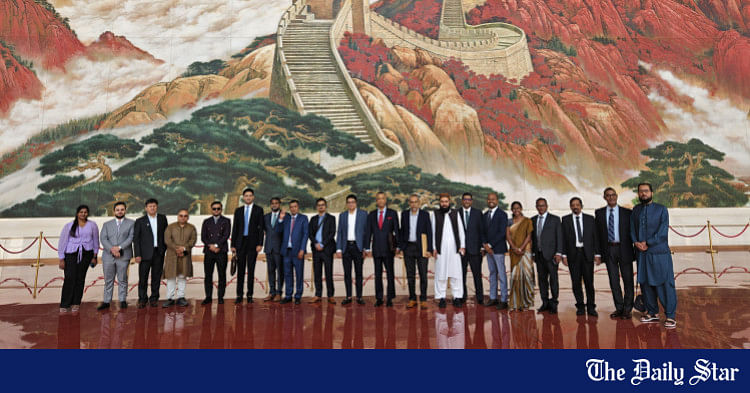
The author with other South Asian delegates during a recent visit to China. PHOTO: CPC

On May 24, I had the pleasure of travelling to China to meet a delegation of over 20 members from across South Asia, as well as representatives of the Chinese Communist Party (CPC). The seven-day trip, during which CPC representatives held dialogues with political parties from South Asia, as well as members of academia, think tanks, and the media, proved to be a truly enlightening experience.

Our first stop was Beijing, and what was particularly noticeable from the outset was the warmth and graciousness of our hosts. The delegation from Bangladesh was greeted at the airport—and later at the hotel—by several CPC members, who also welcomed delegates from across South Asia and accompanied us throughout the entire visit.

Our stay in Beijing involved visits to various places in an effort to experience Chinese culture first-hand. It was evident that, for the Chinese, their culture forms the foundational pillar of their identity and aspirations.

During our time in the city, we also had the pleasure of attending a large-scale dialogue that included senior representatives from Southeast Asian and Central Asian countries. At that event, the enthusiasm of all stakeholders regarding the Chinese-led Belt and Road Initiative (BRI) was visible. It was also evident how much progress had been made in terms of connecting China with Southeast Asia, as well as in improving connectivity among the Southeast Asian countries themselves.

Unfortunately, perhaps due largely to intra-regional conflict, it was equally clear how far South Asia has fallen behind in this regard. Representatives from Central Asian countries spoke of how China's technological prowess has been harnessed to extract their significant natural resource reserves. Once again, it was clear that South Asian countries are lagging far behind in their ability to make effective use of their own resources.

A recurring theme throughout many of the dialogues was that much of this stagnation appears to stem from the quality of leadership that South Asia has experienced over the decades. China, on the other hand, according to our gracious hosts, has worked extensively to improve the calibre of its leadership and to address corruption. One interesting story that was shared with us involved a member of the CPC who was photographed smiling at an accident site. His apparent insensitivity during a tragedy raised concerns among the Chinese leadership, who also noticed that he had been photographed wearing new and expensive watches at various events—watches that were beyond his pay grade. This led to a deeper investigation, which ultimately found that the individual had been involved in corruption.

As the world navigates increasing chaos and uncertainty, perhaps we are better off working together. As I mentioned earlier, the Chinese people take great pride in their civilisation, which spans thousands of years. And they also believe that Asian civilisations, in general, share a common history of peace and a tradition of pursuing mutually beneficial, win-win cooperation. There has been much talk about the 21st century being the "Asian century," and during our visit to China, it became obvious that Asia, as a whole, possesses all the components needed for shared success.

There were more such stories shared with us. We were informed that in China, every government department has its own "discipline committee," which reports to a central authority. Not only are government officials expected to refrain from corruption in order to keep their positions, but they are also expected to demonstrate other good disciplinary habits, including humility and a willingness to serve the public.

Naturally, the practice of good discipline and the effort to establish an educated and merit-based society have contributed to the rapid pace of China's development. While in the West it is evident that most countries developed 50 to 100 years ago, China's development has occurred largely in the past 30 to 40 years.

At the same time—whether it is infrastructure, environmental protection, poverty eradication, or the extremely impressive technological strides they have made—China's development is remarkable by any metric. In the area of technology in particular, the progress China has made is astonishing. From the development of self-driving cars to robotics and the generation of renewable energy, the country has become one of the hotspots for global technological innovation.

Our next stop was Kunming City in Yunnan Province, which is among the most beautiful places I have ever visited. But beyond its natural beauty, the city has been transformed into a gateway for connectivity between China and many of its neighbours. Again, during the dialogues held there, it became obvious that—from train tracks to highways—China has rapidly connected with Southeast Asia through Yunnan Province. And despite massive potential, activity along that front with South Asia remains somewhat slow, if not stagnant.

However, speaking with other South Asian delegates, it also became clear that people across South Asia are increasingly realising how far they are being left behind in a world that is rapidly moving forward. And China is a perfect example. Its cooperation with Southeast Asian countries has led to win-win outcomes for all parties. Having witnessed the fruits of that cooperation, others are increasingly eager to join in.

This week-long trip was not only a wonderful experience of witnessing China's rapid development and impressive achievements, but it also gave us insight into how it has sustained its success—through dialogue, sharing, and getting to know and understand one another: where we agree, where we disagree; where we can work together, and where we are better off on our own.

For the most part, as the world navigates increasing chaos and uncertainty, perhaps we are better off working together. As I mentioned earlier, the Chinese people take great pride in their civilisation, which spans thousands of years. And they also believe that Asian civilisations, in general, share a common history of peace and a tradition of pursuing mutually beneficial, win-win cooperation.

There has been much talk about the 21st century being the "Asian century," and during our visit to China, it became obvious that Asia, as a whole, possesses all the components needed for shared success. The only questions that remain are: i) do we have the visionary leadership needed to imagine Asia at the forefront of shaping the global order?; and ii) can we set aside our petty emotions and egos, and finally work together for the common good?

His X handle is @EreshOmarJamal.​
 
Analyze

Analyze Post

Add your ideas here:
Highlight Cite Fact Check Respond

Members Online

Latest Posts

Latest Posts

Post