You are using an out of date browser. It may not display this or other websites correctly.
You should upgrade or use an alternative browser.
You should upgrade or use an alternative browser.
[🇧🇩] Chittagong Hill Tracts----A Victim of Indian Intervention
- Thread starter Saif
- Start date
Post a Reply — Share your thoughts or reply to this thread...
Reply
Quick Reply
✓ Posted!
Quick Reply
✓ Posted!
 Bangladesh Defense
More options
Manage feed entries
- Joined
- Sep 29, 2024
- Messages
- 11
- Likes
- 7
- Nation

kashmir was , is and will always remain integral part of undivided PakistanI think Bangladesh, China and Pakistan should join hands to separate seven sisters and Kashmir from India. If we fail to break India, they will surely make an attempt to take over Bangladesh and Pakistan to form their dream country--Akhand Bharat.

Saif
Senior Member
- Joined
- Jan 24, 2024
- Messages
- 22,262
- Likes
- 9,869
- Nation

- Axis Group


Security dynamics in CHT
ETHNIC conflicts have become a global problem with serious regional implications. Scholarly concern with ethnic groups and conflict has become increasingly salient since the second half of the twentieth century. An estimate shows that one-third of all countries experienced civil conflict and...
 www.newagebd.net
Security dynamics in CHT
Saleh Shahriar 29 September, 2024, 00:00

|United News of Bangladesh/Abu Sufian Jewel
ETHNIC conflicts have become a global problem with serious regional implications. Scholarly concern with ethnic groups and conflict has become increasingly salient since the second half of the twentieth century. An estimate shows that one-third of all countries experienced civil conflict and ethnic unrest. The term ‘ethnicity’ or ‘ethnic’ finds origin in the Greek term ethnos, meaning nation, and its modern-day meaning translates to a group of people who share a common culture and sense of heritage.
There has been a proliferation of ethnic nationalism in many parts of the world. Language, culture, memory, history and tradition are the vital sources of ethnic nationalism. These variables can drive the members of an ethnic community to shape their own collective identity and destiny. Managing the violence of ethnic groups remains a central problem of state-building, security and development.
Bangladesh, to the east of India on the Bay of Bengal, is a densely populated South Asian country. It has more than 4,000 kilometres of border with India and 271 kilometres of border with Myanmar. It is a gateway to the eleven Southeast Asian countries, such as Brunei, Myanmar, Cambodia, Timor-Leste, Indonesia, Laos, Malaysia, the Philippines, Singapore, Thailand, and Vietnam. The Chittagong Hill Tracts, bordered by India and Myanmar, is situated in the south-eastern corner of Bangladesh. The hill tracts, composed of southeastern hilly districts of Bandarban, Rangamati and Khagrachari, is plagued by ethnic conflicts and violent secessionist movements. The hill tracts have had a long history of conflict and bloodshed. Numerous ethnonationalist groups are active in the three hill districts.
Of late, a new separatist group, namely, the Kuki-Chin National Front, surfaced in the Chittagong Hill Tracts and the hill districts of India, Myanmar and the disputed territories between China and the neighbours. The Kuki-Chin National Front has its own armed wing, namely, the Kuki-Chin National Army . Members of newly emerged militant group Kuki-Chin National Front looted over Tk 15 million from Sonali Bank’s branch in Ruma, Bandarban on the first week of July 2024. They looted 14 weapons from the Ansar members guarding the bank and allegedly abducted the Sonali Bank manager.
The latest violent confrontation in Rangamati town and at Dighinala and sadar in Khagrachari resulted in the deaths of four people and left at least 72 others injured. Leaders of the Chakma community urged the Indian prime minister to take steps to protect the lives and properties of the hill tribes and religious minorities. These tribal leaders might have placed their demands to the interim Yunus government through proper means instead of showing their allegiance to the Modi regime in India. It is also true that beyond the accord-transferred responsibilities to the ethnic minority-controlled three district councils and the larger regional council, the hill leaders demanded the closing of most military outposts, stringent restrictions on the Bengali settlers and more resource allocations for the hills, to mention a few of those demands.
With the rise of China, Professor Walt, a realist scholar, in his 2018 paper entitled ‘Rising Powers and the Risks of War: A Realist View on Sino-American Relations’ predicts that the United States and China will increasingly see each other as rivals and will engage in more intense security competition. The purpose of this paper is to address a couple of questions: What are the underlying security dynamics in the hill tracts? How does the super and great power competition shape the geopolitics of the hill tracts?
The Rohingya crisis has been disrupting bilateral relations between Myanmar and Bangladesh since the late 1970s. As a host nation, Bangladesh faces several non-traditional security threats originating from the Rohingya crisis. Drug trafficking is a major threat to regional security and domestic stability. Drug addiction has become a matter of serious global concern. Bangladesh is near the three major drug-producing regions: the Golden Triangle, the Golden Crescent and the Golden Wedge. In the Chittagong Hill Tracts, the smuggling of drugs and arms has increased instability in the region.
On May 3, 2023, violence broke out between the Meitei community and the Kuki tribe in Churachandpur town of Manipur, which is close to Imphal, the state’s capital. The reason for the clashes has been attributed to the non-tribal Meitei people’s demand for scheduled tribe status. While the Meiteis view the Kukis as outsiders and drug peddlers, the Kukis see themselves as marginalised by the Meiteis, who hold major political and administrative positions in the state. The violence in Manipur escalated from burning the Anglo-Kuki War Memorial to destroying homes and killings, displacing about 5,000 people within 48 hours.
Within two months, the number of displaced individuals soared to 60,000, the death toll reached 70, and over 1,700 buildings, including homes and religious structures, were reduced to ashes. Geopolitically, Manipur has strategic importance as it shares a border with Myanmar and serves as a gateway to Southeast Asia for India. Also, Manipur is crucial for India’s act-east policy, which aims to develop cultural links, trade, tourism and connectivity with Southeast Asia. The trilateral highway project linking India, Myanmar, and Thailand starts from Moreh in Manipur and ends at Mae Sot in Thailand.
The fall of Sheikh Hasina through an unprecedented mass uprising on August 5, 2024, created some sorts of political vacuum in the social and institutional settings in Bangladesh. Indeed, the ouster of Hasina is a significant setback for India’s security and regional policy. A reasonably understandable anti-Indian sentiment and feeling reached its climax for the incessant Indian support provided to the sustenance and survival of the autocratic Hasina regime.
Consequently, the diplomatic relations between Bangladesh and India reached their lowest ebbs after the interim government resumed state power. ‘If you destabilise Bangladesh, it will spill over all around Bangladesh, including Myanmar and seven sisters in West Bengal everywhere,’ Dr Yunus told NDTV. He further warns, ‘It will be a volcanic eruption everywhere around us and in Myanmar... and it would be a bigger problem because a million Rohingyas are in here’.
The security situation in the hill tracts has become complicated since the 1997 peace accord. There are two opposing views about the deterioration of law and order there. A group of scholars such as professor Amena Mohsin singled out processes of militarisation, Bengalization and religious conversion at the hill tracts as aggravating factors for the deterioration. These experts talked in favour of empowering the indigenous population and subsequent withdrawal of the CHT military camps. On the other hand, the scholars belonging to the opposite camp, professor M Rashiduzzaman, for instance, argued for the importance of maintaining territorial integrity, geopolitical interests and strategic communication along the cross-border region.
In recent years, the traditional Sino-Indian rivalry has been accelerated by at least two key developments. Firstly, China’s announcement of the Belt and Road Initiative in 2013 through which China began to encroach in India’s traditional sphere of influence (South Asia); and secondly, the flare-up in mid-2020 along the Sino-Indian border regions, known as the LAC or the Line of Actual Control, which possibly has brought a fundamental shift in the Indian perception and strategy vis-à-vis China. Moreover, China has a historic claim over the northeastern state of Arunachal Pradesh. China has released a fourth list of 30 new names of various places in Arunachal Pradesh amid Beijing’s stepped-up assertions in recent weeks to re-emphasise its claim over the Indian state.
India has been rejecting China renaming places in Arunachal Pradesh, asserting that the state is an integral part of the country and assigning ‘invented’ names does not alter this reality. India, after the 1962 War with China, adopted the ‘scorched earth’ policy of keeping the border areas with China underdeveloped. The Atal Bihari Vajpayee-led National Democratic Alliance government in 1999 first changed the policy of keeping the border areas of India along China underdeveloped. His cabinet approved thirteen new border projects to develop the Sino-Indian border areas. In 2006, the UPA government launched the Indo-China Border Roads Program to construct good quality roads in the forward areas of the Sino-Indian border for easy conduct of Indian troop movement. It proposed to construct the 1,850-kilometre-long Trans Arunachal National Highway along the northern bank of the Brahmaputra River.
The main aim for constructing this highway was to move troops quickly in the border areas of Arunachal Pradesh from Assam. The current Modi government has increased the Border Roads Organisation budget to Rs 14,387 crores in 2023-2024 in comparison to the previous budget of Rs 3,782 crore for the year 2013-2014. In the years between 2014 and 2022, 6,806 kilometres of road construction have been completed in the Sino-India border areas in comparison to only 3,610 kilometres of road constructed between 2008 and 2014. This boost in the infrastructural development in the border areas with China has changed the geopolitics of the border areas with China. India’s efforts to enhance connectivity with Southeast Asia under the Look/Act East Policy rest on five initiatives: the Kaladan Multi-modal Transit Transport Corridor, the Bay of Bengal Initiative for Multi-Sectoral Technical and Economic Cooperation, the Trilateral Highway and its extension, the Ganga-Mekong Economic Corridor, and the Mekong-India Economic Corridor.
In December 2021, US Secretary of State Antony J Blinken laid out the US government’s Indo-Pacific Strategy, America’s vision for a free, open, connected, prosperous, resilient, and secure Indo-Pacific region in which all countries are empowered to adapt to the 21st century’s challenges and seize its many opportunities. The Biden administration also established the Indo-Pacific Economic Framework to enhance economic cooperation among the Indo-Pacific states. As one of the small states of the Indian Ocean and Bay of Bengal, Bangladesh has emerged as a vital factor in the geopolitics of the region.
China considers the IPS ill-motivated to weaken China’s rise and sees the Indo-Pacific Economic Framework as a threat to its regional dominance. Chinese leaders are convinced that the United States won’t willingly allow China to become the dominant power in Asia, much less deign to share global leadership with Beijing. Beijing has embarked on projects such as Xi’s overlapping Global Security Initiative, Global Development Initiative, and Global Civilisation Initiative, all of which challenge the West’s right to unilaterally define universal rules and seek to undermine the notion of universal values in areas such as human rights.
Given the current geopolitical atmosphere and realities, we may conclude that the CHT problems have many domestic and global dimensions. The end of the cold war has unleashed new forces in international politics. The 1997 peace accord has established a kind of Chakma hegemony in the hill tracts. As a result, smaller ethnic groups like the Kuki-Chin National Front challenged the peace treaty demanding the creation of an exclusive ethnic homeland, namely Kukiland. It is high time for Bangladesh to adopt a comprehensive and informed peace strategy to tackle the ethnic conflict and security problems in a systematic and enlightened manner.
Dr Saleh Shahriar is an assistant professor of history and philosophy, North South University, Dhaka. This article is a part of a research project on the Changing Security Dynamics of the Chattogram Hill Tract.
Saleh Shahriar 29 September, 2024, 00:00
|United News of Bangladesh/Abu Sufian Jewel
ETHNIC conflicts have become a global problem with serious regional implications. Scholarly concern with ethnic groups and conflict has become increasingly salient since the second half of the twentieth century. An estimate shows that one-third of all countries experienced civil conflict and ethnic unrest. The term ‘ethnicity’ or ‘ethnic’ finds origin in the Greek term ethnos, meaning nation, and its modern-day meaning translates to a group of people who share a common culture and sense of heritage.
There has been a proliferation of ethnic nationalism in many parts of the world. Language, culture, memory, history and tradition are the vital sources of ethnic nationalism. These variables can drive the members of an ethnic community to shape their own collective identity and destiny. Managing the violence of ethnic groups remains a central problem of state-building, security and development.
Bangladesh, to the east of India on the Bay of Bengal, is a densely populated South Asian country. It has more than 4,000 kilometres of border with India and 271 kilometres of border with Myanmar. It is a gateway to the eleven Southeast Asian countries, such as Brunei, Myanmar, Cambodia, Timor-Leste, Indonesia, Laos, Malaysia, the Philippines, Singapore, Thailand, and Vietnam. The Chittagong Hill Tracts, bordered by India and Myanmar, is situated in the south-eastern corner of Bangladesh. The hill tracts, composed of southeastern hilly districts of Bandarban, Rangamati and Khagrachari, is plagued by ethnic conflicts and violent secessionist movements. The hill tracts have had a long history of conflict and bloodshed. Numerous ethnonationalist groups are active in the three hill districts.
Of late, a new separatist group, namely, the Kuki-Chin National Front, surfaced in the Chittagong Hill Tracts and the hill districts of India, Myanmar and the disputed territories between China and the neighbours. The Kuki-Chin National Front has its own armed wing, namely, the Kuki-Chin National Army . Members of newly emerged militant group Kuki-Chin National Front looted over Tk 15 million from Sonali Bank’s branch in Ruma, Bandarban on the first week of July 2024. They looted 14 weapons from the Ansar members guarding the bank and allegedly abducted the Sonali Bank manager.
The latest violent confrontation in Rangamati town and at Dighinala and sadar in Khagrachari resulted in the deaths of four people and left at least 72 others injured. Leaders of the Chakma community urged the Indian prime minister to take steps to protect the lives and properties of the hill tribes and religious minorities. These tribal leaders might have placed their demands to the interim Yunus government through proper means instead of showing their allegiance to the Modi regime in India. It is also true that beyond the accord-transferred responsibilities to the ethnic minority-controlled three district councils and the larger regional council, the hill leaders demanded the closing of most military outposts, stringent restrictions on the Bengali settlers and more resource allocations for the hills, to mention a few of those demands.
With the rise of China, Professor Walt, a realist scholar, in his 2018 paper entitled ‘Rising Powers and the Risks of War: A Realist View on Sino-American Relations’ predicts that the United States and China will increasingly see each other as rivals and will engage in more intense security competition. The purpose of this paper is to address a couple of questions: What are the underlying security dynamics in the hill tracts? How does the super and great power competition shape the geopolitics of the hill tracts?
The Rohingya crisis has been disrupting bilateral relations between Myanmar and Bangladesh since the late 1970s. As a host nation, Bangladesh faces several non-traditional security threats originating from the Rohingya crisis. Drug trafficking is a major threat to regional security and domestic stability. Drug addiction has become a matter of serious global concern. Bangladesh is near the three major drug-producing regions: the Golden Triangle, the Golden Crescent and the Golden Wedge. In the Chittagong Hill Tracts, the smuggling of drugs and arms has increased instability in the region.
On May 3, 2023, violence broke out between the Meitei community and the Kuki tribe in Churachandpur town of Manipur, which is close to Imphal, the state’s capital. The reason for the clashes has been attributed to the non-tribal Meitei people’s demand for scheduled tribe status. While the Meiteis view the Kukis as outsiders and drug peddlers, the Kukis see themselves as marginalised by the Meiteis, who hold major political and administrative positions in the state. The violence in Manipur escalated from burning the Anglo-Kuki War Memorial to destroying homes and killings, displacing about 5,000 people within 48 hours.
Within two months, the number of displaced individuals soared to 60,000, the death toll reached 70, and over 1,700 buildings, including homes and religious structures, were reduced to ashes. Geopolitically, Manipur has strategic importance as it shares a border with Myanmar and serves as a gateway to Southeast Asia for India. Also, Manipur is crucial for India’s act-east policy, which aims to develop cultural links, trade, tourism and connectivity with Southeast Asia. The trilateral highway project linking India, Myanmar, and Thailand starts from Moreh in Manipur and ends at Mae Sot in Thailand.
The fall of Sheikh Hasina through an unprecedented mass uprising on August 5, 2024, created some sorts of political vacuum in the social and institutional settings in Bangladesh. Indeed, the ouster of Hasina is a significant setback for India’s security and regional policy. A reasonably understandable anti-Indian sentiment and feeling reached its climax for the incessant Indian support provided to the sustenance and survival of the autocratic Hasina regime.
Consequently, the diplomatic relations between Bangladesh and India reached their lowest ebbs after the interim government resumed state power. ‘If you destabilise Bangladesh, it will spill over all around Bangladesh, including Myanmar and seven sisters in West Bengal everywhere,’ Dr Yunus told NDTV. He further warns, ‘It will be a volcanic eruption everywhere around us and in Myanmar... and it would be a bigger problem because a million Rohingyas are in here’.
The security situation in the hill tracts has become complicated since the 1997 peace accord. There are two opposing views about the deterioration of law and order there. A group of scholars such as professor Amena Mohsin singled out processes of militarisation, Bengalization and religious conversion at the hill tracts as aggravating factors for the deterioration. These experts talked in favour of empowering the indigenous population and subsequent withdrawal of the CHT military camps. On the other hand, the scholars belonging to the opposite camp, professor M Rashiduzzaman, for instance, argued for the importance of maintaining territorial integrity, geopolitical interests and strategic communication along the cross-border region.
In recent years, the traditional Sino-Indian rivalry has been accelerated by at least two key developments. Firstly, China’s announcement of the Belt and Road Initiative in 2013 through which China began to encroach in India’s traditional sphere of influence (South Asia); and secondly, the flare-up in mid-2020 along the Sino-Indian border regions, known as the LAC or the Line of Actual Control, which possibly has brought a fundamental shift in the Indian perception and strategy vis-à-vis China. Moreover, China has a historic claim over the northeastern state of Arunachal Pradesh. China has released a fourth list of 30 new names of various places in Arunachal Pradesh amid Beijing’s stepped-up assertions in recent weeks to re-emphasise its claim over the Indian state.
India has been rejecting China renaming places in Arunachal Pradesh, asserting that the state is an integral part of the country and assigning ‘invented’ names does not alter this reality. India, after the 1962 War with China, adopted the ‘scorched earth’ policy of keeping the border areas with China underdeveloped. The Atal Bihari Vajpayee-led National Democratic Alliance government in 1999 first changed the policy of keeping the border areas of India along China underdeveloped. His cabinet approved thirteen new border projects to develop the Sino-Indian border areas. In 2006, the UPA government launched the Indo-China Border Roads Program to construct good quality roads in the forward areas of the Sino-Indian border for easy conduct of Indian troop movement. It proposed to construct the 1,850-kilometre-long Trans Arunachal National Highway along the northern bank of the Brahmaputra River.
The main aim for constructing this highway was to move troops quickly in the border areas of Arunachal Pradesh from Assam. The current Modi government has increased the Border Roads Organisation budget to Rs 14,387 crores in 2023-2024 in comparison to the previous budget of Rs 3,782 crore for the year 2013-2014. In the years between 2014 and 2022, 6,806 kilometres of road construction have been completed in the Sino-India border areas in comparison to only 3,610 kilometres of road constructed between 2008 and 2014. This boost in the infrastructural development in the border areas with China has changed the geopolitics of the border areas with China. India’s efforts to enhance connectivity with Southeast Asia under the Look/Act East Policy rest on five initiatives: the Kaladan Multi-modal Transit Transport Corridor, the Bay of Bengal Initiative for Multi-Sectoral Technical and Economic Cooperation, the Trilateral Highway and its extension, the Ganga-Mekong Economic Corridor, and the Mekong-India Economic Corridor.
In December 2021, US Secretary of State Antony J Blinken laid out the US government’s Indo-Pacific Strategy, America’s vision for a free, open, connected, prosperous, resilient, and secure Indo-Pacific region in which all countries are empowered to adapt to the 21st century’s challenges and seize its many opportunities. The Biden administration also established the Indo-Pacific Economic Framework to enhance economic cooperation among the Indo-Pacific states. As one of the small states of the Indian Ocean and Bay of Bengal, Bangladesh has emerged as a vital factor in the geopolitics of the region.
China considers the IPS ill-motivated to weaken China’s rise and sees the Indo-Pacific Economic Framework as a threat to its regional dominance. Chinese leaders are convinced that the United States won’t willingly allow China to become the dominant power in Asia, much less deign to share global leadership with Beijing. Beijing has embarked on projects such as Xi’s overlapping Global Security Initiative, Global Development Initiative, and Global Civilisation Initiative, all of which challenge the West’s right to unilaterally define universal rules and seek to undermine the notion of universal values in areas such as human rights.
Given the current geopolitical atmosphere and realities, we may conclude that the CHT problems have many domestic and global dimensions. The end of the cold war has unleashed new forces in international politics. The 1997 peace accord has established a kind of Chakma hegemony in the hill tracts. As a result, smaller ethnic groups like the Kuki-Chin National Front challenged the peace treaty demanding the creation of an exclusive ethnic homeland, namely Kukiland. It is high time for Bangladesh to adopt a comprehensive and informed peace strategy to tackle the ethnic conflict and security problems in a systematic and enlightened manner.
Dr Saleh Shahriar is an assistant professor of history and philosophy, North South University, Dhaka. This article is a part of a research project on the Changing Security Dynamics of the Chattogram Hill Tract.

- Joined
- Jan 24, 2024
- Messages
- 4,110
- Likes
- 2,237
Security dynamics in CHT
ETHNIC conflicts have become a global problem with serious regional implications. Scholarly concern with ethnic groups and conflict has become increasingly salient since the second half of the twentieth century. An estimate shows that one-third of all countries experienced civil conflict and...
Security dynamics in CHT
Saleh Shahriar 29 September, 2024, 00:00
View attachment 9056
|United News of Bangladesh/Abu Sufian Jewel
ETHNIC conflicts have become a global problem with serious regional implications. Scholarly concern with ethnic groups and conflict has become increasingly salient since the second half of the twentieth century. An estimate shows that one-third of all countries experienced civil conflict and ethnic unrest. The term ‘ethnicity’ or ‘ethnic’ finds origin in the Greek term ethnos, meaning nation, and its modern-day meaning translates to a group of people who share a common culture and sense of heritage.
There has been a proliferation of ethnic nationalism in many parts of the world. Language, culture, memory, history and tradition are the vital sources of ethnic nationalism. These variables can drive the members of an ethnic community to shape their own collective identity and destiny. Managing the violence of ethnic groups remains a central problem of state-building, security and development.
Bangladesh, to the east of India on the Bay of Bengal, is a densely populated South Asian country. It has more than 4,000 kilometres of border with India and 271 kilometres of border with Myanmar. It is a gateway to the eleven Southeast Asian countries, such as Brunei, Myanmar, Cambodia, Timor-Leste, Indonesia, Laos, Malaysia, the Philippines, Singapore, Thailand, and Vietnam. The Chittagong Hill Tracts, bordered by India and Myanmar, is situated in the south-eastern corner of Bangladesh. The hill tracts, composed of southeastern hilly districts of Bandarban, Rangamati and Khagrachari, is plagued by ethnic conflicts and violent secessionist movements. The hill tracts have had a long history of conflict and bloodshed. Numerous ethnonationalist groups are active in the three hill districts.
Of late, a new separatist group, namely, the Kuki-Chin National Front, surfaced in the Chittagong Hill Tracts and the hill districts of India, Myanmar and the disputed territories between China and the neighbours. The Kuki-Chin National Front has its own armed wing, namely, the Kuki-Chin National Army . Members of newly emerged militant group Kuki-Chin National Front looted over Tk 15 million from Sonali Bank’s branch in Ruma, Bandarban on the first week of July 2024. They looted 14 weapons from the Ansar members guarding the bank and allegedly abducted the Sonali Bank manager.
The latest violent confrontation in Rangamati town and at Dighinala and sadar in Khagrachari resulted in the deaths of four people and left at least 72 others injured. Leaders of the Chakma community urged the Indian prime minister to take steps to protect the lives and properties of the hill tribes and religious minorities. These tribal leaders might have placed their demands to the interim Yunus government through proper means instead of showing their allegiance to the Modi regime in India. It is also true that beyond the accord-transferred responsibilities to the ethnic minority-controlled three district councils and the larger regional council, the hill leaders demanded the closing of most military outposts, stringent restrictions on the Bengali settlers and more resource allocations for the hills, to mention a few of those demands.
With the rise of China, Professor Walt, a realist scholar, in his 2018 paper entitled ‘Rising Powers and the Risks of War: A Realist View on Sino-American Relations’ predicts that the United States and China will increasingly see each other as rivals and will engage in more intense security competition. The purpose of this paper is to address a couple of questions: What are the underlying security dynamics in the hill tracts? How does the super and great power competition shape the geopolitics of the hill tracts?
The Rohingya crisis has been disrupting bilateral relations between Myanmar and Bangladesh since the late 1970s. As a host nation, Bangladesh faces several non-traditional security threats originating from the Rohingya crisis. Drug trafficking is a major threat to regional security and domestic stability. Drug addiction has become a matter of serious global concern. Bangladesh is near the three major drug-producing regions: the Golden Triangle, the Golden Crescent and the Golden Wedge. In the Chittagong Hill Tracts, the smuggling of drugs and arms has increased instability in the region.
On May 3, 2023, violence broke out between the Meitei community and the Kuki tribe in Churachandpur town of Manipur, which is close to Imphal, the state’s capital. The reason for the clashes has been attributed to the non-tribal Meitei people’s demand for scheduled tribe status. While the Meiteis view the Kukis as outsiders and drug peddlers, the Kukis see themselves as marginalised by the Meiteis, who hold major political and administrative positions in the state. The violence in Manipur escalated from burning the Anglo-Kuki War Memorial to destroying homes and killings, displacing about 5,000 people within 48 hours.
Within two months, the number of displaced individuals soared to 60,000, the death toll reached 70, and over 1,700 buildings, including homes and religious structures, were reduced to ashes. Geopolitically, Manipur has strategic importance as it shares a border with Myanmar and serves as a gateway to Southeast Asia for India. Also, Manipur is crucial for India’s act-east policy, which aims to develop cultural links, trade, tourism and connectivity with Southeast Asia. The trilateral highway project linking India, Myanmar, and Thailand starts from Moreh in Manipur and ends at Mae Sot in Thailand.
The fall of Sheikh Hasina through an unprecedented mass uprising on August 5, 2024, created some sorts of political vacuum in the social and institutional settings in Bangladesh. Indeed, the ouster of Hasina is a significant setback for India’s security and regional policy. A reasonably understandable anti-Indian sentiment and feeling reached its climax for the incessant Indian support provided to the sustenance and survival of the autocratic Hasina regime.
Consequently, the diplomatic relations between Bangladesh and India reached their lowest ebbs after the interim government resumed state power. ‘If you destabilise Bangladesh, it will spill over all around Bangladesh, including Myanmar and seven sisters in West Bengal everywhere,’ Dr Yunus told NDTV. He further warns, ‘It will be a volcanic eruption everywhere around us and in Myanmar... and it would be a bigger problem because a million Rohingyas are in here’.
The security situation in the hill tracts has become complicated since the 1997 peace accord. There are two opposing views about the deterioration of law and order there. A group of scholars such as professor Amena Mohsin singled out processes of militarisation, Bengalization and religious conversion at the hill tracts as aggravating factors for the deterioration. These experts talked in favour of empowering the indigenous population and subsequent withdrawal of the CHT military camps. On the other hand, the scholars belonging to the opposite camp, professor M Rashiduzzaman, for instance, argued for the importance of maintaining territorial integrity, geopolitical interests and strategic communication along the cross-border region.
In recent years, the traditional Sino-Indian rivalry has been accelerated by at least two key developments. Firstly, China’s announcement of the Belt and Road Initiative in 2013 through which China began to encroach in India’s traditional sphere of influence (South Asia); and secondly, the flare-up in mid-2020 along the Sino-Indian border regions, known as the LAC or the Line of Actual Control, which possibly has brought a fundamental shift in the Indian perception and strategy vis-à-vis China. Moreover, China has a historic claim over the northeastern state of Arunachal Pradesh. China has released a fourth list of 30 new names of various places in Arunachal Pradesh amid Beijing’s stepped-up assertions in recent weeks to re-emphasise its claim over the Indian state.
India has been rejecting China renaming places in Arunachal Pradesh, asserting that the state is an integral part of the country and assigning ‘invented’ names does not alter this reality. India, after the 1962 War with China, adopted the ‘scorched earth’ policy of keeping the border areas with China underdeveloped. The Atal Bihari Vajpayee-led National Democratic Alliance government in 1999 first changed the policy of keeping the border areas of India along China underdeveloped. His cabinet approved thirteen new border projects to develop the Sino-Indian border areas. In 2006, the UPA government launched the Indo-China Border Roads Program to construct good quality roads in the forward areas of the Sino-Indian border for easy conduct of Indian troop movement. It proposed to construct the 1,850-kilometre-long Trans Arunachal National Highway along the northern bank of the Brahmaputra River.
The main aim for constructing this highway was to move troops quickly in the border areas of Arunachal Pradesh from Assam. The current Modi government has increased the Border Roads Organisation budget to Rs 14,387 crores in 2023-2024 in comparison to the previous budget of Rs 3,782 crore for the year 2013-2014. In the years between 2014 and 2022, 6,806 kilometres of road construction have been completed in the Sino-India border areas in comparison to only 3,610 kilometres of road constructed between 2008 and 2014. This boost in the infrastructural development in the border areas with China has changed the geopolitics of the border areas with China. India’s efforts to enhance connectivity with Southeast Asia under the Look/Act East Policy rest on five initiatives: the Kaladan Multi-modal Transit Transport Corridor, the Bay of Bengal Initiative for Multi-Sectoral Technical and Economic Cooperation, the Trilateral Highway and its extension, the Ganga-Mekong Economic Corridor, and the Mekong-India Economic Corridor.
In December 2021, US Secretary of State Antony J Blinken laid out the US government’s Indo-Pacific Strategy, America’s vision for a free, open, connected, prosperous, resilient, and secure Indo-Pacific region in which all countries are empowered to adapt to the 21st century’s challenges and seize its many opportunities. The Biden administration also established the Indo-Pacific Economic Framework to enhance economic cooperation among the Indo-Pacific states. As one of the small states of the Indian Ocean and Bay of Bengal, Bangladesh has emerged as a vital factor in the geopolitics of the region.
China considers the IPS ill-motivated to weaken China’s rise and sees the Indo-Pacific Economic Framework as a threat to its regional dominance. Chinese leaders are convinced that the United States won’t willingly allow China to become the dominant power in Asia, much less deign to share global leadership with Beijing. Beijing has embarked on projects such as Xi’s overlapping Global Security Initiative, Global Development Initiative, and Global Civilisation Initiative, all of which challenge the West’s right to unilaterally define universal rules and seek to undermine the notion of universal values in areas such as human rights.
Given the current geopolitical atmosphere and realities, we may conclude that the CHT problems have many domestic and global dimensions. The end of the cold war has unleashed new forces in international politics. The 1997 peace accord has established a kind of Chakma hegemony in the hill tracts. As a result, smaller ethnic groups like the Kuki-Chin National Front challenged the peace treaty demanding the creation of an exclusive ethnic homeland, namely Kukiland. It is high time for Bangladesh to adopt a comprehensive and informed peace strategy to tackle the ethnic conflict and security problems in a systematic and enlightened manner.
Dr Saleh Shahriar is an assistant professor of history and philosophy, North South University, Dhaka. This article is a part of a research project on the Changing Security Dynamics of the Chattogram Hill Tract.
I think the time may come, at some point - to severely incarcerate tribals in the hill tracts and mete out much more severe punishment per new rules of anti-insurgency. These tribals are taking advantage of the restraint of Army deployed in that area.
Saif
Senior Member
- Joined
- Jan 24, 2024
- Messages
- 22,262
- Likes
- 9,869
- Nation
- Axis Group
Bangladesh army should be given magistracy power to quell unrest in Chittagong Hill Tracts. Disobedience has to be dealt with an iron fist.I think the time may come, at some point - to severely incarcerate tribals in the hill tracts and mete out much more severe punishment per new rules of anti-insurgency. These tribals are taking advantage of the restraint of Army deployed in that area.
Saif
Senior Member
- Joined
- Jan 24, 2024
- Messages
- 22,262
- Likes
- 9,869
- Nation
- Axis Group

No more violence in Khagrachhari
The government must de-escalate tensions through proper measures.
No more violence in Khagrachhari
The government must de-escalate tensions through proper measures

VISUAL: STAR
We are gravely concerned by the latest flare-up in tensions between Indigenous and Bangalee communities in Khagrachhari, mere days after some normalcy was restored there. According to media reports, the district's situation escalated again on Tuesday when a teacher was beaten to death for allegedly raping a student, leading to attacks and vandalism. This is the latest incident in a string of violent, often fatal attacks by mobs that has plagued various parts of the country since August 5.
The latest victim, Abul Hasnat Muhammad Sohail Rana, a Bangalee teacher at Khagrachhari Technical School and College who was accused of raping a Tripura student, was beaten severely by a group of 10-15 Indigenous students, and died afterwards. The schoolgirl was admitted to a hospital, where doctors said there were indications of rape. Rana's death led to armed groups chasing and clashing with each other. A Buddhist temple was vandalised while several houses and shops of Chakma and Marma people were looted and torched, violating Section 144. This is reminiscent of what happened less than two weeks ago, when four Indigenous people, including a 17-year-old, were killed in violence that erupted in Khagrachhari and later spilt over to Rangamati.
We condemn these senseless acts from all sides involved. In no way is taking the law into one's own hands acceptable, nor is using it as an excuse to instigate and engage in communal violence. Reportedly, a probe committee has been formed to look into the incident. We urge those in charge to thoroughly investigate the events and identify the perpetrators so that they can be brought to justice. Moreover, the government must take strict actions to put an end to this disturbing trend of mob violence which, in the hilly districts, has the potential to inflame communal tensions at the expense of vulnerable people. We must stop this cycle of criminality anyway possible.
The recent incidents have again highlighted how susceptible to instability the Chittagong Hill Tracts (CHT) remain. Over the decades, tensions between the Indigenous people and Bangalees have been fuelled and sustained by many actors for their own gains. It's high time this division was bridged through a reconciliation process overseen by political and community leaders. A major step in that direction would be the full implementation of the CHT Accord, which the authorities should start on an urgent basis. We must do everything to ensure that Indigenous communities in the CHT region are able to live in peace and stability.
The government must de-escalate tensions through proper measures
VISUAL: STAR
We are gravely concerned by the latest flare-up in tensions between Indigenous and Bangalee communities in Khagrachhari, mere days after some normalcy was restored there. According to media reports, the district's situation escalated again on Tuesday when a teacher was beaten to death for allegedly raping a student, leading to attacks and vandalism. This is the latest incident in a string of violent, often fatal attacks by mobs that has plagued various parts of the country since August 5.
The latest victim, Abul Hasnat Muhammad Sohail Rana, a Bangalee teacher at Khagrachhari Technical School and College who was accused of raping a Tripura student, was beaten severely by a group of 10-15 Indigenous students, and died afterwards. The schoolgirl was admitted to a hospital, where doctors said there were indications of rape. Rana's death led to armed groups chasing and clashing with each other. A Buddhist temple was vandalised while several houses and shops of Chakma and Marma people were looted and torched, violating Section 144. This is reminiscent of what happened less than two weeks ago, when four Indigenous people, including a 17-year-old, were killed in violence that erupted in Khagrachhari and later spilt over to Rangamati.
We condemn these senseless acts from all sides involved. In no way is taking the law into one's own hands acceptable, nor is using it as an excuse to instigate and engage in communal violence. Reportedly, a probe committee has been formed to look into the incident. We urge those in charge to thoroughly investigate the events and identify the perpetrators so that they can be brought to justice. Moreover, the government must take strict actions to put an end to this disturbing trend of mob violence which, in the hilly districts, has the potential to inflame communal tensions at the expense of vulnerable people. We must stop this cycle of criminality anyway possible.
The recent incidents have again highlighted how susceptible to instability the Chittagong Hill Tracts (CHT) remain. Over the decades, tensions between the Indigenous people and Bangalees have been fuelled and sustained by many actors for their own gains. It's high time this division was bridged through a reconciliation process overseen by political and community leaders. A major step in that direction would be the full implementation of the CHT Accord, which the authorities should start on an urgent basis. We must do everything to ensure that Indigenous communities in the CHT region are able to live in peace and stability.

Vsdoc
Senior Member
- Joined
- Sep 8, 2024
- Messages
- 7,017
- Likes
- 5,425
- Joined
- Jan 24, 2024
- Messages
- 4,110
- Likes
- 2,237
সনাতনী নির্যাতন প্রশ্নে চট্টগ্রামে কি ভারতের এখনই হস্তক্ষেপ করা উচিৎ ? (I am surprised at the audacity of this nincompoop)
No one in any sane leadership in any country would even "think" about invading another country. Crimea and Ukraine were naked attempts to attack Russian sovereignty.
Mostly countries fight proxy wars and help insurgencies. That favor can be returned.
Armed forces have to prepare for any eventuality.
There are all sorts of muckraking "experts" in the media, their primary objective is to gather views with audacious claims like this.
Best to ignore them.
Saif
Senior Member
- Joined
- Jan 24, 2024
- Messages
- 22,262
- Likes
- 9,869
- Nation
- Axis Group
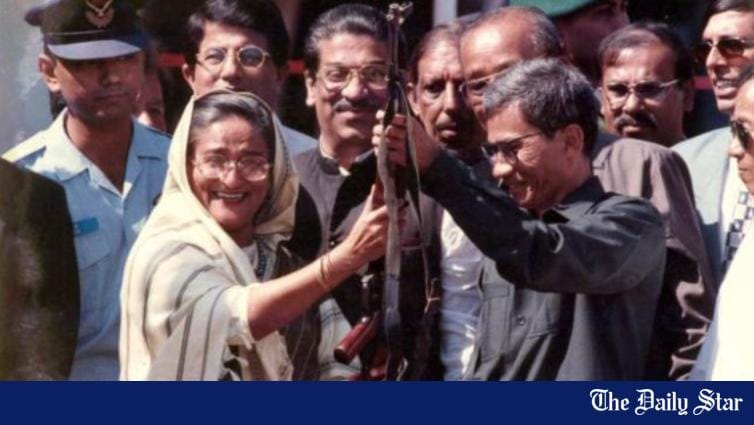
27yrs of CHT peace accord: Key promises still unfulfilled
Twenty-seven years have passed but four key promises of the Chittagong Hill Tracts Peace Accord remain unfulfilled, said indigenous leaders and rights activists.
27yrs of CHT peace accord: Key promises still unfulfilled
Indigenous rights advocates say successive govts ignored pact

Twenty-seven years have passed but four key promises of the Chittagong Hill Tracts Peace Accord remain unfulfilled, said indigenous leaders and rights activists.
These are rehabilitation of repatriated and internally displaced indigenous people, demilitarisation, empowering district and regional councils, and making the Land Commission effective.
They alleged that the full implementation of the accord is elusive due to the unwillingness of successive governments to carry it out.
The government claims that 65 out of the 72 sections of the treaty have been fully implemented. However, leaders of the Parbatya Chattagram Jana Sanghati Samiti (PCJSS) said only 25 sections have been fully implemented and 18 partially, adding that 29 others are untouched.
The CHT Peace Accord was inked on this day in 1997 between the then Awami League government and PCJSS leaders, ending the armed conflict, as PCJSS leaders surrendered their firearms to the government.
Talking to The Daily Star, Devasish Roy, the king of the Chakma Circle, said he does not evaluate the status of the CHT Peace Accord by the number of clauses implemented.
"I focus on the qualitative aspects. From that perspective, four key elements -- rehabilitation of returnees from India and internally displaced indigenous people, demilitarisation, empowering district and regional councils, and making the Land Commission effective -- are still unmet."
He added that not a single repatriated or internally displaced indigenous person has been rehabilitated, despite the formation of a taskforce on January 20, 1998. Similarly, the district and regional councils have been rendered ineffective.
Demilitarisation has also not been achieved, even though the treaty stipulated the presence of only six camps, he said, adding that the Land Commission, formed in 2001, has yet to resolve any land dispute.
Dipayan Khisa, a PCJSS central committee member, said that despite being a signatory to the accord, the AL government has betrayed the CHT people as it did not implement the treaty fully.
"Voter lists of the CHT permanent residents must be prepared for holding elections to three district councils, members of which elect the regional council. However, no government, including the Awami League, has taken any steps to formulate the voter lists."
In the absence of such lists, polls in the three hill districts have not been held and consequently, the regional council elections could not take place, he said, adding that the district council members are replaced whenever the government changes.
The PCJSS leader alleged that the district councils function as a tool of the government, turning the three district councils into factories for implementing the ruling party's agenda without respecting the highest administrative body in the hills, the regional council.
Santoshita Chakma Bakul, general secretary of the Parbatya Chattogram Jumma Kalyan Samity, said a separate 20-point treaty was signed with the government on March 9, 1997, before the CHT Peace Accord, in which the government promised rehabilitation of the returnees from India.
"A taskforce was formed on January 20, 1998, for rehabilitation, but not a single person has been rehabilitated to date, as the issue relates to the Land Commission, which could not resolve any disputes because the government failed to formulate its regulations."
He demanded that the government prepare the regulations for the commission immediately.
Shamsul Huda, executive director of the Association for Land Reform and Development, said the law under which the Land Commission was formed contradicted the CHT Peace Accord, and it took until 2016 to amend the provisions of the law.
"After 2016, the Land Commission managed to hold a few meetings. But it could not convene meetings regularly due to opposition by a Bangalee organisation in the CHT. A powerful group supporting this organisation has prevented the commission from functioning."
He added that over 28,000 land-related complaints remain unresolved because the Land Commission is dysfunctional.
"To make the commission effective, regulations need to be prepared as early as possible. Despite repeated requests from the regional council, I don't understand why the relevant ministry has not taken any steps in this regard."
Indigenous rights advocates say successive govts ignored pact
Twenty-seven years have passed but four key promises of the Chittagong Hill Tracts Peace Accord remain unfulfilled, said indigenous leaders and rights activists.
These are rehabilitation of repatriated and internally displaced indigenous people, demilitarisation, empowering district and regional councils, and making the Land Commission effective.
They alleged that the full implementation of the accord is elusive due to the unwillingness of successive governments to carry it out.
The government claims that 65 out of the 72 sections of the treaty have been fully implemented. However, leaders of the Parbatya Chattagram Jana Sanghati Samiti (PCJSS) said only 25 sections have been fully implemented and 18 partially, adding that 29 others are untouched.
The CHT Peace Accord was inked on this day in 1997 between the then Awami League government and PCJSS leaders, ending the armed conflict, as PCJSS leaders surrendered their firearms to the government.
Talking to The Daily Star, Devasish Roy, the king of the Chakma Circle, said he does not evaluate the status of the CHT Peace Accord by the number of clauses implemented.
"I focus on the qualitative aspects. From that perspective, four key elements -- rehabilitation of returnees from India and internally displaced indigenous people, demilitarisation, empowering district and regional councils, and making the Land Commission effective -- are still unmet."
He added that not a single repatriated or internally displaced indigenous person has been rehabilitated, despite the formation of a taskforce on January 20, 1998. Similarly, the district and regional councils have been rendered ineffective.
Demilitarisation has also not been achieved, even though the treaty stipulated the presence of only six camps, he said, adding that the Land Commission, formed in 2001, has yet to resolve any land dispute.
Dipayan Khisa, a PCJSS central committee member, said that despite being a signatory to the accord, the AL government has betrayed the CHT people as it did not implement the treaty fully.
"Voter lists of the CHT permanent residents must be prepared for holding elections to three district councils, members of which elect the regional council. However, no government, including the Awami League, has taken any steps to formulate the voter lists."
In the absence of such lists, polls in the three hill districts have not been held and consequently, the regional council elections could not take place, he said, adding that the district council members are replaced whenever the government changes.
The PCJSS leader alleged that the district councils function as a tool of the government, turning the three district councils into factories for implementing the ruling party's agenda without respecting the highest administrative body in the hills, the regional council.
Santoshita Chakma Bakul, general secretary of the Parbatya Chattogram Jumma Kalyan Samity, said a separate 20-point treaty was signed with the government on March 9, 1997, before the CHT Peace Accord, in which the government promised rehabilitation of the returnees from India.
"A taskforce was formed on January 20, 1998, for rehabilitation, but not a single person has been rehabilitated to date, as the issue relates to the Land Commission, which could not resolve any disputes because the government failed to formulate its regulations."
He demanded that the government prepare the regulations for the commission immediately.
Shamsul Huda, executive director of the Association for Land Reform and Development, said the law under which the Land Commission was formed contradicted the CHT Peace Accord, and it took until 2016 to amend the provisions of the law.
"After 2016, the Land Commission managed to hold a few meetings. But it could not convene meetings regularly due to opposition by a Bangalee organisation in the CHT. A powerful group supporting this organisation has prevented the commission from functioning."
He added that over 28,000 land-related complaints remain unresolved because the Land Commission is dysfunctional.
"To make the commission effective, regulations need to be prepared as early as possible. Despite repeated requests from the regional council, I don't understand why the relevant ministry has not taken any steps in this regard."
Saif
Senior Member
- Joined
- Jan 24, 2024
- Messages
- 22,262
- Likes
- 9,869
- Nation
- Axis Group

Govts blamed for delay in treaty execution
The ineffectiveness of the bodies formed under the Chittagong Hill Tracts peace accord has been delaying the full execution of the treaty signed about three decades ago, national minority leaders and rights activists have said.
www.newagebd.net
Govts blamed for delay in treaty execution
Staff Correspondent 02 December, 2024, 00:45
The ineffectiveness of the bodies formed under the Chittagong Hill Tracts peace accord has been delaying the full execution of the treaty signed about three decades ago, national minority leaders and rights activists have said.
For its effective implementation, they have said that initiatives from the professor Muhammad Yunus-led interim government are crucial to activate all relevant bodies, including the CHT Land Commission having no chairperson since August 2023, the CHT Accord Implementation and Monitoring Committee, and the advisory committee of the CHT affairs ministry.
The frustrating delay in the treaty’s execution was increasing uncertainty of the national minorities in the hill districts of Rangamati, Bandarban and Khagrachari, they observe.
Describing the ‘CHT issues as both national and political’, ethnic minorities and activists emphasise that the full implementation of the accord, popularly known as the peace treaty, signed 27 years ago to establish peace and rights in the region, is crucial for the greater interest of Bangladesh.
They blame the ineffectiveness of the CHT land commission as a major barrier against ensuring their rights to land ownership, a crucial issue for the hill people mostly depending on land for their livelihoods.
They have also underlined the need for handing over responsibilities through executive orders to the regional and district councils for each hill district under the ‘CHT special governance system’.
‘After the interim government took charge, all bodies established under the CHT accord became non-functional and till now remain so, which is dangerous as it has heightened uncertainty regarding the full implementation of the treaty,’ Khairul Chowdhury, joint coordinator of the Chittagong Hill Tracts Accord Implementation Movement, told New Age.
He added that the situation led to growing disappointment and frustration among the national minority communities in the hills.
Particularly, the ineffectiveness of the CHT Land Dispute Resolution Commission, formed in 1999 under the provision of the treaty, as it had no chairman now and lacked corresponding rules under the law, has deprived many national minority people of their land, heightening the instability in the region.
‘Land dispute is the prime problem of the CHT. A major part of the inhabitants have become landless due to the ineffectiveness of the land commission,’ observes KS Mong, a member of the CHT Regional Council.
The CHT Land Dispute Resolution Commission Act 2001 was amended in 2016 to recognise the customary rights of the region’s national minority communities and resolve land disputes in accordance with the law, customs and practices in force in the CHT.
But over 22,000 land dispute applications from the national minorities remained unresolved as corresponding rules under the law are yet to be formulated, the speakers said.
‘Resolving the land dispute is essential to give the special governance system, incorporating the CHT Regional Council and the three hill district councils, an institutional shape,’ said KS Mong, also a central committee member of the Parbatya Chattagram Jana Samhati Samiti.
He explains that a voter list needs to be created for an independent election for the CHT Regional Council that has been operating under an interim committee, and that a person must have a permanent address and ownership of land legally in order to be eligible to vote.
To mark the 27 years of the treaty today, government, several organisations of national minorities and rights activists have announced programmes, including discussion events.
National minority leaders have also said that fundamental issues, including land problems, withdrawal of army camps, resettlement of Bangalee settlers, and self-governance, were not addressed in keeping with the accord in these 27 years.
Chittagong Hill Tracts Affairs adviser Supradip Chakma could not be reached for a comment over phone.
Abul Hasanat Abdullah, then chief whip of the Jatiya Sangsad and convener of the National Committee on CHT, and Jyotirindra Bodhipriya Larma, better known as Santu Larma, who heads the PCJSS, signed the accord respectively on behalf of the then AL-led government and the ‘residents of the CHT’ in the presence of then prime minister Sheikh Hasina on December 2, 1997.
The accord was signed to end the armed conflicts between the ethnic communities and the security forces with promises to protect the hill people’s land rights and the revival and conservation of their cultural uniqueness.
The accord was also aimed at rehabilitating people displaced due to the conflict and repatriating those who had left the country, limiting the presence of security forces, and setting up regional and district councils headed by representatives mostly from the national minority communities.
Saif
Senior Member
- Joined
- Jan 24, 2024
- Messages
- 22,262
- Likes
- 9,869
- Nation
- Axis Group

Parallel economy of rent seeking key barrier to establishing peace in CHT: Speakers
Diplomats, former army officers, and academics on Monday noted that the operation of a parallel economy driven by rent-seeking by certain groups is a major challenge to achieving peace in the Chittagong Hill Tracts (CHT). They also recommended addressing the interests of all stakeholders for the f
Parallel economy of rent seeking key barrier to establishing peace in CHT: Speakers
CHT peace crucial for stability in neighbouring states, they say
FE ONLINE REPORT
Published :
Jan 06, 2025 20:02
Updated :
Jan 06, 2025 20:14
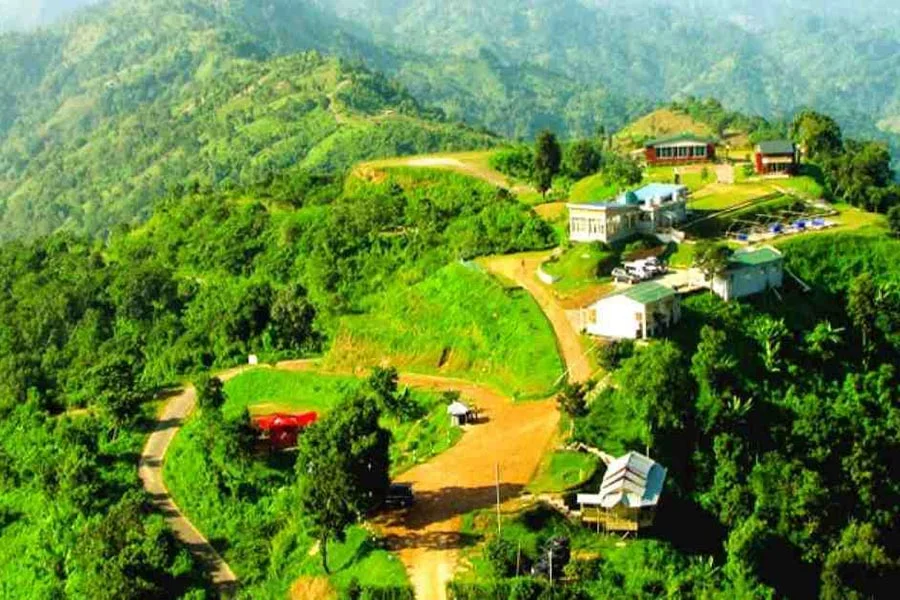
Diplomats, former army officers, and academics on Monday noted that the operation of a parallel economy driven by rent-seeking by certain groups is a major challenge to achieving peace in the Chittagong Hill Tracts (CHT).
They also recommended addressing the interests of all stakeholders for the full implementation of the Chittagong Hill Tracts Peace Accord of 1997.
The experts highlighted land ownership issues, lack of communal harmony, and the parallel economy as thorny matters that pose obstacles to the full implementation of the treaty.
They were speaking at the launching ceremony of the book titled "Regional Security and CHT Peace Accord 1997: An Unfinished Peace Building Model of Bangladesh" by Brigadier General Md Nasimul Gani, held at the Foreign Service Academy.
Md Touhid Hossain, Foreign Adviser, and Lt Gen Abdul Hafiz (retd), Special Assistant on Defense and National Integration Development to the Chief Adviser of the Interim Government of Bangladesh, were the chief guest and special guest, respectively. Professor Salimullah Khan and the author also spoke at the event.
The Foreign Adviser emphasised the need to involve all stakeholders in the CHT region to ensure peace there.
“The unfinished peace-building effort needs to be completed," he said, adding, “You don’t have to finish it in a day, but action must be taken so that peace can return to the CHT."
He also mentioned that detractors, acting in their own interest, would try to obstruct the peace-building process. However, he stressed that the country must continue on the right path to convince all groups in the hills that peace is in their best interest.
“When they come to know that peace is in their interest, they will support it," he said.
However, the adviser noted that the groups benefiting from the lack of peace in the CHT may oppose it.
In this context, he pointed out that a well-established system of rent-seeking already exists in the CHT.
He said that people in the region are forced to pay a regular fee to ‘people in uniform,’ explaining, “They come in uniform with a gun. They are not state actors, but they have the uniform and establishment, and they seek money. For them, this is the easiest way to live."
“So, there are two aspects to this: one is the security aspect, and the other is the economic aspect,” he added.
Special Assistant to the Chief Adviser, Lt Gen (Rtd) Hafiz, said that the author had served in the CHT for five and a half years and had first-hand experience of the conflict.
“The book is being published at a time when the interim government is facing security challenges in maintaining communal and social harmony in the CHT,” he noted.
Referring to recent unrest in the CHT, Gen Hafiz said, “In September, only four months ago, we witnessed significant commotion, agitation, and unrest. At least five or six advisers had to rush there when mob justice occurred, including killings, which triggered widespread violence over a few days.”
He went on to explain that the issues in the CHT, which have persisted since 1976 or even earlier, have multiple dimensions: “It has an ethno-religious dimension, a political dimension, as the ethnic groups want political identity and autonomy. It has a military dimension, stemming from insurgency and counterinsurgency, and it has deep-rooted issues regarding land ownership.”
On the land issue, Gen Hafiz said, “We need to decide who will own the land, and under what procedures the land ownership issue can be resolved.”
“There is also an economic dimension to the conflict,” he added.
Gen Hafiz noted that while the 1997 peace accord was assumed to bring long-term peace, after 27 years, peace has not been established.
“After 27 years, we do not see stability or security,” Gen Hafiz said. He also pointed out that the book by Brigadier General Gani highlights both the strengths and weaknesses of the peace accord and analyzes why many of the 72 clauses of the agreement have not been implemented over the years.
He also referred to the internal conflict within the UPDF, the non-signatory group to the peace accord, which has led to frequent casualties due to infighting.
“Moreover, there is an unabated toll collection and a parallel economy run by groups opposed to the peace accord,” he said.
Gen Hafiz stressed the importance of engaging the local community in peacebuilding efforts and noted that the book emphasises the need for both security operations and demilitarisation.
He pointed out that peace and stability in the CHT have broader implications for regional security due to its proximity to neighbouring countries. “What happens in the CHT impacts the same communities across the border in Mizoram and Nagaland, as well as in parts of Myanmar. Regional security and stability are crucial, not just for Bangladesh, but for the entire region,” he said.
He called for a collective effort from local communities, the government, and international partners, emphasising the need for people’s participation and consultation alongside the Bangladesh armed forces.
“We encourage further discussion among government agencies, security forces, and civil society to address these challenges,” Gen Hafiz added.
Professor Salimullah Khan pointed out that the current constitution lacks provisions to address the issue of self-respect for the hill people, as it refers to Bangladesh as the land of the Bengalis.
He suggested that the hill people need to be convinced that peace is in their best interest and criticised previous governments for taking measures that further alienated them, rather than bringing them into the fold.
CHT peace crucial for stability in neighbouring states, they say
FE ONLINE REPORT
Published :
Jan 06, 2025 20:02
Updated :
Jan 06, 2025 20:14
Diplomats, former army officers, and academics on Monday noted that the operation of a parallel economy driven by rent-seeking by certain groups is a major challenge to achieving peace in the Chittagong Hill Tracts (CHT).
They also recommended addressing the interests of all stakeholders for the full implementation of the Chittagong Hill Tracts Peace Accord of 1997.
The experts highlighted land ownership issues, lack of communal harmony, and the parallel economy as thorny matters that pose obstacles to the full implementation of the treaty.
They were speaking at the launching ceremony of the book titled "Regional Security and CHT Peace Accord 1997: An Unfinished Peace Building Model of Bangladesh" by Brigadier General Md Nasimul Gani, held at the Foreign Service Academy.
Md Touhid Hossain, Foreign Adviser, and Lt Gen Abdul Hafiz (retd), Special Assistant on Defense and National Integration Development to the Chief Adviser of the Interim Government of Bangladesh, were the chief guest and special guest, respectively. Professor Salimullah Khan and the author also spoke at the event.
The Foreign Adviser emphasised the need to involve all stakeholders in the CHT region to ensure peace there.
“The unfinished peace-building effort needs to be completed," he said, adding, “You don’t have to finish it in a day, but action must be taken so that peace can return to the CHT."
He also mentioned that detractors, acting in their own interest, would try to obstruct the peace-building process. However, he stressed that the country must continue on the right path to convince all groups in the hills that peace is in their best interest.
“When they come to know that peace is in their interest, they will support it," he said.
However, the adviser noted that the groups benefiting from the lack of peace in the CHT may oppose it.
In this context, he pointed out that a well-established system of rent-seeking already exists in the CHT.
He said that people in the region are forced to pay a regular fee to ‘people in uniform,’ explaining, “They come in uniform with a gun. They are not state actors, but they have the uniform and establishment, and they seek money. For them, this is the easiest way to live."
“So, there are two aspects to this: one is the security aspect, and the other is the economic aspect,” he added.
Special Assistant to the Chief Adviser, Lt Gen (Rtd) Hafiz, said that the author had served in the CHT for five and a half years and had first-hand experience of the conflict.
“The book is being published at a time when the interim government is facing security challenges in maintaining communal and social harmony in the CHT,” he noted.
Referring to recent unrest in the CHT, Gen Hafiz said, “In September, only four months ago, we witnessed significant commotion, agitation, and unrest. At least five or six advisers had to rush there when mob justice occurred, including killings, which triggered widespread violence over a few days.”
He went on to explain that the issues in the CHT, which have persisted since 1976 or even earlier, have multiple dimensions: “It has an ethno-religious dimension, a political dimension, as the ethnic groups want political identity and autonomy. It has a military dimension, stemming from insurgency and counterinsurgency, and it has deep-rooted issues regarding land ownership.”
On the land issue, Gen Hafiz said, “We need to decide who will own the land, and under what procedures the land ownership issue can be resolved.”
“There is also an economic dimension to the conflict,” he added.
Gen Hafiz noted that while the 1997 peace accord was assumed to bring long-term peace, after 27 years, peace has not been established.
“After 27 years, we do not see stability or security,” Gen Hafiz said. He also pointed out that the book by Brigadier General Gani highlights both the strengths and weaknesses of the peace accord and analyzes why many of the 72 clauses of the agreement have not been implemented over the years.
He also referred to the internal conflict within the UPDF, the non-signatory group to the peace accord, which has led to frequent casualties due to infighting.
“Moreover, there is an unabated toll collection and a parallel economy run by groups opposed to the peace accord,” he said.
Gen Hafiz stressed the importance of engaging the local community in peacebuilding efforts and noted that the book emphasises the need for both security operations and demilitarisation.
He pointed out that peace and stability in the CHT have broader implications for regional security due to its proximity to neighbouring countries. “What happens in the CHT impacts the same communities across the border in Mizoram and Nagaland, as well as in parts of Myanmar. Regional security and stability are crucial, not just for Bangladesh, but for the entire region,” he said.
He called for a collective effort from local communities, the government, and international partners, emphasising the need for people’s participation and consultation alongside the Bangladesh armed forces.
“We encourage further discussion among government agencies, security forces, and civil society to address these challenges,” Gen Hafiz added.
Professor Salimullah Khan pointed out that the current constitution lacks provisions to address the issue of self-respect for the hill people, as it refers to Bangladesh as the land of the Bengalis.
He suggested that the hill people need to be convinced that peace is in their best interest and criticised previous governments for taking measures that further alienated them, rather than bringing them into the fold.
Saif
Senior Member
- Joined
- Jan 24, 2024
- Messages
- 22,262
- Likes
- 9,869
- Nation
- Axis Group

পার্বত্য চট্টগ্রাম উন্নয়ন বোর্ডের নতুন চেয়ারম্যান অনুপ কুমার চাকমা
পার্বত্য চট্টগ্রাম উন্নয়ন বোর্ডে চেয়ারম্যান পদে নতুন নিয়োগ দিয়েছে অন্তর্বর্তীকালীন সরকার। মেজর জেনারেল (অবসরপ্রাপ্ত) অনুপ কুমার চাকমাকে (এনডিসি) আগামী দুই বছরের জন্য চুক্তিভিত্তিক নিয়োগ দিয়ে প্রজ্ঞাপন জারি করা হয়েছে। সোমবার (২০ জানুয়ারি) জনপ্রশাসন মন্ত্রণালয়ের চুক্তি ও বৈদেশিক নিয়োগ শাখার উপ
পার্বত্য চট্টগ্রাম উন্নয়ন বোর্ডের নতুন চেয়ারম্যান অনুপ কুমার চাকমা
এফই অনলাইন ডেস্ক
Published :
Jan 20, 2025 22:37
Updated :
Jan 20, 2025 22:37

পার্বত্য চট্টগ্রাম উন্নয়ন বোর্ডে চেয়ারম্যান পদে নতুন নিয়োগ দিয়েছে অন্তর্বর্তীকালীন সরকার। মেজর জেনারেল (অবসরপ্রাপ্ত) অনুপ কুমার চাকমাকে (এনডিসি) আগামী দুই বছরের জন্য চুক্তিভিত্তিক নিয়োগ দিয়ে প্রজ্ঞাপন জারি করা হয়েছে।
সোমবার (২০ জানুয়ারি) জনপ্রশাসন মন্ত্রণালয়ের চুক্তি ও বৈদেশিক নিয়োগ শাখার উপসচিব আবুল হায়াত মো. রফিকের স্বাক্ষর করা এক প্রজ্ঞাপনে এ তথ্য জানিয়েছে মন্ত্রণালয়।
প্রজ্ঞাপনে বলা হয়েছে, পার্বত্য চট্টগ্রাম উন্নয়ন বোর্ড আইন, ২০১৪-এর ৬(২) ধারা অনুযায়ী মেজর জেনারেল (অবসরপ্রাপ্ত) অনুপ কুমার চাকমাকে অন্য যে কোনো পেশা, ব্যবসা কিংবা সরকারি, আধাসরকারি, বেসরকারি প্রতিষ্ঠান/সংগঠনের সঙ্গে কর্মসম্পর্ক পরিত্যাগের শর্তে যোগদানের তারিখ থেকে ২ বছর মেয়াদে পার্বত্য চট্টগ্রাম উন্নয়ন বোর্ডের চেয়ারম্যান পদে সরকারের সচিব পদমর্যাদায় ও আর্থিক সুবিধাদিসহ চুক্তিভিত্তিক নিয়োগ প্রদান করা হলো।
নিয়োগের অন্যান্য শর্ত চুক্তিপত্র দ্বারা নির্ধারিত হবে এবং জনস্বার্থে এ আদেশ জারি করা হলো বলেও প্রজ্ঞাপনে জানানো হয়েছে।
প্রসঙ্গত, গত বছরের ৫ আগস্ট দেশে রাজনৈতিক পট-পরিবর্তনের পর ১১ আগস্ট উপদেষ্টা হিসেবে শপথ গ্রহণ করেন পার্বত্য চট্টগ্রাম উন্নয়ন বোর্ডের তৎকালীন চেয়ারম্যান সুপ্রদীপ চাকমা। পার্বত্য চট্টগ্রাম বিষয়ক মন্ত্রণালয়ের উপদেষ্টা হিসেবে দায়িত্ব গ্রহণের পর শূন্য হয় উন্নয়ন বোর্ডের চেয়ারম্যান পদটি। বিগত ৪ মাসের বেশি সময় ধরে চেয়ারম্যান পদটি শূন্য থাকার পর অবশেষে পার্বত্য চট্টগ্রাম উন্নয়ন বোর্ডে সাবেক সেনা কর্মকর্তাকে নিয়োগ দিল সরকার।
এফই অনলাইন ডেস্ক
Published :
Jan 20, 2025 22:37
Updated :
Jan 20, 2025 22:37
পার্বত্য চট্টগ্রাম উন্নয়ন বোর্ডে চেয়ারম্যান পদে নতুন নিয়োগ দিয়েছে অন্তর্বর্তীকালীন সরকার। মেজর জেনারেল (অবসরপ্রাপ্ত) অনুপ কুমার চাকমাকে (এনডিসি) আগামী দুই বছরের জন্য চুক্তিভিত্তিক নিয়োগ দিয়ে প্রজ্ঞাপন জারি করা হয়েছে।
সোমবার (২০ জানুয়ারি) জনপ্রশাসন মন্ত্রণালয়ের চুক্তি ও বৈদেশিক নিয়োগ শাখার উপসচিব আবুল হায়াত মো. রফিকের স্বাক্ষর করা এক প্রজ্ঞাপনে এ তথ্য জানিয়েছে মন্ত্রণালয়।
প্রজ্ঞাপনে বলা হয়েছে, পার্বত্য চট্টগ্রাম উন্নয়ন বোর্ড আইন, ২০১৪-এর ৬(২) ধারা অনুযায়ী মেজর জেনারেল (অবসরপ্রাপ্ত) অনুপ কুমার চাকমাকে অন্য যে কোনো পেশা, ব্যবসা কিংবা সরকারি, আধাসরকারি, বেসরকারি প্রতিষ্ঠান/সংগঠনের সঙ্গে কর্মসম্পর্ক পরিত্যাগের শর্তে যোগদানের তারিখ থেকে ২ বছর মেয়াদে পার্বত্য চট্টগ্রাম উন্নয়ন বোর্ডের চেয়ারম্যান পদে সরকারের সচিব পদমর্যাদায় ও আর্থিক সুবিধাদিসহ চুক্তিভিত্তিক নিয়োগ প্রদান করা হলো।
নিয়োগের অন্যান্য শর্ত চুক্তিপত্র দ্বারা নির্ধারিত হবে এবং জনস্বার্থে এ আদেশ জারি করা হলো বলেও প্রজ্ঞাপনে জানানো হয়েছে।
প্রসঙ্গত, গত বছরের ৫ আগস্ট দেশে রাজনৈতিক পট-পরিবর্তনের পর ১১ আগস্ট উপদেষ্টা হিসেবে শপথ গ্রহণ করেন পার্বত্য চট্টগ্রাম উন্নয়ন বোর্ডের তৎকালীন চেয়ারম্যান সুপ্রদীপ চাকমা। পার্বত্য চট্টগ্রাম বিষয়ক মন্ত্রণালয়ের উপদেষ্টা হিসেবে দায়িত্ব গ্রহণের পর শূন্য হয় উন্নয়ন বোর্ডের চেয়ারম্যান পদটি। বিগত ৪ মাসের বেশি সময় ধরে চেয়ারম্যান পদটি শূন্য থাকার পর অবশেষে পার্বত্য চট্টগ্রাম উন্নয়ন বোর্ডে সাবেক সেনা কর্মকর্তাকে নিয়োগ দিল সরকার।
Saif
Senior Member
- Joined
- Jan 24, 2024
- Messages
- 22,262
- Likes
- 9,869
- Nation
- Axis Group

CHT accord: New Monitoring Committee to be activated
Prolonged inaction has led to significant dissatisfaction among the hill communities, while successive governments have failed to take effective measures to address the issues
 en.prothomalo.com
CHT accord: New Monitoring Committee to be activated
To establish lasting peace in the hills, it is essential to alleviate the fear among the hill people caused by the non-implementation of many critical provisions of the accord
Editorial Desk
Published: 22 Jan 2025, 15: 12
Despite the signing of the Chittagong Hill Tracts (CHT) Peace Accord on 2 December 1997 to establish peace in the region, numerous provisions of the agreement remain unimplemented even after 27 years. This prolonged inaction has led to significant dissatisfaction among the hill communities, while successive governments have failed to take effective measures to address the issues.
A high-level committee formed earlier to monitor the implementation of the accord remained largely inactive due to political reasons. Leadership appointments to the committee often lacked the capacity or time to make decisions or hold meetings, stalling progress in monitoring the accord’s implementation.
With the interim government assuming office on 8 August, the previous monitoring committee was dissolved. In response, a new committee was formed on 12 January, headed by Foreign Affairs Adviser Touhid Hossain.
The inclusion of Jyotirindra Bodhipriyo Larma, president of the Parbatya Chattagram Jana Samhati Samiti (PCJSS), and Sudatta Chakma, chairman of the task force on the matter, as members of the committee has been positively received.
According to a government notification, the newly constituted committee has been tasked with monitoring and supervising the implementation of the Accord. Its responsibilities include addressing problems related to the accord’s implementation, taking necessary actions, and, if required, making recommendations to the government.
The regional organisations in the Chittagong Hill Tracts (CHT) allege that, although the Hill Tracts Accord was signed 27 years ago, its fundamental clauses remain unimplemented.
Conversely, the government has consistently claimed that most of the accord's clauses have already been implemented. On 24 August last year, the Chittagong Hill Tracts Accord Implementation Movement held a press conference, urging the interim government to prioritise the accord's implementation in its agenda.
Later, in the last week of November, the organisation sent a letter to Chief Adviser Professor Muhammad Yunus reiterating the same demand.
In this context, the reconstitution of the Chittagong Hill Tracts Accord Monitoring Committee is a welcome step forward. It is hoped that the current committee will avoid the challenges faced by its predecessor and provide the government with practical recommendations to address the pressing issues in the region.
Previous party-led governments often prioritised establishing political dominance over fulfilling the demands of the entire CHT population. As the interim government is free from partisan ambitions, it is better positioned to engage in open discussions and work towards a logical and equitable resolution to the region's problems.
Above all, to achieve a permanent solution to the Chittagong Hill Tracts problem, the primary issue—land disputes—must be prioritised. Unfortunately, despite the formation of several commissions to address land disputes following the accord’s signing, these bodies have been unable to function effectively. It is imperative for the government to create an environment in which the land dispute commission can operate without fear or hindrance.
One of the key objectives of the Hill Tracts Accord was to preserve the unique identity, culture, and lifestyle of the hill communities.
However, while various programmes have been initiated to develop the region’s economy and infrastructure over the past two and a half decades, little progress has been made in this area.
To establish lasting peace in the hills, it is essential to alleviate the fear among the hill people caused by the non-implementation of many critical provisions of the accord.
In this regard, the monitoring committee can play a crucial role as a bridge between the government and the hill communities.
Saif
Senior Member
- Joined
- Jan 24, 2024
- Messages
- 22,262
- Likes
- 9,869
- Nation
- Axis Group

Adviser Sakhawat calls for dialogue to resolve conflict in hills
"Bandarban is an area of peace and harmony. The sudden surge in terrorist activities here has caused distress among everyone," says shipping adviser
Adviser Sakhawat calls for dialogue to resolve conflict in hills

Sakhawat Hussain. Photo: Star
Shipping Adviser Brig Gen (retd) M Sakhawat Hossain has said that the situation in the hill areas must be addressed through government-led discussions after identifying the root causes.
"Bandarban is an area of peace and harmony. The sudden surge in terrorist activities here has caused distress among everyone," he told reporters after visiting a Buddhist orphanage in Bandarban town today.
Highlighting the importance of involving experienced individuals to restore peace and harmony in the region, the adviser said, "It's time for everyone to come together and solve the issue."
The adviser also mentioned that the government is considering establishing a land port at Ghumdhum in Teknaf to enhance trade with Myanmar.
After the programme, the adviser planted trees at the Buddhist orphanage.
The army's Bandarban Region Commander Brigadier General Rakib Ibne Rezwan, Joint Secretary to the Ministry of Labor ASM Ashraful Islam, Zilla Parishad Chairman Professor Thanjama Lusai, Deputy Commissioner Shamim Ara Rini, and Superintendent of Police Shahidullah Kawsar were also present at the event.


Bhai @Saif putting up pictures of dead people is not a great idea. It is in poor taste in my opinion.
It is important to make people aware about India sponsored Shanti Bahini's heinous crimes against Bengali people in Chittagong Hill Tracts. I have put up the pictures of dead people to show the brutality of Shanti Bahini with whom Awami League has signed a peace treaty in 1997. Those Shanti Bahini terrorists should have been hanged for the brutal murders of Bengalis and Tribal people in Chittagong Hill Tracts. Alas! those terrorists are roaming freely in Chittagong Hill Tracts which, as a Bengali, I cannot tolerate anymore.
Those pictures are fine. We encourage non-censorship.
- Joined
- Jan 24, 2024
- Messages
- 4,110
- Likes
- 2,237
Those pictures are fine. We encourage non-censorship.
Thanks for the clarification bhai.
Saif
Senior Member
- Joined
- Jan 24, 2024
- Messages
- 22,262
- Likes
- 9,869
- Nation
- Axis Group

15 families return to homes in Bandarban after 23 months: ISPR
A total of 81 members from 15 families out of 28 in Baklai Para in Thanchi Upazila of Bandarban returned to their homes with the help of the army after being displaced for 23 months. The return follows the success of a joint operation that has normalised the security situation in the area, the Int
15 families return to homes in Bandarban after 23 months: ISPR
UNB
Published :
Feb 15, 2025 22:44
Updated :
Feb 15, 2025 22:44

A total of 81 members from 15 families out of 28 in Baklai Para in Thanchi Upazila of Bandarban returned to their homes with the help of the army after being displaced for 23 months.
The return follows the success of a joint operation that has normalised the security situation in the area, the Inter Services Public Relation (ISPR) said in a statement on Saturday.
The families had been forced to leave their homes due to insecurity caused by the Kuki Chin National Front (Bawm Party) terrorist group's activities in the Ruma, Thanchi, and Rowangchhari areas of Bandarban since mid-2022.
To escape extortion, unjust demands, and being used as human shields in clashes, these families, including children, had been living in the remote mountains and forests in fear and hunger.
The army organised a midday meal for the returning families and provided necessary ration assistance.
They also started a medical camp to ensure healthcare for the residents and have begun distributing educational materials and tuition fee facilities to restore the education system in the area.
The Bangladesh Army will continue its efforts to bring back all displaced families from the region and ensure their basic rights to survival.
UNB
Published :
Feb 15, 2025 22:44
Updated :
Feb 15, 2025 22:44
A total of 81 members from 15 families out of 28 in Baklai Para in Thanchi Upazila of Bandarban returned to their homes with the help of the army after being displaced for 23 months.
The return follows the success of a joint operation that has normalised the security situation in the area, the Inter Services Public Relation (ISPR) said in a statement on Saturday.
The families had been forced to leave their homes due to insecurity caused by the Kuki Chin National Front (Bawm Party) terrorist group's activities in the Ruma, Thanchi, and Rowangchhari areas of Bandarban since mid-2022.
To escape extortion, unjust demands, and being used as human shields in clashes, these families, including children, had been living in the remote mountains and forests in fear and hunger.
The army organised a midday meal for the returning families and provided necessary ration assistance.
They also started a medical camp to ensure healthcare for the residents and have begun distributing educational materials and tuition fee facilities to restore the education system in the area.
The Bangladesh Army will continue its efforts to bring back all displaced families from the region and ensure their basic rights to survival.
Saif
Senior Member
- Joined
- Jan 24, 2024
- Messages
- 22,262
- Likes
- 9,869
- Nation
- Axis Group

Rubber plants: 25 workers abducted in Lama
At least 25 workers were abducted by unknown people from various rubber plantations in Lama’s Fasiakhali area in Bandarban yesterday, said locals and garden owners.
Rubber plants: 25 workers abducted in Lama

Photo: Collected
At least 25 workers were abducted by unknown people from various rubber plantations in Lama's Fasiakhali area in Bandarban yesterday, said locals and garden owners.
The incident took place in the Goyalmara area of Fasiakhali around 10:00am.
Md Shajahan, one of the plantation owners, said, "At least 12 of them are workers of my garden."
Talking to The Daily Star, he said the rest of the victims were kidnapped from other gardens.
"Some unknown people called me by phone in the afternoon and demanded Tk 6 lakh in ransom for the release of my 12 workers," said Shajahan.
He also said that unidentified people sent letters to all the rubber gardens in this area demanding ransom.
The workers are residents of Ramu and Eidgah in Cox's Bazar district and Naikhongchhari in Bandarban district, said locals.
Lama Upazila Nirbahi Officer Moin Uddin confirmed the incident and said they are yet to identify the suspects.
Members of the army, police, BGB, and local representatives are coordinating the rescue efforts, which is challenging due to the area's geographical challenges, the UNO added.
Contacted, Bandarban Superintendent of Police Md Shahidullah Kauser said he was on leave but is now on his way to Bandarban. The identities of the abductors remain unknown and joint forces are carrying out operations.
A member of Fasiakhali Union Parishad, wishing anonymity, told The Daily Star that a week ago, leaflets demanding Tk 50,000 in extortion from each rubber plantation were found hanging in the Lama Fasiakhali-Naikhongchhari border area.
Earlier on January 14, three workers were abducted and on February 1, seven lumberjacks were reportedly abducted from Bandarban's Lama upazila, according to media reports.
The abducted individuals were later released after paying a ransom.
Saif
Senior Member
- Joined
- Jan 24, 2024
- Messages
- 22,262
- Likes
- 9,869
- Nation
- Axis Group

26 Lama rubber workers freed after ransom payment
Twenty-six rubber plantation workers from Lama Upazila in Bandarban were finally freed after being held hostage for two days by armed terrorists in exchange for ransom. The terrorists released them in a remote hilly area early Tuesday in Eidgah, Cox’s Bazar, after crossing the Lama Upazila b
26 Lama rubber workers freed after ransom payment
UNB
Published :
Feb 18, 2025 21:35
Updated :
Feb 18, 2025 21:35

Twenty-six rubber plantation workers from Lama Upazila in Bandarban were finally freed after being held hostage for two days by armed terrorists in exchange for ransom.
The terrorists released them in a remote hilly area early Tuesday in Eidgah, Cox’s Bazar, after crossing the Lama Upazila border through Naikhongchhari Upazila.
Later, local residents and members of law enforcement received them and provided them with primary treatment at Eidgah Medical Centre in Cox’s Bazar.
The freed workers reported being severely beaten during captivity. They also confirmed that a large sum of money was paid to the terrorists for their release.
Md Shahidullah Kawsar, Bandarban Superintendent of Police, said, “All of them are currently receiving treatment at various private clinics in Eidgah, Cox’s Bazar. The law enforcement is working to identify and arrest the terrorists involved in the abduction.”
Earlier, armed terrorists abducted 26 workers from rubber plantations in Murang Jhiri area of Fasiakhali Union, Lama Upazila, Bandarban on Sunday.
UNB
Published :
Feb 18, 2025 21:35
Updated :
Feb 18, 2025 21:35
Twenty-six rubber plantation workers from Lama Upazila in Bandarban were finally freed after being held hostage for two days by armed terrorists in exchange for ransom.
The terrorists released them in a remote hilly area early Tuesday in Eidgah, Cox’s Bazar, after crossing the Lama Upazila border through Naikhongchhari Upazila.
Later, local residents and members of law enforcement received them and provided them with primary treatment at Eidgah Medical Centre in Cox’s Bazar.
The freed workers reported being severely beaten during captivity. They also confirmed that a large sum of money was paid to the terrorists for their release.
Md Shahidullah Kawsar, Bandarban Superintendent of Police, said, “All of them are currently receiving treatment at various private clinics in Eidgah, Cox’s Bazar. The law enforcement is working to identify and arrest the terrorists involved in the abduction.”
Earlier, armed terrorists abducted 26 workers from rubber plantations in Murang Jhiri area of Fasiakhali Union, Lama Upazila, Bandarban on Sunday.
Saif
Senior Member
- Joined
- Jan 24, 2024
- Messages
- 22,262
- Likes
- 9,869
- Nation
- Axis Group
