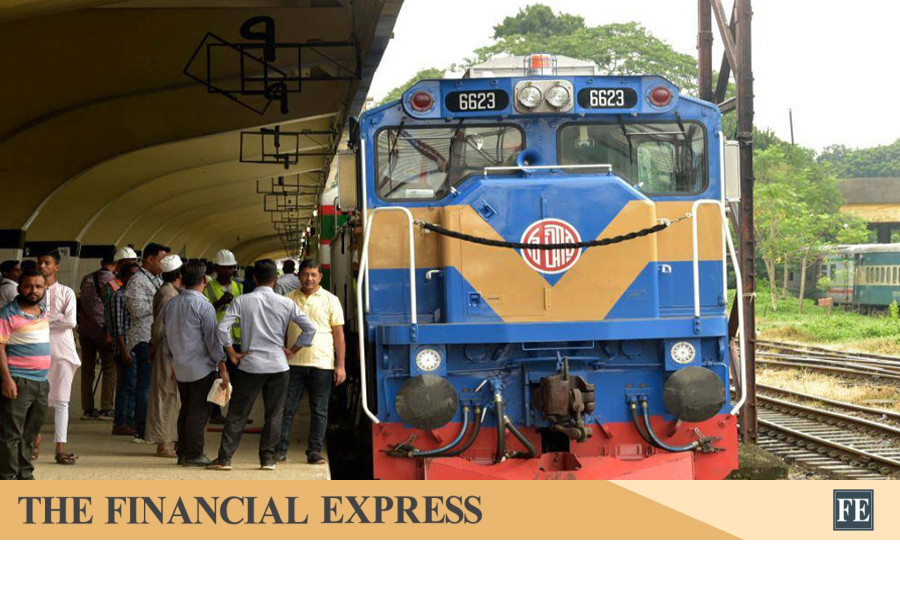
Privatisation fails to cut railway losses, improve services
Part-1 of railway stories
Shahin Akhter . Dhaka
Bangladesh Railway began privatising some of its services more than three decades ago in an effort to improve passenger services and reduce losses.
However, services have remained poor or deteriorated in many areas, while the state-run railway continues to incur mounting losses despite repeated fare increases and substantial government budget allocations.
Over the past three decades, the authorities have raised the railway’s base fare on three occasions, increasing it nearly two and a half times, while the railway’s losses have risen over 16-fold over the same period.
Experts and governance advocates say the experience exposed serious weaknesses in railway management, including lack of accountability, professional inefficiency, inadequate supervision, and alleged corruption and monopoly by some private companies.
The railway introduced a computerised ticketing and reservation system with a private company in 1994. In 1997, it began leasing out commercial operations of passenger trains, initially on the Dhaka-Narayanganj route.
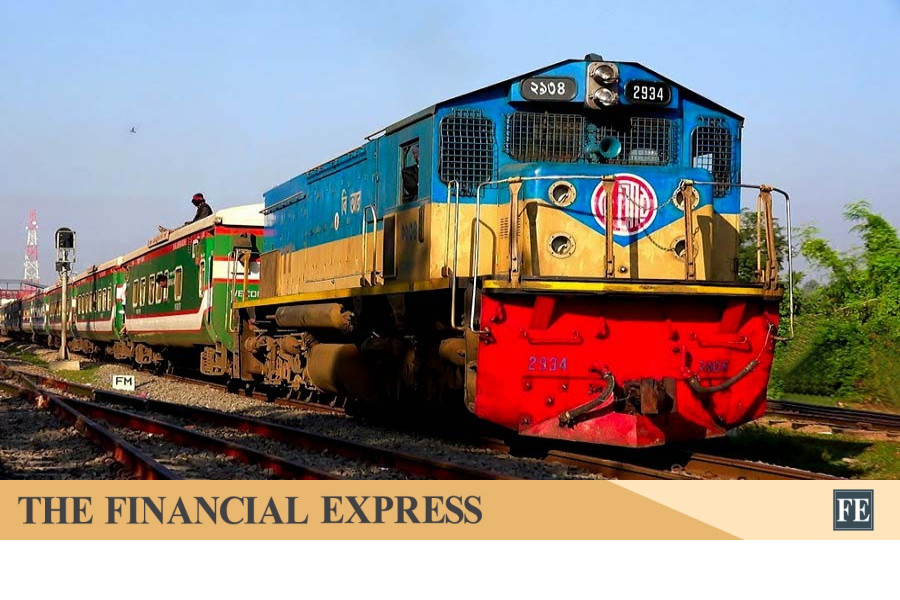
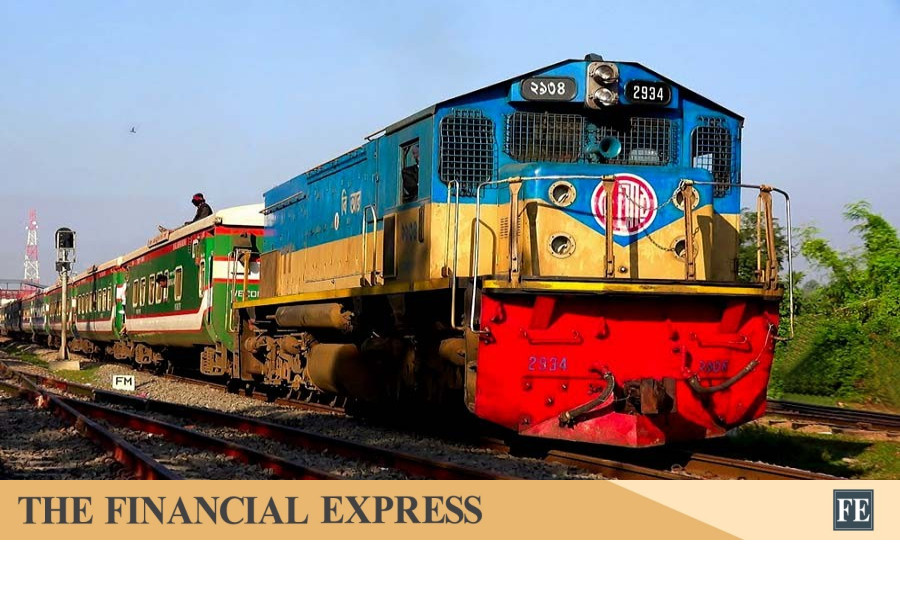
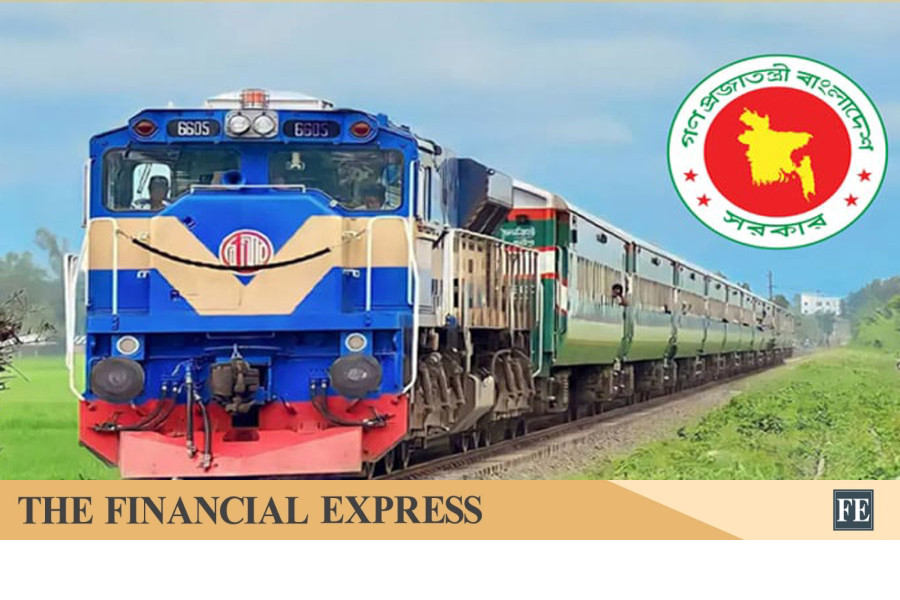
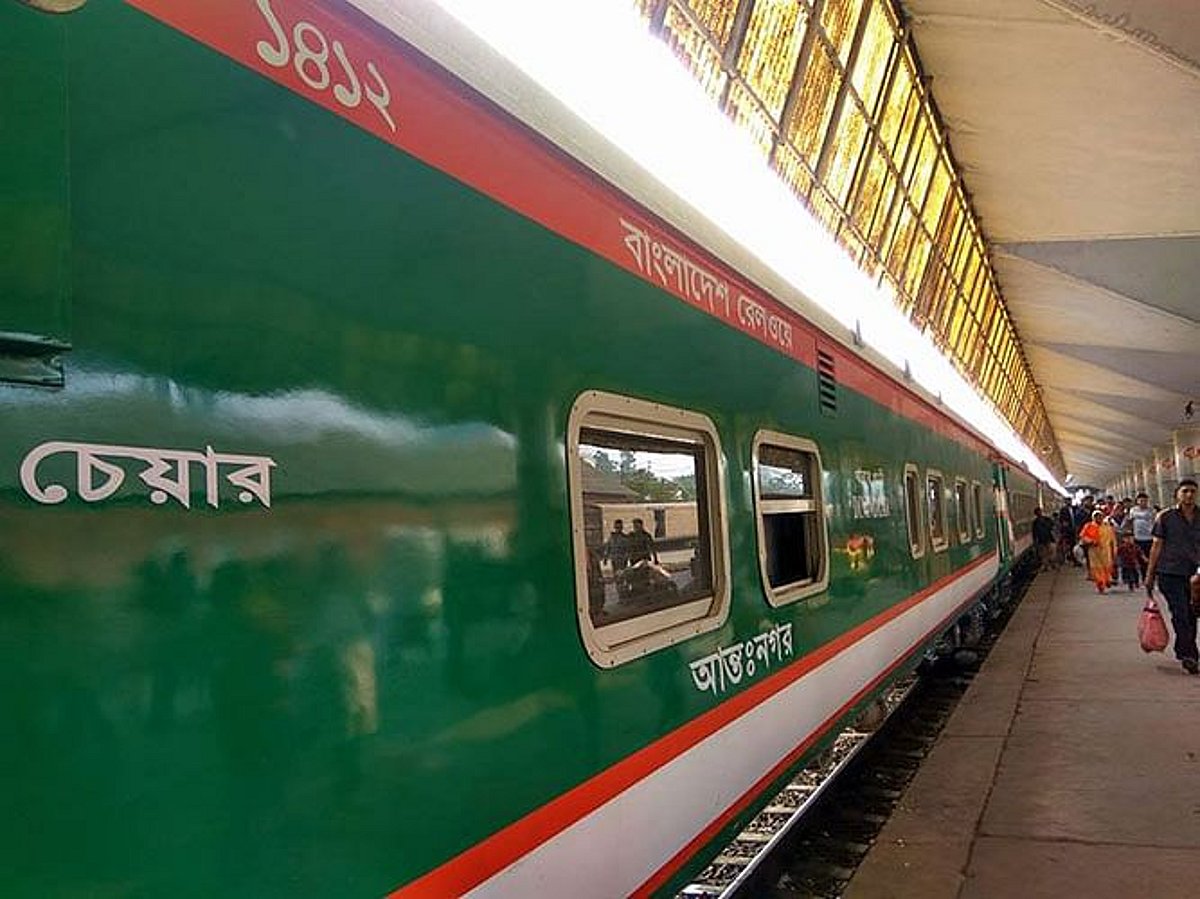
Currently, five private companies operate 32 of Bangladesh Railway’s 285 local, mail and commuter trains.
They sell tickets at railway-fixed fares, while the railway provides locomotives, coaches, tracks, platforms, ticket counters, signalling infrastructure and locomotive drivers.
Among Bangladesh Railway’s various services, onboard services and cleaning, catering, fibre-optic telecommunications and train tracking have been fully privatised, with private operators using railway infrastructure.
The railway has also begun discussions on amending the Railways Act, 1890. A proposed Section 38 deals with track-access agreements involving private companies, joint ventures and foreign railway companies or administrations.
Railways state minister Habibur Rashid told New Age on October 4 that the government planned to allow private companies to hire railway tracks to operate newly purchased passenger and freight trains by the end of the year.
Outsourcing begins
The railway introduced computerised ticketing and reservation under a build-operate-transfer arrangement with Technohaven Company Ltd on March 21, 1994.
Former railway director general Tafajjal Hossain said outsourcing was introduced to improve services following recommendations from stakeholders, development partners and civil society.
Another former DG, Shamsuzzaman, said recruitment was suspended in 1984 for several years. Manpower shortages and operational problems contributed to losses and prompted the railway to lease trains to private companies, he said.
A former senior railway official, however, alleged that leasing was also encouraged by pressure from business groups linked to road transport, donors and other vested interests seeking to weaken the railway.
Train leasing
The 32 trains are operated by SR Trading, TM Trading, LR Trading, NL Trading and SA Trading, selected through competitive bidding.
Railway data show that before private management, the railway earned Tk 15.77 crore a year from the trains, including the Dewanganj, Karnaphuli, Mohua, Jamalpur, Titas, Turag, Sagarika, Balaka and Padmarag commuters, Mohananda and Nakshikatha expresses, Rocket Mail, Chilahati Express, and Rajshahi commuter and local trains.
Under private management, the railway receives Tk 41.88 crore a year, excluding income the companies retain after paying travelling ticket examiners and booking assistants. This is around 165 per cent increase in railway receipts.
Transparency International Bangladesh executive director Iftekharuzzaman said state-owned enterprises in Bangladesh rarely become profitable through reform or outsourcing alone.
‘Concrete evidence shows that private companies operating partial services are turning a good profit; otherwise, they would not be regularly paying millions of taka annually,’ he said.
He said this indicated inefficiency, corruption or neglect among state personnel and increased the financial burden on the state and the public. ‘Ultimately, this privatisation initiative serves as clear proof of the state entity’s operational failure,’ he said.
Privatisation has also failed to stem the railway’s losses.
Bangladesh Railway information books show that net operating income of Tk 5.02 crore in FY1969-70 turned into a loss of Tk 110.33 crore in FY1989-90. The loss reached Tk 2,072.52 crore in FY2023-24.
According to the draft Railway Master Plan 2026-2060, prepared by Bangladesh Railway in July, its operating expenditure increased from Tk 1,808.30 crore in 2015 to Tk 3,546.29 crore in 2024, an increase of about 96 per cent.
In contrast, railway’s operating income increased from Tk 1,060.82 crore in 2015 to Tk 1,473.77 crore in 2024, an increase of about 39 per cent.
Over nine years between FY2015-2016 and FY2023-2024, the railway incurred a cumulative net operating loss of Tk 15,918 crore despite Tk 1,38,251 crore in government budget allocations.
A base-fare system was introduced in 1988, when the unit fare was Tk 0.16. It rose to Tk 0.24 in 1992, Tk 0.36 in 2012 and Tk 0.39 in 2016.
Fares increased by 50 to 115 per cent on October 1, 2012, and by an average of 7.23 per cent on February 20, 2016.
In December 2025, the eastern zone revised pontage charges for the first time in nearly 43 years, raising fares by Tk 5 to Tk 226 per ticket.
The income of the private companies has nearly tripled from using railway resources while the railway continues to incur losses.
Questions over operators
Questions have also been raised about the companies operating the trains. According to addresses supplied by the railway, SR Trading, LR Trading, NL Trading and TM Trading had an office at 78 Motijheel Commercial Area. Another address given for TM Trading was 110 Shantinagar.
During a visit on August 30, only SR Trading’s nameplate was found at the Motijheel address, and staff declined to comment.
No office was found at the Shantinagar address, which was a residential building.
Railway officials said the companies were owned by Salauddin Ripon of Madaripur, who contested the 2024 national election from Barishal-5 as an independent candidate and was defeated.
A senior railway commercial official said Ripon first obtained a train-operation contract through an open tender in 2012 and continued through extensions.
In 2023, he sought a 273-day extension, arguing that train services had remained suspended for that period during the Covid-19 pandemic. After the request was rejected and fresh tenders were invited, he filed seven cases against Bangladesh Railway under the names of SR Trading, NL Trading and TM Trading, and secured stay orders.
Railway senior law officer Shakhawat Hossain Chowdhury said seven cases concerning commuter trains were pending in the High Court.
‘The cases are ongoing and at the hearing stage. We hope they will be resolved quickly,’ he said.
Ripon could not be reached for comment.
Ticketing and onboard services
Online ticket sales were introduced in 2007, with Computer Network Systems Ltd operating the computerised system until March 2022.
On February 15, 2022, the railway signed a five-year contract with the Shohoz-Synesis-Vincen JV to manage the Bangladesh Railway Integrated Ticketing System.
Passengers have repeatedly complained of technical problems and the black-market sale of tickets, particularly AC-class tickets.
Under the agreement, the JV gets Tk 0.25 in commission or service charge for each offline intercity ticket sold at counters.
For each online intercity ticket, Shohoz gets Tk 20, which is distributed among VAT, banks, payment gateways and ticketing service providers such as bKash and Nagad. Shohoz’s commission is Tk 6.50 of this amount.
Shohoz director (tickets) Shakil Jowad Rahim said about 25 per cent of tickets were sold online when the JV started work, while now all tickets are open to online and counter sales at the same time.
He said the JV had set up offices at stations, monitors and a GPS system, and distributed pause machines on trains as per the contract.
The railway said in a written statement that the JV was investing in its own management to develop the software, hardware and server maintenance systems needed to run the IT infrastructure.
The railway first leased out onboard services of Subarna Express on the Dhaka-Chattogram route on April 14, 1998. Cleaning services for all intercity trains were handed to caterers on January 1, 1999.
Passengers and railway officials alleged that some private stewards collect money from passengers travelling without tickets instead of depositing it with the railway.
A senior eastern-zone official was recently transferred to the western zone, allegedly after taking strict action against onboard and cleaning services on routes including Dhaka-Chattogram.
Additional director general (operation) Mohammad Nazmul Islam said catering services had been under private management from the beginning, though the railway provides limited catering on some trains.
Passengers have long complained about poor-quality food.
In June 2024, railway police arrested three catering employees over allegations of raping a female passenger aboard the Udayan Express on the Sylhet-Chattogram route.
The railway leased its fibre-optic telecommunications system to a private company on September 17, 1997. The Train Tracking and Monitoring System was launched on January 16, 2014, with support from Malaysia-based Suncrops.
‘Privatisation exposes failure’
According to TIB’s ‘Corruption in Service Sectors: National Household Survey 2025’, released in June, Around 34.6 per cent of surveyed households reported experiencing corruption, including bribery, while obtaining railway services.
Iftekharuzzaman called for an investigation into why profitable opportunities were being squandered and whether outsourcing followed open and fair competition or involved irregularities and collusion with railway insiders.
‘While privatisation was intended to reduce losses, structural problems such as single-track infrastructure and professional corruption continue to hinder progress,’ said professor Md Shamsul Hoque of Bangladesh University of Engineering and Technology.
‘Railway management lacks both the capacity to deliver quality services directly and the oversight capability to enforce standards on private vendors,’ he said, calling for institutional reforms and greater transparency to prevent the railway from becoming a permanent financial liability.
Md Mozammel Hoque Chowdhury, secretary general of the Passenger Welfare Association of Bangladesh, said outsourcing catering, ticketing and commuter train operations had failed to improve passengers’ experience.
In a written statement, state minister Habibur Rashid said the private sector was given responsibility for operating trains commercially on certain routes to improve passenger service and reduce operating costs.
‘However, we are seriously reviewing whether the expected goals in terms of service and revenue have been achieved in the long experience of three decades,’ the statement read.
It said that if the desired service was not maintained as per the contract and the railway’s economic interests were not protected, the contracts would be re-evaluated.
The statement described the issue of multiple trains being leased anonymously under a single organisation, exerting monopoly influence, as very sensitive.
The authorities concerned have been instructed to investigate whether any irregularities, syndicate or anonymous ownership were involved in the contract process, it said, adding that appropriate action would be taken if any were found.
 Bangladesh Defense