You are using an out of date browser. It may not display this or other websites correctly.
You should upgrade or use an alternative browser.
You should upgrade or use an alternative browser.
[🇧🇩] Chittagong Hill Tracts----A Victim of Indian Intervention
- Thread starter Saif
- Start date
Post a Reply — Share your thoughts or reply to this thread...
Reply
Quick Reply
✓ Posted!
Quick Reply
✓ Posted!
 Bangladesh Defense
More options
Manage feed entries


Saif
Senior Member
- Joined
- Jan 24, 2024
- Messages
- 22,238
- Likes
- 9,869
- Nation

- Axis Group

India is supplying arms and ammunition to the terrorist outfits operating in Chittagong Hill Tract. Bangladesh army has evidence of India's involvement in the terrorist activities in CHT. Providing arms and ammunition to UPDF and other terrorist outfits by India is easy as the border is porous.What happened in chuttardgong ?
Saif
Senior Member
- Joined
- Jan 24, 2024
- Messages
- 22,238
- Likes
- 9,869
- Nation
- Axis Group

Four held for kidnapping 8 tourists for ransom in Khagrachari
Police in a drive arrested four people, including a woman, for their alleged involvement in reasiling ransom after kidnapping eight tourists from West Kathaltoli in Dighinala upazila of Khagrachari district on Sunday. The arrestees were identified as Belal, Azizur Rahman, Shahidul, and Sufia Begum
Four held for kidnapping 8 tourists for ransom in Khagrachari
UNB
Published :
Mar 10, 2025 19:54
Updated :
Mar 10, 2025 19:54

Police in a drive arrested four people, including a woman, for their alleged involvement in reasiling ransom after kidnapping eight tourists from West Kathaltoli in Dighinala upazila of Khagrachari district on Sunday.
The arrestees were identified as Belal, Azizur Rahman, Shahidul, and Sufia Begum.
Md Zakaria, officer-in-charge of Dighinala Police Station, said eight friends from Puthia upazila in Rajshahi went to Khagrachari to visit Sajek on March 2.
On March 3, when they were heading towards Sajek Valley, Belal and Azizur intercepted the vehicle carrying the tourists when it reached the Noy Mil area.
Later, they forcibly took them to Ambagan and realised Tk 720,000 as ransom from them through bank accounts.
The abductors also kept the signatures of the victims and released them.
After getting a complaint, a team of police conducted a drive in the area and arrested four people, said OC Zakaria.
Khalilur Rahman, a victim, filed a case against eight identified and 5/6 unidentified men at Dighinala Police Station.
UNB
Published :
Mar 10, 2025 19:54
Updated :
Mar 10, 2025 19:54
Police in a drive arrested four people, including a woman, for their alleged involvement in reasiling ransom after kidnapping eight tourists from West Kathaltoli in Dighinala upazila of Khagrachari district on Sunday.
The arrestees were identified as Belal, Azizur Rahman, Shahidul, and Sufia Begum.
Md Zakaria, officer-in-charge of Dighinala Police Station, said eight friends from Puthia upazila in Rajshahi went to Khagrachari to visit Sajek on March 2.
On March 3, when they were heading towards Sajek Valley, Belal and Azizur intercepted the vehicle carrying the tourists when it reached the Noy Mil area.
Later, they forcibly took them to Ambagan and realised Tk 720,000 as ransom from them through bank accounts.
The abductors also kept the signatures of the victims and released them.
After getting a complaint, a team of police conducted a drive in the area and arrested four people, said OC Zakaria.
Khalilur Rahman, a victim, filed a case against eight identified and 5/6 unidentified men at Dighinala Police Station.
Saif
Senior Member
- Joined
- Jan 24, 2024
- Messages
- 22,238
- Likes
- 9,869
- Nation
- Axis Group
ভারতে বাংলাদেশের পাহাড়ি সন্ত্রাসীদের সশস্ত্র প্রশিক্ষণ (India has once again started arming the terrorists in Chittagong Hill Tracts. We have to draw world attention to what India has been doing in the Chittagong Hill Tracts. Since the terrain of Chittagong Hill Tracts is porous, we need to use drones to identify and destroy terrorists bases across Chittagong Hill Tracts.)
Saif
Senior Member
- Joined
- Jan 24, 2024
- Messages
- 22,238
- Likes
- 9,869
- Nation
- Axis Group
India trained UPDF had a fight with Bangladesh army in Rangamati, Chittagong Hill Tracts. By sponsoring terrorism in Chittagong Hill Tracts India is playing with fire. If India doesn't put an end to its nefarious plan of annexing Chittagong Hill Tracts, Bangladesh will surely revive ULFA to annex Assam. Ungrateful India has forgotten that it was Bangladesh which brought about stability in North-East by dismantling ULFA.
Saif
Senior Member
- Joined
- Jan 24, 2024
- Messages
- 22,238
- Likes
- 9,869
- Nation
- Axis Group

4 killed as armed groups clash in Khagrachari
At least four people were reportedly killed in a gunfight between two armed groups at Jora Sindhu Karbaripara under Dighinala upazila of Khagrachari district on Friday night.
 www.newagebd.net
4 killed as armed groups clash in Khagrachari
Staff Correspondent 26 July, 2025, 16:29

At least four people were reportedly killed in a gunfight between two armed groups at Jora Sindhu Karbaripara under Dighinala upazila of Khagrachari district on Friday night.
Confirming the gunfight, Dighinala police officer-in-charge Md Zakaria told New Age on Saturday afternoon that the gunfight took place between United People’s Democratic Front and Parbatya Chattagram Jana Samhati Samiti for hours since 8:00pm on Friday.
‘From multiple people we have heard that four people were killed. The place is extremely remote and we cannot send forces to check due to highly remote areas,’ the OC said.
The police officer said that they could not even confirm identities of the deceased as they were yet to receive bodies.
The UPDF, however, in a statement on Saturday said that the news of four UPDF memberss killed in gunfight between UPDF and JSS was ‘completely false’.
In the statement, UPDF spokesperson Ongyo Marma said that the party did not know about any gunfight incident, which was published in media.
‘UPDF did not engage in war with anybody and no UPDF member was killed,’ he said. PCJSS central member Dipayan Khisa said that he was unaware about such gunfight.
According to local people, at least six hours of gunfight took place starting from Friday night between the followers of UPDF led by Prasit Khisa and PCJSS led by Jyotirindra Bodhipriya Larma, widely known as Santu Larma, over establishing supremacy in the area, New Age correspondent in Khagrachari reported.
Witnesses said that panic sparked among the local people after explosion of grenades. They said that grenade explosion was rare in such clashes.
Staff Correspondent 26 July, 2025, 16:29
At least four people were reportedly killed in a gunfight between two armed groups at Jora Sindhu Karbaripara under Dighinala upazila of Khagrachari district on Friday night.
Confirming the gunfight, Dighinala police officer-in-charge Md Zakaria told New Age on Saturday afternoon that the gunfight took place between United People’s Democratic Front and Parbatya Chattagram Jana Samhati Samiti for hours since 8:00pm on Friday.
‘From multiple people we have heard that four people were killed. The place is extremely remote and we cannot send forces to check due to highly remote areas,’ the OC said.
The police officer said that they could not even confirm identities of the deceased as they were yet to receive bodies.
The UPDF, however, in a statement on Saturday said that the news of four UPDF memberss killed in gunfight between UPDF and JSS was ‘completely false’.
In the statement, UPDF spokesperson Ongyo Marma said that the party did not know about any gunfight incident, which was published in media.
‘UPDF did not engage in war with anybody and no UPDF member was killed,’ he said. PCJSS central member Dipayan Khisa said that he was unaware about such gunfight.
According to local people, at least six hours of gunfight took place starting from Friday night between the followers of UPDF led by Prasit Khisa and PCJSS led by Jyotirindra Bodhipriya Larma, widely known as Santu Larma, over establishing supremacy in the area, New Age correspondent in Khagrachari reported.
Witnesses said that panic sparked among the local people after explosion of grenades. They said that grenade explosion was rare in such clashes.
Saif
Senior Member
- Joined
- Jan 24, 2024
- Messages
- 22,238
- Likes
- 9,869
- Nation
- Axis Group
I think we have to impose martial law in Chittagong Hill Tract to save it from disintegration. Strategically, Chittagong Hill Tract is the most important region for Bangladesh. And also we need to abrogate the so called peace treaty with Shanti Bahini to restore rule of Bengalis in Chittagong Hill Tract.
Saif
Senior Member
- Joined
- Jan 24, 2024
- Messages
- 22,238
- Likes
- 9,869
- Nation
- Axis Group

Army raids UPDF hideout in Rangamati; gunfire exchanged
Members of the Bangladesh Army have raided a hideout of the United People’s Democratic Front (UPDF) in a remote hilly area of Baghaichhari upazila in Rangamati. The operation was carried out on Tuesday, according to a media release from the Inter Services Public Relations (ISPR), as per a UN
Army raids UPDF hideout in Rangamati; gunfire exchanged
Published :
Jul 29, 2025 10:48
Updated :
Jul 29, 2025 10:48

Members of the Bangladesh Army have raided a hideout of the United People’s Democratic Front (UPDF) in a remote hilly area of Baghaichhari upazila in Rangamati.
The operation was carried out on Tuesday, according to a media release from the Inter Services Public Relations (ISPR), as per a UNB report.
During the operation, an exchange of gunfire occurred, later security forces recovered firearms, including an AK-47 rifle, ammunition and other military equipment from the hideout, reads it.
Further details of the incident, including possible casualties or arrests, will be shared later, the ISPR said.
Published :
Jul 29, 2025 10:48
Updated :
Jul 29, 2025 10:48
Members of the Bangladesh Army have raided a hideout of the United People’s Democratic Front (UPDF) in a remote hilly area of Baghaichhari upazila in Rangamati.
The operation was carried out on Tuesday, according to a media release from the Inter Services Public Relations (ISPR), as per a UNB report.
During the operation, an exchange of gunfire occurred, later security forces recovered firearms, including an AK-47 rifle, ammunition and other military equipment from the hideout, reads it.
Further details of the incident, including possible casualties or arrests, will be shared later, the ISPR said.
Saif
Senior Member
- Joined
- Jan 24, 2024
- Messages
- 22,238
- Likes
- 9,869
- Nation
- Axis Group
The Chittagong Hill Tract is getting restless once again. The video below contains many pictures of KNF and other terrorist outfits which prove that they are getting weapons and training from across the border. We can use TB-2 attack drones purchased from Turkey to neutralize the terrorist outfits sponsored by India.
Saif
Senior Member
- Joined
- Jan 24, 2024
- Messages
- 22,238
- Likes
- 9,869
- Nation
- Axis Group

CHT ACCORD: Implementation not possible without movement: discussion
Politicians, rights activists and national minority leaders on Tuesday observed that without a strong movement full implementation of the Chittagong Hill Tracts Accord, signed about three decades ago, would not be possible.
www.newagebd.net
CHT ACCORD: Implementation not possible without movement: discussion
Staff Correspondent 03 December, 2025, 00:40

Politicians, rights activists and national minority leaders on Tuesday observed that without a strong movement full implementation of the Chittagong Hill Tracts Accord, signed about three decades ago, would not be possible.
Their remarks came at a discussion meeting held at the Women’s Voluntary Association auditorium in Dhaka city jointly organised by Parbatya Chattogram Ganosamhati Samiti and Bangladesh Adivasi Forum, marking 28 years of signing the agreement on December 2, 1997.
With Adivasi Forum leader Gagendra Nath Mahato in chair, the event was addressed by Communist Party of Bangladesh president Kazi Sazzad Zahir Chandan who said that the national minorities must continue their movement for the full implementation of the CHT accord.Dhaka city guide
The left and democratic political parties would continue supporting their movement, Sazzad Zahir said.
Rights activist Khushi Kabir, demanding the full implementation of the 1997 accord, said that it would be the best way to establish peace in the hills.
Adivasi Juba Forum vice-president Amar Shanti Chakma in his keynote paper said that addressing the issue of land ownership and empowerment of the regional and district councils would be the first step for resolving the ongoing crises in the CHT.
Association for Land Reforms and Development executive director Shamsul Huda alleged that the interim government did not give priority to establishing peace in the hills.
He also said that the interim government, after assuming power, had established several reform commissions on different issues, which they could have done for the trouble-ridden CHT region also, but they did not.
Leader of Parbatya Shanti Chukti Bastabayan Andolan Zakir Hossain, also chief executive of non-governmental organisation Nagorik Uddyog, mentioned that signing of the peace accord did not result in an end to the conflicts and confrontations as was expected. Assistant general secretary of Socialist Party of Bangladesh Razequzzaman Ratan said that the peace accord had failed to fulfil the aspirations of the national minority people.
He demanded an immediate end to the rampant grabbing of land of the national minority communities and full implementation of the CHT accord.
Bangladesh Jasod standing committee member Mushtuq Husein also demanded an immediate end to the violation of human rights of the national minority people of the hills.
Central leader of Parbatya Chattogram Ganasamhati Samiti KS Mong called on the government to resolve the problems of the CHT region, prioritising it as a national crisis.
Staff Correspondent 03 December, 2025, 00:40
Politicians, rights activists and national minority leaders on Tuesday observed that without a strong movement full implementation of the Chittagong Hill Tracts Accord, signed about three decades ago, would not be possible.
Their remarks came at a discussion meeting held at the Women’s Voluntary Association auditorium in Dhaka city jointly organised by Parbatya Chattogram Ganosamhati Samiti and Bangladesh Adivasi Forum, marking 28 years of signing the agreement on December 2, 1997.
With Adivasi Forum leader Gagendra Nath Mahato in chair, the event was addressed by Communist Party of Bangladesh president Kazi Sazzad Zahir Chandan who said that the national minorities must continue their movement for the full implementation of the CHT accord.Dhaka city guide
The left and democratic political parties would continue supporting their movement, Sazzad Zahir said.
Rights activist Khushi Kabir, demanding the full implementation of the 1997 accord, said that it would be the best way to establish peace in the hills.
Adivasi Juba Forum vice-president Amar Shanti Chakma in his keynote paper said that addressing the issue of land ownership and empowerment of the regional and district councils would be the first step for resolving the ongoing crises in the CHT.
Association for Land Reforms and Development executive director Shamsul Huda alleged that the interim government did not give priority to establishing peace in the hills.
He also said that the interim government, after assuming power, had established several reform commissions on different issues, which they could have done for the trouble-ridden CHT region also, but they did not.
Leader of Parbatya Shanti Chukti Bastabayan Andolan Zakir Hossain, also chief executive of non-governmental organisation Nagorik Uddyog, mentioned that signing of the peace accord did not result in an end to the conflicts and confrontations as was expected. Assistant general secretary of Socialist Party of Bangladesh Razequzzaman Ratan said that the peace accord had failed to fulfil the aspirations of the national minority people.
He demanded an immediate end to the rampant grabbing of land of the national minority communities and full implementation of the CHT accord.
Bangladesh Jasod standing committee member Mushtuq Husein also demanded an immediate end to the violation of human rights of the national minority people of the hills.
Central leader of Parbatya Chattogram Ganasamhati Samiti KS Mong called on the government to resolve the problems of the CHT region, prioritising it as a national crisis.
Saif
Senior Member
- Joined
- Jan 24, 2024
- Messages
- 22,238
- Likes
- 9,869
- Nation
- Axis Group

CHT Peace Accord implementation faces fresh complications
There has been no progress in implementing the core provisions of the CHT Accord, including the settlement of land disputes. Alongside recurring conflict and violence, instability continues to grip the hills.
 en.prothomalo.com
28 yrs of CHT Accord
CHT Peace Accord implementation faces fresh complications
Partha Shankar SahaDhaka
Published: 02 Dec 2025, 13: 00

Chittagong Hill Tracts Prothom Alo
The Rangamati Hill District Council building remained under padlock for five days last month. Several Bengali organisations enforced the programme, demanding the cancellation of quotas for hill communities in public employment along with four other demands. Before that, the Council’s chairman, Kajal Talukder, was assaulted.
The Rangamati Hill District Council was formed in 1989. In the three decades since, no one has seen the Council, or any other hill district council, under lock and key.
The public humiliation of the Council’s chairman is also unprecedented in the region, says Gautam Dewan, the first elected chairman of the Rangamati Hill District Council.
Speaking to Prothom Alo, he said that obstructing teacher recruitment in this manner is, in effect, an attempt to undermine the Peace Accord. During the past 18 months of the interim government, there has been no genuine attempt to implement the Accord; rather, efforts are underway to effectively “padlock” the Accord itself.
The Chittagong Hill Tracts (CHT) have even witnessed several ‘untoward’ incidents over the past year and a half. These include the deaths of five people in law enforcement shootings, paralysis of district councils, the suspension of Land Commission meetings, and fresh armed clashes.
As a result, implementation of the Accord has become even more tangled. It is against this backdrop that the 28th anniversary of the CHT Peace Accord is being observed today, 2 December.
Councils run by appointed, not elected, members
After two decades of armed struggle, the Peace Accord was signed on 2 December 1997 between the government and the Parbatya Chattogram Jana Samhati Samiti (JSS), which had been agitating for autonomy. Following the Accord, the Regional Council and the district councils of Rangamati, Bandarban, and Khagrachhari were formed.
The 1989 law governing the district councils was amended accordingly. While several provisions have been implemented since, several central issues, such as resolving land disputes and holding elections to the district councils, remain unsettled.
After the 1997 Accord, violence in the hills decreased significantly. Although clashes between hill people and Bengalis did occur in the interim, gun violence and deaths had become rare. Under the interim government, however, old fears have resurfaced.
The JSS, the signatory to the Accord, has repeatedly accused successive governments, especially the most recent Awami League government, of obstructing implementation.
Of the Accord’s 72 clauses, 35 are directly linked to the district councils. Experts therefore regard the Accord as a charter for local self-governance. Yet, elections to the three hill district councils have never been held. All the governments have run the councils through their nominees.
After assuming office, the interim government dissolved all three councils. Following about a month of leadership vacuum, the councils were reconstituted in November last year, again with government-nominated individuals.
‘This won’t lead to anything good’
Bengali organisations raised objections to the Rangamati Hill District Council’s recruitment notice for assistant teachers in primary schools across 10 upazilas. They demanded the introduction of the national formula, 93 per cent merit-based, and 7 per cent quota, within the hills as well. As a result, examinations could not be held despite two dates being announced. Ultimately, the council building was padlocked.
Under the Peace Accord, priority in recruitment must be given to indigenous permanent residents of the hills. The District Council Act also vests the power of third and fourth-class recruitment in the council.
I received invitations for two meetings but both were cancelled. Under political governments, such problems did arise. But what is preventing this government from keeping these institutions, created under the Accord, functioning? The interim government’s approach to the Accord has been purely ceremonial---Chakma Circle chief Raja Devasish Roy.
Jahangir Kamal, coordinator of the Parbatya Chattogram Samo-Odhikar Andolon, told Prothom Alo, “The most deprived community in the hills today is the Bengalis. Communities including the Khumi, Mro, and Rakhine are also lagging behind. We want recruitment purely on merit.”
When asked whether maintaining the national quota structure would push the numerically smaller indigenous peoples even further behind, he said, “Yes, that too can be discussed.”
Under the law and regulations of the three hill district councils, both indigenous and non-indigenous (Bengali) communities receive recruitment proportionate to the number of council members representing their groups. This system has been followed for decades.
Human rights activist Nirupa Dewan told Prothom Alo, “Bengalis have always been employed according to the law. No one questioned this before. Now fresh questions are being raised by those who do not believe in the spirit of the Accord or want it abolished.”
The structure of the hill district councils is significantly different from other district councils.
Local government expert Salauddin M Aminuzzaman believes the councils are a genuine model of local governance. The disputes surrounding the councils today, he says, undermine the spirit of local government.
According to him, in such a strategically vital region, disrupting local empowerment in this manner “will not lead to anything good”.
2 ‘ominous’ Septembers
Two bouts of deadly conflict in the hill districts over the past year resulted in eight deaths.
On 18 September last year, a Bengali youth, Md Mamun, was beaten to death in Khagrachhari Sadar over allegations of motorcycle theft. The next day in Dighinala, a man named Dhananjay Chakma was killed in mob violence.
Bengalis have always been employed according to the law. No one questioned this before. Now fresh questions are being raised by those who do not believe in the spirit of the Accord or want it abolished---Human rights activist Nirupa Dewan.
That night, gunfire erupted in the district town following the incident, killing two hill youths. This year, on 28 September, three hill youths were shot dead in Guimara, Khagrachhari.
After the 1997 Accord, violence in the hills decreased significantly. Although clashes between hill people and Bengalis did occur in the interim, gun violence and deaths had become rare. Under the interim government, however, old fears have resurfaced.
Speaking about this, security analyst Major (retd.) Emdadul Islam told Prothom Alo, “Two rounds of violence within a year are rare in the post-Accord period. The face-off between the security forces and local residents in Guimara is unprecedented. This is the result of the interim administration’s overall failure.”
Implementation reduced to mere formalities
Land disputes remain the most intractable issue in the CHT. Under the Accord, such disputes are to be resolved by the constitutionally mandated Land Dispute Resolution Commission. But its most recent meeting, scheduled for October, was not held due to obstruction by local Bengalis.
Similar disruptions occurred under the previous political government, yet the Commission managed to conduct several meetings nonetheless.
When the 12th meeting of the Task Force on the Rehabilitation of India-Returned Jumma Refugees and Internally Displaced Persons was called on 22 October, it too was cancelled following threats from local Bengalis.
As the Chakma Circle chief, Raja Devasish Roy is involved with both the Land Commission and the Task Force. He told Prothom Alo, “I received invitations for two meetings but both were cancelled. Under political governments, such problems did arise. But what is preventing this government from keeping these institutions, created under the Accord, functioning? The interim government’s approach to the Accord has been purely ceremonial.”
Foreign affairs adviser Md Touhid Hossain has been appointed convenor of the CHT Accord Implementation and Monitoring Committee, and Appellate Division’s retired justice Muhammad Abdul Hafiz has been appointed chair of the Land Commission.
A meeting of the Implementation and Monitoring Committee has been held in Rangamati with the participation of the JSS. But the JSS said in a statement marking the Accord’s anniversary that there has been “no progress” in implementing the decisions taken at that meeting five months ago.
Repeated attempts to reach CHT affairs adviser Supradip Chakma for the government’s position on Accord implementation went unanswered.
CHT Peace Accord implementation faces fresh complications
Partha Shankar SahaDhaka
Published: 02 Dec 2025, 13: 00
Chittagong Hill Tracts Prothom Alo
The Rangamati Hill District Council building remained under padlock for five days last month. Several Bengali organisations enforced the programme, demanding the cancellation of quotas for hill communities in public employment along with four other demands. Before that, the Council’s chairman, Kajal Talukder, was assaulted.
The Rangamati Hill District Council was formed in 1989. In the three decades since, no one has seen the Council, or any other hill district council, under lock and key.
The public humiliation of the Council’s chairman is also unprecedented in the region, says Gautam Dewan, the first elected chairman of the Rangamati Hill District Council.
Speaking to Prothom Alo, he said that obstructing teacher recruitment in this manner is, in effect, an attempt to undermine the Peace Accord. During the past 18 months of the interim government, there has been no genuine attempt to implement the Accord; rather, efforts are underway to effectively “padlock” the Accord itself.
The Chittagong Hill Tracts (CHT) have even witnessed several ‘untoward’ incidents over the past year and a half. These include the deaths of five people in law enforcement shootings, paralysis of district councils, the suspension of Land Commission meetings, and fresh armed clashes.
As a result, implementation of the Accord has become even more tangled. It is against this backdrop that the 28th anniversary of the CHT Peace Accord is being observed today, 2 December.
Councils run by appointed, not elected, members
After two decades of armed struggle, the Peace Accord was signed on 2 December 1997 between the government and the Parbatya Chattogram Jana Samhati Samiti (JSS), which had been agitating for autonomy. Following the Accord, the Regional Council and the district councils of Rangamati, Bandarban, and Khagrachhari were formed.
The 1989 law governing the district councils was amended accordingly. While several provisions have been implemented since, several central issues, such as resolving land disputes and holding elections to the district councils, remain unsettled.
After the 1997 Accord, violence in the hills decreased significantly. Although clashes between hill people and Bengalis did occur in the interim, gun violence and deaths had become rare. Under the interim government, however, old fears have resurfaced.
The JSS, the signatory to the Accord, has repeatedly accused successive governments, especially the most recent Awami League government, of obstructing implementation.
Of the Accord’s 72 clauses, 35 are directly linked to the district councils. Experts therefore regard the Accord as a charter for local self-governance. Yet, elections to the three hill district councils have never been held. All the governments have run the councils through their nominees.
After assuming office, the interim government dissolved all three councils. Following about a month of leadership vacuum, the councils were reconstituted in November last year, again with government-nominated individuals.
‘This won’t lead to anything good’
Bengali organisations raised objections to the Rangamati Hill District Council’s recruitment notice for assistant teachers in primary schools across 10 upazilas. They demanded the introduction of the national formula, 93 per cent merit-based, and 7 per cent quota, within the hills as well. As a result, examinations could not be held despite two dates being announced. Ultimately, the council building was padlocked.
Under the Peace Accord, priority in recruitment must be given to indigenous permanent residents of the hills. The District Council Act also vests the power of third and fourth-class recruitment in the council.
I received invitations for two meetings but both were cancelled. Under political governments, such problems did arise. But what is preventing this government from keeping these institutions, created under the Accord, functioning? The interim government’s approach to the Accord has been purely ceremonial---Chakma Circle chief Raja Devasish Roy.
Jahangir Kamal, coordinator of the Parbatya Chattogram Samo-Odhikar Andolon, told Prothom Alo, “The most deprived community in the hills today is the Bengalis. Communities including the Khumi, Mro, and Rakhine are also lagging behind. We want recruitment purely on merit.”
When asked whether maintaining the national quota structure would push the numerically smaller indigenous peoples even further behind, he said, “Yes, that too can be discussed.”
Under the law and regulations of the three hill district councils, both indigenous and non-indigenous (Bengali) communities receive recruitment proportionate to the number of council members representing their groups. This system has been followed for decades.
Human rights activist Nirupa Dewan told Prothom Alo, “Bengalis have always been employed according to the law. No one questioned this before. Now fresh questions are being raised by those who do not believe in the spirit of the Accord or want it abolished.”
The structure of the hill district councils is significantly different from other district councils.
Local government expert Salauddin M Aminuzzaman believes the councils are a genuine model of local governance. The disputes surrounding the councils today, he says, undermine the spirit of local government.
According to him, in such a strategically vital region, disrupting local empowerment in this manner “will not lead to anything good”.
2 ‘ominous’ Septembers
Two bouts of deadly conflict in the hill districts over the past year resulted in eight deaths.
On 18 September last year, a Bengali youth, Md Mamun, was beaten to death in Khagrachhari Sadar over allegations of motorcycle theft. The next day in Dighinala, a man named Dhananjay Chakma was killed in mob violence.
Bengalis have always been employed according to the law. No one questioned this before. Now fresh questions are being raised by those who do not believe in the spirit of the Accord or want it abolished---Human rights activist Nirupa Dewan.
That night, gunfire erupted in the district town following the incident, killing two hill youths. This year, on 28 September, three hill youths were shot dead in Guimara, Khagrachhari.
After the 1997 Accord, violence in the hills decreased significantly. Although clashes between hill people and Bengalis did occur in the interim, gun violence and deaths had become rare. Under the interim government, however, old fears have resurfaced.
Speaking about this, security analyst Major (retd.) Emdadul Islam told Prothom Alo, “Two rounds of violence within a year are rare in the post-Accord period. The face-off between the security forces and local residents in Guimara is unprecedented. This is the result of the interim administration’s overall failure.”
Implementation reduced to mere formalities
Land disputes remain the most intractable issue in the CHT. Under the Accord, such disputes are to be resolved by the constitutionally mandated Land Dispute Resolution Commission. But its most recent meeting, scheduled for October, was not held due to obstruction by local Bengalis.
Similar disruptions occurred under the previous political government, yet the Commission managed to conduct several meetings nonetheless.
When the 12th meeting of the Task Force on the Rehabilitation of India-Returned Jumma Refugees and Internally Displaced Persons was called on 22 October, it too was cancelled following threats from local Bengalis.
As the Chakma Circle chief, Raja Devasish Roy is involved with both the Land Commission and the Task Force. He told Prothom Alo, “I received invitations for two meetings but both were cancelled. Under political governments, such problems did arise. But what is preventing this government from keeping these institutions, created under the Accord, functioning? The interim government’s approach to the Accord has been purely ceremonial.”
Foreign affairs adviser Md Touhid Hossain has been appointed convenor of the CHT Accord Implementation and Monitoring Committee, and Appellate Division’s retired justice Muhammad Abdul Hafiz has been appointed chair of the Land Commission.
A meeting of the Implementation and Monitoring Committee has been held in Rangamati with the participation of the JSS. But the JSS said in a statement marking the Accord’s anniversary that there has been “no progress” in implementing the decisions taken at that meeting five months ago.
Repeated attempts to reach CHT affairs adviser Supradip Chakma for the government’s position on Accord implementation went unanswered.
Saif
Senior Member
- Joined
- Jan 24, 2024
- Messages
- 22,238
- Likes
- 9,869
- Nation
- Axis Group

CHT peace deal issue in election manifestos demanded
Right body leaders, professionals and journalists on Tuesday called on the political parties taking part in the forthcoming Jatiya Sangsad elections to promise the implementation of the Chittagong Hill Tracts Treaty in their election manifestos...
www.newagebd.net
CHT peace deal issue in election manifestos demanded
28 January, 2026, 00:25
Right body leaders, professionals and journalists on Tuesday called on the political parties taking part in the forthcoming Jatiya Sangsad elections to promise the implementation of the Chittagong Hill Tracts Treaty in their election manifestos.
They made the call at a press conference organised by Parbatya Chattogram Shanti Chukti Bastabayan Andolan, a rights body, at the Dhaka Reporters Unity in the capital.
The platform’s joint coordinator, Zakir Hossain, called on the political parties to pledge the implementation of the CHT agreement in their election manifestos for the February 12 Jatiya Sangsad elections.
Zakir said that the CHT peace treaty was signed on October 2 in 1997, but still many sections of the accord had not been implemented so far.
He called on the political parties to take steps for a full implementation of the agreement for ensuring peace and stability in the hill districts of Khagrachari, Bandarban and Rangamati — home to various ethnic minorities.
He also called on the interim government and the Election Commission to take steps to hold the next national elections in a free, fair and credible manner so that the national minorities living in hills and plain lands could cast their votes without fear and obstacles.
Leader of the organisation Khairul Islam Chowdhury, journalist Abu Sayeed Khan, ALRD executive director Shamsul Huda and national minority leader Mainthin Promila also spoke at the press conference.
Saif
Senior Member
- Joined
- Jan 24, 2024
- Messages
- 22,238
- Likes
- 9,869
- Nation
- Axis Group

Political parties should commit to full CHT treaty execution
THE call to political parties competing in the national elections scheduled for February 12 to commit to the full implementation of the Chittagong Hill Tracts Treaty and include this promise in election manifestos is timely. Rights activists, professionals and journalists made the appeal at a...
www.newagebd.net
Political parties should commit to full CHT treaty execution
THE call to political parties competing in the national elections scheduled for February 12 to commit to the full implementation of the Chittagong Hill Tracts Treaty and include this promise in election manifestos is timely. Rights activists, professionals and journalists made the appeal at a press conference organised by the Parbatya Chattogram Shanti Chukti Bastabayan Andolan in Dhaka on January 27. They noted that although the peace accord was signed on December 2, 1997, many sections remain unimplemented, leaving grievances of ethnic minorities and tension in the hill districts unaddressed. It has been more than 28 years since the accord was signed, yet successive governments have shown reluctance to see it through. The full implementation could ensure a democratic environment in the three hill districts and address critical land-related issues, among others. These are genuine concerns of the ethnic minority population and most grievances could have been avoided if the treaty had been honoured. The continued delay has given rise to justified discontent among ethnic minorities living in the hill districts.
About 72 clauses of the accord, including two important ones — an effective Chattogram Hill Tracts Land Dispute Resolution Commission and the withdrawal of all temporary security forces camps — that are foundational to the agreement are yet to be fully implemented. The fallen Awami League government, which signed the accord, used to claim unconvincingly that the majority of the clauses had already been implemented. The government set up the Land Dispute Resolution Commission in 2001, keeping to the accord, but the commission has remained largely inactive. In 2016, the government amended the Chattogram Hill Tracts Land Dispute Resolution Commission Act 2001 to recognise customary rights of the hill communities and said that land disputes would be resolved in accordance with the law, custom and practice in force in the districts. But the commission is yet to resolve any of more than 22,000 applications it is reported to have received from ethnic minorities. The accord also promised a special administrative system composed of regional and hill district councils to oversee general administration, law and order and land management. This provision, too, remains unfulfilled. Furthermore, tourism and development activities have become a source of further discontent, having rendered many residents homeless.
Political parties should, therefore, make it clear in their election manifestos that they, if elected, will commit to the full implementation of the treaty. The next government must not procrastinate. It must take early steps to empower an effective land dispute resolution commission, the heart of discontent, and ensure the full adherence to the CHT Regional Council Act and the Land Dispute Resolution Commission Act.
Saif
Senior Member
- Joined
- Jan 24, 2024
- Messages
- 22,238
- Likes
- 9,869
- Nation
- Axis Group

UPDF (Democratic) coordinator shot dead in Khagrachhari
The deceased was identified as Nitidatta Chakma, 40, who served as the coordinator of the organisation in Panchhari upazila.
en.prothomalo.com
UPDF (Democratic) coordinator shot dead in Khagrachhari
Correspondent
Khagrachhari
Published: 27 Mar 2026, 14: 54
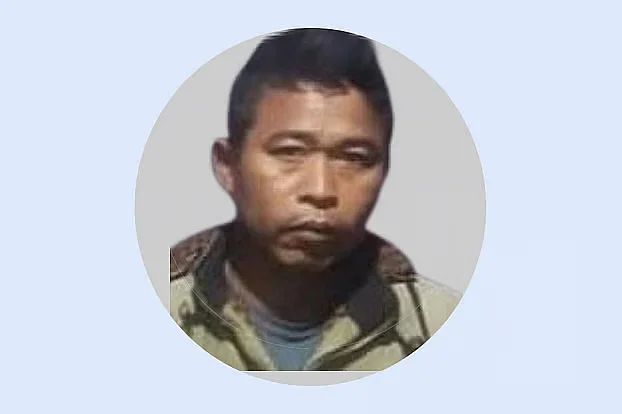
Nitidatta Chakma
A leader of the United People’s Democratic Front (UPDF) Democratic has been shot dead by unidentified assailants in Panchhari upazila of Khagrachhari. The incident took place around 8:30 am on Friday in the Ultachhari union of the upazila.
The deceased was identified as Nitidatta Chakma, 40, who served as the coordinator of the organisation in Panchhari upazila.
Officer-in-Charge of Panchhari Police Station, Md Ferdous Wahid, said Nitidatta Chakma was shot in the Sutakarmapara area of Ultachhari union in the morning.
Before police could reach the scene, local residents rescued him and took him to Khagrachhari Sadar Hospital, where physicians declared him dead.
UPDF (Democratic) has blamed the UPDF faction led by Prasit Khisa for the killing. However, no leaders or activists of the organisation agreed to speak on record.
The UPDF faction led by Prasit Khisa has denied the allegation. When contacted, one of its spokespersons, Angya Marma, said, “This happened due to internal issues within their own group. Our organisation is in no way involved.
Correspondent
Khagrachhari
Published: 27 Mar 2026, 14: 54
Nitidatta Chakma
A leader of the United People’s Democratic Front (UPDF) Democratic has been shot dead by unidentified assailants in Panchhari upazila of Khagrachhari. The incident took place around 8:30 am on Friday in the Ultachhari union of the upazila.
The deceased was identified as Nitidatta Chakma, 40, who served as the coordinator of the organisation in Panchhari upazila.
Officer-in-Charge of Panchhari Police Station, Md Ferdous Wahid, said Nitidatta Chakma was shot in the Sutakarmapara area of Ultachhari union in the morning.
Before police could reach the scene, local residents rescued him and took him to Khagrachhari Sadar Hospital, where physicians declared him dead.
UPDF (Democratic) has blamed the UPDF faction led by Prasit Khisa for the killing. However, no leaders or activists of the organisation agreed to speak on record.
The UPDF faction led by Prasit Khisa has denied the allegation. When contacted, one of its spokespersons, Angya Marma, said, “This happened due to internal issues within their own group. Our organisation is in no way involved.
Saif
Senior Member
- Joined
- Jan 24, 2024
- Messages
- 22,238
- Likes
- 9,869
- Nation
- Axis Group

Diversify livelihoods to ensure sustainable development in CHT
Sustainable development in the Chittagong Hill Tracts (CHT) requires more than traditional farming alone, said speakers at a roundtable yesterday.
Diversify livelihoods to ensure sustainable development in CHT
Urge speakers at roundtable by MJF, Prothom Alo
Staff Correspondent

Sustainable development in the Chittagong Hill Tracts (CHT) requires more than traditional farming alone, said speakers at a roundtable yesterday.
They stressed the need to create diversified livelihood opportunities through tourism, modern agriculture and small-scale industries, while ensuring environmental protection and community participation.
The speakers said stronger infrastructure, access to clean water, women-friendly policies, and greater investment in profitable crops such as coffee and cashew nuts could unlock the region’s economic potential and improve the lives of hill communities.
The observations came at a roundtable titled “Livelihood Patterns, Current Context, and Challenges in the Chittagong Hill Tracts”, held at the Prothom Alo office and jointly organised by Manusher Jonno Foundation and the newspaper with support from the European Union.
Speaking as chief guest, CHT Affairs Minister Dipen Dewan stressed stronger coordination among government agencies to ensure sustainable development in the region.
He said Bangladesh could earn significant foreign revenue by fully exploring the tourism sector and creating a more open environment for investment.
Edwin Koek, first counsellor of the European Union in Bangladesh, reaffirmed the EU’s commitment to reducing poverty, tackling inequality and supporting Sustainable Development Goals in the region.
MJF Executive Director Shaheen Anam said with EU support, Manusher Jonno Foundation and its local partners are implementing an initiative to improve the living conditions of marginalised communities in the hills.
She said the project aims to help nearly 20,000 jhum-dependent families become financially self-reliant by addressing challenges such as harsh environmental conditions, unemployment and water shortages.
She also stressed involving local residents, especially women, in development planning and decision-making.
Meher Nigar Bhuiyan, programme manager for Resilient Livelihoods of the European Union, said infrastructural development, alongside strong government initiatives for improving communication in remote hill areas, access to safe drinking water, and expansion of coffee and cashew cultivation, are essential for long-term progress.
Kajal Talukdar, chairman of the Rangamati Hill District Council, demanded legal recognition of jhum cultivation and transfer of control of Kaptai Lake to the District Council.
Biplab Chakma, head of Livelihoods and Natural Resource Management at UNDP Bangladesh, suggested declaring bamboo an agricultural product, conserving natural forests and formulating a long-term Forest Master Plan.
He also stressed maintaining navigation and water levels in Kaptai Lake to support agricultural marketing and suggested expanding solar power generation to boost the region’s economy.
Mohammad Ali Jinnah, additional director of the Department of Agricultural Extension, said modern farming and new technologies could help achieve economic prosperity in the CHT.
Presenting the Partnership for Resilient Livelihoods in the CHT (PRLC) project implemented by MJF, Project Coordinator Nikhil Chakma said local people and women must be included in planning development initiatives in the hills.
He said due to low government allocation, genuine development in the CHT remains constrained.
Chanchu Chakma, member of CHT Regional Council; Biplab Chakma, executive director of Ashika Development Associates; Md Moniruzzaman, deputy director of Rangamati DAE; Julhas Ahmed, Bandarban district livestock officer; Jagaran Chakma, senior journalist at The Daily Star; Shanti Bijoy Chakma, general secretary of the CHT Headman Network; and Kajali Tanchangya, a beneficiary of the PRLC project, also spoke.
The roundtable was moderated by Firoz Choudhury, assistant editor of Prothom Alo.
Urge speakers at roundtable by MJF, Prothom Alo
Staff Correspondent
Sustainable development in the Chittagong Hill Tracts (CHT) requires more than traditional farming alone, said speakers at a roundtable yesterday.
They stressed the need to create diversified livelihood opportunities through tourism, modern agriculture and small-scale industries, while ensuring environmental protection and community participation.
The speakers said stronger infrastructure, access to clean water, women-friendly policies, and greater investment in profitable crops such as coffee and cashew nuts could unlock the region’s economic potential and improve the lives of hill communities.
The observations came at a roundtable titled “Livelihood Patterns, Current Context, and Challenges in the Chittagong Hill Tracts”, held at the Prothom Alo office and jointly organised by Manusher Jonno Foundation and the newspaper with support from the European Union.
Speaking as chief guest, CHT Affairs Minister Dipen Dewan stressed stronger coordination among government agencies to ensure sustainable development in the region.
He said Bangladesh could earn significant foreign revenue by fully exploring the tourism sector and creating a more open environment for investment.
Edwin Koek, first counsellor of the European Union in Bangladesh, reaffirmed the EU’s commitment to reducing poverty, tackling inequality and supporting Sustainable Development Goals in the region.
MJF Executive Director Shaheen Anam said with EU support, Manusher Jonno Foundation and its local partners are implementing an initiative to improve the living conditions of marginalised communities in the hills.
She said the project aims to help nearly 20,000 jhum-dependent families become financially self-reliant by addressing challenges such as harsh environmental conditions, unemployment and water shortages.
She also stressed involving local residents, especially women, in development planning and decision-making.
Meher Nigar Bhuiyan, programme manager for Resilient Livelihoods of the European Union, said infrastructural development, alongside strong government initiatives for improving communication in remote hill areas, access to safe drinking water, and expansion of coffee and cashew cultivation, are essential for long-term progress.
Kajal Talukdar, chairman of the Rangamati Hill District Council, demanded legal recognition of jhum cultivation and transfer of control of Kaptai Lake to the District Council.
Biplab Chakma, head of Livelihoods and Natural Resource Management at UNDP Bangladesh, suggested declaring bamboo an agricultural product, conserving natural forests and formulating a long-term Forest Master Plan.
He also stressed maintaining navigation and water levels in Kaptai Lake to support agricultural marketing and suggested expanding solar power generation to boost the region’s economy.
Mohammad Ali Jinnah, additional director of the Department of Agricultural Extension, said modern farming and new technologies could help achieve economic prosperity in the CHT.
Presenting the Partnership for Resilient Livelihoods in the CHT (PRLC) project implemented by MJF, Project Coordinator Nikhil Chakma said local people and women must be included in planning development initiatives in the hills.
He said due to low government allocation, genuine development in the CHT remains constrained.
Chanchu Chakma, member of CHT Regional Council; Biplab Chakma, executive director of Ashika Development Associates; Md Moniruzzaman, deputy director of Rangamati DAE; Julhas Ahmed, Bandarban district livestock officer; Jagaran Chakma, senior journalist at The Daily Star; Shanti Bijoy Chakma, general secretary of the CHT Headman Network; and Kajali Tanchangya, a beneficiary of the PRLC project, also spoke.
The roundtable was moderated by Firoz Choudhury, assistant editor of Prothom Alo.
Saif
Senior Member
- Joined
- Jan 24, 2024
- Messages
- 22,238
- Likes
- 9,869
- Nation
- Axis Group

CHT Affairs Minister’s sudden resignation stirs discussions; what leaders-activists say
The resignation of Chittagong Hill Tracts (CHT) Affairs Minister Dipen Dewan just three and a half months into the government's tenure has become a major topic of discussion in hill politics. Leaders and activists involved in Bangladesh Nationalist Party (BNP) politics, as well as members of the...
en.prothomalo.com
CHT Affairs Minister’s sudden resignation stirs discussions; what leaders-activists say
Sujan Ghose
Chattogram
Published: 01 Jun 2026, 22: 25

Leaders and activists of BNP stage a protest and road blockade in front of the Rangamati district BNP office on 2 June 2026, demanding the withdrawal of the resignation letter of Chittagong Hill Tracts Affairs Minister Dipen Dewan. Supriya Chakma
The resignation of Chittagong Hill Tracts (CHT) Affairs Minister Dipen Dewan just three and a half months into the government's tenure has become a major topic of discussion in hill politics.
Leaders and activists involved in Bangladesh Nationalist Party (BNP) politics, as well as members of the community in the hills, are trying to understand why Dipen Dewan made such a decision.
His followers staged a road blockade and protest in Rangamati demanding the withdrawal of his resignation and his reinstatement.
The protesters claim that Dipen Dewan was forced to resign due to pressure. However, in his resignation letter, he cited physical complications and illness.
Citing health issues, Dipen Dewan submitted his resignation letter to Prime Minister Tarique Rahman today, Monday.
Dipen Dewan, who had left a career as a joint district judge, contested a parliamentary election for the first time and was elected a member of parliament. He secured the largest margin of victory in the 13th parliamentary election.
After the BNP formed the government, Dipen Dewan was appointed Minister for Chittagong Hill Tracts Affairs. His father, Subimal Dewan, was an adviser on tribal affairs to the late President Ziaur Rahman. The State Minister for Chittagong Hill Tracts Affairs is Mir Mohammad Helal Uddin, MP from Chattogram-5 (Hathazari). He also serves as State Minister for Land.
Local BNP leaders said they had not anticipated Dipen Dewan’s resignation. They believe he may have resigned due to issues related to running the ministry, controlling Rangamati politics, and the process of appointing administrators to the district councils in the Chittagong Hill Tracts. However, no comment from Dipen Dewan was available.
The activities of the Chittagong Hill Tracts Affairs Ministry are centred on the three hill districts. There are three parliamentary constituencies there. BNP candidates won all three seats in Rangamati, Khagrachhari, and Bandarban in the national election. Sa Ching Prue Jerry was elected from Bandarban and Wadud Bhuiyan from Khagrachhari.
At least six leaders associated with BNP politics in the CHT told Prothom Alo that although there had been disagreements among MPs from the hill constituencies on various issues in the past, the situation was different this time. Since all three MPs belong to the same party, cordial relations existed among them.
For various reasons, the CHT is an extremely sensitive region. Different ethnic communities live there, and in some cases there is a lack of mutual trust.
They said that after becoming minister, Dipen Dewan began working to improve the situation through discussions with public representatives and civil society.
On 11 May, CHT Affairs Minister Dipen Dewan visited Khagrachhari district. That afternoon he exchanged views with administrative officials and members of civil society at the Khagrachhari Circuit House. However, local MP Wadud Bhuiyan was not present at that meeting.
After Dipen Dewan’s resignation, Wadud Bhuiyan told Prothom Alo that he did not know the reason for the resignation. He said he had not attended the meeting that day due to illness. He added that he has a very good relationship with Dipen Dewan.
Local sources say that BNP politics had been divided over party nominations in this election, although the divisions remained hidden during the election period. They have now started to reappear openly. One side consists of Dipen Dewan’s followers, while the other consists of followers of district BNP president Dipon Talukder.
Dipon Talukder rejected the suggestion of party conflict. Speaking to Prothom Alo over the phone this afternoon, Monday, he said, “I know nothing about the minister’s (Dipen Dewan’s) resignation. I do not know why he resigned. This is entirely his personal matter. I did not receive any prior indication either.”
Saiful Islam Bhutto, vice-president of Rangamati district BNP, told Prothom Alo, “Dipen Dewan’s resignation is harmful to BNP politics, hill politics, and the formation of a ‘rainbow nation’ among all hill and Bengali communities. It will cause significant damage to the implementation of BNP’s 31-point state reform framework and 19-point programme. I urge the prime minister to take appropriate measures and return Dipen Dewan to the Chittagong Hill Tracts Affairs Ministry.”
BNP leader Saiful Islam Bhutto further said, “Dipen Dewan is not physically ill. I have travelled with him in remote areas for a long time and have never seen him weak or sick. Some BNP leaders are trying to create instability in the Chittagong Hill Tracts by misleading the prime minister with false information.”
Sajamong Marma, senior vice-president of Kaukhali upazila BNP and an executive member of district BNP, said, “The reason he mentioned in the resignation letter is not correct. Physically and mentally he is capable of carrying out ministerial duties. Those who nurtured the fascist Awami League after 5 August pressured him into temporarily submitting his resignation letter.”
The Chittagong Hill Tracts Affairs Ministry began its journey on 15 July 1998. It was established under the terms of the accord signed the previous year between the government and the Parbatya Chattagram Jana Samhati Samiti. The objective of that accord was to restore peace in the hills after years of conflict.
The Chittagong Hill Tracts Accord contains 72 clauses divided into sections A, B, C and D. Most of them relate to the formation of district councils and the regional council. Clause 19 of section D provides for the establishment of the Chittagong Hill Tracts Affairs Ministry. The clause states: “A ministry for Chittagong Hill Tracts Affairs shall be established by appointing a minister from among the tribal people.”
Among the three members of parliament from the Chittagong Hill Tracts, two belong to hill communities and one is Bengali. Apart from Dipen Dewan, the other hill-community MP is Bandarban’s Sa Ching Prue Jerry.
Sujan Ghose
Chattogram
Published: 01 Jun 2026, 22: 25
Leaders and activists of BNP stage a protest and road blockade in front of the Rangamati district BNP office on 2 June 2026, demanding the withdrawal of the resignation letter of Chittagong Hill Tracts Affairs Minister Dipen Dewan. Supriya Chakma
The resignation of Chittagong Hill Tracts (CHT) Affairs Minister Dipen Dewan just three and a half months into the government's tenure has become a major topic of discussion in hill politics.
Leaders and activists involved in Bangladesh Nationalist Party (BNP) politics, as well as members of the community in the hills, are trying to understand why Dipen Dewan made such a decision.
His followers staged a road blockade and protest in Rangamati demanding the withdrawal of his resignation and his reinstatement.
The protesters claim that Dipen Dewan was forced to resign due to pressure. However, in his resignation letter, he cited physical complications and illness.
Citing health issues, Dipen Dewan submitted his resignation letter to Prime Minister Tarique Rahman today, Monday.
Dipen Dewan, who had left a career as a joint district judge, contested a parliamentary election for the first time and was elected a member of parliament. He secured the largest margin of victory in the 13th parliamentary election.
After the BNP formed the government, Dipen Dewan was appointed Minister for Chittagong Hill Tracts Affairs. His father, Subimal Dewan, was an adviser on tribal affairs to the late President Ziaur Rahman. The State Minister for Chittagong Hill Tracts Affairs is Mir Mohammad Helal Uddin, MP from Chattogram-5 (Hathazari). He also serves as State Minister for Land.
Local BNP leaders said they had not anticipated Dipen Dewan’s resignation. They believe he may have resigned due to issues related to running the ministry, controlling Rangamati politics, and the process of appointing administrators to the district councils in the Chittagong Hill Tracts. However, no comment from Dipen Dewan was available.
The activities of the Chittagong Hill Tracts Affairs Ministry are centred on the three hill districts. There are three parliamentary constituencies there. BNP candidates won all three seats in Rangamati, Khagrachhari, and Bandarban in the national election. Sa Ching Prue Jerry was elected from Bandarban and Wadud Bhuiyan from Khagrachhari.
At least six leaders associated with BNP politics in the CHT told Prothom Alo that although there had been disagreements among MPs from the hill constituencies on various issues in the past, the situation was different this time. Since all three MPs belong to the same party, cordial relations existed among them.
For various reasons, the CHT is an extremely sensitive region. Different ethnic communities live there, and in some cases there is a lack of mutual trust.
They said that after becoming minister, Dipen Dewan began working to improve the situation through discussions with public representatives and civil society.
On 11 May, CHT Affairs Minister Dipen Dewan visited Khagrachhari district. That afternoon he exchanged views with administrative officials and members of civil society at the Khagrachhari Circuit House. However, local MP Wadud Bhuiyan was not present at that meeting.
After Dipen Dewan’s resignation, Wadud Bhuiyan told Prothom Alo that he did not know the reason for the resignation. He said he had not attended the meeting that day due to illness. He added that he has a very good relationship with Dipen Dewan.
Local sources say that BNP politics had been divided over party nominations in this election, although the divisions remained hidden during the election period. They have now started to reappear openly. One side consists of Dipen Dewan’s followers, while the other consists of followers of district BNP president Dipon Talukder.
Dipon Talukder rejected the suggestion of party conflict. Speaking to Prothom Alo over the phone this afternoon, Monday, he said, “I know nothing about the minister’s (Dipen Dewan’s) resignation. I do not know why he resigned. This is entirely his personal matter. I did not receive any prior indication either.”
Saiful Islam Bhutto, vice-president of Rangamati district BNP, told Prothom Alo, “Dipen Dewan’s resignation is harmful to BNP politics, hill politics, and the formation of a ‘rainbow nation’ among all hill and Bengali communities. It will cause significant damage to the implementation of BNP’s 31-point state reform framework and 19-point programme. I urge the prime minister to take appropriate measures and return Dipen Dewan to the Chittagong Hill Tracts Affairs Ministry.”
BNP leader Saiful Islam Bhutto further said, “Dipen Dewan is not physically ill. I have travelled with him in remote areas for a long time and have never seen him weak or sick. Some BNP leaders are trying to create instability in the Chittagong Hill Tracts by misleading the prime minister with false information.”
Sajamong Marma, senior vice-president of Kaukhali upazila BNP and an executive member of district BNP, said, “The reason he mentioned in the resignation letter is not correct. Physically and mentally he is capable of carrying out ministerial duties. Those who nurtured the fascist Awami League after 5 August pressured him into temporarily submitting his resignation letter.”
The Chittagong Hill Tracts Affairs Ministry began its journey on 15 July 1998. It was established under the terms of the accord signed the previous year between the government and the Parbatya Chattagram Jana Samhati Samiti. The objective of that accord was to restore peace in the hills after years of conflict.
The Chittagong Hill Tracts Accord contains 72 clauses divided into sections A, B, C and D. Most of them relate to the formation of district councils and the regional council. Clause 19 of section D provides for the establishment of the Chittagong Hill Tracts Affairs Ministry. The clause states: “A ministry for Chittagong Hill Tracts Affairs shall be established by appointing a minister from among the tribal people.”
Among the three members of parliament from the Chittagong Hill Tracts, two belong to hill communities and one is Bengali. Apart from Dipen Dewan, the other hill-community MP is Bandarban’s Sa Ching Prue Jerry.
Saif
Senior Member
- Joined
- Jan 24, 2024
- Messages
- 22,238
- Likes
- 9,869
- Nation
- Axis Group

2 UPDF members killed in Khagrachhari gunfight
Two members of the United People's Democratic Front (UPDF-Prasit) were killed in a shooting in Khagrachari. The incidents occurred today, Wednesday, in two separate locations in the Dighinala and Ramgarh unions. The UPDF claims that one leader was killed by the security forces and the other by...
en.prothomalo.com
2 UPDF members killed in Khagrachhari gunfight
Correspondent
Khagrachhari

Gunfight Representational image
Two members of the United People's Democratic Front (UPDF-Prasit) were killed in a shooting in Khagrachari.
The incidents occurred today, Wednesday, in two separate locations in the Dighinala and Ramgarh unions.
The UPDF claims that one leader was killed by the security forces and the other by the Parbatya Chattogram Jana Samhati Samiti.
According to police, local, and party sources, a gunfight occurred between the UPDF and security forces in the Premtala area of Ramgarh Upazila around 10am today.
UPDF member Bobin Tripura (32) was killed in the incident. He was a resident of Mazaratila village in Ramgarh Upazila.
The UPDF claims that another person, Mungsanu Marma, alias Jibon (29), was injured in the same incident. His home is in Datrampara of the upazila. During this time, the security forces recovered an AK-47 rifle from the scene.
UPDF spokesperson Angya Marma confirmed the death. In a statement, he claimed that members of the security forces, who had taken position in the Premtala area beforehand, attacked the UPDF workers.
In this, Bobin Tripura was killed. Mungsanu Marma remains missing following the incident. They suspect he might have been detained in an injured state.
Ramgarh police station's Officer-in-Charge (OC) Md Nazir Alam confirmed the gunfight between the UPDF and security forces.
He said that since the location is in a remote area, the security forces have yet to hand over the deceased’s body or related individuals to the police. Necessary procedures are ongoing regarding this.
Meanwhile, in the afternoon, a UPDF member named Sujon Chakma (48) was killed in a shooting in the Muropara area of Babuchhara, Dighinala Upazila. The UPDF has blamed the JSS for this incident. However, JSS's statement on the matter could not be obtained.
At 5 pm today, the UPDF issued a press release condemning the incident. In this release, signed by the organisation’s spokesperson Angya Marma, it was claimed that armed individuals from the JSS launched a surprise attack on their workers.
While on organisational duty in the Muropara area of Babuchhara, their member Sujon Chakma was shot and killed.
When asked, Dighinala Police Station's Officer-in-Charge Iqbal Bahar said Sujon Chakma was sitting in a shop in Babuchara Muropara.
At that time, five masked men came on motorcycles and fired shots before leaving. The body has been recovered and brought to the police station. There are three bullet wounds on the body.
Correspondent
Khagrachhari
Gunfight Representational image
Two members of the United People's Democratic Front (UPDF-Prasit) were killed in a shooting in Khagrachari.
The incidents occurred today, Wednesday, in two separate locations in the Dighinala and Ramgarh unions.
The UPDF claims that one leader was killed by the security forces and the other by the Parbatya Chattogram Jana Samhati Samiti.
According to police, local, and party sources, a gunfight occurred between the UPDF and security forces in the Premtala area of Ramgarh Upazila around 10am today.
UPDF member Bobin Tripura (32) was killed in the incident. He was a resident of Mazaratila village in Ramgarh Upazila.
The UPDF claims that another person, Mungsanu Marma, alias Jibon (29), was injured in the same incident. His home is in Datrampara of the upazila. During this time, the security forces recovered an AK-47 rifle from the scene.
UPDF spokesperson Angya Marma confirmed the death. In a statement, he claimed that members of the security forces, who had taken position in the Premtala area beforehand, attacked the UPDF workers.
In this, Bobin Tripura was killed. Mungsanu Marma remains missing following the incident. They suspect he might have been detained in an injured state.
Ramgarh police station's Officer-in-Charge (OC) Md Nazir Alam confirmed the gunfight between the UPDF and security forces.
He said that since the location is in a remote area, the security forces have yet to hand over the deceased’s body or related individuals to the police. Necessary procedures are ongoing regarding this.
Meanwhile, in the afternoon, a UPDF member named Sujon Chakma (48) was killed in a shooting in the Muropara area of Babuchhara, Dighinala Upazila. The UPDF has blamed the JSS for this incident. However, JSS's statement on the matter could not be obtained.
At 5 pm today, the UPDF issued a press release condemning the incident. In this release, signed by the organisation’s spokesperson Angya Marma, it was claimed that armed individuals from the JSS launched a surprise attack on their workers.
While on organisational duty in the Muropara area of Babuchhara, their member Sujon Chakma was shot and killed.
When asked, Dighinala Police Station's Officer-in-Charge Iqbal Bahar said Sujon Chakma was sitting in a shop in Babuchara Muropara.
At that time, five masked men came on motorcycles and fired shots before leaving. The body has been recovered and brought to the police station. There are three bullet wounds on the body.
Saif
Senior Member
- Joined
- Jan 24, 2024
- Messages
- 22,238
- Likes
- 9,869
- Nation
- Axis Group

Bullet-hit UPDF leader held after gunfight with JSS faction
The detained man Jhimit Chakma was described by police and the UPDF as the Chittagong Hill Tract-based regional political party’s Guimara upazila organiser...
www.newagebd.net
Bullet-hit UPDF leader held after gunfight with JSS faction
United News of Bangladesh . Khagrachari 26 June, 2026, 23:49

A local leader of the United People’s Democratic Front was detained with bullet injuries after an exchange of gunfire between the UPDF and a faction of the Parbatya Chattagram Jana Samhati Samiti in a remote area of Guimara in Khagrachari Friday morning.
The detained man Jhimit Chakma was described by police and the UPDF as the Chittagong Hill Tract-based regional political party’s Guimara upazila organiser.
The gunfight reportedly took place at about 7:00am in the remote Paining Para area of Hafchari union.
After receiving information about the clash, army personnel conducted a search operation in the area and recovered Jhimit Chakma with bullet injuries from the scene. He was later taken to Matiranga Upazila Health Complex for treatment.
Guimara police station officer-in-charge Mohammad Sohrawardi said that Jhimit was brought to the police station after medical treatment.
‘He has several cases pending against him,’ the police officer said.
According to local, police and security sources, armed groups have long been active in the remote area, where they are accused of extortion, abduction and other criminal activities.
The clash reportedly erupted over territorial dominance between the UPDF faction led by Prosit Bikash Khisa and a rival JSS faction.
Police alleged that Jhinit was facing a number of criminal cases on charges of extortion and abduction.
Meanwhile, in a statement sent to the media, the UPDF identified Jhimit Chakma as its Guimara upazila organiser and demanded his release.
Angya Marma, the organisation’s Khagrachari district organiser, also alleged that members of the group were being subjected to repression.
Security sources said that during separate operations conducted over the past three days at Ramgarh, Panchhari and Matiranga, law enforcement agencies recovered three AK-47 rifles, a pistol and a large quantity of ammunition.
Four UPDF members were reportedly detained in those operations.
The same sources also claimed that two members of the organisation were killed in separate shooting incidents during the same period.
The UPDF was formed in 1998 under the leadership of Prosit Bikash Khisa in opposition to the 1997 Chittagong Hill Tracts Peace Accord, although officially it maintained a position that it was skeptical of the accord’s implementation.
The organisation has long campaigned for full autonomy in the Chittagong Hill Tracts.
The group has faced allegations over the years of involvement in armed activities, extortion, abduction and violent clashes with rival groups. The UPDF has repeatedly denied such allegations, maintaining that it is engaged in a movement for political rights.
United News of Bangladesh . Khagrachari 26 June, 2026, 23:49
A local leader of the United People’s Democratic Front was detained with bullet injuries after an exchange of gunfire between the UPDF and a faction of the Parbatya Chattagram Jana Samhati Samiti in a remote area of Guimara in Khagrachari Friday morning.
The detained man Jhimit Chakma was described by police and the UPDF as the Chittagong Hill Tract-based regional political party’s Guimara upazila organiser.
The gunfight reportedly took place at about 7:00am in the remote Paining Para area of Hafchari union.
After receiving information about the clash, army personnel conducted a search operation in the area and recovered Jhimit Chakma with bullet injuries from the scene. He was later taken to Matiranga Upazila Health Complex for treatment.
Guimara police station officer-in-charge Mohammad Sohrawardi said that Jhimit was brought to the police station after medical treatment.
‘He has several cases pending against him,’ the police officer said.
According to local, police and security sources, armed groups have long been active in the remote area, where they are accused of extortion, abduction and other criminal activities.
The clash reportedly erupted over territorial dominance between the UPDF faction led by Prosit Bikash Khisa and a rival JSS faction.
Police alleged that Jhinit was facing a number of criminal cases on charges of extortion and abduction.
Meanwhile, in a statement sent to the media, the UPDF identified Jhimit Chakma as its Guimara upazila organiser and demanded his release.
Angya Marma, the organisation’s Khagrachari district organiser, also alleged that members of the group were being subjected to repression.
Security sources said that during separate operations conducted over the past three days at Ramgarh, Panchhari and Matiranga, law enforcement agencies recovered three AK-47 rifles, a pistol and a large quantity of ammunition.
Four UPDF members were reportedly detained in those operations.
The same sources also claimed that two members of the organisation were killed in separate shooting incidents during the same period.
The UPDF was formed in 1998 under the leadership of Prosit Bikash Khisa in opposition to the 1997 Chittagong Hill Tracts Peace Accord, although officially it maintained a position that it was skeptical of the accord’s implementation.
The organisation has long campaigned for full autonomy in the Chittagong Hill Tracts.
The group has faced allegations over the years of involvement in armed activities, extortion, abduction and violent clashes with rival groups. The UPDF has repeatedly denied such allegations, maintaining that it is engaged in a movement for political rights.
Saif
Senior Member
- Joined
- Jan 24, 2024
- Messages
- 22,238
- Likes
- 9,869
- Nation
- Axis Group

Bangladesh, ADB sign $277.72m financing agreements for housing, CHT energy projects
Bangladesh and the Asian Development Bank (ADB) on Wednesday signed financing agreements involving $277.72 million for two development projects aimed at expanding affordable housing finance and improving electricity access in the Chattogram Hill Tracts. The agreements comprise two concessional loa
Bangladesh, ADB sign $277.72m financing agreements for housing, CHT energy projects
Bangladesh and the Asian Development Bank (ADB) on Wednesday signed financing agreements involving $277.72 million for two development projects aimed at expanding affordable housing finance and improving electricity access in the Chattogram Hill Tracts.
The agreements comprise two concessional loans totalling $275 million and a $2.72 million grant.
Economic Relations Division (ERD) Secretary Md Shahriar Kader Siddiky and ADB Bangladesh Resident Mission Country Director Qingfeng Zhang signed the agreements on behalf of Bangladesh and the ADB respectively at a ceremony in Dhaka, said an ERD press release.
ADB Executive Director Satya Srinivas Lolla attended the signing ceremony, along with senior officials from the government and the ADB.
Under the Inclusive Affordable Housing Finance Project, the ADB will provide a $100 million concessional loan to support improved housing facilities for low- and middle-income families.
The Palli Karma-Sahayak Foundation (PKSF), under the Financial Institutions Division of the Ministry of Finance, will implement the project.
The project will expand housing microfinance services for low- and middle-income borrowers and promote women’s empowerment. It also aims to increase access to affordable and climate-resilient housing finance, contributing to poverty reduction, stronger social protection, improved living standards and inclusive and sustainable economic growth.
The ADB loan carries a 2 percent annual interest rate and will be repayable over 25 years, including a five-year grace period.
Under the Sustainable Energy Development and Community Empowerment in the Chattogram Hill Tracts Project, the ADB will provide a $175 million concessional loan and a $2.72 million grant.
The Bangladesh Power Development Board (BPDB), under the Power Division of the Ministry of Power, Energy and Mineral Resources, will implement the project.
The project aims to ensure reliable electricity supply to remote and underserved communities in the Chattogram Hill Tracts by expanding and modernising electricity distribution systems and improving the climate resilience of power infrastructure.
It will also create opportunities for electricity-dependent economic activities in the region.
The $175 million loan carries a 2 percent annual interest rate and will be repayable over 25 years, including a five-year grace period.
The $2.72 million grant will come from the Japan Fund for Prosperous and Resilient Asia and the Pacific (JFPR), an externally financed fund administered by the ADB.
The ADB has been a development partner of Bangladesh since the country became a member of the bank in 1973.
To date, the ADB has provided Bangladesh with $36.69 billion in loans and $636.52 million in grants. Its assistance mainly covers the power and energy, local government, transport, education, agriculture, health, water resources, governance and financial sectors.
Saif
Senior Member
- Joined
- Jan 24, 2024
- Messages
- 22,238
- Likes
- 9,869
- Nation
- Axis Group
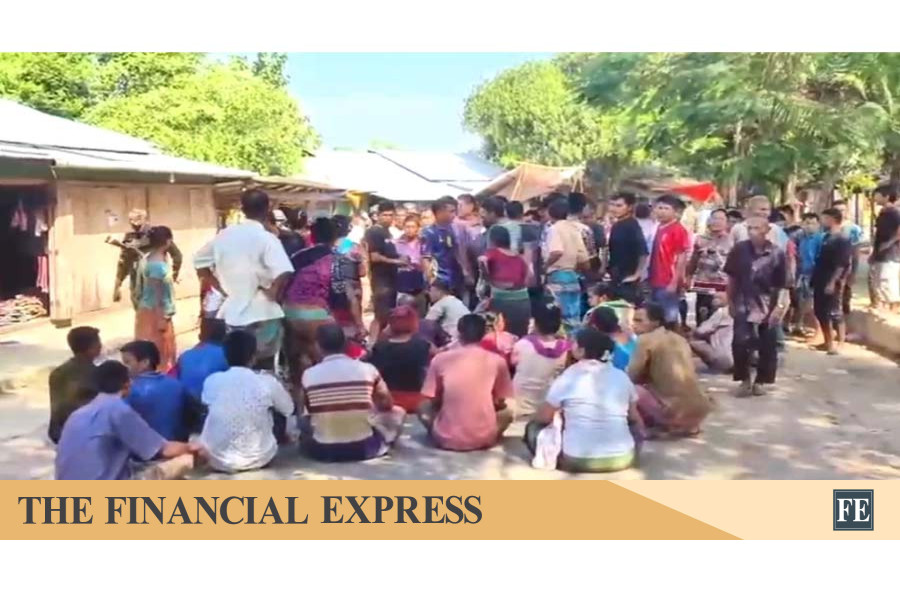
UPDF opens fire on tourists, law enforces in Sajek: ISPR
Nearly 3,000 tourists stranded in Sajek Valley in Rangamati were evacuated safely with the help of the Army and police on Thursday after armed members of the United People's Democratic Front (UPDF) allegedly opened fire on tourists and members of law enforcement agencies during an indefinite road b
UPDF opens fire on tourists, law enforces in Sajek: ISPR
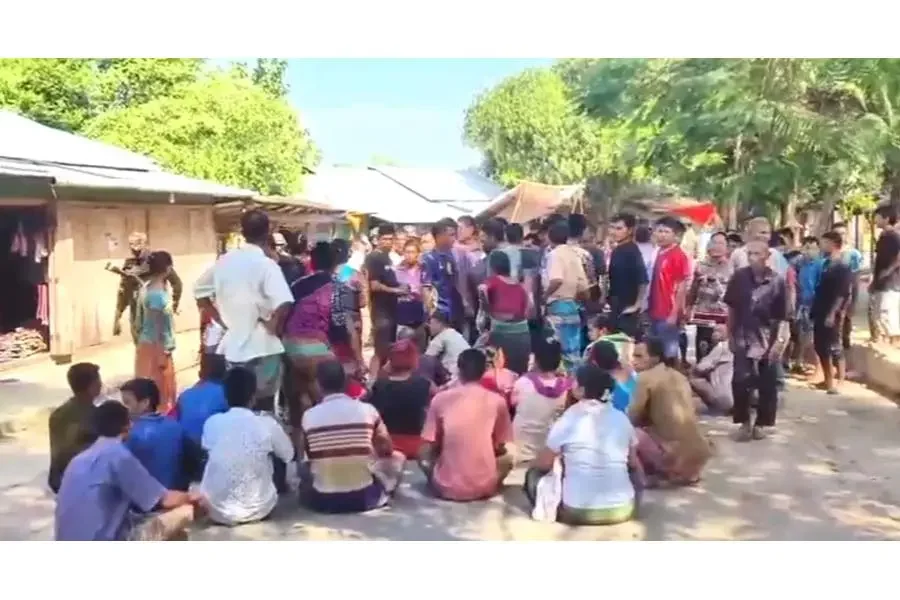
Nearly 3,000 tourists stranded in Sajek Valley in Rangamati were evacuated safely with the help of the Army and police on Thursday after armed members of the United People's Democratic Front (UPDF) allegedly opened fire on tourists and members of law enforcement agencies during an indefinite road blockade there.
No casualties were, however, reported in the incident, according to a statement issued by the Inter-Services Public Relations (ISPR) Directorate.
The incident took place in the Gangaram Bazar area of Sajek in Bagaichari upazila, after the blockade disrupted traffic on the Sajek-Baghaichari road and left the tourists stranded.
According to the ISPR statement, the Army and police jointly took security measures to escort the tourists safely to Khagrachhari, following the road blockade.
Around 10:00am, the blockaders obstructed the road and stopped vehicles carrying tourists from moving forward.
Security personnel then attempted to negotiate with the protesters to ensure safe passage for the visitors.
However, around 10:45am, the protesters allegedly began throwing bricks and stones at security personnel and tourists, prompting law enforcement members to use batons to disperse them and clear the road.
Around 11:00am, armed UPDF members allegedly fired approximately 30 to 40 rounds at security personnel and tourists, according to preliminary information cited in the statement.
An Army patrol team retaliated in self-defence and to protect the tourists, forcing the armed individuals to flee the scene.
The stranded tourists were subsequently evacuated safely through coordinated efforts by the Army and police, the statement added.
The Army described the blockade and violence as apparently premeditated, alleging that local residents were intimidated and forced to participate in the blockade and used as human shields.
The statement further claimed that some armed UPDF members took positions in tourist areas following ongoing security operations in different parts of the Chittagong Hill Tracts (CHT).
It said such violent activities threatened peace, stability and public safety in the hill region while adversely affecting tourism and local livelihoods.
The Army reaffirmed its commitment to maintaining peace and stability in the CHT and protecting the lives and property of local residents and tourists in coordination with the civil administration and other law enforcement agencies.
The indefinite blockade, jointly called by Sajek Ganadhikar Rakkha Committee and the Sajek Karbari Association, to press home their three-point demand, began at 6am on Thursday.
Pickets set fire to tyres at several points along the road, bringing all vehicle movement between Dighinala in Khagrachhari and Sajek Valley to a halt.
Meanwhile, the Rangamati district administration imposed a ban on tourist visits to Sajek from Thursday until further notice, citing the prevailing security situation.
The decision was announced in a public notice signed by Rangamati Deputy Commissioner Nazma Ashrafi on Wednesday night, stating that the restriction was imposed due to unavoidable circumstances.
The organisations enforcing the blockade alleged that armed members of the Parbatya Chattogram Jana Sanghati Samity (Santu Larma) had established positions in different areas of Sajek, including Machalong, Thalkumbho, Chillyatuli Kuti, Noapara, Lambabak and Bhuiochhari, forcing more than a hundred local residents to leave their homes.
They announced that the blockade would continue until their demands, including the removal of armed members from the area and ensuring the safety of local residents, are met.
The organisations enforced blockades on October 11 but suspended the programme until October 21 on the occasion of Durga Puja.
The fresh blockade caused severe hardship for around 30,000 people from the local Lusai, Tripura, Chakma and Marma communities, disrupting their movement and the transportation of essential commodities.
Local farmers have also been facing difficulties as transport shortages have prevented them from taking their jhum crops to markets.
The Army and police remain on high alert to restore normalcy, while the administration is working to resolve the crisis as soon as possible.
Saif
Senior Member
- Joined
- Jan 24, 2024
- Messages
- 22,238
- Likes
- 9,869
- Nation
- Axis Group

Eerie silence in Sajek valley
Roads remain blocked, shops shut and resorts deserted as fear grips the valley
Eerie silence in Sajek valley
Roads remain blocked, shops shut and resorts deserted as fear grips the valley
Our Correspondent, Rangamati

Photo: Nuruchsafa Manik
A sense of panic prevails in Sajek Valley and its surrounding areas in Rangamati, a day after clashes and a reported gunfight over a road blockade.
The tourist centre has taken a desert look after the local administration closed it after Thursday’s violence.
The programme was enforced by Sajek Gano Odhikar Rokkha Committee and Sajek Karbari Association (village headmen’s association) to press for three demands, including the removal of an armed group linked with the Parbatya Chattagram Jana Samhati Samiti (PCJSS).
Vehicular movement on Sajek-Rangamati remained halted for two consecutive days since Thursday. Protesters yesterday burnt tyres at different points as part of their road blockade.
Most shops in the Ujo Bazar area have remained closed since Thursday’s incidents. Many villagers have left the area fearing possible raids and interrogation of law enforcement agencies.
“Whenever locals come to the road, they are facing interrogation and scrutiny by law enforcers. It installs fear among the villagers,” said a resident of Ujo Bazar in Sajek, seeking anonymity.
“We have left our village and shops in fear. Many of our villagers have taken shelters in their relatives’ houses,” said a leader of Ujo Bazar Traders’ Association, wishing not to be named.
Talking to The Daily Star yesterday, Bijoy Kanti Chakma, member secretary of the Sajek Gano Odhikar Rokkha Committee, said around 100 people of their group were injured in Thursday’s incident.
Of them, eight are critically injured. None of them can be taken anywhere for treatment because law enforcers are obstructing them. “However, we are trying to arrange treatment for the injured on our own. We will continue our blockade.”
Talking to this newspaper, Muhammad Abdur Rakib, superintendent of Rangamati police, said public movement were thin and vehicular movement were stopped due to the blockade.
Those who have fled from their homes and shops will not face any problem to return, the SP added.
Although traffic remained suspended due to the blockade, the situation was normal, said Tofazzal Hossain, officer-in-charge of Sajek Police Station.
He added that joint operations by the army and police against armed terrorist groups were underway.
However, no case was filed till filing of the report around 7:00pm yesterday in connection with Thursday’s violence.
Sajek Gano Odhikar Rokkha Committee and Sajek Karbari Association first enforced an indefinite blockade on October 11. They later submitted their demands before the local administration and suspended their programme for two days after getting assurances. When the demands remained unmet, they resumed the blockade on October 15. The blockade was suspended during Durga Puja.
On Wednesday afternoon, the two organisations announced that they would enforce a blockade starting at 6:00am on Thursday.
A few hours later, around 3,000 tourists stranded on the road from Sajek in Rangamati were escorted to Khagrachhari after clashes between supporters of a blockade and law enforcers and then a reported gunfight between United People’s Democratic Front (UPDF) members and security forces.
The army and police jointly conducted the evacuation and five army personnel and two police members were injured in the clashes, said SP Rakib on Thursday.
Besides the removal of an armed group, the protesters’ other demands include ending death threats against innocent people and stopping law enforcement agencies from searching ordinary people’s homes.
Meanwhile, tourism businesses are suffering financial losses as bookings at resorts and cottages in Sajek are being cancelled amid the blockade.
According to the Sajek Resort-Cottage Owners’ Association, around 120 resorts and cottages in Sajek can accommodate over 3,000 tourists.
A large turnout of tourists was seen in Sajek during Durga Puja holidays. But due to the blockade, previous bookings are now being cancelled.
Talking to this correspondent, Mishu Dey, owner of Sajek Ruilui Holiday Resort, said, “Our resort was fully booked from before Durga Puja until October 25. However, following the blockade and clashes on Thursday, around 60 percent of our bookings have been cancelled. If the situation does not return to normal soon, the remaining bookings are also likely to be cancelled.”
Motijoy Tripura, joint general secretary of the Sajek Resort-Cottage Owners’ Association, said continued cancellations and a decline in tourist visits could cause a major downturn in the tourism sector.
Meanwhile, several tourism-related organisations formed a human chain in Khagrachhari town yesterday, demanding the reopening of the Sajek tourist centre.
Roads remain blocked, shops shut and resorts deserted as fear grips the valley
Our Correspondent, Rangamati
Photo: Nuruchsafa Manik
A sense of panic prevails in Sajek Valley and its surrounding areas in Rangamati, a day after clashes and a reported gunfight over a road blockade.
The tourist centre has taken a desert look after the local administration closed it after Thursday’s violence.
The programme was enforced by Sajek Gano Odhikar Rokkha Committee and Sajek Karbari Association (village headmen’s association) to press for three demands, including the removal of an armed group linked with the Parbatya Chattagram Jana Samhati Samiti (PCJSS).
Vehicular movement on Sajek-Rangamati remained halted for two consecutive days since Thursday. Protesters yesterday burnt tyres at different points as part of their road blockade.
Most shops in the Ujo Bazar area have remained closed since Thursday’s incidents. Many villagers have left the area fearing possible raids and interrogation of law enforcement agencies.
“Whenever locals come to the road, they are facing interrogation and scrutiny by law enforcers. It installs fear among the villagers,” said a resident of Ujo Bazar in Sajek, seeking anonymity.
“We have left our village and shops in fear. Many of our villagers have taken shelters in their relatives’ houses,” said a leader of Ujo Bazar Traders’ Association, wishing not to be named.
Talking to The Daily Star yesterday, Bijoy Kanti Chakma, member secretary of the Sajek Gano Odhikar Rokkha Committee, said around 100 people of their group were injured in Thursday’s incident.
Of them, eight are critically injured. None of them can be taken anywhere for treatment because law enforcers are obstructing them. “However, we are trying to arrange treatment for the injured on our own. We will continue our blockade.”
Talking to this newspaper, Muhammad Abdur Rakib, superintendent of Rangamati police, said public movement were thin and vehicular movement were stopped due to the blockade.
Those who have fled from their homes and shops will not face any problem to return, the SP added.
Although traffic remained suspended due to the blockade, the situation was normal, said Tofazzal Hossain, officer-in-charge of Sajek Police Station.
He added that joint operations by the army and police against armed terrorist groups were underway.
However, no case was filed till filing of the report around 7:00pm yesterday in connection with Thursday’s violence.
Sajek Gano Odhikar Rokkha Committee and Sajek Karbari Association first enforced an indefinite blockade on October 11. They later submitted their demands before the local administration and suspended their programme for two days after getting assurances. When the demands remained unmet, they resumed the blockade on October 15. The blockade was suspended during Durga Puja.
On Wednesday afternoon, the two organisations announced that they would enforce a blockade starting at 6:00am on Thursday.
A few hours later, around 3,000 tourists stranded on the road from Sajek in Rangamati were escorted to Khagrachhari after clashes between supporters of a blockade and law enforcers and then a reported gunfight between United People’s Democratic Front (UPDF) members and security forces.
The army and police jointly conducted the evacuation and five army personnel and two police members were injured in the clashes, said SP Rakib on Thursday.
Besides the removal of an armed group, the protesters’ other demands include ending death threats against innocent people and stopping law enforcement agencies from searching ordinary people’s homes.
Meanwhile, tourism businesses are suffering financial losses as bookings at resorts and cottages in Sajek are being cancelled amid the blockade.
According to the Sajek Resort-Cottage Owners’ Association, around 120 resorts and cottages in Sajek can accommodate over 3,000 tourists.
A large turnout of tourists was seen in Sajek during Durga Puja holidays. But due to the blockade, previous bookings are now being cancelled.
Talking to this correspondent, Mishu Dey, owner of Sajek Ruilui Holiday Resort, said, “Our resort was fully booked from before Durga Puja until October 25. However, following the blockade and clashes on Thursday, around 60 percent of our bookings have been cancelled. If the situation does not return to normal soon, the remaining bookings are also likely to be cancelled.”
Motijoy Tripura, joint general secretary of the Sajek Resort-Cottage Owners’ Association, said continued cancellations and a decline in tourist visits could cause a major downturn in the tourism sector.
Meanwhile, several tourism-related organisations formed a human chain in Khagrachhari town yesterday, demanding the reopening of the Sajek tourist centre.
Saif
Senior Member
- Joined
- Jan 24, 2024
- Messages
- 22,238
- Likes
- 9,869
- Nation
- Axis Group
Sajek blockade continues, traders seek resolution as tourism suffers
Our Correspondent . Khagrachari
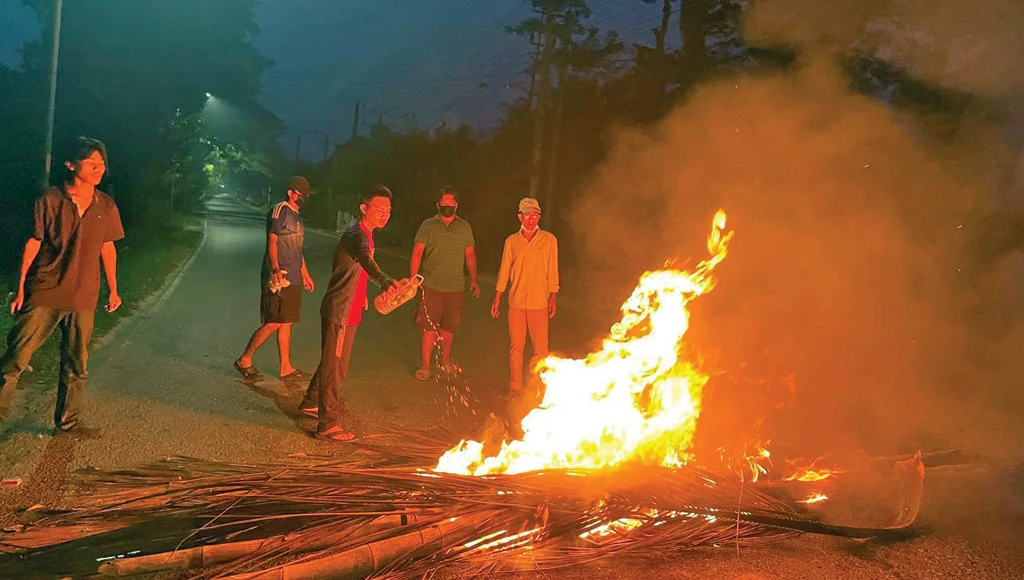
Protesters pour fuel to a fire on Rangamati-Chattogram road at Betbunia under Kawkhali during a blockade in Rangamati on early Saturday. | Collected photo
The indefinite road blockade in Rangamati’s Sajek valley continued for the third day on Saturday, while a half-day roads-and-waterways blockade was also observed in Rangamati and Khagrachari districts over Thursday’s attack on protesters by security forces in Sajek.
The half-day blockade, called by the Chhatra Janata Sangram Parishad in the Chittagong Hill Tracts, was observed from 5:00am to noon. No clashes were reported in the two districts.
Thursday’s clash between protesters and law enforcement agencies left 60 people injured in Sajek, prompting an indefinite road blockade jointly called by the Sajek Karbari Association and the Sajek Gono Odhikar Rakkha Committee.
Meanwhile, traders in Sajek, a popular tourist destination, issued a 48-hour ultimatum to the government to resolve the situation, warning that the protests were affecting the tourism industry. They also threatened to enforce a counter-blockade if the situation did not improve.
In a statement on Saturday, Chhatra Janata Sangram Parishad President Ushatan Chakma thanked people from all walks of life in Rangamati and Khagrachari, as well as transport owners’ and workers’ organisations, for making the half-day blockade successful.
Ushatan Chakma said that problems in Sajek or the CHT could not be resolved through the use of force by the military. Instead, he said, the problems should be resolved through peaceful discussions involving all parties concerned.
The government should create a democratic environment in the CHT and take initiatives to facilitate peaceful dialogue, he added.
On Saturday evening, the Chhatra Janata Sangram Parishad brought out a torch procession in Bangaltali union under Baghaichari Upazila in Rangamati, protesting against what it called the ‘brutal attack’ on Sajek residents and expressing support for their demands.
The protesters put forward a three-point charter of demands, including the removal of armed members of the Parbatya Chattagram Jana Samhati Samiti from the area, alleging that local residents had faced threats and harassment.
The PCJSS, however, denied the allegations.
Our Correspondent . Khagrachari
Protesters pour fuel to a fire on Rangamati-Chattogram road at Betbunia under Kawkhali during a blockade in Rangamati on early Saturday. | Collected photo
The indefinite road blockade in Rangamati’s Sajek valley continued for the third day on Saturday, while a half-day roads-and-waterways blockade was also observed in Rangamati and Khagrachari districts over Thursday’s attack on protesters by security forces in Sajek.
The half-day blockade, called by the Chhatra Janata Sangram Parishad in the Chittagong Hill Tracts, was observed from 5:00am to noon. No clashes were reported in the two districts.
Thursday’s clash between protesters and law enforcement agencies left 60 people injured in Sajek, prompting an indefinite road blockade jointly called by the Sajek Karbari Association and the Sajek Gono Odhikar Rakkha Committee.
Meanwhile, traders in Sajek, a popular tourist destination, issued a 48-hour ultimatum to the government to resolve the situation, warning that the protests were affecting the tourism industry. They also threatened to enforce a counter-blockade if the situation did not improve.
In a statement on Saturday, Chhatra Janata Sangram Parishad President Ushatan Chakma thanked people from all walks of life in Rangamati and Khagrachari, as well as transport owners’ and workers’ organisations, for making the half-day blockade successful.
Ushatan Chakma said that problems in Sajek or the CHT could not be resolved through the use of force by the military. Instead, he said, the problems should be resolved through peaceful discussions involving all parties concerned.
The government should create a democratic environment in the CHT and take initiatives to facilitate peaceful dialogue, he added.
On Saturday evening, the Chhatra Janata Sangram Parishad brought out a torch procession in Bangaltali union under Baghaichari Upazila in Rangamati, protesting against what it called the ‘brutal attack’ on Sajek residents and expressing support for their demands.
The protesters put forward a three-point charter of demands, including the removal of armed members of the Parbatya Chattagram Jana Samhati Samiti from the area, alleging that local residents had faced threats and harassment.
The PCJSS, however, denied the allegations.
Saif
Senior Member
- Joined
- Jan 24, 2024
- Messages
- 22,238
- Likes
- 9,869
- Nation
- Axis Group
Sajek blockade on amid conflict resolution efforts
Our Correspondent . Rangamati
The road blockade continued for the 4th day on Sunday in Sajek Valley, a popular tourist destination under Rangamati’s Baghaichhari upazila, with the district administration forming a three-member committee to resolve the crisis.
The committee members are Chittagong Hill Tracts Headman Network vice-president Bhabatosh Dewan, its general secretary Shanti Bijoy Chakma and Langadu Headman Association adviser Kalyan Mitra Chakma.
The newly formed committee is scheduled to hold a meeting with protesters today.
The decision was taken following an emergency meeting at the district administration on Sunday morning while traders at Sajek could not even enter as the blockade continued there.
After a meeting with the district administration, Khagrachhari lawmaker and the chairman of the parliamentary standing committee on the Chittagong Hill Tracts Affairs Ministry, Abdul Wadud Bhuiyan, said that he expected the crisis would be resolved soon.
Rangamati lawmaker Dipen Dewan also attended the meeting.
On October 22, a clash between protesters and law enforcement agencies left 60 people injured at Sajek, prompting an indefinite road blockade jointly called by the Sajek Karbari Association and the Sajek Gono Odhikar Rakkha Committee, both backed by the UPDF.
Sajek police station officer-in-charge Tofazzal Hossain said that no case was filed over the October 22 incident.
‘Now, the protesters are enforcing their blockade peacefully,’ the OC added.
Sajek Karbari Association president Natunjoy Chakma told New Age that the blockade entered into fourth day and it brought all vehicular movement halted in the area.
The ongoing unrest at Sajek in Rangamati has exposed the deepening power struggle between the Parbatya Chattagram Jana Samhati Samiti and the United People’s Democratic Front, with recurring road blockades and armed clashes in the hill district, home to various ethnic groups.
On September 11, PCJSS and UPDF allegedly exchanged heavy gunfire along a 14-kilometre stretch of Sajek Road in Machalong.
They said that another exchange of gunfire took place in the Noyapara area of Machalong on September 25 and such confrontations continued till September 29 in phases.
During the clashes, a nine-year-old national minority girl, Kasmita Tripura, was reportedly suffered gunshots in the Noyapara area of Machalong and Mandirachhara.
Following the incident, UPDF armed members left Bhuyachhari, Chillyatali, Noyapara and Thalkumbha, according to the local people.
Denying the allegations, UPDF spokesperson Angya Marma said, ‘We have always been working to end conflicts. The ruling groups are deliberately targeting us to portray us in a negative light by taking sides with the JSS.’
He said the UPDF was not engaged in any conflict with the JSS and that the Ganatantrik Pratirodh Bahini was confronting them on their behalf.
JSS assistant information and publicity Sajib Chakma said that the Jana Samhati Samiti did not conduct any armed activities and that allegations against the organisation were being made deliberately.
‘I will not make any comment in the internal issue behind the unrest. We are trying to ensure security of local people,’ said Rangamati district deputy commissioner Nazma Ashrafi.
Asked about the power struggle between PCJSS and UPDF behind Sajek unrest, the Inter Services Public Relations Directorate said in a written reply that Bangladesh Army always remained committed to combating armed miscreant groups.
‘Our primary objective is to ensure the safety and security of innocent populations of CHT and maintain peace and stability in the region,’ the ISPR said.
Saif
Senior Member
- Joined
- Jan 24, 2024
- Messages
- 22,238
- Likes
- 9,869
- Nation
- Axis Group
Police report shooting between UPDF, JSS in Rangamati
Intermittent gunfire erupted for about an hour between the UPDF (Prasit) and the JSS (Santu Larma) in Sajek Union of Rangamati’s Baghaichhari Upazila, police have said. The firing was intermittent throughout the one-hour period on Saturday, reports bdnews24.com. The exchange took place in t
Police report shooting between UPDF, JSS in Rangamati
Intermittent gunfire erupted for about an hour between the UPDF (Prasit) and the JSS (Santu Larma) in Sajek Union of Rangamati’s Baghaichhari Upazila, police have said.
The firing was intermittent throughout the one-hour period on Saturday, reports bdnews24.com.
The exchange took place in the remote Kalabunia area between noon and 1pm, around 20km from Sajek Police Station, officer Tofazzal Hossain said.
Saif
Senior Member
- Joined
- Jan 24, 2024
- Messages
- 22,238
- Likes
- 9,869
- Nation
- Axis Group
Sajek blockade to ease for 12 hours today
Gunfight reported in valley
Our Correspondent . Rangamati
01 November, 2026, 01:28
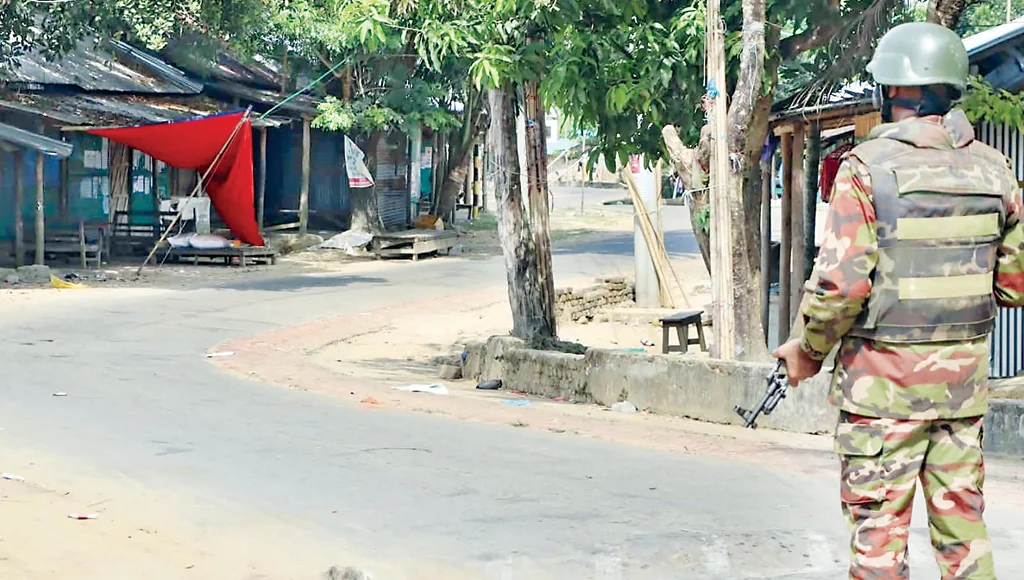
File photo
A gunfight took place reportedly between two major regional political parties allegedly over establishing dominance in the remote Sajek valley of Rangamati hill district on Saturday.
The shootout began in Kolabuniya area of Sajek under Baghaichari upazila around 1:00pm allegedly between the members of Parbatya Chattagram Jana Samhati Samity and United Peoples’ Democratic Front, said the police, adding that no casualty was reported.
Meanwhile, the indefinite road blockade in Sajek enforced to press home a five-point demand, will be relaxed for 12 hours today—from 6:00am to 6:00pm— according to an announcement by the protesters enforcing the blockade.
The blockade will resume tomorrow and continue indefinitely, as before.
Regarding the reported gunfire exchange that spread fear among local residents, both PCJSS and UPDF denied any involvement.
According to the police, the exchange of gunfire was the result of a longstanding strife between the main factions of PCJSS and UPDF over establishing supremacy in the Sajek tourist zone.
Confirming the matter, Sajek police officer-in-charge Tofazzal Hossain said that police could not enter the area immediately due to its remoteness and the risk involved.
‘Police and the joint security forces are on alert,’ the OC added.
UPDF spokesperson Ongyo Marma said allegations of gunfire involving their party were baseless and aimed at diverting attention from the ongoing movement in Sajek.
He alleged that the shooting took place between the armed members of the PCJSS.
PCJSS assistant information and publicity secretary Sajib Chakma also denied the allegations, saying the organisation had no armed wing and was not involved in any gunfire.
Babudhan Chakma and Natun Joy Chakma issued a statement on Friday evening on behalf of the Sajek Gana Adhikar Rakkha Committee and the Karbari Association, announcing the decision to relax the blockade for 12 hours today.
The blockade was enforced on October 22, demanding withdrawal of armed members of PCJSS from Sajek among other demands.
Gunfight reported in valley
Our Correspondent . Rangamati
01 November, 2026, 01:28
File photo
A gunfight took place reportedly between two major regional political parties allegedly over establishing dominance in the remote Sajek valley of Rangamati hill district on Saturday.
The shootout began in Kolabuniya area of Sajek under Baghaichari upazila around 1:00pm allegedly between the members of Parbatya Chattagram Jana Samhati Samity and United Peoples’ Democratic Front, said the police, adding that no casualty was reported.
Meanwhile, the indefinite road blockade in Sajek enforced to press home a five-point demand, will be relaxed for 12 hours today—from 6:00am to 6:00pm— according to an announcement by the protesters enforcing the blockade.
The blockade will resume tomorrow and continue indefinitely, as before.
Regarding the reported gunfire exchange that spread fear among local residents, both PCJSS and UPDF denied any involvement.
According to the police, the exchange of gunfire was the result of a longstanding strife between the main factions of PCJSS and UPDF over establishing supremacy in the Sajek tourist zone.
Confirming the matter, Sajek police officer-in-charge Tofazzal Hossain said that police could not enter the area immediately due to its remoteness and the risk involved.
‘Police and the joint security forces are on alert,’ the OC added.
UPDF spokesperson Ongyo Marma said allegations of gunfire involving their party were baseless and aimed at diverting attention from the ongoing movement in Sajek.
He alleged that the shooting took place between the armed members of the PCJSS.
PCJSS assistant information and publicity secretary Sajib Chakma also denied the allegations, saying the organisation had no armed wing and was not involved in any gunfire.
Babudhan Chakma and Natun Joy Chakma issued a statement on Friday evening on behalf of the Sajek Gana Adhikar Rakkha Committee and the Karbari Association, announcing the decision to relax the blockade for 12 hours today.
The blockade was enforced on October 22, demanding withdrawal of armed members of PCJSS from Sajek among other demands.
