[🇧🇩] Chittagong Hill Tracts----A Victim of Indian Intervention

[🇧🇩] Chittagong Hill Tracts----A Victim of Indian Intervention
90
6K
More threads by Saif

G Bangladesh Defense

UPDF (Democratic) coordinator shot dead in Khagrachhari

Correspondent
Khagrachhari
Published: 27 Mar 2026, 14: 54

1774658137631.webp

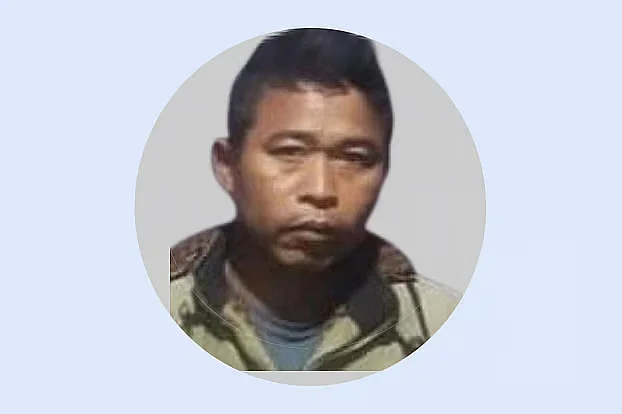
Nitidatta Chakma

A leader of the United People’s Democratic Front (UPDF) Democratic has been shot dead by unidentified assailants in Panchhari upazila of Khagrachhari. The incident took place around 8:30 am on Friday in the Ultachhari union of the upazila.

The deceased was identified as Nitidatta Chakma, 40, who served as the coordinator of the organisation in Panchhari upazila.

Officer-in-Charge of Panchhari Police Station, Md Ferdous Wahid, said Nitidatta Chakma was shot in the Sutakarmapara area of Ultachhari union in the morning.

Before police could reach the scene, local residents rescued him and took him to Khagrachhari Sadar Hospital, where physicians declared him dead.

UPDF (Democratic) has blamed the UPDF faction led by Prasit Khisa for the killing. However, no leaders or activists of the organisation agreed to speak on record.

The UPDF faction led by Prasit Khisa has denied the allegation. When contacted, one of its spokespersons, Angya Marma, said, “This happened due to internal issues within their own group. Our organisation is in no way involved.​
 

Diversify livelihoods to ensure sustainable development in CHT

Urge speakers at roundtable by MJF, Prothom Alo

Staff Correspondent

1779421467550.webp


Sustainable development in the Chittagong Hill Tracts (CHT) requires more than traditional farming alone, said speakers at a roundtable yesterday.

They stressed the need to create diversified livelihood opportunities through tourism, modern agriculture and small-scale industries, while ensuring environmental protection and community participation.

The speakers said stronger infrastructure, access to clean water, women-friendly policies, and greater investment in profitable crops such as coffee and cashew nuts could unlock the region’s economic potential and improve the lives of hill communities.

The observations came at a roundtable titled “Livelihood Patterns, Current Context, and Challenges in the Chittagong Hill Tracts”, held at the Prothom Alo office and jointly organised by Manusher Jonno Foundation and the newspaper with support from the European Union.

Speaking as chief guest, CHT Affairs Minister Dipen Dewan stressed stronger coordination among government agencies to ensure sustainable development in the region.

He said Bangladesh could earn significant foreign revenue by fully exploring the tourism sector and creating a more open environment for investment.

Edwin Koek, first counsellor of the European Union in Bangladesh, reaffirmed the EU’s commitment to reducing poverty, tackling inequality and supporting Sustainable Development Goals in the region.

MJF Executive Director Shaheen Anam said with EU support, Manusher Jonno Foundation and its local partners are implementing an initiative to improve the living conditions of marginalised communities in the hills.

She said the project aims to help nearly 20,000 jhum-dependent families become financially self-reliant by addressing challenges such as harsh environmental conditions, unemployment and water shortages.

She also stressed involving local residents, especially women, in development planning and decision-making.

Meher Nigar Bhuiyan, programme manager for Resilient Livelihoods of the European Union, said infrastructural development, alongside strong government initiatives for improving communication in remote hill areas, access to safe drinking water, and expansion of coffee and cashew cultivation, are essential for long-term progress.

Kajal Talukdar, chairman of the Rangamati Hill District Council, demanded legal recognition of jhum cultivation and transfer of control of Kaptai Lake to the District Council.

Biplab Chakma, head of Livelihoods and Natural Resource Management at UNDP Bangladesh, suggested declaring bamboo an agricultural product, conserving natural forests and formulating a long-term Forest Master Plan.

He also stressed maintaining navigation and water levels in Kaptai Lake to support agricultural marketing and suggested expanding solar power generation to boost the region’s economy.

Mohammad Ali Jinnah, additional director of the Department of Agricultural Extension, said modern farming and new technologies could help achieve economic prosperity in the CHT.

Presenting the Partnership for Resilient Livelihoods in the CHT (PRLC) project implemented by MJF, Project Coordinator Nikhil Chakma said local people and women must be included in planning development initiatives in the hills.

He said due to low government allocation, genuine development in the CHT remains constrained.

Chanchu Chakma, member of CHT Regional Council; Biplab Chakma, executive director of Ashika Development Associates; Md Moniruzzaman, deputy director of Rangamati DAE; Julhas Ahmed, Bandarban district livestock officer; Jagaran Chakma, senior journalist at The Daily Star; Shanti Bijoy Chakma, general secretary of the CHT Headman Network; and Kajali Tanchangya, a beneficiary of the PRLC project, also spoke.

The roundtable was moderated by Firoz Choudhury, assistant editor of Prothom Alo.​
 

CHT Affairs Minister’s sudden resignation stirs discussions; what leaders-activists say

Sujan Ghose
Chattogram
Published: 01 Jun 2026, 22: 25

1780360684787.webp

Leaders and activists of BNP stage a protest and road blockade in front of the Rangamati district BNP office on 2 June 2026, demanding the withdrawal of the resignation letter of Chittagong Hill Tracts Affairs Minister Dipen Dewan. Supriya Chakma

The resignation of Chittagong Hill Tracts (CHT) Affairs Minister Dipen Dewan just three and a half months into the government's tenure has become a major topic of discussion in hill politics.

Leaders and activists involved in Bangladesh Nationalist Party (BNP) politics, as well as members of the community in the hills, are trying to understand why Dipen Dewan made such a decision.

His followers staged a road blockade and protest in Rangamati demanding the withdrawal of his resignation and his reinstatement.

The protesters claim that Dipen Dewan was forced to resign due to pressure. However, in his resignation letter, he cited physical complications and illness.

Citing health issues, Dipen Dewan submitted his resignation letter to Prime Minister Tarique Rahman today, Monday.

Dipen Dewan, who had left a career as a joint district judge, contested a parliamentary election for the first time and was elected a member of parliament. He secured the largest margin of victory in the 13th parliamentary election.

After the BNP formed the government, Dipen Dewan was appointed Minister for Chittagong Hill Tracts Affairs. His father, Subimal Dewan, was an adviser on tribal affairs to the late President Ziaur Rahman. The State Minister for Chittagong Hill Tracts Affairs is Mir Mohammad Helal Uddin, MP from Chattogram-5 (Hathazari). He also serves as State Minister for Land.

Local BNP leaders said they had not anticipated Dipen Dewan’s resignation. They believe he may have resigned due to issues related to running the ministry, controlling Rangamati politics, and the process of appointing administrators to the district councils in the Chittagong Hill Tracts. However, no comment from Dipen Dewan was available.

The activities of the Chittagong Hill Tracts Affairs Ministry are centred on the three hill districts. There are three parliamentary constituencies there. BNP candidates won all three seats in Rangamati, Khagrachhari, and Bandarban in the national election. Sa Ching Prue Jerry was elected from Bandarban and Wadud Bhuiyan from Khagrachhari.

At least six leaders associated with BNP politics in the CHT told Prothom Alo that although there had been disagreements among MPs from the hill constituencies on various issues in the past, the situation was different this time. Since all three MPs belong to the same party, cordial relations existed among them.

For various reasons, the CHT is an extremely sensitive region. Different ethnic communities live there, and in some cases there is a lack of mutual trust.

They said that after becoming minister, Dipen Dewan began working to improve the situation through discussions with public representatives and civil society.

On 11 May, CHT Affairs Minister Dipen Dewan visited Khagrachhari district. That afternoon he exchanged views with administrative officials and members of civil society at the Khagrachhari Circuit House. However, local MP Wadud Bhuiyan was not present at that meeting.

After Dipen Dewan’s resignation, Wadud Bhuiyan told Prothom Alo that he did not know the reason for the resignation. He said he had not attended the meeting that day due to illness. He added that he has a very good relationship with Dipen Dewan.

Local sources say that BNP politics had been divided over party nominations in this election, although the divisions remained hidden during the election period. They have now started to reappear openly. One side consists of Dipen Dewan’s followers, while the other consists of followers of district BNP president Dipon Talukder.

Dipon Talukder rejected the suggestion of party conflict. Speaking to Prothom Alo over the phone this afternoon, Monday, he said, “I know nothing about the minister’s (Dipen Dewan’s) resignation. I do not know why he resigned. This is entirely his personal matter. I did not receive any prior indication either.”

Saiful Islam Bhutto, vice-president of Rangamati district BNP, told Prothom Alo, “Dipen Dewan’s resignation is harmful to BNP politics, hill politics, and the formation of a ‘rainbow nation’ among all hill and Bengali communities. It will cause significant damage to the implementation of BNP’s 31-point state reform framework and 19-point programme. I urge the prime minister to take appropriate measures and return Dipen Dewan to the Chittagong Hill Tracts Affairs Ministry.”

BNP leader Saiful Islam Bhutto further said, “Dipen Dewan is not physically ill. I have travelled with him in remote areas for a long time and have never seen him weak or sick. Some BNP leaders are trying to create instability in the Chittagong Hill Tracts by misleading the prime minister with false information.”

Sajamong Marma, senior vice-president of Kaukhali upazila BNP and an executive member of district BNP, said, “The reason he mentioned in the resignation letter is not correct. Physically and mentally he is capable of carrying out ministerial duties. Those who nurtured the fascist Awami League after 5 August pressured him into temporarily submitting his resignation letter.”

The Chittagong Hill Tracts Affairs Ministry began its journey on 15 July 1998. It was established under the terms of the accord signed the previous year between the government and the Parbatya Chattagram Jana Samhati Samiti. The objective of that accord was to restore peace in the hills after years of conflict.

The Chittagong Hill Tracts Accord contains 72 clauses divided into sections A, B, C and D. Most of them relate to the formation of district councils and the regional council. Clause 19 of section D provides for the establishment of the Chittagong Hill Tracts Affairs Ministry. The clause states: “A ministry for Chittagong Hill Tracts Affairs shall be established by appointing a minister from among the tribal people.”

Among the three members of parliament from the Chittagong Hill Tracts, two belong to hill communities and one is Bengali. Apart from Dipen Dewan, the other hill-community MP is Bandarban’s Sa Ching Prue Jerry.​
 

Latest Posts

Back