Bangladesh Defense
Saif
Senior Member
- Joined
- Jan 24, 2024
- Messages
- 21,241
- Likes
- 9,688
- Nation

- Residence
- Axis Group

No well-thought-out urban planning in the past 50 years
Bangladesh is growing horizontally and vertically, with new multistoried complexes being erected on fresh land in suburbs and towns to replace more modest structures.
No well-thought-out urban planning in the past 50 years
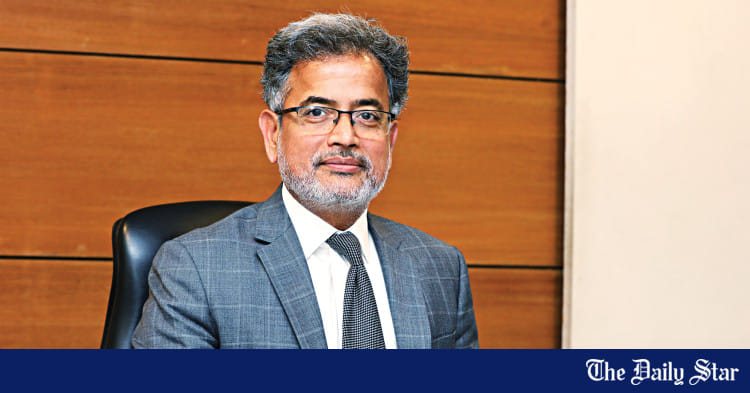
Says Credence Housing’s managing director

Zillul Karim
Bangladesh is growing horizontally and vertically, with new multistoried complexes being erected on fresh land in suburbs and towns to replace more modest structures.
Demand for homes and commercial spaces is rising hand in hand with the growing population of this land-scarce country, which accommodates over 1,300 people per square kilometre, making it one of the most densely populated nations in the world.
However, the development has not been planned. This is the case not only in the capital Dhaka but also outside the metropolis.
"We saw some plans regarding Dhaka during the Pakistan period. However, no proper planning was done after the independence. We have not had any long-term goal to make Dhaka a livable city," said Zillul Karim, managing director of Credence Housing Ltd.
During the pre-liberation period, areas such as Dhanmondi and Mohammadpur were developed in a planned manner.
Since then, only the Purbachal and Uttara areas have been developed in a planned manner. Of those, Purbachal has yet to become livable. Other than that, no well-thought-out plan has been made in the past 50 years.
"In parallel, we have made Bangladesh totally centralised," Karim added, referring to the overcrowded state of the capital. At the time of the independence in 1971, Dhaka had a population of only 700,000. Now, it is home to nearly 2.5 crore.
"We could not ensure industrialisation in any part of the country except Dhaka. Now, everyone is coming to Dhaka although we have no idea whether the capital can bear the load."
The authorities could have developed cities like Khulna, thereby ensuring facilities and jobs and preventing people from feeling compelled to move to the capital for better opportunities.
Instead, Khulna, a city blessed with a seaport and the Sundarbans, has become almost lifeless.
Not only do young people flock to Dhaka for career opportunities after graduation but politicians and businessmen also aim to ultimately reach the capital.
"Everything is centred around Dhaka. But how much load can it bear? Problems will not be solved if you don't think about the whole country."
Karim, who has been engaged in the real estate sector for nearly two decades, said Bangladesh needs to grow vertically in a bid to preserve land, which can be used for farming to ensure food security for the growing population.
"We have no option but to go for vertical growth. Just think about the fact that we have to import green chillies. If we lose our farmland, there will be no crops."
Many of our problems could be solved by vertical expansion, but the government has to provide infrastructural support for this, he added.
Karim highlighted that roughly 90 percent of people in Dhaka live in rented houses.
"We are unable to ensure homes for a majority of people in Dhaka."
One of the reasons for that is the high property prices in Dhaka. There is a huge demand for apartments at prices between Tk 50 lakh and Tk 1 crore.
"But we are totally missing this group. This is a big group. They are willing to purchase, but they do not have the capability to buy homes in the capital."
He said they can offer a flat at Tk 50 lakh in Savar.
"But a person whose office is in Karwan Bazar and whose son studies at Dhanmondi Boys' School will not move to Savar because no smooth communication facilities have been ensured for that person.
"Is there a reliable public transport that could take him to Dhanmondi in half an hour? If there were such infrastructures, there would have been development in Savar."
Everyone wants to stay in Dhaka, where traffic jams have made all the problems more complicated, he lamented.
One option could be housing developments surrounding the capital. But a lack of good public transport, and the absence of good educational institutions, healthcare, and other amenities there pose major barriers.
"We need a long-term plan, taking the whole country into perspective, not Dhaka only. We must give equal priority to every divisional city, ensuring everything that citizens need, so that no one feels the urgency to come to Dhaka.
"Had all the facilities been available in districts like Khulna or Dinajpur, who would come to Dhaka?" he said. "Just think, a person has to be brought to Dhaka in case of cardiac arrest. There is no good medical facility that treats heart disease in most other areas."
To address these issues, public-private initiatives are needed.
Karim also highlighted policy problems, saying: "The sad part is that we have no proper township planning."
Real estate development in Dhaka slowed after the government framed a detailed area plan (DAP) in 2022. Landowners are not willing to give land for new buildings since the floor area ratio has been reduced, he said.
This has fueled land prices and, in turn, the prices of flats.
He said they have been waiting for a revision in the DAP for nearly six months, but there has been no progress in this regard.
"As a result, we cannot take on new projects, and three or four departments in our office are sitting idle.
We cannot design buildings either because we are not clear which rules we should follow."
The devaluation of the taka due to the dollar crisis has further complicated the situation. The import costs of construction raw materials have soared, as have prices of apartments and commercial spaces.
"Our construction costs go up whenever the price of the dollar increases," he said. "We sell flats upfront. So, cost escalation is a big challenge for us."
The number of buyers is declining due to the rise in apartment prices.
The market situation deteriorated further after the political changeover in August last year.
"Fresh bookings slumped by half after August amid political uncertainty. People seem very cautious. The situation may normalise after the national elections and the stabilisation of dollar rates. People feel comfortable during political stability," he said.
"However, our existence will be at stake if the cost of dollars rises," said Karim.
Says Credence Housing’s managing director
Zillul Karim
Bangladesh is growing horizontally and vertically, with new multistoried complexes being erected on fresh land in suburbs and towns to replace more modest structures.
Demand for homes and commercial spaces is rising hand in hand with the growing population of this land-scarce country, which accommodates over 1,300 people per square kilometre, making it one of the most densely populated nations in the world.
However, the development has not been planned. This is the case not only in the capital Dhaka but also outside the metropolis.
"We saw some plans regarding Dhaka during the Pakistan period. However, no proper planning was done after the independence. We have not had any long-term goal to make Dhaka a livable city," said Zillul Karim, managing director of Credence Housing Ltd.
During the pre-liberation period, areas such as Dhanmondi and Mohammadpur were developed in a planned manner.
Since then, only the Purbachal and Uttara areas have been developed in a planned manner. Of those, Purbachal has yet to become livable. Other than that, no well-thought-out plan has been made in the past 50 years.
"In parallel, we have made Bangladesh totally centralised," Karim added, referring to the overcrowded state of the capital. At the time of the independence in 1971, Dhaka had a population of only 700,000. Now, it is home to nearly 2.5 crore.
"We could not ensure industrialisation in any part of the country except Dhaka. Now, everyone is coming to Dhaka although we have no idea whether the capital can bear the load."
The authorities could have developed cities like Khulna, thereby ensuring facilities and jobs and preventing people from feeling compelled to move to the capital for better opportunities.
Instead, Khulna, a city blessed with a seaport and the Sundarbans, has become almost lifeless.
Not only do young people flock to Dhaka for career opportunities after graduation but politicians and businessmen also aim to ultimately reach the capital.
"Everything is centred around Dhaka. But how much load can it bear? Problems will not be solved if you don't think about the whole country."
Karim, who has been engaged in the real estate sector for nearly two decades, said Bangladesh needs to grow vertically in a bid to preserve land, which can be used for farming to ensure food security for the growing population.
"We have no option but to go for vertical growth. Just think about the fact that we have to import green chillies. If we lose our farmland, there will be no crops."
Many of our problems could be solved by vertical expansion, but the government has to provide infrastructural support for this, he added.
Karim highlighted that roughly 90 percent of people in Dhaka live in rented houses.
"We are unable to ensure homes for a majority of people in Dhaka."
One of the reasons for that is the high property prices in Dhaka. There is a huge demand for apartments at prices between Tk 50 lakh and Tk 1 crore.
"But we are totally missing this group. This is a big group. They are willing to purchase, but they do not have the capability to buy homes in the capital."
He said they can offer a flat at Tk 50 lakh in Savar.
"But a person whose office is in Karwan Bazar and whose son studies at Dhanmondi Boys' School will not move to Savar because no smooth communication facilities have been ensured for that person.
"Is there a reliable public transport that could take him to Dhanmondi in half an hour? If there were such infrastructures, there would have been development in Savar."
Everyone wants to stay in Dhaka, where traffic jams have made all the problems more complicated, he lamented.
One option could be housing developments surrounding the capital. But a lack of good public transport, and the absence of good educational institutions, healthcare, and other amenities there pose major barriers.
"We need a long-term plan, taking the whole country into perspective, not Dhaka only. We must give equal priority to every divisional city, ensuring everything that citizens need, so that no one feels the urgency to come to Dhaka.
"Had all the facilities been available in districts like Khulna or Dinajpur, who would come to Dhaka?" he said. "Just think, a person has to be brought to Dhaka in case of cardiac arrest. There is no good medical facility that treats heart disease in most other areas."
To address these issues, public-private initiatives are needed.
Karim also highlighted policy problems, saying: "The sad part is that we have no proper township planning."
Real estate development in Dhaka slowed after the government framed a detailed area plan (DAP) in 2022. Landowners are not willing to give land for new buildings since the floor area ratio has been reduced, he said.
This has fueled land prices and, in turn, the prices of flats.
He said they have been waiting for a revision in the DAP for nearly six months, but there has been no progress in this regard.
"As a result, we cannot take on new projects, and three or four departments in our office are sitting idle.
We cannot design buildings either because we are not clear which rules we should follow."
The devaluation of the taka due to the dollar crisis has further complicated the situation. The import costs of construction raw materials have soared, as have prices of apartments and commercial spaces.
"Our construction costs go up whenever the price of the dollar increases," he said. "We sell flats upfront. So, cost escalation is a big challenge for us."
The number of buyers is declining due to the rise in apartment prices.
The market situation deteriorated further after the political changeover in August last year.
"Fresh bookings slumped by half after August amid political uncertainty. People seem very cautious. The situation may normalise after the national elections and the stabilisation of dollar rates. People feel comfortable during political stability," he said.
"However, our existence will be at stake if the cost of dollars rises," said Karim.