Home Login Watch Videos Wars

[🇧🇩] City Buses, Metro Rail, Urban Transport & City Road Infra

[🇧🇩] City Buses, Metro Rail, Urban Transport & City Road Infra
143
9K
More threads by Bilal9

G Bangladesh Defense

Bilal9

Bangladeshi & Senior Moderator
Moderator
Joined
Jan 24, 2024
Messages
3,797
Likes
2,025

Metro rail eases traffic on Mirpur-Motijheel route​

Metro Rail authorities operate a train from Agargaon to Motijheel as part of the system-integrated test run. Prime Minister Sheikh Hasina is expected to inaugurate this section today. The photo was taken from the Dhaka University area recently. Photo: Rajib Dhar

1706322807434.webp


Metro Rail authorities operate a train from Agargaon to Motijheel as part of the system-integrated test run. Prime Minister Sheikh Hasina is expected to inaugurate this section today. The photo was taken from the Dhaka University area recently. Photo: Rajib Dhar

Traffic congestion on the Mirpur-Agargaon-Farmgate-Motijheel route has significantly decreased since the Dhaka metro rail operating hours were extended, providing commuters with a more relaxed and faster journey.

However, other busy routes like Uttara-Mohakhali-Motijheel and Uttara-Badda-Motijheel continue to see the same old gridlock.
Service holder Sayma Hoque, who used to spend hours commuting from her Mirpur home to her Motijheel office, now enjoys a one-hour journey, thanks to the metro rail. With reduced traffic on the route, her daily commute has become significantly less stressful.


Deputy Commissioner of the Dhaka Metropolitan Police traffic department's Tejgaon division Mushtaq Ahmed confirmed the decrease in traffic and improved discipline on the metro rail route. However, he acknowledged that the congestion problem persists in other parts of the city.

Since early November of last year, metro rail has begun running between Uttara and Motijheel. However, the trains were only in service from 7:10am until 11:30am. On 20 January, the time was extended to 8:40pm.


The metro rail's 20.1km stretch from Uttara to Motijheel now takes only 31 minutes to cover, a stark contrast to the hours spent battling traffic on the same route before.

This has led to a significant shift in commuter preference, with many opting for the faster and more comfortable metro rail over traditional public transport like buses.

The impact on bus services is evident. Ayat Paribahan owner Khaled Khan reported a 35% drop in passengers on the Mirpur-Motijheel route, forcing some buses to remain parked.

Similar observations were made by Shikar Paribahan bus helper Nur Hossen and ride-share provider Md Kamrul, both of whom have seen a decline in business due to the metro rail's success.

A Bangladesh University of Engineering and Technology survey conducted in 2023 revealed that before the metro rail, 59.41% of passengers used public buses for their commute on the Uttara-Motijheel route. This highlights the significant shift in travel patterns brought about by the metro rail.

While the metro rail has brought relief to commuters on the Mirpur-Motijheel route, congestion remains a major concern in other parts of the city.

Shahidul Islam, a commuter from Banani to Farmgate, told The Business Standard that traffic congestion has worsened in the Mohakhali area, even on the flyover. Similarly, the Uttara-Badda-Motijheel route continues to experience the same level of traffic and passenger pressure.

Mahbubur Rahman, vice-president of the Bangladesh Road Transport Owner Association, acknowledged the drop in bus passengers on the Uttara-Motijheel route, except for those running via Badda-Rampura.

He reported a 50% decrease in income for bus owners on the Mirpur-Motijheel route, with some companies even stopping operations due to the losses.

Rahman expressed the bus operators' commitment to improving service quality to attract passengers back. However, it remains to be seen whether they can effectively compete with the convenience and efficiency offered by the metro rail.
 
Analyze

Analyze Post

Add your ideas here:
Highlight Cite Fact Check Respond
  • Like (+1)
Reactions: Saif

How Metro rail changed the life of Uttara and Mirpur residents​

In the ever-congested Dhaka, the metro rail has made many city dwellers' lives easy. At present, around 2.3 lakh to 2.4 lakh passengers are using it daily​


Pallabi metro rail station at Mirpur-12 substantially eased Mirpur residents’ commute.  Photo: Syed Zakir Hossain

Pallabi metro rail station at Mirpur-12 substantially eased Mirpur residents’ commute. Photo: Syed Zakir Hossain

Sharif Mahbubur Rahman, a contractor by profession, lives in Uttara's House Building area. His work requires him to frequently travel to Motijheel.

Before the metro rail was opened, it used to take him nearly four hours to reach Motijheel from Utttara. A whole day was wasted on the commute.

Now, it takes Sharif 20 minutes to reach the Uttara North station from home, via a BRTC bus or Leguna. From there, it is a 30-minute ride to Motijheel.

"With the extra time now, I can go shopping, take my children to school and even put extra time into my business," he said, sounding particularly relieved.

The metro rail was inaugurated in Dhaka in December 2022 by Prime Minister Sheikh Hasina. That year, the Diabari-Agargaon route was opened. In November 2023, the PM inaugurated the second phase from Agargaon to Motijheel.

In the ever-congested Dhaka city, the Uttara-Motijheel route has made many city dwellers' lives easy. Traffic congestion on the Mirpur-Agargaon-Farmgate-Motijheel route has also decreased.


A general view of the metro rail. Photo: TBS

A general view of the metro rail. Photo: TBS

According to authorities, at present, around 2.3 lakh to 2.4 lakh passengers are using the metro daily. Out of the six compartments, one is only for female passengers.

Although bus owners are complaining about the loss of passengers, restaurant businesses as well as building constructions in Diabari are rapidly growing.

Riadul Jannat is a medical officer at Bangabandhu Sheikh Mujib Medical University (BSMMU). Before the metro, he used ride-sharing bikes to reach his workplace and it would take him more than an hour to come from Mirpur-10.

"Every day, I had to spend around Tk.400 on my commute. It has gone down to Tk.100," he said.

Metro stations in Dhaka were overrun on Sunday, with throngs of commuters snaking through lengthy queues at Uttara, Pallabi, Secretariat, and Motijheel stations. Photo: Collected from Maksud Rahman Nizam's post on Facebook

Metro stations in Dhaka were overrun on Sunday, with throngs of commuters snaking through lengthy queues at Uttara, Pallabi, Secretariat, and Motijheel stations. Photo: Collected from Maksud Rahman Nizam's post on Facebook

According to him, the bike rides were like nightmares. "It was dusty and so uncomfortable. After getting down, my whole body would hurt."

Now it takes him only 15 minutes to reach BSMMU from Mirpur-10. In fact, he now even has time to take a relaxed shower in the morning before leaving the house.

Other Mirpur dwellers like Abdul Majed are elated with the metro rail. The 30-year-old works for Delta Hospital in Mirpur-1 and lives in Mirpur-14.

For the last few days, he has been travelling from Mirpur-10 to Shahbagh for treatment at BSMMU. What used to be a one-hour journey has been cut short to around 15 minutes.

"I bought the Rapid Pass two months ago so I do not have to stand in a queue to buy tickets," he said, adding, "In the past, I had to keep at least two hours in hand before going somewhere and now it is 40 minutes."

Uttara residents enjoy a much faster commute to Motijeel from Uttara North station. Photo: Syed Zakir Hossain

Uttara residents enjoy a much faster commute to Motijeel from Uttara North station. Photo: Syed Zakir Hossain

Growing businesses in Diabari

Locals shared that even a few years ago, Diabari under Turag Police Station was a remote area. It was mostly deserted and even during the day, people thought twice before coming here. Communication was poor and robberies and mugging were quite common.

After the construction of the metro rail, people from different parts of the city started visiting Diabari. What was once a semi-rural area has now become a tourist attraction. Rows of food shops and restaurants have been erected along the Uttara North station.

"Trains loaded with passengers are coming and going all the time," said Kabul Hossain, a resident of the area. He said that the Uttara North station experiences heavy crowds throughout the week, except on Fridays.

metro_rail_bangladesh_tbs_2.jpeg

Saturdays witness a surge in the number of people, resulting in the station becoming particularly crowded. The area around the station is bustling with activity until 8 pm.

"If the trains ran on Fridays, Allah knows how many people would have come!" he said.

Construction of residential buildings as well as commercial structures near the station is also going in full swing. More people are showing interest in living in Diabari because of the metro rail.

Monir Hossain, an employee of the Shurja Dighal Bari restaurant in Diabari, was waiting for customers next to the station. He was born and raised in Tongi. He remembers when he was a child, sometimes he would take a boat to come to Diabari to visit his aunt.

He said that the place was originally a jheel (a large area of freshwater) and boro paddy was cultivated around it. Rajdhani Unnayan Kartripakkha (Rajuk) acquired the area and sold it to different people as plots. Years later came the metro rail project.

A crowded metro rail on its way to Motijheel on Sunday, 5 November 2023. Photo: Courtesy

A crowded metro rail on its way to Motijheel on Sunday, 5 November 2023. Photo: Courtesy
"On Saturdays, our sales are so high that it feels like Eid for us," said Monir.

He shared that the monthly rent of the two-storied Shurja Dighal Bari restaurant is now Tk95,000. But house rent in the area is still low compared to other parts of the city.

The price of land in Diabari has increased manifold over the last 15 years. In 2005 or 2007 when Rajuk acquired the area, one katha land was sold at Tk40,000 to Tk50,000. These days, however, it stands at around Tk1.5 to Tk2 crore.

Bus businesses feel the pinch

Mirpur-12 is one of the most important bus stops in Mirpur. It is usually packed with buses and passengers. However, on our visit last Wednesday afternoon, there were only a few.

The metro rail has significantly reduced traffic congestion on the Mirpur-Agargaon-Farmgate-Motijheel route. The roads below the metro rail route from Uttara North to Motijheel have also become smoother.

Metro Rail authorities operate a train from Agargaon to Motijheel as part of the system-integrated test run. Prime Minister Sheikh Hasina is expected to inaugurate this section today. The photo was taken from the Dhaka University area recently. Photo: Rajib Dhar

Metro Rail authorities operate a train from Agargaon to Motijheel as part of the system-integrated test run. Prime Minister Sheikh Hasina is expected to inaugurate this section today. The photo was taken from the Dhaka University area recently. Photo: Rajib Dhar

Mohammad Shamim, a driver of Bikalpa bus, said, "We are incurring losses because of the metro rail. Now, only 25-30 passengers ride the bus daily."

Originally, Bikalpa's route was from Mirpur-12 to Motijheel. With the opening of the metro rail route to Motijheel, the bus company has been compelled to change its route to Jatrabari.

Other buses including Bihanga and Mirpur Super Link Ltd were also waiting for passengers at the Pallabi bus stand for a long time.

Another driver, Mohammad Nadim, said that in the past they could earn Tk2,700-Tk2,800 for a single trip from Pallabi to Motijheel. Now they can earn a maximum of Tk1,400-Tk1,500.
 
Analyze

Analyze Post

Add your ideas here:
Highlight Cite Fact Check Respond
  • Like (+1)
Reactions: Saif
Metro Rail to build Skywalks at various stations


TBS Illustration

TBS Illustration

The Mass Rapid Transit (MRT) authorities are set to construct three skywalks at three metro stations connecting them with prominent locations to provide easier and direct access for commuters.

One of the skywalks will be established at Farmgate station, connecting to the Farmgate foot overbridge. The second one will be positioned at Shahbagh station, facilitating a direct link to Bangabandhu Sheikh Mujib Medical University (BSMMU). The third skywalk is planned to provide access to the Bangladesh Secretariat from the Secretariat station in Paltan.

A metro rail skywalk is an elevated, covered pathway connecting stations to points of interest like malls and transport hubs. Positioned above tracks, it offers a weather-protected route, enhancing commuter convenience and reducing street traffic congestion.

The decision was made in the latest meeting of the project implementation committee of MRT Line-6 held on 27 November 2023. At the meeting, another decision was made to promptly initiate a pre-feasibility study for extending MRT Line-6 from Uttara to Tongi.

Officials say that upon completion, these skywalks will streamline the movement of metro users.

For instance, commuters landing at Farmgate station will have direct access to the Farmgate foot over bridge, allowing them to reach Farmgate directly from the station, while those at Shahbagh station can seamlessly enter BSMMU, they say.

Meanwhile, works on two skywalks are underway at Shahbagh station. One of them connects to BIRDEM Hospital, and the other one connects to the Shahbagh foot-overbridge.

DMTCL Managing Director MAN Siddique said that both passengers and authorities are eager for the construction of the skywalks.

Regarding the progress, he said building the skywalk for the Bangladesh Secretariat requires special considerations due to access control, and discussions with the Home Ministry are underway to address this matter.

Siddique said the BSMMU authority has approved the proposed skywalk, and it is currently in the design stage.

He added that the skywalks will have two ramps – one towards the hospital's cabin block and another to the super-specialised unit – to accommodate the increasing number of patients and visitors in the hospital from across the country.

"Regarding the third skywalk, our plan was to connect it directly to the Farmgate foot-over bridge from the Farmgate metro station.

However, there has been a development where the city corporation is planning to install an escalator for the convenience of elderly and special-needs individuals at the location where the skywalk ramp was supposed to be attached," he said.

The DMTCL boss further said, "If we do not attach the ramp to the foot over bridge, then a metro passenger will have to get down from the station and climb again on the foot-over bridge to pass the Farmgate intersection, which will be tiresome for commuters."

However, he assured that discussions are ongoing with the authorities concerned to resolve the issue.

When asked about the budget for these projects, Siddique said that the budget will be determined after completing the designs for these projects.

He said the funds for the project are expected to come from the main Mass Rapid Transit (MRT) project allotment, as additional developments for ongoing projects are managed within the project cost.

Siddique clarified that there are no immediate plans for additional skywalks beyond the proposed three. However, he highlighted ongoing construction, including a skywalk connecting Shahbagh station to the foot-over bridge towards the national museum and a ramp leading to BIRDEM Hospital, which is nearing completion.
 
Analyze

Analyze Post

Add your ideas here:
Highlight Cite Fact Check Respond
Funding has been confirmed for the construction of Metro Rail 5 (MRT-5) South from Gabtali to Dasherkandi in the capital. Asian Development Bank-ADB and South Korea will provide loan assistance of 4.5 billion dollars. This has paved the way for one more route of metro rail in Dhaka. MRT-5 will cross at Karwan Bazaar for transfers to MRT-6. Most of MRT-5 crossing through midtown Dhaka will be underground (12 stations will be underground and 4 overhead). Timeline for completion is 2030.


Image shows stations of MRT 5 South. Most of the stations within the periphery of Dhaka urban area (other than at the extremities on both ends) will be underground.

1707694788290.webp
 
Last edited:
Analyze

Analyze Post

Add your ideas here:
Highlight Cite Fact Check Respond
  • Like (+1)
Reactions: Saif

Karnaphuli Tunnel and Padma Bridge construction​

The vision of building a sustainable and developed Bangladesh by 2041

1707961565854.webp

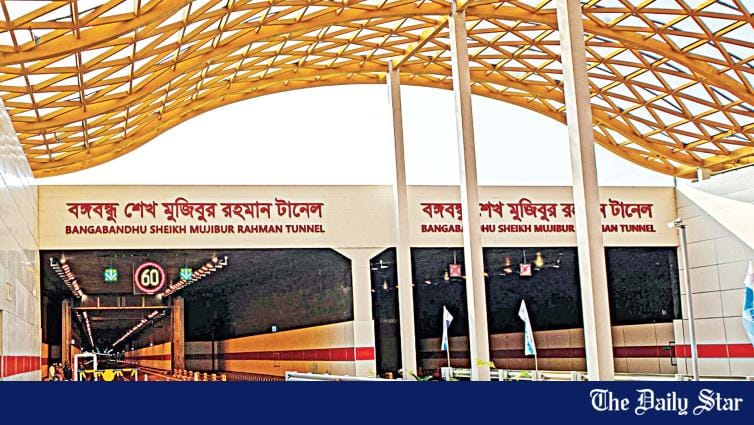
The completion of the Karnaphuli Tunnel is expected to revolutionise transportation dynamics in the Chittagong region, fostering efficient movement of goods and services. PHOTO: Star

The Karnaphuli Tunnel, an ambitious project, seeks to enhance connectivity in the southeastern part of Bangladesh, bridging the gap between Chittagong and Cox's Bazar. Approved in 2016, this underwater tunnel is designed to span the Karnaphuli River, aiming to reduce travel time and traffic congestion. Positioned strategically as a vital link between the east and west banks of the river, it plays a key role in the government's vision for regional integration and improved accessibility, particularly to the Chittagong Hill Tracts. As part of the broader transportation network, it contributes to the world's longest marine drive from Mirershorai to Teknaf and the Asian Highway, connecting Chittagong Port and Matarbari Deep Seaport.

The completion of the Karnaphuli Tunnel is expected to revolutionise transportation dynamics in the Chittagong region, fostering efficient movement of goods and services and, in turn, boosting trade activities. The envisioned enhancement in connectivity is poised to attract investments, stimulate industrial growth, and generate employment opportunities, positioning Chittagong as a pivotal economic hub.

The transformative potential of the Karnaphuli Tunnel extends to the movement of goods and services between Chittagong and Cox's Bazar, two economically crucial centres. By streamlining transportation, the tunnel is anticipated to facilitate trade operations, contributing significantly to overall economic growth. Furthermore, improved connectivity holds promise for the tourism sector, providing easier access to Cox's Bazar, renowned globally for its extensive beach. This increased accessibility is anticipated to drive tourism and subsequently stimulate local economic activities. Beyond its economic impacts, the Karnaphuli Tunnel is expected to catalyse regional development, with improved connectivity often leading to increased investments, job opportunities, and infrastructure development in the surrounding areas. Additionally, there is optimism that the tunnel will play a pivotal role in the establishment of a twin-town on both sides of the river.

However, a critical examination is warranted to assess whether the Karnaphuli Tunnel can effectively realise its stated objectives and deliver the anticipated transformative impact. Additionally, it is crucial to evaluate the prudence of the decision to construct this tunnel.

1707961606631.webp

An inside view of the Bangabandhu Sheikh Mujibur Rahman Tunnel under the Karnaphuli river in Chattogram. Photo: Star

Planning issues

The decision to opt for a river-crossing tunnel over a bridge presents inherent challenges, both in terms of construction cost and ongoing maintenance. The justification for choosing a capital-intensive tunnel is rooted in concerns about siltation and potential obstruction to ship movements due to strong tidal forces, as well as the scour that could threaten bridge piers. However, this decision seems to overlook the viability of long-span arch, suspension, and cable stayed bridges, which many countries prefer for their cost-effectiveness, environmental friendliness, and sustainability in addressing sedimentation and ship movement issues.

Several weaknesses and planning issues associated with the Karnaphuli Tunnel project include:

1. Ventilation and lighting challenges: The confined structure of the tunnel requires constant artificial ventilation and lighting, adding to construction and operational expenses. Safety and emergency response systems, including passive fire detection and fighting systems and pumping-based drainage systems, contribute to its energy-intensive and resource-intensive nature. The tunnel's operational reliance on costly ICU-like ventilation and lighting systems raises questions about its sustainability, particularly when compared to more modern and eco-friendly alternatives.


2. Cost disparities: The Karnaphuli Tunnel, featuring a shorter diameter and 4.9m headroom instead of the standard 5.5m, comes with a cost that is approximately 1.5 times that of the high-standard double-decker Padma Multipurpose Bridge (PMB). The significantly higher life cycle cost, where the operation and maintenance (O&M) expenses are nearly 3.5 times more expensive than that of PMB, contradicts the principles of sustainable development and national conservation policies, particularly considering the tunnel's higher energy and safety requirements.

3. Toll differentials and financial viability: Road users of the Karnaphuli Tunnel are burdened with tolls 2.5 to 6 times higher than those using the existing Shah Amanat Bridge, raising concerns about the project's financial viability. The significant toll differential poses challenges in attracting the forecasted number of tunnel users and achieving the expected socio-economic return.

4. Lack of provisions for local traffic and integration with master plans: The tunnel lacks provisions for local traffic, including pedestrians, bicycles, CNG, and motorcycles. It does not integrate with the twin-town masterplan, hindering inclusive development and accessibility. The absence of a universal access-controlled lane and interchange facilities further restricts its compatibility with local traffic needs.

5. Access restriction and safety concerns: The tunnel's adoption of a 4.9m headroom, deviating from the RHD standard of 5.5m, raises concerns about access restrictions for certain heavy cargo laden vehicles, including those carrying flammable materials. The screening-based entry system, coupled with higher toll rates, poses obstacles to tunnel accessibility and its productivity. Safety concerns related to elephant crossings and potential conflicts with beach-bound pedestrian movements further diminish its operational capacity.

6. Conflict with climate resilience guidelines: The tunnel, with at-grade approach roads not only conflict with beach-bound pedestrian movements but also does not align with national climate-resilient infrastructure development guidelines for coastal fronts experiencing sea-level rise and land subsidence issues.

7. Limited capacity and aesthetic shortcomings: The tunnel's twin-tube configuration limits its capacity expansion, preventing the implementation of reverse or tidal flow operations during peak hours. Additionally, tunnels are less visually appealing compared to iconic bridges, missing an opportunity to create a landmark structure that attracts tourists and generates non-operational revenue streams.

8. Preference for long span bridges in harbour channels: The absence of bridges with spans greater than 200m in Bangladesh overlooks the global preference for long-span bridges in harbour channels. The choice of a costly tunnel is considered justifiable only in extreme cases where bridge construction is unviable and unavoidable, such as when crossing mountains, historically sensitive areas, or where a sea-crossing bridge is exposed to frequent high-intensity storms. Otherwise, based on cost and operational advantage considerations, a long-span bridge is the best recommended and affordable sustainable solution, similar to the Karnaphuli Channel, which is 800-1000m wide at the mouth.

1707961643827.webp

A critical examination is warranted to assess whether the Karnaphuli Tunnel can effectively realise its stated objectives and deliver the anticipated transformative impact. PHOTO: RAJIB RAIHAN

Exaggeration of expected benefits of tunnel and rational development

Addressing the longstanding concern of insufficient connectivity in the Chittagong region, a crucial economic hub and Bangladesh's second-largest city, prompted the government to undertake the ambitious Karnaphuli Tunnel project. While existing transportation routes faced challenges like congestion and limited capacity, the decision to construct the tunnel seems to be based on a lack of awareness of better alternatives adopted by neighbouring countries. The claim of the Karnaphuli Tunnel being the first of its kind in South-East Asia appears to be a false assertion driven by national pride, potentially resulting in significant costs to road users and hindrance to rapid economic development.

The tunnel development project lacks integration with the twin-town masterplan and does not have a corresponding approach road and connectivity plan with Matarbari and Cox's Bazar. Despite being touted as a groundbreaking development, the Karnaphuli Tunnel, upon completion, reveals itself as merely a river crossing facility with a high cost for road users and severe access restrictions. The objectives and expected returns, including the anticipation of revolutionising transportation, enhancing connectivity, promoting economic prosperity, and fostering regional development by reducing travel time and congestion, seem exaggerated and wishful.

In contrast to these claims, the original objectives, particularly for developing robust connectivity with Dhaka, industrial and energy hubs, and the tourist destination of Cox's Bazar, would have been better served by a double-decker 6-8 lane long-span suspension or cable stayed bridge.

Such a bridge could have been seamlessly integrated with a railway/metro system, harmonising with the twin-town land-use and transport master plan. To fulfil the twin-town development objective, the bridge-based crossing facility would have been accessible to all modes of city transport, including pedestrians, bicycles, and various paratransit options such as CNG and Leguna. Moreover, despite the crossing site's channel width being nearly 1km, the adoption of the tunnel configuration necessitated an additional 1.4 km approach tunnel. Opting for a bridge would have allowed for a viaduct, a more cost-effective solution that avoids obstructing beach-bound tourist movements and waterfront-based livelihood activities. The current approach roads at both sides of the tunnel, meeting with at-grade roads, obstruct beach accessibility and create a mismatch in the standard of approach roads with the capital-intensive tunnel investment, resulting in unsafe and low-level service conditions. Given these considerations, the justification for the construction of the tunnel over other sustainable, more cost-effective long-span bridge options raises questions.

1707961680700.webp

By streamlining transportation, the tunnel is anticipated to facilitate trade operations, contributing significantly to overall economic growth. PHOTO: RAJIB RAIHAN

Lessons learned

The option of a long-span suspension/cable-stayed bridge with no pier in the navigational channel, complemented by viaduct-type approaches, would have been a superior choice. This alternative offers several advantages, including the absence of sedimentation problems and threats to ship movements. More significantly, it ensures expressway-standard safety and facilitates faster mobility without impeding beach-bound individuals, tourist movements, or elephant pass. This choice would have been in harmony with the goals of twin-city development and the promotion of tourist-friendly coastal activities and business environments.

However, to capitalise on these benefits and align with broader long-term objectives, there is a need for meticulous planning. This includes the formulation of a comprehensive land-use master plan and the establishment of downstream access-controlled expressway connectivity. This network should strategically link with deep-sea ports, industrial hubs, and Cox's Bazar. Crucially, achieving these goals requires seamless inter-departmental integration facilitated through the active involvement of the planning commission. Only through such concerted efforts can the potential of this alternative be fully realised, contributing to a more sustainable, smart, and developed Bangladesh in the long run.

1707961705039.webp

The decision to opt for a river-crossing tunnel over a bridge presents inherent challenges. PHOTO: COLLECTED

Way forward

To prevent the recurrence of decision failure events like the Karnaphuli Tunnel, it is imperative to adopt proactive measures and strategic shifts in our approach to infrastructure planning. Drawing lessons from other developed countries, the following initiatives may be proposed:

1. Public hearings for informed decision-making: Emulate the practices of developed nations by instituting public hearings before embarking on capital-intensive infrastructural initiatives. Public engagement ensures a transparent decision-making process, incorporates diverse perspectives, and aligns projects with the actual needs of the community. This participatory approach minimises the risk of decision failures and enhances public trust.

2. Strengthening planning units: All key implementation organisations, including Bangladesh Bridge Authority, Roads and Highways Department, Local Government Engineering Department, RAJUK, and Chittagong Development Authority, should establish robust planning units equipped with enhanced institutional capacities. The focus should be on cultivating in-house expertise for thorough research and development-based planning. Relying solely on external consultants may fall short in ensuring sustainable development within the constraints of limited land and construction resources.

1707961734285.webp

The Karnaphuli Tunnel, an ambitious project, seeks to enhance connectivity in the southeastern part of Bangladesh, bridging the gap between Chittagong and Cox’s Bazar. PHOTO: RAJIB RAIHAN

3. Infrastructure development aligned with sustainable goals: Emphasise resource-conserving, sustainable, and smart integrated development. This necessitates a shift in the mindset of the planning commission towards adopting quality infrastructures that are appropriate and sustainable for local conditions. The planning commission should transform into a planning-compliant department, boasting a pool of reputable foreign and local land-use, and transport planners. This shift is crucial for guiding integrated, balanced, multi-modal planning, ensuring resource efficiency, and future-proofing infrastructure development with a higher economic return multiplier.

4. Investment in human capital and research: Recognise the need to invest in human capital and research to address the challenges associated with LDC graduation and achieve 4th industrial development. Improving transport infrastructures and logistics is crucial to reducing transport costs and mitigating the LDC graduation shock. Furthermore, sustainable development necessitates an enhanced contribution of local expertise, supported by a home-grown research and development-driven knowledge base.

5. Long span bridges for water crossings: Acknowledge the unique challenges presented by rivers in Bangladesh, including sediment load and perennial siltation problems. When implementing waterways-based freight transportation systems, contemplate the use of long-span bridges featuring substantial navigational clearance, like renowned structures such as Australia's Sydney Harbor Bridge, Hong Kong's Stonecutter Bridge, the USA's Brooklyn Bridge, and Vietnam's Dragon Bridge. The good news is that recently RHD and BBA have proposed bridges at Kewatkhali, Mymensingh, and Matlab, Chandpur, each with a span of 350m to 400m, respectively. Shunning false pride in tunnel building, we must go a long way to catch up with our neighbouring countries, embracing more appropriate longer span bridge development.

In conclusion, a comprehensive way forward involves a combination of public involvement, strengthened planning units, a shift in mindset towards sustainability, and a focus on long-span bridges for water crossings. These measures collectively contribute to the vision of building a sustainable, smart, and developed Bangladesh by 2041.

1707961762296.webp


The Karnaphuli Tunnel, featuring a shorter diameter and 4.9m headroom instead of the standard 5.5m, comes with a cost that is approximately 1.5 times that of the high-standard double-decker Padma Multipurpose Bridge (PMB). PHOTO: COLLECTED​
 
Analyze

Analyze Post

Add your ideas here:
Highlight Cite Fact Check Respond
  • Like (+1)
Reactions: Bilal9

Members Online

Latest Posts

Back
PKDefense
G
O
 
H
O
M
E