Home Watch Videos Wars Movies Login

[🇧🇩] Everything about the interim government and its actions

[🇧🇩] Everything about the interim government and its actions
213
7K
More threads by Saif

G Bangladesh Defense

Adviser Touhid Hossain ditches claims of giving up diplomatic passport

UNB
Published :
Feb 01, 2026 20:00
Updated :
Feb 01, 2026 20:00

1769992804748.webp


Foreign Affairs Adviser Md Touhid Hossain on Sunday said reports claiming that he had surrendered his diplomatic passport are untrue, although he acknowledged that some of his colleagues have opted for ordinary passports to facilitate quicker visa processing due to travel-related issues.

“Here is where misinformation comes in. Neither my wife nor I have surrendered our diplomatic passports. My passport is with me. It would be highly unusual for anyone to surrender a diplomatic passport while their tenure is still in effect,” he told reporters when asked about the issue.

Hossain, however, confirmed that some have taken new passports, noting that it can make obtaining visas easier in certain cases.

But the Foreign Adviser did not mention who obtained the new passports.

In Bangladesh, diplomatic (red) passports are issued to top-ranking government officials, diplomats, and, depending on policy, certain high-ranking public representatives and their dependents.

Key holders include the President, Prime Minister (now the Chief Adviser), Speaker, Chief Justice, cabinet members (now Council of Advisers), diplomats and senior civil servants.

If they surrender their diplomatic (red) passports, they obtain an ordinary (green) passport.

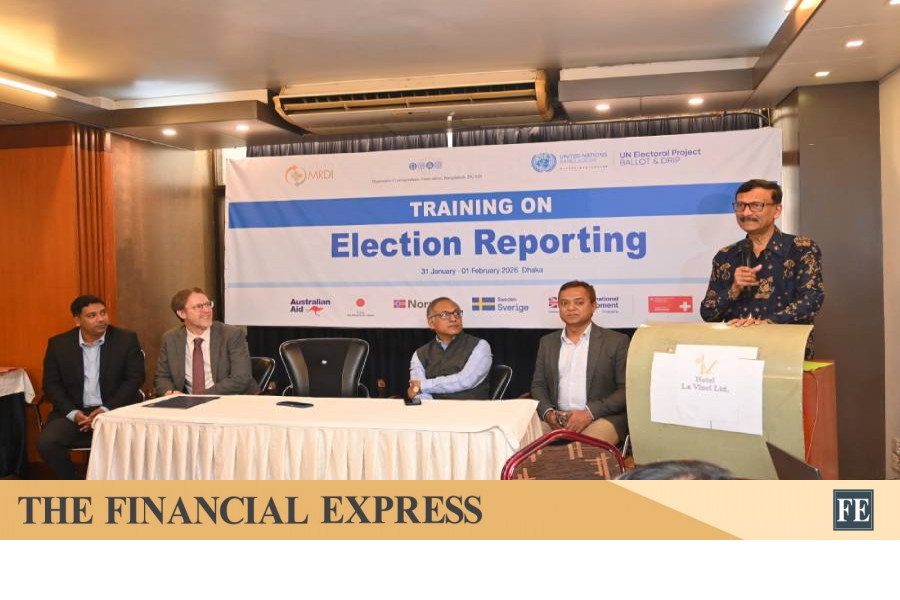
Earlier, he spoke as the chief guest at the closing session of a training programme on election reporting.

Diplomatic Correspondents Association, Bangladesh (DCAB) in cooperation with the UNDP and Media Resources Development Initiative (MRDI) hosted the training where former Bangladesh Bureau Chief of the Associated Press (AP) Farid Hossain was the facilitator of the two-day session.

UNDP Resident Representative in Bangladesh Stefan Liller, MRDI Executive Director Hasibur Rahman and DCAB President AKM Moinuddin also spoke at the event conducted by DCAB General Secretary Emrul Kayesh.​
 
Analyze

Analyze Post

Add your ideas here:
Highlight Cite Respond

Why the hurry to sign deals?

Govt’s haste to sign DP World deal ahead of election is perplexing


1770082822408.webp


The ongoing strike at Chattogram port over the interim government’s decision to hand over the New Mooring Container Terminal (NCT) to a foreign operator has opened a Pandora’s box of questions. While we are not opposed to foreign investment aimed at improving port efficiency, management, and overall trade logistics, any deal involving a strategically vital national asset like the country’s principal seaport must be fully transparent. The proposed agreement with UAE-based DP World falls short on that count.


Little information is available regarding the terms of the proposal or the status of its evaluation, even though sources at the Chittagong Port Authority (CPA) indicate that the government is preparing to sign the deal ahead of the election. But why the rush to conclude such a consequential agreement when fewer than 10 days remain before we welcome a new government?

Reportedly, the deal originated during the tenure of the previous Awami League government when an MoU was signed with DP World. After assuming office following the fall of the AL government, the interim administration revived the proposal. However, the contract was not awarded through a standard public bidding process. In March last year, a civil society organisation challenged the decision by filing a writ petition with the High Court. Although the court delivered a dissenting verdict on December 3, 2025, the Supreme Court, on January 29, rejected the petition, clearing the way for the government to move forward with the deal. The apex court noted that the awarding process complied with the 2017 Procurement Policy, which allows for direct selection in certain cases, and was consistent with the MoU signed during the AL era.

However, yesterday, a fresh petition was placed before a Supreme Court chamber judge seeking an order of status quo on the government’s move to award the contract to DP World. The petitioner's lawyer told The Daily Star that with the national parliamentary election imminent, executing the contract at such a critical juncture amounts to “executive high‑handedness, arbitrariness, and malafide exercise of power.” We, too, believe that such decisions should rest with an elected government operating under a functional parliament, where opposition voices can scrutinise long-term strategic agreements involving ports, energy, and other critical infrastructure. A non-political interim government, formed in the wake of a popular uprising, is better suited to pursuing reforms that have emerged from broad and meaningful stakeholder consultations. It remains unclear why, in its final days, the government is pushing through such high-value projects and deals—often without adequate consultation—that risk constraining the choices of the incoming elected administration.


Besides, CPA’s decision to transfer four protesting employees to the Pangaon Inland Container Terminal raises questions. Why was punitive action the authorities’ first response? Should they not instead have initiated dialogue with the protesters and addressed their concerns regarding the agreement? According to the protesters, leasing out the NCT would result in a significant share of the port’s earnings being transferred abroad. Had the interim government ensured transparency and made the contract terms public, the strike now paralysing the port might well have been avoided. The government’s priority right now should not be taking steps that could trigger unrest; only the election should be its main priority.​
 
Analyze

Analyze Post

Add your ideas here:
Highlight Cite Respond

Challenges beyond the interim period

Published :
Feb 05, 2026 22:54
Updated :
Feb 05, 2026 22:54

1770338582095.webp


The statement by Finance Adviser Dr Salehuddin Ahmed that the interim government is leaving the country's economy in a stable position does not entirely sound like rhetoric, especially when viewed against the backdrop of the looming collapse from which the economy has managed to recover over the past one and a half years. Speaking to reporters after a Government Purchase Committee meeting, he observed that the economy is no longer in a fragile condition as it once was, and that a degree of stability has been restored to its foundations, allowing future governments to move forward with greater confidence. Responding to concerns about record levels of public borrowing, the finance adviser noted that although borrowing increased, a substantial portion of external debt had also been repaid. He pointed out that the government deliberately refrained from taking large foreign loans for mega projects, a policy choice that helped prevent public debt pressure from worsening further. In a time of heightened uncertainty, such restraint arguably reflects a measure of prudence.

There is little doubt that the interim government assumed office amid an exceptionally chaotic situation. The economy was burdened by disorder in the banking sector, dwindling foreign exchange reserves, export slump and a decline in overseas workers' remittances. Steering the country clear through this difficult phase with a sense of resolve and removing the fear of an imminent economic calamity is no small achievement. Efforts to protect the banking sector from further deterioration and to rebuild foreign exchange reserves-even after repaying US$6.0 billion in external debt-are indeed heartening developments. Yet, these gains alone may not be sufficient to justify the claim that the economy has reached a satisfactory and stable footing. Dr Salehuddin himself acknowledged that employment generation remains one of the most pressing challenges. Job creation, he admitted, requires sustained support for small and medium enterprises, support that could not be adequately extended due to limited fiscal space. At another event the following day, while expressing optimism about ongoing reforms, he cautioned that significant challenges still lie ahead. The greater task, he stressed, is to carry forward reforms carefully and methodically-an endeavour that demands time, cooperation and procedural discipline, all of which are often difficult to sustain within Bangladesh's complex administrative framework.

Among the challenges ahead, the banking sector obviously stands out as a persistent source of concern. The burden of non-performing loans continues to threaten the health of the financial system. Addressing this will require transparent loan facilitation, streamlined disbursement mechanisms, and firm accountability-tasks that will test the resolve of future policymakers. Beyond banking, other critical areas demand attention, including containing inflationary pressures, improving productivity, diversifying exports and enhancing the competitiveness of Bangladeshi products in global markets.

With the general elections approaching, the challenges facing the next government are undeniably multifaceted. Any lapse in vigilance or flaw in planning could exact a cost the country can ill afford. The interim government may have steadied the ship, but navigating the waters ahead will require careful judgment, sustained reforms and a clear commitment to long-term economic resilience.​
 
Analyze

Analyze Post

Add your ideas here:
Highlight Cite Respond

The interim’s last-minute deals and the economic perils ahead

8 February 2026, 01:49 AM

1770599699862.webp

FILE ILLUSTRATION: BIPLOB CHAKROBORTY

Many of my high school teachers in Nalitabari, Sherpur used to say that good students never burn the midnight oil on the eve of an exam. Serious students distribute their efforts evenly and consistently throughout the term, so they feel confident about their results without needing last-minute cramming. However, the interim government, despite being teamed with a group of well-known experts and economists, seems to be behaving like a group of poor students frantically trying to study the whole book overnight just before the test (read: election). That rarely produces good results, nor is it practicable.

The government, crowned with no less than a Nobel laureate, raised massive hopes among the public following the student-led uprising in August 2024. Most expectations regarding reforms, justice, and economic upliftment have since nosedived, while social peace and sense of security have eroded sharply. Not only did the government fail on most economic fronts, but it also escalated risks and fear among depositors, investors, and low-income groups, thus throwing banks, capital markets, and investments in the doldrums.

While the interim failed to create new jobs for the youth who fought for change, the rate of job losses due to the closures of many factories over the past 18 months has been particularly precipitous. Still, people chose to downgrade their expectations and wait for the election before things could hopefully improve. But the interim’s sudden rush to ink new deals just before its transfer of power has not only created valid concerns for the next elected government but also raised questions about how a non-elected government can so hurriedly seal or pursue multiple strategic deals with foreign counterparts.

Foremost among these is a prospective deal with UAE-based DP World to manage cargo operations at the New Mooring Container Terminal in Chattogram Port, an endeavour that has ignited protests, including an indefinite strike by port employees scheduled to start today. Earlier, in November 2025, the authorities decided to grant Denmark’s APM Terminals a 33-year concession to build and operate the $550 million Laldia Container Terminal. Additionally, Switzerland’s Medlog SA has been allowed to run Pangaon River Port under a 22-year contract.

These deals engage the long-term interests of the nation, and thus deserve to be scrutinised and debated in parliament before approval. The interim, which took an oath to usher in civilised avenues of democracy, is clearly downplaying the role of democratic discussion and civic engagement. Its last-minute moves seem not only impulsive, but also largely designed to misrepresent the economic future of the nation. Thus, the interim is making the incoming government’s journey treacherous, toying with the nation’s sensitive, long-term interests without demonstrating adequate legitimacy and transparency.

There are other examples. Take Bangladesh Biman. Like many other public enterprises, it is also deeply troubled by inefficiency and corruption. One may recall that there was a clamour of disapproval from domestic passengers and concerned groups when Biman was given the task to manage luggage handling at the third terminal, reflecting how people largely withdrew trust from this carrier. But the interim has now reportedly fast-tracked a highly expensive procurement of 14 Boeing aircraft for Biman without any research, needs assessment, feasibility study, cost-benefit analysis, or stakeholder discussion. By doing so, it is effectively prioritising a foreign company’s interests while depleting national coffers.

The interim government has entered another sensitive arena by approving a defence industrial zone in Chattogram’s Mirsarai, an area previously designated for the Indian Economic Zone, which was cancelled last year. There are two anti-economic signals in this decision. First, the interim is fanning anti-India sentiment without doing justice to Bangladesh’s economic gains from manufacturing and trade. Second, it is diverting our developmental path towards a military-focused model akin to some other countries, a model where military might and economic growth could move in opposite directions.

Bangladesh has allowed countries like China, Japan, South Korea, and India to build economic zones on its soil, assessing that they are mutually beneficial. More importantly, they contribute to Bangladesh’s employment, knowledge, technology, productivity, and growth. The selection of which countries should be allowed to build economic zones entails Bangladesh’s largest trade partners, and India qualifies in that regard.

The drastic fall in Bangladesh-India relations may be a reason why India lost the zone in Bangladesh, but it could have been granted to smaller trading partners like Pakistan, Iran, Afghanistan, or Cambodia. The interim’s sudden leap into establishing a defence industrial zone instead is both absurd and contradictory to what Bangladesh needs now: employment generation and recovery from economic downturn.

The interim is thus not only attempting to alter Bangladesh’s character but is also behaving anti-economically. While people jocularly say that six economists will generate seven opinions, there is consensus among economists that increasing military spending is discouraged for countries aspiring to rapid poverty alleviation, respectable growth, and faster development. As Noam Chomsky asserts, “If you’re worried about the deficit, pay attention to the fact that it’s almost all attributable to military spending and the totally dysfunctional health program.”

Finally, the interim’s handling of the public-sector pay hike issue is a poorly timed disaster. It may act as a landmine for the next elected government, which will neither be able to avoid it nor totally afford it given the revenue situation that was worsened by the interim itself. High inflation has certainly eroded public servants’ purchasing power, but the issue could have been deferred to the incoming government.

Such last-minute deals, along with high-impact administrative initiatives reported by the media recently, are poised to do more harm than good. They are socially divisive, politically inappropriate for the present, and economically perilous for the next government.

Dr Birupaksha Paul is professor of economics at the State University of New York at Cortland, US.​
 
Analyze

Analyze Post

Add your ideas here:
Highlight Cite Respond

Interim government reveals advisors’ asset details before election

bdnews24.com
Published :
Feb 10, 2026 22:04
Updated :
Feb 10, 2026 22:04

1770769954886.webp


The interim government has disclosed the details of assets owned by its advisors and their spouses.

The Cabinet Division published a notice on Tuesday outlining records from June 2024 to June 2025.

These disclosures also account for their outstanding liabilities.

Commerce Advisor Sheikh Bashir Uddin is the richest among them, with assets worth Tk 916.5 million, while former advisor Mahfuj Alam owns the least, with assets valued at Tk 1.3 million.​
 
Analyze

Analyze Post

Add your ideas here:
Highlight Cite Respond

What will be the fate of interim government's ordinances?

Shahdeen Malik
Updated: 25 Feb 2026, 17: 28

1772067154947.webp


The defunct interim government enthusiastically issued dozens of ordinances. According to the website of the Ministry of Law, in the first 45 days of 2026, that is, up to 15 February, the government issued 36 ordinances. This means an ordinance was issued in less than every one and a half days on average.

In 2025, 80 ordinances were issued; meaning it took around 4.5 days on average for each ordinance. And from 13 August to 31 December in 2024, 17 ordinances were issued. The average time taken for each ordinance was about 9 days.

Clearly, as time passed, the efficiency in issuing ordinances increased significantly. This is natural, as generally, efficiency blossoms progressively with repetition or frequent execution of the same task.

At the beginning of each ordinance, it is stated that the President issued the ordinances by the power of Article 93 of the Constitution. Broadly speaking, Article 93 states that if the parliament is not in session or dissolved, and “if the President is satisfied that circumstances exist which require immediate action...he may promulgate an ordinance.”

This implies that clearly, the President felt the need to take ''immediate action'' 133 times during the tenure of the interim government. It goes without saying, the actual ''realisation'' was that of the advisory council of the interim government, and so many ordinances were issued on their recommendations.

The interim government has left; so what will happen to the ordinances now? It's assumed that most citizens believe the new parliament will pass most of the ordinances as laws to maintain their effectiveness. But there is a major 'complication' here.

Article 93 of the Constitution is quite unfriendly. Firstly, even if the President feels it is necessary, Article 93 imposes three limitations on him. These are—(a) No ordinance can be issued by the President regarding any law that the parliament cannot make according to the Constitution; (b) The provisions of the Constitution cannot be amended or repealed through an ordinance. For instance, the President cannot, by ordinance, make it so that the Prime Minister cannot serve more than two terms; (c) A new ordinance cannot be issued to maintain the effect or continue the effectiveness of a previous ordinance.

For argument's sake, someone might claim that none of the 133 ordinances exceeded these limitations, or a generous person might accept that a couple of ordinances breached these limits. As a result, a few ordinances might be annulled. This means most of the ordinances will remain in effect substantially.

However, Article 93's sub-clause (2) has created a major complication. This sub-clause (2) might seem perplexing or complex to some general readers.

Therefore, we will try to create a simplified explanation.

As already mentioned, the President can only issue ordinances when the parliament is not in session or is dissolved. The first session of the new or thirteenth parliament will commence on 12 March. Sub-clause (2) instructs that the ordinances issued must be laid before the parliament on the very first day it sits. Accordingly, all 133 ordinances will be presented for consideration in parliament on 12 March. What happens next?

According to sub-clause (2), there are three options open to the parliament. On the very day of presentation, the parliament can annul all the ordinances at once. If they are not annulled on the first day, the second course available to parliament is to annul them gradually, like 5 on the first day, followed by 10 in two to three days, and another 20 in the following week.

If the ordinances are not annulled on the first day or sequentially, or if some are annulled and no decision is made on others, then according to sub-clause (2), all ordinances for which no decisions are made will ''lose effectiveness'' on the 30th day of the first session of parliament. In simpler terms, on the 30th day of the first parliamentary session, all ordinances will indiscriminately ''die''!

So what to do? Suppose the new parliament would like to maintain the effectiveness of some ordinances. The ones intended to be kept effective must be passed through the legislative process in parliament as new laws.
Broadly, this process will include—the concerned ministry preparing a brief regarding the necessity of the law; presenting the brief to the cabinet for approval, and approval by the cabinet. After which the concerned ministry will draft the law, which will be submitted again to the cabinet meeting for final approval.

After the cabinet approves the draft, it will be sent to the government press for printing as a bill, potentially with necessary linguistic and grammatical edits. The printed copies will be sent to all members of parliament before being presented in parliament on the specified day for consideration.

There are numerous steps or stages in the parliamentary discussion and debate, which are not necessary to detail at the moment. After traversing these stages and steps, if the bill is passed in parliament, it will be sent for the President’s assent. After the President's approval, it will be published as law, which we will then be bound to adhere to.

In conclusion, it can be assumed that the interim government might have thought that by issuing ordinances, all problems would be solved. But they likely did not consider that these ordinances are short-term or temporary. After a specific time, i.e., within 30 days of the next parliamentary session, all ordinances will be abolished.

Issuing ordinances is by no means the ultimate solution for state reform. Some activities, measures, appointments, or even the annulment of previous activities have been carried out under these ordinances.

However, once the effectiveness of these ordinances expires, there will be significant debates and arguments about the consequences of activities initiated or taken under these ordinances in the near future.

In the past 54 years, this complex legal question has been sought in two rulings. One is Suranjit Sengupta vs. Election Tribunal (1981); the other is Shariatullah vs. Bangladesh (2009). Additionally, there is brief discussion in a couple more cases. However, these precedents are not sufficient to resolve the legal complexities.

The complexity created by issuing so many ordinances would have been better avoided by the interim government. It is better not to make hasty laws than to make them.

#Shahdeen Malik is a senior advocate at Bangladesh Supreme Court​
 
Analyze

Analyze Post

Add your ideas here:
Highlight Cite Respond

Members Online

Latest Posts

Back
 
G
O
 
H
O
M
E