[šŸ‡®šŸ‡³] Cockroach Janta Party of India

[šŸ‡®šŸ‡³] Cockroach Janta Party of India
31
746
More threads by Saif

G   Indian Defense

Saif

Senior Member
Joined
Jan 24, 2024
Messages
22,197
Likes
9,869
Nation

Axis Group

India’s ā€˜Cockroaches’ movement emerges as major youth-led challenge to Modi government
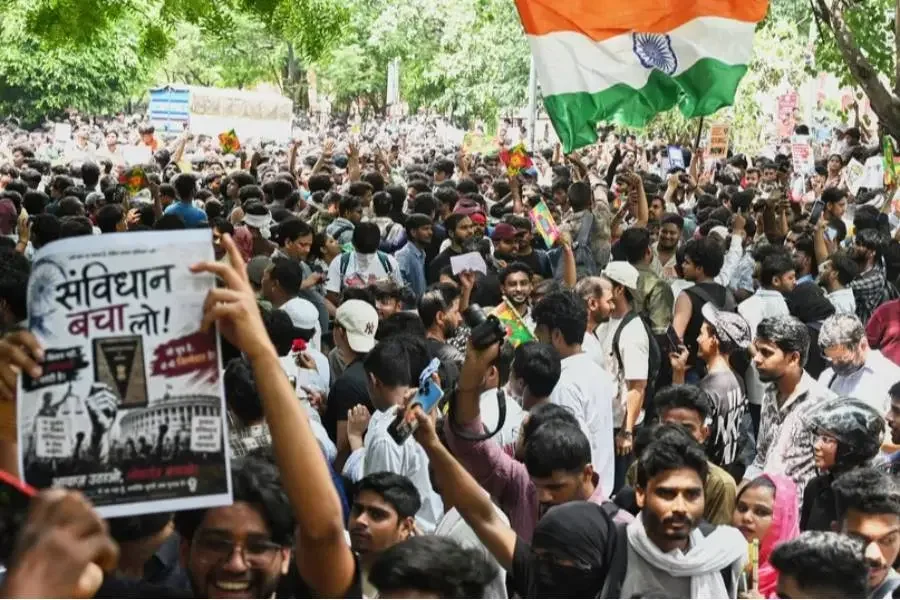

1784762779839.webp

A protestor carries a poster with a message in Hindi which translates as ā€˜Save Our Constitution’ as he participates in a protest movement led by Cockroach Janta Party, in New Delhi, India, Wednesday, July 22, 2026. Source: AP Photo/Vipin

A youth-led protest movement that began as an online response to a controversial court remark has grown into one of the most significant public challenges to India’s ruling government, expanding from demands for education reforms to broader calls for accountability and institutional change.

The movement, known as the ā€œCockroaches,ā€ was sparked by widespread anger over alleged leaks of highly competitive entrance examinations for medical colleges and government jobs, which are seen as critical pathways to employment and social mobility for millions of Indians.

The protests gained momentum in May after India’s Supreme Court Chief Justice Surya Kant, during an unrelated court hearing, reportedly compared some unemployed young people to ā€œcockroaches.ā€ The remark triggered a backlash on social media, leading Boston University student Abhijeet Dipke to launch the Cockroach Janta Party, or Cockroach People’s Party.

Many young people embraced the label as a symbol of resilience, rapidly turning the movement into a social media phenomenon. Supporters shared satirical content criticizing the government over unemployment, limited job opportunities and economic challenges.

The campaign moved from online platforms to the streets in June when Dipke returned to India and organized demonstrations in several cities and university campuses. Protesters are demanding the resignation of Education Minister Dharmendra Pradhan, reforms to the examination system and compensation for families of students who died by suicide following alleged exam paper leaks.

Initially drawing only a few hundred participants, the protests have since attracted thousands. The movement gained further attention after activist Sonam Wangchuk joined the demonstrations and launched a hunger strike lasting more than three weeks before police transferred him to a hospital.

As the campaign has expanded, it has evolved beyond student concerns to reflect wider public frustration over government accountability, unemployment and confidence in institutions, including the education system, political leadership, judiciary and media.

The protests have also drawn support from professionals, families and volunteers across the country, many of whom have contributed through donations and social media campaigns rather than traditional political organizations.

The Indian government initially dismissed the protesters’ demands. Education Minister Dharmendra Pradhan said authorities had addressed the examination controversy by ordering fresh tests and accused demonstrators of acting against national interests.

However, the government’s stance softened after police used tear gas and batons to disperse protesters attempting to march to Parliament earlier this week. The crackdown triggered public criticism and prompted government representatives to hold talks with protest leaders, although no breakthrough was reported.

The movement has also received backing from opposition leader Rahul Gandhi and several rights groups, who describe it as a broader campaign for democratic accountability and the right to peaceful protest.

Political observers say the decentralized youth movement presents an unusual challenge for Prime Minister Narendra Modi’s government, particularly as India’s large population of young voters could play a decisive role in future elections.​
 

What has happened so far in India's protests demanding education minister's resignation


1784849976666.webp
 

What India’s ā€˜cockroach’ protest tells us about South Asia’s generation of discontent

Jannatul Naym Pieal

1784851076668.webp

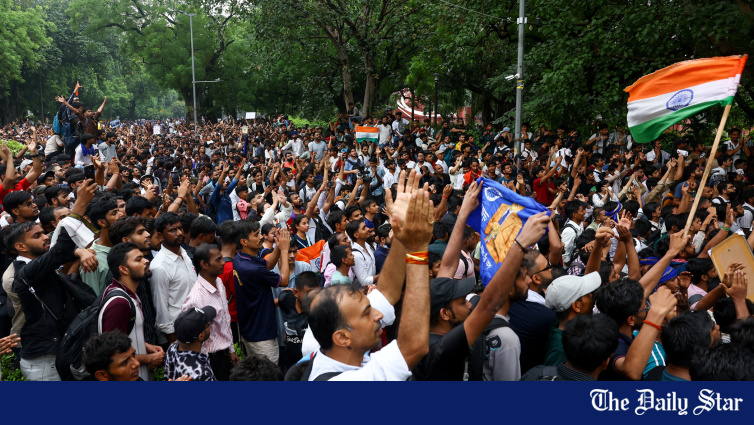
Supporters of the youth-led Cockroach Janta Party movement protest on the opening day of the Indian parliament's monsoon session on July 20, 2026. PHOTO: REUTERS/ANUSHREE FADNAVIS

When more than 10,000 young Indians marched from Jantar Mantar to the parliament in New Delhi on Monday—responding to a call by the youth-led Cockroach Janta Party (CJP) movement—police launched a crackdown on them with tear gas and batons, allegedly injuring about 150 protesters and detaining many others. It was the largest demonstration to challenge the Narendra Modi government in years, a spark that may refuse to fizzle soon. The next day, despite heavy rains overnight, hundreds of protesters returned to Jantar Mantar to settle into what appears to be an indefinite sit-in, signalling their intention to prepare for a much longer political fight.

The movement itself is barely ten weeks old. It emerged from an offhand remark by India’s Chief Justice Surya Kant during a hearing on forged educational credentials, when he compared fraudulent degree holders to ā€œcockroachesā€ and ā€œparasites.ā€ Although he later clarified that he had referred only to fake degree holders, the damage had been done. The CJP founder Abhijeet Dipke embraced the insult, registering a website that mocked the ruling Bharatiya Janata Party’s initials while reclaiming the metaphor. Volunteers soon began arriving at protests dressed as cockroaches. What began as a judicial gaffe evolved into a shared identity for many young Indians who felt that the country’s institutions had long treated them with contempt.

The immediate grievance concerns the National Eligibility-cum-Entrance Test (NEET), the examination that determines admission to India’s medical colleges. Following allegations of questions being leaked, the test was cancelled and conducted again, throwing millions of candidates into weeks of uncertainty. Around a dozen students reportedly died by suicide during the turmoil. The CJP demands Rs 1 crore in compensation for each affected family and the resignation of Union Education Minister Dharmendra Pradhan. Its demands broadened after Sonam Wangchuk, the well-known Ladakhi engineer who had been on an indefinite hunger strike since June 28 in support of the movement, was forcibly removed from his protest stage early this week. Later, Health Minister JP Nadda indicated the government’s willingness to ā€œconsiderā€ the demands. The government now seems ready to hold a discussion on the NEET paper leak issue in parliament.

However, treating the ongoing agitation simply as a protest over an exam would be misleading. The NEET controversy has become a vessel for grievances that extend far beyond one test. According to the State of Working India 2026 report released by Azim Premji University, roughly four in ten young graduates remain unemployed, while only a small fraction secure permanent salaried work within a year of finishing university. Anthropologist Craig Jeffrey has spent years documenting how educated Indian youth drift through long periods of preparation for government jobs that statistically most will never obtain. So, the NEET leak did not create this frustration; it only gave it a focal point.

Perhaps this is what distinguishes the CJP from other big protest movements Modi has faced since taking office. The demonstrations against the Citizenship Amendment Act (CAA) centred on constitutional rights and religious identity. The farmers’ movement revolved around agricultural policy and a highly organised rural constituency. This movement draws strength from something ā€œcloser to homeā€: the issues that most consistently galvanise young people regardless of their ideology or geography—unemployment, state repression, and the loss of dignity. It challenges not merely a policy but the belief that education, hard work, and merit still offer a meaningful route to social mobility. In that sense, it may represent a deeper and potentially more enduring challenge than the CAA or farm-law protests because it strikes at the expectations of an entire generation rather than the interests of a particular community.

The comparison with similar movements in Bangladesh, Sri Lanka, and Nepal also reveals something important. In each case, the immediate trigger looked small next to underlying economic misery. Bangladesh’s 2024 protests were initially about a quota system reserving 56 percent of government jobs for descendants of freedom fighters. But the discontent ran far deeper, influenced by years of authoritarian rule, entrenched corruption, political repression, and democratic backsliding. The crisis ultimately escalated into the indiscriminate killing of as many as 1,400 people between July 1 and August 15, 2024, transforming a dispute over quotas into a nationwide uprising against the government. Sri Lanka’s 2022 uprising began with fuel shortages but soon became a revolt against political privilege and economic collapse. Nepal’s demonstrations over restrictions on social media reflected wider frustration among young people confronting limited opportunities at home while watching political elites and ā€œnepo kidsā€ remain insulated from hardship.

Across South Asia, youth-led movements have thus found their momentum not in a single policy dispute but in the convergence of repression, unemployment, and the erosion of dignity. India’s protests are showing the same characteristics.

The symbolism surrounding NEET reinforces this broader reading. In a society where family connections, political patronage, and caste networks continue to shape access to opportunities, competitive examinations have long been presented as the one institution where merit could prevail. The allegation that even this gateway could be manipulated transformed the scandal into something much larger than administrative failure. For many students, it represented the collapse of the last institution that still seemed capable of rewarding effort fairly.

Opposition parties have been naturally eager to associate themselves with the CJP movement, though their reactions have underscored their own political calculations. Arvind Kejriwal proposed making Wangchuk the education minister. Trinamool Congress leaders like Mamata Banerjee and Abhishek Banerjee expressed early support. The Samajwadi Party dispatched delegations. Rahul Gandhi remained largely silent until Wangchuk’s detention made silence politically untenable. Since then, he has emerged as one of the movement’s most prominent political backers, even being briefly detained by Delhi Police during a march towards Modi’s residence. Rather than leading the protests, opposition parties have found themselves trying to borrow legitimacy from a movement that has deliberately kept them at arm’s length. So, as Reuters has put it, the protest has given India’s opposition parties ā€œa rare opening against Modiā€.

The government’s response has likewise revealed a calculated balancing act. Authorities blocked the CJP’s website and social media platforms under national security provisions soon after its emergence. Protesters allege constant surveillance around the demonstration site. Yet even as police forcibly removed Wangchuk from his stage, BJP leaders held discussions with movement representatives. Alternating between coercion and engagement appears designed less to resolve the dispute than to prolong it until fatigue overtakes mobilisation.

Even so, the movement faces formidable obstacles. Narendra Modi continues to command significant support, and his government has demonstrated remarkable resilience during previous crises. The CAA protests ultimately failed to alter the government’s broader policy trajectory. The farmers’ agitation secured the repeal of contentious legislation but left the BJP’s electoral dominance largely intact. Those precedents suggest that while the current protests may expose one of the government’s greatest vulnerabilities, Modi’s personal popularity and the BJP’s organisational strength are likely to limit their immediate political impact.

Whether the CJP ultimately succeeds, therefore, matters less than what it has already revealed. A generation of young Indians has discovered that institutions once regarded as untouchable can be openly challenged. The shift to an indefinite sit-in away from potentially confrontational marches suggests the movement is preparing for a war of endurance rather than spectacle. Governments can disperse marches, but they cannot easily extinguish the frustrations that brought thousands of young Indians onto the streets. Bangladesh’s own experience offers a reminder: the anti-VAT protests of 2015, or the quota reform movement and road safety movement of 2018, did not achieve all they sought, but they nurtured the networks, grievances, and political consciousness that eventually culminated in the July 2024 uprising. Thus, even when youth movements appear to fade, the anger that animates them often survives.

Jannatul Naym Pieal is a writer, researcher, and journalist.​
 

India's 'cockroach' party says ending protest after minister resigns

AFP
New Delhi
Updated: 25 Jul 2026, 22: 32

1785020684997.webp

Cockroach Janta Party (CJP) supporters celebrate the resignation of India's Education Minister Dharmendra Pradhan, at Jantar Mantar in New Delhi on 25 July 2026 amid the ongoing protests over alleged NEET exam irregularities. India's education minister Dharmendra Pradhan resigned on 25 July 25, after mass youth-led protests demanded his ouster in anger over a string of irregularities in potentially life-changing exams. AFP

India's "cockroach" party said Saturday it was ending its youth-led protests in New Delhi after the government "accepted" all its demands, a spokesperson for the movement said.

"All our demands have been accepted, so we request the protesters to withdraw immediately and return home peacefully," Ashutosh Ranka, spokesperson of the social-media driven Cockroach Janta Party (CJP) said after meeting government ministers.​
 

India's education minister Dharmandra Pradhan resigns after youth protests

Reuters
New Delhi, India

1785020817262.webp

People gather in solidarity with Cockroach Janta Party (CJP) protests held at Jantar Mantar in New Delhi, which demand the resignation of India's Education Minister Dharmendra Pradhan over exam paper leaks, in Kolkata, India, 24 July 2026. Reuters

India's education minister resigned on Saturday, handing a major victory to youth protesters who had demanded he quit to take responsibility for examination paper leaks, and who erupted in celebration on news of his departure.

"We have done it," said Abhijeet Dipke, founder of the Cockroach Janta Party that led the protests, to loud cheers at the Jantar Mantar protest site in New Delhi.


India's biggest street protests of recent years have become a political flashpoint, posing one of the biggest challenges to Prime Minister Narendra Modi as politicians joined youngsters' calls to demand action.

"Considering the situation that has arisen at Jantar Mantar (protest site) and across the country, so that anti-national forces do not take advantage of this situation ... I have sent my resignation letter to the Prime Minister," Dharmendra Pradhan wrote in his post.

1785020852560.webp

India's Education Minister Dharmendra Pradhan addresses the gathering on the second day of the three-day B20 Summit in New Delhi on August 26, 2023. AFP file photo

"I deeply respect the aspirations, feelings, and legitimate expectations of the country's youth."

The minister announced his resignation on X just as police fired tear gas to scatter young protesters in New Delhi, hours before their leaders were set to hold another round of talks with ministers.

Youngsters at the Jantar Mantar site shouted "Jai Hind", a patriotic slogan meaning "Victory to India".

Thousands of supporters of India's youth-led "cockroach" movement had been protesting since June, but anger boiled over since police on Monday injured dozens of students, launching baton charges and firing tear gas to deter crowds of protesters marching on parliament.

The protests, led largely by young people and triggered by discontent over leaks of question papers for high-stakes entrance exams, reflect anger over job scarcity, corruption and government accountability.

Federal authorities even on Saturday restricted access to the internet and to 18 metro stations to try to limit the protest in the capital, the latest day of such restrictions.​
 

India’s ā€˜cockroach’ movement says will launch protest if poll panel chief doesn’t quit in 48 hours


1790316601156.webp

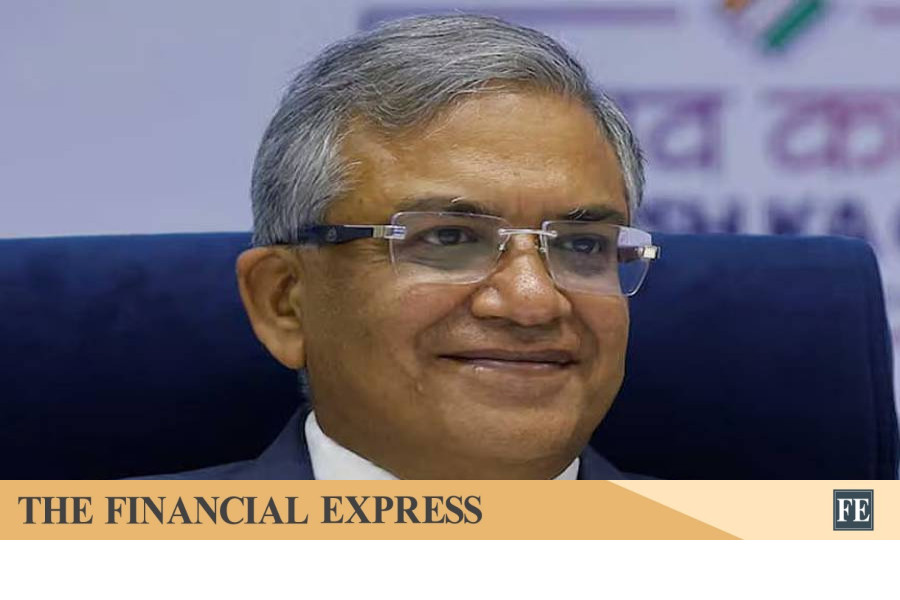
India's Election Commissioner Gyanesh Kumar smiles during a press conference in New Delhi, India, Mar 16, 2024. REUTERS/Adnan Abidi

India’s ā€˜Cockroach’ youth movement leaders said on Thursday that they would launch protests across the country if India’s chief election officer does not resign in 48 hours, a day after a newspaper report pointed to differences among top officers leading the poll panel.

The Indian Express newspaper said on Wednesday that two election commissioners had raised questions or expressed concern at least 14 times in 10 months, mostly in connection with the process of updating voters’ lists that began last year, with Chief Election Commissioner Gyanesh Kumar.

The Election Commission of India said that differences were normal in any institution and that all its actions were legal.​
 

India protesters demand election chief resign

AFP
New Delhi


1790985531916.webp

Members of the Communist Party of India's student wing are detained by police during a protest against India's Chief Election Commissioner Gyanesh Kumar, condemning alleged electoral malpractices in the Special Intensive Revision (SIR) of electoral rolls, in New Delhi on 2 October 2026. AFP

Indian protesters rallied in New Delhi on Friday, demanding the resignation of the chief election commissioner over alleged voter-roll irregularities, but were blocked by large police deployments.

A newspaper investigation by The Indian Express last month alleged impropriety during a large-scale voter-roll revision, that has struck millions of names from lists.

The Election Commission, India's constitutional body responsible for conducting elections, has rejected allegations of wrongdoing over the voter-list revision.

Opposition politicians have accused the head of Election Commission of India of acting at the behest of Prime Minister Narendra Modi's Hindu nationalist Bharatiya Janata Party (BJP).

Opposition party members also joined the protest in New Delhi, and were briefly detained by police.

Jantar Mantar, a government-designated protest site in the heart of the capital, was sealed off by police behind barricades, as protesters gathered on surrounding roads.

Mobile internet services were also suspended in the area.

Friday, 2 October, is a public holiday to mark the birthday of Mahatma Gandhi, and protesters said they were invoking his principles of peaceful demonstration.

Protesters waved India's flag and chanted slogans against the Election Commission, demanding its chief Gyanesh Kumar step down.

"My motivation is our future," Nidhi Sharma, 19, a Delhi University student, told AFP. "I have to vote."

Mina Giri, 38, who said she had lived in Delhi for 15 years and voted in previous elections, said her name had been removed from the rolls.

"How could my fundamental right be taken away from me?" she said.

Another protester, Imran, 18, said his family had been left off the list.

"Because of this, we are struggling to get our other official documents being made, which prevents us from getting government scheme benefits," he said.

"We are poor, don't have alot and dependent on it."

Kumar has not commented on the allegations, which the ECI said gave "only one part of the picture".

The protests came ahead of demonstrations on the same issue expected in Mumbai later Friday by the Cockroach Janta Party (CJP), which would be its first protests since July, when their protests helped oust the education minister.

The CJP began in May as a satirical online movement launched by Abhijeet Dipke, 31, and grew into a youth protest campaign.

India's opposition parties have also announced protests, with a plan to march to the Election Commission in New Delhi on 6 October, and hold "Save Democracy" rallies countrywide in the days following.​
 

India detains protesters demanding election chief resignation
Updated : 4 October 2026, 01:56

AFP, New Delhi

1791070178444.webp

Neha Bora, National President of the All India Students' Association (AISA), is detained by police during a protest demanding the resignation of India's Chief Election Commissioner Gyanesh Kumar, in New Delhi, India, October 3, 2026. Photo: Reuters/Adnan Abidi

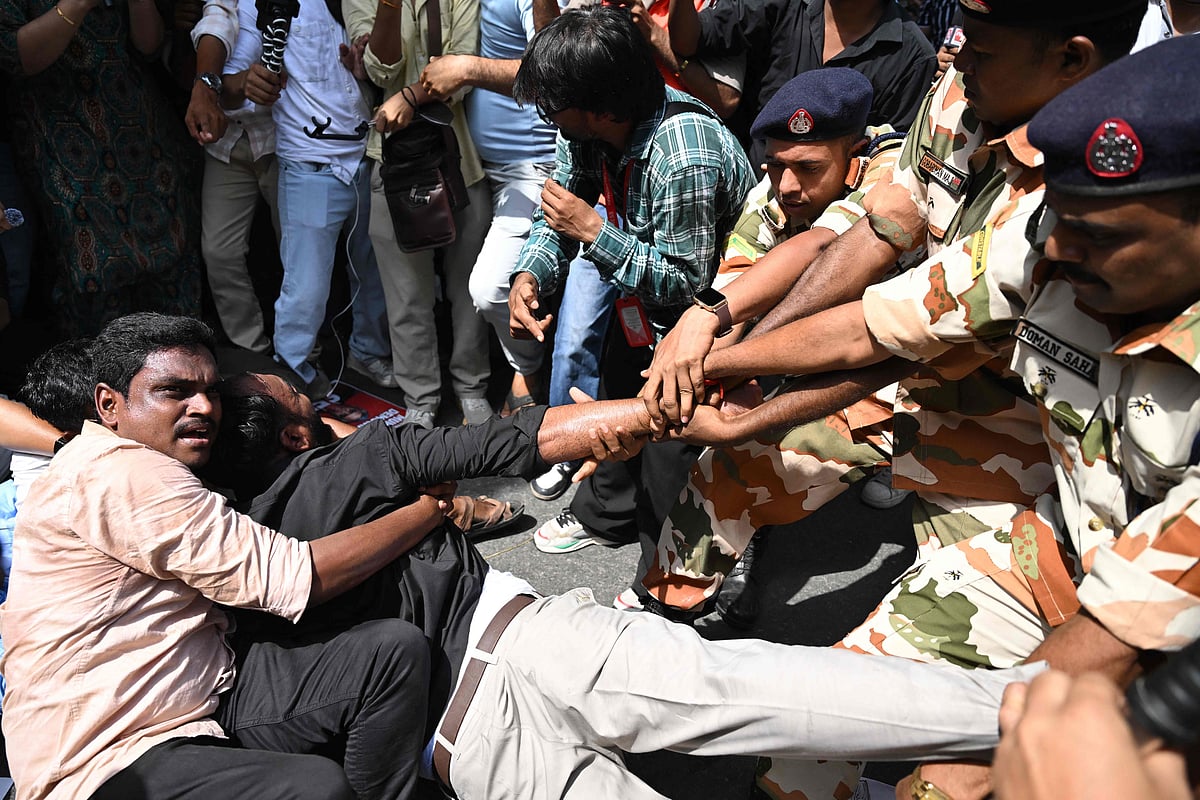
Indian police on Saturday detained dozens of youth protesters in New Delhi on the second straight day of demonstrations demanding the chief election commissioner's resignation over alleged voter-roll irregularities.

The demonstrations have been backed by key opposition parties, including the popular Gen Z-led Cockroach Janta Party (CJP), who say voter-roll changes give an advantage to Prime Minister Narendra Modi's ruling Bharatiya Janata Party.

Tap here to add The Daily Star as a trusted source google-preferred-source-badge
There was a heavy police presence around Jantar Mantar, a government-designated protest site in the heart of New Delhi, which remained sealed off behind police barricades.

Local media reports said more than 100 protesters demanding that Election Commission of India (ECI) chief Gyanesh Kumar step down were detained.

"Delhi Police must stop its crackdown on protesting students and activists," CJP chief Abhijeet Dipke said in a social media post.

"Every attempt to suppress peaceful protesters will only bring more people to the streets and strengthen the march to Jantar Mantar," Dipke added.

"Dissent is a democratic right. It cannot be crushed through intimidation or force".

Delhi police did not comment on the reported detentions but warned that "unauthorised gatherings", processions and demonstrations were prohibited around Jantar Mantar.

"No permission has been granted for any protest scheduled for today... nor has any prior intimation regarding any such protest been received by New Delhi District Police," police said.

Anti-government activist Yogendra Yadav said: "If a designated protest site cannot accommodate peaceful dissent, where does democracy leave room for protest?"

'Peaceful dissent'

A newspaper investigation by The Indian Express last month alleged impropriety during a large-scale voter-roll revision that left millions of names struck from the lists.

The Election Commission of India has rejected allegations of wrongdoing. Kumar himself has not commented.

On Friday, hundreds of protesters gathered on roads around Jantar Mantar and in Mumbai's Shivaji Park.

The protest in Mumbai was the first major demonstration by the CJP -- which began in May as a satirical online movement -- since July, when their nationwide campaign helped oust the education minister.

Just as they did in July, Indian authorities reportedly cut off mobile internet services around protest areas on Friday.

In July, protesters used mobile apps to circumvent the internet ban.

One of those was Bitchat, a peer-to-peer messaging system that relies on Bluetooth to link people who are nearby into an ad-hoc network without using the internet.

US tech entrepreneur Jack Dorsey, who co-founded Twitter (now known as X) and developed Bitchat, said that New Delhi had ordered its removal from Apple's App store.

In his post on X, Dorsey included a screenshot of a notification from Apple that said the app "includes content that is illegal in India".

New Delhi did not immediately comment about the decision.

Opposition parties have announced plans for more protests, including a march to the election commission in New Delhi on Tuesday and "Save Democracy" rallies countrywide afterwards.

The CJP has called for a "massive mobilisation of young Indians" in New Delhi on October 10. Other opposition parties and activists have also backed the protest call.​
 

ā€˜Cockroaches’ plan Oct 10 Delhi march, 160 more held
New Age Desk . Dhaka 04 October, 2026, 01:14


1791071366309.webp


The Cockroach Janta Party on Saturday announced a march to Delhi on October 10 as protests against chief election commissioner Gyanesh Kumar continued for a second day, with around 160 protesters detained in the capital.

The protesters were detained as Section 163 of the Bharatiya Nagarik Suraksha Sanhita remained in force in New Delhi, Hindustan Times reported, quoting Press Trust of India.

Those detained included advocate Prashant Bhushan, political activist Yogendra Yadav and president of All India Students’ Association Neha Bora.

CJP convener Abhijeet Dipke and party spokesperson Das announced a ā€˜massive mobilisation’ at Jantar Mantar on October 10.

Dipke criticised the Delhi police for detaining protesters. ā€˜By crushing dissent and cracking down on peaceful protesters, Delhi police is bringing nothing but shame to the institution and the country,’ he said in a post on X.

The protests have centred on allegations of irregularities in the Special Intensive Revision of electoral rolls and demands for the resignation of CEC Gyanesh Kumar.

Senior advocate Kapil Sibal and Bhushan joined Bora in a march towards the protest site on Saturday.

Yadav also announced his participation in the second day’s protest, saying in an X post that they would meet at Jantar Mantar at 1:00pm.

On Friday, around 1,000 people were detained across Delhi as police and security forces prevented protesters from reaching Jantar Mantar for the planned demonstration.

The protest had been called by the Aam Aadmi Party, AISA, Students’ Federation of India, National Students’ Union of India, Indian Youth Congress and other student and youth organisations.

Nearly 750 people were detained from areas around Jantar Mantar, while another 400 were detained from other parts of Delhi, according to Indian media reports. Around 200 people were also placed under house arrest.

More than 5,000 security personnel were deployed in and around Jantar Mantar to prevent protesters from reaching the site.​
 

Indians protest election chief as police probe harassment claims​
  1. Voter-roll revision sparks allegations​
  2. Election Commission denies wrongdoing​
  3. Thousands protest in Mumbai​
  4. ​

1791160770359.webp

Police detain a protester during a demonstration against India’s election chief in New Delhi on October 3, 2026. Photo: AFP

Indians rallied for a third day on Sunday demanding the election commission chief's resignation, while police launched an investigation into sexual harassment allegations against officers during protests in New Delhi a day earlier.

Protests began on Friday demanding the Election Commission of India (ECI) chief Gyanesh Kumar step down, alleging wrongdoing during a large-scale voter-roll revision that has removed millions of names from the lists.

The ECI has rejected allegations of wrongdoing. Kumar himself has not commented.

Thousands marched in Mumbai on Sunday, waving Indian flags, demanding Kumar step down.

Protesters have included supporters of the Cockroach Janta Party (CJP) -- which began in May as a satirical online movement, and succeeded in its campaign to oust the then education minister.

"Mumbai is out on the streets again for free and fair elections!" CJP chief Abhijeet Dipke said in a social media post on Sunday.

"Solidarity with all the protestors," he added. "All Indians need to come together. It's now or never!"

In New Delhi, a few dozen activists, including CJP supporters, gathered outside a police station on Sunday to demand action over the allegations against officers during protests in the capital on Saturday.

The harassment allegations were made after police detained scores of protesters around the government-designated protest site of Jantar Mantar in New Delhi.

"Allegations of sexual harassment were made by three female journalists against police officers," Delhi police said in a statement, promising "a fair and impartial enquiry".

In a video posted on social media, a complainant said that a police officer pushed and touched her "inappropriately".

CJP activist Saurav Das, in a post on social media, said that "a delegation with the victim is inside the police station".

Dipke said that the accused officer "must be arrested immediately".

Opposition politicians have accused the ECI of acting at the behest of Prime Minister Narendra Modi's Hindu nationalist Bharatiya Janata Party (BJP).

They have said they will march to the Election Commission in New Delhi on Tuesday, and hold "Save Democracy" rallies countrywide afterwards.

The CJP has called for a "massive mobilisation of young Indians" in New Delhi on October 10.​
 

Mamata Banerjee, Trinamool MPs detained during protest in New Delhi


1791677245905.webp

Image courtesy: Social media via NDTV

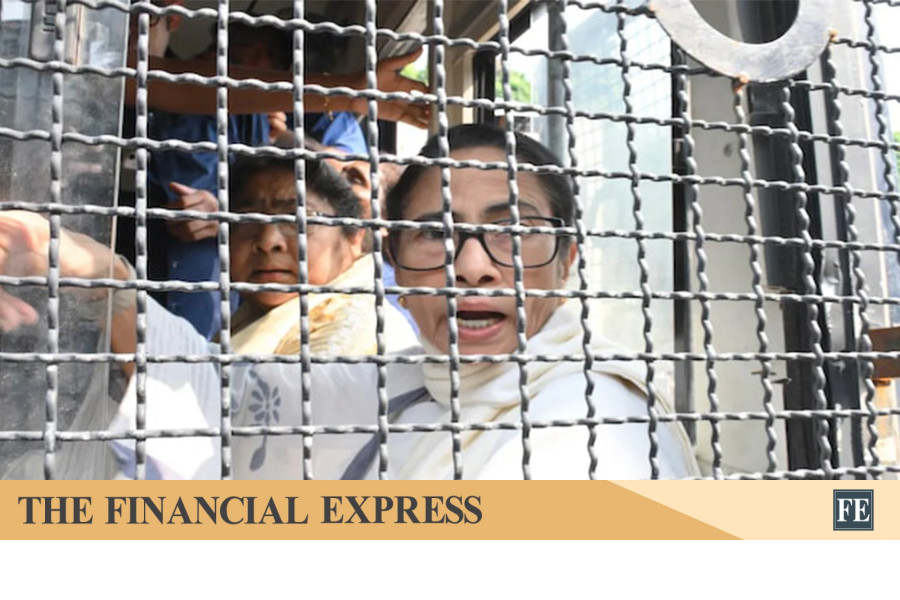
Former Bengal Chief Minister Mamata Banerjee was detained on Saturday as she tried to join the Cockroach Janta Party (CJP) protest in New Delhi. The Trinamool Congress chief was detained along with several of her party MPs from South Avenue in central Delhi, where she sat on a protest at a bus stand after being stopped by police, BDTV reports.

Banerjee and five of her party MPs, including Derek O'Brien and Dola Sen, were detained and taken away in a police bus. Mamata Banerjee sat with a band-aid stuck to her mouth during the protest.

"The government is misbehaving with us," Banerjee said in a video statement from inside the police bus.

"We the INDIA alliance will continue to fight to strengthen people's voice," she added.

Several other opposition and student leaders were also detained as they tried to join the Jantar Mantar protest.

Former Kerala CM Pinarayi Vijayan and CPM MP John Brittas were among those detained by police and taken to the detention centre at Chhatrasal Stadium.

Mamata Banerjee had arrived in Delhi on Friday to join the Opposition protest against Chief Election Commissioner Gyanesh Kumar. She was part of the INDIA bloc delegation that met President Droupadi Murmu on Friday evening to demand Kumar's sacking.

During the meeting with the President, the Opposition leaders flagged the issue of their "vote chori" claims to demand the resignation of Gyanesh Kumar and repeal of all Assembly polls held in the last two years, with Leader of Opposition Rahul Gandhi saying he was "shocked" that the President did not deny the 'election theft' charge.

Sources later said that claims made by Rahul Gandhi suggesting President Droupadi Murmu accepted assertions of 'vote theft' were incorrect.

After the meeting, Gandhi said the opposition leaders would go to the Supreme Court on Monday to meet Chief Justice Surya Kant and hand over a memorandum to him too, as they wanted to avail all options available.

The INDIA alliance has also announced a major protest against the alleged Election Commission irregularities on Monday.​
 

Pressure mounts on India poll chief Gyanesh Kumar over voter list changes


1791677524321.webp

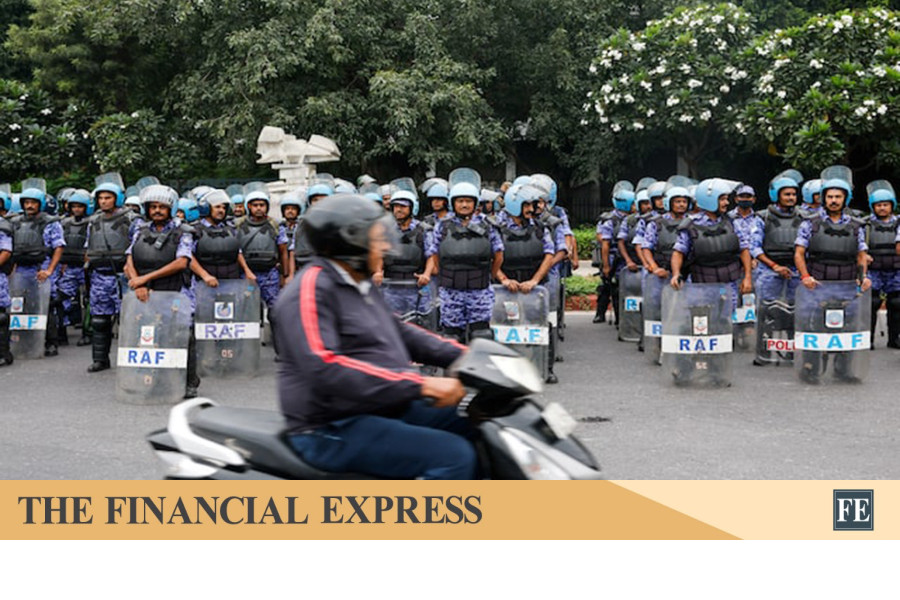
A man on a scooter passes members of the Rapid Action Force (RAF) standing guard ahead of a protest planned by the Cockroach Janta Party (CJP) seeking the resignation of India's Chief Election Commissioner Gyanesh Kumar, near the protest site in New Delhi, India, on October 10, 2026. — Reuters photo

Police detained scores of protesters and their leaders in the Indian capital on Saturday amid patrols by thousands of security forces, with travel and telecoms links suspended, in a lockdown to stop a youth protest asking the election chief to quit.

The ā€Œprotest by the "Cockroach" youth movement aimed to draw thousands of demonstrators against Chief Election Commissioner Gyanesh Kumar over a revision of voter lists that critics say favours Prime Minister Narendra Modi's Bharatiya Janata Party.

"Long live the revolution," chanted some of the young protesters in central Delhi chased by police, who dragged scores of others into buses to be taken away, even as more arrived, a Reuters witness said.

"This is violating the rights of the people and the country will not tolerate this anymore," Yogendra Solanki, one of those being pushed into a bus, told Reuters.

Police also detained 'Cockroach Janta Party' founder Abhijeet Dipke and senior leaders Saurav Das and Ashutosh Ranka as the aircraft bringing them to Delhi arrived from Mumbai, CJP said in a statement.

"I have come to be arrested, arrest me ... I am not afraid of ⁠you guys," Dipke told police officers who spoke to the trio on board the aircraft, television images showed.

"No, this is not an arrest," one police officer replied. "Please cooperate."

DELHI LOCKED DOWN TO FOIL PROTEST

CJP condemned the "authoritarian detention" of its leaders, which it called a "pre-planned interception" aimed at crippling the leadership of Saturday's rally and demanded their immediate release.

Representatives of two digital media outlets said on X that police detained four of their reporters while covering the protest.

Some lawyers protesting outside the Supreme Court were also picked up, the president of its bar association posted on X.

There was no immediate comment from police on the detentions.

Elsewhere across the city of 20 million, 45 metro stations and markets were shut and mobile internet suspended in the central business district.

Police boarded buses to check for protesters after stopping them at points of entry into the city, with cars and other vehicles also subjected to checks, Reuters witnesses said.

Barricades and concrete blocks stopped traffic, while anti-riot vehicles mounted with tear gas guns were stationed on key routes, they said.

"Why is the prime minister so scared of the country's youth, the country's people?" Dipke had asked before leaving for Delhi.

"Why did you need to close all the railways, the metro, the internet has been closed, roads have been closed? ... this is nothing but ā€Œfear," he ⁠told the ANI news agency in the financial capital of Mumbai.

The protesters aimed to gather at Jantar Mantar, a protest site designated by authorities in the heart of New Delhi, at 10:00 am, but security curbs delayed their schedule.

NEW CHALLENGE TO MODI

The protest, which the CJP called an effort to "Save Democracy", is planned as the biggest of a series of demonstrations launched last week after the Indian Express newspaper said Kumar's deputies had queried and disagreed with him over list revisions that dropped about 130 million voters.

That number exceeds the population of Japan.

Opposition parties have long accused the government of trying to fix voter lists to its advantage and were quick to resurrect the allegations following the report.

Kumar has not ⁠commented, but the Election Commission and the BJP have denied the allegations.

The BJP says Modi's popularity and India's economic growth are key reasons for its electoral dominance and accuses opposition parties of misleading the country as they are unable to win elections.

Nonetheless, the near-daily protests by opposition groups pose a new political challenge to Modi, just months after similar demonstrations forced his education minister to quit over exam paper leaks.

They also come months before a series of key state elections starting ⁠in early 2027.

On Friday, Delhi police said they had not given permission for the protest and violators would face the law, but the CJP stuck to its plan on grounds of exercising a fundamental right.

DELETIONS AFFECTED STATE POLLS, OPPOSITION ALLEGES

The protesters accuse the BJP of using the revision of voter lists to sway election results, in collusion with its appointees in the Election Commission, including Kumar.

Opposition parties say the voter deletions affected the ⁠outcome of some recent state elections won by the BJP, and have cast a shadow on elections in the world's largest democracy.

Election Commission data shows about 130 million names were deleted from voter lists during the verification exercise, including 63 million who relocated, 30 million who could not be traced, and 28 million who are dead.

The commission says the count represents voter entries flagged during the draft revision stage and voters wrongly removed can enroll again.​
 

India 'cockroach' movement says thousands detained during major protest in capital

AFP
New Delhi


1791677844705.webp

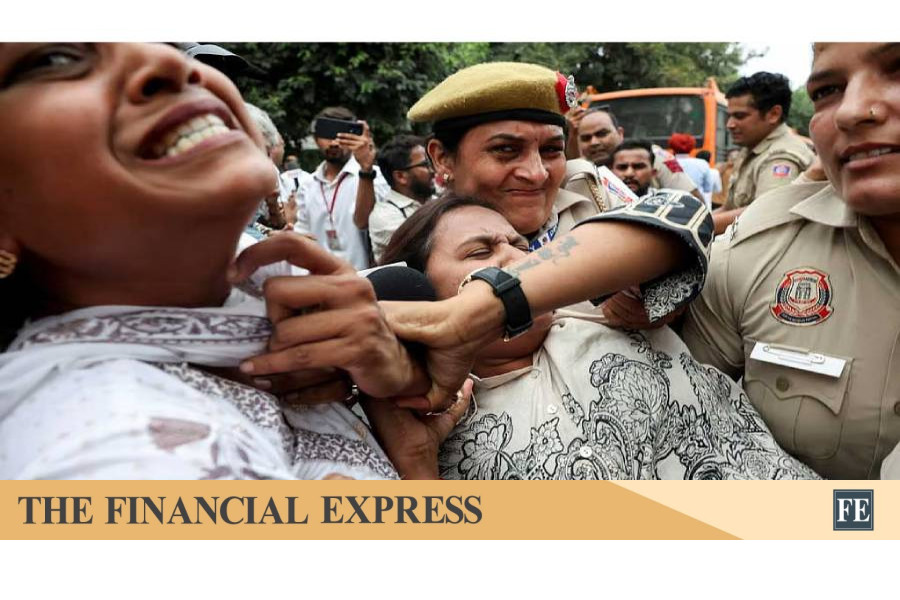
Police personnel detain a supporter of the Cockroach Janata Party (CJP) during a protest demanding the resignation of Indias Chief Election Commissioner Gyanesh Kumar over alleged voter roll irregularities linked to the "special intensive revision" (SIR), in Ahmedabad on 10 October, 2026. AFP

Indian police detained the head of the satirical "cockroach" online movement as well as thousands of protesters trying to take part in a major demonstration in New Delhi against the country's election commissioner, the group said on Saturday.

The protest is the culmination of weeks of opposition mobilisation following allegations of misconduct during a nationwide voter-roll revision by the Election Commission of India (ECI).

Cockroach Janta Party (CJP) founder Abhijeet Dipke and two other leaders were detained before disembarking from a flight in the capital, according to a statement from the group.

"They're being denied access to their lawyers and cut off from all contact with others," it said, adding the trio had been taken to "an undisclosed location".

The CJP also said that thousands more protesters were detained in New Delhi as they attempted to march to the main Jantar Mantar protest site, defying a massive security clampdown.

"More than 15,000 protesters have been detained," Ajinkya Shinde, a CJP leader, said at a news conference in Delhi.

Police did not immediately respond to AFP's request for comment on detentions.

"We will be back, let them fill up all the jails," Shinde said.

Dozens of protesters shouted anti-government slogans as they were taken away in police vehicles, AFP reporters witnessed.

Calls for the ECI chief Gyanesh Kumar to step down have intensified in recent weeks as opposition parties and critics said his commission's voter-roll revision could disenfranchise millions of constituents and benefit Prime Minister Narendra Modi's ruling Hindu nationalist Bharatiya Janata Party.

The ECI has rejected allegations of impropriety, saying the revision was intended to remove duplicate and ineligible voters.

Ahead of the protest, authorities in the capital deployed thousands of police, closed dozens of metro stations, cancelled more than 200 trains and temporarily shut down mobile internet around the protest site.

The demonstrations are widely seen as a reprise of the "cockroach" movement's mass mobilisation in July, which led to the education minister stepping down over an examination scandal.

This time, protesters are demanding Kumar's resignation and a halt to the voter revision exercise.


1791677891273.webp

Police personnel detain supporters of the Cockroach Janata Party (CJP) during a protest demanding the resignation of Indias Chief Election Commissioner Gyanesh Kumar over alleged voter roll irregularities linked to the "special intensive revision" (SIR), in Ahmedabad on 10 October, 2026. AFP

Fresh challenge

The accusations are a fresh challenge for 76-year-old Modi during his third term in office.

Opposition parties have long alleged that legitimate voters are being struck off lists in India, the world's largest democracy with 1.4 billion people.

The issue flared up last month when the Indian Express newspaper reported that key decisions linked to the revision were likely taken without the approval of two of the three election commissioners.

The ECI, a constitutional body, says all its decisions were unanimous and legally valid.

Demonstrators expressed anger on Saturday, telling AFP their right to protest peacefully was being hampered.

Saransh, a university graduate, walked several miles after navigating security barricades to get close to the Jantar Mantar protest site.

"I am here to protect the constitution," said the 24-year-old, who gave only one name.

"Why do I need permission to peacefully express my opinion?"

'Keep protesting'

Amnesty International denounced the "lockdown-like restrictions" and leader of the opposition Congress party, Rahul Gandhi, called on young people to continue with the rallies.

"Youth of India, I am proud of you. Keep protesting. We are standing with you," he said.

The Hindu newspaper reported more than 5,000 protesters had been detained, although it was not immediately possible to verify that number.

Media outlets, including the Scroll and Newslaundry, said their journalists had also been detained briefly.

The United Nations' human rights office urged India to release those "arbitrarily detained" in the protests and expressed concern at reports of mass detentions.

BJP spokesman Sambit Patra said on Saturday the CJP had failed in its attempt to spread "anarchy".

"What is happening at Jantar Mantar, what you can see on TV and a few social media handles, is not India's story," he told reporters.

The voter list overhaul, which began in 2025, has led to more than 133 million names being excluded from draft rolls, according to Indian media reports citing ECI data.

The ECI has said the voter-roll revision identifies fraudulently registered voters and aims to prevent "foreign illegal immigrants" from voting.

Critics say the drive has disproportionately affected marginalised and minority communities.

Members of Modi's party have long alleged that large numbers of undocumented Muslim migrants from neighbouring Bangladesh have fraudulently entered India's electoral rolls.

Political analyst Nilanjan Mukhopadhyay told AFP the protest comes at a time when Modi appears to be "at his weakest politically and individually".

Though India's next general elections are not slated until 2029, the country's most populous state of Uttar Pradesh will go to the polls next year.

"I see this becoming a bigger challenge in the coming months," Mukhopadhyay said.​
 

"Why are people's voices being suppressed?": Bollywood actor Imran Khan detained in Mumbai

ANI
Mumbai, India


1791678117079.webp

Bollywood actor Imran Khan was detained by the Mumbai Police on 10 October 2026. Hindustan Times

Bollywood actor Imran Khan was detained by the Mumbai Police on Saturday at August Kranti Maidan in Mumbai, the proposed venue for a protest in support of CJP’s protest call.

Following his detention, the actor shared a picture of himself apparently seated inside a police van. He accompanied the photograph with a light-hearted caption, writing, ā€œApparently I’m going for a drive.ā€

Speaking to the media, Imran Khan clarified that he was not present with any specific demands but had come forward in his capacity as a citizen of Mumbai. He said he wanted to understand why freedom of movement was being restricted and why people’s voices were being suppressed.

ā€œI don't have demands. I am here as a citizen, as a person who lives in this city. I am here to see why freedom of movement is being restricted. Why are people's voices being suppressed? That is why I am here,ā€ the actor said.

He further stated that he was not affiliated with any organisation and was participating in an individual capacity.

Emphasising his position, Imran added, ā€œI don't have any right to demand anything from people. I am not a part of any organisation. I will stand as a representative.ā€

The actor’s detention comes amid police action at August Kranti Maidan, where authorities have detained more than 400 people, according to the Mumbai Police.

On the other hand, around 1,000 protesters have been detained across the national capital so far while attempting to march towards Jantar Mantar for a Cockroach Janta Party (CJP)-led protest demanding the resignation of Chief Election Commissioner Gyanesh Kumar, Delhi Police sources said on Saturday.​
 

UN calls for release of detained protesters in India
Staff Correspondent

1791680549106.webp

Collected photo

The United Nations on Saturday called on Indian authorities to immediately and unconditionally release all people arbitrarily detained amid large-scale demonstrations in New Delhi.

ā€˜We call on the authorities to ensure that the right to peaceful assembly is fully respected and fulfilled,’ UN human rights spokesperson Thameen Al-Kheetan said in a statement.

The UN expressed concern over reports of mass detentions of demonstrators, protest leaders, members of civil society organisations, lawyers and journalists before and during the demonstrations.

ā€˜Restrictions on peaceful protests must meet strict tests of necessity and proportionality,’ Al-Kheetan said.

He urged Indian law enforcement agencies to exercise the utmost restraint in dealing with peaceful protesters, in keeping with the country’s democratic traditions and human rights obligations.

The UN spokesperson also called on the authorities to engage in meaningful dialogue to address the widely shared concerns raised by the demonstrators.​
 

Poll chief protesters detained in Delhi as ā€˜Cockroach’ youth leaders are released by court


1791762109919.webp

Police officers detain a demonstrator from National Students' Union of India (NSUI), outside the Press Club of India, amid protests seeking the resignation of India's Chief Election Commissioner Gyanesh Kumar, in New Delhi, India, Oct 11, 2026. REUTERS/Bhawika Chhabra

Police detained hundreds of protesters in Delhi for a second consecutive day on Sunday as demonstrations continued demanding the resignation of India’s chief election commissioner, while a court ordered the release of three senior leaders of the ā€œCockroachā€ youth movement.

Abhijeet Dipke, founder of the Cockroach Janta Party (CJP), and two other leaders were detained on Saturday after arriving in Delhi by plane as the movement prepared to gather thousands of people at Jantar Mantar in the capital.

The court ordered their release on an undertaking to ā€œmaintain public peaceā€, the CJP said in a statement. The group later posted on X: ā€œCockroaches never die.ā€

Young protesters, many affiliated with student organisations linked to India’s communist parties, staged sporadic demonstrations across the city on Sunday afternoon before police detained them and took them away in vehicles.

The All India Students’ Association alleged on X that police assaulted some detainees inside the vehicles. A video posted by the Communist Party of India (Marxist) showed its lawmaker John Brittas being helped off a bus and into an autorickshaw as he appeared to be in distress.

Reuters could not independently verify the allegations of assault. Delhi Police did not respond to requests for comment.

The youth movement has emerged as a significant political challenge to Prime Minister Narendra Modi, who has been in power for 12 years. His Bharatiya Janata Party has repeatedly won elections, weakening challenges from opponents, including the Congress Party.

Protesters are demanding the resignation of Chief Election Commissioner Gyanesh Kumar over revisions to voter lists that critics say disproportionately benefit Modi and his party.​
 

India’s ā€˜cockroach’ leaders vow to keep up election protests


The youth movement has emerged as one of the most significant political challenges to Modi during his third term in power, winning millions of followers on social media since it was launched in May as a satirical party.


1791762466857.webp
 

ā€˜Abducted, phones taken, no lawyer’: Cockroach Party alleges against Delhi Police

New Age Online

1791764614130.webp

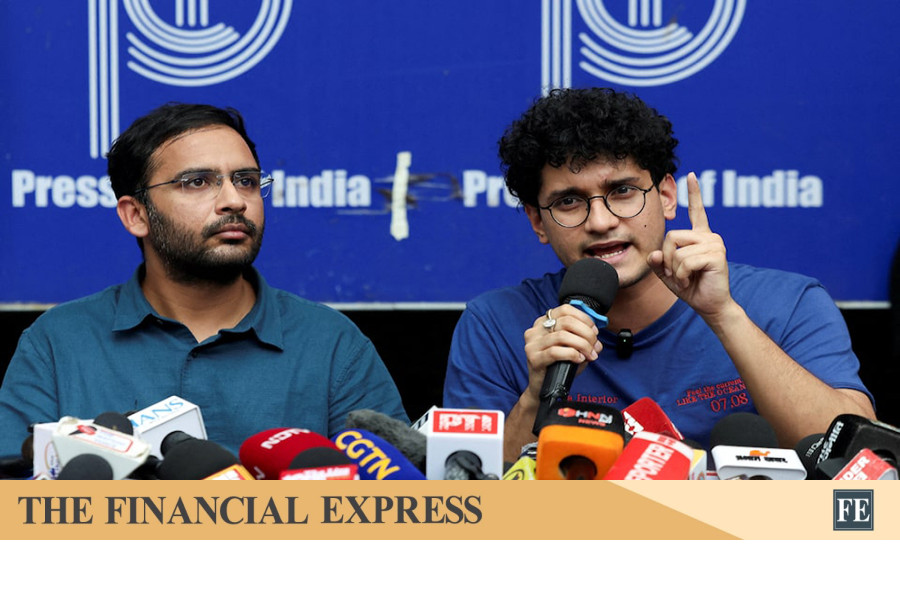
Cockroach Janata Party leaders Ashutosh Ranka and Saurav Das spoke at a press conference in New Delhi on Sunday.


Cockroach Janata Party (CJP) leaders Ashutosh Ranka and Saurav Das came down heavily on the Centre at their first press conference after coming out of 24-hour detention by the Delhi Police, reports Hindustan Times.

Saurav Das said the entire country was in an emergency-like situation, with protesters being detained, transport curbs in place and internet services shut down in parts of the national capital.

Police had detained several thousand people before the protest rally in New Delhi on Saturday, calling for the resignation of Indian Chief Election Commissioner Gyanesh Kumar.

The Election Commission figures indicate that around 130 million entries were removed during the verification exercise, including names of people who had relocated, could not be traced or had died.

Protesters argue that the process could disenfranchise millions of eligible voters and disproportionately affect minority communities.

Abhijeet Dipke and two other Cockroach Janta Party leaders were detained before they could disembark from their flight after arriving in the capital from Mumbai.

They were released early hours on Sunday.

At the press conference in New Delhi on Sunday afternoon, Saurav Das said entire Delhi is like a fort with 40,000 personnel.

ā€˜They are trying to give a negative image to our movement...by shutting 50+ metro stations, shops, roads. They want to put the genZ movement in bad light,’ he said.

They spoke to media following a huge demonstration in New Delhi on Sunday

The CJP leader continued his attack on the Modi government, saying they knew they would be detained but did not expect it to happen this way.

ā€˜When we landed, police immediately jumped into the stairs leading to the plane and abducted us,’ he said.

Saurav added their phones were taken away after their detention and they were told that no lawyer could be provided to them during detention.

ā€˜They gave us no papers or grounds of detention. They seized our phones forcefully using female cops. We still gave our phones and asked for seizure memo but they refused to do so...We have a legal right to a lawyer but police said no. They said that under detention, we have no rights. Imagine what they must be doing to others.’

Saurav then alleged that their phones might have been cloned.

ā€˜We suspect what all they must have done to our phones. We think they hacked our phones. Or cloned our phones. Maybe they planted evidence. And this is a rational doubt. Since they gave us no document and had our phones for over 24 hours,’ he said.

He said the government was doing all this to protest Gyanesh Kumar, whom he described as a traitor.

CJP legal affairs head Ratna Singh accused the Delhi Police of harassing protesters and their families, alleging that officers visited volunteers' homes and intimidated their parents from Friday night through Saturday.

Calling the government ā€˜scared’, Singh alleged that police were acting at the government's behest.

She claimed that she was followed by the Intelligence Bureau after landing in Delhi and that officers chased her as though she were a criminal.

ā€˜Four police personnel came to my apartment. They harassed my flatmates by ringing doorbell in the morning . Later, when I left and was sitting in car. All of a sudden, four cars came and detained me by surrounding me from two sides.

ā€˜I was sitting between 4 cars for 9 hours in Jangpura. This caused problem for all residents. They kept saying they got orders from above. 30-35 officials came and said either I should come to detention center or get house arrested. How can you wrongfully confine us,’ Ratna said.​
 

Cockroach Janta Party vows to resume protest for the second straight day

New Age Online

1791764744778.webp


The Cockroach Janta Party has vowed to resume its protest for the second straight day after on Sunday an estimated 7,000 people were detained across city the previous day, reports Hindustan Times.

Meanwhile, Delhi Police will continue its clampdown across central Delhi on Sunday, keeping Jantar Mantar sealed, maintaining barricades at the capital’s borders and diverting traffic at 30 points.

The fresh round of restrictions comes as CJP leaders insist they will not back down until Chief Election Commissioner Gyanesh Kumar resigns.

While security restrictions will continue, the curbs on metro and rail services are being lifted.

Ajinkya Shinde, who was designated by the group to lead the agitation after its leader Abhijeet Dipke was taken into custody, said protesters would attempt to reach Jantar Mantar again on Sunday and continue their agitation until their demands were met.

ā€˜The government thought we would back down after the detention of Abhijeet Dipke, Saurav Das and Ashutosh Ranka. But we won’t. We will continue our agitation till Gyanesh Kumar resigns,’ Shinde said.

All India Students’ Association president Neha Bora also announced the protest would continue in a late-night post on X on Saturday.

ā€˜Let a hundred Jantar Mantars bloom! Another part of Delhi will become Jantar Mantar tomorrow,’ she said.

40,000 security personnel deployed across Delhi

Quoting officials, Hindustan Times reports police will try to prevent protesters from gathering at Jantar Mantar or entering the New Delhi district on Sunday.

Movement on key roads will be regulated depending on the situation on the ground, officials said, adding that police and Central Armed Police Forces personnel would remain deployed until the situation eased.

More than 40,000 security personnel were deployed on Saturday, including 26,000 reinforcements. It was the largest such deployment in Delhi since February 2020.

Jantar Mantar, the intended site of Saturday’s demonstration, remained sealed, with even journalists barred from entering. Loudspeakers at three entry and exit points broadcast warnings in Hindi and English.

Restrictions on gatherings, processions and road blockades under Section 163 of the Bharatiya Nagarik Suraksha Sanhita will remain in force until further orders, officials said.

At the borders with Haryana and Uttar Pradesh, police have set up two tiers of barricades at Chilla, Ghazipur, Apsara and Singhu. Local police and paramilitary personnel will continue to man these crossings on Sunday.

Metro and train services return to normal

The Delhi Metro Rail Corporation (DMRC) said in a post around 10pm on Saturday that the entry and exit gates of all metro stations had reopened. Neither the DMRC nor the Delhi government's excise department had received a request from Delhi Police to close metro stations or liquor shops on Sunday as of Saturday.

Northern Railway's chief public relations officer said the restrictions on rail services applied only until Saturday.

Traffic restrictions, however, will continue. The Delhi Traffic Police will divert vehicles from 6am on Sunday at the same 30 points as on Saturday, ā€œdepending upon prevailing situationā€.

Opposition protest on Monday

Meanwhile, the opposition INDIA bloc has announced a separate protest for Monday, with top opposition leaders set to march to the Supreme Court and urge it to expedite cases related to the Special Intensive Revision and the Election Commission.

Former West Bengal chief minister Mamata Banerjee was detained on Saturday during a silent protest outside the residence of Trinamool Congress MP Abhishek Banerjee on South Avenue. She was taken to Dwarka in a prison van.

Banerjee said Rahul Gandhi had asked her to stay in Delhi for Monday's march.​
 

Thousands march in India's capital to demand election chief resign

AFP
New Delhi

1791865010395.webp

India's opposition party members march to the Supreme Court in protest against a controversial revision of voter lists that has sparked days of unrest, in New Delhi, India, 12 October, 2026.REUTERS

Thousands of protesters marched in New Delhi on Monday demanding the resignation of India's election chief over alleged misconduct during a voter roll revision, the latest showdown with authorities in the heavily fortified capital.

Opposition parties and supporters of the youth-led Cockroach Janta Party protest movement have taken to the streets in recent days, defying a strict security clampdown to demand a halt to the revision exercise and the resignation of the chief election commissioner.

"You can see how big the crowd is," demonstrator Abhay Aryan, 28, told AFP as protesters marched towards the Supreme Court, chanting slogans and waving placards.

"The government has to listen to the voice of the people."

Critics say the large-scale revision of electoral lists could benefit Prime Minister Narendra Modi's ruling Hindu nationalist Bharatiya Janata Party.

The Election Commission of India, which oversees the voting process in the world's most populous nation, has denied wrongdoing.

A protester who gave his name as Mehvaish said he could no longer "tolerate the injustices" meted out by Modi's government.

"We want removal of this government (because) of all the injustices we have suffered in the past 12-13 years," he said.

"Now if they take away our right to vote, what is left with us?"

Rights advocates and critics say Modi's government has eroded democratic freedoms during more than a decade in power, citing pressure on journalists, civil society groups and political opponents -- allegations the government rejects.

1791865067835.webp

A protester shouts a slogan while lying on a fallen police barricade as opposition parties march to the Supreme Court to protest a controversial revision of voter lists that has sparked days of unrest in New Delhi, India, 12 October, 2026. REUTERS

Thousands detained

Authorities deployed thousands of security personnel across central Delhi for a third straight day, erecting heavy metal barricades and closing key metro stations.

The protests on Monday were led by Rahul Gandhi of the main opposition Congress party, who waved a copy of the constitution as crowds cheered during the procession to the Supreme Court.

He later filed a writ petition in the court through his lawyer, challenging the voter revision exercise.

Public attention has also focused on the police response, after a chaotic weekend in which thousands of protesters including organisers were detained, according to local media reports.

Most of those detained, including three top leaders of the "cockroach" movement, have since been released.

Opposition figures have accused authorities of trying to suppress dissent through mass detentions.

Parliamentarian John Brittas of the Communist Party of India (Marxist) alleged he was "manhandled, dragged, assaulted" by police during Sunday's demonstrations.

"This is not merely an assault on an MP. It is an assault on democratic freedoms and the rule of law," Brittas said.

Police did not respond to questions on detentions or their actions during a news conference on Sunday.

Several journalists covering the protest said they were detained despite prominently displaying their press cards.

Nitin Katiyar, a digital journalist, told The Times of India newspaper police had punched him in the eye. AFP could not immediately verify his charge.

1791865128983.webp

Security personnel cross over barricades to stop protestors as opposition parties march to the Supreme Court to protest a controversial revision of voter lists that has sparked days of unrest, in New Delhi, India, 12 October, 2026. REUTERS

'Spirit of resistance'

Hundreds of yellow metal barricades were set up on roads leading to central Delhi, while six major metro stations remained shut.

The protests have become a major political challenge for Modi, drawing together opposition parties, student groups and activists angered by the voter roll revision.

The leaders of the Cockroach Janta Party, which has millions of social media followers, have pledged to continue their protests until Kumar steps down.

They reiterated that pledge on Monday after Delhi Police announced that Jantar Mantar in the heart of Delhi was no longer designated as an official protest site.

"If Modi thinks taking away Jantar Mantar will put an end to protests, he is mistaken," the group's founder Abhijeet Dipke said on social media.

"Jantar Mantar is not just a location but a spirit of resistance that nobody can ever take away."

The revision of voter rolls that started last year has resulted in more than 133 million names being removed from electoral lists, according to media reports.

Critics say the measure has disproportionately affected minorities, particularly Muslims.

Election authorities say the move was intended to eliminate duplicate, deceased and fraudulent entries.

A senior minister from Modi's party accused Gandhi's Congress on Monday of trying to undermine legitimate electoral processes.

"By discrediting constitutional institutions (and) spreading chaos and riots on the streets, all that the Congress is seeking is to seize power," Shivraj Singh Chouhan told reporters.​
 

Protesters chant ā€˜vote thief’ at India opposition march
Agence France-Presse . New Delhi, India

1791866664551.webp

A student activist aligned with left-wing organisations holds a poster of India's Prime Minister Narendra Modi amid the ongoing protest in solidarity with the youth-led Cockroach Janata Party (CJP) demanding the resignation of the country’s Chief Election Commissioner Gyanesh Kumar over alleged voter roll irregularities linked to the special intensive revision, in Kolkata on October 11, 2026. | AFP photo

Waving giant India flags and chanting ā€˜vote thief’, thousands of protesters poured onto the streets of New Delhi on Monday to demand the resignation of the country’s election chief.

The protest march, led by Rahul Gandhi of the opposition Congress party, is the latest in a series of rallies in the capital over a large-scale voter roll revision that critics say could benefit Prime Minister Narendra Modi’s Hindu nationalist Bharatiya Janata Party.

Opposition parties and supporters of the ā€˜cockroach’ youth movement have been demanding the resignation of Chief Election Commissioner Gyanesh Kumar.

The Election Commission of India has denied any wrongdoing.

ā€˜This is bigger than anything,’ said protester Anjali, 21, her voice competing with drums, whistles and slogans echoing down a packed stretch of road leading to the Supreme Court.

ā€˜It is a fight to save the very fabric of the country. It is the duty of every citizen to raise their voice and protest till he (Kumar) resigns.’

The sea of demonstrators marked a dramatic reversal from the weekend, when authorities detained thousands, including journalists, and placed much of the capital under a virtual lockdown to thwart any major rally.

The government has come under fire for its high-handed response to the protests over the weekend.

Most of those detained have been released.

Police have not commented on the detentions.

On Monday, police largely stood by as the crowd surged through central Delhi in a colourful procession with flags and banners fluttering above.

The call to protest came from Gandhi, who urged everyone who ā€˜believes in democracy’ to join the march regardless of political affiliation.

Gandhi travelled briefly in an open bus through the crowd, waving a copy of India’s constitution.

Some protesters carried oversized replicas of the constitution’s cover, while others climbed atop parked buses meant to ferry detainees.

Along the route, office workers crowded balconies and peered through windows from buildings lining the avenue.

The revision of voter rolls resulted in more than 133 million names being removed from electoral lists, according to media reports.

Critics say the measure has disproportionately affected minorities, particularly Muslims.

Election authorities say the move was intended to eliminate duplicate, deceased and fraudulent entries.

Protester Abhay Aryan, 28, said he was happy to be able to join the rally on Monday, two days after he was briefly detained by authorities.

ā€˜You can see how big the crowd is,’ he told AFP.

ā€˜The government has to listen to the voice of the people.’​
 

Indian police detain 'cockroach' movement leaders demanding election chief's resignation


1791934401884.webp


Saurav Das, chief spokesperson of the Cockroach Janta Party (CJP), speaks next to Ashutosh Ranka, co-convenor of CJP, during a press conference at the Press Club of India following their release, amid protests demanding the resignation of India's Chief Election Commissioner Gyanesh Kumar, in New Delhi, India, on October 11, 2026. — Reuters photo

Top leaders of India's "cockroach" youth movement were detained on Tuesday after they jumped barricades to enter the grounds of a historic observatory popular ā€Œfor protests, chanting slogans demanding the chief election commissioner's resignation over a controversial revision of voter lists.

Supporters of the Cockroach Janta Party (CJP) and opposition groups have held almost daily protests this month to demand commissioner Gyanesh Kumar's resignation over the revisions critics say favour Prime Minister Narendra Modi's Bharatiya Janata Party (BJP).

The Election Commission has denied favouring any party and said wrongly deleted voters can re-enrol, while the BJP has accused rivals of trying to undermine ⁠democracy by wrongly questioning legitimate electoral processes.

Thousands joined a protest march by opposition groups on Monday, after a clampdown foiled CJP plans for a weekend demonstration, with police detaining thousands of protesters, including CJP leaders.

Delhi Police announced on Monday that the Jantar Mantar open-air observatory, in the national capital's central business district, was no longer designated as an official protest site, and said three new venues had been identified.

The CJP said its leaders Ashutosh Ranka, Saurav Das, and Ajinkya Shinde were among about 20 volunteers who "sneaked" inside the observatory to "reclaim" it and were detained.

"You cannot denotify the resistance," founder Abhijeet Dipke said on X after their detention.

BIGGEST POLITICAL CHALLENGE FOR MODI

A CJP livestream showed about ā€Œa ⁠dozen volunteers jumping a gate and barricades to reach the site, where they waved the Indian flag and chanted slogans before police detained them.

Delhi Police did not immediately respond to a request for comment.

The youth movement, which has mobilised protests in recent months against issues ranging from government school infrastructure to jobs, is among the biggest political challenges to Modi and his BJP ⁠in his 12 years in power.

A weeks-long sit-in by its supporters at Jantar Mantar earlier this year forced the resignation of Education Minister Dharmendra Pradhan over exam paper leaks.

The latest protests erupted after the Indian Express newspaper reported last month that Kumar's two deputies ⁠raised several concerns internally about voter list revisions, registration procedures and digital systems.

The change, which started last year, removed over 130 million names – more than the population of Japan – from voter lists, including 28 million who died, 63 ⁠million who relocated, and 30 million who could not be traced.

Opposition parties allege the deletions disproportionately affect Muslim voters and other minorities, who are unlikely to support the Hindu nationalist ruling party — allegations the poll panel and BJP reject.​
 

Top Cockroach party leaders held after flash protest: CJP
Agence France-Presse . New Delhi, India

1791937595791.webp

Supporters of India’s opposition Congress party scuffle with security personnel during a protest march demanding the resignation of the country’s chief election commissioner Gyanesh Kumar over alleged voter roll irregularities linked to the ā€˜special intensive revision’, in New Delhi on October 12, 2026. | AFP photo.


India’s youth-led Cockroach Janta Party said Tuesday that key leaders had been detained after entering an iconic protest site in New Delhi blocked by police.

Opposition parties and supporters of the movement have taken to the streets in recent days, defying a security clampdown to demand the resignation of the head of India’s election commission, accusing it of manipulating voter rolls to benefit prime minister Narendra Modi’s ruling party.

The Election Commission of India, which oversees the voting process in the world’s most populous nation, has denied any wrongdoing.

Delhi Police said on Monday that Jantar Mantar in the heart of the capital had been taken off the list of designated official protest sites.

The site has been sealed off for several days by yellow metal barricades and guarded by a heavy police presence.

But a video posted online by CJP leader Abhijeet Dipke showed protesters clambering over the barricades, before running into the empty space and waving the national flag — before police chased and detained them.

ā€˜CJP sneaks inside to reclaim Jantar Mantar,’ the group said in a post on social media, adding that those detained included leaders Saurav Das, Ashutosh Ranka and Ajinkya Shinde.

ā€˜All of them have been detained by Delhi Police,’ it added.​
 

ā€˜Abducted, phones taken, no lawyer’: Cockroach Party alleges against Delhi Police
New Age Online

1791937729875.webp

Cockroach Janata Party leaders Ashutosh Ranka and Saurav Das spoke at a press conference in New Delhi on Sunday.

Cockroach Janata Party (CJP) leaders Ashutosh Ranka and Saurav Das came down heavily on the Centre at their first press conference after coming out of 24-hour detention by the Delhi Police, reports Hindustan Times.

Saurav Das said the entire country was in an emergency-like situation, with protesters being detained, transport curbs in place and internet services shut down in parts of the national capital.

Police had detained several thousand people before the protest rally in New Delhi on Saturday, calling for the resignation of Indian Chief Election Commissioner Gyanesh Kumar.

The Election Commission figures indicate that around 130 million entries were removed during the verification exercise, including names of people who had relocated, could not be traced or had died.


Protesters argue that the process could disenfranchise millions of eligible voters and disproportionately affect minority communities.

Abhijeet Dipke and two other Cockroach Janta Party leaders were detained before they could disembark from their flight after arriving in the capital from Mumbai.

They were released early hours on Sunday.

At the press conference in New Delhi on Sunday afternoon, Saurav Das said entire Delhi is like a fort with 40,000 personnel.

ā€˜They are trying to give a negative image to our movement...by shutting 50+ metro stations, shops, roads. They want to put the genZ movement in bad light,’ he said.

They spoke to media following a huge demonstration in New Delhi on Sunday

The CJP leader continued his attack on the Modi government, saying they knew they would be detained but did not expect it to happen this way.

ā€˜When we landed, police immediately jumped into the stairs leading to the plane and abducted us,’ he said.

Saurav added their phones were taken away after their detention and they were told that no lawyer could be provided to them during detention.

ā€˜They gave us no papers or grounds of detention. They seized our phones forcefully using female cops. We still gave our phones and asked for seizure memo but they refused to do so...We have a legal right to a lawyer but police said no. They said that under detention, we have no rights. Imagine what they must be doing to others.’

Saurav then alleged that their phones might have been cloned.

ā€˜We suspect what all they must have done to our phones. We think they hacked our phones. Or cloned our phones. Maybe they planted evidence. And this is a rational doubt. Since they gave us no document and had our phones for over 24 hours,’ he said.

He said the government was doing all this to protest Gyanesh Kumar, whom he described as a traitor.

CJP legal affairs head Ratna Singh accused the Delhi Police of harassing protesters and their families, alleging that officers visited volunteers' homes and intimidated their parents from Friday night through Saturday.

Calling the government ā€˜scared’, Singh alleged that police were acting at the government's behest.

She claimed that she was followed by the Intelligence Bureau after landing in Delhi and that officers chased her as though she were a criminal.

ā€˜Four police personnel came to my apartment. They harassed my flatmates by ringing doorbell in the morning . Later, when I left and was sitting in car. All of a sudden, four cars came and detained me by surrounding me from two sides.

ā€˜I was sitting between 4 cars for 9 hours in Jangpura. This caused problem for all residents. They kept saying they got orders from above. 30-35 officials came and said either I should come to detention center or get house arrested. How can you wrongfully confine us,’ Ratna said.​
 

A juncture and a moment for India

Jawed Naqvi


1791938104921.webp

New Age/Mehedi Haque


A CLUTCH of unforeseen events have combined to pose the existential crisis India’s prime minister Narendra Modi is facing from unemployed youth and young students, who after claiming his education minister’s scalp recently are now determined to win the resignation of Gyanesh Kumar, India’s chief election commissioner whom they call ā€˜a vote thief’.

The first trigger for the youth to take to the streets came with the cancellation and corruption in the entrance exams to India’s medical colleges, which led to nationwide protests amid a dozen suicides by dejected students. Then the chief justice of India described unemployed youth as cockroaches, setting off a response nobody expected.

But the safety pin from the fraught grenade was pulled by Ritika Chopra, who broke the Indian Express story on September 23 about two election commissioners officially calling out their chief Gyanesh Kumar for alleged illegalities in deleting 130 million voters from the electoral rolls. The deletions altered the outcomes in Bihar and West Bengal polls to the BJP’s advantage.

That Modi is not prepared to allow the fall of a key pivot of his winning electoral machinery is evident from the paramilitary units he has mobilised, including from troubled Jammu and Kashmir and from platoons purposed to guard the frontier with Pakistan. They have been joined by the Delhi Police supported by street criminals from the Hindutva fold to jointly barricade New Delhi against protesters led largely by the recently formed Cockroach Janta Party.


On their part, the Cockroaches are predominantly from the Hindu middle classes, which makes it a tricky proposition for Modi to use the lethal force he deployed against the Shaheen Bagh anti-citizenship laws campaign in 2020. That movement, led chiefly by swathes of brave Muslim women in Delhi, was broken by a combination of the Covid pandemic and brute force that coincided with president Donald Trump’s visit to Gujarat. Trump lost the election and Joe Biden won it, only for Trump to stage a comeback, while two Muslim student activists, Umar Khalid and Sharjeel Imam, picked up in the crackdown during his India visit six years ago, have marked time in prison.

Last week, Khalid, detained without trial under draconian anti-terror laws, won the 2026 Award for Human Rights Defenders at Risk for the Asia and Pacific region, presented by the Ireland-based Front Line Defenders. It’s difficult to see the crass brutality of a combined force of Delhi Police and Hindutva squads visiting the current crop of protesters, even though they have attacked young women in particular several times. The protests have created an extremely critical moment for the Modi establishment and for the opposition, represented prominently by the feisty young woman leader Neha Bora from the left flank of national politics. The wide political support has added heft to the collective battle for Gyanesh Kumar’s resignation.

There has been some quibbling in the opposition ranks, principally between the Aam Aadmi Party and the Congress, about who is more committed to the students’ cause, but this has more to do with the political chance both are eyeing in Punjab, where they face each other in elections early next year. To be fair, the campaign against ā€˜vote theft’ began as Rahul Gandhi’s battle in mid-2023, when two laws were enacted that would be considered scandalous and unacceptable in any functioning democracy. Modi changed the mechanism that chose the poll chief. He replaced the chief justice of India from the troika that chose the poll chief with his cabinet minister, making the opposition’s presence meaningless. He also gave his handpicked election chief lifelong immunity from legal challenges for his duty in holding elections. The move paid off, with the poll body ignoring Modi’s communally polarising campaign and money power in the 2024 elections, without which he would perhaps have not got the 240 seats that were still 32 short of a majority.

The Cockroach movement has gained credibility by underscoring its key objectives that Indians have been dreaming of. No chief justice shall be granted a Rajya Sabha seat as a post-retirement reward, it declared, the reference being to the reward going to the chief justice who gave the controversial Ayodhya judgement. The Cockroach agenda offered a dire warning to the poll chief. ā€˜If any legitimate vote is deleted, the chief election commissioner shall be arrested under the Unlawful Activities (Prevention) Act, as taking away voting rights is ā€œno less than terrorismā€.’

The Cockroaches are committed to women getting 50 per cent reservation (instead of the 33 per cent promised at present) without increasing the strength of parliament. They want 50 per cent of all cabinet positions to be reserved for women by law. TV channels seen as loyal to Modi should be disbanded. ā€˜All media houses owned by the Gautam Adani Group and Mukesh Ambani’s Reliance Industries shall have their licences cancelled to make way for independent media. Bank accounts of ā€œGodi media anchorsā€ shall be investigated.’

To political parties like the Congress, which has suffered a slew of defections to the BJP, the Cockroaches have offered relief. ā€˜Any member of the legislative assembly (MLA) or member of parliament (MP) who defects from one party to another shall be barred from contesting elections and holding public office for 20 years.’ On its part, the Cockroaches promised to remain answerable under the Right to Information (RTI) Act and refuse to accept any anonymous donations.

It’s a given that much of the Cockroach agenda gestated in years of Rahul Gandhi’s critical campaigns. But is it helpful to squabble with each other when the idea is to seize the moment at this fraught juncture for Indian democracy? Mistrusting each other ended disastrously in Bihar and West Bengal for the INDIA group. Rahul sees Modi and key aides facing the law soon. To pursue the wish, he could trust the newly minted youth power and less so his party. The ā€˜party’ has been the bane of the Congress since Nehru’s time.

The article was originally published in Dawn on October 13.

Jawed Naqvi is a Delhi-based journalist and writer.​
 

What India’s current protests mean, and what they do not

Jannatul Naym Pieal

1792022362032.webp

Supporters of India’s opposition Congress party scuffle with security personnel during a protest march demanding the resignation of the country’s chief election commissioner over alleged voter roll irregularities linked to the Special Intensive Revision (SIR), in New Delhi on October 12, 2026. Photo: AFP

For decades, successive Indian governments have answered external critics with a familiar claim: whatever their flaws, whether corruption, patronage, or communal tensions, India is the world’s largest democracy where elections are free and fair, power changes hands legitimately, and so the government reflects the people’s aspirations. The protests now brewing in Delhi and elsewhere strike at the heart of that claim by targeting the very man who oversees elections: Chief Election Commissioner Gyanesh Kumar. Protesters want him to resign over a controversial voter-roll revision that has removed 13 crore names across the country, which critics say has benefitted the ruling BJP unfairly. The Election Commission, meanwhile, says it is removing only ā€œduplicate and ineligibleā€ entries.

The pressure grew after it was revealed that Kumar’s two fellow commissioners had formally raised concerns at least 14 times in 10 months. The commission describes this as ā€œa normal part of deliberationā€ and, like BJP, denies wrongdoing. The Supreme Court has sought the commission’s response but has not suspended Kumar. Whatever the merits of the competing claims, the dispute has moved from a policy disagreement to a crisis of confidence in the election referee, and when millions doubt the impartiality of that referee, it is hard to fix. This is what makes this second phase of the Cockroach Janta Party (CJP) protests seem far more significant than the first.

The first phase, which saw education minister Dharmendra Pradhan forced to resign over exam paper leaks, looks mild beside what is unfolding now. At that time, CJP founder Abhijeet Dipke distanced the movement from the uprisings in Nepal and Bangladesh, pledging to keep dissent within the bounds of India’s constitution. The mood has since hardened, and the opposition has now moved from the sidelines to the front rows. Rahul Gandhi, the leader of the opposition, was detained three times in two days last week, once while leading nearly 300 INDIA bloc MPs towards Jantar Mantar. He has also called for the election chief to be tried for treason. Mamata Banerjee, who lost power in West Bengal in May, has vowed that her movement will continue until Kumar goes, while her Trinamool Congress (TMC) party is joining forces with its old rival, the CPM, against him. Even Bollywood, long wary of crossing the government, is showing up. Prakash Raj has emerged as a prominent figure in the movement, Imran Khan was among those detained, and Shabana Azmi, Naseeruddin Shah, and Vishal Dadlani joined the CJP’s October 2 rally at Mumbai’s Shivaji Park. A movement that began as a youth-led campaign is becoming a broader platform of resistance cutting across political, cultural, and generational lines.

The government’s response has, perhaps unsurprisingly, increasingly echoed the playbook Bangladesh witnessed in July-August 2024. On Saturday, Delhi was effectively locked down. Dozens of metro stations were shut, and mobile internet was suspended in the central business district. According to an estimate, around 3,000 people have been detained so far, while Dipke and two colleagues were taken off a plane upon arrival. Popular YouTuber Dhruv Rathee was also picked up from his home in Gurgaon. They were later released. At a special sitting on Sunday, the Supreme Court directed that metro and rail services as well as internet access resume normal operation and that peaceful protesters not be illegally detained, subject to law-and-order conditions.

The political rhetoric has also followed the same pattern as Bangladesh. On October 2, BJP legislator Parinay Fuke alleged that Naxalites and leftist groups were behind the protests and wanted to create ā€œBangladesh-like chaosā€ to overthrow the government. Some commentators even dismissed the ā€œcockroachā€ movement as a ā€œfarceā€, built on what they see as the myth of Gen Z revolutions in Bangladesh and Nepal. During Bangladesh’s uprising, the UN human rights office documented internet shutdowns timed to prevent protesters from organising, and estimated that as many as 1,400 people were killed between July 1 and August 15, 2024. Nothing on that lethal scale has occurred in Delhi, of course. But the use of pre-emptive shutdowns, mass detentions, communication restrictions, and accusations of foreign-inspired subversion is recognisably similar.

Still, India is not Bangladesh or Nepal, and the parallel should not be pushed too far. Bangladesh’s movement hardened into a one-point demand for the Awami League government’s exit only after the state responded to protests over the quota system with live fire. Nothing comparable has happened in India. India’s huge size and scale also factor in this: there is no single pressure point, as its federal structure disperses power, and BJP governs in so many states that turmoil in one or even a few cities would not bring its administrative machinery to a halt. But there is a ā€œbut,ā€ and it lies in the ballot box. In the 2024 general election, Narendra Modi’s BJP lost its parliamentary majority and has since governed with the help of coalition partners. If the opposition sustains its protests, and doubts about voter rolls and other institutions keep gnawing at public confidence, BJP may find it much harder to retain power in 2029. The controversy has already cast a shadow over some of the party’s recent electoral conquests.

In West Bengal, for example, where BJP won 207 of 294 seats in May and ended the Trinamool Congress’s 15-year rule, more than 90 lakh names, disproportionately from TMC strongholds and Muslim-majority constituencies, were removed under the same revision. An analysis by Scroll found that in 105 BJP-won seats, the number of deleted voters exceeded the winning margin, suggesting that restoration of their votership could have delivered a different result. This, however, could not be the only deciding factor, with survey company C-Voter’s Yashwant Deshmukh also attributing the swing to disillusionment with Banerjee’s rule. Still, this is the kind of doubt that a credible election commission exists to prevent. Protesters are fighting to ensure that the election process remains fair and inclusive, and the government’s attempt to cast them as agents of chaos only reinforces their argument.

This again brings us to the most curious part of Delhi’s response: the attempt to use alleged foreign interference as a weapon against protesters. In Bangladesh, National Citizen Party Convener Nahid Islam has issued a statement expressing solidarity with India’s youth, saying their struggle ā€œis not yours aloneā€ and urging the authorities to release detained protesters and respect peaceful assembly. NCP spokesperson Asif Mahmud has separately condemned the detention of YouTuber Dhruv Rathee and Dipke. Certain sections of the Indian media, along with some senior BJP leaders, have seized on this as proof of a ā€œforeign hand.ā€ It is hard not to find this a little laughable. During Bangladesh’s uprising, many Indians—including students, writers, and commentators—stood in solidarity with the protesters. Rathee, now one of the most recognisable faces of the Indian protests, made several videos in support of Bangladesh at the time. Solidarity between young people across borders is not a conspiracy. It is what happens when people recognise a familiar struggle.

The questions that brought thousands onto the streets in India are locally grounded: how voter rolls have been revised, why two commissioners voiced objections, whether the process has been thoroughly transparent, and whether the man at the centre of the controversy should remain in office. These questions will be answered, or not, by Indian courts, institutions and, eventually, voters. Pointing at outside influences is just a cynical attempt to discredit the protesters and evade accountability for the questions they are raising.

Jannatul Naym Pieal is a writer, researcher, and journalist.​
 

Indian police detain 'Cockroach' movement founder Dipke ahead of protest


1792195710194.webp

Abhijeet Dipke, head of the Cockroach Janta Party (CJP), speaks during a protest demanding the resignation of India's Chief Election Commissioner Gyanesh Kumar, at Shivaji Park in Mumbai, India, Oct 2, 2026. REUTERS/Francis Mascarenhas Purchase Licensing Rights

Police detained India’s ā€˜cockroach’ movement founder Abhijeet Dipke on Friday, live images from his group showed, ahead of a protest called by him in capital, Delhi’s central business district, the latest rally to demand the resignation of India’s election chief.

The youth-led ā€˜Cockroach Janta Party’ (CJP), opposition groups, and student organisations have held almost daily protests this month demanding Chief Election Commissioner Gyanesh Kumar’s resignation over a revision of voter lists that critics say favours Prime Minister Narendra Modi’s Bharatiya Janata Party (BJP).

More than 130 million voters were deleted during the revision, but the Election Commission has denied favouring any party and said wrongly deleted voters can re-enrol. The BJP has accused rivals of trying to undermine democracy by wrongly questioning legitimate electoral processes.

Dipke called Friday’s protest in support of two CJP leaders detained and sent to jail this week for five days for demonstrating at a protest site in violation of a ban.

The group and left-wing student organisations had urged supporters to gather at the Central Park in New Delhi’s busy Connaught Place shopping and food district on Friday evening to wave and hoist the national flag.

The live video on CJP’s Instagram handle showed Dipke coming out of a house and walking towards the street, where police officers stopped him and, after a brief argument, hauled him into a police car and drove away.

ā€œWe are detaining you right now,ā€ a police officer could be heard telling Dipke.

ā€œI have not broken any law right now...how can you detain me?ā€ Dipke asked the police officers as he was taken away.

There was no immediate comment from the police on the detention.

Earlier on Friday, police met Dipke and warned him against going ahead with the protest.​
 

India closes down New Delhi park ahead of ā€˜cockroach’ movement rally

AFP
New Delhi, India


1792196490549.webp

Cockroach Janta Party (CJP) founder Abhijeet Dipke (C) along with Indian actor and activist Prakash Raj (R) and Indian lawyer and activist Prashant Bhushan (L) addresses the media during a press conference in New Delhi on October 15, 2026 amid ongoing protests against India's Chief Election Commissioner Gyanesh Kumar over alleged voter roll irregularities linked to the "special intensive revision" (SIR). CJP founder Dipke called on people to gather on October 16 in Connaught Place, close to Jantar Mantar. CJP activists and opposition parties have defied a security crackdown to demand the resignation of India's chief election commissioner, accusing the poll body of manipulating voter rolls to benefit Prime Minister Narendra Modi's ruling party. (Photo by Arun SANKAR / AFP)

Authorities closed a central New Delhi park Friday before a fresh protest seeking the removal of India’s election chief over a voter-roll revision that critics say has disenfranchised millions.

Organised by the Cockroach Janta Party (CJP), the campaign has become the focal point of opposition anger over allegations that the revised rolls favour Prime Minister Narendra Modi’s ruling party.

The Election Commission of India, which oversees voting in the world’s most populous nation, has denied any wrongdoing.

CJP founder Abhijeet Dipke urged supporters to rally at the capital’s Central Park after two of his colleagues were detained for breaching security barricades at Jantar Mantar, where they had gone to wave the national flag.

Earlier this week, police removed authorisation for Jantar Mantar as a designated protest site.

On Friday, thousands of security personnel were deployed in parts of the city, with yellow-coloured metal barricades put up at key intersections.

Dipke said he was undeterred despite the possibility of being arrested ahead of Friday’s protest.

ā€œWhy are you so afraid of cockroaches?ā€ Dipke said.

ā€œI want to tell Narendra Modi that we are not afraid... if waving the Indian national flag lands you in jail, we are ready,ā€ he said Thursday.

Delhi’s municipal authorities said they were closing the Central Park for two days for ā€œadministrativeā€ reasons.

Delhi Police have barred public gatherings around Connaught Place citing concerns about public order and safety.

Violation of the orders would ā€œattract suitable legal actionā€, police said Thursday, but added that they would allow ā€œselected personsā€ to gather at a ā€œsuitable placeā€.

In recent days, the Indian capital has seen street protests over a large-scale voter roll revision exercise overseen by chief election commissioner Gyanesh Kumar.

More than 130 million names have been removed from electoral lists under the revision exercise, according to media reports.

Critics say the removals have disproportionately affected minorities, particularly Muslims.

Election authorities say the move was intended to eliminate duplicate, deceased and fraudulent entries.

Members of Modi’s Hindu nationalist Bharatiya Janata Party have long alleged that large numbers of undocumented Muslim migrants from neighbouring Bangladesh have fraudulently entered India’s electoral rolls.

On Friday, Defence Minister Rajnath Singh dismissed the allegations, saying the sole agenda of the opposition parties was ā€œto destroy democratic institutions and create unrest in the countryā€.

ā€œTheir fight is not for electoral reform... not for Gyanesh Kumar, not for the bright future of the country’s youth,ā€ he said at a news conference.

ā€œRather, this is their conspiracy to seize power by creating anarchy in the country.​
 

India protests: Cockroach movement founder Abhijeet Dipke arrested, activist Neha Bora released

Reuters

1792280864885.webp


Abhijeet Dipke, founder of the Cockroach Janata Party (CJP) and Neha Bora, national president of the All India Students' Association (AISA) gesture as they addresses a press conference in New Delhi, India, 15 October 2026.Reuters

Police arrested Indian "cockroach" movement founder Abhijeet Dipke, according to several media reports on Saturday, after he was detained on Friday ahead of a Delhi rally that drew hundreds of people waving the national flag and demanding the resignation of India's election chief.

Dipke was arrested to prevent a breach of the peace and will be called before a Special Executive Magistrate on Saturday, broadcasters NDTV and India Today said.

Delhi police did not immediately respond to an emailed request for comment.

The youth-led Cockroach Janta Party (CJP), opposition groups and student organisations have held near-daily protests this month demanding Chief Election Commissioner Gyanesh Kumar's resignation over a revision of voter lists that they say favours Prime Minister Narendra Modi's Bharatiya Janata Party (BJP).

More than 130 million voters were deleted during the revision. The Election Commission has denied favouring any party and said wrongly deleted voters can re-enrol. The BJP has accused rivals of trying to undermine democracy by wrongly questioning legitimate electoral processes.

Student activist Neha Bora, a prominent face of the protests, who was also detained on Friday as she tried to reach central Delhi with dozens of supporters, was released on Saturday.

"Please, spare the people of India. Impeach Gyanesh Kumar and halt SIR (special intensive revision), so that the ordinary citizens of this country can breathe a sigh of relief, feel at ease, and have their voting rights ensured," Bora told ANI news agency after she was released.

Dipke was detained on Friday as he stepped out of a house in central Delhi, with police hauling him into a police car and driving away after a brief argument.

Dipke had called Friday's protest in support of two CJP leaders detained and sent to jail this week for five days for demonstrating at a protest site in violation of a ban.

Earlier on Friday, police had met Dipke and warned him against going ahead with the protest.

The cockroach movement has emerged as one of the biggest political challenges faced by Modi and the BJP in the prime minister's 12 years in power.

A weeks-long sit-in by supporters of the movement earlier this year forced Education Minister Dharmendra Pradhan's resignation over exam paper leaks.​
 

Can India’s cockroach movement save its democracy?

Maya Tudor

More than 25,000 police officers were deployed across New Delhi recently to prevent demonstrations led by India’s new youth-led political movement, the Cockroach Janta Party (CJP). Government authorities had denied the CJP permission to protest on public-order grounds.

The ensuing security operation saw the authorities shut one in six metro stations in the capital, barricade dozens of central roads and cancel over 250 trains in what Indian rail officials called an ā€œunprecedented closureā€. Thousands of protesters were detained, with documented accounts of police brutality. While the epicentre is in Delhi, protests have been documented in five other major cities.

The protests underscore a paradox at the heart of Indian politics. On the one hand, they show just how far India’s democracy has declined. On the other, they offer up glimmers of the key ingredients needed for democratic renewal: widening political participation, greater opposition coordination and mobilisation around concrete demands.

The protests grew out of discontent over a nationwide electoral roll review known as the Special Intensive Revision. The revision, which began in 2025, has removed more than 130 million names from eligible voter lists – almost a tenth of India’s entire population.

India’s Election Commission has led the revision and says it is necessary to remove duplicate and ineligible voters. But critics allege the review has political motivations. In the state of West Bengal earlier in 2026, almost 12% of registered voters were removed from voter rolls before India’s ruling Bharatiya Janata Party (BJP) sailed to an election victory in a state it had not previously governed.


1792629968150.webp

Supporters of the youth-led Cockroach Janta Party (CJP) hold placards during a protest demanding the resignation of Indian Education Minister Dharmendra Pradhan following an examination paper leak scandal on July 19, 2026. Photo: Reuters

One analysis found that in a large number of constituencies the BJP won, the number of deleted voters exceeded the party’s margin of victory. These events do not definitively prove that Special Intensive Revision deletions changed the state election results. But the pattern is troubling.

So when the Indian Express recently reported that Election Commission members themselves raised 14 objections to voter exclusion during the revision, all of which were overruled by Chief Election Commissioner Gyanesh Kumar, the CJP called for his resignation and took to Delhi’s streets.

All of this is occurring in the context of considerable democratic decline under Narendra Modi’s government. This has taken the form of executive centralisation, intensified use of anti-terror laws and growing media ownership concentration.

No democracy watchdogs currently classify India as a full democracy. In 2021, Freedom House downgraded India from ā€œfreeā€ to ā€œpartly freeā€, while the Sweden-based V-Dem Institute now classifies the world’s most populous country as an ā€œelectoral autocracyā€.

Arresting the decline

The protests are unlikely to arrest India’s democratic decline. Modi’s government is powered not just by the BJP, but also the Rashtriya Swayamsevak Sangh. This is a century-old Hindu nationalist organisation with well-organised networks extending into schools, unions, charities and neighbourhoods.

1792630003285.webp

Security personnel detain a protester during a demonstration organised by the Cockroach Janta Party (CJP) to demand the resignation of Chief Election Commissioner Gyanesh Kumar in New Delhi, India, on October 10, 2026. Photo: Reuters

The combination of deep grassroots organisation and effective government control of media makes Modi’s government extraordinarily capable of mobilising supporters. These advantages help explain why Modi has remained in power for 12 years in a country historically known for turning incumbents out of power.

But the cockroach movement is getting three aspects of its political activism right. First, the movement has begun to restore a sense of political efficacy in India, or the belief that collective action can force a powerful government to retreat.

Earlier in 2026, CJP-led protests successfully forced Modi’s education minister, Dharmendra Pradhan, to resign over a scandal involving leaked exam papers. The stakes are extremely high. In a country where university graduates make up two-thirds of unemployed 20-29 year olds, success in such exams offers a rare pathway to upward mobility.

One indication that participation in the protest movement is now widening came from popular Indian YouTuber, Dhruv Rathee. In a recent interview, Rathee told the BBC that he was not a political figure but now felt compelled to participate in his first protest because ā€œbasically the foundation of our democracy is at stake hereā€.

Second, the protests have brought together previously distinct forces across broad sectors of Indian society. For example, lawyers, farmers’ organisations and activists have come together to back the protests.


1792630060566.webp

Protesters shout slogans and wave the Indian national flag during a rally organised by the Cockroach Janta Party (CJP), demanding the resignation of Chief Election Commissioner Gyanesh Kumar over voter list deletions, in New Delhi, India, on October 16, 2026. Photo: Reuters

It is especially important to coordinate the CJP and the Indian National Developmental Inclusive Alliance (India) of opposition parties. This is because challenging a dominant party at the polls requires above all opposition coordination.

Opposition groups need not agree on every policy. The CJP is able to supply youth mobilisation without the historical baggage of an established opposition party, while the India bloc can bring parliamentary representation and organisation.

Third, protests are more effective when they coalesce around a clear and specific demand. Mahatma Gandhi’s 1930 Salt March, a 24-day, 240-mile march to protest the British colonial monopoly on salt production and trade, epitomised this strategy. It brought together broad social alliances in opposition to a discrete policy that could be reversed.

A focused demand, in this case the resignation of the chief election commissioner, also gives any movement strategic flexibility. This includes the ability to pause mobilisation after concessions without entirely dissolving the coalition that produced it.

India’s incumbent government retains formidable advantages. The BJP has enormous organisational resources and nearly three years remain before the next national election in 2029, though an upcoming 2027 election in India’s largest state of Uttar Pradesh will provide an important test of the government’s popularity.

That is ample time to outlast protests, exploit opposition divisions and wait for public attention to shift elsewhere. So, the recent demonstrations have not reversed India’s democratic decline. But they have widened political participation, focused public attention on the institutions that underpin democracy and weakened the belief that public resistance is futile.

This article was first published under the title ā€œCan India’s cockroach movement reverse its democratic decline?ā€ in The Conversation, on October 16, 2026.

Maya Tudor is a Professor of Politics and Public Policy at University of Oxford.​
 
Back
Top