Saif
Senior Member
- Joined
- Jan 24, 2024
- Messages
- 16,880
- Likes
- 8,153
- Nation

- Residence

- Axis Group

Power demand soars past 15,000MW
The power demand rose even further, crossing the 15,000MW mark, despite a slight drop in day temperature between Tuesday and Wednesday...
www.newagebd.net
Power demand soars past 15,000MW
Load-shedding exceeds 1,800MW
Staff Correspondent | Published: 00:38, Apr 04,2024
The power demand rose even further, crossing the 15,000MW mark, despite a slight drop in day temperature between Tuesday and Wednesday.
At 12 midnight past Tuesday, the Power Grid Company of Bangladesh's daily generation data showed that the overall load-shedding stood at 1,826MW with the generation of 12,488MW.
The power demand reached 15,100MW at 10:00pm on Tuesday.
A heat wave meanwhile continued to sweep Bangladesh for the fourth consecutive day on Wednesday in Dhaka, Khulna and Rajshahi divisions.
'The heat wave will continue with the temperature jumping up another round in two to three days,' said meteorologist Bazlur Rashid.
Except for the north-eastern Sylhet region, rain is unlikely to occur anywhere else in the country.
Bangladesh continues to witness frequent power cuts, lasting for an hour or more in one go, particularly in rural areas.
The poor bear the brunt for they need to go out for work under the sun. The Bangladesh Meteorological Department warned that the days are set to get even more uncomfortable when southerly wind stops.
The BMD said that moisture incursion will continue over the next few days, increasing the feeling of heat and discomfort. At 6:00pm on Wednesday, humidity stood at 51 per cent.
On Wednesday, Bangladesh's highest maximum day temperature of 38.5C was recorded in Chuadanga and Ishurdi.
In Dhaka, the highest maximum temperature was recorded to be 36C.
April is the hottest month when day temperature often reaches 40C or beyond affecting vast swathes of the country with severe heat waves.
The BMD in its monthly outlook has predicted two to four mild heat waves and one to two severe to very severe heat wave to sweep the country.
The Power Cell has predicted the power demand to reach 17,500MW this month.
Bangladesh should not have a problem with meeting the power demand given its current installed generation capacity of over 26,000MW.
But the installed capacity remained unused because of the dollar crisis. Bangladesh cannot import enough gas, oil and coal to run its power plants.
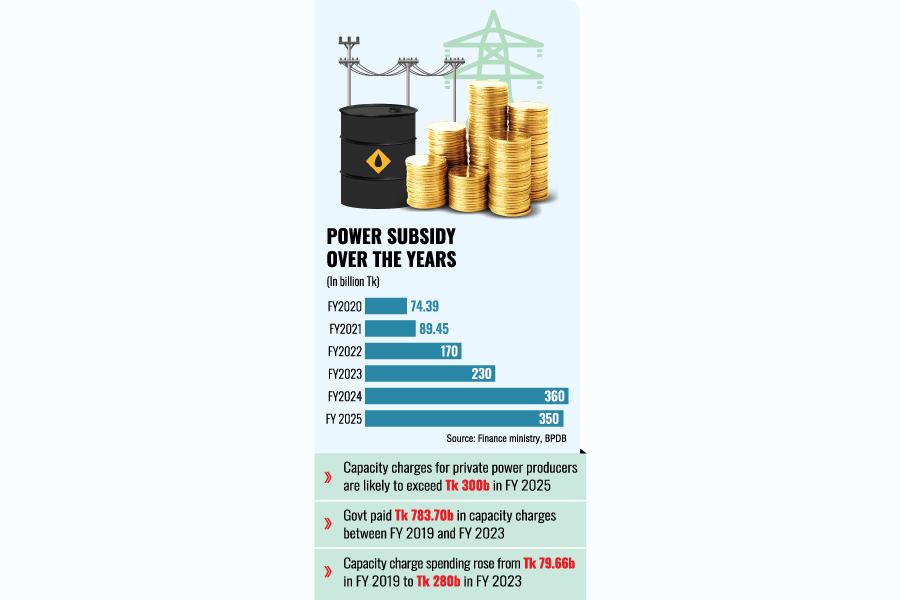
The power plants sitting idle is even more harmful for they generate capacity charge without supplying any power.
Over 14 years since 2009, Bangladesh paid Tk 1,00,000 crore in capacity charge.
The incumbent government spent $33 billion in the power sector over the same period of time, increasing the country's power generation capacity more than five folds without matching it with the transmission and distribution capacity.
The Flood Forecasting and Warning Centre on Wednesday predicted less than normal rainfall in the first two weeks of April.
In the past summer, Bangladesh saw load-shedding exceed 3,000MW mainly because of the fuel crisis.
This would be the third year of an acute power outage since the government officially introduced rotating power cuts on July 19, 2022.
The government had initially promised not to roll out power cuts unannounced but failed to keep the promise because the crisis turned out to be far greater than expected.
Load-shedding exceeds 1,800MW
Staff Correspondent | Published: 00:38, Apr 04,2024
The power demand rose even further, crossing the 15,000MW mark, despite a slight drop in day temperature between Tuesday and Wednesday.
At 12 midnight past Tuesday, the Power Grid Company of Bangladesh's daily generation data showed that the overall load-shedding stood at 1,826MW with the generation of 12,488MW.
The power demand reached 15,100MW at 10:00pm on Tuesday.
A heat wave meanwhile continued to sweep Bangladesh for the fourth consecutive day on Wednesday in Dhaka, Khulna and Rajshahi divisions.
'The heat wave will continue with the temperature jumping up another round in two to three days,' said meteorologist Bazlur Rashid.
Except for the north-eastern Sylhet region, rain is unlikely to occur anywhere else in the country.
Bangladesh continues to witness frequent power cuts, lasting for an hour or more in one go, particularly in rural areas.
The poor bear the brunt for they need to go out for work under the sun. The Bangladesh Meteorological Department warned that the days are set to get even more uncomfortable when southerly wind stops.
The BMD said that moisture incursion will continue over the next few days, increasing the feeling of heat and discomfort. At 6:00pm on Wednesday, humidity stood at 51 per cent.
On Wednesday, Bangladesh's highest maximum day temperature of 38.5C was recorded in Chuadanga and Ishurdi.
In Dhaka, the highest maximum temperature was recorded to be 36C.
April is the hottest month when day temperature often reaches 40C or beyond affecting vast swathes of the country with severe heat waves.
The BMD in its monthly outlook has predicted two to four mild heat waves and one to two severe to very severe heat wave to sweep the country.
The Power Cell has predicted the power demand to reach 17,500MW this month.
Bangladesh should not have a problem with meeting the power demand given its current installed generation capacity of over 26,000MW.
But the installed capacity remained unused because of the dollar crisis. Bangladesh cannot import enough gas, oil and coal to run its power plants.
The power plants sitting idle is even more harmful for they generate capacity charge without supplying any power.
Over 14 years since 2009, Bangladesh paid Tk 1,00,000 crore in capacity charge.
The incumbent government spent $33 billion in the power sector over the same period of time, increasing the country's power generation capacity more than five folds without matching it with the transmission and distribution capacity.
The Flood Forecasting and Warning Centre on Wednesday predicted less than normal rainfall in the first two weeks of April.
In the past summer, Bangladesh saw load-shedding exceed 3,000MW mainly because of the fuel crisis.
This would be the third year of an acute power outage since the government officially introduced rotating power cuts on July 19, 2022.
The government had initially promised not to roll out power cuts unannounced but failed to keep the promise because the crisis turned out to be far greater than expected.