Home Watch Videos Wars

[🇧🇩] Energy Security of Bangladesh

[🇧🇩] Energy Security of Bangladesh
515
17K
More threads by Saif

G Bangladesh Defense

Govt to buy 2 more spot LNG cargoes in July to feed more gas to industries

FE Online Report
Published :
Jun 14, 2025 20:12
Updated :
Jun 14, 2025 20:12

1749942221459.webp


The government is eyeing the import of two more spot liquefied natural gas (LNG) cargoes in July to supply more gas to industries and other commercial consumers, excluding power plants.

State-run Rupantarita Prakritik Gas Company Ltd (RPGCL) has floated a couple of tenders to purchase two spot LNG cargoes for the July 15–16 and 17–18 delivery windows, a senior RPGCL official told The Financial Express on Saturday.

The volume of each of the spot LNG cargoes is around 3.36 million British thermal units (MMBtu).

The bid winner will deliver the LNG cargo at Moheshkhali Island in the Bay of Bengal, with options to discharge the cargo at either of the country’s two floating storage re-gasification units located on Moheshkhali Island.

If this tender is successful, the country’s total purchase of spot LNG cargoes in early July will be five in total.

The country might seek to buy more spot LNG cargoes in late July, said the official.

Bangladesh has purchased three spot LNG cargoes for June deliveries.

RPGCL is a wholly owned subsidiary of state-run Petrobangla and oversees LNG trades in Bangladesh.

Bangladesh previously awarded its latest spot LNG cargo tender to POSCO International Corporation of South Korea for the July 11–12 delivery window at \$12.68 per MMBtu.

Officials said the interim government has been importing more spot LNG cargoes, as it has decided to import six additional LNG cargoes to supply an augmented volume of re-gasified natural gas to industries.

Gas supply to industries has already increased from early June with the import of additional spot LNG cargoes, a senior Petrobangla official said.

The government aims to increase around 250 million cubic feet per day (mmcfd) of gas to industries by ramping up spot LNG imports and diverting gas from power plants to industries.

According to the Ministry of Power, Energy and Mineral Resources (MPEMR), average gas supply to industries during the first four months of 2025 until April was 997 mmcfd, compared to 823 mmcfd during the same period of the previous year.

The government will have to provide a subsidy worth around Tk 35 per cubic meter for importing the additional LNG cargoes for industries, the MPEMR said.

The import cost of the LNG would be Tk 65 per cubic meter, while its selling price would be Tk 30 for new industries and Tk 31.50 for captive power plants.

State-run Petrobangla has planned to reduce natural gas allocations for gas-fired power plants to 1,050 mmcfd from the existing 1,200 mmcfd.

Bangladesh currently imports LNG from Qatar Energy and OQ Trading International under long-term deals and also purchases LNG from the spot market to re-gasify it in its two operational floating, storage and re-gasification units (FSRUs), which have a total capacity of 1.10 billion cubic feet per day (Bcfd).

The country has been reeling from an acute energy crisis as its natural gas output is depleting.

Bangladesh has been rationing gas supply to industries, power plants, and other gas-guzzling sectors to cope with the mounting demand.​
 
Analyze

Analyze Post

Add your ideas here:
Highlight Cite Fact Check Respond

RENEWABLE ENERGY TRANSITION
Investing in energy future

Musharraf Tansen 15 June, 2025, 00:00

1749946963096.webp


BANGLADESH stands at a crossroads. On the one hand, it faces intensifying climate risks, mounting fuel import costs and increasing energy demand; on the other, it has the opportunity to shape a more sustainable and resilient energy future. The national budget for the 2025-26 financial year, recently unveiled, provides a timely lens through which to assess how seriously the country is preparing for a renewable energy transition. While there have been institutional efforts — notably the government’s move to update the Renewable Energy Policy 2008 to make it more relevant to the current context — the fiscal strategy laid out in this year’s budget does not reflect a proportionate commitment to the renewable energy agenda.

Current allocation

IN THE previous financial year (2024–25), the government had made a modest yet symbolically important allocation of Tk 100 crore (approximately $10 million) to establish a renewable energy fund. This was widely interpreted as a recognition that a transition to clean energy is not just desirable but necessary. Unfortunately, in the 2025–26 financial year budget, there is no mention of any continued or enhanced funding for this renewable energy fund, signalling a retreat rather than progress.

Instead, the broader energy and mineral resources division received a total allocation of Tk 2,178 crore — up from Tk 1,086 crore in the previous budget (which was later revised downward to Tk 1,053 crore). While the increased budgetary allocation may appear encouraging on the surface, it lacks any dedicated or earmarked fund for renewable energy development. In other words, there is no clear indication that any portion of this increased allocation is targeted towards achieving the country’s stated renewable energy goals.

This omission is glaring, particularly when viewed against the targets outlined in the Integrated Energy and Power Master Plan, which aims to generate 40 per cent of Bangladesh’s electricity from renewable sources by 2041. According to the plan, meeting this target would require a cumulative investment of approximately $37.4 billion to install 37.8GW of renewable energy capacity by 2050. The previous Tk 100 crore allocation, although symbolic, covered less than 0.03 per cent of the estimated investment requirement. The disappearance of even that symbolic commitment in the current fiscal year raises serious concerns about the country’s policy coherence and long-term strategy.

In the absence of sustained and scaled-up investments, policy reforms and clear budgetary commitment, the country risks falling behind its own renewable energy road map. Simply put, Bangladesh cannot afford to allow renewable energy to remain an afterthought in its national budgeting priorities — not when the stakes are this high.

More broadly, the energy sector budget continues to be skewed in favour of fossil fuels. A significant portion is still devoted to liquefied natural gas subsidies, diesel-based generation and capacity payments for idle fossil fuel plants. These priorities undermine the broader goal of transitioning to clean energy. At a time when global energy prices are volatile and the fiscal pressure from energy imports is growing, this approach risks deepening Bangladesh’s economic vulnerability.

Despite policy statements advocating for renewable expansion, the budget does little to shift the energy paradigm. There is no substantial provision for retiring outdated oil-based generation capacity. Neither is there a dedicated allocation to support the development of utility-scale solar or wind projects, or to build the necessary transmission infrastructure to integrate intermittent renewable sources into the national grid.

Barriers beyond budgets

BEYOND financial allocation, Bangladesh faces several structural and regulatory barriers to renewable energy development. While some incentives exist — such as tax holidays for solar equipment imports and duty reductions on key components — these have not been sufficient to spur large-scale private investment. Land acquisition remains a major obstacle, as does the lack of grid connectivity in remote or suitable locations for renewable projects.

Policy inconsistency further hampers progress. The Renewable Energy Policy of 2008 is outdated and lacks enforcement mechanisms. Tender processes are often delayed or cancelled, creating uncertainty for investors. Moreover, there is limited coordination between different government agencies, which slows down project approvals and implementation. Even when policies are in place, weak institutional capacity at both national and local levels constrains effective execution.

Bangladesh’s continued reliance on imported fossil fuels also acts as a structural impediment. In the 2023-24 financial year, the government spent billions on energy imports, which exacerbated the trade deficit and drained foreign exchange reserves. Instead of reallocating these funds to build domestic renewable capacity, the 2025–26 financial year budget continues this dependency, with more than Tk 7,000 crore proposed for subsidies on liquefied natural gas alone. This not only distorts market signals but also undercuts the competitiveness of renewables.

Green shoots

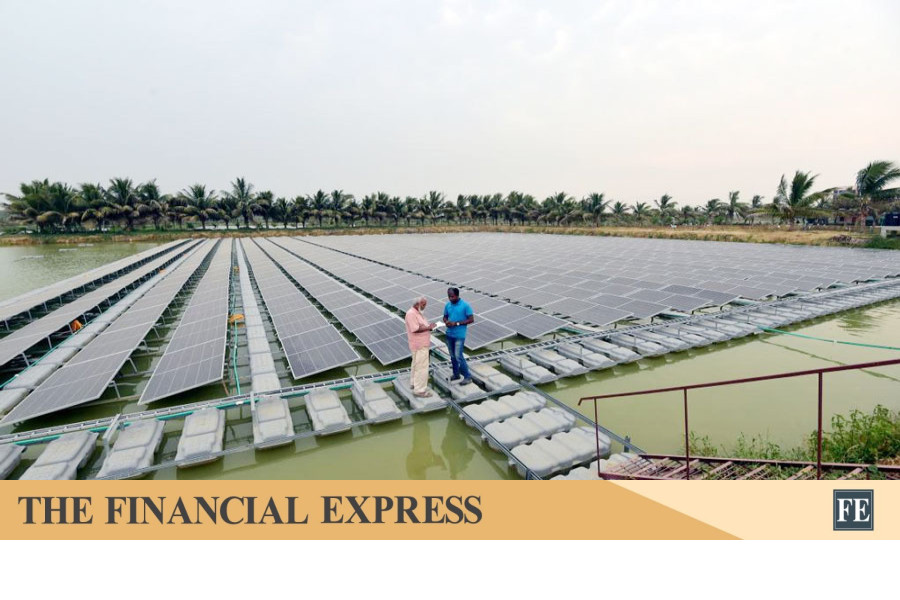
DESPITE these challenges, there are positive developments that suggest a shift, albeit gradual, is underway. The operation of a 60 MW wind power plant in Cox’s Bazar marks a significant milestone, being the country’s first major commercial wind project. Similarly, a 500 MW solar tender is currently in progress, aimed at integrating large-scale solar generation into the national grid.

Institutions like the Sustainable and Renewable Energy Development Authority and the Renewable Energy Research Centre in the University of Dhaka are contributing to the policy and research landscape. Their efforts in energy auditing, project feasibility assessments and capacity building are laying the groundwork for future growth. The newly announced Tk 100 crore renewable energy fund, while modest, indicates an institutional willingness to explore alternative financing mechanisms.

There are also encouraging signs in the private sector. Several local companies are investing in rooftop solar for industrial use, spurred by rising electricity tariffs and unreliable grid supply. Bangladesh has also seen a proliferation of solar irrigation systems in rural areas, supported by donor funding and government facilitation. These decentralised renewable energy solutions are critical for ensuring energy access in off-grid areas and reducing pressure on the national grid.

Recommendations

BANGLADESH must rethink its budgetary and policy approach to turn these green shoots into a robust forest of clean energy. Here are majore recommendations:

Scaled up targeted investment: The government should commit to allocating at least Tk 1,000 crore annually to renewable energy development. This funding should prioritise utility-scale solar and wind projects, battery storage, and smart grid technologies. Special attention should be given to scaling solar irrigation and mini-grid solutions for off-grid communities. Such targeted investments will yield both environmental and economic returns.

Financial market integration: Bangladesh must develop financial instruments to mobilise private capital. Green bonds, blended finance, and viability gap funding can reduce risks for investors. The central bank can play a role by issuing refinancing schemes for renewable projects. Local banks and non-bank financial institutions should be equipped with tools and incentives to lend to green energy ventures.

Fixing policy inconsistency: A new Renewable Energy Act is urgently needed to replace the outdated 2008 policy. This act should mandate clear targets, streamline approval processes, and ensure regulatory certainty. Transparent and timely tender processes must become the norm. Government agencies should coordinate better to ensure smooth implementation.

Redirecting fossil subsidies: The government should gradually phase out fossil fuel subsidies and reallocate these funds to clean energy development. A portion of the liquefied natural gass subsidy budget can be redirected to support renewable energy research and development, grid modernisation, and capacity building. This reallocation will not only reduce fiscal pressure but also level the playing field for renewables.

Advancing enabling infrastructure: A modern, flexible grid is essential for integrating renewable energy. Investments in transmission and distribution infrastructure must go hand-in-hand with renewable deployment. Net metering should be simplified and expanded. Technical standards for grid connection should be clearly defined to avoid project delays.

The 2025–26 budget marks a cautious step towards renewable energy development in Bangladesh. While the creation of a renewable energy fund is a move in the right direction, the overall allocation and strategic direction remain insufficient for a transformative shift. The continued emphasis on fossil fuel subsidies and lack of systemic support for renewables highlight the need for a more coherent and ambitious approach.

The transition to clean energy is not just an environmental imperative but an economic necessity. It is about reducing dependence on volatile global markets, creating green jobs, and ensuring energy security for future generations. Bangladesh has the technical capacity, entrepreneurial spirit, and policy frameworks to lead in South Asia’s green transition. What it needs now is the political will, financial commitment, and policy coherence to realise that potential.

The time for incremental change is over. The budget for the 2025–26 financial year should be seen as a foundation — but the real work lies ahead. Bangladesh must act boldly, invest wisely and lead decisively in building a resilient, inclusive and sustainable energy future.

Musharraf Tansen is a PhD Researcher and former Country Representative of the Malala Fund.​
 
Analyze

Analyze Post

Add your ideas here:
Highlight Cite Fact Check Respond

Bangladesh’s energy policy raises more questions than answers

1750208190168.png

The sudden shift to competitive bidding and the suspension of more than 30 renewable energy projects have cost developers dearly. FILE VISUAL: ALIZA RAHMAN

The government's approval of a new renewable energy policy, which sets higher targets of 20 percent and 30 percent electricity generation from renewables by 2030 and 2041 respectively, is a welcome step towards advancing the energy transition. However, despite these enhanced commitments, a lack of support mechanisms and persistent policy inconsistencies continue to hinder progress in the renewable energy sector.

While the national budget for fiscal year (FY) 2025–26, unveiled on June 2, articulates an ambitious vision of building a society based on "three zeroes"—zero poverty, zero unemployment, and zero net carbon emissions—it fails to offer incentives for the private sector to scale up renewable energy deployment.

In parallel, the government has made sweeping changes to the energy and power sectors. It repealed the Quick Enhancement of Electricity and Energy Supply Act (QEEESA) 2010, which previously allowed unsolicited project proposals without competitive bidding. It has also suspended renewable energy projects that had received Letters of Intent (LOIs) under QEEESA before August 2024. Additionally, the government floated four tender packages for renewable energy projects totalling over 5,000 megawatts (MW) in capacity but removed the payment guarantee clause. Such abrupt policy shifts raise serious concerns for investors.

The recent announcement to build a new coal-fired power plant to generate cheaper electricity than oil-fired peaking plants further highlights the lack of policy coherence. A baseload coal plant is unlikely to reduce the share of oil-fired generation and may instead exacerbate the sector's overcapacity, especially amid sluggish power demand growth.

Proposed budget fails to incentivise renewable energy

While solar power can reduce reliance on expensive oil-based generation, the proposed FY2025–26 budget does not include any incentives to promote solar or other renewable technologies. It also excludes the Tk 100 crore ($8.2 million) in renewable energy funding that was allocated in the previous year's budget. This disconnect between the government's stated ambitions and actual fiscal measures undermines momentum in the renewable energy space.

Abrupt policy changes dent investor confidence

The sudden shift to competitive bidding and the suspension of more than 30 renewable energy projects have cost developers dearly, as many had already invested substantial time and resources in land acquisition.

Furthermore, the exclusion of an "implementation agreement clause"—a provision akin to a payment guarantee—from the tender documents has negatively affected project bankability. Developers may now struggle to secure debt financing. The issue is already visible: Bangladesh failed to attract bidders for the first tender package of 12 projects totalling 453 MW, leading the government to extend the submission deadline six times.

Although 20 local companies ultimately submitted proposals, no foreign firms participated. This lack of foreign interest signals serious challenges for Bangladesh in achieving its 6,145 MW renewable energy target by 2030. Reaching this goal would require annual capacity additions of around 750 MW between July 2025 and December 2030. With the country's current renewable energy capacity at 1,562 MW—and only 400 MW of utility-scale projects under construction—domestic capital alone will not suffice. Foreign investment, along with support from multilateral and bilateral development partners, will be critical.

In June 2021, Bangladesh scrapped 10 coal-fired power projects due to concerns over excess capacity and the growing difficulty of securing funding, especially from institutions focused on environmental, social, and governance (ESG) criteria. The move was also presented as part of the country's enhanced greenhouse gas (GHG) mitigation efforts, raising hopes for an accelerated renewable energy transition.

Fast forward to June 2025: the current government is now reconsidering one of the scrapped plants and plans to build a 1,200 MW coal-fired power plant in Matarbari, next to an existing plant. Although the rationale is to generate cheaper electricity compared to oil-based generation, this logic appears short-sighted.

Bangladesh's peak electricity demand declined by around 1.1 percent in 2025 compared to 2024—falling from 17,200 MW to 16,999 MW. With more than 7,000 MW of baseload capacity already under construction, adding another coal plant will only worsen the country's reserve margin, which currently stands at around 61 percent. This surplus will further strain the power sector's finances as capacity payment obligations rise in the absence of sufficient demand.

The decision also contradicts the GHG mitigation pledge made in 2021 and risks damaging Bangladesh's credibility in the eyes of investors and development partners.

As the government finalises the FY2025–26 budget, it should reconsider introducing a dedicated renewable energy fund and reinstating the Tk 100 crore allocation. It should also waive import duties on components used in rooftop solar systems.

Achieving Bangladesh's renewable energy targets will require not only sustained fiscal support but also a stable and predictable policy environment. Avoiding abrupt policy reversals is essential to attract long-term domestic and foreign investment.

Shafiqul Alam is lead energy analyst for Bangladesh at Institute for Energy Economics and Financial Analysis (IEEFA).​
 
Analyze

Analyze Post

Add your ideas here:
Highlight Cite Fact Check Respond

Govt releases big sum to pay off private power plant dues
Clean chit claims Tk620b in state subsidy in revised budget


FHM Humayan Kabir
Published :
Jun 21, 2025 10:07
Updated :
Jun 21, 2025 10:07

1750547437499.webp


A clean chit up to April on huge leftover arrears cost Tk 600 billion as the interim government doubled the state subsidy to pay off the overdue bills to private-sector power producers, officials said.

In order to clear all the much-talked-about capacity charges and electricity bills, the government already jacked up the power-sector subsidy to Tk 620 billion from Tk 360-billion allocations in the original budget for the outgoing fiscal year (FY) 2024-25, they said Friday.

"We have so far released nearly Tk600 billion worth of funds as power subsidy to pay the arrears to the private-sector rental and independent power producers (IPPs)," says a Ministry of Finance (MoF) official.

"After getting bill of the remaining two months of the current fiscal year (FY) 2024-25, we will provide the remaining arrears shortly," he adds about the contingencies aimed at averting any major power breakdowns.

As a matter of set practice, after getting power-supply and other bills from the Bangladesh Power Development Board (BPDB), the MoF usually scrutinises those and then releases the necessary funds.

A hefty sum of subsidy in the revised budget has given a big respite to Bangladesh government as it has already paid a good amount of overdue bills to the private power producers, officials said.

All 133 private and public-sector power stations across Bangladesh have a combined generation capacity of nearly 20,697 megawatts a day. Out of the total, 78 private-sector power plants has a production capacity of nearly 8,778mws a day.

Besides, BPDB imports 1,160mw power from India where Adani power station from Jharkhand alone supplies nearly 750 megawatts a day.

Finance ministry and power division officials said the government would be paying all the arrears and dues to the IPPs and rental power plants gradually by next FY2026.

The interim administration of Prof Muhammad Yunus has decided to repay off the outstanding capacity charges, power-purchase bills and other liabilities to the local and foreign IPPs and rental electricity producers.

Among the producers are Indian Adani Power, Bangladesh-China Power Company Plant (Payra power plant), Meghnaghat 450mw Power Ltd, 210mw Rural Power Co Ltd, 335mw Summit-Meghnaghat Power Ltd and 414mw Sembcorp NWPC Ltd, 145mw Aggreko International Projects, United Power and Doreen Power.

The bills of the rental power plants and IPPs are paid from BPDB's income and the subsidies provided by the MoF.

However, the bills for imported electricity from Adani and other Indian power plants are paid from BPDB's own income.

About the massive Tk620-billion allocation for the power subsidy in the current revised budget, the MoF official says: "We are paying the arrears every month to the private power-plant owners. But the arrears are comparatively higher than our monthly payments. So, we will allocate a higher amount of money in the revised national budget for the current FY2025."

From the next FY, power division would slash the subsidy on power sector drastically and try to ensure loss-free supply within next few years, says the official.

The government in the newly placed national budget has proposed a Tk 370-billion fund as power subsidy for the upcoming FY2026.

Bangladesh purchases power at higher rates from the costly IPPs and the rental-power producers and sells to the consumers at lower rates by way of subsidizing the distribution.

Another MoF official says Bangladesh wants to be a liability-free country to the IPPs and private-sector power plants from the next fiscal year as it has agreed with the International Monetary Fund (IMF) for getting its financial support.

In the last FY2024 revised budget, the government allocated Tk 394.06 billion in subsidy for the power sector.

Data from MoF, BPDB and a non-government research organisation show a total of Tk 783.7 billion had been paid as capacity charges since 2018-19 till 2022-23.

Some Tk 62.41 billion was paid in FY2019, Tk 89.29 billion in 2020, Tk 132 billion in 2021, Tk 240 billion in 2022 and Tk 260 billion paid in FY2023 as capacity charges for private-and rental-power plants.

Such huge capacity payments to IPPs and rentals have become a big burden for the government while struggling with emaciated foreign-exchange reserves and rising external debts.

Banks can ill afford to provide dollars for repayment of dues of the foreign companies in the power and energy sector. The country had forex reserves worth over US$48.0 billion two years back, which depleted to $22 billion in recent days.

Usually, the state-run power board sells electricity to consumers at rates lower than it purchases from the IPPs and the gap needs to be made up with state subsidies.

Most of the IPPs and rental-power plants are HFO- or diesel-based ones which is costly for generating electricity.

The BPDB purchases the electricity from the private-sector plants at costs that vary from Tk 14 to Tk 26 per kilowatt hour (kwh) for feeding into the national grid.

On the other hand, the average retail price of electricity the consumers pay is some Tk 8.95 per unit and the average bulk electricity tariff is Tk 7.04 per unit.​
 
Analyze

Analyze Post

Add your ideas here:
Highlight Cite Fact Check Respond

Power outage hits parts of Dhaka due to Rampura substation malfunction

FE ONLINE DESK
Published :
Jun 22, 2025 23:26
Updated :
Jun 22, 2025 23:26

1750632749172.webp


A major power outage affected several areas of Dhaka on Sunday night following a mechanical failure at the Rampura substation, causing widespread inconvenience to residents, according to local media.

Md Shamim Hasan, Director of the Public Relations Department of the Bangladesh Power Development Board (BPDB), confirmed the matter to Jago News. He said the disruption occurred at around 9:30 PM due to a technical fault in the 230/132 KV grid line connected to the national grid via Rampura substation. Repair work is underway, and normal supply is expected to resume between midnight and 12:30 AM.

Due to the sudden malfunction, electricity supply was cut off in areas including Banani and Moghbazar for several hours. Later in the night, around 10:30 PM, parts of Azimpur and New Market also experienced blackouts.​
 
Analyze

Analyze Post

Add your ideas here:
Highlight Cite Fact Check Respond

Posts you haven't read yet..

Members Online

Latest Posts

Back
 
G
O
 
H
O
M
E