New Tweets

[🇧🇩] Energy Security of Bangladesh

G Bangladesh Defense
[🇧🇩] Energy Security of Bangladesh
549
19K
More threads by Saif


BD seeks US ban waiver to import Russian energy
Dhaka focused on maximising benefits within framework, says finance minister about US-BD pact

Published :
Mar 12, 2026 00:44
Updated :
Mar 12, 2026 00:44

1773275260207.webp


Bangladesh Wednesday formally requested a temporary waiver of United States sanctions to import energy from Russia to mitigate fuel crunch amid the Middle East tensions triggered by US-Israel war on Iran.

Finance Minister Amir Khosru Mahmud Chowdhury conveyed the request to US Ambassador Brent T. Christensen during a courtesy meeting at the minister's office in Dhaka's Sher-e-Bangla Nagar.

"The US has already granted a waiver to India, allowing it to temporarily purchase Russian oil. Bangladesh is seeking a similar waiver," the minister told journalists after the meeting.

If India was given this opportunity, he hopes, Bangladesh should also be considered, as it would provide significant support to the country, which has limited alternatives at hand.

Ambassador Christensen indicated that he would forward Bangladesh's request to Washington for further consideration, the finance minister said.

The government says there are enough fuels in stock and more in pipeline to meet short-term demand yet transporters are making a beeline to filling stations in what is described as panic buying.

Beyond energy, the discussion covered broader investment and trade relations between the US and Bangladesh as well as capacity-building initiatives involving government agencies, he said.

On trade and tariff agreements -- which have induced calls from economists for a review for parity -- the minister noted that while the pacts are bilateral and cannot be interpreted unilaterally, Bangladesh is focused on maximizing benefits within the existing framework.

Responding a question from journalists, the minister said the government examined potential scenarios depending on the duration of the ongoing conflict -- short-term, midterm, or prolonged -- and the implications for Bangladesh's strategic planning.​
 
Analyze

Analyze Post

Add your ideas here:
Highlight Cite Respond

Where Bangladesh imports diesel from, and how much comes from India
Two decades ago, a large share of diesel imports came through government-to-government (G2G) agreements. At that time, Middle Eastern countries were the primary suppliers. Gradually, however, around 50 per cent of diesel began to be purchased through competitive international tenders.

Masud Milad & Sujoy Chowdhury

Chattogram
Updated: 11 Mar 2026, 13: 26

1773276370972.webp


A drop of diesel is seen at the tip of a nozzle in a petrol station in Nice, France, 20 October, 2021 Reuters

Bangladesh once imported almost all of its diesel from the Middle East. Most shipments mainly arrived by sea from Kuwait. Over the past two decades, however, the sources of imports have changed significantly. Several Southeast Asian countries have now emerged as major suppliers, while a notable amount also comes from India.

Import data from the National Board of Revenue (NBR) shows that in the 2006–07 fiscal year, about 91 per cent of the diesel imported by the Bangladesh Petroleum Corporation (BPC) came from Kuwait. India accounted for the remaining 9 per cent at the time.

Within a decade, the situation began to shift. Singapore rapidly moved up the list of diesel suppliers and eventually became the leading source. At the same time, Malaysia, China, the United Arab Emirates (UAE), Saudi Arabia and several other countries were added to the list of suppliers.

The sources of imports have become even more diversified now. In the first eight months of the current fiscal year (July–February), Bangladesh imported around 2.3 million tonnes of diesel. Of this amount, 41 per cent came from Singapore and 24 per cent from Malaysia. As a result, dependence on Middle Eastern countries has declined significantly.

Two decades ago, a large share of diesel imports came through government-to-government (G2G) agreements. At that time, Middle Eastern countries were the primary suppliers. Gradually, however, around 50 per cent of diesel began to be purchased through competitive international tenders.

This increased the number of suppliers and diversified the sources of imports. It is worth noting that diesel is still imported solely by the government sector, with the Bangladesh Petroleum Corporation (BPC) handling the imports.

Although the sources of diesel imports have changed, imports from India have not followed a single consistent trend. At times they have decreased, while at other times they have increased.
Diesel is the most widely used fuel in the country’s energy system. A large portion of transports—buses, trucks, pickups, covered vans and cargo vehicles—runs on diesel.

The fuel is also used to operate irrigation equipment in agriculture, run engine-powered boats on inland waterways and power generators in many industries. During electricity shortages, some power plants also rely on diesel.

As a result, transport, agriculture, industry and electricity generation all depend heavily on this fuel. About 24 per cent of the country’s diesel is used in agriculture.

We are starting the process to import 120,000 tonnes of oil from Brunei. At the same time, imports from the United States will also be possible. This will further diversify the sources of imports----Anindya Islam, State Minister for Power, Energy and Mineral Resources.

According to BPC data, diesel accounts for about 63 per cent of the country’s total fuel demand. In the 2024–25 fiscal year, the demand for diesel was about 4.35 million tonnes. A large portion of this demand is met through direct imports, while about 700,000 to 750,000 tonnes are produced annually by refining crude oil.

Although the sources of diesel imports have changed, imports from India have not followed a single consistent trend. At times they have decreased, while at other times they have increased.

According to NBR data, 9 per cent of the diesel imported into the country in the 2006–07 fiscal year came from India. For several years afterward, the share remained in single digits, though it later reached double-digit levels in some years.

Over the past five years, India’s share was highest in the 2023–24 fiscal year. That year, about 551,000 tonnes of diesel were imported from India, accounting for nearly 15 per cent of total imports.

The amount has decreased somewhat since then. In the last fiscal year, imports from India stood at around 448,000 tonnes, while about 333,000 tonnes arrived in the first eight months of the current fiscal year.

Several companies, including India’s state-owned Indian Oil Corporation Limited, supply diesel to Bangladesh. To facilitate imports from India, the two countries built the Bangladesh–India Friendship Pipeline.

The nearly 130-kilometre pipeline, constructed with Indian financing, was launched in December 2022. Through this pipeline, diesel from the Numaligarh refinery in India is delivered directly to the depot in Parbatipur, Dinajpur. Shipments reach Bangladesh within two days of being sent through the pipeline.

Now Bangladesh imports diesel from several countries including Singapore, Malaysia, China, Indonesia and India. As a result, even if problems arise in one region, supplies can be ensured from alternative sources.

Recently, a shipment of 5,000 tonnes of diesel arrived in Bangladesh through the pipeline. Under the agreement, about 180,000 tonnes of diesel can be imported annually in this way.

Diversified sources reduce risks

The diversification of diesel import sources has also reduced supply risks. In the past, heavy dependence on the Middle East meant that any instability in the Strait of Hormuz could create pressure on fuel supplies.

Now Bangladesh imports diesel from several countries including Singapore, Malaysia, China, Indonesia and India. As a result, even if problems arise in one region, supplies can be ensured from alternative sources.

State Minister for Power, Energy and Mineral Resources Anindya Islam said that Bangladesh now has multiple sources for diesel imports. In addition to G2G agreements, diesel is also being purchased through competitive tenders, which has reduced the risk of major supply disruptions. Diesel can also be brought easily through the pipeline from the Numaligarh refinery in India.

“We are starting the process to import 120,000 tonnes of oil from Brunei. At the same time, imports from the United States will also be possible. This will further diversify the sources of imports,” he added.​
 
Analyze

Analyze Post

Add your ideas here:
Highlight Cite Respond

How dependent is Bangladesh on Middle East oil, gas?

Mohammad Suman

1773277678421.webp


It has been 12 days since the US-Israel war on Iran pushed the Middle East into turmoil, raising fears of a global energy crisis. Many countries, including Pakistan, have taken austerity measures, such as introducing a four-day workweek for public employees and announcing holidays for schools beginning March 16.

In Bangladesh, the government has begun rationing fuel supply to avoid a shortage, as the country meets 95 percent of its oil and 30 percent of its gas requirements through imports. Middle Eastern countries such as Saudi Arabia and Qatar are two key sources.

Now, fears are growing over the adequate supply of fuel as Iran has blocked the Strait of Hormuz, through which a fifth of the world's oil travels, demanding that the US and Israel stop the attack on Iran. Long queues of bikes and cars have been visible at filling stations in the capital, Dhaka, for more than a week. There is no sign of them shortening.

This raises the question: What is the stake of the Middle East in the global energy market?

The Energy Information Administration (EIA) says five of the world's top 10 oil producers are from the Gulf region -- Saudi Arabia, Iraq, the United Arab Emirates, Iran and Kuwait. These five countries produced 26.61 million barrels per day (bpd) in 2023, out of total global output of 101.81 million bpd. That means the region accounts for more than one-fourth of daily global oil production.

How much does Bangladesh import from the region?

SAUDI ARABIA, THE UAE MAJOR SUPPLIERS OF CRUDE

Customs data showed that Bangladesh imports crude and refined fuel oil from a range of countries including Iran, the United Arab Emirates (UAE), Oman, Saudi Arabia, Kuwait, Iraq and Qatar in the Middle East, as well as Singapore, Malaysia and India, to meet its annual demand of roughly 70 lakh tonnes.

During the last 14 months, Bangladesh imported around 20.69 lakh tonnes of crude oil, of which Saudi Arabia, the UAE and Iraq supplied around 13 lakh tonnes, or 63 percent of the total. Malaysia was another supplier, selling 3 lakh tonnes of crude oil, which was 15 percent of the total crude petroleum imports.

Saudi Arabia emerged as the largest individual supplier, exporting 7.10 lakh tonnes, representing roughly 35 percent of the total crude import volume.

The UAE followed as the second-largest source with 6.20 lakh tonnes, accounting for 30 percent.

Eastern Refinery Limited processes the imported crude, refining it into 13 petroleum products, including diesel, petrol, octane and jet fuel.

While crude imports remain concentrated among these four countries, the sourcing of refined products shows a different trend.

PETROL, DIESEL, FURNACE OIL

Bangladesh imported 3 lakh tonnes of petrol during the same period -- between January 2025 and March 2026.

Only five percent, or around 36,000 tonnes, came from the Middle Eastern countries Oman and Qatar, while the largest share was sourced from Singapore, which supplied around 1.15 lakh tonnes, accounting for about 38 percent of total petrol imports.

For diesel and furnace oil, Bangladesh relied heavily on Singapore and Malaysia, with no supplies sourced from Middle Eastern countries.

Of the 39.07 lakh tonnes of diesel imported, Singapore provided 17.5 lakh tonnes, or 45 percent, while Malaysia supplied 8.76 lakh tonnes, or 22 percent.

Similarly, furnace oil imports reached 17.43 lakh tonnes, with Singapore accounting for 10.19 lakh tonnes, or 57 percent, and Malaysia contributing 6.81 lakh tonnes, or 39 percent.

Meanwhile, diesel imports from India are rising, increasing from 70,055 tonnes in 2024 to about 122,000 tonnes in 2025. The Bangladesh Petroleum Corporation (BPC) plans to import more than 100,000 tonnes from India this year.

To facilitate these imports, BPC regularly imports refined products from Numaligarh Refinery Limited. Beyond the rail transport used since 2016, the Bangladesh-India Friendship Pipeline now carries fuel from Numaligarh to Parbatipur in Dinajpur.

LNG AND LPG

During the same period, the country imported 25.86 lakh tonnes of liquefied natural gas (LNG). Of this, 16.52 lakh tonnes, or 64 percent, came from Qatar.

Additionally, about 4.36 lakh tonnes, or 17 percent, were imported from the United States. The remaining LNG was sourced from Nigeria, Equatorial Guinea, Indonesia, Angola, Malaysia, and Australia.

In the case of liquefied petroleum gas (LPG), the country was previously heavily dependent on the Middle East, but recently its reliance on the United States has been increasing.

Over the past 14 months, Bangladesh imported 15.87 lakh tonnes of LPG, of which 11.07 lakh tonnes, or 69 percent, came from Middle Eastern countries such as the United Arab Emirates, Iraq, and Oman.

Meanwhile, 3.40 lakh tonnes, or 22 percent, were imported from the United States. However, following the recent trade agreement between the US and the Bangladesh government, dependence on the Middle East has begun to decline.

In the last two months alone, 62 percent of the total 1.73 lakh tonnes of LPG imports came from the United States.​
 
Analyze

Analyze Post

Add your ideas here:
Highlight Cite Respond

Bad management, 'erroneous' calculations behind fuel oil crisis: traders

bdnews24.com
Published :
Mar 12, 2026 21:22
Updated :
Mar 12, 2026 21:22

1773360681109.webp


Fuel traders say the pressure on Bangladesh’s fuel supply, particularly petrol and octane, is not driven by the crisis in the Middle East but rather by flawed government management and what they describe as “erroneous” calculations.

At a press conference held at a Dhanmondi restaurant on Thursday, the Bangladesh Petroleum Dealer’s, Distributor’s, Agents and Petrol Pump Owners’ Association demanded the immediate withdrawal of petrol and octane rationing to restore stability to the market.

The association argued that the decision to limit fuel sales was unnecessary and served only to ignite public anxiety.

Syed Sajjadul Karim Kabul, the association’s convenor, pointed out that a significant portion of the country’s petrol and octane demand is met by condensate produced at the Sylhet gas fields and processed in local refineries.

“The production of gas and condensate in Sylhet has no direct or indirect connection with the war in the Middle East or international instability,” Kabul said.

He emphasised that since the Bangladesh Petroleum Corporation (BPC) receives the entire output from these domestic sources, the global conflict should not have impacted the availability of these specific fuels.

The traders alleged that while the crisis began with rumours and panic-buying, it was exacerbated by the BPC’s “hasty” implementation of a rationing policy without consulting stakeholders.

On Mar 6, the BPC set fuel sales limits at two litres of octane/petrol for motorcycles, 10 litres for private cars, 20–25 litres for SUVs and microbuses, and for diesel, 70–80 litres for local buses and pickups, and up to 220 litres for long-haul trucks and lorries.

The motorcycle oil refill limit was later increased to five litres.

The association claimed the BPC’s calculation is fundamentally flawed.

The calculation behind the rationing is based on the average fuel consumption from March to June, a period of lower demand, the association said.

The BPC ignored the high-demand period of January to April, it added.

The association also argued that while the BPC officially announced a 25 percent supply cut, the actual market shortage has reached 45 percent because the regulator failed to account for the fact that pumps only uplift oil 20–22 days a month, not 30.

The traders warned that the current “quota” system has made fuel distribution commercially unviable.

Many pumps are receiving such small allocations that they cannot fill a standard 5,000 to 9,000- litre tank lorries.

“In many cases, the transport cost for partial loads exceeds the dealer’s commission,” the written statement read out at the press conference noted.

Many pumps have stopped collecting oil altogether because it is “unprofitable and ineffective,” the statement added.

Kabul blamed “bureaucracy” for creating the crisis that severely impacted public life, causing people to spend hours in queues to get fuel in the fasting month of Ramadan. People even clashed with pump staff for fuel.

The association urged the government to replace daily quotas with weekly allocations and to adjust supply based on actual demand fluctuations.​
 
Analyze

Analyze Post

Add your ideas here:
Highlight Cite Respond

Foreign advisor says Dhaka in talks with Washington to buy Russian fuel

bdnews24.com
Published :
Mar 13, 2026 23:01
Updated :
Mar 13, 2026 23:01

1773446827800.webp


The Prime Minister’s Foreign Affairs Advisor Humayun Kabir has said discussions are under way for securing US approval for Bangladesh to purchase fuel from Russia.

He made the remarks while speaking to journalists on Friday afternoon after a meeting with government officials at the Sylhet Circuit House.

Asked about reports that a key suspect in the killing of Sharif Osman bin Hadi had recently been arrested in India, Humayun said Dhaka is in talks with New Delhi to bring them back to the country.

Referring to ousted prime minister Sheikh Hasina, Humayun said if India ensures that she will not carry out any terrorist activities from her exile there, there will be no obstacle in bilateral relations.

He added that Bangladesh’s relations with India in the past decade and a half had centred on Hasina rather than ties between the two countries.

Humayun also said the government was strengthening cooperation with Turkey across several sectors, describing the relationship as “longstanding and brotherly”.

The advisor also urged police to take a firm stance against harassment cases, warning that action would be taken against anyone attempting to file cases using political influence.​
 
Analyze

Analyze Post

Add your ideas here:
Highlight Cite Respond

How much crude oil is in stock, how long can petrol and octane production continue?
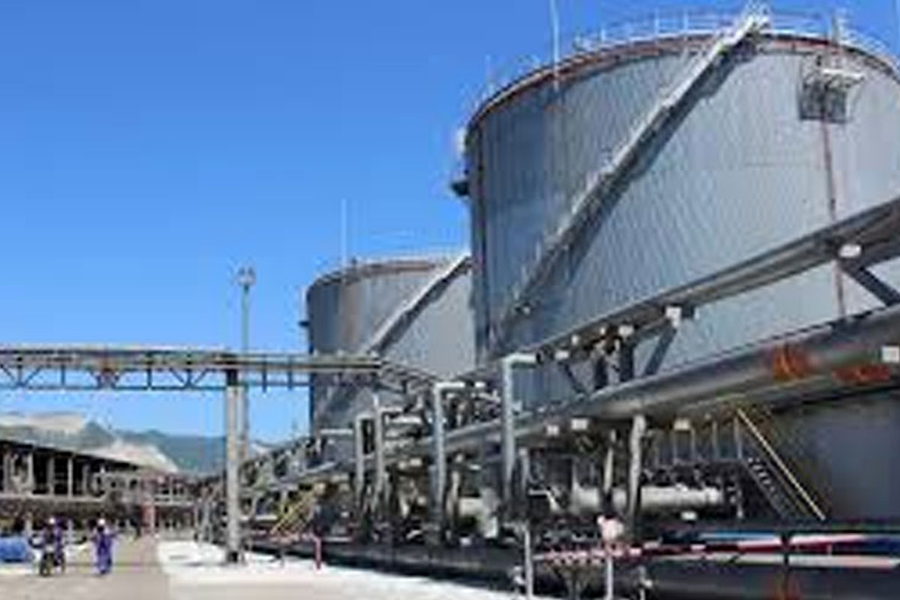
Eastern Refinery PLC in Chattogram is the country’s only state-owned oil refinery. Imported crude oil is refined here to produce diesel, petrol, octane, furnace oil, naphtha and other fuel products.

Sujoy Chowdhury
Chattogram
Updated: 13 Mar 2026, 17: 14

1773449369346.webp

Easter Refinery.taken from Easter Refinery's website.

Eastern Refinery PLC in Chattogram currently has around 100,000 tonnes of crude oil in stock. Based on its daily refining capacity, production can continue for another 20 to 22 days with this reserve. However, energy sector insiders fear that if new shipments do not arrive on time, pressure could mount on the production system of the country’s only state-owned refinery.

The ongoing war situation in the Middle East along with rising tensions in the Strait of Hormuz has created uncertainty over the movement of crude oil tankers. The situation has become more uncertain after a vessel carrying crude oil from Saudi Arabia’s Ras Tanura terminal was forced to halt its journey.

Sources at the Bangladesh Petroleum Corporation (BPC) said the vessel, Nordic Pollux, loaded crude oil on 3 March. Although it initially set sail, it had to return to Ras Tanura due to unfavourable conditions and is currently stationed there.

Eastern Refinery PLC in Chattogram is the country’s only state-owned oil refinery. Imported crude oil is refined here to produce diesel, petrol, octane, furnace oil, naphtha and other fuel products. These are later supplied to consumers through Padma, Meghna, Jamuna and Standard Asiatic oil companies.

Refinery sources said the facility has a total storage capacity of about 225,000 tonnes, while the current stock stands at about 100,000 tonnes. The refinery can process around 4,500 tonnes of crude oil per day.

When contacted, Eastern Refinery’s managing director Md Sharif Hasnat told Prothom Alo, “Major portion of the crude oil comes through the Strait of Hormuz, where tensions are currently high. With the oil we have in stock, production can continue for about 20 to 22 days. If no new shipment arrives within that time, pressure may arise in production.”

However, he added that Bangladesh’s fuel supply does not rely solely on crude oil. “Around 80 per cent of total imports are refined fuel, so there is no immediate risk of a shortage. Still, the arrival of a new shipment would make the situation more comfortable.”

According to refinery sources, the existing crude oil stock could produce around 40,000 tonnes of diesel, 15,000 to 20,000 tonnes of petrol and octane, with about 30,000 tonnes of furnace oil.

Sources from the Eastern Refinery, the country's only state-owned oil refinery, said the facility has a total storage capacity of about 225,000 tonnes, while the current stock stands at about 100,000 tonnes. The refinery can process around 4,500 tonnes of crude oil per day.

Uncertainty over tanker schedules.

The current Middle East conflict began on 28 February, when the United States and Israel launched strikes in Iran. Iran’s retaliatory attacks quickly escalated tensions in the region.

At the centre of this conflict is the Strait of Hormuz, a vital maritime route in the Persian Gulf. Nearly 20 per cent of the world’s oil and gas is transported through this route. Any military tension there can therefore disrupt global energy supply chains.

The route is crucial for Bangladesh as well, because a large share of the crude oil imported from the Middle East passes through it.

According to BPC sources, Bangladesh imports 700,000 to 800,000 tonnes of Arabian Light crude oil each year from Saudi Arabia’s state-owned company Aramco. The oil is usually loaded onto vessels at the Ras Tanura terminal.

Meanwhile, roughly the same amount of Murban crude oil is supplied by the Abu Dhabi National Oil Company (ADNOC) of the United Arab Emirates. This oil can sometimes be shipped through the Fujairah port, which does not require passing through the Strait of Hormuz.

According to BPC’s import schedule, six more vessels carrying about 600,000 tonnes of crude oil are expected to arrive from Ras Tanura in April, June, July, September, October and December this year. However, if the conflict persists, uncertainty remains over whether these shipments will arrive on schedule.

Energy sector insiders say prolonged disruption in crude oil supply could affect the production of the domestic refinery, particularly that of petrol and octane.

Almost all petrol used in Bangladesh and a large portion of octane are produced domestically through refinery operations and condensate processing. A drop in crude supply could therefore impact production of these fuels as well.

However, officials from the refinery and BPC say refined fuel continues to arrive from multiple international sources, so there is currently no risk of a major shortage.

About 20 per cent of total imports are crude oil, while 80 per cent are refined fuel. Bangladesh is now importing fuel from various sources. Supplies are also coming from countries such as Singapore, Malaysia, India and China. Therefore, there is no immediate concern about a major fuel shortage-----Anindya Islam, state minister for power, energy and mineral resources.

Refined fuel makes up the bulk of imports

Bangladesh mainly imports two types of fuel: refined fuel and crude oil. About 80 per cent of imports are refined fuel, which can be used directly. These are imported from countries including Malaysia, the United Arab Emirates, China, Indonesia, Thailand, India, Oman and Kuwait.

According to BPC data, during the 2024-25 fiscal year, Bangladesh imported 4.7 million tonnes of refined fuel at a cost of about Tk 396.92 billion.

During the same period, 1.51 million tonnes of crude oil were imported at a cost of about Tk 105.03 billion, mainly from Saudi Arabia and the United Arab Emirates.

Some fuel is also produced by processing condensate derived from local gas fields. In total, Eastern Refinery produced about 1.496 million tonnes of petroleum products in the last fiscal year, including around 750,000 tonnes of diesel.

When contacted, state minister for power, energy and mineral resources Anindya Islam said about 20 per cent of total imports are crude oil, while 80 per cent are refined fuel.

“Bangladesh is now importing fuel from various sources. Supplies are also coming from countries such as Singapore, Malaysia, India and China. Therefore, there is no immediate concern about a major fuel shortage,” he said.

The state minister added that initiatives have also been taken to import fuel from alternative sources. As part of this effort, the process has begun to import about 120,000 tonnes of oil from Brunei.

“As a result, even if crude oil shipments are delayed, the country is not facing an immediate crisis,” he said.​
 
Analyze

Analyze Post

Add your ideas here:
Highlight Cite Respond

Latest Posts

Back
PKDefense - Recommended Toggle